

Synopsis
Covers the whole plot, including the ending.
- Difficulty
- Hard
- Pacing
- Slow
- Mood
- Atmospheric, Reflective, Melancholy, Psychological
- Read it if
- You enjoy deep psychological character studies, intricate social dramas, and Victorian-era prose exploring themes of freedom, independence, and manipulation.
- Skip it if
- You prefer fast-paced plots, clear-cut resolutions, or modern, straightforward language.
The Portrait of a Lady Plot Summary
Covers the whole plot, including the ending.
Arrival at Gardencourt
Isabel Archer, a smart and spirited young American woman, travels to England after her father's death to live with her wealthy aunt, Mrs. Touchett, at her country estate, Gardencourt. There, Isabel meets her cousin, Ralph Touchett, and his kind, elderly father, Mr. Touchett. She also meets Lord Warburton, a charming and rich aristocrat, who is a close family friend. Isabel's lively and unconventional spirit immediately attracts everyone, especially Ralph, who becomes fascinated by her potential and wish for independence. Her presence brings new energy to the quiet English household.
Lord Warburton's Proposal
Lord Warburton, taken with Isabel's charm and intelligence, quickly proposes marriage. He is a man of high social standing, wealth, and good character, making him a suitable match in society's eyes. However, Isabel, who values her independence above all, feels that marrying Warburton would confine her, limiting her chances for self-discovery. Despite the practical benefits and her genuine affection for him as a friend, she declines his offer, surprising and disappointing her aunt and even Ralph, who secretly wants her to remain free.
Caspar Goodwood's Persistence
While at Gardencourt, Isabel is also visited by Caspar Goodwood, a wealthy and earnest American businessman from Boston who has long loved her. Goodwood represents a more traditional, straightforward American idea of marriage and home life. He is persistent, deeply devoted to Isabel, and offers her a stable, secure future. However, Isabel finds his directness and conventional expectations somewhat stifling. She feels he lacks imagination and would limit her spirit. Despite his true affection and reliable character, Isabel rejects his proposals too, confirming her wish to make her own way without marriage.
Inheritance and Freedom
Mr. Touchett, on his deathbed, changes his will at Ralph's subtle suggestion. Ralph, believing that Isabel's potential needs complete financial independence, convinces his father to leave her a large fortune of 70,000 pounds. This inheritance, meant to free Isabel from needing to marry for money or status, ironically sets her up for future troubles. Isabel, now wealthy, feels truly able to make her own choices and explore the world, unaware of Ralph's kind but ultimately misguided intention behind the gift.
Meeting Madame Merle and Osmond
After receiving her inheritance, Isabel travels to Florence, Italy, where she meets Madame Merle, an American living abroad and a long-time friend of Mrs. Touchett. Madame Merle is charming, cultured, and socially graceful, but also cynical and manipulative. Isabel, impressed by Merle's sophistication, becomes close to her, seeing her as a mentor. Through Madame Merle, Isabel meets Gilbert Osmond, an American expatriate living an artistic life in Italy. Osmond is a widower with a young daughter, Pansy, and presents himself as a man of exquisite taste and intellect.
Isabel's Engagement to Osmond
Gilbert Osmond, with Madame Merle's help, skillfully creates an image of deep originality and artistic sensitivity that greatly impresses Isabel. She sees him as a man living outside conventional society, a quality she values. Despite her friends' doubts, especially Ralph, Henrietta Stackpole, and even Mrs. Touchett, who see Osmond as superficial and cold, Isabel becomes increasingly fond of him. She interprets his refined detachment as depth and his aestheticism as a noble pursuit. Believing she is choosing a partner who will respect her independence and challenge her mind, Isabel accepts Osmond's proposal, sealing her fate.
The Unraveling of the Marriage
Soon after their marriage, Isabel's ideal view of Gilbert Osmond shatters. She discovers that his refined aestheticism hides a deeply narcissistic, controlling, and cruel personality. Osmond wants to possess and control Isabel completely, reducing her to an ornament for his own image and forcing her to fit his strict standards. Her fortune, which she had hoped would give her freedom, instead becomes another tool for Osmond's manipulation and social climbing. Isabel finds herself trapped in a suffocating marriage, her spirit slowly crushed by her husband's demands and emotional abuse. She realizes she made a terrible mistake.
Pansy's Predicament
Isabel grows to deeply care for Osmond's innocent and gentle daughter, Pansy. Pansy, who Osmond has trained to be perfectly obedient and demure, is a pawn in her father's social plans. Osmond wants Pansy to marry Lord Warburton, despite Warburton's lingering affection for Isabel and Pansy's own lack of strong feelings for him. Isabel, seeing Pansy's vulnerability and Osmond's ruthlessness, feels a strong protective instinct. She tries to guide Pansy and even tries to discourage Warburton from the match, though Osmond's strong influence and Pansy's ingrained obedience often stop her efforts.
The Revelation of Merle's Deception
Through hints and conversations, especially with Mrs. Touchett, Isabel slowly uncovers the truth about Madame Merle. She discovers that Merle and Osmond were not just friends, but long-time lovers, and that Pansy is their biological daughter. Merle had arranged Isabel's marriage to Osmond specifically for her fortune, intending it to benefit Osmond and, through him, Pansy. This revelation shows the full extent of the manipulation Isabel has faced, destroying her trust in Merle and confirming the malicious plan behind her marriage. The knowledge leaves Isabel feeling deeply betrayed and used.
Ralph's Dying Wish and Isabel's Return
Isabel learns that Ralph Touchett is seriously ill and wants to see her before he dies. Osmond, angry at any defiance of his will, forbids her from going. However, Isabel, asserting a rare moment of rebellion, defies him and travels to Gardencourt. During her last, sad conversations with Ralph, he confesses his deep love for her and reveals he was the one who arranged her inheritance, hoping to give her complete freedom. This revelation is a bittersweet comfort, as Isabel understands his good intentions but also the tragic irony of how the fortune led to her entrapment. Ralph dies, leaving Isabel with deep sadness and gratitude.
Confrontation and Choice
After Ralph's funeral, Isabel returns to Rome, where she confronts Osmond. She now fully understands his cruelty and the extent of his and Madame Merle's deception. Osmond, as expected, remains unrepentant and continues to demand her absolute obedience. Caspar Goodwood, who has followed Isabel to Europe, makes one final, passionate plea for her to leave Osmond and come with him, offering her escape and true affection. Isabel is torn between her wish for freedom and her sense of duty and marriage vows. The novel ends with her making a difficult and unclear choice about her future.
The Ambiguous Ending
In the novel's unclear ending, Isabel, after her intense encounter with Caspar Goodwood, who tries to physically make her leave Osmond, makes a choice that leaves her future uncertain. Despite Goodwood's passionate appeal and the clear path to freedom he offers, Isabel returns to Rome. Her reasons are complex: a sense of duty, a refusal to be seen as fleeing, a desire to protect Pansy, or perhaps a deep, if tragic, commitment to the results of her own choices. The novel closes without stating whether she stays with Osmond indefinitely, suggesting that her 'portrait' is one of ongoing internal struggle and the complex nature of freedom and responsibility.
The Portrait of a Lady Characters
Isabel Archer
Protagonist
A spirited and intelligent American woman who seeks independence but becomes entangled in a manipulative marriage.
Isabel Archer is a young, American woman of keen intelligence, strong will, and vivid imagination. Orphaned and initially without fortune, she values her independence and the freedom to make her own choices above all else. She possesses a romantic idealism and a deep desire for experience and self-discovery, which makes her resistant to conventional expectations and suitors. Her greatest flaw is her naive trust in appearances and her profound pride, which prevents her from seeing the true nature of others, particularly Gilbert Osmond and Madame Merle.
Relationships: Ralph Touchett (Cousin and secret admirer; devoted friend and benefactor); Gilbert Osmond (Husband; manipulative and cruel); Madame Merle (Friend turned betrayer; co-conspirator with Osmond); Lord Warburton (Suitor; respectable but rejected); Caspar Goodwood (Persistent American suitor); Pansy Osmond (Stepdaughter; object of Isabel's protection and affection)
Gilbert Osmond
Antagonist
A narcissistic American expatriate who marries Isabel for her money and seeks to control her entirely.
Gilbert Osmond is a sophisticated, aesthetic American expatriate living in Italy, presenting himself as a man of exquisite taste and intellectual refinement. Beneath this cultivated facade lies a deeply narcissistic, cold, and cruel individual. He is a 'collector' of beautiful objects and people, valuing them only for how they enhance his image. His primary goal is to control and possess, and he sees Isabel's fortune and beauty as tools for his social advancement and personal satisfaction. He lacks genuine emotion and empathy, making him a truly formidable antagonist.
Relationships: Isabel Archer (Wife; object of his control); Madame Merle (Long-time lover and co-conspirator; mother of his daughter); Pansy Osmond (Daughter; pawn in his social schemes)
Madame Merle
Antagonist/Supporting
A charming and cultivated American expatriate who manipulates Isabel into marrying Osmond.
Madame Merle is a highly cultivated, charming, and socially adept American expatriate. She is a woman of the world, seemingly independent and sophisticated, but beneath her polished exterior lies a deep cynicism and a capacity for ruthless manipulation. She is Gilbert Osmond's long-time lover and the biological mother of Pansy. Her actions are driven by a complex mix of devotion to Osmond, a desire for social standing through him, and a pragmatic acceptance of her own compromised position. She orchestrates Isabel's marriage to Osmond, using Isabel's fortune to benefit her own clandestine family.
Relationships: Gilbert Osmond (Long-time lover and co-conspirator); Isabel Archer (Manipulated friend); Pansy Osmond (Biological daughter; kept secret)
Ralph Touchett
Supporting
Isabel's invalid cousin and devoted admirer, who orchestrates her inheritance in a misguided attempt to secure her freedom.
Ralph Touchett is Isabel's witty, intelligent, and deeply perceptive cousin. Suffering from a debilitating lung illness, he is an observer of life rather than an active participant. He is profoundly fond of Isabel, recognizing and admiring her unique spirit and potential. Out of a misguided but benevolent desire to see her truly free and capable of achieving her full potential, he convinces his father to leave Isabel a large fortune. He acts as her silent protector and confidant, often seeing the truth about Osmond and Merle long before Isabel does, but is limited by his illness and his own inability to directly intervene.
Relationships: Isabel Archer (Cousin; secret admirer and benefactor); Mr. Touchett (Father); Mrs. Touchett (Mother)
Lord Warburton
Supporting
An aristocratic English suitor, initially rejected by Isabel, who later becomes entangled in Osmond's schemes.
Lord Warburton is a wealthy, charming, and well-intentioned English aristocrat. He is a man of good character, respectable, and somewhat progressive in his views. He is genuinely attracted to Isabel and proposes marriage, offering her a life of comfort and social standing. Despite his eligibility, Isabel rejects him, fearing the constraints of such a conventional life. Later, he becomes a pawn in Osmond's plans to marry Pansy, demonstrating his lingering attachment to Isabel and his general good nature, which is easily exploited by the more manipulative characters.
Relationships: Isabel Archer (Suitor; rejected); Gilbert Osmond (Acquaintance; potential father-in-law to Pansy)
Caspar Goodwood
Supporting
Isabel's persistent American suitor, who embodies conventional American values and offers her a path to escape.
Caspar Goodwood is a wealthy and earnest American businessman from Boston. He is deeply and consistently in love with Isabel, pursuing her across continents. Goodwood represents a more traditional, straightforward, and pragmatic view of love and marriage. While Isabel finds his conventionality and directness somewhat stifling, he is genuinely devoted, reliable, and offers a clear path to a stable, loving life. He is a man of action and simple, pure intentions, serving as a stark contrast to Osmond's duplicity and refinement.
Relationships: Isabel Archer (Persistent suitor)
Pansy Osmond
Supporting
Gilbert Osmond's innocent and obedient daughter, who becomes a pawn in his social schemes.
Pansy Osmond is Gilbert Osmond's daughter (and secretly Madame Merle's). She is portrayed as an innocent, gentle, and perfectly obedient young woman, carefully molded by her father to be a compliant and charming ornament. She possesses a quiet sweetness and an almost childlike simplicity, which makes her vulnerable to Osmond's manipulations. Isabel develops a strong protective affection for Pansy, seeing her as a victim of Osmond's cruel ambition. Pansy's fate is intrinsically linked to Isabel's, as she represents the potential for another life to be crushed by Osmond's will.
Relationships: Gilbert Osmond (Father; controlling); Madame Merle (Biological mother; hidden); Isabel Archer (Stepmother; protector)
Henrietta Stackpole
Supporting
Isabel's outspoken American journalist friend, who offers pragmatic advice and a contrasting view of American independence.
Henrietta Stackpole is Isabel's childhood friend from America, an independent and opinionated journalist. She is fiercely American, pragmatic, and direct, often offering blunt advice and criticism. Henrietta serves as a foil to Isabel's romantic idealism, representing a more grounded, no-nonsense approach to life and relationships. She is suspicious of European sophistication and correctly perceives Osmond's true character from the outset. Her presence provides a touch of comic relief and a constant reminder of Isabel's American roots and a different path she might have taken.
Relationships: Isabel Archer (Close friend); Mr. Bantling (Future husband)
The Portrait of a Lady Themes
The Nature of Freedom and Independence
The novel explores Isabel's strong wish for freedom and independence, especially as a woman in the 19th century. Initially, Isabel thinks financial independence and the ability to choose will give her complete liberty. However, her marriage to Gilbert Osmond shows that true freedom is not just the lack of outside limits, but also freedom from manipulation and the ability to see true character. Her inheritance, meant by Ralph to free her, ironically becomes the very thing that traps her, as Osmond wants her fortune more than her. The novel suggests that freedom is complex, often hard to find, and that one's choices, even those made for freedom, can lead to deep unfreedom.
“She had an unquenchable desire to think well of herself. She had a theory that she was a person of great good-will, and that she should always act with a certain nobleness.”
American Innocence vs. European Corruption
A main theme is the conflict between American innocence and European sophistication, often shown as a type of corruption. Isabel, with her American ideals of self-reliance and moral clarity, arrives in Europe full of romantic ideas. She is at first charmed by the 'old world' beauty and social graces, especially as seen in Madame Merle and Gilbert Osmond. However, she slowly discovers that this European sophistication often hides deep cynicism, manipulation, and moral decay. Her journey becomes a loss of innocence, as she learns that appearances can be misleading and that seeking 'culture' can lead to moral compromise, contrasting with the more straightforward, if less refined, American characters like Caspar Goodwood and Henrietta Stackpole.
“She was not eager to please, she was eager to live.”
Manipulation and Betrayal
Manipulation and betrayal are common throughout the novel, ultimately leading to Isabel's sad entrapment. Madame Merle and Gilbert Osmond skillfully arrange Isabel's marriage, using her idealism, her pride, and her wish for an unconventional life. Merle, in particular, betrays Isabel's trust as a friend, acting as a knowing partner in Osmond's plan to get Isabel's fortune. Ralph Touchett's kind manipulation in getting Isabel's inheritance, while well-intended, also puts her on a path where she becomes open to others' bad intentions. The novel details how characters use social graces, emotional pleas, and calculated deceptions to control others, showing the devastating effect of such betrayals on a person's sense of self and control.
“She had had a vision of the world, and it was a vision of the world that was too simple.”
The Constraints of Marriage and Social Convention
The novel examines marriage and the restrictive nature of social rules, especially for women in the 19th century. Isabel at first rejects marriage proposals from Lord Warburton and Caspar Goodwood because she fears losing her independence. However, her eventual marriage to Gilbert Osmond, which she believes will be a partnership of equals, instead becomes a prison. Osmond systematically takes away her control, forcing her to follow his will and social expectations. The novel shows how marriage, far from being a source of freedom or companionship, can be a tool for control and a place of deep personal sacrifice, especially when choices are made under false pretenses or naive idealism.
“It was not a question of her being happy; it was a question of her being free.”
Plot Devices & Literary Techniques
The Inheritance
A large sum of money bequeathed to Isabel, intended to grant her freedom, but ironically leading to her entrapment.
Ralph Touchett orchestrates Isabel's inheritance of 70,000 pounds from his dying father, Mr. Touchett. This substantial sum is intended as a gift of freedom, allowing Isabel to live without financial constraint and pursue her ideals. However, it becomes a crucial plot device that directly facilitates her downfall. Her wealth makes her an attractive target for Gilbert Osmond and Madame Merle, who manipulate her into marriage solely for her money. The inheritance serves as a tragic irony, demonstrating how even well-intentioned actions can have unforeseen and devastating consequences, transforming a symbol of liberation into a chain of enslavement.
The Portrait Metaphor
The novel's title and recurring imagery of 'portraits' reflecting how characters perceive and define Isabel.
The title itself, 'The Portrait of a Lady,' serves as a central metaphor. Throughout the novel, various characters attempt to 'paint' their own portrait of Isabel – to define her, control her, or fit her into their preconceived notions. Ralph sees her as a magnificent, independent spirit; Osmond views her as a beautiful object to be possessed and refined; Madame Merle sees her as a means to an end. Isabel herself struggles to define her own portrait, her true self, amidst these competing interpretations. The metaphor highlights the subjective nature of perception and the societal pressures that seek to mold individuals, particularly women, into predefined roles. The ambiguity of her final choice leaves her 'portrait' unfinished or open to interpretation.
The European Setting
The sophisticated European backdrop serving as a contrast to American innocence and a stage for moral corruption.
The novel's primary setting in various European cities, particularly Florence and Rome, is a crucial plot device. Europe, with its rich history, culture, and established social hierarchies, serves as a seductive and dangerous environment for the innocent and idealistic Isabel. It represents a world of refined manners and aesthetic beauty, which initially captivates her. However, it also becomes the stage for her corruption and entrapment, as the 'old world' sophistication masks the moral decay and manipulative schemes of characters like Osmond and Merle. The European setting allows James to explore the clash between American optimism and European cynicism, and how the former can be exploited by the latter.
The Portrait of a Lady Quotes
“She was fond of life, and meant to make the best of it.”
“It has made me think I have been a great fool.”
“The world was a large place, and she had only just begun to see it.”
“She had an undefinable instinct that the world was a dangerous place.”
“To live is to be a woman, and to be a woman is to be a perpetual revelation.”
“There are few things in life more disagreeable than the necessity of having to go to bed when you are not sleepy.”
“She was a woman of many moods, and they were all of them charming.”
“One can't be always crying about one's self.”
“The deepest quality of a work of art will always be the quality of the mind of the producer.”
“Her life was her own, to be disposed of as she chose.”
“Deep in her soul, she was a creature of fine ambitions.”
“She had a theory that it was always better to discover than to be told.”
“She had an air of being at home in the world, and yet of being a stranger to it.”
“There was a great deal of the world that she was not acquainted with.”
Quiz
10 questions on the plot and the characters. Each answer comes with a short explanation.
Question 1
Where does Isabel Archer travel to visit her aunt after her father's death, leaving behind her life in America?
- France
- Italy
- England
- Germany
Show answer
C. England The book description explicitly states that Isabel travels to England to visit her aunt.
Question 2
What is Isabel Archer's primary motivation when she arrives at her aunt's country estate?
- To find a wealthy husband
- To plot a new course unburdened by routine
- To return to America as soon as possible
- To become a professional artist
Show answer
B. To plot a new course unburdened by routine The text states Isabel is 'determined to plot a new course unburdened by routine,' highlighting her desire for independence.
Question 3
Which suitor does Isabel Archer spurn in Boston before her departure for Europe?
- A French nobleman
- Her Bostonian suitor
- An Italian artist
- A British lord
Show answer
B. Her Bostonian suitor The synopsis mentions Isabel 'spurning the romantic overtures of her Bostonian suitor' before leaving America.
Question 4
What fundamental tension does 'The Portrait of a Lady' explore regarding human psychology and societal influences?
- The conflict between materialism and spiritualism
- The tension between the pull of social norms and the desire for autonomy
- The struggle between urban and rural lifestyles
- The debate between scientific progress and tradition
Show answer
B. The tension between the pull of social norms and the desire for autonomy The description highlights the novel as a 'rich and nuanced depiction of human psychology and the tension between the pull of social norms and the desire for autonomy.'
Question 5
The novel suggests that Isabel's decision, 'prodded by convention at every turn,' ultimately has what significant consequence?
- It leads to her immediate return to America.
- It secures her immense financial fortune.
- It undermines her longing for independence and may seal her fate forever.
- It allows her to pursue a successful career.
Show answer
C. It undermines her longing for independence and may seal her fate forever. The text states her decision 'not only undermines her longing for independence, but may seal her fate forever,' emphasizing the negative impact on her autonomy.
Question 6
What type of novel is 'The Portrait of a Lady' classified as, according to the provided information?
- Science Fiction and Mystery
- Historical Fiction and Romance
- Fantasy and Adventure
- Thriller and Crime
Show answer
B. Historical Fiction and Romance The genre is explicitly stated at the beginning: 'Historical Fiction, Romance.'
Question 7
What makes 'The Portrait of a Lady' one of Henry James's 'most timeless works'?
- Its detailed descriptions of 19th-century fashion trends.
- Its focus on technological advancements of the era.
- Its rich and nuanced depiction of human psychology and the tension between social norms and autonomy.
- Its groundbreaking use of magical realism.
Show answer
C. Its rich and nuanced depiction of human psychology and the tension between social norms and autonomy. The description states it's timeless due to its 'rich and nuanced depiction of human psychology and the tension between the pull of social norms and the desire for autonomy.'
Question 8
Given the description, what is the most significant internal conflict Isabel Archer faces throughout the novel?
- Her struggle to adapt to a foreign language.
- Her desire for personal freedom versus the pressures of societal expectations and conventional choices.
- Her indecision about which profession to pursue.
- Her fear of traveling alone.
Show answer
B. Her desire for personal freedom versus the pressures of societal expectations and conventional choices. The core theme of the novel is Isabel's 'search for freedom in a world that seeks to tie her to convention' and the 'tension between the pull of social norms and the desire for autonomy.'
Question 9
The phrase 'may seal her fate forever' regarding Isabel's decision implies what about the nature of her choices within the novel's context?
- Her choices are easily reversible with minimal consequences.
- Her choices have profound, lasting, and potentially irreversible consequences on her life and independence.
- Her decisions are inconsequential to the overall plot.
- Her fate is predetermined and unchangeable regardless of her actions.
Show answer
B. Her choices have profound, lasting, and potentially irreversible consequences on her life and independence. The strong phrasing 'seal her fate forever' suggests that her decision has a definitive and enduring impact, implying lasting and potentially irreversible consequences.
Question 10
Based on the provided information, what aspect of Isabel Archer's character is most challenged by the European setting and its conventions?
- Her financial prudence.
- Her commitment to family.
- Her longing for independence and her desire to live unburdened by routine.
- Her artistic talents.
Show answer
C. Her longing for independence and her desire to live unburdened by routine. The text states Isabel 'is determined to plot a new course unburdened by routine' and that convention 'undermines her longing for independence,' directly linking the setting's influence to her challenge for autonomy.
The Portrait of a Lady FAQ
What is the central conflict Isabel Archer faces throughout the novel?
Isabel Archer's central conflict is the tension between her profound desire for independence and autonomy, and the societal expectations and machinations that repeatedly attempt to circumscribe her freedom, particularly through marriage and financial entanglement. She wishes to 'choose her own fate,' but finds herself increasingly constrained by the choices she makes and the people she trusts.
Who are the primary suitors for Isabel Archer's hand early in the novel, and what do they represent?
Isabel is courted by Caspar Goodwood, a wealthy and earnest American businessman representing straightforward, passionate devotion and a more traditional, albeit comfortable, American life; and Lord Warburton, an English aristocrat offering social status, an established position, and a life of ease within the British upper class. She rejects both, valuing her personal freedom over their respective offers of security and position.
How does Isabel Archer come into her significant fortune, and what impact does it have on her life?
Isabel inherits a substantial sum from her dying uncle, Mr. Touchett, who admired her spirit and wished to secure her independence. This inheritance, while intended to free her, ironically makes her a more attractive target for fortune-hunters and manipulators like Gilbert Osmond, directly leading to her ill-fated marriage and subsequent disillusionment.
Who is Madame Merle, and what is her initial relationship with Isabel?
Madame Merle is an accomplished, sophisticated, and outwardly charming American woman living in Europe, who befriends Isabel upon her arrival. She initially appears as a mentor and confidante, introducing Isabel to European society and culture, but she is secretly a manipulative accomplice of Gilbert Osmond and has a deeply personal connection to him.
What is the true nature of Gilbert Osmond's character, and why does Isabel marry him?
Gilbert Osmond is a seemingly cultured, refined, and aesthetically-minded American expatriate living in Florence, but he is in fact a cruel, vain, and controlling man who values appearances and possessions above all else. Isabel marries him partly due to her romanticized perception of his 'originality' and 'fine mind,' viewing him as someone who would respect her independence, and partly out of a desire to make a 'serious' choice and prove her judgment.
What is the hidden connection between Madame Merle and Gilbert Osmond?
Madame Merle and Gilbert Osmond were lovers in the past, and Pansy Osmond, Gilbert's supposed daughter, is actually their biological child. This secret is a crucial revelation, exposing the depth of their deception and manipulation of Isabel.
How does Ralph Touchett's perspective on Isabel change or deepen as the novel progresses, particularly regarding his initial gift?
Ralph initially gifts Isabel her inheritance out of a genuine desire to see her free and flourish, believing it would enhance her independence. However, as he witnesses her disastrous marriage to Osmond, he comes to profoundly regret his action, realizing it made her vulnerable to exploitation and ultimately contributed to her suffering, rather than securing her happiness.
What is the significance of the scene where Isabel confronts Madame Merle in Rome, and what does it reveal about Madame Merle?
In this pivotal confrontation, Isabel realizes the full extent of Madame Merle's betrayal and her complicity in Osmond's scheme, including the truth about Pansy. Madame Merle, stripped of her facade, confesses her past with Osmond and her deep-seated weariness, revealing her own tragic and compromised existence beneath her polished exterior.
How does Isabel's perception of freedom evolve from the beginning to the end of the novel?
Initially, Isabel views freedom as the absence of external constraints and the ability to choose her own path. By the end, after her marriage to Osmond, she understands freedom more as an internal state of moral integrity and the capacity to fulfill her responsibilities, even if it means enduring personal suffering and sacrificing her own happiness for the sake of others, like Pansy.
Analyze the psychological motivations behind Gilbert Osmond's cruelty and desire for control.
Osmond's cruelty stems from deep-seated vanity, insecurity, and an obsessive need for control to compensate for his own perceived lack of genuine achievement or social standing. He views people, especially Isabel, as objects to be arranged and possessed to reflect his own superior taste and intellect, deriving satisfaction from dominating and molding them to his will.
Discuss the psychological impact of Isabel's marriage on her sense of self and identity.
Isabel's marriage to Osmond profoundly shatters her youthful idealism and belief in her own judgment. She experiences a profound loss of self, feeling suffocated and diminished, as Osmond systematically attempts to crush her spirit and mold her into an extension of his own will. This experience forces her to confront the painful reality of her own errors in judgment and the limitations of her cherished independence.
How does Pansy Osmond serve as a psychological foil to Isabel, and what is her ultimate fate?
Pansy, a meek and obedient young woman, represents the antithesis of Isabel's spirited independence, embodying the ideal 'product' of Osmond's controlling education. She is deeply devoted to her father and desires to please him, even at the cost of her own happiness. Isabel feels a profound sense of responsibility and pity for Pansy, ultimately returning to Osmond to protect her, leaving Pansy's fate tied to her father's oppressive influence.
Why does Isabel ultimately return to Rome at the novel's end, despite the misery of her marriage?
Isabel's return to Rome is open to interpretation, but key reasons include her profound sense of moral obligation and responsibility towards Pansy, whom she believes needs her protection from Osmond. It also represents a tragic acceptance of her fate, a demonstration of her integrity, and perhaps a refusal to be defined by escape, instead choosing to endure the consequences of her choices.
Was Isabel Archer truly a tragic figure, or did she ultimately achieve a form of moral victory?
This is a central debate. While her personal happiness is undeniably sacrificed, many argue Isabel achieves a moral victory by choosing integrity and responsibility over personal escape. Her decision to return to Rome, though painful, demonstrates a profound growth in character and a commitment to upholding her vows and protecting Pansy, rather than succumbing to self-pity or easy solutions.
Could Isabel have avoided her fate, or was she destined for disillusionment given her character and the societal constraints?
One could argue both. Isabel's inherent idealism and desire for unique experiences made her susceptible to Osmond's polished facade, and her rejection of conventional suitors like Goodwood and Warburton closed off easier paths. However, the novel also highlights how societal expectations for women, particularly regarding marriage and financial dependence, severely limited her choices and made her vulnerable to manipulation, suggesting a degree of inevitability.
What is the significance of the ending, particularly Caspar Goodwood's final plea and Isabel's reaction?
Caspar Goodwood's passionate, almost forceful, final plea represents a last chance for Isabel to escape her misery and embrace a life of love and freedom with him. Isabel's reaction, a mix of terror and a final, decisive rejection, underscores her commitment to her chosen path, however painful. It emphasizes her moral resolve and her refusal to be saved by an external force, choosing instead to confront her responsibilities.
How does James use the setting (America, England, Italy) to reflect Isabel's journey and state of mind?
America represents Isabel's initial innocence and boundless potential. England, particularly Gardencourt, offers a blend of tradition and comfort, a transitional space. Italy, especially Florence and Rome, initially symbolizes beauty, culture, and a new beginning, but ultimately becomes the site of her disillusionment, confinement, and suffering, reflecting the entrapment of her marriage.
About the author
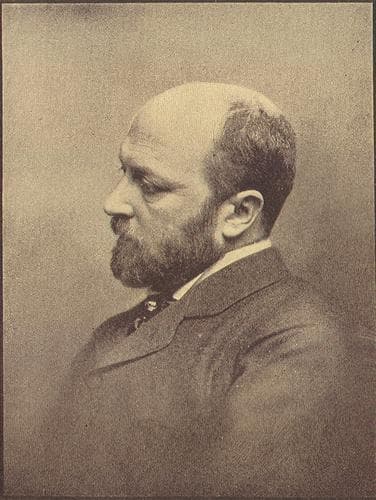
Henry James was an American-British author. He is regarded as a key transitional figure between literary realism and literary modernism, and is considered by many to be among the greatest novelists in the English language. He was the son of Henry James Sr. and the brother of philosopher and psychologist William James and diarist Alice James.
Similar books
- Middlemarch
George Eliot
4.0 (136k) average on GoodreadsHistorical FictionExplores the constrained lives of intelligent women in 19th-century society and complex moral dilemmas.
- Sense and Sensibility
Jane Austen
4.1 (958k) average on GoodreadsHistorical FictionFocuses on social conventions, romance, and women's limited choices in a historical setting.
- Pride and Prejudice
Jane Austen
4.3 (3M) average on GoodreadsHistorical FictionBoth feature spirited heroines navigating societal expectations and marriage. However, Austen's novel operates with clearer moral lines, wit, social comedy, and ultimately happy resolutions. James's novel is far more morally ambiguous, psychologically complex, and explores darker undercurrents of human manipulation, with elusive happy endings and fragile personal freedom.
- To Kill a Mockingbird
Harper Lee
4.3 (4.5M) average on GoodreadsHistorical FictionIn the 1930s Jim Crow South, Harper Lee writes about racial injustice, moral growth, and the quiet courage of a lawyer father, Atticus Finch, as seen through his young daughter's eyes.
- The Great Gatsby
F. Scott Fitzgerald
3.9 (3.8M) average on GoodreadsHistorical FictionIn the opulent Roaring Twenties, a mysterious millionaire's lavish parties hide his desperate, tragic pursuit of a lost love, exposing the emptiness within the American Dream.
- Angels & Demons
Dan Brown
3.9 (2.7M) average on GoodreadsThrillerA Harvard symbologist races through Rome's ancient sites, deciphering cryptic clues to unmask the Illuminati and stop a vengeful plot to destroy the Vatican with a stolen antimatter weapon.





Enjoyed the summary?
A summary gives you the shape of the book. The book itself has the detail, the examples and the voice.
Find The Portrait of a Lady on AmazonAs an Amazon Associate, BookBrief earns from qualifying purchases. How we're funded