
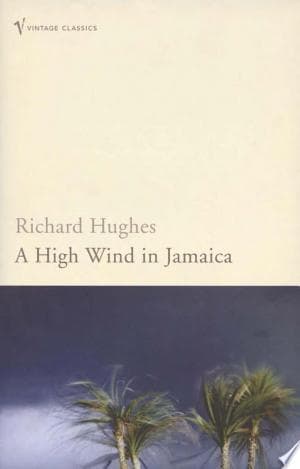
Synopsis
Covers the whole plot, including the ending.
- Difficulty
- Medium
- Pacing
- Moderate
- Mood
- Unsettling, Darkly Humorous, Psychological, Atmospheric, Detached
- Read it if
- You enjoy dark, unsettling narratives about childhood innocence corrupted, or are fascinated by psychological studies of children in extreme circumstances.
- Skip it if
- You prefer straightforward adventure stories, are sensitive to themes of childhood trauma, or expect a traditional 'children's' book.
A High Wind in Jamaica Plot Summary
Covers the whole plot, including the ending.
The Thornton Children and the Hurricane
The Thornton family lives a wild, unsupervised life on their Jamaican plantation. The children—John, Emily, Laura, Edward, Rachel, and the infant Margaret—spend their days exploring, climbing trees, and living with minimal adult rules. A hurricane strikes the island, destroying their house and forcing them into the cellar. The experience is terrifying but also exciting for the children. After the storm, their parents, Mr. and Mrs. Thornton, decide the children are too wild and need a proper English education. They arrange for them to sail to England on the schooner 'Clorinda'.
Aboard the Clorinda
The Thornton children, along with the two Fernandez children, Harry and Isabel, board the 'Clorinda'. The captain, a nervous man, is uncomfortable with the boisterous children. Emily, the eldest Thornton girl, quickly becomes a keen observer, though her understanding of adult intentions is skewed. The children are largely left alone, exploring the ship and adapting to sea life. Their innocence and unique logic often confuse the captain and crew, who struggle to maintain order. The journey is initially uneventful, but the children's presence changes the ship's atmosphere.
Pirate Capture
While at sea, pirates from the schooner 'Rattlesnake', led by Captain Jonsen, intercept and board the 'Clorinda'. The pirates plan to loot the ship and then release it, but they discover the children, hidden below deck. In the confusion, and due to a misunderstanding, Captain Jonsen decides to take the children, believing they are part of the 'Clorinda's' crew or valuable hostages. The 'Clorinda's' captain is left tied up, and the pirate crew sails away with their unexpected young cargo. The children, especially Emily, view this turn of events with a strange mix of curiosity and disinterest, rather than fear.
Life with the Pirates
Life on the 'Rattlesnake' quickly becomes the children's new normal. They are not held captive in the usual sense; instead, they roam the ship, play, and even take part in minor ways in the pirates' daily lives. The pirates, initially unsure how to handle them, grow fond of the children, especially Captain Jonsen, who develops an affection for Emily. The children, particularly Emily, observe the pirates' rough lives and occasional violence with detached curiosity. Their moral compass is still largely unformed or interpreted uniquely. They quickly learn the ship's layout and the crew's personalities, treating the pirates as new playmates.
The Death of Margaret
During their time with the pirates, the youngest child, Margaret, falls ill and dies. Her death is a somber event on the ship. The pirates are genuinely saddened and perform a respectful burial at sea. However, the older children, particularly Emily, react to Margaret's death with a lack of overt grief or understanding. Emily observes the process and the pirates' sorrow, but her own thoughts show a practical, almost scientific, curiosity about the event rather than emotional distress. This incident highlights the children's unusual psychological state and their developing detachment from conventional human emotions.
The Fernandez Children Disappear
Captain Jonsen, trying to keep the children from seeing a violent pirate raid on another ship, locks them in a cabin. During the raid, in the chaos, the two Fernandez children, Harry and Isabel, are accidentally killed by the pirates, possibly suffocated or crushed. The pirates, fearing the implications and legal problems if the deaths were discovered, dispose of their bodies at sea and agree to keep it a secret. The remaining Thornton children, though aware of the Fernandez children's absence, do not fully grasp the seriousness of what happened, their minds explaining the disappearance in their own ways.
Emily's 'Killing'
One day, a pirate named Otto, who had been teasing Emily, falls from the mast and dies. Emily, in her later testimony, claims to have pushed him, believing he was 'dead' already in some abstract sense, or that she was simply playing a game. The pirates, though shocked, do not suspect the child. Emily's internal thoughts, however, reveal a complex and disturbing interpretation of the event, where her actions are both deliberate and yet without malice or understanding of the outcome. This incident shows the profound moral ambiguity that has begun to define the children's actions and perceptions.
Encounter with a Merchant Ship
The 'Rattlesnake' encounters a large merchant ship, the 'Vittoria'. Captain Jonsen and his crew realize that keeping the children is becoming problematic and dangerous. They decide to transfer the children to the 'Vittoria' with a made-up story that they rescued them from a shipwreck. The pirates hope this will free them of their unusual burden and potential witnesses. The children, having grown used to pirate life, are somewhat reluctant to leave, but they comply. This transfer marks a turning point, bringing the children back into contact with the 'civilized' world.
Rescue and Return to Civilization
The 'Vittoria' takes the children to England. Upon arrival, they are treated as shipwreck survivors and heroes, their story of being rescued from the 'Clorinda' after a storm widely believed. Authorities interview them, and their accounts are heavily influenced by their childlike understanding, selective memory, and the pirates' made-up story. Emily, in particular, becomes the main narrator, her testimony a strange mix of truth, fantasy, and self-preservation. This period highlights the stark contrast between their internal experiences and the external perceptions of their ordeal.
The Trial of the Pirates
Eventually, Captain Jonsen and his crew are captured and brought to trial in England for piracy and murder. The Thornton children are called as key witnesses. Their testimony, filtered through their unique and often unreliable memories, is important. Emily's account, particularly regarding the deaths of the Fernandez children and Otto, is a central point of argument. She denies involvement in Otto's death and misrepresents other events, not out of malice but from her own distorted sense of reality and self-preservation. Her testimony, though confusing and contradictory, ultimately helps convict and execute the pirates.
Emily's Testimony and the Conviction
During the trial, Emily is cross-examined. She struggles to match her memories with the court's expectations. When asked about Otto's death, she denies pushing him, stating she only 'thought' of it, and that he fell. Her child logic and seemingly innocent denials, combined with the general confusion surrounding the events, are interpreted by the court as proof of the pirates' depravity and their corrupting influence on the children. The court, unable to fully understand the children's psychological state, takes Emily's testimony at face value, leading to the conviction and hanging of Captain Jonsen and his crew, despite the complex reality of their interactions with the children.
Aftermath and England
After the trial, the Thornton children are sent to various boarding schools in England. Their parents believe they have been traumatized and need a proper upbringing. They are seen as victims of a harrowing pirate ordeal, their unique and disturbing adaptations to pirate life largely unacknowledged or misinterpreted by adults. Emily, in particular, carries her experiences internally, her childhood innocence changed, yet outwardly she conforms to expectations. The novel ends with the children seemingly back in society, but the reader knows about their profound internal changes and the gap between their perceptions and the adult world's understanding.
Principal Figures
Emily Thornton
Protagonist
The eldest Thornton daughter, a keen observer with a uniquely detached moral compass.
Emily is the central figure, a precocious and intensely observant child, perhaps around ten years old. She possesses a remarkable capacity for internal monologue and analysis, yet she lacks conventional empathy or a developed sense of right and wrong. She adapts readily to any environment, rationalizing events through her own peculiar logic. Her innocence is not a shield against the world's harshness but a lens through which she reinterprets it, often with chilling results. She is driven by curiosity and a pragmatic desire to understand, rather than emotional attachment.
Relationships: Captain Jonsen (A complex bond of affection and observation; Jonsen is fond of her, she observes him with detached interest.); John Thornton (Siblings, Emily often takes a leading role in their interactions and interpretations.); Her parents (Distant and largely uncomprehending of her inner world.)
Captain Jonsen
Antagonist/Supporting
The pragmatic and surprisingly paternal leader of the pirate crew.
Captain Jonsen is the leader of the 'Rattlesnake' pirates. He is a practical, somewhat world-weary man who, despite his profession, is not entirely devoid of humanity. He finds himself unexpectedly burdened by the children and, against his better judgment, develops a genuine fondness for them, particularly Emily. He tries to protect them from the worst aspects of pirate life, sometimes clumsily. He represents a kind of rough, unrefined paternal figure, capable of both violence and surprising tenderness, ultimately becoming a victim of circumstances and the children's misconstrued testimony.
Relationships: Emily Thornton (A bond of unexpected affection, where Jonsen is paternal and Emily is a detached observer.); His crew (Leader, but also a figure they respect and sometimes fear.)
John Thornton
Supporting
Emily's younger brother, who often follows her lead.
John is Emily's younger brother and one of the central Thornton children. He is less introspective than Emily but equally adaptable to the pirate life. He often looks to Emily for guidance and interpretation of events. His experiences mirror Emily's in their detachment and lack of conventional emotional response, though he articulates them less. He represents the collective innocence and adaptability of the children, albeit without Emily's unique psychological depth. He is a more typical 'boy' character, focused on play and immediate experiences.
Relationships: Emily Thornton (Siblings, John often defers to Emily's interpretations and leadership.)
Laura Thornton
Supporting
Another of the Thornton children, quieter and less prominent than Emily or John.
Laura is one of the younger Thornton children. She is less developed as a character than Emily or John, serving more as part of the collective group of children. Her reactions to the pirate life are similar to her siblings: a peculiar blend of adaptability, playfulness, and a lack of conventional fear or moral judgment. She represents the general innocence and detachment that defines the children's experience.
Relationships: Emily Thornton (Siblings, part of the group under Emily's informal leadership.)
Mr. and Mrs. Thornton
Supporting
The children's well-meaning but ultimately detached parents.
Mr. and Mrs. Thornton are the children's parents, living a somewhat lax lifestyle on their Jamaican plantation. They are largely absent from the children's daily lives, allowing them a great deal of freedom. Their decision to send the children to England is born of a desire for them to receive a 'proper' upbringing, but they remain largely oblivious to the true nature of their children's inner lives and experiences. They represent the well-intentioned but ultimately uncomprehending adult world.
Relationships: Their children (Parents, but distant and somewhat ineffectual guardians.)
Otto
Mentioned
A pirate who dies in a fall, an event Emily later misrepresents.
Otto is one of Captain Jonsen's pirate crew. He is a minor character whose primary significance comes from his death, which Emily later implies she caused. He is portrayed as a typical pirate, somewhat rough and prone to teasing, particularly towards Emily. His death becomes a pivotal moment in the narrative, highlighting Emily's unique moral framework and the unreliability of her testimony.
Relationships: Emily Thornton (Teaser/victim in Emily's narrative.)
Harry Fernandez
Supporting
One of the two Fernandez children who accompany the Thorntons and later disappear.
Harry Fernandez is one of the two additional children sent to England with the Thorntons. He is a quiet, somewhat timid boy. His primary role in the story is to be one of the children who mysteriously disappear while aboard the pirate ship. His death, along with his sister Isabel's, is covered up by the pirates and becomes another instance of the children's detachment from the gravity of events.
Relationships: Isabel Fernandez (Siblings.)
Isabel Fernandez
Supporting
One of the two Fernandez children who accompany the Thorntons and later disappear.
Isabel Fernandez is Harry's sister, also sent to England with the Thornton children. Like Harry, she is a minor character whose disappearance and presumed death at the hands of the pirates serve to illustrate the dark undertones of the children's experience and the pirates' desperate attempts to conceal their actions. Her fate highlights the real dangers that lurk beneath the children's 'game' of pirate life.
Relationships: Harry Fernandez (Siblings.)
Themes & Insights
The Nature of Innocence
The novel explores the complex and often disturbing nature of childhood innocence. It suggests that innocence is not always goodness or moral purity, but rather a lack of a developed moral framework and an inability to fully grasp consequences. The children, especially Emily, adapt to pirate life with unsettling ease, viewing violence and death with detached curiosity rather than fear. Their 'innocence' allows them to rationalize bad acts and misinterpret adult intentions, leading to tragic outcomes for others. This theme challenges common ideas of childhood purity.
“For children are as new as that: and at first they are not even human, but have to be made so slowly.”
The Unreliability of Memory and Perception
A main theme is the subjective and unreliable nature of memory, especially a child's memory, and how perception shapes reality. The children's accounts of their time with the pirates, particularly Emily's testimony at the trial, are filtered through their unique, often distorted, understanding of events. They mix facts with fantasy, leave out important details, and interpret adult actions through their own logic. This highlights the gap between objective truth and subjective experience, and how adults often misinterpret or project their own understanding onto children's stories, leading to miscarriages of justice.
“She had not really killed him, but only thought of it; and then he had fallen.”
The Corrupting Influence of Environment
The novel examines how environment shapes character, especially in childhood. The Thornton children, initially wild and unsupervised in Jamaica, are thrust into the lawless world of pirates. While they do not become overtly 'evil,' their exposure to violence, death, and a lack of moral boundaries subtly changes their psychology. They learn to adapt to and even normalize the abnormal, leading to a chilling detachment from conventional morality. The 'civilizing' goal of sending them to England is ironically undermined by their pirate experience, which fundamentally reshapes their internal world.
“They were no longer quite children. They had tasted the fruit of the tree of knowledge, and it was bitter.”
Adult Blindness and Misunderstanding
Throughout the story, adults consistently fail to understand the children's true internal lives and motivations. From the Thorntons' initial decision to send them away, to the 'Clorinda's' captain's discomfort, to the pirates' clumsy attempts at care, and finally to the court's interpretation of Emily's testimony, adults project their own assumptions and anxieties onto the children. They see what they expect to see (victims, innocent children) rather than the complex, sometimes disturbing, reality of the children's psychological adaptations. This theme highlights the deep divide between the adult and child worlds.
“And the children, being children, knew nothing of the world, and so, of course, knew everything.”
Plot Devices & Literary Techniques
Unreliable Narrator (Child's Perspective)
The story is primarily told through the filtered, often detached, perspective of the children, especially Emily.
The novel frequently employs a third-person narrative that closely aligns with the children's, particularly Emily's, internal thoughts and perceptions. This device creates a profound sense of dramatic irony, as the reader is privy to the children's unique and often morally ambiguous interpretations of events, while the adult characters within the story remain oblivious. This unreliability challenges the reader to question what constitutes 'truth' and highlights the vast gulf between childhood perception and adult understanding, making the children's actions and testimonies at the trial particularly unsettling.
Foreshadowing
Subtle hints and eerie premonitions of future events or the children's changing nature.
Hughes uses subtle foreshadowing to hint at the darker turns the children's journey will take and the profound changes within them. For instance, the children's initial wildness and lack of conventional supervision in Jamaica, and their detached reaction to the hurricane, subtly prepare the reader for their unsettling adaptability to pirate life. The early descriptions of Emily's peculiar observations and internal logic also foreshadow her later, morally ambiguous actions and testimony, creating a sense of unease and inevitability about the loss of a certain kind of innocence.
Dramatic Irony
The reader knows more about the children's true thoughts and experiences than the characters within the story.
Dramatic irony is a pervasive device, particularly evident in the children's interactions with adults and at the trial. The reader is given access to Emily's internal monologues and the collective children's unique interpretations of events, such as the deaths of Margaret, the Fernandez children, and Otto. This privileged knowledge contrasts sharply with the adults' naive or misinformed understanding, creating tension and highlighting the tragedy of their inability to truly comprehend the children's altered states. This irony underscores the novel's central themes of adult blindness and the complex nature of innocence.
A High Wind in Jamaica Quotes
“They were not bad children, but they were not children as we understand the term.”
“The mind of a child is a terrifying thing.”
“The children had no idea of fear, because they had no idea of danger.”
“Emily had a way of looking at things as if they were perfectly ordinary, even when they were quite extraordinary.”
“Pirates are not romantic figures; they are simply men who steal.”
“It is not so much that children are cruel as that they are without pity.”
“Memory is a treacherous thing, especially in children.”
“The sea, like life, was a thing to be endured, not enjoyed.”
“She had merely watched, with that peculiar detachment which was her most terrifying characteristic.”
“The world was full of things which could not be explained, and of which it was better not to think too much.”
“They were not good, nor bad, but merely themselves, and that was enough to make them terrifying.”
“One had to learn to take things as they came, without question or complaint.”
“The truth was not a simple thing, especially when children were involved.”
“It was the children who remembered nothing, or remembered everything wrong, who were the truly dangerous ones.”
Quiz
10 questions on the plot and the characters. Each answer comes with a short explanation.
Question 1
Why did the Bas-Thornton parents decide to send their children to England?
- To escape a hurricane season in Jamaica.
- To provide them with a more 'civilising' education and upbringing.
- To visit their ailing grandparents in London.
- They were being deported from Jamaica.
Show answer
B. To provide them with a more 'civilising' education and upbringing. The book states that the parents sent the children to England to receive the 'civilising effects' of England, believing Jamaica was making them wild.
Question 2
What is the name of the ship on which the Bas-Thornton children initially set sail for England?
- The 'Clorinda'
- The 'Jolly Roger'
- The 'Sea-Witch'
- The 'Caribbean Queen'
Show answer
A. The 'Clorinda' The children's journey begins on the ship named 'Clorinda', which is subsequently captured by pirates.
Question 3
Who is the oldest of the Bas-Thornton children and generally considered the leader of the group?
- John
- Rachel
- Emily
- Laura
Show answer
C. Emily Emily is the eldest and most prominent of the Bas-Thornton children, often reflecting on events with a peculiar detachment.
Question 4
What incident leads to the death of the pirate captain's pet monkey?
- It falls overboard during a storm.
- It is accidentally killed by one of the younger children during play.
- It is shot by a rival pirate during a skirmish.
- It dies of old age.
Show answer
B. It is accidentally killed by one of the younger children during play. The monkey is accidentally killed by the youngest children, specifically Margaret, who twists its neck, an event that highlights their detached innocence.
Question 5
What is the name of the pirate captain who captures the children's ship?
- Captain Hook
- Captain Jonsen
- Captain Blackbeard
- Captain Kidd
Show answer
B. Captain Jonsen The pirate captain who takes the children aboard his ship is Captain Jonsen.
Question 6
What central theme does the novel explore through the children's interactions with the pirates?
- The triumph of good over evil.
- The corrupting influence of power.
- The unsettling nature of childhood innocence and its capacity for cruelty.
- The allure of a life of adventure and freedom.
Show answer
C. The unsettling nature of childhood innocence and its capacity for cruelty. A primary theme is the unsettling nature of childhood innocence, which, rather than protecting them, allows the children to observe and participate in brutal events with a detached, amoral perspective.
Question 7
How do the children react when they witness acts of violence or death among the pirates?
- They are consistently horrified and traumatized.
- They often observe with a detached curiosity, sometimes even amusement.
- They try to intervene and stop the violence.
- They immediately report it to Captain Jonsen.
Show answer
B. They often observe with a detached curiosity, sometimes even amusement. The children display a remarkable, almost unsettling, detachment when witnessing violence, often processing it without conventional adult emotional responses.
Question 8
What specific event leads to the pirates being accused of murder, despite Emily's knowledge of the truth?
- The pirates attacking and sinking another merchant vessel.
- The death of a sailor from the 'Clorinda' whom Emily pushed overboard, which she later denies.
- The accidental death of Captain Jonsen's monkey.
- A pirate being killed by another pirate in a drunken brawl.
Show answer
B. The death of a sailor from the 'Clorinda' whom Emily pushed overboard, which she later denies. Emily pushes a sailor, Mr. Marpole, overboard, leading to his death. When questioned by authorities later, she denies it, and the pirates are implicated in his murder.
Question 9
How does the legal system and adult perception of the children's experiences contrast with the reality of their time with the pirates?
- Adults accurately perceive the children as traumatized victims.
- Adults see the children as innocent victims, while the children themselves often enjoyed or were indifferent to aspects of their pirate life.
- Adults believe the children were complicit in piratical acts, which was largely true.
- The legal system is fair and just in its assessment of the pirates' actions.
Show answer
B. Adults see the children as innocent victims, while the children themselves often enjoyed or were indifferent to aspects of their pirate life. The novel highlights the profound disconnect between adult perceptions of childhood innocence and trauma, and the children's actual, often amoral or even enjoyable, experiences with the pirates.
Question 10
What ultimately happens to the pirate crew, including Captain Jonsen, after the children are rescued?
- They are released after the children testify in their favor.
- They are all pardoned due to insufficient evidence.
- They are tried for piracy and murder, and ultimately hanged.
- They escape custody and continue their piratical life.
Show answer
C. They are tried for piracy and murder, and ultimately hanged. Despite the children's unreliable testimonies and the true circumstances of Mr. Marpole's death, the pirates are tried and executed by hanging for their crimes.
A High Wind in Jamaica FAQ
What is the basic premise of 'A High Wind in Jamaica'?
The novel follows the Bas-Thornton children, who are sent from their home in Jamaica to England for a proper education. Their journey takes an unexpected turn when their ship, the Clorinda, is captured by pirates, leading them to live among the buccaneers and adapt to their new, unconventional lives on the high seas.
Who are the main child protagonists and what are their most prominent characteristics?
Emily is arguably the central figure, known for her intense, often detached observations and a burgeoning, somewhat amoral inner life. John and Laura are younger and more reactive, while Rachel and Edward are the eldest but less focalized. Their collective characteristic is a profound, almost alien, innocence that warps their perception of adult morality.
How do the children initially react to being captured by pirates?
Initially, the children find the pirate capture more exciting than frightening, viewing it as an adventure and a temporary change from the mundane journey to England. They quickly adapt to the pirates' ship, the schooner, and form new, albeit superficial, attachments to the crew, particularly Captain Jonsen.
What role does Captain Jonsen play in the children's experience?
Captain Jonsen becomes the de facto guardian of the children, struggling to manage them while maintaining his pirate operations. He develops a curious affection for them, particularly Emily, but is ultimately outmaneuvered and undone by the children's unintentional and often incomprehensible actions, leading to his eventual arrest and execution.
How does the novel portray the concept of 'innocence'?
The novel portrays innocence not as purity, but as a lack of fully developed moral understanding and empathy, making the children capable of acts that are profoundly disturbing without recognizing their own culpability. Their innocence acts as a shield, allowing them to escape consequences that adults would face, yet it also makes them dangerous and unpredictable.
What is the significance of the hurricane at the beginning of the book?
The hurricane serves as a powerful catalyst, disrupting the children's established lives and foreshadowing the chaotic and unsettling journey they are about to embark on. It physically uproots them, mirroring their psychological dislocation and the dismantling of their conventional understanding of the world.
How does Emily's memory of the 'murder' of the Dutch sailor evolve?
Emily initially believes she witnessed a murder committed by the pirates. However, her memory becomes distorted and self-serving, leading her to fabricate a story where she, not the pirates, killed the sailor. This false confession ultimately leads to the pirates' conviction and her own psychological escape from accountability.
What is the fate of the pirate crew and how do the children contribute to it?
The pirate crew, including Captain Jonsen, is eventually captured and executed for piracy. Their conviction is largely based on Emily's fabricated testimony about the 'murder' of the Dutch sailor, which, due to her perceived innocence, is taken as undeniable truth by the authorities, sealing the pirates' doom.
What is the significance of the squirrel that Emily keeps as a pet?
The squirrel, 'Mouse,' acts as a symbol of Emily's detached and often cruel curiosity. Her treatment of the squirrel, including its eventual death, reflects her own burgeoning understanding of power and mortality, and her casual disregard for other living beings, highlighting her developing amorality.
How does the novel explore the theme of cultural displacement?
The children, having grown up in Jamaica, are already somewhat detached from conventional English society, speaking Patois and living a less structured life. Their time with the pirates further alienates them, making their eventual return to England a profound cultural shock where they struggle to fit into the rigid Victorian norms.
Why do the children return to their parents in England after the pirates' capture?
After the pirates are apprehended, the children are rescued and eventually sent to their parents, who had already moved to England. This return to 'civilization' is meant to re-establish normalcy, but for the children, especially Emily, it marks a significant internal struggle as they try to reconcile their experiences with societal expectations.
How does Emily's character challenge traditional notions of childhood innocence?
Emily challenges innocence by demonstrating that children are not inherently pure or good. Her actions, from the casual cruelty towards the squirrel to her self-serving testimony, reveal a capacity for manipulation and a lack of moral compass that is deeply unsettling, suggesting innocence can be a dangerous, unformed state.
What is the underlying commentary on justice within the novel?
The novel offers a cynical commentary on justice, showing how it can be easily swayed by perception and appearance. The pirates, though guilty of piracy, are convicted for a murder that never happened, based on a child's unreliable testimony, while the children, who cause significant harm, escape consequence due to their perceived innocence.
What is the significance of the children's inability to truly communicate their experiences?
The children's inability to articulate their experiences accurately, partly due to their unique perspective and partly due to their developing language skills, highlights the chasm between adult and child understanding. This communication breakdown is crucial, as it allows their misinterpretations and fabrications to go unchallenged, with devastating consequences.
How does the narrative perspective contribute to the novel's unsettling tone?
The narrative often adopts a detached, almost anthropological tone when describing the children's actions and thoughts, mirroring their own emotional detachment. This objective perspective allows the reader to observe the disturbing events without overt judgment, amplifying the unsettling nature of the children's amorality and the moral ambiguities of the story.
What psychological impact does the pirate experience have on the younger children, like Laura and John?
Laura and John, being younger, adapt more readily to the pirate life, viewing it largely as an extended game. However, their experiences still desensitize them to violence and unconventional living, potentially hindering their ability to reintegrate into structured society and understand conventional morality upon their return.
Does the novel suggest that the children are inherently 'evil'?
The novel doesn't explicitly label the children as 'evil,' but rather explores their pre-moral state where conventional ethics are not yet fully formed. Their actions stem from a self-preservation instinct and a lack of empathy, rather than malice, suggesting a frightening neutrality or amorality that is more unsettling than outright wickedness.
How does the setting of the high seas contribute to the novel's themes?
The vast, lawless expanse of the high seas mirrors the children's internal state of moral ambiguity and freedom from societal constraints. It provides an isolated environment where their unconventional development can unfold without the immediate influence of land-based societal norms, emphasizing their detachment and unique perspective.
About the author
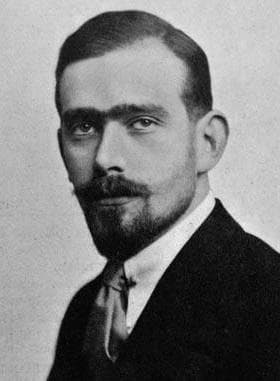
Richard Hughes may refer to:Sir Richard Hughes, 1st Baronet, British naval commander, first of the Hughes baronets of East Bergholt in the County of Suffolk Sir Richard Hughes, 2nd Baronet, British naval officer and Lieutenant-governor of Nova Scotia Richard Hughes (1881–1962) Richard Hughes (1900–1976), British writer Richard Hughes (cricketer) (1926–2020), English cricketer Richard Hughes (footballer), Scottish footballer Richard Hughes (jockey), Irish jockey Richard Hughes (journalist) (1906–1984), Australian journalist Richard Hughes (musician), drummer with Keane Richard Bannister Hughes (1810–1875), British businessman, active in Uruguay Richard Cyril Hughes, Welsh historian Richard E. Hughes (1909–1974), comics writer Richard J. Hughes (1909–1992), Governor of New Jersey in the 1960s, Chief Justice of New Jersey in the 1970s Richard N. Hughes (1927–2004), American television executive and television station editorialist Richard W. Hughes, American gemologist Dick Hughes, American football player Dick Hughes (baseball), baseball player Dick Hughes (footballer) (1902–1984), English footballer Dick Hughes (musician) (1931–2018), Australian musician Rick Hughes, American basketball player Richy Hughes, British Musical Theatre Lyricist
Similar books
- Lord of the Flies
William Golding
3.7 (2.3M) average on GoodreadsYoung AdultExplores the darker side of human nature, particularly in children, when removed from societal constraints.
- The Turn of the Screw
Henry James
3.4 (104k) average on GoodreadsMysteryFeatures ambiguous and unsettling child characters, leaving the reader to question their innocence and motives.
- The Wasp Factory
Iain Banks
3.8 (83k) average on GoodreadsThrillerDelves into the disturbed psyche of a young protagonist with a unique and chilling worldview.
- Swallows and Amazons
Arthur Ransome
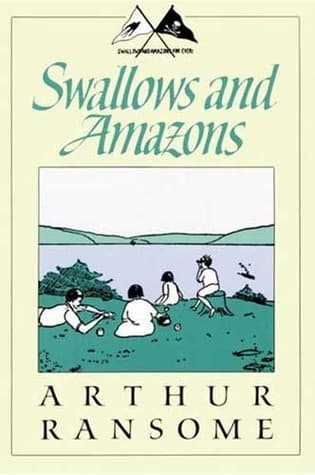
4.0 (28k) average on GoodreadsChildren'sHughes's novel stands in stark contrast to Ransome's Swallows and Amazons. While Ransome celebrates the resourcefulness, moral integrity, and wholesome adventures of children in a natural setting, Hughes delves into the darker, amoral, and often disturbing psychological landscape of childhood, portraying children as potentially cruel and detached from adult morality. Ransome's children embody an idealized, self-sufficient innocence, whereas Hughes's children demonstrate a more ambiguous, almost alien form of 'innocence' born of a lack of understanding of consequences.
- Harry Potter and the Sorcerer's Stone
J.K. Rowling
4.5 (7M) average on GoodreadsFantasyRescued from a miserable life under the stairs, an orphaned boy discovers he's a wizard destined for a magical school, where he uncovers a dangerous secret tied to the dark wizard who murdered his parents.
- The Hobbit, or There and Back Again
J.R.R. Tolkien
4.3 (2.9M) average on GoodreadsFantasyA comfort-loving hobbit named Bilbo Baggins is whisked away by a mischievous wizard and a band of dwarves on an unexpected journey to reclaim stolen treasure from a fearsome dragon, discovering courage and a magical ring along the way.





Enjoyed the summary?
A summary gives you the shape of the book. The book itself has the detail, the examples and the voice.
Find A High Wind in Jamaica on AmazonAs an Amazon Associate, BookBrief earns from qualifying purchases. How we're funded