
Synopsis
Covers the whole plot, including the ending.
- Difficulty
- Easy
- Pacing
- Moderate
- Mood
- Whimsical, Adventurous, Heartwarming, Mysterious
- Read it if
- You enjoy heartwarming and adventurous stories about self-discovery, with a touch of magic and mystery, perfect for young readers.
- Skip it if
- You prefer realistic fiction without fantastical elements or are looking for a very fast-paced thriller.
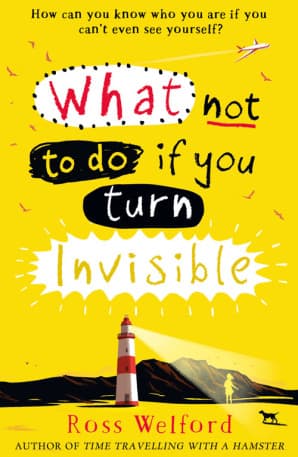
What Not to Do If You Turn Invisible Plot Summary
Covers the whole plot, including the ending.
Ethel's Desperate Quest for Clear Skin
Thirteen-year-old Ethel Leatherhead suffers from severe acne and wants a cure. After seeing an ad for a 'miracle' acne cream and looking online, she decides to combine it with a sunbed session, hoping the UV light will help. She also takes what she thinks are herbal supplements from her mother's cupboard, despite warnings. During the sunbed session, she feels a tingling. When she gets out, she discovers a side effect: she can turn invisible. This first invisibility is temporary, lasting only a few minutes, but it shocks her and starts the strange events that follow.
The Secret Experiment and Boydy's Discovery
At first, Ethel has trouble controlling her new ability, becoming invisible at bad times. She tells her best friend, Boydy, who is skeptical but soon becomes an enthusiastic helper. They do experiments to understand her invisibility, like how it affects objects she touches and how long it lasts. They use her ability for small mischief, such as sneaking into a cinema. They keep her secret from Ethel's mother, Mary, and the world, understanding the dangers if others found out. Boydy's scientific curiosity and loyalty are very helpful during this time.
The Invisibility Becomes Permanent
Ethel, still hoping to cure her acne and the intermittent invisibility, tries another, longer sunbed session. She believes it might 'reset' her condition. This time, the outcome is bad. Her invisibility becomes permanent and uncontrollable. She is trapped, unable to become visible again. Panic sets in as she understands how serious her situation is. She cannot go to school, interact normally with her family, or even eat without great difficulty. The immediate challenge is living an invisible life while searching for a way to become visible, all while avoiding detection.
Living in the Shadows and Seeking a Cure
With Boydy's help, Ethel tries to live her permanently invisible life. She learns to move carefully, avoiding bumping into people, and relies on Boydy to talk to the outside world and bring her food. They plan for her to 'attend' school by sitting in the back of classes, hoping to learn without being seen. Ethel becomes more isolated, with Boydy as her only real connection. She also starts investigating the mysterious supplements she took, suspecting they played a role in her condition. Her mother, Mary, worries more about Ethel's sudden 'illness' and withdrawal, not knowing the real reason.
The Discovery of Dr. J.G. Finch's Notes
While looking for clues in her mother's room, Ethel finds a hidden compartment in a locked box. Inside, she finds a diary belonging to a mysterious Dr. J.G. Finch. The diary entries show that the supplements Ethel took were not herbal remedies but experimental drugs developed by Finch. The notes detail Finch's research into 'chameleon cells' and invisibility, and his attempts to copy a rare phenomenon. This discovery confirms Ethel's suspicions about the supplements and provides a scientific explanation for her condition. It also raises questions about her mother's connection to Dr. Finch and the truth about her birth.
The Truth About Mary and Dr. Finch
With Finch's diary, Ethel confronts her mother, Mary. Mary, crying, tells Ethel the truth: Dr. J.G. Finch was Ethel's biological father, and he was obsessed with finding a cure for his own genetic invisibility, a condition he passed to Ethel. Mary had been Finch's research assistant, and they had a secret relationship. Finch died in an accident, leaving Mary to raise Ethel and protect her from the same fate. The supplements Ethel took were a concentrated form of Finch's experimental 'chameleon' cells, meant to activate or control the invisibility gene. This news changes Ethel's understanding of her family and her identity.
The Search for the Antidote
Finch's diary contains a formula for an antidote, but a key ingredient is missing: a rare, bioluminescent algae found only in a specific cave near the coast. Realizing this is their only hope, Ethel and Boydy, now with Mary, plan a dangerous trip. They use clues from Finch's notes and Mary's memories to find the cave. The journey is hard, as Ethel remains invisible and vulnerable, while Mary deals with her past and Boydy provides practical support and scientific insight. They know time is short, as Finch's notes suggest the invisibility could become permanent.
The Perilous Cave Expedition
The trio arrives at the remote coastal cave, which is dangerous. Inside, they navigate narrow passages and unstable ground, using Boydy's torch and Ethel's heightened senses as an invisible person. They find a pool of water with the rare bioluminescent algae. As they collect the sample, the cave starts to collapse from shifting tides and unstable ground. They barely escape, with Ethel using her invisibility to find exits and Boydy helping Mary through the crumbling rock. They leave the cave shaken but successful, having secured the ingredient for the antidote, though the experience affects them all.
The Antidote and a Difficult Choice
Back home, Mary, using Finch's notes and the collected algae, carefully prepares the antidote. As Ethel is about to take it, she sees a faint, almost invisible message in the margin of Finch's diary, visible only at a certain angle. The message, from Finch, warns that the antidote is not a permanent cure but a temporary reversal, and that continued use could have unforeseen side effects, possibly making the invisibility permanent. He also hints at a deeper purpose for her unique ability, suggesting it might be a gift, not a curse, making Ethel rethink her path.
Ethel's Decision and a New Beginning
After much thought and talks with Mary and Boydy, Ethel decides not to take the antidote. She realizes that her invisibility, though challenging, has given her unique perspectives and a deeper understanding of herself and the world. Instead of seeing it as a curse, she chooses to accept it as part of who she is, a legacy from her father. She starts to explore ways to use her invisibility for good, perhaps by helping others or observing unseen things. Her journey ends with her accepting her identity, changing her from a self-conscious girl into a confident young woman ready to live with her extraordinary gift. Mary and Boydy support her decision, ready to face the future together.
What Not to Do If You Turn Invisible Characters
Ethel Leatherhead
Protagonist
A thirteen-year-old girl who accidentally turns permanently invisible.
Ethel is a highly intelligent, but initially insecure, thirteen-year-old girl plagued by severe acne. Her desperate desire for clear skin leads her to experiment with untested remedies, inadvertently triggering her genetic predisposition for invisibility. Throughout the story, Ethel transforms from a self-conscious and withdrawn girl into a brave, resilient, and accepting young woman. She grapples with feelings of isolation, fear, and confusion, but ultimately finds strength in her unique condition. Her journey is one of self-discovery, identity, and coming to terms with an extraordinary genetic legacy.
Relationships: Boydy (Best friend and loyal accomplice); Mary Leatherhead (Mother, initially secretive, later reveals her true parentage and history); Dr. J.G. Finch (Biological father, whose research caused her condition)
Boydy (Boyd McWilliam)
Supporting
Ethel's loyal, scientifically-minded best friend and confidant.
Boydy is Ethel's steadfast and scientifically curious best friend. He is incredibly loyal, supportive, and practical, often providing the logical and technical assistance needed to navigate Ethel's invisible life. He is fascinated by Ethel's condition and actively helps her conduct experiments, search for clues, and adapt to her new reality. Boydy's calm demeanor and resourcefulness are crucial for Ethel's survival and quest for a cure. He never questions their friendship, even when faced with the incredible challenges her invisibility presents, making him a true anchor for Ethel.
Relationships: Ethel Leatherhead (Best friend and confidant)
Mary Leatherhead
Supporting
Ethel's overprotective mother, hiding a profound secret about Ethel's past.
Mary is Ethel's loving but overprotective mother, who initially appears to be a typical parent worried about her daughter's health. However, she harbors a deep secret about Ethel's true parentage and the origins of her invisibility. She was Dr. J.G. Finch's research assistant and lover, and has been trying to protect Ethel from her genetic inheritance. Mary's guilt and fear drive her initial secrecy, but her love for Ethel ultimately compels her to reveal the truth and help search for a solution. She is a woman burdened by her past, but dedicated to her daughter's well-being.
Relationships: Ethel Leatherhead (Daughter); Dr. J.G. Finch (Biological father of Ethel, former lover and colleague)
Dr. J.G. Finch
Mentioned/Supporting (posthumous)
Ethel's biological father, a brilliant but obsessive scientist who researched invisibility.
Dr. J.G. Finch is Ethel's biological father, a brilliant geneticist who suffered from a rare, inherited form of intermittent invisibility. Obsessed with understanding and controlling his condition, he conducted extensive research into 'chameleon cells' and invisibility. His detailed diary entries, discovered by Ethel, provide the scientific backbone for her condition and the potential for a cure. Finch died in a tragic accident, leaving behind his research and a legacy that profoundly impacts Ethel's life. He is a complex figure, driven by scientific curiosity and a desire to overcome his own affliction, but ultimately leaving behind a complicated inheritance for his daughter.
Relationships: Ethel Leatherhead (Biological father); Mary Leatherhead (Former lover and colleague)
Mr. Henderson
Supporting
Ethel's kind and observant science teacher.
Mr. Henderson is Ethel's science teacher at school. He is portrayed as an intelligent and perceptive educator who notices Ethel's sudden withdrawal and concerns about her well-being. Although he doesn't know the truth about her invisibility, he genuinely cares for his students and tries to reach out to Ethel and her mother. His concern highlights the impact of Ethel's condition on her academic and social life, and represents the external world's confusion and worry about her unexplained absence.
Relationships: Ethel Leatherhead (Teacher)
Gran (Ethel's Grandmother)
Supporting
Ethel's loving grandmother, a source of comfort.
Ethel's grandmother is a loving and supportive figure in her life. She offers a sense of stability and normalcy, often providing comfort and a safe haven when Ethel feels overwhelmed. While not directly involved in the scientific quest, her presence represents the enduring strength of family bonds and the emotional support Ethel needs during her ordeal. She is a grounding force amidst the chaos of Ethel's unique situation, though she is not privy to the full extent of Ethel's secret.
Relationships: Ethel Leatherhead (Grandmother); Mary Leatherhead (Mother)
The School Nurse
Mentioned
A minor character who expresses concern about Ethel's health.
The school nurse is a minor character who expresses concern about Ethel's prolonged absences and general health, particularly her acne. Her interactions with Mary and the school staff highlight the growing institutional concern over Ethel's unexplained 'illness' and the challenges Mary faces in fabricating excuses to protect Ethel's secret. She represents the societal structures Ethel must avoid or deceive due to her condition.
Relationships: Ethel Leatherhead (Student)
What Not to Do If You Turn Invisible Themes
Identity and Self-Acceptance
Ethel's journey centers on her struggle with and eventual acceptance of her identity. Initially, she sees her invisibility as a curse, an extension of her self-consciousness about her acne. She wants a cure, believing that being 'normal' will bring happiness. However, as she learns about her father's legacy and the meaning of her ability, she starts to see it not as a flaw, but as a part of who she is. Her decision to not take the antidote shows her acceptance of her true self, extraordinary and unseen, finding strength and purpose in her uniqueness.
“Perhaps I wasn't broken. Perhaps I was just... different. And maybe different wasn't so bad after all.”
The Nature of Beauty and Self-Image
Ethel's story begins with her insecurities about her appearance, specifically her severe acne. This focus on outward beauty leads her to take extreme measures, which result in her invisibility. The irony is that by becoming invisible, she removes the very thing she was self-conscious about, but gains a more isolating problem. The theme explores how society's focus on appearance can lead to extreme actions and how true self-worth comes from within. Her invisibility forces her to look beyond the surface, in herself and others, helping her understand that her value is in her character, intelligence, and resilience, not her skin.
“I hated my face. I hated my spots. I hated everything about how I looked. And now... I looked like nothing at all.”
Family Secrets and Legacies
The story is driven by the uncovering of family secrets, especially those about Ethel's biological father, Dr. J.G. Finch, and her mother, Mary. Mary's overprotective nature and her initial reluctance to tell the truth come from her guilt and wish to shield Ethel from the same fate as her father. Finch's diary entries reveal a complex legacy of scientific brilliance, obsession, and a genetic condition passed down through generations. Ethel's invisibility is not an isolated event but an inheritance, making her confront her family history and her parents' choices. The theme shows how family histories, both known and hidden, shape individual identities.
“My father wasn't just a name on a birth certificate. He was a ghost in my genes, a whisper in my cells.”
Friendship and Loyalty
The strong bond between Ethel and Boydy is a central theme. Boydy's loyalty, scientific curiosity, and practical support are essential to Ethel's survival and her search for understanding and a cure. He never leaves her, even with the challenges of her invisibility, acting as her eyes, ears, and voice in the visible world. Their friendship highlights the importance of having a trusted friend during hard times. Boydy's acceptance of Ethel's condition, without judgment or fear, allows her to stay connected to the human world and find the courage to face her situation.
“You're still you, Ethel,' Boydy said, his voice quiet but firm. 'Just... a bit less visible.”
The Ethics of Scientific Experimentation
The book explores the ethical issues of scientific research through Dr. J.G. Finch. His obsession with his own genetic invisibility led him to do experimental research, passing a complicated legacy to his daughter, Ethel. The supplements Ethel takes were part of his untested work, showing the dangers of uncontrolled experiments and unforeseen results. While Finch's goal may have been to find a cure, his methods raise questions about the responsibility of scientists, the line between innovation and recklessness, and the impact of such research on future generations.
“He wanted to understand it, to control it. And in doing so, he made me into it.”
Plot Devices & Literary Techniques
First-Person Narrative
Provides direct access to Ethel's thoughts and experiences as an invisible girl.
The story is told entirely from Ethel's perspective, allowing readers to intimately experience her struggles, fears, and eventual triumphs. This narrative choice is particularly effective because Ethel is invisible; her internal monologue becomes the primary way readers connect with her. It highlights her isolation and the unique challenges of her situation, as she observes the world without being seen, and provides direct insight into her evolving self-perception and emotional state as she grapples with her extraordinary condition. This perspective enhances empathy and suspense.
The Diary of Dr. J.G. Finch
A crucial exposition device revealing the scientific basis of Ethel's invisibility and her family history.
Dr. Finch's diary serves as a pivotal plot device, functioning as a narrative means to reveal critical backstory and scientific explanation. It is through these hidden entries that Ethel and the reader learn about the genetic origins of her invisibility, the experimental nature of the supplements she took, and her true parentage. The diary not only provides the 'how' and 'why' of her condition but also guides the quest for an antidote, detailing the formula and the missing ingredient. It acts as a posthumous voice for her biological father, connecting past scientific ambition with present-day consequences.
The 'Chameleon Cells' and Invisibility Gene
The scientific explanation for Ethel's ability, grounding the fantasy in a sci-fi context.
This concept provides the pseudo-scientific framework for Ethel's invisibility, distinguishing it from pure magic. Dr. Finch's research into 'chameleon cells' and a specific invisibility gene attempts to offer a plausible (within the story's context) explanation for her condition. This device allows the author to explore the biological and genetic aspects of her ability, rather than simply presenting it as a magical phenomenon. It also adds a layer of complexity to the narrative, as the search for a cure becomes a scientific endeavor based on Finch's research, rather than a fantastical quest.
The Sunbed
A catalyst for Ethel's initial and permanent invisibility.
The sunbed acts as a crucial plot catalyst, serving as the trigger mechanism for Ethel's invisibility. Initially, she uses it in a misguided attempt to cure her acne, inadvertently activating her dormant genetic predisposition when combined with the experimental supplements. Her subsequent, longer session on the sunbed is what makes her invisibility permanent, escalating the central conflict of the story. It is a mundane object transformed into a powerful, life-altering device, symbolizing the unexpected and drastic consequences of desperate actions.
The Rare Bioluminescent Algae
The MacGuffin that drives the quest for the antidote.
The specific, rare bioluminescent algae is the central MacGuffin that propels the middle section of the plot. It is the crucial, missing ingredient for Dr. Finch's antidote, forcing Ethel, Boydy, and Mary on a dangerous expedition to a remote cave. Its rarity and specific location create urgency and adventure, providing a tangible goal for the characters and allowing for moments of peril and teamwork. The quest for this ingredient is what brings the family together and moves the story towards its climax, before the ultimate twist of Finch's hidden warning.
What Not to Do If You Turn Invisible Quotes
“Invisibility is not a superpower. It's a curse.”
“Sometimes the hardest thing to see is what's right in front of you.”
“You can't hide from yourself, no matter how invisible you are.”
“The world looks different when nobody's looking at you.”
“Being invisible doesn't make you invincible.”
“Secrets have a way of making themselves known, one way or another.”
“Sometimes you have to disappear to find out who you really are.”
“The most dangerous thing about being invisible is forgetting you exist.”
“Friends are the people who see you even when you're invisible.”
“Magic isn't in the disappearing; it's in the reappearing.”
“You can't fix everything by turning invisible.”
“The truth is like light: it finds its way through the darkest places.”
“Being different isn't a weakness; it's what makes you strong.”
“Sometimes the bravest thing you can do is let yourself be seen.”
Quiz
10 questions on the plot and the characters. Each answer comes with a short explanation.
Question 1
What is the main reason Ethel Leatherhead initially tries the combination that makes her invisible?
- To impress her friend Boydy
- To cure her acne
- To spy on her grandmother
- To win a school competition
Show answer
B. To cure her acne Ethel's primary motivation was to find a cure for her acne, which led her to experiment with untested medicines and a sunbed, accidentally triggering her invisibility.
Question 2
Who is Ethel's main friend and ally who helps her keep her invisibility secret?
- Her grandmother
- Boydy
- A teacher at school
- A mysterious stranger
Show answer
B. Boydy Boydy is Ethel's loyal friend who assists her in navigating the challenges of being invisible and helps her maintain secrecy about her condition.
Question 3
What unexpected problem arises with Ethel's invisibility as the story progresses?
- It only works at night
- It fails to wear off
- It makes her glow in the dark
- It spreads to other people
Show answer
B. It fails to wear off Initially, Ethel can control her invisibility, but later it becomes permanent, forcing her into a desperate search for a remedy and complicating her life.
Question 4
What major mystery does Ethel try to solve while dealing with her invisibility?
- The identity of a school bully
- The location of a hidden treasure
- The mystery of her own birth
- The source of her invisibility power
Show answer
C. The mystery of her own birth Alongside coping with invisibility, Ethel investigates the circumstances of her birth, which becomes a central plot point revealing family secrets.
Question 5
How does Ethel's invisibility initially affect her daily life and interactions?
- It makes her instantly popular at school
- It forces her to drop out of school entirely
- It is fun at first but leads to lies and deception
- It causes her to become a public spectacle
Show answer
C. It is fun at first but leads to lies and deception Ethel enjoys the novelty of invisibility initially, but as she struggles to keep it secret and it becomes permanent, she gets entangled in deceptive situations to protect herself.
Question 6
What role does Ethel's grandmother play in the story?
- She is unaware of Ethel's invisibility and provides comic relief
- She helps Ethel find the invisibility cure and reveals family truths
- She is the main antagonist trying to exploit Ethel's power
- She is a scientist who created the invisibility formula
Show answer
B. She helps Ethel find the invisibility cure and reveals family truths Ethel's grandmother becomes a key figure in helping her navigate the crisis, offering support and uncovering truths about Ethel's past.
Question 7
Which theme is most prominently explored through Ethel's experience with invisibility?
- The importance of academic success
- The challenges of identity and self-acceptance
- The dangers of technology
- The benefits of supernatural powers
Show answer
B. The challenges of identity and self-acceptance Ethel's invisibility serves as a metaphor for feeling unseen or different, highlighting themes of identity, acceptance, and the struggle to be true to oneself.
Question 8
What specific combination does Ethel use that leads to her invisibility?
- Prescription acne medication and a tanning bed
- Herbal tea and excessive sunlight
- Untested medicines and a sunbed
- A special diet and meditation
Show answer
C. Untested medicines and a sunbed Ethel's invisibility results from an accidental experiment involving untested medicines (likely for acne) combined with the use of a sunbed, as mentioned in the book's description.
Question 9
How does the book's title 'What Not to Do If You Turn Invisible' relate to Ethel's journey?
- It lists explicit rules Ethel follows from a manual
- It humorously reflects the mistakes and lessons Ethel learns through trial and error
- It is a warning from Boydy that Ethel ignores
- It refers to a government guideline in the story
Show answer
B. It humorously reflects the mistakes and lessons Ethel learns through trial and error The title captures the comedic and cautionary aspect of Ethel's experiences, as she navigates the pitfalls of invisibility and learns what actions to avoid in her unique situation.
Question 10
In what way does Ethel's invisibility crisis force her to confront her personal history?
- It reveals she has a long-lost twin who is also invisible
- It uncovers secrets about her parents and her birth that she must piece together
- It shows she was adopted from a family of invisible people
- It proves she inherited the invisibility from her grandmother
Show answer
B. It uncovers secrets about her parents and her birth that she must piece together As Ethel deals with the permanence of her invisibility, she delves into her family's past, uncovering hidden truths about her parents and the circumstances of her birth, which is integral to the plot.
What Not to Do If You Turn Invisible FAQ
What is 'What Not to Do If You Turn Invisible' about?
The novel follows 13-year-old Ethel Leatherhead who accidentally turns invisible after combining untested acne medication with a sunbed. Initially enjoying the freedom, she faces a crisis when the invisibility becomes permanent, forcing her to navigate lies, deception, and a quest to reverse her condition while uncovering secrets about her own birth.
Why should I read 'What Not to Do If You Turn Invisible'?
This book blends fantasy, humor, and emotional depth in a relatable coming-of-age story. It explores themes of identity, friendship, and family secrets through Ethel's unique predicament, offering suspenseful mystery and heartfelt moments that appeal to both young adult and adult readers.
What is the background/setting of 'What Not to Do If You Turn Invisible'?
The story is set in modern-day Whitley Bay, a coastal town in Northeast England. Key locations include Ethel's home, her school, and the local area where she navigates her invisibility, with the mundane suburban setting contrasting sharply with her extraordinary situation.
What are the most memorable quotes from the book?
Notable quotes include Ethel's reflection, 'Invisibility isn't about not being seen; it's about choosing who sees you,' and Boydy's supportive line, 'You're still you, Eth, even if no one can see it.' These capture the novel's themes of identity and connection.
What writing style does Ross Welford use in this book?
Welford employs a first-person narrative from Ethel's perspective, blending witty, conversational prose with suspenseful pacing. The style mixes humor and emotional depth, making complex themes accessible to younger readers while engaging adults with its clever plot twists.
What minor details add significant meaning to the story?
Small details like Ethel's acne struggles symbolize her desire to fit in, while the sunbed—a mundane object—becomes a catalyst for the fantastical plot. Her grandmother's evasive behavior about family history subtly hints at the larger mystery of Ethel's birth.
What are some subtle foreshadowing moments in the book?
Early mentions of Ethel's unknown father and her grandmother's secretive nature foreshadow the birth mystery revelation. The initial temporary nature of her invisibility hints at the later permanent crisis, building tension around her quest for a cure.
What unexpected character connections exist in the story?
A key connection is between Ethel's family and the local community, revealing that her invisibility ties into long-hidden secrets about her parentage. Boydy's loyalty uncovers links to other characters who aid or hinder her, weaving a network of alliances and betrayals.
What are Ethel's unspoken character motivations?
Beneath her desire to cure her invisibility, Ethel is driven by a deep need to understand her identity and belong. Her actions are motivated by loneliness and a fear of abandonment, stemming from the mystery surrounding her birth and family.
What psychological complexities do characters exhibit?
Ethel grapples with anxiety and isolation due to her condition, while Boydy shows resilience and empathy in supporting her. Adult characters like her grandmother display guilt and protectiveness, revealing how secrets shape their behaviors and relationships.
What are the major emotional turning points in the book?
Key moments include Ethel's initial panic when invisibility becomes permanent, her heartfelt conversations with Boydy that strengthen their friendship, and the climax where she confronts family truths. Each turning point deepens her emotional growth and resolve.
How do relationship dynamics evolve between Ethel and Boydy?
Their friendship starts with casual school camaraderie but deepens into a trusted partnership as Boydy helps Ethel navigate her invisibility. Through shared risks and secrets, they develop a bond based on mutual respect and loyalty, crucial to Ethel's journey.
Which parts of the book remain ambiguous or open-ended?
The exact scientific mechanism behind the invisibility is left vague, focusing more on its emotional impact. Some family history details are implied rather than fully explained, allowing readers to ponder the broader implications of Ethel's discoveries.
What are controversial scenes or decisions in the story?
Ethel's risky use of untested medication and a sunbed sparks debate about teenage impulsivity. Her choices to deceive others while invisible raise ethical questions, and the resolution of her birth mystery involves morally gray actions by adult characters.
How does 'What Not to Do If You Turn Invisible' end, and what does it mean?
The ending sees Ethel finding a remedy for her invisibility and uncovering the truth about her birth, leading to reconciliation with her family. It symbolizes her acceptance of identity and the importance of truth, emphasizing that visibility is about emotional connection, not just physical presence.
Similar books
- Time Travelling with a Hamster
Ross Welford
4.1 (3k) average on GoodreadsFantasyShares the same author's blend of humor, heart, and fantastical elements in a children's adventure.
- A Wrinkle in Time
Madeleine L'Engle
4.0 (1.1M) average on GoodreadsFantasyFeatures a young protagonist on a fantastical quest, dealing with family secrets and self-acceptance.
- Wonder
R.J. Palacio
4.4 (733k) average on GoodreadsChildren'sWhile both books feature a relatable protagonist dealing with being 'different' and navigating social challenges, Palacio's Wonder delves into themes of empathy and acceptance with a more sustained emotional depth and a wider exploration of the impact on others, while Welford uses invisibility as a metaphor for feeling unseen.
- Harry Potter and the Sorcerer's Stone
J.K. Rowling
4.5 (7M) average on GoodreadsFantasyRescued from a miserable life under the stairs, an orphaned boy discovers he's a wizard destined for a magical school, where he uncovers a dangerous secret tied to the dark wizard who murdered his parents.
- The Hunger Games
Suzanne Collins
4.3 (6.4M) average on GoodreadsFantasyIn a future where children fight to the death on live television, Katniss Everdeen volunteers for the arena, turning a death sentence into a fight for survival and a spark of rebellion.
- 1984
George Orwell
4.2 (3.1M) average on GoodreadsPoliticsIn a future where surveillance and thought control are absolute, a man's search for truth clashes with the Party, showing that hope can be a form of rebellion.





Enjoyed the summary?
A summary gives you the shape of the book. The book itself has the detail, the examples and the voice.
Find What Not to Do If You Turn Invisible on AmazonAs an Amazon Associate, BookBrief earns from qualifying purchases. How we're funded