
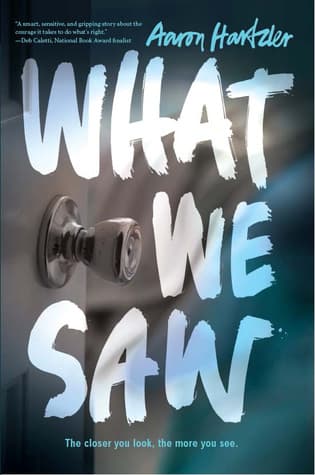
Synopsis
Covers the whole plot, including the ending.
- Difficulty
- Medium
- Pacing
- Moderate
- Mood
- Suspenseful, Thought-provoking, Intense, Realistic
- Read it if
- You enjoy thought-provoking YA thrillers with strong female leads, tackling difficult social issues like sexual assault, complicity, and the impact of social media.
- Skip it if
- You prefer lighthearted stories or are sensitive to discussions of sexual assault and victim blaming.
What We Saw Plot Summary
Covers the whole plot, including the ending.
The Morning After John Doone's Party
Kate Weston wakes up after a party at John Doone's house with a vague memory of drinking with her best friend, Stacey Stallard. She recalls being driven home by Ben Cody, her long-time friend and potential love interest. Her morning is disrupted by a text from Stacey, containing a shocking photo: Stacey herself, passed out, draped over Deacon Mills's shoulder, with other boys in the background. The photo quickly goes viral, spreading through their small town of Meadow Creek. Kate feels uneasy, realizing her memory of the night is incomplete and something significant happened after Ben took her home. This image immediately sets a tense, suspicious tone for the unfolding events.
Stacey's Accusations and the Town's Reaction
After the photo's rapid circulation, Stacey Stallard comes forward with an accusation: she alleges that she was sexually assaulted at John Doone's party by four members of the school's star football team: Deacon Mills, Mark Doone (John's brother), Noah Riley, and Kevin Vance. The news sends shockwaves through Meadow Creek, a town deeply invested in its football team's success. The community immediately splits into two camps: those who support Stacey and demand justice, and those who fiercely defend the football players, dismissing Stacey's claims as an attempt to ruin their futures. Kate finds herself caught in the middle, torn between loyalty to her friend and her own complicated feelings about the accused.
Kate's Divided Loyalties and Initial Doubts
Kate Weston is conflicted. While she wants to support Stacey, she has known the accused boys, particularly Deacon Mills and Mark Doone, since childhood. They are popular, well-liked, and seem like good guys. The idea that they could commit such an act is difficult for her to accept. Her internal struggle grows due to the town's intense polarization, with friends and family taking sides. Kate begins to question her own memories of the party, wondering what she might have missed. This internal conflict highlights the difficulty of discerning truth when personal connections are involved, and the pressure to conform to one side or the other.
The Police Investigation Begins
The Meadow Creek police department officially begins an investigation into Stacey's allegations. Detectives interview partygoers, including Kate, who is asked to recount her version of events. The formal investigation adds another layer of pressure to the already tense situation. Students are advised to cooperate, but many are reluctant to speak out, fearing social or legal repercussions. The presence of law enforcement further divides the community, with some seeing it as a necessary step towards justice, and others viewing it as an overreach threatening the town's harmony and the boys' reputations. Kate feels the weight of her testimony, knowing it could impact everyone involved.
Ben Cody's Evasion and Kate's Growing Suspicion
As the investigation progresses, Kate notices Ben Cody's strange and evasive behavior. He avoids discussing the party, deflects her questions, and seems unusually withdrawn. Given that Ben drove her home early and was one of the last people she saw before Stacey was left alone, Kate expects him to be a key witness, but he offers little information. His silence and discomfort make Kate suspicious, leading her to wonder if he knows more than he is saying, or if his involvement is more complicated than she initially thought. This growing doubt about Ben, her long-time friend and crush, creates significant emotional turmoil for Kate.
The Power of Social Media and Public Opinion
Social media platforms become a battleground for public opinion, with hashtags, comments, and shared posts fueling the controversy. The initial photo of Stacey goes viral, followed by a flood of opinions, accusations, and defenses. Anonymous accounts and local residents alike weigh in, creating a toxic environment where facts are often secondary to emotional appeals and personal attacks. Public perception, heavily influenced by online discourse, begins to solidify, making it harder for objective truth to emerge. Kate sees firsthand how social media can both expose injustice and spread misinformation, making the search for truth even more arduous and emotionally draining for everyone involved.
Kate's Investigation and Uncomfortable Discoveries
Frustrated by the lack of clear answers and Ben's continued quietness, Kate decides to conduct her own informal investigation. She talks to other partygoers, pieces together fragmented memories, and examines the timeline of the night. Her inquiries lead to uncomfortable discoveries, revealing inconsistencies in various accounts and highlighting how many people chose to look away or were too intoxicated to recall details. She learns more about the boys' reputations and past behaviors, which complicates her previous perceptions. Each new piece of information brings her closer to the truth but also further alienates her from some of her friends, as she challenges their narratives and loyalties.
The Truth About Ben's Involvement
Through her persistent questioning and the accumulation of evidence, Kate finally confronts Ben Cody. Under pressure, Ben confesses his true involvement. He admits that he saw what was happening to Stacey and, in a moment of fear and peer pressure, chose to leave without intervening or reporting it. He reveals his struggle with guilt and his reasons for silence, which stemmed from a desire to protect his own future and avoid social ostracization. This confession shatters Kate's perception of Ben and forces her to face the painful reality of complicity and the devastating impact of inaction, fundamentally altering their relationship and her understanding of moral courage.
The Grand Jury and Its Outcome
The legal process ends with a grand jury hearing, where evidence and testimonies are presented to determine if there is enough probable cause to indict the four football players. Kate testifies, sharing her fragmented memories and the information she gathered. Stacey also bravely recounts her experience. Despite the emotional testimonies and the mounting public pressure, the grand jury ultimately decides not to indict Deacon Mills, Mark Doone, Noah Riley, and Kevin Vance. This outcome devastates Stacey and her supporters, reinforcing the perceived injustice and highlighting the challenges in prosecuting sexual assault cases, especially in close-knit communities where powerful individuals are involved.
Aftermath and Kate's Choice to Speak Out
After the grand jury's decision, Meadow Creek remains fractured. Stacey faces continued scrutiny and victim-blaming, while the boys return to school, largely unpunished by the legal system. Kate, deeply affected by the injustice and Ben's confession, grapples with her own complicity and the silence of others. Driven by a renewed sense of moral responsibility, she decides she can no longer stay silent. She chooses to speak out, not just about what happened to Stacey, but about the culture of silence and complicity that allowed it to occur. This decision marks a significant turning point for Kate, solidifying her commitment to truth and justice, regardless of the personal cost.
What We Saw Characters
Kate Weston
Protagonist
A high school student who uncovers the truth about a sexual assault.
Kate is an observant and empathetic high school student who initially struggles with her loyalty to friends versus her sense of justice. She is intelligent and thoughtful, often internalizing events before acting. Her initial memory of the night is hazy, leading her to question everything and everyone, including herself. She values truth and fairness, which ultimately drives her to investigate the events of the party despite the social risks. She is deeply affected by the injustice Stacey faces and the complicity she witnesses.
Relationships: Stacey Stallard (Best friend, victim of assault); Ben Cody (Long-time friend and romantic interest, who becomes complicit); Deacon Mills (Acquaintance, one of the accused); Mark Doone (Acquaintance, one of the accused)
Stacey Stallard
Supporting
Kate's best friend and the victim of the alleged sexual assault.
Stacey is initially portrayed as a fun-loving, popular high school student. After the party, she becomes the central figure in the controversy, bravely coming forward with accusations of sexual assault. She faces immense scrutiny, victim-blaming, and public shaming, yet she maintains her resolve to seek justice. Her vulnerability and courage highlight the immense challenges victims face in reporting such crimes, especially in a hostile environment. She is emotionally fragile but determined to have her story heard.
Relationships: Kate Weston (Best friend); Deacon Mills (Accused assaulter); Mark Doone (Accused assaulter); Noah Riley (Accused assaulter); Kevin Vance (Accused assaulter)
Ben Cody
Supporting
Kate's long-time friend and romantic interest, who is complicit in the assault.
Ben is initially presented as a kind, reliable friend to Kate, with hints of a developing romantic relationship. He drives Kate home from the party, but his subsequent evasiveness and guilt reveal a darker truth: he witnessed part of the assault and chose to leave without intervening or reporting it. He struggles with immense guilt and fear of social repercussions, which leads to his silence and distance from Kate. His character embodies the theme of complicity and the moral compromises individuals make under pressure.
Relationships: Kate Weston (Long-time friend, romantic interest, later strained by his complicity); Deacon Mills (Acquaintance/friend, one of the accused)
Deacon Mills
Antagonist
A popular football player and one of the four accused of sexual assault.
Deacon is one of the star football players and a popular figure in Meadow Creek. He is initially seen as charismatic and well-liked, representing the town's athletic pride. He is one of the central figures in Stacey's accusation, and his denial fuels the town's division. His character, along with the other accused boys, highlights the privilege and protection afforded to athletes in some communities, making it difficult for victims to be heard or for justice to be served against them. He maintains his innocence throughout the ordeal.
Relationships: Stacey Stallard (Accused assaulter); Mark Doone (Friend, co-accused); Noah Riley (Friend, co-accused); Kevin Vance (Friend, co-accused)
Mark Doone
Antagonist
One of the four football players accused of sexually assaulting Stacey.
Mark is John Doone's brother and another member of the popular football team. Like Deacon, he is a well-known and respected figure in the community, benefiting from the town's adoration of its athletic heroes. He is among the four boys accused by Stacey. His denial, coupled with the influence of his family, contributes to the difficulty of prosecuting the case. He represents the collective denial and the protective bubble around the accused, which further isolates Stacey and challenges the pursuit of justice.
Relationships: Stacey Stallard (Accused assaulter); Deacon Mills (Friend, co-accused); Noah Riley (Friend, co-accused); Kevin Vance (Friend, co-accused); John Doone (Brother)
John Doone
Supporting
Host of the party where the assault occurred.
John Doone is the host of the party where Stacey is assaulted. While not directly accused of the assault, his role as the host means he bears some responsibility for the environment and for not intervening or ensuring everyone's safety. He is Mark's brother and part of the popular social circle. His character highlights the broader complicity of those who host or are present at such events but fail to act or report. He struggles with the aftermath of the party and the scrutiny it brings to his family.
Relationships: Mark Doone (Brother); Kate Weston (Acquaintance); Stacey Stallard (Acquaintance)
Noah Riley
Antagonist
One of the four football players accused of sexually assaulting Stacey.
Noah is another member of the football team and one of the four boys accused by Stacey. His involvement, though less detailed than Deacon or Mark, contributes to the collective denial and the town's protective stance. He is part of the popular athletic clique, and his character reinforces the narrative of privileged individuals who face minimal consequences despite serious accusations. He represents another facet of the institutional protection afforded to the football team.
Relationships: Stacey Stallard (Accused assaulter); Deacon Mills (Friend, co-accused); Mark Doone (Friend, co-accused); Kevin Vance (Friend, co-accused)
Kevin Vance
Antagonist
One of the four football players accused of sexually assaulting Stacey.
Kevin is the fourth football player accused in Stacey's case. Similar to Noah, his individual actions are less detailed, but his inclusion in the group of accused boys solidifies the collective front against Stacey's claims. He is part of the protected athletic circle, highlighting how a group dynamic can enable and shield individuals from accountability. His character contributes to the overall theme of powerful figures in a small town avoiding consequences.
Relationships: Stacey Stallard (Accused assaulter); Deacon Mills (Friend, co-accused); Mark Doone (Friend, co-accused); Noah Riley (Friend, co-accused)
Coach Miller
Supporting
The respected football coach, who prioritizes the team's reputation.
Coach Miller is a highly respected figure in Meadow Creek, embodying the town's pride in its football team. He is fiercely protective of his players and the team's reputation, often prioritizing their success over moral considerations. His influence contributes to the culture of silence and the pressure on witnesses to downplay or ignore the allegations. He represents the institutional forces that inadvertently (or sometimes directly) enable injustice by protecting powerful figures.
Relationships: Deacon Mills (Player); Mark Doone (Player); Noah Riley (Player); Kevin Vance (Player)
What We Saw Themes
Silence and Complicity
The novel examines how silence, whether from fear, loyalty, or indifference, becomes a form of complicity in injustice. Ben Cody's inaction after witnessing the assault is a central example, as his silence allows the perpetrators to avoid immediate accountability and deepens Kate's moral struggle. The broader community's reluctance to speak out, fueled by loyalty to the football team or fear of social ostracization, enables the injustice against Stacey. This theme is powerfully shown in the grand jury's decision, which many interpret as a failure of the collective to break its silence.
“Silence is the loudest sound in this town.”
The High Stakes of Speaking Up
The book portrays the personal and social costs of speaking truth to power, especially in a close-knit community. Stacey Stallard faces intense victim-blaming, public shaming, and social isolation for coming forward with her allegations. Kate Weston, in her pursuit of the truth, risks alienating her friends, her potential romantic interest (Ben), and becoming an outcast in her town. The fear of these repercussions is a major deterrent for other witnesses, showing how difficult it is to challenge established norms and powerful individuals, even when injustice is clear.
“It's easier to look away, to pretend you didn't see, than to face the storm that comes with telling the truth.”
Justice vs. Loyalty
A core conflict in the novel is the tension between personal loyalty and the pursuit of justice. Kate is torn between her long-standing friendships with the accused boys and Ben, and her growing conviction that justice must be served for Stacey. The town itself is split between loyalty to its football heroes and the demand for accountability. This theme explores how personal connections and community identity can blind people to wrongdoing or compel them to protect those they know, even at the expense of fairness and truth. The grand jury's decision, influenced by community loyalty, underscores this painful dilemma.
“How do you choose between the people you love and the truth?”
The Blurring of Guilt and Innocence
The narrative challenges simple ideas of guilt and innocence, particularly in cases of sexual assault and complicity. While the four accused boys are central to Stacey's allegations, the book also explores the 'innocence' of those who were present but did not intervene, like Ben Cody, or those who allowed a culture of silence. The grand jury's decision not to indict further blurs these lines, as the legal system deems them 'not guilty' despite the deep conviction of Stacey and her supporters. This theme forces readers to consider the various degrees of responsibility and the impact of inaction.
“It wasn't just about what they did. It was about what everyone else didn't do.”
The Role of Social Media
Social media acts as a powerful, double-edged sword throughout the narrative. It rapidly spreads the initial photo of Stacey, bringing the incident to public attention and fueling immediate outrage. However, it also becomes a platform for misinformation, victim-blaming, and character assassination, creating a toxic environment that complicates the search for truth and justice. The constant online commentary shapes public opinion, intensifies pressure on all parties, and shows how digital spaces can both expose and obscure reality, making it harder for objective truth to emerge from the noise.
“Every opinion, every accusation, every defense, played out in real-time, 140 characters at a time.”
Plot Devices & Literary Techniques
Unreliable Narrator (Memory)
Kate's fragmented memory of the party drives the initial mystery.
Kate Weston's initial blurry and incomplete memory of John Doone's party serves as a primary plot device. Her inability to fully recall the events of the night, particularly after Ben Cody takes her home, creates immediate suspense and propels her personal investigation. This device highlights the subjective nature of memory, especially under the influence of alcohol, and forces both Kate and the reader to question what actually happened and what might have been missed or deliberately obscured. Her journey to piece together the truth is a central narrative arc.
The Viral Photo
A single photo on social media ignites the central conflict.
The photo of Stacey Stallard passed out over Deacon Mills's shoulder, quickly going viral, acts as the catalyst for the entire plot. It's the inciting incident that reveals the gravity of the situation and forces the community to confront the uncomfortable truth of what happened at the party. This device immediately establishes the role of social media in contemporary conflicts and creates an undeniable public record, even if its interpretation is heavily debated. It serves as a constant visual reminder of the alleged crime.
Small Town Setting
A close-knit community amplifies the pressure and complicity.
The setting of Meadow Creek, a small, insular town, is crucial to the plot. In such a community, everyone knows everyone, and reputations, especially those of the beloved football team, are fiercely protected. This closeness amplifies the themes of loyalty and complicity, making it incredibly difficult for Stacey to be believed and for Kate to speak out. The fear of social ostracization is heightened because there's no anonymity. The small town's collective identity and values directly impact the legal process and the public's perception of justice.
The Grand Jury Decision
The legal outcome serves as a major turning point and source of injustice.
The grand jury's decision not to indict the four accused football players is a pivotal plot device. It represents the legal system's failure to deliver justice for Stacey and acts as a major turning point for Kate, solidifying her resolve to speak out. This outcome underscores the novel's exploration of systemic issues in prosecuting sexual assault, particularly when powerful figures are involved, and highlights the difference between legal 'innocence' and moral accountability. It leaves a lasting sense of injustice that fuels the story's resolution.
What We Saw Quotes
“The hardest part of getting away with something isn't the deed itself. It's the having to live with it, the knowing.”
“Sometimes you have to break a few rules to find out what you're really made of.”
“The past isn't a place you can visit. It's a story you tell yourself, and sometimes that story changes.”
“There's a difference between seeing and understanding. You can look right at something and still miss everything.”
“Love isn't always pretty. Sometimes it's messy and complicated and makes you do stupid things.”
“We all carry secrets, some heavier than others. It's what we do with them that defines us.”
“Fear has a way of making you see things that aren't there, and not see the things that are.”
“You can't outrun your past, no matter how fast you go or how far you travel.”
“Sometimes the most dangerous lies are the ones we tell ourselves.”
“The truth is rarely simple. It's usually a tangled mess of intentions and accidents and half-truths.”
“There's a fine line between loyalty and complicity.”
“Grief changes you. It leaves a mark, and sometimes that mark is invisible to everyone but you.”
“Everyone has a breaking point. The trick is not to let anyone else find yours.”
“We're all just trying to make sense of the chaos, to find a story that fits.”
Quiz
10 questions on the plot and the characters. Each answer comes with a short explanation.
Question 1
What is the initial event that makes Kate suspect she doesn't have all the details about the party at John Doone's house?
- She overhears a conversation between Stacey and Deacon Mills.
- A picture of Stacey passed out over Deacon Mills's shoulder appears online.
- Ben Cody tells her that something bad happened to Stacey.
- Stacey Stallard calls her, upset about the previous night.
Show answer
B. A picture of Stacey passed out over Deacon Mills's shoulder appears online. The appearance of the picture online is the catalyst for Kate's suspicion and the unfolding of the story.
Question 2
Who is the character that takes Kate's keys and gets her home early from the party?
- John Doone
- Deacon Mills
- Ben Cody
- Stacey Stallard
Show answer
C. Ben Cody Ben Cody is portrayed as the responsible one who takes Kate home, which later complicates her perception of him.
Question 3
What is the primary charge Stacey Stallard levels against four of Kate's classmates?
- Theft
- Assault
- Vandalism
- Harassment
Show answer
B. Assault Stacey levels assault charges against the boys, which ignites the central conflict and controversy in the town.
Question 4
What is the 'razor thin line' mentioned in the book's description that often gets blurred?
- Love and hate
- Guilt and innocence
- Friendship and betrayal
- Truth and lies
Show answer
B. Guilt and innocence The book explores the difficulty of distinguishing between guilt and innocence, especially in the context of the alleged crime and public perception.
Question 5
Which social media aspect is specifically mentioned as blurring the line between guilt and innocence?
- Live streaming
- One hundred and forty characters at a time
- Private messaging
- Anonymous forums
Show answer
B. One hundred and forty characters at a time The description specifically highlights 'one hundred and forty characters at a time' (referencing Twitter) as a medium where truth becomes blurred.
Question 6
What is the central question that every answer Kate finds eventually leads back to?
- Who organized the party at John Doone's house?
- Why did Stacey Stallard make the accusations?
- Where was Ben when a terrible crime was committed?
- How did the picture of Stacey get online?
Show answer
C. Where was Ben when a terrible crime was committed? Kate's investigation consistently circles back to Ben Cody's whereabouts during the time of the alleged crime, as he is a key figure in her life and the mystery.
Question 7
The book is described as taking an 'unflinching look at silence as a form of complicity.' What does this theme primarily suggest about the characters' roles?
- That speaking up is always the wrong choice.
- That remaining silent can contribute to injustice or harm.
- That only direct participants are responsible for a crime.
- That silence is a form of protection for victims.
Show answer
B. That remaining silent can contribute to injustice or harm. The theme of 'silence as a form of complicity' implies that those who know something but choose not to speak up can inadvertently contribute to the problem or allow injustice to persist.
Question 8
What significant detail about Ben Cody's relationship with Kate is established early in the book?
- He is her new boyfriend.
- They have known each other since they were kids, and there's a developing romantic interest.
- He is Stacey Stallard's brother.
- He is a stranger she just met at the party.
Show answer
B. They have known each other since they were kids, and there's a developing romantic interest. The description states Kate has known Ben since they were kids and feels he might be 'becoming more than just the guy' she's known, indicating a budding romance.
Question 9
The story is 'inspired by real events.' How does this detail likely impact the reader's experience?
- It guarantees a happy ending for all characters.
- It makes the fictional events feel more plausible and impactful.
- It means the author is directly reporting a true crime case.
- It suggests the book is a historical fiction novel.
Show answer
B. It makes the fictional events feel more plausible and impactful. Being 'inspired by real events' often adds a layer of realism and gravity to a fictional story, making its themes and conflicts resonate more deeply with readers.
Question 10
What is the 'high stakes' aspect of the book, as described by the author?
- The competition for college scholarships.
- The financial ruin of the accused families.
- The consequences of speaking up.
- The outcome of a local sports championship.
Show answer
C. The consequences of speaking up. The description explicitly states, 'It’s a book about the high stakes of speaking up,' referring to the personal and social repercussions of revealing information or taking a stand.
What We Saw FAQ
What is the central mystery Kate Weston investigates in 'What We Saw'?
Kate Weston investigates the events surrounding a party at John Doone’s house after a picture of her best friend, Stacey Stallard, passed out over Deacon Mills’s shoulder appears online. The central mystery deepens when Stacey levels charges against four of Kate's classmates, forcing Kate to uncover what truly happened and where Ben Cody, her childhood friend and potential love interest, was during the alleged crime.
Who are the key characters involved in the alleged crime and its aftermath?
The key characters include Stacey Stallard, the victim; Deacon Mills, one of the accused; and three other classmates who are also charged. Kate Weston drives the investigation, while Ben Cody's ambiguous role and whereabouts become central to the unfolding events, complicating Kate's feelings for him.
How does social media influence the narrative and the town's reaction?
Social media plays a crucial role, as the initial picture of Stacey goes viral, fueling speculation and public outrage. It becomes a platform for both accusations and defenses, blurring the lines of truth and contributing to the rapid spread of rumors and opinions throughout the town, making it difficult to discern facts from hearsay.
What is the 'razor thin line between guilt and innocence' that the book explores?
The book explores how difficult it is to determine guilt and innocence when evidence is scarce, witnesses are unreliable, and public opinion is swayed by social media. It highlights how complicity can manifest through silence or inaction, even if one isn't directly involved in the crime, and how personal biases can cloud judgment.
What real-life events inspired Aaron Hartzler to write 'What We Saw'?
'What We Saw' was inspired by real events, particularly high-profile cases of sexual assault in small towns that gained national attention through social media. Hartzler aimed to explore the complexities of these situations, focusing on the role of community, complicity, and the often-blurred lines of responsibility.
What is the significance of the title 'What We Saw' in relation to the themes?
The title 'What We Saw' is significant because it alludes to the subjective nature of truth and memory, as different characters 'saw' different things or chose not to see. It also points to the collective responsibility of the community to acknowledge uncomfortable truths and the danger of ignoring what is happening around them.
How does Ben Cody's character arc reflect the theme of complicity?
Ben Cody's character arc reflects the theme of complicity through his initial silence and evasiveness regarding his whereabouts during the crime. Despite not being directly involved in the assault, his reluctance to speak up and reveal what he knew, or didn't know, about the events at the party places him in a morally ambiguous position, challenging Kate's perception of him.
Are there any subtle clues throughout the book that hint at the ultimate truth before the reveal?
Yes, there are subtle clues, such as inconsistencies in various characters' accounts and Ben's unusual behavior and discomfort when discussing the party. Kate's own fragmented memories and her growing unease about the gaps in the story also serve as hints, suggesting that the initial narrative presented to her is incomplete or misleading.
How does the book explore the concept of victim blaming?
The book explores victim blaming through the town's reaction to Stacey's accusations, where her past behavior, drinking, and reputation are scrutinized and used to discredit her claims. Social media comments and whispers among community members often shift focus from the alleged perpetrators to Stacey's actions, illustrating how victims can be unfairly judged and blamed.
What psychological impact does the controversy have on Kate Weston?
The controversy has a profound psychological impact on Kate, causing her immense stress, confusion, and moral conflict. She struggles with loyalty to her friends versus her sense of justice, experiences cognitive dissonance regarding Ben, and feels the weight of the community's judgment and the pressure to uncover the truth, leading to emotional exhaustion.
How does the book portray the psychological toll on Stacey Stallard?
The book portrays the psychological toll on Stacey Stallard through her isolation, the public scrutiny, and the traumatic experience itself. She grapples with the invasion of her privacy, the disbelief from some, and the burden of being the center of a town-wide scandal, leading to emotional distress and a struggle for agency.
What role does collective memory versus individual memory play in the narrative?
Collective memory, shaped by social media and town gossip, often distorts individual memories and creates a 'truth' that may not align with reality. The narrative highlights how individual memories can be fallible, influenced by trauma or self-preservation, and how the pressure of collective opinion can make it difficult for individuals to recall or share their unique perspectives accurately.
Is the ending of 'What We Saw' definitive, or does it leave room for interpretation regarding guilt?
While the book provides significant clarity regarding the events and the individuals involved, it does leave some room for interpretation, particularly regarding the nuances of complicity and the long-term consequences for all characters. The legal outcomes might not fully resolve the moral questions, prompting readers to consider the broader implications of justice and accountability.
How does the book challenge traditional notions of heroism in YA literature?
The book challenges traditional notions of heroism by portraying Kate not as a flawless hero, but as a flawed individual who struggles with difficult moral choices and personal biases. Her journey is about finding her voice and doing the right thing despite personal cost, rather than performing grand heroic acts, emphasizing the quiet bravery of speaking truth to power.
What message does the author convey about the 'high stakes of speaking up'?
The author conveys that speaking up, especially against powerful individuals or popular opinion, carries significant personal and social risks, including ostracization, backlash, and the potential loss of relationships. However, the book also suggests that the moral imperative to speak truth and seek justice outweighs these risks, highlighting the importance of integrity and courage.
How does the romance between Kate and Ben evolve and ultimately resolve in the context of the mystery?
The romance between Kate and Ben evolves from a budding, hopeful connection to one fraught with suspicion and disillusionment as Kate uncovers details about the night of the party. Their relationship becomes a casualty of the mystery, as Ben's actions and silence force Kate to prioritize truth and justice over her romantic feelings, leading to a complex and painful resolution.
Does the book offer a clear solution or resolution to the problem of online shaming and misinformation?
The book does not offer a clear-cut solution to online shaming and misinformation, but rather exposes its destructive power and the difficulty of combating it. It highlights the need for critical thinking, empathy, and a commitment to factual truth, suggesting that individual responsibility in consuming and sharing information is paramount, even if a perfect solution remains elusive.
Similar books
- Speak
Laurie Halse Anderson
4.0 (485k) average on GoodreadsPsychologyExplores the aftermath of sexual assault and a protagonist's struggle to find her voice.
- The Hate U Give
Angie Thomas
4.5 (504k) average on GoodreadsYoung AdultFeatures a young protagonist navigating complex social justice issues and finding her voice.
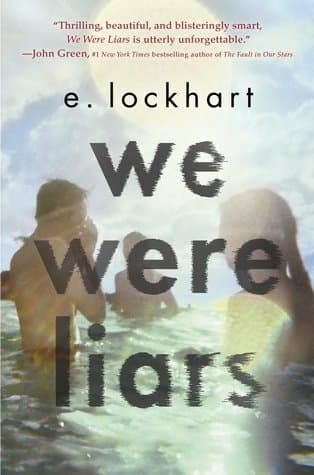
- We Were Liars
E. Lockhart
3.8 (465k) average on GoodreadsThrillerBoth novels are mysteries with significant twists, but their thematic core differs. We Were Liars explores themes of privilege, memory, and the manipulation of truth within an affluent family, with the mystery revolving around a past tragedy. What We Saw directly addresses the contemporary issue of sexual assault, consent, and the public's role in judgment, grounding its mystery in real-world social dynamics and the complexities of 'he said, she said' scenarios, rather than an insular family secret.
- Angels & Demons
Dan Brown
3.9 (2.7M) average on GoodreadsThrillerA Harvard symbologist races through Rome's ancient sites, deciphering cryptic clues to unmask the Illuminati and stop a vengeful plot to destroy the Vatican with a stolen antimatter weapon.
- Gone Girl
Gillian Flynn
4.1 (2.3M) average on GoodreadsThrillerA wife's sudden disappearance on her fifth anniversary reveals a web of lies and psychological warfare, exposing the secrets within a seemingly perfect marriage.
- The Girl on the Train
Paula Hawkins
3.9 (2.1M) average on GoodreadsThrillerA woman’s fascination with a seemingly perfect couple she watches from her daily train commute leads her into a dark investigation when she witnesses something that shatters their idyllic image.




Enjoyed the summary?
A summary gives you the shape of the book. The book itself has the detail, the examples and the voice.
Find What We Saw on AmazonAs an Amazon Associate, BookBrief earns from qualifying purchases. How we're funded