

Synopsis
Covers the whole plot, including the ending.
- Difficulty
- Medium
- Pacing
- Variable
- Mood
- Bleak, Suspenseful, Psychological, Desperate, Hopeful (eventually)
- Read it if
- You enjoy a blend of psychological thriller and post-apocalyptic survival, with a strong focus on a single character's internal journey and a mystery unraveling through fragmented memories.
- Skip it if
- You prefer straightforward action-driven plots without significant introspection or a slow burn mystery, or if you dislike ambiguous endings.
White Horse Plot Summary
Covers the whole plot, including the ending.
The Awakening
Zoe wakes up confused in a ruined apartment, pregnant and remembering nothing of her past or how the world got this way. She is in a world destroyed by an unknown disaster, where familiar places are gone and silence reigns. Her first concern is survival and her unborn child's safety. She searches for food and water, moving through the ruins of what seems to be a big city. The initial shock gives way to a primal urge to protect herself and her baby, pushing her to explore and look for any signs of life or supplies. The air is thick with dust and a strange, metallic smell. An unsettling quiet covers everything, making her feel even more alone and afraid.
First Encounters and Fragmented Memories
As Zoe goes out, she meets other survivors, most of whom are cautious and unfriendly. She learns the world has been this way for an unknown time, and supplies are scarce, leading to constant fights. During these encounters, she gets flashes of memories from before the disaster: a therapist's office, a cleaning job, a recurring nightmare of a white horse. These fragments are confusing and often triggered by everyday objects or sounds. She struggles to connect her terrifying reality with these vague memories, questioning her sanity and her past. The white horse, especially, becomes a constant and disturbing image in her mind.
The Search for Answers and the White Horse
Zoe's dreams are filled with the image of a white horse, which she first thinks is just stress. But as her memories slowly return, she starts to link the white horse to an event or entity that might be tied to the world's destruction. She learns from other survivors about 'The Grey,' a widespread despair that has taken over many people. She begins to actively seek information about the white horse, hoping it holds the key to her past and the apocalypse. Her search for answers becomes part of her struggle to survive, as she believes understanding the past is essential for handling the present and protecting her future.
The Sanctuary and the Scientist
Zoe eventually finds a small, organized group of survivors led by Sarah, a practical woman. This community offers a short break from constant danger, giving some stability and a sense of belonging. Here, Zoe learns about a scientist, Dr. Aris Thorne, who was reportedly working on a project related to the collapse before it happened. Thorne is rumored to have important information or even a cure. The community is careful, but the hope of answers pushes Zoe to investigate more. She believes Thorne might be able to explain the white horse and the nature of the disaster, offering a way to understand her own fragmented identity.
The Journey East
With vague directions and desperate hope, Zoe decides to leave the sanctuary and travel east, where Dr. Thorne is thought to be. The journey is full of dangers: mutated animals, hostile scavenger groups, and the constant threat of 'The Grey,' a mental illness that makes people lose their will to live. Her pregnancy makes the journey even harder, but her determination to protect her unborn child and discover the truth drives her forward. She learns to be resourceful and tough, relying on her instincts and the few supplies she carries. Each step east brings her closer to the truth but also deeper into danger.
The Journal and the Experiment
After a difficult journey, Zoe reaches a hidden research facility, which seems empty. Inside, she finds Dr. Thorne's journals, full of scientific notes and personal thoughts. The journals reveal that Thorne was experimenting with reality and consciousness, trying to connect different dimensions. He believed that the human mind, especially during intense stress or trauma, could accidentally create entities or change reality. The 'white horse' was not a real animal but a strong, psychic manifestation of shared fear and despair, accidentally released through Thorne's research, causing the world to break apart and decay. This discovery is both terrifying and revealing for Zoe.
The Truth of Her Past
As Zoe reads more of Thorne's journals, she uncovers a shocking truth: she was part of his experiments, though she had no memory of it. Her recurring nightmares and scattered memories were not just signs of trauma, but echoes of her involvement in the project. Thorne's notes suggest that her unique brain made her a prime subject, and her own subconscious fears, amplified by the experiment, helped create the 'white horse' and the subsequent collapse of reality. This realization shatters her understanding of herself and her role in the disaster, leaving her with immense guilt and a deep sense of responsibility for the ruined world.
Confronting the Manifestation
With the truth known, Zoe understands that the 'white horse' is a psychic entity, a powerful manifestation of human fear and despair, now running wild and continuing to unravel reality. She realizes that to save her unborn child and possibly give the world a chance to heal, she must confront this entity directly. Thorne's journals hinted at a way to stop or reverse its effects, requiring a strong act of will and a connection to where the manifestation came from. Zoe, being closely linked to its creation through Thorne's experiments, believes she is the only one who can try this. Her pregnancy, a symbol of new life, becomes both a weakness and a source of incredible strength.
The Ultimate Sacrifice or Redemption
Zoe prepares for a final confrontation with the 'white horse.' Thorne's notes suggest the entity feeds on fear and despair. To weaken it, one must find a source of hope and connection. Zoe believes her love for her unborn child, and the possibility of a new beginning, is this opposing force. The confrontation is not physical but happens on a psychic level, a battle of wills and emotions. She must decide whether to make the ultimate sacrifice, using her own life force to contain the entity, or find a way to cut its link to humanity's shared subconscious. This would give the world a chance to slowly heal and her child a future. The fate of reality hangs in the balance.
A Glimmer of Hope
In a final psychic battle, Zoe confronts the 'white horse.' Drawing on her love for her child and a renewed sense of purpose, she manages to break the entity's hold on reality. The exact method is unclear – it could be a complete sacrifice of her own consciousness or a deep act of mental redirection. The immediate result is not a sudden restoration of the world, but a subtle change. The oppressive silence lessens, the air feels clearer, and a faint hint of green appears in the desolate landscape. Zoe, tired but alive, holds her belly, a symbol of the fragile hope she has managed to save. The future is uncertain, but a seed of change has been planted, suggesting a long, hard road to recovery.
Principal Figures
Zoe
Protagonist
A pregnant woman who wakes up in a post-apocalyptic world with amnesia.
Zoe is a resilient and determined woman in her early thirties. Before the apocalypse, she was grappling with typical life challenges, including a part-time cleaning job, college aspirations, and therapy for recurring bad dreams. Post-apocalypse, her primary drive becomes the survival of her unborn child and the desperate search for answers about the world's collapse and her own past. She displays remarkable adaptability and courage, learning to navigate a dangerous new reality while battling fragmented memories and existential dread. Her love for her baby is her ultimate motivator.
Relationships: Unborn Baby (Her sole motivation for survival and hope for the future.); Dr. Aris Thorne (Her former therapist/experimenter, whose work directly led to the apocalypse and her amnesia.); Sarah (A fellow survivor and leader of a temporary sanctuary, offering brief support and information.)
Dr. Aris Thorne
Antagonist/Catalyst
A brilliant but reckless scientist whose experiments caused the apocalypse.
Dr. Aris Thorne is a shadowy figure, primarily revealed through his journals. He was a scientist obsessed with the nature of reality and consciousness, pushing the boundaries of human understanding. His brilliance was matched by his ethical blindness, leading him to conduct dangerous experiments on human subjects, including Zoe. He believed he could harness the power of the collective subconscious, but instead unleashed a devastating psychic entity. His motivations were likely a mix of scientific curiosity and a desire to control or understand fundamental forces, inadvertently triggering the 'white horse' manifestation and the subsequent collapse of the world.
Relationships: Zoe (His unwitting experimental subject, whose subconscious helped manifest the 'white horse'.)
The White Horse
Antagonist/Plot Device
A psychic manifestation of collective fear and despair, responsible for the world's collapse.
The 'white horse' is not a physical creature but a powerful, sentient psychic entity. It is a manifestation of humanity's deepest fears, anxieties, and despair, accidentally unleashed by Dr. Thorne's experiments. It feeds on negative emotions, unraveling reality and driving people to 'The Grey' – a state of catatonic hopelessness. Its presence is felt more than seen, a pervasive sense of dread and decay that permeates the post-apocalyptic world. It represents the ultimate antagonist, a force that must be confronted on a mental and emotional plane rather than a physical one, embodying the psychological horror of the story.
Relationships: Humanity (Feeds on human fear and despair, causing the world's destruction.); Zoe (Intimately linked to Zoe's subconscious due to Thorne's experiments.)
Sarah
Supporting
The pragmatic and cautious leader of a small survivor community.
Sarah is a strong, no-nonsense woman who has adapted well to the harsh realities of the post-apocalyptic world. She leads a small, organized community of survivors, prioritizing safety and resource management. While initially wary of newcomers, she possesses a practical sense of empathy, offering Zoe temporary refuge and crucial information about the world and Dr. Thorne. She represents the resilience of humanity in the face of despair, providing a brief glimpse of hope and order amidst the chaos. Her leadership is essential for the survival of her group, and her cautious nature highlights the constant dangers they face.
Relationships: Zoe (Provides temporary sanctuary and information, a brief ally.)
The Unborn Baby
Supporting/Motivation
Zoe's unborn child, representing hope and a future beyond the apocalypse.
Zoe's unborn baby is not a character in the traditional sense but serves as her ultimate motivation and a powerful symbol throughout the narrative. The baby represents innocence, vulnerability, and the potential for new life in a world consumed by death and despair. Zoe's unwavering determination to protect her child drives her through unimaginable dangers and fuels her quest for answers and a better future. The baby's existence is a constant reminder of what is at stake and the profound hope that can exist even in the most desolate circumstances, pushing Zoe to fight against the forces of oblivion.
Relationships: Zoe (Mother-child bond, the baby is Zoe's primary motivation for survival and redemption.)
The Scavengers
Mentioned/Antagonist
Hostile groups of survivors who prey on others for resources.
The Scavengers are various loosely organized or lone individuals who have succumbed to the brutal realities of the post-apocalyptic world. Driven by desperation and a lack of resources, they resort to violence and predation against other survivors. They represent the darker side of human nature when societal structures collapse, acting as a constant external threat to Zoe and other peaceful communities. Their existence reinforces the extreme danger and moral decay present in the shattered world, forcing Zoe to develop her survival instincts and remain constantly vigilant.
Relationships: Zoe (Antagonistic; they pose a constant physical threat to her.); Other Survivors (Antagonistic; they prey on other groups for supplies.)
Themes & Insights
The Nature of Reality and Perception
The novel explores how reality can be personal and delicate, easily twisted by shared thoughts and individual trauma. Dr. Thorne's experiments changed the very nature of existence, showing that human minds, when amplified, can have real effects on the world. Zoe's scattered memories and the recurring image of the 'white horse' are central to this theme, suggesting her view of reality was manipulated even before the apocalypse. The 'white horse' itself is not physical but a psychic manifestation, showing how internal states can become external and destroy the world. The story makes the reader question what is real and how much of our world is built by our minds.
“The world is not what it seems. It is what we fear it to be, made manifest.”
Hope and Despair in the Face of Catastrophe
This theme is central to the human experience in the novel. The post-apocalyptic world is full of despair, shown by 'The Grey,' a condition that takes away people's will to live. Yet, against this, Zoe's strong will to protect her unborn child is a powerful symbol of hope. Her journey is not just about surviving, but about finding a reason to keep living and fighting for a future. The small, organized community led by Sarah also represents pockets of hope, where people try to rebuild and keep some sense of order and humanity. The conflict between the widespread despair caused by the 'white horse' and Zoe's individual hope drives much of the story.
“In a world designed to break you, the greatest rebellion is to keep hoping.”
Motherhood and Sacrifice
Zoe's pregnancy is not just a plot point but a deep look into motherhood. Her unborn child becomes the main reason for her survival, her search for truth, and her willingness to face unimaginable dangers. The theme explores a mother's natural drive to protect her child, even if it means risking her own life. Zoe's journey east, her confrontation with the 'white horse,' and her eventual actions are all shaped by her desire to ensure her child has a chance at life in a world that seems determined to deny it. The sacrifices she considers and potentially makes highlight the depth of maternal love and its power to overcome even an apocalyptic reality.
“Every beat of her heart was for the one within her, a silent promise to fight until there was nothing left.”
Memory, Trauma, and Identity
Zoe's amnesia and scattered memories are vital to her character arc and the plot. The novel explores how trauma can shatter one's sense of self and how recovering memories can be both terrifying and necessary for understanding who you are. Zoe's recurring nightmares, especially of the white horse, are not just bad dreams but repressed memories and clues to the world's destruction. As she puts her past together, she not only learns about the apocalypse but also confronts her own unintentional part in it. This theme highlights the psychological impact of catastrophic events and the complex link between memory, identity, and personal responsibility.
“To forget is to survive, but to remember is to truly live, even in the ruins.”
Plot Devices & Literary Techniques
Amnesia
Zoe's memory loss drives her quest for answers and personal identity.
Zoe's amnesia is a primary plot device, serving multiple functions. Initially, it creates mystery and suspense, forcing both Zoe and the reader to uncover the truth about the world's collapse and her own past. It allows for a gradual reveal of the complex backstory, as fragments of memory return to Zoe, often triggered by specific events or objects. This device also heightens Zoe's vulnerability and isolation, as she cannot rely on past knowledge. Crucially, it links her personal journey of self-discovery directly to the overarching mystery of the apocalypse, making her quest deeply personal and compelling.
The MacGuffin (Dr. Thorne's Journals)
A set of journals that contain the key to understanding the apocalypse and Zoe's past.
Dr. Thorne's journals act as a classic MacGuffin, a plot device that drives the narrative forward by being the object of the protagonist's quest. While the journals themselves are not inherently important, the information they contain is vital. They provide the backstory of the apocalypse, explain the nature of the 'white horse,' and reveal Zoe's connection to Thorne's experiments. The search for these journals propels Zoe across the dangerous landscape, leading her to critical revelations that allow her to understand her world and her role within it, ultimately enabling her to confront the central antagonist.
The Unborn Child
A symbol of hope and a powerful motivator for the protagonist.
Zoe's pregnancy is more than just a character detail; it's a significant plot device. It serves as her ultimate motivation for survival, pushing her through unimaginable hardships. The baby represents innocence, the potential for a future, and a tangible reason to fight against the overwhelming despair of the post-apocalyptic world. This device amplifies the stakes, making Zoe's journey not just about her own survival but about protecting new life. It adds emotional depth and urgency to her quest, highlighting the theme of motherhood and sacrifice, and ultimately provides a glimmer of hope for a devastated world.
The Recurring Dream/Vision (White Horse)
A symbolic and literal clue to the nature of the catastrophe.
The recurring dream or vision of the 'white horse' functions as a powerful symbolic and literal clue. Initially presented as a symptom of Zoe's trauma and amnesia, it gradually reveals itself to be directly linked to the apocalypse itself. This device creates an ominous atmosphere and builds suspense as Zoe slowly understands its significance. It foreshadows the true nature of the 'white horse' as a psychic entity rather than a physical one, guiding Zoe's investigation into the metaphysical aspects of the world's collapse and her own connection to it. It's a persistent, unsettling image that constantly reminds the reader and Zoe of the core mystery.
White Horse Quotes
“It was the only thing I had left of my mother, a tiny, almost invisible scar just above my left eyebrow. A reminder that sometimes even the most ordinary things could leave an indelible mark.”
“The past wasn't just behind you; it was interwoven with every breath, every choice, every future you might have.”
“Some secrets were like that: too heavy to carry alone, but too dangerous to share.”
“Fear was a constant companion, but it wasn't the master. Not yet.”
“The world had a way of shrinking when you were trying to hide, until every shadow felt like a potential threat.”
“Hope was a dangerous thing, a fragile spark in the vast darkness, but sometimes it was all you had.”
“Every step forward felt like two steps back, a frustrating dance with an invisible enemy.”
“The truth was a weapon, sharp and double-edged, capable of saving or destroying.”
“Sometimes the greatest monsters weren't the ones in the shadows, but the ones who wore human faces.”
“Memory was a fickle thing, a mosaic of fragments, some bright, some faded, never quite complete.”
“The silence was heavy, not empty, but filled with all the things left unsaid, all the questions unanswered.”
“To survive, you had to shed pieces of yourself, until you wondered if anything real was left.”
“The world was a puzzle, and I was just one piece, trying to find where I fit, or if I fit at all.”
“There was a thin line between courage and foolishness, and I often found myself dancing right on it.”
Quiz
10 questions on the plot and the characters. Each answer comes with a short explanation.
Question 1
What is Zoe's primary goal immediately after waking up in the post-apocalyptic world?
- Finding her family members.
- Locating the source of the apocalypse.
- Ensuring the survival of herself and her unborn baby.
- Seeking revenge on those responsible for the destruction.
Show answer
C. Ensuring the survival of herself and her unborn baby. The book description explicitly states, 'The only thought that remains is survival. Survival in a desolate, post-apocalyptic world. For herself. For her unborn baby.'
Question 2
Before the world changed, what was Zoe doing to pay for college?
- Working as a barista.
- A part-time cleaning job.
- Tutoring other students.
- Working as a bartender.
Show answer
B. A part-time cleaning job. The synopsis mentions, 'A part-time cleaning job to pay for college'.
Question 3
What is Zoe's age around the time before the world's collapse?
- Twenty-something.
- In her early twenties.
- Thirty.
- Late thirties.
Show answer
C. Thirty. The description states her problems are 'The same problems that any thirty-year-old would have.'
Question 4
What common challenges does Zoe face in the post-apocalyptic world, as described?
- Lack of shelter and extreme weather.
- Scarcity of food and water, and untold horrors.
- Dealing with rival survivor groups.
- Navigating complex political landscapes.
Show answer
B. Scarcity of food and water, and untold horrors. The synopsis highlights 'untold horrors exist around every corner, where food and water are in desperately short supply'.
Question 5
What is described as Zoe's 'only chance of happiness' in the post-apocalyptic world?
- Finding a safe community.
- Reaching a location half a world away.
- Discovering a cure for the apocalypse.
- Reuniting with a lost loved one.
Show answer
B. Reaching a location half a world away. The description states, 'the only chance of happiness is half a world away.'
Question 6
What regular appointment did Zoe have before the world changed, related to her personal issues?
- A weekly support group meeting.
- A weekly appointment with her therapist.
- A regular check-up with her doctor.
- A monthly session with a life coach.
Show answer
B. A weekly appointment with her therapist. The synopsis mentions, 'a weekly appointment with her therapist to straighten out the problems in her life.'
Question 7
What specific characteristic is attributed to the 'horrors' that exist in the post-apocalyptic world?
- They are primarily supernatural entities.
- They are 'untold' and exist 'around every corner'.
- They are remnants of advanced technology.
- They are manifestations of Zoe's bad dreams.
Show answer
B. They are 'untold' and exist 'around every corner'. The text states, 'untold horrors exist around every corner'. This emphasizes their unknown nature and omnipresence.
Question 8
The synopsis implies a strong theme of personal struggle and potential mental health issues for Zoe 'Before'. What specific detail hints at this?
- Her difficulty making friends.
- Her 'bad dreams' and 'weekly appointment with her therapist'.
- Her financial instability despite working.
- Her inability to commit to a relationship.
Show answer
B. Her 'bad dreams' and 'weekly appointment with her therapist'. The line 'A few bad dream, that's all.' combined with her therapist appointments strongly suggests internal struggles and potentially mental health themes before the apocalypse.
Question 9
How does the phrase 'When I wake the world is gone. Only fragments remain. And then I remember...' set the tone for the narrative structure?
- It suggests a linear narrative from past to present.
- It implies a non-linear narrative, potentially with amnesia or a fragmented memory perspective.
- It indicates the story begins with a dream sequence.
- It foreshadows a twist ending where the apocalypse was a dream.
Show answer
B. It implies a non-linear narrative, potentially with amnesia or a fragmented memory perspective. The opening lines 'When I wake the world is gone. Only fragments remain. And then I remember...' strongly suggest a protagonist waking up into a new reality with fragmented memories, indicating a non-linear or memory-driven narrative.
Question 10
The description uses the terms 'Before' and 'After' to delineate sections. What is the implied relationship between Zoe's 'problems' 'Before' and the 'untold horrors' 'After'?
- They are completely unrelated events, one personal and one global.
- The 'bad dreams' 'Before' might be metaphorical or literal precursors to the 'untold horrors' 'After', suggesting a deeper connection.
- Her personal problems 'Before' made her uniquely prepared for the 'horrors' 'After'.
- The 'horrors' 'After' are a direct result of her 'wrong turns' 'Before'.
Show answer
B. The 'bad dreams' 'Before' might be metaphorical or literal precursors to the 'untold horrors' 'After', suggesting a deeper connection. The contrast between her 'bad dreams' before and the 'untold horrors' after, especially in a thriller/fantasy/sci-fi context, often implies a deeper, possibly supernatural or psychological connection between the protagonist's inner world and the external catastrophe.
White Horse FAQ
What is the core premise of 'White Horse'?
The novel follows Zoe, a woman who wakes up in a post-apocalyptic world with no memory of how it happened, only fragmented recollections. She quickly realizes she is pregnant and must navigate a desolate landscape filled with danger to survive and protect her unborn child, all while trying to piece together her past.
Who is Zoe before the apocalypse, and what are her main struggles?
Before the world's collapse, Zoe is a thirty-year-old college student working a part-time cleaning job. She attends therapy for what she perceives as typical adult problems, including recurring bad dreams and unresolved personal issues, which subtly hint at deeper psychological complexities beneath the surface.
What is Zoe's primary motivation in the 'After' timeline?
Zoe's paramount motivation in the ruined world is survival, not just for herself but specifically for her unborn baby. This maternal instinct drives her through extreme hardships, pushing her to seek resources and safety despite constant threats and the overwhelming despair of her surroundings.
What kind of dangers does Zoe face in the post-apocalyptic world?
Zoe encounters numerous perils, including untold horrors and monstrous creatures lurking around every corner, severe scarcity of food and water, and the constant threat from other desperate survivors. The environment itself is hostile, making every step a challenge for her and her pregnancy.
What is the significance of the 'White Horse' in the title?
The 'White Horse' is a multifaceted symbol, often associated with the Horseman of Conquest or Pestilence from the Book of Revelation, foreshadowing the apocalyptic events. It also appears in Zoe's fragmented memories and dreams, potentially linking to a specific event or entity that precipitated the world's collapse or holds a key to her past.
Are Zoe's 'bad dreams' before the apocalypse connected to the 'After' events?
Yes, Zoe's recurring bad dreams are strongly implied to be premonitions or suppressed memories of the impending catastrophe. They serve as early clues to the fantastical and horrifying elements that will later manifest in her reality, suggesting a deeper, perhaps psychic, connection to the world's fate.
What role does Zoe's therapist play in uncovering hidden details?
While Zoe's therapist is only present in the 'Before' timeline, their sessions are crucial for revealing aspects of Zoe's subconscious and her perception of reality. The therapist's questions and observations might inadvertently highlight Zoe's unique vulnerabilities or strengths that become relevant after the apocalypse.
Is there a specific 'event' that caused the apocalypse, and how is it hinted at?
The specific event is gradually revealed through Zoe's returning memories and environmental clues, rather than being explicitly stated early on. It involves a catastrophic, possibly supernatural or extra-dimensional, occurrence that fragmented reality, often hinted at through disturbing imagery in her dreams and the strange nature of the 'horrors' she encounters.
How does Zoe's pregnancy impact her psychological state during the apocalypse?
Zoe's pregnancy significantly amplifies her psychological state, fostering both immense determination and profound vulnerability. The primal urge to protect her unborn child provides a powerful driving force, but it also increases her anxiety and fear, making every decision carry immense weight and emotional toll.
What psychological coping mechanisms does Zoe employ to survive?
Zoe primarily relies on dissociation and compartmentalization to cope with the trauma. She often pushes down overwhelming fear to focus on immediate survival tasks, and her fragmented memories might also be a form of psychological protection, slowly allowing her to process the catastrophic events.
How does the loss of memory affect Zoe's identity and sense of self?
The loss of memory profoundly disorients Zoe, stripping her of her past identity and forcing her to redefine who she is in the face of extreme adversity. She grapples with a void where her history should be, making her journey not just about physical survival but also about rediscovering her true self.
Are Zoe's 'problems' before the apocalypse indicative of a deeper mental health struggle, or a premonition?
Her 'problems' likely represent a complex interplay of both. While she perceives them as normal adult stressors, the recurring bad dreams and the depth of her therapy sessions suggest a heightened sensitivity or a subconscious awareness of an impending reality shift, blurring the lines between mental health and premonition.
Is the 'post-apocalyptic world' a literal reality or a metaphorical representation of Zoe's psychological breakdown?
This is a key interpretive question. While presented as a literal post-apocalyptic setting, elements of the narrative, particularly Zoe's memory loss and the surreal nature of the 'horrors,' allow for an interpretation where the world reflects her internal psychological state or a fragmented reality within her mind.
What could be the 'happiness half a world away' that Zoe seeks?
The 'happiness half a world away' could be interpreted literally as a safe haven or a specific person she remembers from her past, possibly her baby's father. Metaphorically, it might represent a return to sanity, peace, or a reunion with a lost part of herself, signifying hope beyond the immediate desolation.
Does the novel suggest humanity is inherently good or evil in times of crisis?
The novel presents a nuanced view, showcasing both the brutal selfishness and surprising resilience and occasional kindness of humanity under extreme duress. While Zoe encounters desperate and dangerous individuals, she also finds fleeting moments of unexpected aid or connection, reflecting the duality of human nature.
How does the blend of thriller, fantasy, and science fiction genres contribute to the story's themes?
The blend of genres creates a unique atmosphere, where the thriller elements drive the survival narrative, fantasy introduces the surreal and monstrous 'horrors,' and science fiction hints at the underlying mechanisms of the world's collapse or the nature of reality itself. This fusion enhances the themes of existential dread, psychological fragmentation, and the unknown.
What is the ultimate message about motherhood in a dystopian setting?
The novel powerfully conveys that motherhood, even in the most desolate circumstances, can be an unparalleled source of strength and purpose. Zoe's unwavering determination to protect her unborn child elevates her struggle beyond mere personal survival, highlighting the profound and transformative power of maternal love.
Similar books
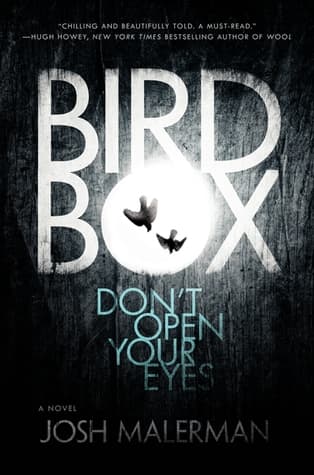
- Bird Box
Josh Malerman
4.0 (143k) average on GoodreadsThrillerFeatures a pregnant protagonist navigating a dangerous, sensory-deprived world with unseen horrors.
- The Road
Cormac McCarthy
4.0 (716k) average on GoodreadsScience FictionDepicts a bleak, post-apocalyptic journey of survival and parental love amidst despair.
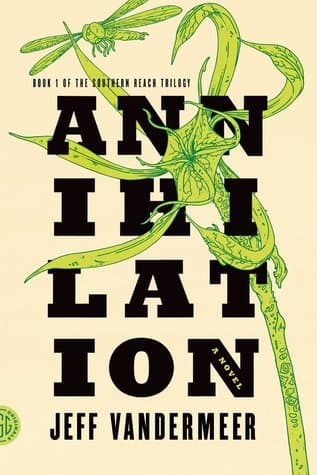
- Annihilation
Jeff VanderMeer
4.0 (5k) average on GoodreadsFantasyExplores a mysterious, transforming landscape and a protagonist's internal struggle with a strange, evolving threat.
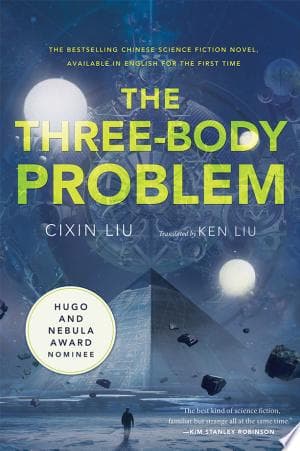
- The Three-Body Problem
Cixin Liu
4.1 (505k) average on GoodreadsScience FictionWhile both books deal with 'first encounters' and humanity confronting the unknown, White Horse prioritizes the individual's immediate, visceral and psychological experience of the alien or transformative event. In contrast, The Three-Body Problem focuses on the large-scale geopolitical, scientific, and societal ramifications of such an encounter, offering a much broader, less personal scope.
- Angels & Demons
Dan Brown
3.9 (2.7M) average on GoodreadsThrillerA Harvard symbologist races through Rome's ancient sites, deciphering cryptic clues to unmask the Illuminati and stop a vengeful plot to destroy the Vatican with a stolen antimatter weapon.
- Gone Girl
Gillian Flynn
4.1 (2.3M) average on GoodreadsThrillerA wife's sudden disappearance on her fifth anniversary reveals a web of lies and psychological warfare, exposing the secrets within a seemingly perfect marriage.



Enjoyed the summary?
A summary gives you the shape of the book. The book itself has the detail, the examples and the voice.
Find White Horse on AmazonAs an Amazon Associate, BookBrief earns from qualifying purchases. How we're funded