
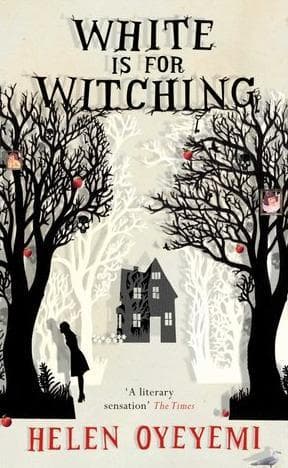
Synopsis
Covers the whole plot, including the ending.
- Difficulty
- Medium
- Pacing
- Slow
- Mood
- Atmospheric, Melancholy, Haunting, Eerie, Poetic
- Read it if
- You love atmospheric, literary gothic horror with a focus on family trauma, psychological depth, and poetic prose.
- Skip it if
- You prefer straightforward plots, clear resolutions, or traditional horror scares over existential dread and ambiguous supernatural elements.
White is for Witching Plot Summary
Covers the whole plot, including the ending.
The Silver House and Lily's Absence
The story begins with the Silver family—Luc, Miranda, and Eliot—living in their ancestral home in Dover. The house itself has a strange, living quality that seems to mourn with them. Lily, Luc's wife and the twins' mother, has recently died, leaving a deep emptiness. The house, home to generations of Silver women, shows its own grief and odd nature, growing winter apples out of season and confusing visitors. Miranda, one of the twins, starts to show unusual behaviors, including a strange craving for chalk and a heightened sensitivity to the house's supernatural residents. This hints at a growing connection to the house's old, feminine history.
Miranda's Peculiar Appetites and Connections
Miranda's behavior becomes more noticeable after her mother's death. She develops Pica, an eating disorder marked by an overwhelming hunger for non-food items, especially chalk, which she eats secretly. This physical change happens alongside her increasing spiritual connection to the Silver House and its past female residents. She senses and sometimes talks to the spirits of her ancestors, mainly the long-dead Silver women who lived and died within its walls. This connection further separates her from her father, Luc, and her twin brother, Eliot, who struggle to understand her transformation and the house's influence.
Eliot's Concern and the House's Influence
Eliot, Miranda's twin, worries deeply about her worsening health and her growing distance from the living world. He notices her thinness, her chalk eating, and her increasing focus on the house's unseen forces. The house itself acts as a character, having a harmful influence. It causes confusion, traps visitors in its winding halls, and seems to feed on the family's grief and Miranda's weakness. Eliot tries to protect Miranda, but feels increasingly helpless against the house's strong hold and his sister's deepening connection to it, which seems to pull her away from him.
Miranda's Time at Boarding School
To help Miranda, Luc sends her to a boarding school in Switzerland, hoping a change of scenery will ease her Pica and her spiritual attachments. Away from the Silver House, Miranda's condition seems to improve. She starts to eat normally and engages more with the world, even forming a close bond with a girl named Ore. This time offers a glimpse of possible recovery and a more 'normal' life for Miranda, suggesting the house's influence is a key factor in her illness. However, the relief is short-lived.
The Return to Dover and the House's Resurgence
Despite the good changes in Switzerland, Miranda eventually returns to the Silver House in Dover. Upon her return, the house's influence immediately reasserts itself. Her Pica returns with more intensity, and her connection to the house's spirits becomes even stronger. The brief recovery fades, signaling that the house is not just a setting but an active, hostile entity that claims the Silver women. Her family watches helplessly as she slips further away, becoming more ethereal and less tied to reality.
Miranda's Relationship with Ore
Ore, Miranda's girlfriend from Switzerland, comes to Dover to be with her. She is a determined and loving presence, trying to understand Miranda's strange illness and the threatening atmosphere of the Silver House. Ore represents an outside force, a hope for Miranda's rescue, and a link to the outside world. She tries to break through Miranda's increasingly isolated state and confront the house's hostile influence, believing her love can bring Miranda back. However, the house seems to actively resist her presence and efforts.
The House's Hostility Towards Outsiders
The Silver House shows clear hostility toward outsiders, especially those who try to uncover its secrets or challenge its hold over the Silver women. It creates confusing illusions, causes physical harm, and instills a deep sense of dread in non-Silver visitors. This is clear in its treatment of Ore, who experiences unsettling events and a constant feeling of being unwelcome and threatened. The house's actions suggest a protective, almost predatory, instinct to keep its chosen inhabitants, especially Miranda, within its walls and away from any outside influence that might break its spell.
Eliot's Desperate Attempts
Eliot, increasingly desperate to save his twin sister, sees the house as the cause of her decline. He tries several times to intervene, including physically attempting to remove Miranda from its grasp. In a final act of desperation and love, Eliot even tries to burn down the Silver House, believing its destruction is the only way to free Miranda from its curse. His efforts meet resistance from the house itself, which seems to defend itself, and ultimately, his attempts fail to break the deep, spiritual bond Miranda shares with the house and its history.
The House's History and the Silver Women
Through fragmented stories and the voices of the house itself and its past residents, the story reveals the sinister history of the Silver House. It becomes clear that the house has a long tradition of consuming the Silver women, especially those with a unique sensitivity or 'otherness,' much like Miranda. These women, including her mother Lily, often develop Pica or other strange illnesses and eventually disappear into the house, becoming part of its spectral lineage. The house holds their memories and spirits, constantly hungry for the next Silver woman to join its ethereal family.
Miranda's Vanishing
Despite Luc, Eliot, and Ore's efforts, Miranda's connection to the Silver House becomes undeniable and ultimately unbreakable. Her physical form wastes away as she becomes more attuned to the spectral world within the house's walls. One dark night, Miranda vanishes entirely, slipping away from the living world and into the collective consciousness of the Silver women who live in the house. Her disappearance is not a traditional death, but a transformation, an absorption into the house's ancient, ghostly lineage, fulfilling the cycle that has claimed generations of Silver women.
The Aftermath and the Survivors' Grief
After Miranda vanishes, Luc, Eliot, and Ore are left to mourn her loss and deal with the lasting, hostile presence of the Silver House. Their grief is deep and complex, made harder by the uncertainty of Miranda's fate. They are left with unanswered questions and the chilling realization that the house continues its ancient, hungry existence. The story ends with the survivors trying to process what happened, leaving a lingering sense of sorrow, mystery, and the oppressive, inescapable legacy of the Silver House and its claim on the family's women.
Principal Figures
Miranda Silver
Protagonist
A twin sister consumed by the ancestral house and its spirits.
Miranda is one of the Silver twins, deeply affected by her mother Lily's death. She develops Pica, an eating disorder involving non-food items like chalk, and a profound, almost psychic connection to the Silver House. She is sensitive, artistic, and increasingly ethereal, drawn into the house's history and its spectral inhabitants. Her unique connection to the house makes her both its victim and its chosen successor, embodying the inherited curse of the Silver women.
Relationships: Eliot Silver (Twin brother, deeply loving and protective); Luc Silver (Father, struggling to understand and save her); Lily Silver (Deceased mother, whose absence triggers Miranda's decline and connection to the house); Ore (Girlfriend, attempting to save her from the house)
Eliot Silver
Supporting
Miranda's protective twin brother, desperate to save her.
Eliot is Miranda's twin brother, grounded and fiercely protective. He watches helplessly as Miranda succumbs to the house's influence and her mysterious illness. He represents the rational, external world trying to make sense of the supernatural. His love for Miranda drives him to desperate measures, including attempting to destroy the Silver House, in a futile effort to break its hold on his sister. He is a witness and a survivor, burdened by the loss and the house's enduring power.
Relationships: Miranda Silver (Twin sister, deeply loving and protective); Luc Silver (Father, sharing grief and concern for Miranda)
Luc Silver
Supporting
The twins' father, a gentle and grieving man struggling with his family's curse.
Luc is the father of Miranda and Eliot, and husband to the deceased Lily. He is a gentle, somewhat passive figure, overwhelmed by grief and the strange events within his ancestral home. He tries to help Miranda by sending her away, but ultimately struggles to comprehend or combat the supernatural forces at play. His love for his family is clear, but he is largely powerless against the house's ancient curse, representing the masculine inability to fully grasp or intervene in the feminine, ancestral pull of the house.
Relationships: Miranda Silver (Daughter, whom he tries to save); Eliot Silver (Son, sharing grief and concern for Miranda); Lily Silver (Deceased wife, whose loss marks a turning point)
Ore
Supporting
Miranda's girlfriend, an outsider who tries to break the house's spell.
Ore is Miranda's girlfriend from Switzerland, an outsider to the Silver family's strange world. She is resilient, loving, and determined, arriving in Dover to support Miranda and confront the mysterious illness consuming her. Ore represents hope and the possibility of an escape for Miranda, a connection to a 'normal' life. However, she quickly becomes a target of the Silver House's malevolence, experiencing its hostile manifestations directly. Her efforts to save Miranda are ultimately thwarted by the house's overwhelming power.
Relationships: Miranda Silver (Girlfriend, deeply in love and protective)
Lily Silver
Mentioned/Supporting
Miranda and Eliot's deceased mother, whose death triggers the story's events.
Lily is the deceased mother of Miranda and Eliot, and wife of Luc. Her death, which occurs before the main narrative begins, is the catalyst for Miranda's decline and the reawakening of the Silver House's sinister influence. Though deceased, her presence is deeply felt; she is another Silver woman claimed by the house, her story echoing Miranda's. Her absence creates the 'hole' in the family's heart and sets the stage for the house to reassert its ancient claim on her daughter.
Relationships: Miranda Silver (Daughter, whose fate mirrors her own); Eliot Silver (Son); Luc Silver (Husband)
The Silver House
Antagonist
The sentient, ancestral home that consumes the Silver women.
The Silver House is a living, breathing entity, an ancestral home on the cliffs of Dover. It is not merely a setting but a character, a primary antagonist with its own will and consciousness. It feeds on grief, confusion, and the unique sensitivities of the Silver women, particularly those with Pica. It actively repels outsiders, disorients visitors, and claims the female descendants of the Silver family, absorbing their spirits into its walls. It is a repository of memories, a collective consciousness of all the Silver women it has consumed.
Relationships: Miranda Silver (Chosen inhabitant, gradually consumed by its power); Lily Silver (Past inhabitant, absorbed by its power); Silver Women Ancestors (Collective consciousness within its walls)
The Silver Women Ancestors
Supporting/Collective
The spectral collective of women absorbed by the Silver House.
These are the spirits of generations of Silver women who have lived and died within the Silver House, eventually becoming part of its collective consciousness. They communicate through the house, influencing Miranda and perpetuating the cycle of consumption. They are both victims and guardians of the house's traditions, a chorus of voices that tell its history and beckon Miranda to join them. They represent the inherited burden and the inescapable fate of the Silver female lineage.
Relationships: Miranda Silver (Their newest, impending member); The Silver House (Their collective home and prison)
Themes & Insights
Inherited Trauma and Ancestral Memory
The novel shows how trauma, especially for women, passes down through generations and becomes part of physical places. The Silver House acts as a living record of the Silver women's pain, madness, and Pica. Miranda's own struggle with Pica and her spiritual connection to the house directly show this inherited trauma, linking her fate to her mother and countless female ancestors. The house literally consumes these women, making their memories and suffering part of its fabric, as seen when Miranda begins to hear and see past residents.
“The house was a hungry thing, and it fed on the grief of the Silver women, on their strangeness, on their hunger for things that were not food.”
The Nature of Home and Belonging
The Silver House is not a place of comfort, but a site of entrapment and hostility. For Miranda, 'home' both nurtures her unique sensitivities and consumes her. The idea of belonging is twisted; while she belongs to the house and its lineage, this belonging means losing herself and her freedom. Outsiders like Ore are actively rejected by the house, highlighting its exclusive and predatory nature. The house shows a twisted sense of belonging, where the women are bound to it by an unbreakable, destructive tie.
“This house has always been a woman, and it has always been hungry.”
Loss, Grief, and the Undead
The novel is filled with grief, mainly from Lily's death. However, grief in 'White is for Witching' is not a process that ends; it changes into a constant state, mixed with the supernatural. Miranda's Pica and her spectral connections show unresolved grief, blurring the lines between the living and the dead. The Silver women are not truly gone; they are 'undead' within the house, their memories and presences lingering, keeping a cycle of endless mourning and spiritual consumption going. The house thrives on this unending sorrow, making it a permanent fixture.
“Miri, I conjure you. You were here, and then you weren't, and the house began to speak of you.”
Identity and Transformation
Miranda's journey is a deep change, moving from a girl dealing with grief to an ethereal being absorbed by her ancestral home. Her identity becomes increasingly tied to the house and its spectral residents, blurring the lines between self and other, living and dead. The Pica she develops physically shows this change, a hunger for non-food that reflects her growing detachment from the mundane world and her craving for something intangible and ancient. Her transformation is both a curse and a fulfillment of her unique destiny as a Silver woman.
“She was leaving them slowly—slipping away from them—and when one dark night she vanishes entirely, the survivors are left to tell her story.”
Feminine Power and Subjugation
The novel explores a complex dynamic of feminine power and subjugation. The Silver House is a powerful, ancient female entity, and mostly the women of the Silver lineage have the sensitivity to connect with it. However, this connection often leads to their subjugation and ultimate consumption. The house's power is both a source of unique connection and a destructive force that claims the women, stripping them of their individual identities and absorbing them into a collective. It suggests a dark, inherited legacy of female 'otherness' and sacrifice.
“All the Silver women were a little bit like that. They had a hunger for things that were not food, and the house fed it.”
Plot Devices & Literary Techniques
Sentient House
The Silver House acts as a living, malevolent character.
The Silver House is more than just a setting; it is a sentient entity with its own consciousness, will, and desires. It actively participates in the plot by influencing characters, particularly Miranda, and repelling outsiders like Ore. It manifests its malevolence through physical phenomena (growing winter apples, confusing visitors) and psychological manipulation. This device transforms the environment into an antagonist, making the struggle against it deeply personal and pervasive, as the house literally embodies the ancestral curse.
Pica
Miranda's eating disorder for non-food items, symbolizing her detachment and ancestral connection.
Pica, Miranda's craving and consumption of non-food items like chalk, serves as a powerful symbol and plot device. It physically manifests her growing detachment from the living world and her increasing connection to the spectral realm of the Silver House. It is presented as an inherited ailment among the Silver women, linking Miranda directly to her ancestors and foreshadowing her eventual absorption into the house. The Pica is not merely a medical condition but a mystical symptom of her unique, destructive bond with her ancestral home.
Multiple Narrators/Voices
The story is told from various perspectives, including the house itself.
The novel employs multiple narrative voices, including those of Eliot, Luc, Ore, and the Silver House itself (or the collective consciousness of the Silver women). This fragmented perspective allows for a richer, more complex understanding of the events, revealing different characters' interpretations, fears, and connections to Miranda and the house. The inclusion of the house's voice is particularly crucial, as it provides direct insight into its motivations and history, blurring the lines between objective reality and subjective experience, and emphasizing its role as a living entity.
Gothic Atmosphere
The pervasive mood of dread, decay, and the supernatural.
The novel utilizes a strong Gothic atmosphere, characterized by a decaying ancestral home, a sense of pervasive dread, supernatural occurrences, and characters grappling with inherited curses and psychological torment. The isolated location on the cliffs of Dover, the house's labyrinthine quality, and the presence of spectral ancestors all contribute to this mood. This device creates a constant tension and sense of impending doom, immersing the reader in the story's unsettling and mysterious world, and emphasizing the inescapable nature of the Silver family's fate.
White is for Witching Quotes
“The wind was a mischievous child, always trying to steal the skirts from the women of the village.”
“My grandmother always said that a house remembers everything, especially the tears.”
“There are some silences that are louder than any scream.”
“Grief is a house with many rooms, and you can get lost in any of them.”
“The house was a hungry thing, and it fed on loneliness.”
“Some stories aren't meant to be told, but they tell themselves anyway.”
“Memory is a tricky thing. It can be a comfort or a curse, depending on what it decides to show you.”
“The past is not a foreign country; it's the room next door, and sometimes it walks in.”
“There's a kind of quiet that means something is about to break.”
“Love, like a good meal, should be savored, not rushed.”
“The house was a living history book, its pages turned by the wind, its stories whispered by the floorboards.”
“Sometimes, the hardest thing to face is not what's outside, but what's inside you.”
“Hope is a fragile thing, easily shattered, but sometimes, even a shard can cut through the dark.”
“The scent of apples always reminds me of endings and new beginnings, a cycle that never truly breaks.”
Quiz
10 questions on the plot and the characters. Each answer comes with a short explanation.
Question 1
What unusual appetite does Miranda develop after her mother's death?
- A craving for raw meat
- An insatiable hunger for chalk
- A desire for bitter herbs
- A preference for spoiled fruit
Show answer
B. An insatiable hunger for chalk Miranda's developing appetite for chalk is a key indicator of her growing connection to the house and its supernatural elements.
Question 2
Which of the following is NOT one of the 'crystalline voices' that narrates the story?
- Miranda
- Eliot
- Luc
- Lily
Show answer
D. Lily While Lily's absence is central, she is not one of the active narrators. The story is told by Miranda, Eliot, Luc, and the house itself.
Question 3
What is the primary location of the Silver family's house?
- In a bustling city center
- On the cliffs near Dover
- Deep within a dense forest
- By a serene inland lake
Show answer
B. On the cliffs near Dover The house's isolated and dramatic location on the Dover cliffs contributes to its Gothic atmosphere and sense of being cut off from the outside world.
Question 4
What unusual phenomenon does the house exhibit in its garden?
- It grows tropical flowers in winter.
- It forces winter apples when branches should be bare.
- It causes trees to shed leaves in summer.
- It makes all plants wilt despite proper care.
Show answer
B. It forces winter apples when branches should be bare. The house's ability to force winter apples out of season is an early sign of its malign and unnatural influence over its surroundings.
Question 5
What is the central theme explored through the house's connection to generations of women?
- The stability of family legacies.
- The cyclical nature of trauma and inheritance among women.
- The triumph of modern progress over tradition.
- The importance of male lineage.
Show answer
B. The cyclical nature of trauma and inheritance among women. A core theme is how the house traps and influences generations of Silver women, often leading to their disappearance or an unusual fate, reflecting inherited trauma and female lineage.
Question 6
How does the house primarily affect visitors, according to the description?
- It makes them feel welcomed and safe.
- It creaks, grumbles, and malignly confuses them in its mazy rooms.
- It offers them an abundance of comfort and warmth.
- It encourages lively conversations and gatherings.
Show answer
B. It creaks, grumbles, and malignly confuses them in its mazy rooms. The house is described as actively hostile, confusing visitors with its layout, which is part of its character as a supernatural entity.
Question 7
What is Eliot's relationship to Miranda?
- He is her older brother.
- He is her twin brother.
- He is her cousin.
- He is her father.
Show answer
B. He is her twin brother. Eliot and Miranda are described as twins, sharing a deep, unspoken connection, especially after their mother's death.
Question 8
What happens to Miranda one dark night, as described in the summary?
- She elopes with a mysterious stranger.
- She accidentally falls from the cliffs.
- She vanishes entirely.
- She finds her mother's hidden diary.
Show answer
C. She vanishes entirely. Miranda's complete disappearance is the pivotal event that leaves her father and brother to grapple with her story and the house's influence.
Question 9
The novel is said to have 'Gothic roots but an utterly modern sensibility.' Which element primarily contributes to its 'modern sensibility'?
- Its focus on a haunted house and mysterious disappearances.
- Its exploration of myth and memory through a quartet of crystalline voices.
- Its setting in an isolated, foreboding location.
- Its depiction of a grieving family.
Show answer
B. Its exploration of myth and memory through a quartet of crystalline voices. While Gothic elements like the haunted house are present, the 'utterly modern sensibility' comes from the experimental narrative structure, with multiple, distinct voices exploring complex themes of identity, race, and memory in a contemporary way.
Question 10
What is the name of Miranda and Eliot's father?
- Luc
- Arthur
- Silas
- Edward
Show answer
A. Luc Luc is identified as the 'gentle Luc,' husband to Lily and father to Miranda and Eliot, who mourns Lily's absence.
White is for Witching FAQ
What is the central tragedy that sets the plot in motion for the Silver family?
The central tragedy is the sudden death of Lily Silver, the mother of twins Miranda and Eliot, and wife to Luc. Her absence creates a profound void in the family and seems to intensify the house's already unsettling nature, leaving the survivors grappling with their grief and the developing strangeness around them.
Who are the primary narrators of the story, and what makes their narrative structure unique?
The story is primarily narrated by a quartet of voices: Miranda herself, her brother Eliot, her father Luc, and the house itself. This multi-perspectival approach offers fragmented, sometimes contradictory insights into Miranda's deteriorating condition and the house's influence, creating a rich, layered understanding of events.
What unusual habit does Miranda develop, and what might it symbolize?
Miranda develops a severe case of pica, an insatiable craving for chalk. This habit symbolizes her increasing detachment from the physical world and her growing connection to the house's ethereal inhabitants, as chalk is often associated with boundaries, purity, and the mineral earth from which the house is built.
How does the Silver house itself act as a character in the novel?
The Silver house is a living entity, possessing its own consciousness and malevolent will, actively influencing events and confusing visitors. It manifests its power through physical alterations, like forcing winter apples, and through its ability to trap and consume the women who reside within its walls, becoming a central antagonist.
What eventually happens to Miranda Silver?
Miranda gradually slips away from her family, becoming increasingly attuned to the spirits within the house and less present in the physical world. She ultimately vanishes entirely, absorbed by the house like generations of women before her, leaving her father and brother to mourn her loss and try to understand her disappearance.
What is the significance of the house's location near Dover and its connection to the 'Dover witches'?
The house's location near Dover links it to historical accusations of witchcraft, particularly the 'Dover witches' mentioned in the narrative. This connection suggests a long lineage of women in the area, and specifically in the house, who have been perceived as 'different' or 'other,' aligning with the house's tendency to consume these women.
How do the 'generations of women' mentioned in the synopsis manifest within the story?
The 'generations of women' are the spirits of Miranda's maternal ancestors who have been trapped within the house, effectively consumed by its malevolent will. Miranda becomes increasingly aware of their presence and eventually joins their ranks, continuing the house's cycle of female absorption.
What is the implied connection between Miranda's pica and the house's desire for her?
Miranda's pica, her craving for chalk, is subtly connected to the house's desire for her, perhaps acting as a physical manifestation of the house's influence. The house is built of chalk, and her consumption of it suggests a literal internalizing of the house, preparing her for her eventual absorption into its fabric.
How does the author use the concept of 'doubles' or 'twins' beyond Miranda and Eliot?
Beyond Miranda and Eliot, the novel explores themes of doubling through the idea of the house as a 'twin' entity to Miranda, reflecting her inner turmoil and isolation. There are also echoes of past generations of women who mirror Miranda's fate, creating a sense of predestination and cyclical tragedy.
How does Miranda's unique sensory perception contribute to her psychological state?
Miranda's heightened sensory perception, particularly her ability to sense spirits and her extreme sensitivity to food, isolates her and contributes to her psychological fragility. This makes her more susceptible to the house's influence, as her boundaries between the physical and spiritual worlds are already blurred.
What role does grief play in the psychological unraveling of the Silver family?
Grief over Lily's death acts as a catalyst for the Silver family's psychological unraveling, creating a vulnerability that the house exploits. Luc and Eliot struggle to process their loss, while Miranda's grief manifests as a retreat from reality and an intensified connection to the supernatural, exacerbating her existing sensitivities.
Discuss the psychological impact of the house's malevolence on its inhabitants, particularly Miranda.
The house's malevolence psychologically isolates and disorients its inhabitants, eroding their sense of reality and belonging. For Miranda, this leads to a profound detachment from her family and herself, as the house actively manipulates her perceptions and draws her into its spectral embrace, blurring her identity.
How does the novel explore themes of inherited trauma and feminine lineage?
The novel explores inherited trauma through the house's history of consuming women, suggesting that Miranda's fate is a continuation of a familial curse or pattern. This feminine lineage is one of entrapment and loss, where each generation of women is drawn into the house's embrace, perpetuating a cycle of suffering.
Is Miranda a victim of the house, or does she possess some agency in her eventual disappearance?
While the house is undeniably a powerful, malevolent force, Miranda's keen sense for spirits and her growing detachment suggest a degree of agency, or at least a susceptibility, that draws her towards it. Her acceptance of her fate, even if compelled, blurs the line between victimhood and a peculiar form of belonging.
To what extent can the supernatural elements be interpreted as metaphors for mental illness or eating disorders?
The supernatural elements, particularly the house's influence and Miranda's pica, can be powerfully interpreted as metaphors for mental illness or eating disorders. Miranda's withdrawal, her peculiar cravings, and her fading presence echo symptoms of severe psychological distress and anorexia, grounding the fantastical in relatable human suffering.
How does the novel's 'modern sensibility' reconcile with its Gothic roots?
The novel blends its Gothic roots, characterized by a decaying house, isolated heroine, and supernatural elements, with a modern sensibility through its fragmented narrative, exploration of contemporary social issues (like immigration and identity), and a psychological depth that moves beyond simple horror to explore complex emotional landscapes and inherited trauma.
What is the meaning behind the title, 'White is for Witching'?
The title 'White is for Witching' suggests a connection between the color white, often associated with purity, death, or absence, and the concept of witchcraft. It hints at the uncanny, the spectral women absorbed by the house, and Miranda's own pale, chalk-eating existence, aligning her with the house's witchy, consuming nature.
Does the book offer any hope or resolution for the surviving Silver men, Luc and Eliot?
The book offers a poignant, rather than hopeful, resolution for Luc and Eliot. They are left to grapple with profound loss and the lingering mystery of Miranda's disappearance, forever marked by the house's influence. While they survive, the ending emphasizes the enduring nature of their grief and the house's continued power, rather than a clear path to healing.
How does the concept of 'home' evolve throughout the narrative for the Silver family?
Initially a family home, the house gradually transforms from a place of comfort to a malevolent entity that consumes its inhabitants, particularly its women. For Miranda, it becomes a literal and metaphorical prison, while for Luc and Eliot, it becomes a site of unbearable grief and a constant reminder of their losses, redefining 'home' as a place of entrapment and sorrow.
About the author

Helen Oyeyemi FRSL is a British novelist and writer of short stories.
Similar books
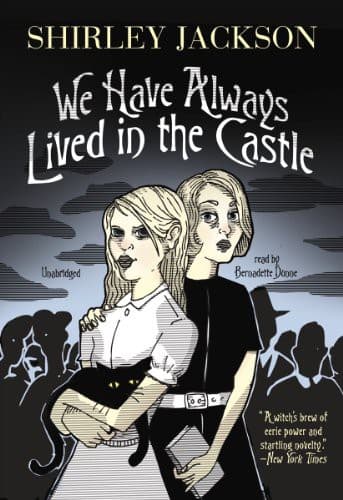
- We Have Always Lived in the Castle
Shirley Jackson
4.0 (118k) average on GoodreadsThrillerExplores isolation, family dynamics, and a house with a powerful, unsettling presence.
- Beloved
Toni Morrison
3.9 (325k) average on GoodreadsLiterary FictionDeals with intergenerational trauma, a haunting presence, and a non-linear narrative.
- The Haunting of Hill House
Shirley Jackson
3.8 (162k) average on GoodreadsThrillerBoth novels feature a sentient, malevolent house that psychologically torments its inhabitants. However, Oyeyemi's work delves more explicitly into themes of racial identity and inherited trauma, offering a more contemporary and culturally specific gothic horror compared to Jackson's focus on universal psychological dread.
- Harry Potter and the Sorcerer's Stone
J.K. Rowling
4.5 (7M) average on GoodreadsFantasyRescued from a miserable life under the stairs, an orphaned boy discovers he's a wizard destined for a magical school, where he uncovers a dangerous secret tied to the dark wizard who murdered his parents.
- The Hunger Games
Suzanne Collins
4.3 (6.4M) average on GoodreadsFantasyIn a future where children fight to the death on live television, Katniss Everdeen volunteers for the arena, turning a death sentence into a fight for survival and a spark of rebellion.
- 1984
George Orwell
4.2 (3.1M) average on GoodreadsPoliticsIn a future where surveillance and thought control are absolute, a man's search for truth clashes with the Party, showing that hope can be a form of rebellion.





Enjoyed the summary?
A summary gives you the shape of the book. The book itself has the detail, the examples and the voice.
Find White is for Witching on AmazonAs an Amazon Associate, BookBrief earns from qualifying purchases. How we're funded