

Synopsis
Covers the whole plot, including the ending.
- Difficulty
- Hard
- Pacing
- Slow
- Mood
- Haunting, Melancholy, Intense, Reflective, Dark
- Read it if
- You are prepared for a deeply moving, challenging, and often disturbing exploration of the psychological scars of slavery, motherhood, and trauma, written with breathtaking literary prose.
- Skip it if
- You prefer light, fast-paced narratives, or are sensitive to graphic depictions of violence and child death.
Beloved Plot Summary
Covers the whole plot, including the ending.
124 Bluestone Road
In 1873, Sethe and her daughter, Denver, live at 124 Bluestone Road in Cincinnati, Ohio. The house is haunted by the malevolent spirit of Sethe's deceased infant daughter, Beloved, which has driven away Sethe's two sons, Howard and Buglar, and contributed to the death of her mother-in-law, Baby Suggs. Denver, isolated by the haunting, finds comfort in the ghost's presence. One day, Paul D, a former slave from Sweet Home, the Kentucky plantation where Sethe was enslaved, arrives at 124. His presence momentarily cleanses the house of the ghost's more violent manifestations, causing the spirit to appear as a young woman.
Sweet Home Memories
Paul D and Sethe slowly begin to discuss their traumatic pasts at Sweet Home. Paul D reveals the inhumane conditions he endured, including being collared and forced into a chain gang in Alfred, Georgia. He recounts how Schoolteacher's nephews stole Sethe's milk, leading to her brutal whipping by Schoolteacher himself. Sethe shares the story of how she escaped Sweet Home while pregnant with Denver, after her husband, Halle, became unresponsive witnessing her abuse. Their shared experiences bring them closer, but the weight of their memories, particularly Sethe's infanticide, remains a heavy, unspoken burden between them.
The Arrival of Beloved
After Paul D's arrival, a mysterious young woman appears at 124, disoriented and suffering from amnesia. She introduces herself as Beloved. Sethe is immediately drawn to her, feeling an inexplicable familiarity. Denver, eager for companionship, is overjoyed by Beloved's presence. Paul D, however, is deeply uneasy, sensing something unsettling and unnatural about her. Beloved's strange mannerisms, her insatiable hunger, and her deep, unwavering focus on Sethe begin to disrupt the fragile peace Paul D had brought to the house, suggesting a more sinister presence.
Sethe's Unspeakable Act
Through fragmented flashbacks and Sethe's own painful recollections, the full horror of her past becomes clear. Eighteen years prior, after escaping Sweet Home, Sethe was tracked by Schoolteacher and his men to Baby Suggs' house in Ohio. Fearing her children would be returned to slavery, Sethe tried to kill all of them, succeeding in murdering her infant daughter with a saw. This act, born of desperate love and the trauma of slavery, is the central event of her life and the source of the haunting at 124. The town ostracized her for it, and the memory continues to trouble her and Denver.
Beloved's Influence Grows
Beloved's presence in 124 becomes increasingly dominant and controlling. She demands Sethe's constant attention and affection, monopolizing her time and resources. Sethe, consumed by guilt and a desperate need for redemption, indulges Beloved, believing her to be the reincarnation of her lost child. Beloved's influence alienates Paul D, who grows increasingly uncomfortable with her unsettling nature and Sethe's obsession. He eventually leaves 124 after Beloved seduces him, leaving Sethe and Denver isolated with the demanding spirit.
Denver's Awakening
As Beloved's hold on Sethe intensifies, Sethe physically and emotionally wastes away, dedicating all her energy to appeasing Beloved. Denver, initially happy with Beloved's companionship, begins to recognize the destructive nature of the relationship. Realizing that Beloved is literally consuming Sethe, Denver breaks free from her isolation. Driven by a desperate need to save her mother, she leaves 124 and seeks help from the black community in Cincinnati, who had previously ostracized Sethe for her past actions, but now begin to offer support.
Community Intervention
Concerned by Denver's plea and the sight of Sethe's deterioration, a group of thirty black women from the community, led by Ella, gather at 124 Bluestone Road. They perform an exorcism-like ritual, singing and praying to drive away the malevolent spirit. As they approach the house, Sethe, mistaking Mr. Bodwin (the white man who previously helped her) for Schoolteacher, attacks him with an ice pick. In the ensuing chaos, Beloved is seen by the women, and under the force of their collective will and spiritual energy, she vanishes from 124.
The Aftermath and Paul D's Return
Following Beloved's disappearance, Sethe falls into a deep depression, physically and emotionally spent. Denver, having found her independence and a sense of belonging within the community, cares for her mother. Eventually, Paul D returns to 124. He finds Sethe despondent, lying in bed, having given up. He gently tries to comfort her, reminding her of her worth and resilience, and that she is her 'best thing.' His return signifies a possibility of healing and rebuilding for Sethe, offering a future rooted in love and shared humanity, rather than the haunting past.
The Scars Remain
The community, having collectively driven Beloved away, tries to forget her, believing that 'some things are just too terrible to remember.' However, the memory of Beloved, and the trauma she represents, continues to subtly affect those who encountered her. Paul D and Sethe are left to grapple with the deep scars left by slavery and the haunting presence of Beloved. The narrative suggests that while the physical manifestation of Beloved is gone, the deep wounds of the past, especially the psychological impact of slavery, are not easily erased and continue to shape their lives and memories.
A Life Reclaimed
With Paul D's unwavering support and Denver's newfound strength, Sethe slowly begins the hard process of healing. The novel ends with a sense of cautious hope. While the past can never be fully forgotten, Sethe is no longer consumed by it. She has faced her deepest trauma, and through the love and solidarity of others, she can begin to reclaim her life and her identity, moving forward with the possibility of a future free from the immediate, suffocating grip of Beloved's ghost. The lingering presence of 'Beloved' as a concept, however, highlights the lasting legacy of slavery.
Beloved Characters
Sethe
Protagonist
An escaped slave haunted by her past and the ghost of her child.
Sethe is a fiercely protective mother and a survivor of the brutal Sweet Home plantation. Her life is defined by the horrific choices she made to save her children from slavery, particularly the act of infanticide. She carries immense guilt and trauma, manifesting as a desperate need to protect her remaining daughter, Denver, and an inability to escape the haunting memories of her past. She is resilient, but deeply scarred, often withdrawing into herself to cope with the pain.
Relationships: Beloved (Her murdered infant daughter, returned as a demanding spirit.); Denver (Her surviving daughter, whom she fiercely protects.); Paul D (A former Sweet Home slave and lover, representing a connection to her past and a chance for future love.); Baby Suggs (Her mother-in-law, who offered her refuge and spiritual guidance.); Halle (Her husband, traumatized into catatonia at Sweet Home.)
Beloved
Antagonist/Symbolic Figure
The physical manifestation of Sethe's murdered infant daughter and the collective trauma of slavery.
Beloved appears as a young woman with a childlike demeanor, insatiable hunger, and an unsettling, ancient wisdom. She is the ghost of Sethe's murdered infant, returned to demand her mother's love and retribution. She embodies the profound loss, grief, and the unaddressed trauma of slavery, not just for Sethe, but for an entire generation. Her presence is both seductive and destructive, consuming Sethe physically and emotionally.
Relationships: Sethe (Her mother, whom she loves and punishes.); Denver (Her sister, initially a companion, later an opponent.); Paul D (Seduces and manipulates him, driving him away from Sethe.)
Denver
Supporting Character/Catalyst for Change
Sethe's surviving daughter, isolated and seeking connection.
Denver is Sethe's youngest daughter, born during Sethe's escape from Sweet Home. She lives a reclusive life, largely confined to 124 by the haunting and her mother's overprotective nature. She is lonely and starved for companionship, initially welcoming Beloved's arrival. Denver is deeply affected by her family's past and the community's ostracization, but her love for Sethe ultimately gives her the courage to break free from her isolation and seek help.
Relationships: Sethe (Her mother, whom she loves fiercely and eventually saves.); Beloved (Her sister, initially a cherished companion, later a terrifying force.); Baby Suggs (Her grandmother, who provided her with comfort and stories.)
Paul D
Supporting Character/Love Interest
A former Sweet Home slave who helps Sethe confront her past.
Paul D is one of the last remaining male slaves from Sweet Home. He is a wanderer, carrying his own deep psychological scars from slavery, including being forced to wear a bit and experiencing the horrors of a chain gang. He represents the possibility of love and a future for Sethe, and his presence initially helps to cleanse the house of the more aggressive haunting. He struggles with his own trauma and the revelation of Sethe's infanticide, but ultimately returns to offer comfort and support.
Relationships: Sethe (His lover and fellow Sweet Home survivor, with whom he seeks to build a future.); Beloved (Seduces him, causing him to leave 124, but he is also a victim of her manipulation.)
Baby Suggs
Supporting Character/Spiritual Guide
Sethe's mother-in-law, a preacher and spiritual leader.
Baby Suggs, 'holy,' was a revered matriarch and spiritual leader in the black community of Cincinnati. After being freed from slavery by Halle, she became a lay preacher, conducting gatherings in the Clearing where she encouraged her community to love their own bodies and spirits, which had been denied and brutalized by slavery. Her spirit was broken after Sethe's act of infanticide and the community's subsequent ostracization, leading her to retreat to her bed, desiring only to see colors.
Relationships: Sethe (Her daughter-in-law, whom she welcomed and supported.); Halle (Her son, who bought her freedom.)
Schoolteacher
Antagonist
The cruel, 'scientific' owner of Sweet Home.
Schoolteacher is the second owner of Sweet Home, who brings a chillingly 'scientific' approach to slavery. He views his slaves as animals to be studied and controlled, meticulously documenting their 'animal characteristics' and administering brutal punishments. He represents the dehumanizing and intellectually perverse nature of slavery, and his arrival at Sweet Home marks a turning point towards extreme cruelty for Sethe and the other slaves.
Relationships: Sethe (Her tormentor and the instigator of her deepest trauma.)
Ella
Supporting Character
A strong community leader who organizes the women to help Sethe.
Ella is a pragmatic and powerful woman in the black community. Having endured significant trauma herself, including being sexually abused as a child, she holds a deep understanding of suffering and a strong sense of community responsibility. She initially held a grudge against Sethe for the infanticide but ultimately recognizes Sethe's desperate need and organizes the women to intervene and drive Beloved away, demonstrating the power of collective female strength.
Relationships: Sethe (Initially estranged, later a rescuer.)
Stamp Paid
Supporting Character
A wise elder in the black community who helps Sethe and Paul D.
Stamp Paid is a former slave who gained his freedom and now serves as a compassionate and insightful member of the black community, often helping those in need. He represents resilience and the enduring spirit of survival. He helps Sethe cross the Ohio River during her escape and later acts as a bridge between Paul D and the community, offering guidance and insight. He carries his own pain, having given his wife to his master, but uses his experiences to help others.
Relationships: Sethe (A helper during her escape and a watchful, concerned friend.); Paul D (A fellow former slave and confidant.)
Beloved Themes
The Destructive Power of Memory and the Past
The novel shows how the trauma of slavery profoundly shapes and haunts the lives of its characters, making the past an inescapable presence. Sethe is literally haunted by Beloved, who embodies her guilt and the unspeakable act of infanticide. Her memories are 'too thick to get through,' preventing her from moving forward. Paul D carries his 'tin tobacco box' heart, a metaphor for his repressed emotions and memories of the bit and chain gang. The past is not just remembered; it actively intrudes upon and dictates the present, as seen when Beloved physically appears and consumes Sethe, showing how unresolved trauma can destroy an individual. The community's attempt to 'forget' Beloved at the end highlights the difficulty and the necessity of confronting, rather than burying, historical pain.
“No, Thank you. I don't want to know or remember,' Sethe said. 'I have my children. I have my house. I have my life. I have my husband. I have my freedom.”
The Dehumanizing Nature of Slavery
Morrison details the psychological and physical brutalities of slavery, showing how it stripped individuals of their humanity and identity. The Sweet Home plantation, despite its name, was a place of deep degradation, where slaves like Sethe, Paul D, and Halle were treated as property, their bodies and minds subjected to unspeakable cruelty. Schoolteacher's 'scientific' study of slaves as animals, the theft of Sethe's milk, and Paul D's experience with the bit and chain gang are clear examples of this dehumanization. The novel argues that slavery not only inflicted physical pain but also distorted the very concept of self, leaving deep, lasting wounds that persisted long after emancipation. The characters' struggle to reclaim their humanity and define themselves outside of their enslaved past is central to their journey.
“They were so small, those two boys. And I was so big. He said, 'I'll put a bit in your mouth, boy. You like that?”
The Complexities of Motherly Love
Sethe's love for her children is fierce and all-consuming, driving her to commit the ultimate act of desperation: infanticide. This act, while horrifying, is presented as a distorted manifestation of a mother's desire to protect her children from a fate worse than death – slavery. The novel explores the ethical paradox of Sethe's choice, asking whether a mother's love can be so absolute that it justifies murder. Beloved's return forces Sethe to confront the consequences of this love, as Beloved demands an equally absolute, and ultimately destructive, love in return. The theme also highlights the deep grief and guilt that mothers, especially enslaved mothers, carried, constantly facing the threat of losing their children or seeing them brutalized.
“She worked hard to remember as close to nothing as she could. To remember just the necessary things. To make sure she didn't forget what she had to do. But it was hard to forget the rest.”
The Importance of Community and Collective Healing
Initially, Sethe and Denver are isolated by their past and the community's judgment. Baby Suggs' sermons in the Clearing highlight the initial strength of communal love and self-acceptance among the freed slaves. However, after Sethe's act, the community withdraws, leaving Sethe and Denver vulnerable to Beloved's consuming presence. It is only when Denver breaks her isolation and the women of the community, led by Ella, come together to confront Beloved that Sethe can begin to heal. This collective action, through song and prayer, shows that individual trauma, especially one rooted in systemic oppression, requires communal solidarity and forgiveness for true healing to begin. The novel suggests that the scars of slavery can only be truly addressed when people come together to acknowledge and process their shared history.
“The women were singing. And when Sethe heard them, she began to feel the first stirrings of an emotion she had not felt in years. Hope.”
The Nature of Freedom and Identity Post-Slavery
The novel explores what freedom truly means for those who have lived their entire lives in bondage. For Sethe, freedom from physical chains doesn't immediately mean freedom from psychological torment. The memories of Sweet Home and her act of infanticide are constant chains. Paul D, a wanderer, finds that even without a master, the scars of the bit and chain gang remain, influencing his ability to form lasting connections. Baby Suggs, after gaining her freedom, initially finds joy in preaching but ultimately succumbs to despair, realizing that freedom doesn't erase the past. The characters struggle to rebuild their identities and find a sense of self outside the definition of 'slave,' a process complicated by lingering trauma and a society still grappling with the legacy of slavery. True freedom, the novel suggests, is not merely the absence of chains but the reclamation of one's mind, body, and spirit.
“Freeing yourself was one thing; claiming ownership of that freed self was another.”
Plot Devices & Literary Techniques
Magical Realism
The blending of supernatural elements with everyday reality.
Magical realism is a central device in 'Beloved,' most notably through the character of Beloved herself. Her initial manifestation as a poltergeist and later as a flesh-and-blood woman who is clearly supernatural blurs the line between the tangible and the spiritual. This allows Morrison to represent the intangible, pervasive trauma of slavery in a concrete, visceral way. The haunting of 124, the appearance of Beloved, and the collective exorcism by the community are all elements that exist outside strict realism, enabling the narrative to explore profound psychological and historical truths that might be difficult to convey through purely realistic means. It gives voice and form to the unspeakable horrors and lingering effects of the past.
Non-Linear Narrative / Flashbacks
The story unfolds through fragmented memories and shifts in time.
Morrison employs a non-linear narrative structure, constantly shifting between the present (1873) and various points in the characters' pasts, particularly their time at Sweet Home. This fragmented structure mirrors the fragmented and traumatized psyches of the characters, whose memories are not linear or easily compartmentalized. Flashbacks, often triggered by sensory details or conversations, slowly reveal the full horror of Sethe's infanticide and the brutalities of slavery. This device keeps the reader in a state of suspense and gradually builds a complete picture of the characters' pasts, emphasizing how the past is not simply gone but continually intrudes upon and shapes the present.
Symbolism
Objects, places, and characters represent deeper meanings.
Symbolism is rich in 'Beloved.' The house at 124 Bluestone Road symbolizes the physical and psychological space where the past haunts the present. The 'tin tobacco box' in Paul D's chest symbolizes his repressed emotions and trauma. The red light that follows Beloved symbolizes blood, violence, and the unspeakable. Sethe's 'tree' of scars on her back symbolizes the lasting physical and emotional marks of slavery. Beloved herself is a powerful symbol, representing not only Sethe's murdered child but also the collective forgotten and unmourned victims of slavery, embodying the national trauma. These symbols deepen the narrative, allowing Morrison to explore complex themes and emotions on multiple levels.
Stream of Consciousness
Characters' internal thoughts and feelings are presented directly.
Morrison frequently utilizes stream of consciousness, particularly in the later sections when Sethe, Beloved, and Denver's thoughts intertwine. This technique allows the reader direct access to the characters' raw, unfiltered internal worlds, revealing their deepest fears, desires, and traumas. The overlapping and sometimes indistinguishable internal monologues, especially between Sethe and Beloved, create a sense of psychological intimacy and confusion, reflecting the characters' profound connection and the blurring of individual identities under the weight of shared experience and trauma. It emphasizes the subjective nature of memory and pain, and how deeply intertwined the characters' emotional landscapes are.
Beloved Quotes
“Freeing yourself was one thing, claiming ownership of that freed self was another.”
“Sweet, crazy conversations full of things she could not remember, and some she could not forget, lavished on her. Words that made her cry. Scent that made her giddy. Features she could not but admire.”
“She was a friend of her mind. She was her own best thing.”
“Love is or it ain't. Thin love ain't love at all.”
“Some things go. Some things stay. I myself have to go.”
“The past was like a black-and-white film, but the present was in living color.”
“Anything dead coming back to life hurts.”
“It was not a story to pass on.”
“To get to a place where you could love anything you chose--not to need permission for desire--well now, that was freedom.”
“She had to be alive, and Paul D was the only one who could help her be it.”
“124 was spiteful. Full of a baby's venom.”
“We got more yesterday than anybody. We need some kind of tomorrow.”
“Her price was greater than her value.”
“The only thing they got to look forward to is the next whipping.”
Quiz
10 questions on the plot and the characters. Each answer comes with a short explanation.
Question 1
Which former Sweet Home slave arrives at 124 Bluestone Road, prompting Sethe to recall her past?
- Halle Suggs
- Stamp Paid
- Paul D Garner
- Sixo
Show answer
C. Paul D Garner Paul D is the first of Sethe's former Sweet Home companions to arrive at 124, triggering many memories for Sethe.
Question 2
What is the name of Sethe's only surviving daughter who lives with her at 124?
- Beloved
- Baby Suggs
- Denver
- Nettie
Show answer
C. Denver Denver is Sethe's living daughter, who is often isolated and fearful due to the haunting presence in their house.
Question 3
What is the primary reason Sethe killed her child, an act known as 'the cleaving'?
- She was suffering from a mental illness and could not care for her.
- She wanted to spare her child from returning to slavery at Sweet Home.
- The child was gravely ill and she wanted to end its suffering.
- She was commanded to by the ghost haunting her home.
Show answer
B. She wanted to spare her child from returning to slavery at Sweet Home. Sethe's horrific act was driven by her desperate desire to protect her children from the brutal realities of slavery, choosing death over a return to bondage.
Question 4
What does Baby Suggs, Holy, preach in the Clearing to her community?
- The importance of forgiveness and forgetting the past.
- The need for physical and spiritual self-love among her people.
- Strategies for escaping to the North and achieving freedom.
- Strict adherence to traditional Christian doctrines.
Show answer
B. The need for physical and spiritual self-love among her people. Baby Suggs's sermons in the Clearing emphasize the importance of loving their own bodies and spirits, which slavery had denied them, before loving anything else.
Question 5
The character of Beloved is widely interpreted to represent what?
- A long-lost relative of Paul D.
- The literal reincarnation of Sethe's dead daughter.
- The embodied trauma and collective memory of slavery.
- A runaway slave seeking refuge at 124.
Show answer
C. The embodied trauma and collective memory of slavery. Beloved is a complex figure, embodying not only Sethe's murdered child but also the broader, inescapable trauma and historical memory of slavery that haunts all characters.
Question 6
What physical mark does Sethe bear on her back, inflicted by the schoolteacher's nephews?
- A brand in the shape of a 'B'.
- A deep scar resembling a chokecherry tree.
- A tattoo of a bird.
Show answer
B. A deep scar resembling a chokecherry tree. Paul D describes Sethe's scarred back as resembling a 'chokecherry tree,' a vivid image of the lasting physical and emotional damage of slavery.
Question 7
What event causes the community to ostracize Sethe and her family, leading to their isolation?
- Sethe's refusal to attend church services.
- Baby Suggs's controversial sermons in the Clearing.
- Sethe's act of killing her child and the subsequent public scandal.
- Their house being haunted by a malevolent spirit.
Show answer
C. Sethe's act of killing her child and the subsequent public scandal. The community's judgment and horror at Sethe's act of infanticide, rather than sympathy for her plight, lead to their abandonment of the family at 124.
Question 8
How does Paul D react when he learns the full truth about Sethe's past and the reason for her child's death?
- He immediately understands and offers unwavering support.
- He is horrified and leaves Sethe, unable to reconcile with her actions.
- He confronts Sethe angrily but eventually forgives her.
- He tries to convince her to confess her sins to the community.
Show answer
B. He is horrified and leaves Sethe, unable to reconcile with her actions. Upon learning the full extent of Sethe's act, Paul D is deeply disturbed and leaves 124, struggling to comprehend and accept her past.
Question 9
The title 'Beloved' refers directly to what?
- The name of Sethe's favorite hymn.
- The single word engraved on the tombstone of Sethe's dead daughter.
- The name of the Sweet Home plantation.
Show answer
B. The single word engraved on the tombstone of Sethe's dead daughter. Sethe could only afford to have 'Beloved' engraved on her child's headstone, which later becomes the name of the spectral figure who enters their lives.
Question 10
What is the ultimate fate of Beloved in the novel?
- She marries Paul D and moves away.
- She is taken away by the schoolteacher's men.
- She fades away and disappears after the community intervenes.
- She remains at 124, forever haunting Sethe and Denver.
Show answer
C. She fades away and disappears after the community intervenes. As Sethe becomes consumed by Beloved, the women of the community gather to sing and pray, causing Beloved to eventually dissipate and disappear.
Beloved FAQ
What is the central conflict Sethe faces in the novel?
Sethe's central conflict is her struggle to escape and then suppress the traumatic memories and lingering effects of slavery, particularly the act of killing her infant daughter, which manifests in the arrival of Beloved. She seeks to protect her remaining daughter, Denver, from the past while simultaneously being consumed by it.
Who is Beloved and what is her significance to Sethe?
Beloved is a mysterious young woman who appears at Sethe's home, 124 Bluestone Road, and is widely interpreted as the reincarnation or ghost of Sethe's murdered infant daughter. Her arrival forces Sethe to confront the unspeakable act of infanticide and the profound grief and guilt she carries from slavery.
How does Paul D's arrival impact Sethe and the household at 124?
Paul D, a former slave from Sweet Home, brings a brief period of hope and stability to Sethe and Denver, offering companionship and a sense of normalcy. However, his presence also stirs up dormant memories of Sweet Home and eventually leads to a confrontation with Beloved, ultimately driving him away from 124.
What is 'Sweet Home' and why is it significant to Sethe's past?
Sweet Home was the Kentucky plantation where Sethe, Paul D, and others were enslaved. Initially presented as a relatively 'kinder' form of slavery, it eventually became a site of extreme cruelty under the new master, Schoolteacher, leading to Sethe's brutal whipping and her desperate escape attempt.
What event led Sethe to commit the 'unthinkable' act against her child?
Upon seeing Schoolteacher and his nephews approaching her isolated cabin in Ohio, Sethe, fearing they would drag her children back into slavery, attempted to kill all of them. She succeeded in murdering her infant daughter with a saw, believing death was preferable to a life in bondage.
What is the significance of the number '124' for Sethe's house?
The number '124' is the address of Sethe's house and serves as a symbolic marker of the house's isolation and its haunted nature. The missing '3' from a typical sequential numbering often implies a missing presence or a break, which could refer to Beloved or the lost sense of completeness within the family.
How does the 'chokecherry tree' on Sethe's back relate to her past?
The 'chokecherry tree' is the scar tissue on Sethe's back from the severe whipping she received at Sweet Home. It symbolizes the physical and emotional scars of slavery, a constant, painful reminder of the brutality she endured, and a mark that Paul D attempts to soothe and understand.
What is the implied connection between the 'girl from the water' and the ghost of Sethe's baby?
The 'girl from the water' who appears near 124 is Beloved, and her emergence from the water is often interpreted as a symbolic rebirth or a literal resurrection of Sethe's drowned baby. Her physical characteristics, like smooth skin, suggest she has been preserved or is newly formed, connecting her directly to the past infanticide.
How does Baby Suggs's character change after the incident at 124?
After Sethe's act of infanticide and the community's subsequent shunning, Baby Suggs loses her will to live and her spiritual calling. She retreats into her bed, consumed by despair, and dedicates her remaining days to contemplating 'color,' finding solace only in the simple beauty of the world, having given up on the possibility of greater good.
Describe Denver's psychological state and how it evolves throughout the novel.
Denver is initially a lonely, isolated young woman, fearful of the outside world and deeply attached to her mother and the ghost of her sister. Her psychological state is marked by a desperate need for belonging and a fear of abandonment. The arrival of Beloved gives her a companion, but Beloved's eventual possessiveness forces Denver to overcome her fear and seek help from the community, leading to her maturation and independence.
How does the novel explore the concept of 'rememory'?
Morrison's concept of 'rememory' suggests that the past is not simply gone but exists as a palpable, inescapable presence that can be encountered and re-experienced. For Sethe, places and objects hold the 'rememories' of pain and trauma, making it impossible for her to truly escape her past, as it is always 'out there' for her to stumble into.
What psychological effect does Beloved have on Sethe and Denver?
Beloved initially provides Sethe with a chance to atone for her past and Denver with companionship, but her presence quickly becomes psychologically draining and destructive. Beloved's insatiable demands for Sethe's love and attention consume Sethe, making her physically and mentally ill, while Denver is initially drawn in but eventually recognizes the danger and finds the strength to break free.
Is Beloved a literal ghost, a psychologically manifested trauma, or both?
The novel deliberately leaves Beloved's true nature ambiguous, allowing for multiple interpretations. She can be read as the literal ghost of Sethe's child, a physical embodiment of the collective trauma of slavery, or a psychological manifestation of Sethe's guilt and repressed memories. This ambiguity deepens the novel's exploration of trauma and memory.
How does the community's reaction to Sethe's act of infanticide reflect the complexities of slavery's aftermath?
The community initially shuns Sethe for her act, viewing it as monstrous, but their eventual intervention against Beloved demonstrates a complex understanding of her desperation and the profound impact of slavery. Their collective action to save Sethe from Beloved suggests a recognition that the trauma of slavery can drive individuals to extreme acts, and that healing requires communal support.
What is the significance of the ending, where Beloved is 'disremembered'?
The ending, where Beloved is 'disremembered' by the community, signifies the difficulty and necessity of moving past profound trauma. While the pain of slavery can never be fully erased, the act of 'disremembering' Beloved represents a communal effort to heal and reclaim the future, acknowledging the past without allowing it to perpetually consume the present.
How does the novel challenge traditional notions of motherhood?
The novel challenges traditional notions of motherhood through Sethe's desperate act of infanticide, forcing readers to question what constitutes 'good' mothering in the context of slavery. Sethe believed she was protecting her child from a fate worse than death, highlighting the impossible choices enslaved mothers faced and the profound love and despair that drove them.
What role does collective memory play in the narrative?
Collective memory is crucial, as the shared experiences of slavery and the stories passed down shape the characters' identities and interactions. The community's eventual intervention to save Sethe from Beloved is an act of collective memory and healing, demonstrating how shared historical trauma requires communal acknowledgment and support for individuals to move forward.
About the author
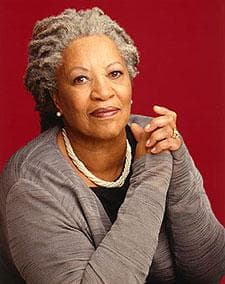
Chloe Anthony Wofford Morrison, known as Toni Morrison, was an American novelist. Her first novel, The Bluest Eye, was published in 1970. The critically acclaimed Song of Solomon (1977) brought her national attention and won the National Book Critics Circle Award. In 1988, Morrison won the Pulitzer Prize for Beloved (1987); she was awarded the Nobel Prize in Literature in 1993.
Similar books
- The Underground Railroad
Colson Whitehead
4.0 (290k) average on GoodreadsLiterary FictionExplores the brutality of slavery and the fight for freedom with a touch of magical realism.
- Kindred
Octavia E. Butler
4.1 (5k) average on GoodreadsFantasyFeatures a protagonist grappling with the horrors of slavery through a time-travel narrative.
- Homegoing
Yaa Gyasi
4.4 (175k) average on GoodreadsLiterary FictionTraces the legacy of slavery and its impact across generations with powerful prose.
- The Old Man and the Sea
Ernest Hemingway
3.8 (831k) average on GoodreadsLiterary FictionA Cuban fisherman's long struggle with a giant marlin becomes a story of endurance and dignity, now retold for young adults with illustrations, phonetic guides, and writing prompts in Traditional Chinese.
- One Hundred Years of Solitude
Gabriel García Márquez
4.1 (753k) average on GoodreadsLiterary FictionThrough the multi-generational story of the Buendía family, a mythical town deals with the repeating patterns of time, love, and solitude, as the extraordinary mixes with the ordinary.
- The Goldfinch
Donna Tartt
3.9 (720k) average on GoodreadsLiterary FictionHaunted by a tragic explosion and clutching a stolen Dutch masterpiece, a young orphan navigates the opulent drawing rooms of New York and the gritty underbelly of the art world, desperately seeking connection and redemption amidst a life spiraling into crime and obsession.






Enjoyed the summary?
A summary gives you the shape of the book. The book itself has the detail, the examples and the voice.
Find Beloved on AmazonAs an Amazon Associate, BookBrief earns from qualifying purchases. How we're funded