
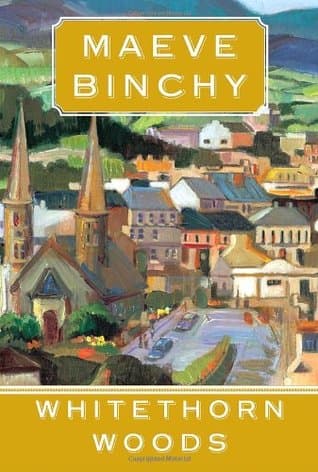
Synopsis
Covers the whole plot, including the ending.
- Difficulty
- Easy
- Pacing
- Moderate
- Mood
- Heartwarming, Reflective, Community-focused, Gentle
- Read it if
- You enjoy character-driven stories about community, tradition versus progress, and the quiet magic of everyday life in an Irish setting.
- Skip it if
- You prefer fast-paced thrillers or plots with a single, clear protagonist and conflict.
Whitethorn Woods Plot Summary
Covers the whole plot, including the ending.
The Threat to St. Ann's Well
The quiet Irish town of Rossmore faces a major change with the announcement of a new bypass highway that will cut through Whitethorn Woods. This development sparks heated debate among the townspeople: some see it as progress and economic prosperity, while others fear it will destroy Rossmore's character and bypass its businesses entirely. At the center of the controversy is St. Ann's Well, a revered site at the edge of the woods, believed by many to possess spiritual power and a place where generations have come to share their hopes and fears. Young Father Brian Flynn, newly assigned to the parish, finds himself caught in the middle, tasked with understanding the community's diverse opinions before the well's fate is sealed by the highway's path.
Ned and the Legacy of the Well
Ned, the local historian and a strong supporter of St. Ann's Well, researches its history. He finds old maps, local legends, and personal testimonies that show its deep importance to Rossmore. He believes the well is more than just water; it is a sacred site with centuries of prayers and wishes, and its destruction would be a loss to the town's heritage and spiritual life. Ned takes it upon himself to teach Father Flynn and anyone who will listen about the well's meaning, hoping to sway public opinion and prevent its demolition, even as the highway project moves forward.
The Developers' Perspective
Mr. Kennedy, the lead developer for the highway project, represents the opposing view. He is a practical businessman who sees St. Ann's Well as an inconvenient relic, an obstacle to modern infrastructure and economic advancement. He dismisses the spiritual and historical claims surrounding the well as sentimental, prioritizing efficiency and cost. Mr. Kennedy argues that the highway will bring jobs and connect Rossmore to larger markets, benefits that outweigh preserving what he considers a mere puddle. His stance creates a direct clash with Ned and the well's supporters, further dividing the community.
Vera's Return and Personal Connection
Vera, a successful woman who left Rossmore years ago to build a life in Dublin, returns to her hometown, initially not caring about the highway debate. However, as she reconnects with old friends and familiar places, she gets drawn into the discussion about St. Ann's Well. Vera has a personal history with the well; as a young girl, she made a wish there that she believes came true, shaping her life. Her return forces her to confront her past and re-evaluate her priorities, as she finds herself unexpectedly invested in the well's fate, bridging the gap between her modern, urban life and the traditions of her childhood.
Father Flynn's Dilemma
Father Brian Flynn, a young priest with a modern outlook, grapples with the complexities of the St. Ann's Well controversy. He respects the historical and spiritual meaning that many townspeople attribute to the well, understanding their emotional connection. However, he also recognizes the practical arguments for the highway and the potential economic benefits for Rossmore. Father Flynn feels responsible to his flock, wanting to make a decision that is both spiritually sound and good for the community's future. He spends his days listening patiently to all sides, trying to find the true path forward amid conflicting desires and beliefs, often feeling overwhelmed by the decision.
The Power of Wishes
As the debate grows, many townspeople share personal stories and anecdotes related to St. Ann's Well. Some recount wishes made there that seemingly came true, attributing their successes in love, career, or health to the well's power. Others speak of comfort found in its peaceful presence during times of sorrow or uncertainty. These narratives, passed down through generations, highlight the well's deep psychological and emotional meaning to the community, whether its power is supernatural or simply a strong symbol of hope and tradition. Father Flynn listens intently, understanding that these stories are as much a part of the well as its physical location.
A Community Divided
The impending decision regarding the highway and St. Ann's Well deeply divides the close-knit community of Rossmore. Old friends find themselves on opposing sides, families argue, and local businesses align with either the 'progress' or 'preservation' groups. Public meetings become heated, and the local newspaper is filled with letters expressing strong opinions. Yet, amid the conflict, unexpected alliances also form, as individuals from different walks of life find common ground in their shared concern for Rossmore's future, whether they envision it as a bustling modern town or a guardian of cherished traditions.
The Revelation of a Secret
During his research and conversations, Father Flynn uncovers a long-buried secret connected to St. Ann's Well, a story that sheds new light on its meaning and the lives of some of Rossmore's oldest residents. This revelation, involving a past tragedy and a hidden act of kindness, adds another layer of complexity to the well's history. It shows that its importance extends beyond simple superstition or historical fact. The secret's disclosure forces several characters to re-evaluate their past actions and relationships, showing how deeply personal histories are linked with the communal memory surrounding the well.
A Compromise is Sought
Recognizing the deep emotional and cultural investment in St. Ann's Well, Father Flynn, with the help of Ned and other community leaders, begins to explore alternative solutions to the highway's path. They engage in discussions with Mr. Kennedy and the developers, seeking a compromise that could allow the highway to proceed while also preserving the well, or at least its essence. This search for a middle ground involves negotiations, engineering challenges, and a willingness from both sides to consider new approaches. The community, though still divided, rallies around the idea of finding a solution that respects both tradition and progress.
The Well's Enduring Spirit
Ultimately, a creative solution is found that allows the highway to be built while acknowledging the deep meaning of St. Ann's Well. While the exact physical location or form of the well might be altered or relocated, the community commits to preserving its spirit and ensuring its continued role as a place of reflection and remembrance. This resolution is not a complete victory for either side, but it shows Rossmore's ability to adapt and honor its heritage. The well's story becomes a symbol of the town's resilience and its capacity to find common ground, ensuring that future generations will still have a place to connect with the past and make their own wishes.
Whitethorn Woods Characters
Father Brian Flynn
Protagonist
A young, earnest priest tasked with navigating Rossmore's highway controversy.
Father Brian Flynn is a young, intelligent, and compassionate priest, newly assigned to Rossmore. He is earnest in his desire to do good for his parish but finds himself overwhelmed by the conflicting opinions surrounding St. Ann's Well and the proposed highway. He is a good listener, trying to understand all viewpoints without immediately taking a side, which often puts him in a difficult position. His faith is strong, but he also possesses a practical, modern sensibility, making him question the literal truth of some superstitions while respecting their cultural significance.
Relationships: Ned (mentor/advisor on local history and well's significance); Mr. Kennedy (opposing viewpoint in the highway debate); Vera (initially a new acquaintance, later a confidante and ally)
Ned
Supporting
Rossmore's passionate historian and staunch defender of St. Ann's Well.
Ned is the unofficial historian of Rossmore, deeply knowledgeable about local lore, family histories, and especially the centuries-old legends surrounding St. Ann's Well. He is passionate, traditional, and fiercely protective of the town's heritage, viewing the well as an irreplaceable spiritual and cultural landmark. Ned is a kind, elderly man, initially skeptical of Father Flynn's modern views but becomes a trusted advisor, providing the historical context necessary for understanding the well's importance. He is driven by a profound respect for the past and a desire to preserve it for future generations.
Relationships: Father Brian Flynn (mentor/advisor on local history and well's significance); Mr. Kennedy (ideological opponent in the highway debate); Vera (old acquaintance, shares local history)
Mr. Kennedy
Antagonist
The pragmatic highway developer, focused on progress and efficiency.
Mr. Kennedy is the lead developer for the new bypass highway, representing the forces of modern progress and economic development. He is a pragmatic, no-nonsense businessman who views St. Ann's Well as an inconvenient and superstitious relic, an obstacle to a much-needed infrastructure project. He is efficient, results-oriented, and initially dismissive of the emotional and spiritual arguments surrounding the well. While not malicious, he struggles to understand sentimentality when faced with practical engineering and economic benefits. He believes his work will bring prosperity to Rossmore, even if it means sacrificing some traditions.
Relationships: Father Brian Flynn (negotiator/opposing viewpoint); Ned (ideological opponent)
Vera
Supporting
A successful woman who returns to Rossmore, reconnecting with her past and the well's legacy.
Vera is a successful, independent woman who left Rossmore years ago for a career in Dublin. She initially returns with a somewhat detached, modern perspective, seeing the town's debates from a distance. However, her past is deeply intertwined with St. Ann's Well, where she made a significant wish as a child. Her return forces her to confront her own history, her family's legacy, and the true meaning of 'home.' She is intelligent, articulate, and capable, but also carries a hidden vulnerability related to her past experiences and the choices she's made.
Relationships: Father Brian Flynn (initially a new acquaintance, later a confidante and ally); Ned (old acquaintance, shares local history)
Molly
Supporting
A local shopkeeper, emblematic of the town's practical concerns about the bypass.
Molly is a sharp-witted and pragmatic shopkeeper in Rossmore. She's deeply concerned about the economic impact of the bypass, fearing it will divert traffic and customers away from her business and the town center. While she respects the traditions surrounding St. Ann's Well, her primary focus is on the livelihoods of the townspeople. She represents the vocal segment of the community that prioritizes economic survival and believes progress is necessary, even if it comes at a cost. Molly is a realist, grounded in the day-to-day struggles of small-town life.
Relationships: Father Brian Flynn (parishioner, voice of economic concern); Ned (local acquaintance, differing priorities)
Maeve
Supporting
An elderly woman with a deep, personal connection to the well and its mystical power.
Maeve is one of Rossmore's oldest residents, a quiet and deeply spiritual woman who holds a profound, almost mystical belief in the power of St. Ann's Well. She has personal stories and family anecdotes stretching back generations, all testifying to the well's ability to grant wishes, offer solace, and even heal. Her connection to the well is not just historical but deeply personal and emotional. She represents the unwavering faith in the well's spiritual significance, and her quiet conviction deeply impacts Father Flynn and others, reminding them of the intangible values at stake.
Relationships: Father Brian Flynn (parishioner, shares personal stories of the well); Ned (shares historical knowledge and stories)
Declan
Supporting
A young local who sees the highway as an opportunity for the town's youth.
Declan is a young man in Rossmore who represents the aspirations of the younger generation. He sees the new highway as a chance for modernization, new jobs, and better connections to larger cities, which could prevent young people from having to leave Rossmore to find opportunities. He's less concerned with the historical or spiritual significance of the well, viewing it as an old tradition that might need to be sacrificed for a brighter future. Declan is energetic and forward-looking, but sometimes impatient with the town's slower pace and attachment to the past.
Relationships: Father Brian Flynn (parishioner, voice of youth's aspirations); Molly (shares economic concerns for the town)
Eileen
Mentioned
A woman whose family has a long, personal history with the well's curative powers.
Eileen is a woman whose family has generations of stories connected to St. Ann's Well, particularly regarding its reputed curative powers for various ailments. She believes deeply in the well's ability to provide solace and even healing, recounting personal experiences where prayers at the well seemed to bring relief or resolution. Her perspective highlights the well's role as a source of hope and comfort, especially in times of illness or despair, reinforcing its profound emotional and psychological impact on the community.
Relationships: Father Brian Flynn (parishioner, shares personal testimony of the well); Maeve (shares similar spiritual beliefs about the well)
Whitethorn Woods Themes
Tradition vs. Progress
The central conflict of the novel is about preserving long-held traditions, symbolized by St. Ann's Well, and embracing modern progress, represented by the new highway. Characters like Ned strongly defend the historical and spiritual meaning of the well, while figures like Mr. Kennedy and Molly prioritize economic development and infrastructure. Father Flynn navigates this divide, understanding that both elements are important for a thriving community. The town of Rossmore itself shows this tension, trying to maintain its identity while adapting to a changing world, as seen in the debates over its future.
“The well wasn't just a hole in the ground, it was a memory, a hope, a thousand whispered prayers.”
Faith and Superstition
The book explores the relationship between genuine faith, spiritual belief, and local superstitions, particularly concerning St. Ann's Well. While some, like Maeve, hold a deep, unwavering belief in the well's miraculous powers, others, like Father Flynn, grapple with how to reconcile these beliefs with modern theological understanding. The 'wishes' made at the well are presented as both acts of faith and reflections of human desire, questioning whether the power lies in the well itself or in the belief of those who visit it. The story suggests that even if some beliefs are 'superstitious,' the comfort and hope they provide are real and valuable to the community.
“Was it God working through the well, or just the powerful belief of people making their own futures?”
Community and Identity
Whitethorn Woods examines how shared history, geography, and collective memory shape a community's identity. The debate over St. Ann's Well is not just about a physical location but about what Rossmore represents and what it will become. The well is a focal point for communal identity, a place where generations have connected, shared, and remembered. The characters' differing opinions reflect their individual visions for Rossmore's future, but their shared concern for the town's essence ultimately binds them. The resolution of the conflict highlights the importance of collective decision-making and the resilience of a community finding its way forward.
“Rossmore wasn't just a place; it was a patchwork of lives, woven together by shared memories and hopes.”
The Power of Storytelling
The novel is structured around the diverse voices and personal narratives of the townspeople, showing the power of storytelling to convey history, belief, and individual experience. Each character's account of their connection to St. Ann's Well—whether a tale of a granted wish, a historical anecdote, or a childhood memory—adds to the collective understanding of the well's meaning. These stories are not just entertainment; they are the fabric of Rossmore's heritage, influencing decisions and shaping perceptions. Father Flynn's role as a listener shows the importance of hearing and valuing every voice in a community's story.
“Every stone in Rossmore had a story, and the well had more than most.”
Plot Devices & Literary Techniques
Framing Device: Father Flynn's Listening
The narrative is presented through Father Flynn's perspective as he gathers community opinions.
The novel uses Father Brian Flynn's role as the central listener and arbiter as a framing device. The plot unfolds largely through his interactions with various townspeople, each offering their personal perspective, stories, and arguments regarding St. Ann's Well and the highway. This allows the author to present a polyphonic view of the community, showcasing diverse opinions without necessarily endorsing one. Father Flynn's empathetic and non-judgmental approach encourages characters to reveal their deepest feelings and histories, making him an ideal conduit for the reader to understand the complex dynamics of Rossmore.
Symbolism: St. Ann's Well
The well symbolizes tradition, spiritual belief, community memory, and the past.
St. Ann's Well serves as the central symbol of the novel. On a literal level, it's a physical site, but its symbolic weight is far greater. It represents the deep roots of tradition, the enduring power of spiritual belief (whether faith or superstition), and the collective memory of the Rossmore community. Its threatened destruction symbolizes the potential loss of identity, heritage, and the intangible connections that bind people together. The well's ultimate fate reflects the possibility of integrating the past with the future, rather than simply sacrificing one for the other.
Symbolism: The Highway
The highway symbolizes progress, modernization, economic opportunity, and the future.
The proposed bypass highway acts as a powerful symbol of progress, modernization, and the future. It represents the practical and economic aspirations of Rossmore – the desire for better connectivity, increased trade, and opportunities for younger generations. Its planned route directly through Whitethorn Woods and potentially St. Ann's Well highlights the inherent conflict between these modern aspirations and the preservation of tradition. The highway forces the community to confront the costs and benefits of change, and whether growth must always come at the expense of heritage.
Interwoven Narratives
The story is told through multiple, interconnected character viewpoints and backstories.
The novel employs interwoven narratives, presenting the story of the highway and the well through the individual perspectives and backstories of numerous Rossmore residents. Each chapter or section often focuses on a different character, revealing their personal history, their connection to the well, and their stance on the community's future. These individual stories gradually build a rich, multifaceted portrait of the town and its people, demonstrating how deeply interconnected their lives are and how their personal histories influence their present-day decisions and beliefs about the well.
Whitethorn Woods Quotes
“There are some people who can make you feel instantly at home, as if you've known them all your life, and others who, no matter how long you know them, always feel like strangers.”
“Everyone has a story, even if they don't know how to tell it yet.”
“Sometimes the greatest adventures are the ones you never planned.”
“Love isn't always fireworks and grand gestures; sometimes it's just quiet understanding and a shared cup of tea.”
“The past is like a comfortable old armchair; you can sit in it for a while, but you can't live there.”
“It's never too late to learn something new, or to change your mind about something old.”
“People often think they know what's best for others, but only the heart truly knows its own path.”
“A good laugh can mend almost anything, even a broken heart, for a little while at least.”
“The world is full of small kindnesses, if you only take the time to notice them.”
“Sometimes the bravest thing you can do is to ask for help.”
“Home isn't a place, it's a feeling, and it can be found in the most unexpected people.”
“Regrets are like shadows; they follow you, but they don't have to define you.”
“The best stories are not always the ones with happy endings, but the ones that make you feel something real.”
“It's the little things that make life rich, not the grand ones.”
Quiz
10 questions on the plot and the characters. Each answer comes with a short explanation.
Question 1
What is the primary conflict that ignites the various stories in 'Whitethorn Woods'?
- A dispute over the ownership of Whitethorn Woods
- The construction of a new highway threatening to bypass Rossmore and destroy St. Ann's Well
- A local election for mayor of Rossmore
- A love triangle involving Father Flynn
Show answer
B. The construction of a new highway threatening to bypass Rossmore and destroy St. Ann's Well The central conflict driving the narrative is the proposed highway that would bypass Rossmore and lead to the destruction of St. Ann's Well, prompting various characters to share their perspectives.
Question 2
Who is the young priest who listens to the various opinions regarding the fate of St. Ann's Well?
- Father Michael
- Father Brennan
- Father Flynn
- Father Liam
Show answer
C. Father Flynn Father Flynn is the specific character mentioned as the young priest who is concerned with the fate of St. Ann's Well and listens to the townspeople's stories.
Question 3
What is St. Ann's Well primarily known for among the people of Rossmore?
- It's a popular fishing spot.
- It's a place where people share dreams, fears, and prayers, believed by some to have spiritual power.
- It's the site of an annual town fair.
- It's a historical landmark from a famous battle.
Show answer
B. It's a place where people share dreams, fears, and prayers, believed by some to have spiritual power. The description states that people have been coming to St. Ann's for generations to share their dreams and fears, and speak their prayers, with some believing it has spiritual power.
Question 4
What is one of the main thematic tensions explored through the various characters' opinions in the book?
- The conflict between urban and rural lifestyles
- The choice between upholding traditions of the past and embracing promises of the future
- The struggle between different religious denominations
- The impact of tourism on small towns
Show answer
B. The choice between upholding traditions of the past and embracing promises of the future The synopsis explicitly states that the characters are 'men and women deciding between the traditions of the past and the promises of the future,' which is a core theme.
Question 5
How does the proposed highway primarily affect the town of Rossmore?
- It will bring a new train station to the town center.
- It threatens to bypass the town, leading to debate about its economic impact.
- It will connect Rossmore directly to a major city, increasing tourism.
- It will create new jobs in construction within Rossmore itself.
Show answer
B. It threatens to bypass the town, leading to debate about its economic impact. The highway 'threatens to bypass the town of Rossmore,' causing passionate opinions about whether the town will benefit or suffer, indicating an economic concern.
Question 6
What is Father Flynn's initial stance regarding the two factions debating the future of St. Ann's Well?
- He immediately sides with those who want to protect the well.
- He believes the well is a mere superstition and should be sacrificed.
- He is uncertain and listens to both sides without favoring either.
- He tries to mediate a compromise between the two groups.
Show answer
C. He is uncertain and listens to both sides without favoring either. The text states, 'Not knowing which faction to favor, Father Flynn listens to all those caught up in the conflict,' indicating his initial neutrality and desire to understand.
Question 7
What literary device is central to how the story of 'Whitethorn Woods' is told?
- A single, omniscient narrator following one main character's journey.
- A series of interconnected short stories or vignettes told from multiple perspectives.
- An epistolary novel, told through letters and diary entries.
- A futuristic dystopian narrative.
Show answer
B. A series of interconnected short stories or vignettes told from multiple perspectives. The description states, 'these are the voices we hear in the stories of 'Whitethorn Woods'--men and women deciding between the traditions of the past and the promises of the future,' implying a collection of individual stories or perspectives.
Question 8
What is the general perception of Maeve Binchy's writing style, as described in the synopsis?
- Dark, suspenseful, and mysterious
- Experimental, avant-garde, and challenging
- Full of wit, warmth, and wisdom, with generosity and empathy
- Formal, academic, and historically focused
Show answer
C. Full of wit, warmth, and wisdom, with generosity and empathy The synopsis praises Binchy for her 'wit, warmth, and wisdom' and describes her portrayal of characters with 'generosity and empathy.'
Question 9
What specific detail about St. Ann's Well contributes to the debate over its destruction?
- It is a protected habitat for a rare species of bird.
- It is located on private land, complicating its acquisition.
- Some believe it has true spiritual power, while others see it as a magnet for superstitions.
- It is a source of drinking water for the entire town.
Show answer
C. Some believe it has true spiritual power, while others see it as a magnet for superstitions. The text highlights that 'Some believe it to be a place of true spiritual power, demanding protection; others think it's a mere magnet for superstitions, easily sacrificed,' which is the core of the debate.
Question 10
How does the author characterize the people whose stories are told in 'Whitethorn Woods'?
- Wealthy and influential figures in Irish society
- Ordinary people brought vividly to life by Binchy's storytelling
- Historical figures from Ireland's past
- Fictional characters representing different mythical beings
Show answer
B. Ordinary people brought vividly to life by Binchy's storytelling The synopsis explicitly describes them as 'ordinary people brought vividly to life by Binchy's generosity and empathy, and in the vivacity and surprise of her storytelling.'
Whitethorn Woods FAQ
What is the central conflict driving the plot of 'Whitethorn Woods'?
The central conflict revolves around the proposed construction of a new highway that will bypass the town of Rossmore and cut directly through Whitethorn Woods. This development sparks heated debate among the townspeople, who are divided on whether the highway will bring economic benefit or destroy their community's character and traditions, particularly concerning St. Ann's Well.
Who is Father Flynn, and what is his role in the story?
Father Flynn is a young priest in Rossmore who finds himself at the heart of the highway debate. He is particularly concerned about the fate of St. Ann's Well, which is threatened by the construction. His role is primarily as a listener, gathering the diverse perspectives and stories of the townspeople as they grapple with the changes facing their community.
What is the significance of St. Ann's Well in the book?
St. Ann's Well is a deeply symbolic and historically significant site located at the edge of Whitethorn Woods. For generations, people have visited the well to share their dreams, fears, and prayers, believing it to be a place of spiritual power. Its potential destruction by the highway becomes a focal point for the conflict between tradition and progress.
How does the book explore the theme of tradition versus progress?
The book explores this theme through the varying opinions of Rossmore's residents regarding the highway. Some characters champion the highway as a path to modernization and economic growth, while others fiercely defend the historical and spiritual importance of Whitethorn Woods and St. Ann's Well, seeing them as vital to their community's identity and heritage.
Is 'Whitethorn Woods' primarily a romance novel, or does it encompass other genres?
While the book is categorized as romance, it is more accurately described as a collection of interconnected stories that explore various forms of human relationships, community dynamics, and individual struggles. It delves into the lives of multiple characters, each with their own personal challenges and romantic entanglements, but the overarching narrative focuses on the town's collective response to change.
Are there any subtle connections between the seemingly disparate stories of the townspeople?
Yes, many of the seemingly individual stories are subtly interconnected through shared acquaintances, family ties, or past events that resurface during the highway debate. For instance, characters from one narrative might be mentioned or briefly appear in another, revealing the intricate web of relationships within Rossmore and highlighting the ripple effects of each person's life on the community.
Does the book offer a definitive resolution or an ambiguous ending regarding the highway and the well?
The book tends to offer a nuanced rather than definitive resolution. While some individual character arcs find closure, the larger question of the highway and the well often remains somewhat open-ended or complex. Binchy focuses more on the journey of the characters and their evolving perspectives rather than a clear-cut 'win' or 'loss' for either side.
Are there any characters whose initial stance on the highway changes significantly by the end of their story?
Yes, several characters undergo shifts in their perspectives as they hear others' stories and reflect on their own lives. For example, some who initially championed the highway might come to appreciate the value of the woods and well, while others who were resistant might grudgingly accept the inevitability or potential benefits of progress. These changes are often driven by personal revelations or new understanding.
How does Father Flynn's personal journey or internal conflict evolve throughout the book?
Father Flynn's journey is one of increasing empathy and understanding. Initially, he struggles with his pastoral duty to remain neutral while feeling a personal pull towards protecting the well. As he listens to the diverse stories, he learns to navigate the complexities of human belief and motivation, ultimately growing in wisdom and compassion as a spiritual guide for his community, rather than simply taking a side.
What psychological insights does the book offer into the human resistance to change?
The book deeply explores human resistance to change, portraying it as rooted in fear of the unknown, attachment to tradition, and the emotional comfort of familiarity. Characters often equate the physical landscape of Rossmore and its traditions with their own identities and sense of belonging, making the threat of change feel like a personal attack on their very essence.
How does Binchy use the individual stories to illustrate collective psychological traits of a small town?
Binchy masterfully uses individual narratives to reveal collective psychological traits such as gossip, community loyalty, stubbornness, resilience, and the power of shared history. Each character's personal struggle or triumph contributes to a broader portrait of how a small, close-knit community navigates external threats and internal divisions, highlighting both its strengths and its limitations.
In what ways do characters use St. Ann's Well as a projection of their own hopes and fears?
Characters use St. Ann's Well as a powerful projection of their deepest hopes and fears, imbuing it with personal significance. For some, it represents hope for healing or answered prayers; for others, it's a place to shed fears or acknowledge past mistakes. The well acts as a mirror, reflecting their inner lives and spiritual needs, regardless of its objective 'power.'
Does the book ultimately side with the 'spiritual power' or 'mere superstition' view of St. Ann's Well?
The book deliberately avoids taking a definitive side on whether St. Ann's Well possesses true spiritual power or is merely a magnet for superstition. Instead, it emphasizes the profound human need for belief, hope, and ritual. The power of the well is shown to lie in what people choose to believe and the comfort or introspection it provides them, rather than an objective truth.
What is the broader message Binchy conveys about the importance of listening to diverse voices?
Binchy conveys that true understanding and empathy come from actively listening to and valuing diverse voices, even those with opposing viewpoints. Through Father Flynn's role, the book illustrates that complex issues cannot be solved by simple answers, but rather by appreciating the multifaceted human experiences and motivations that shape individual perspectives.
Could the Whitethorn Woods itself be seen as a character in the story?
Yes, the Whitethorn Woods can certainly be interpreted as a character in its own right. It is not merely a setting but a living entity that holds history, memories, and spiritual significance for the community. Its fate is intrinsically linked to the characters' identities and futures, making it a silent, yet powerful, presence throughout the narrative.
How does the structure of interconnected short stories contribute to the overall impact of the novel?
The structure of interconnected short stories allows Binchy to present a panoramic view of the Rossmore community, showcasing a wide range of perspectives and experiences without being confined to a single protagonist's viewpoint. This mosaic approach enriches the narrative, demonstrating how individual lives intertwine and how a collective identity is formed through shared challenges and triumphs, enhancing the sense of a vibrant, living community.
What role does nostalgia play in the characters' attitudes towards the proposed highway?
Nostalgia plays a significant role, particularly for characters who resist the highway. They often view the woods, the well, and the traditional way of life in Rossmore through a romanticized lens, associating them with cherished memories, a simpler past, and a perceived loss of innocence or community spirit. This emotional attachment to the past fuels their opposition to modernization.
Are there any characters who initially support the highway for purely selfish reasons but later gain a broader perspective?
Yes, some characters initially support the highway primarily for personal gain, such as increased business or property value. However, as they interact with others and hear their stories, or face personal challenges, their perspectives often broaden. They might begin to consider the wider community impact or the intrinsic value of the woods and well beyond monetary terms, leading to a more nuanced understanding.
About the author

Maeve Binchy was an Irish author known for her engaging fiction that often explores themes of friendship and community. Some of her notable works include "Tara Road," "Circle of Friends," "A Week in Winter," "Evening Class," "Nights of Rain and Stars," and "Light a Penny Candle." Her storytelling style has resonated with readers worldwide, making her a significant figure in contemporary literature.
Similar books
- Circle of Friends
Maeve Binchy
4.0 (59k) average on GoodreadsHistorical FictionShares Binchy's signature style of interwoven character stories in an Irish setting.
- The Light We Lost
Jill Santopolo
3.9 (82k) average on GoodreadsRomanceExplores themes of personal history, community, and the impact of decisions on individual lives.
- The Van
Roddy Doyle
3.9 (6k) average on GoodreadsLiterary FictionWhile both authors depict Irish community life, Doyle's work, like 'The Van,' often features sharper social commentary and a more unvarnished, sometimes biting, portrayal of character and societal friction. Binchy's 'Whitethorn Woods,' while exploring community division, maintains a gentler, more sentimental tone, focusing more on reconciliation and enduring spirit rather than deeper critiques of social structures.
- The Hunger Games
Suzanne Collins
4.3 (6.4M) average on GoodreadsFantasyIn a future where children fight to the death on live television, Katniss Everdeen volunteers for the arena, turning a death sentence into a fight for survival and a spark of rebellion.
- The Great Gatsby
F. Scott Fitzgerald
3.9 (3.8M) average on GoodreadsHistorical FictionIn the opulent Roaring Twenties, a mysterious millionaire's lavish parties hide his desperate, tragic pursuit of a lost love, exposing the emptiness within the American Dream.
- The Fault in Our Stars
John Green
4.2 (3.6M) average on GoodreadsYoung AdultA girl with a terminal illness finds her story rewritten when a charming boy with a similar past enters her life at a cancer support group, leading to a star-crossed romance.



Enjoyed the summary?
A summary gives you the shape of the book. The book itself has the detail, the examples and the voice.
Find Whitethorn Woods on AmazonAs an Amazon Associate, BookBrief earns from qualifying purchases. How we're funded