
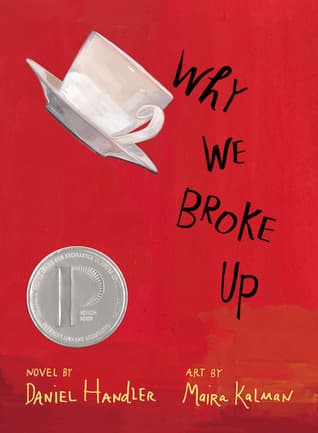
Synopsis
Covers the whole plot, including the ending.
- Difficulty
- Medium
- Pacing
- Moderate
- Mood
- Introspective, Melancholy, Romantic, Reflective, Heartbreaking
- Read it if
- You appreciate unique storytelling formats, enjoy introspective young adult romance, or want a realistic portrayal of a first love and its painful end.
- Skip it if
- You prefer fast-paced plots with minimal introspection, or you're not in the mood for a poignant and somewhat melancholic breakup story.
Why We Broke Up Plot Summary
Covers the whole plot, including the ending.
The Box and the Letter Begin
Min Green, an artistic high school junior, starts a long letter to her ex-boyfriend, Ed Slaterton, explaining their breakup. The letter comes with a box of mementos from their relationship. Min introduces the first item: two bottle caps, one from soda, one from beer, symbolizing their early differences and the moment Ed first noticed her. She remembers their first talk at a party, where Ed, the popular basketball star, was with his friends, and Min felt like an outsider. The bottle caps show the unexpected spark that started their connection, despite their different social groups.
The First Movie and the Milkshake
Min describes their first 'date,' a trip to the movies to see 'The Seventh Seal,' a film Ed clearly did not understand but pretended to like. She puts the movie ticket stub in the box. After the film, they get milkshakes, and Min notices Ed's casual dishonesty, especially his fake interest in the intellectual film to impress her. This early interaction shows a main difference in their personalities: Min's honesty versus Ed's habit of presenting a polished version of himself. Still, the shared experience and intimacy of the moment bring them closer, setting up their relationship.
The Folded Note and First Kiss
The next item is a folded note, which Min says was their first communication, a simple 'Hi' from Ed passed in class. This note led to their first kiss, which happened suddenly in the school hallway. Min remembers the exciting feeling of the kiss and the quick change in their relationship from acquaintances to something more. This moment solidified their connection and marked the official start of their romance. The note, though seemingly small, holds the weight of that first, thrilling step into intimacy and the promise of a deeper bond.
The Matchbox and the Party Scene
Min includes a small box of matches, remembering a party at Ed's friend Al's house where she felt out of place. While Ed easily moved through his popular social circle, Min watched the superficial interactions and felt growing unease. The matches represent the short-lived, sometimes damaging, nature of the party scene and Min's difficulty connecting with Ed's world. She felt like an observer rather than a participant, a repeated theme where her artistic, thoughtful nature clashed with Ed's more outgoing, conventional popularity. This scene highlights their different values.
The Protractor and Shared Secrets
A protractor from Min's geometry class is a symbol of a rare moment of real connection. Ed, usually reserved, told Min about his struggles with a math problem, and Min, despite her artistic interests, helped him. This shared academic vulnerability allowed them to connect more deeply, beyond their usual social roles. For Min, it was a look at Ed's less confident, more human side, and for Ed, it was a moment of trusting Min with something personal. It shows the potential for a relationship built on mutual support and understanding.
The Books and Intellectual Disparity
Min includes several books she lent to Ed, which he never read or returned. These books — from classic literature to philosophy — represent Min's attempts to share her intellectual world with Ed and build a deeper connection through shared interests. However, Ed's lack of interest shows their intellectual difference. Min realizes that while she wanted to explore his world, Ed was less willing to explore hers. This item sadly illustrates Min's feeling of being intellectually alone in the relationship, despite her efforts.
The Toy Truck and the Road Trip
A small toy truck, taken from a motel room, marks a spontaneous road trip they took together. This adventure, born from a desire to escape their daily lives, was a time of intense intimacy and freedom for Min. The truck symbolizes their shared journey and the moments of pure joy they experienced away from school and friends. During this trip, their physical and emotional bond grew stronger, making Min believe in the strength and uniqueness of their connection, despite the underlying differences she had started to notice.
The Ugly Earrings and Min's Compromises
Min includes a pair of 'ugly earrings' that Ed bought her, which she hated but wore to please him. These earrings symbolize Min's attempts to change her own identity and preferences to fit into Ed's world and meet his expectations. She felt pressured to change parts of herself, from her appearance to her interests, to keep his affection and approval. This item marks a point where Min starts to see the sacrifices she is making, showing the imbalance in their relationship and the loss of her self-worth.
The Motel Comb and the Realization
A cheap comb from a motel room becomes a painful symbol of Ed's cheating. Min finds evidence of his betrayal during a weekend away, realizing he had been seeing other girls, specifically Al's girlfriend, Lauren. This discovery destroys Min's trust and forces her to face the truth of Ed's deceit. The comb represents all the small lies and inconsistencies she had ignored, bringing the full weight of his cheating and marking the point of no return for their relationship. This is the ultimate reason for the breakup.
The Final Items and the End
The final items in the box—a dried flower, a crumpled note, and a photograph—represent the last parts of their relationship and Min's decision to end things. The dried flower might be from a bouquet he gave her, now withered, symbolizing their dying love. The crumpled note could be a final apology or part of a last argument. The photograph captures a moment of their past happiness, now spoiled by betrayal. These items show the pain of memory and the irreversible nature of their split, as Min finishes her letter, having revealed all the reasons 'why we broke up.'
Why We Broke Up Characters
Min Green
Protagonist
An observant, artistic, and introspective high school junior.
Min is the narrator and protagonist, an intelligent and sensitive individual with a deep appreciation for art, literature, and authenticity. She often feels like an outsider in her high school's social hierarchy, preferring intellectual pursuits and genuine connections over superficial popularity. Her observations are sharp, and her emotional depth allows her to dissect the nuances of her relationship with Ed. She is driven by a desire for true understanding and honesty, which ultimately clashes with Ed's more conventional and sometimes deceptive nature.
Relationships: Ed Slaterton (Ex-boyfriend; their complex and ultimately doomed romantic relationship.); Al (Ed's best friend; Min finds him and his friends superficial.); Lauren (Al's girlfriend; the girl Ed cheats with, leading to the breakup.)
Ed Slaterton
Antagonist/Love Interest
The popular, charming, but ultimately dishonest high school basketball star.
Ed is the object of Min's affection and the catalyst for her emotional journey. He is charismatic, handsome, and popular, a star athlete who easily navigates the social landscape of their high school. However, beneath his charming exterior lies a tendency towards superficiality, dishonesty, and a lack of emotional depth. He struggles with genuine intimacy and often prioritizes his image and desires over the feelings of others. His actions, particularly his infidelity, drive the central conflict of the story.
Relationships: Min Green (Ex-girlfriend; his romantic relationship with her is the central focus.); Al (Best friend; they share a similar social circle and values.); Lauren (Al's girlfriend; he has an affair with her.)
Al
Supporting
Ed's best friend and a representation of the popular crowd.
Al is Ed's closest friend and a fixture in the popular social scene. He is portrayed as somewhat crude and less sensitive than Ed, often making inappropriate jokes or comments. Min views him and his friends as embodying the superficiality she dislikes. He serves as a foil to Min's intellectualism and artistic sensibilities, highlighting the vast social and emotional gap between Min and Ed's world. His girlfriend, Lauren, becomes entangled in Ed's betrayal, further complicating the narrative.
Relationships: Ed Slaterton (Best friend.); Min Green (Acquaintance; she dislikes his personality and social group.); Lauren (Girlfriend; her involvement with Ed leads to further conflict.)
Lauren
Mentioned
Al's girlfriend, with whom Ed cheats on Min.
Lauren is Al's girlfriend and the person with whom Ed has an affair. While not a central character, her existence and her involvement with Ed are crucial to the plot, serving as the ultimate catalyst for Min and Ed's breakup. She represents the direct betrayal that shatters Min's trust and forces her to confront the reality of Ed's character. Her role underscores the theme of infidelity and the pain of discovering deceit within a relationship.
Relationships: Ed Slaterton (Involved in an affair with him.); Al (Girlfriend to Al.)
Why We Broke Up Themes
The Nature of Memory and Perspective
The novel is structured around Min's subjective memories, each item in the box starting a specific recollection. This shows how memory is not a neutral record but is shaped by emotion, perspective, and the desire to understand a past event. Min's story is her attempt to build a clear account of their relationship, focusing on her feelings and observations. The letter itself is an act of processing and understanding a painful experience, showing that 'truth' in a relationship is often varied and personal.
“The truth is, you don’t know what is going to happen tomorrow. Life is a crazy ride, and nothing is guaranteed.”
Authenticity vs. Performance
A main theme is the clear contrast between Min's desire for authenticity and Ed's habit of performing or showing a curated version of himself. Min seeks genuine connection and intellectual honesty, seen in her appreciation for complex films and literature. Ed, however, often fakes interest, breaks promises, and ultimately deceives. This theme appears in scenes like Ed pretending to understand 'The Seventh Seal' or Min wearing the 'ugly earrings' to please him, highlighting the compromises made and the emptiness of a relationship built on pretense.
“I hated the earrings. But I wore them because you gave them to me.”
The Pain of First Love and Heartbreak
The novel explores the exciting highs and devastating lows of a first serious relationship. Min's story captures the initial excitement, intense intimacy, and deep emotional investment that mark young love. However, it also shows the deep pain of betrayal, disappointment, and heartbreak. Each item in the box, while recalling a sweet memory, is also filled with the sadness of its ending. The story is an honest portrayal of how deeply a first love can hurt and the difficult process of healing and moving on.
“I’m writing you this letter, Ed, because I’m going to break up with you. I’m going to break up with you, and I’m going to do it in person, and I’m going to do it with this box.”
Social Class and Identity
While not directly stated as a class struggle, there is a tension between Min's artistic, intellectual identity and Ed's world of popular athletes and social conformity. Min often feels like an outsider at Ed's parties or among his friends, showing a clash of values and social circles. Her discomfort with his friends and her attempts to introduce him to her world (through books) highlight this divide. The novel suggests that these differences in identity and social standing contribute to their relationship's ultimate incompatibility.
“You were the star quarterback. I was the girl who sat in the back of the class and drew pictures in her notebook.”
Plot Devices & Literary Techniques
The Box of Mementos
A physical container holding symbolic items that trigger memories.
The box is the central structural device of the novel. Each item within it serves as a tangible anchor for Min's memories, allowing her to organize and narrate the story of her relationship with Ed chronologically and thematically. It functions as a 'memory palace,' where each object is a key to a specific scene, emotion, or turning point. This device allows for a fragmented, non-linear storytelling approach while still maintaining a cohesive narrative arc, mirroring the way memories often surface and connect.
Epistolary Format (The Letter)
The entire novel is presented as a long, unsent letter from Min to Ed.
The epistolary format provides an intimate and deeply personal perspective, allowing readers direct access to Min's thoughts, feelings, and analytical process. It creates a sense of direct address and confession, making Min a highly reliable (though subjective) narrator of her own experience. The act of writing the letter is itself a form of therapy and closure for Min, allowing her to meticulously dissect the relationship and articulate her reasons for the breakup, even if Ed never truly hears or understands it.
Foreshadowing through Items
Early items subtly hint at future conflicts and the relationship's eventual demise.
Many items, even those from the early, happier stages of the relationship, contain subtle hints of the problems to come. For instance, the movie ticket for 'The Seventh Seal' highlights Ed's pretense, and the matchbox from Al's party underscores Min's discomfort with Ed's social world. This device builds a sense of inevitability, showing that the seeds of their breakup were present from the beginning, even if Min didn't fully recognize them at the time. It adds depth to the narrative by demonstrating that relationships often unravel due to inherent incompatibilities.
Why We Broke Up Quotes
“I can't believe how much I miss you. It's like I'm walking around with a hole in my heart.”
“Every single thing in this box is a piece of evidence. A piece of a puzzle. A piece of you and a piece of me.”
“We were like two halves of a weird, beautiful whole. And then we broke.”
“This isn't a story about how we fell in love. This is a story about how we broke up.”
“I don't think I ever told you how much I loved your hands. They were always doing something interesting.”
“It's funny how you can live with someone for so long and still not really know them.”
“Sometimes I think the only way to get over someone is to write them a letter they'll never read.”
“You were the first person who ever made me feel like I wasn't just a collection of flaws.”
“Maybe love is just a big, elaborate practical joke.”
“I wanted to be the girl who didn't care. But I did. Oh, God, I did.”
“This isn't about blaming. This is about remembering. And figuring out where we went wrong.”
“You can't just un-love someone. It's not a light switch.”
“Every single one of these things, Ed, every single one, is a reminder of how much I loved you. And how much I still do.”
Quiz
10 questions on the plot and the characters. Each answer comes with a short explanation.
Question 1
What is the primary format Min uses to explain why she and Ed broke up?
- A series of text messages
- A long letter accompanied by a box of items
- A journal she kept throughout their relationship
- A face-to-face confrontation
Show answer
B. A long letter accompanied by a box of items Min explains their breakup through a detailed letter she writes to Ed, which she intends to give him along with a box containing various mementos from their relationship.
Question 2
Which of the following items is NOT mentioned as being in the box Min gives to Ed?
- A movie ticket
- A concert program
- A pair of ugly earrings
- A comb from a motel room
Show answer
B. A concert program The description mentions bottle caps, a movie ticket, a folded note, matches, a protractor, books, a toy truck, ugly earrings, and a motel comb, but not a concert program.
Question 3
What is Ed Slaterton's primary role in his school's social hierarchy, which initially attracts Min?
- He is a star athlete, specifically a basketball player.
- He is the president of the student council.
- He is a talented musician in the school band.
- He is known for his academic achievements and intellect.
Show answer
A. He is a star athlete, specifically a basketball player. Ed is presented as the popular, star basketball player, which is a significant part of his appeal and how Min initially perceives him.
Question 4
Min frequently references classic films and literature throughout her letter. What does this habit reveal about her character?
- She is pretentious and uses her knowledge to intimidate Ed.
- She struggles to form her own opinions, relying on external sources.
- She is thoughtful, reflective, and uses art to process her experiences and emotions.
- She is trying to impress Ed with her intelligence, even after their breakup.
Show answer
C. She is thoughtful, reflective, and uses art to process her experiences and emotions. Min's constant references highlight her intellectual and artistic nature, using these touchstones to understand, articulate, and cope with her relationship and its end.
Question 5
What is the significance of the 'protactor' mentioned in the box of items?
- It represents Ed's passion for mathematics.
- It symbolizes Min's attempt to measure and understand the angles of their relationship.
- It was a gift Ed gave Min for her birthday.
- It was used in a specific school project they worked on together.
Show answer
B. It symbolizes Min's attempt to measure and understand the angles of their relationship. The protractor is a metaphor for Min's analytical approach to their relationship, trying to precisely define and understand its trajectory and eventual breakdown.
Question 6
What ultimately causes the irrevocable rift between Min and Ed, leading to their breakup?
- Ed cheats on Min with another girl, Alana.
- Min discovers Ed has been lying about his future plans.
- They have a major disagreement about their differing social circles.
- Min decides she wants to pursue a relationship with someone else.
Show answer
A. Ed cheats on Min with another girl, Alana. The primary reason for their breakup, as detailed by Min, is Ed's infidelity with Alana, which Min struggles to reconcile with his perceived affection for her.
Question 7
How does Min's perspective on love and relationships evolve throughout the narrative?
- She becomes cynical, believing all relationships are doomed to fail.
- She learns that love is more complex and nuanced than she initially believed, often involving pain alongside joy.
- She decides that popular guys are never worth the trouble.
- She realizes she prefers being alone to being in a relationship.
Show answer
B. She learns that love is more complex and nuanced than she initially believed, often involving pain alongside joy. Min's journey through the relationship and its ending teaches her about the messy, imperfect reality of love, moving beyond a simplistic, idealistic view.
Question 8
What recurring literary device does Daniel Handler (writing as Min) employ to structure the narrative?
- Flash-forwards to Min's life years after the breakup.
- Each chapter is centered around a specific item from the box, triggering a memory.
- Interspersed poems written by Min about her feelings for Ed.
- Alternating perspectives between Min and Ed.
Show answer
B. Each chapter is centered around a specific item from the box, triggering a memory. The entire book is structured as Min's letter to Ed, with each item in the box serving as a tangible prompt for a specific memory or explanation related to their relationship.
Question 9
The book explores the idea that memory is subjective and often reconstructed. How is this theme demonstrated through Min's narration?
- Min admits she often makes up details to make her story more dramatic.
- Min's emotional state influences how she recalls and interprets past events, highlighting her bias.
- She includes footnotes from other characters correcting her recollections.
- Min frequently consults old photographs to ensure accuracy, proving memory is reliable.
Show answer
B. Min's emotional state influences how she recalls and interprets past events, highlighting her bias. Min's narrative is deeply colored by her feelings of hurt and betrayal, leading her to re-evaluate and reinterpret past events, demonstrating how personal experience shapes memory.
Question 10
What is the overarching tone of Min's letter to Ed by the end of the book?
- Pure hatred and a desire for revenge.
- A mix of lingering affection, deep hurt, and a determined sense of closure.
- Complete indifference towards Ed and their past.
- Overwhelming regret for ever having started the relationship.
Show answer
B. A mix of lingering affection, deep hurt, and a determined sense of closure. While Min is clearly hurt and angry, her letter isn't solely vindictive. It's a complex blend of still caring for Ed, processing her pain, and ultimately seeking understanding and a definitive end to their relationship.
Why We Broke Up FAQ
What is the central premise of 'Why We Broke Up'?
The book is a long letter written by Min Green to her ex-boyfriend, Ed Slaterton, detailing the reasons for their breakup. She sends him a box containing various mementos from their relationship, with each item serving as a catalyst for a specific memory or explanation of an event that contributed to their eventual split.
Who are the main characters in the story?
The primary characters are Min Green, the narrator and protagonist who is an aspiring filmmaker with a keen eye for detail, and Ed Slaterton, a popular jock and basketball star. Other significant characters include Ed's friends Al and Lauren, and Min's best friend Laila.
What kind of items does Min include in the box she sends to Ed?
Min includes a diverse collection of items, each imbued with personal significance to their relationship. Examples include two bottle caps, a movie ticket stub, a folded note, a box of matches, a protractor, various books, a toy truck, a pair of ugly earrings, and a comb from a motel room, among many others.
What is the primary format and narrative style of the book?
The book is entirely presented as a letter from Min to Ed, written in a highly personal and introspective first-person voice. Each item in the box prompts a new section of the letter, where Min recounts specific memories, conversations, and emotional turning points, often with accompanying illustrations of the items.
What ultimately leads to Min and Ed's breakup?
Their breakup is a culmination of several factors, including fundamental differences in their personalities, priorities, and social circles, as well as Ed's perceived infidelity and lack of emotional depth. Min details how Ed's casual disregard for her feelings and his inability to truly connect on an intellectual level ultimately eroded their relationship.
What is the significance of the two bottle caps Min includes in the box?
The two bottle caps symbolize the very beginning of their relationship, representing the first time Ed approached Min and offered her a drink, initiating their connection. Min sees them as a marker of the naive optimism and hope she felt at the outset.
How does the 'protractor' item subtly hint at Min's perspective on their relationship?
The protractor, a tool for measuring angles, subtly represents Min's analytical and precise nature, and her attempt to systematically understand and dissect their relationship. It highlights her need for clarity and truth, contrasting with Ed's more spontaneous and perhaps less reflective approach.
What role do the 'ugly earrings' play in exposing Ed's character flaws?
The 'ugly earrings' were a gift from Ed to Min, which she found distasteful but wore out of obligation. They symbolize Ed's lack of true understanding of Min's taste and personality, and his tendency to give generic or thoughtless gifts, revealing his superficiality and lack of genuine effort in knowing her deeply.
How does Min's aspiring filmmaker background influence her narrative and perception of events?
Min's background as an aspiring filmmaker shapes her narrative by giving her a highly observational and detail-oriented perspective. She 'frames' their relationship like a movie, paying close attention to dialogue, setting, and character development, which allows her to dissect their story with a critical, almost directorial eye.
Discuss the psychological impact of Ed's popularity on his relationship with Min.
Ed's popularity as a basketball star creates a dynamic where he is accustomed to being admired and having things come easily. This fosters a sense of entitlement and a lack of need to deeply understand or work for Min's affection, contributing to his emotional unavailability and the power imbalance in their relationship.
How does Min's act of writing the letter and assembling the box serve as a coping mechanism?
Min's meticulous act of writing the letter and curating the box is a profound coping mechanism, allowing her to process her grief, anger, and confusion in a structured way. It gives her a sense of control over the narrative of their breakup, enabling her to find closure and articulate her truth.
Analyze the role of denial and self-deception in Min's early stages of the relationship with Ed.
In the early stages, Min engaged in denial and self-deception, overlooking Ed's flaws and idealizing their connection, despite warning signs from her friends and her own gut feelings. She wanted to believe in the romance, pushing aside inconsistencies to maintain the illusion of a perfect relationship.
To what extent is Ed truly a 'bad guy,' or is Min's perspective biased?
While Min's perspective is inherently biased as the narrator, Ed is portrayed as genuinely flawed. His actions, like the alleged cheating and emotional distance, contribute significantly to their breakup. However, the letter also acknowledges moments of genuine connection, suggesting he isn't purely malicious, but rather immature and perhaps self-absorbed.
Is the letter truly for Ed's benefit, or is it more for Min's own healing and understanding?
The letter is arguably more for Min's own healing and understanding than for Ed's. While she addresses him directly, the act of articulating her pain and dissecting the relationship allows her to gain clarity and closure. It's a therapeutic process of self-discovery, even if Ed never fully comprehends or appreciates its contents.
How does the novel challenge or reinforce typical YA romance tropes?
The novel challenges typical YA romance tropes by starting with the breakup and dissecting the 'why' rather than focusing on the 'happily ever after.' It deconstructs the popular-jock-meets-artsy-girl dynamic, showing the often-unspoken incompatibilities and the pain of a relationship's unraveling, rather than just its giddy beginnings.
What is the thematic significance of the 'box' itself as a metaphor?
The 'box' is a powerful metaphor for the relationship itself—a contained collection of memories, both beautiful and painful, that Min is finally ready to package up and discard. It represents the tangible evidence of their shared history, and the act of sending it signifies her attempt to move on by literally 'boxing up' the past.
Could Ed have saved the relationship if he had understood Min better?
It's debatable whether Ed could have saved the relationship, as their fundamental differences were significant. While better understanding and effort from Ed might have prolonged it, Min's intellectual and emotional needs were not being met, suggesting that a deeper incompatibility might have always led to their eventual separation, regardless of effort.
What message does the book convey about the nature of memory and truth in relationships?
The book conveys that memory is subjective and truth is often multifaceted in relationships. Min's narrative is her truth, shaped by her feelings and perspective. It highlights how two people can experience the same events but construct vastly different interpretations of their shared history, making a singular 'truth' elusive.
About the author

Daniel Handler is a celebrated author known for his witty and often poignant young adult novels. His most notable work, 'Why We Broke Up,' earned critical acclaim and was a finalist for the National Book Award for Young People's Literature. Handler also writes for adults under the pseudonym Lemony Snicket, most famously for 'A Series of Unfortunate Events'.
Similar books
- Paper Towns
John Green
3.8 (919k) average on GoodreadsMysteryExplores the complexities of young love and disillusionment, with a strong narrative voice.
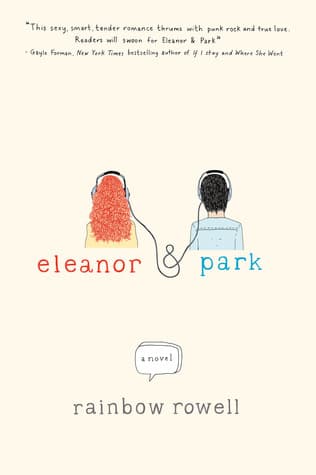
- Eleanor & Park
Rainbow Rowell
4.0 (860k) average on GoodreadsYoung AdultCaptures the intensity and emotional depth of a first love in a realistic high school setting.
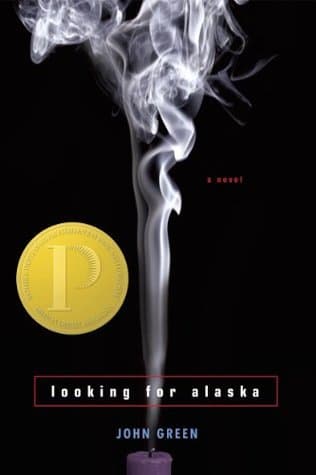
- Looking for Alaska
John Green
4.0 (1.1M) average on GoodreadsMysteryDeals with intense young adult relationships, self-discovery, and the aftermath of significant events.
- The Fault in Our Stars
John Green
4.2 (3.6M) average on GoodreadsYoung AdultUnlike The Fault in Our Stars, which focuses on the intense, blossoming romance between characters facing external, life-threatening challenges, Why We Broke Up is an internal, retrospective analysis of a relationship's decline and dissolution. Green's novel emphasizes the beauty and tragedy of love in the face of mortality, while Handler's delves into the painful dissection of what went wrong between two people.
- To All the Boys I've Loved Before
Jenny Han
4.2 (490k) average on GoodreadsYoung AdultWhile Han's series explores the awkwardness and excitement of burgeoning romance, identity formation through new relationships, and the complexities of family life, Handler's book is a post-mortem of a relationship. Han focuses on the 'getting together' and the challenges within new love, whereas Handler meticulously unpacks the 'falling apart' and the difficult process of moving on and understanding past love.
- Harry Potter and the Sorcerer's Stone
J.K. Rowling
4.5 (7M) average on GoodreadsFantasyRescued from a miserable life under the stairs, an orphaned boy discovers he's a wizard destined for a magical school, where he uncovers a dangerous secret tied to the dark wizard who murdered his parents.




Enjoyed the summary?
A summary gives you the shape of the book. The book itself has the detail, the examples and the voice.
Find Why We Broke Up on AmazonAs an Amazon Associate, BookBrief earns from qualifying purchases. How we're funded