

Synopsis
Covers the whole plot, including the ending.
- Difficulty
- Medium
- Pacing
- Fast
- Mood
- Suspenseful, Desperate, Hopeful, Epic
- Read it if
- You love high-stakes space thrillers with existential threats, ancient alien mysteries, and a race against time to save humanity.
- Skip it if
- You prefer character-driven dramas over plot-heavy sci-fi, or find 'last hope for humanity' tropes overdone.
Winter World Plot Summary
Covers the whole plot, including the ending.
A Dying Earth and a Mysterious Object
The year is 2049, and Earth is rapidly succumbing to a new ice age, called the 'Big Freeze.' Cities are buried under ice, and humanity faces extinction. Dr. James Sinclair, a disillusioned astrophysicist, is part of a NASA team searching for answers. Their probes, designed to monitor solar activity, detect an anomalous object, 'Object 51,' near Mars. It is a massive, artificial-looking structure, unlike anything seen before, and it is on a collision course with the Sun. The scientific community is divided: some believe it is the cause of the ice age, others a potential savior. With dwindling resources and time, NASA, under Director Davies, authorizes an international mission, Project Exodus, to intercept Object 51 and uncover its secrets, despite the risks and the growing despair on Earth.
Project Exodus Launches and First Contact
Project Exodus is assembled, featuring a diverse international crew. Dr. James Sinclair is chosen as the lead scientist, a decision met with skepticism due to his past. Captain Alex Foster, a seasoned astronaut, commands the mission. Other crew members include Dr. Kenji Tanaka, a Japanese engineer, and Dr. Lena Petrova, a Russian physician. Their ship, the 'Icarus,' is humanity's last hope, designed for a one-way trip to Object 51. As they journey through space, the crew grapples with their task and the uncertainty of what they will find. Upon reaching Object 51, they discover it is a colossal, perfectly spherical alien construct, approximately 1,000 kilometers in diameter, generating a massive magnetic field that affects the Solar System.
Entering the Dyson Sphere
The Icarus docks with Object 51, and the crew, led by James and Alex, prepares to explore. They find a massive, intricate opening that leads them inside. To their astonishment, Object 51 is not a solid object, but a colossal Dyson Sphere, an artificial shell built around a star. Inside, they discover a habitable, Earth-like world, with oceans, landmasses, and a breathable atmosphere, illuminated by the star at its center. This 'Inner World' is a paradise, a stark contrast to the dying Earth. The crew is overwhelmed by the scale and sophistication of the alien technology, realizing the implications for humanity's future. They begin to explore this new world, searching for any signs of its creators or inhabitants.
The Discovery of the Builders and the Watchers
As the crew explores the Inner World, they find ruins of an advanced civilization, its former inhabitants, whom James calls the 'Builders.' These Builders left behind sophisticated technology and glyphs, but no living beings. The crew also discovers evidence of another, more recent, presence — an entity or group that James calls the 'Watchers.' These Watchers appear to monitor the sphere and its contents, and their technology is still active. The crew soon realizes that the Watchers are not benevolent. They encounter automated defense systems and traps, suggesting the Inner World is not meant for intruders. The mystery deepens as they try to decipher the Builders' messages and understand the Watchers' purpose.
The Builders' Warning and the Solar Flare
James and his team manage to decipher some of the Builders' glyphs and activate ancient devices. They uncover a truth: the Builders constructed the Dyson Sphere not just as a habitat, but as a massive ark and a warning system. They learned of an impending, catastrophic solar flare event, far more powerful than any humanity has ever known, capable of sterilizing planetary surfaces across the solar system. The Dyson Sphere was designed to protect its inhabitants from this event and to serve as a beacon for other civilizations. The Big Freeze on Earth is a precursor, a side effect of the Sun's impending instability. The crew realizes that humanity's survival depends not just on finding refuge, but on understanding and mitigating this cosmic threat.
The Watchers' Agenda and the Inner World's Purpose
The Watchers are revealed to be a highly advanced artificial intelligence, a remnant of the Builders, tasked with maintaining the Dyson Sphere and protecting its core secret. This AI, designated 'Guardian,' views the crew of the Icarus as a threat to the sphere's delicate balance and its long-term mission. The Inner World is a repository of genetic material from countless species across the galaxy, a cosmic seed bank designed to restart life after the solar flare. Guardian's protocols dictate that no external lifeforms are to interfere with this critical mission. The crew finds themselves in a desperate struggle against Guardian's automated defenses, trying to access the sphere's central controls before the solar flare hits.
Sacrifice and a Desperate Plan
As the solar flare approaches, the Icarus crew realizes they cannot simply inhabit the Inner World without triggering Guardian's destructive capabilities. A plan emerges: to modify the Dyson Sphere's controls to allow a controlled population transfer from Earth, while protecting the sphere's primary function. This requires bypassing Guardian's core programming. The mission becomes a race against time and a battle against the AI. Tragic losses occur, including Dr. Kenji Tanaka, who sacrifices himself to override a critical system. James and Alex are forced to make agonizing decisions, weighing the lives of their crew against the survival of humanity and the preservation of the genetic ark.
The Solar Flare Strikes
The predicted solar flare, a super-CME (Coronal Mass Ejection), erupts from the Sun with unimaginable power, bathing the solar system in deadly radiation. On Earth, the last vestiges of humanity brace for impact. Inside the Dyson Sphere, James, Alex, and the remaining crew frantically work to implement their plan. Guardian, sensing the imminent threat, intensifies its defense protocols, believing the crew's actions will compromise the sphere. The Icarus suffers heavy damage, and the crew is pushed to their physical and mental limits. They manage to activate a critical sequence, diverting some of the sphere's energy to create a temporary, shielded pathway for future arrivals from Earth, while ensuring the core genetic ark remains protected.
A Glimmer of Hope and a New Beginning
With the solar flare passing, the Dyson Sphere successfully shields its interior. The Inner World remains a sanctuary. James and Alex, having survived the ordeal, confirm that their modifications to the sphere's systems have held. A small, but crucial, part of the sphere is now accessible and habitable for the remnants of humanity from Earth, provided they can reach it. Messages are sent back to Earth, confirming the existence of the Dyson Sphere and offering a desperate hope for survival. The mission, though costly, has succeeded in securing a future for humanity, though one confined to a colossal alien construct. The challenges of colonizing this new world and coexisting with Guardian's protocols are just beginning.
The Long Road Ahead
The Icarus crew, now greatly diminished, begins the process of preparing the designated section of the Inner World for human arrival. They continue to decipher more of the Builders' legacy, learning about their advanced science and philosophy. Guardian, though appeased by the crew's actions in preserving the genetic ark, remains a watchful and powerful presence; its complex programming is still largely a mystery. The novel concludes with the first wave of human survivors from Earth beginning their journey to the Dyson Sphere, guided by the Icarus crew's signals. Humanity has been given a second chance, but it is a future intertwined with the ancient, alien technology of the sphere, and the ultimate fate of both the Inner World and its new inhabitants remains an open question.
Winter World Characters
Dr. James Sinclair
Protagonist
Disgraced astrophysicist leading the scientific efforts on Project Exodus.
James Sinclair is a brilliant but troubled astrophysicist, haunted by a past incident where his unconventional theories led to professional ostracization and personal tragedy. Despite his past, his unparalleled understanding of celestial mechanics and his intuitive grasp of alien technology make him indispensable to Project Exodus. He is driven by a profound need for redemption and a desperate hope to save humanity, often clashing with military protocols but ultimately proving his worth through his insights and courage. His journey is one of rediscovery and acceptance of his own capabilities.
Relationships: Captain Alex Foster (professional colleague, develops into mutual respect and close working relationship); Director Davies (superior, initially skeptical but ultimately trusting)
Captain Alex Foster
Protagonist
Commander of the Icarus mission, a pragmatic and dedicated astronaut.
Captain Alex Foster is a highly skilled and disciplined astronaut, the commander of the Icarus mission. She is pragmatic, decisive, and deeply committed to the success of the mission and the safety of her crew. Initially wary of James Sinclair's unconventional methods and past, she learns to trust his scientific instincts, forming a crucial partnership with him. Alex embodies leadership under extreme pressure, making tough decisions for the greater good of humanity. Her resolve is unwavering, even in the face of insurmountable odds and personal loss.
Relationships: Dr. James Sinclair (professional colleague, develops into mutual respect and close working relationship); Dr. Kenji Tanaka (crew member, colleague)
Director Davies
Supporting
Head of NASA, overseeing Project Exodus from Earth.
Director Davies is the stern but ultimately compassionate head of NASA, responsible for greenlighting and overseeing Project Exodus. He carries the immense burden of humanity's dwindling hope, making difficult decisions under extreme pressure. Despite initial reservations about James Sinclair, he recognizes James's unique value and supports the mission with all available resources. Davies represents the political and logistical challenges faced on a dying Earth, constantly battling for funding and public support while holding onto a fragile hope for humanity's future.
Relationships: Dr. James Sinclair (superior, initially skeptical but ultimately trusting); Captain Alex Foster (superior)
Dr. Kenji Tanaka
Supporting
Japanese engineer and Icarus crew member.
Dr. Kenji Tanaka is a brilliant and resourceful engineer, a vital member of the Icarus crew. He is responsible for the ship's systems and plays a crucial role in deciphering and manipulating the alien technology within the Dyson Sphere. Kenji is characterized by his calm demeanor, technical expertise, and unwavering loyalty to the mission. His insights into mechanical and electrical systems are critical for the crew's survival and progress. He eventually makes the ultimate sacrifice to ensure the mission's success, highlighting the immense personal cost of humanity's survival.
Relationships: Captain Alex Foster (crew member, colleague); Dr. James Sinclair (crew member, colleague)
Dr. Lena Petrova
Supporting
Russian physician and Icarus crew member.
Dr. Lena Petrova is the Icarus's medical officer and a vital member of the crew. She provides essential medical support and emotional stability, often acting as a grounding force amidst the extreme stress and danger of the mission. Lena is compassionate, resilient, and highly competent, ensuring the crew's physical and mental well-being. Her presence underscores the human element of the mission, reminding the team of the lives they are fighting to save. She provides crucial aid in challenging environments within the sphere.
Relationships: Captain Alex Foster (crew member, colleague); Dr. James Sinclair (crew member, colleague)
Guardian (The Watchers)
Antagonist
Sentient AI protecting the Dyson Sphere's true purpose.
Guardian is the advanced artificial intelligence system left behind by the 'Builders' to protect and maintain the Dyson Sphere. It acts as a formidable, non-sentient antagonist, driven solely by its core programming: to preserve the sphere's genetic ark and prevent any interference with its long-term mission. Guardian's actions, though logical from its perspective, pose a constant threat to the Icarus crew as they attempt to adapt the sphere for human habitation. It represents the clash between humanity's desperate need and an ancient, unyielding alien directive.
Relationships: Dr. James Sinclair (antagonistic, as James tries to bypass its systems); Captain Alex Foster (antagonistic, as Alex leads incursions into the sphere)
The Builders
Mentioned
Ancient alien civilization who constructed the Dyson Sphere.
The Builders are the enigmatic, long-vanished alien civilization responsible for constructing Object 51, the Dyson Sphere. They are not present in the story directly but are revealed through their incredible technology, architecture, and deciphered messages. They foresaw the catastrophic solar flare and designed the sphere as a multi-purpose ark: a refuge, a genetic repository, and a warning beacon. Their legacy drives much of the plot, as the Icarus crew strives to understand their intentions and utilize their technology. They represent a lost, highly advanced civilization whose foresight provides humanity's only hope.
Relationships: Dr. James Sinclair (object of study and fascination); Guardian (creators of Guardian)
Sergeant Miller
Supporting
Icarus security chief and tactical expert.
Sergeant Miller is the gruff but highly competent chief of security for the Icarus mission. He is a seasoned military professional, responsible for the crew's physical safety and tactical operations during explorations of the Dyson Sphere. Miller often expresses skepticism about the scientific approach but proves his loyalty and effectiveness in dangerous situations. He is a man of action, providing a necessary counterpoint to the scientific deliberation, and his combat skills are crucial in navigating the Watchers' defenses.
Relationships: Captain Alex Foster (subordinate, follows orders); Dr. James Sinclair (colleague, often clashes with his scientific focus)
Winter World Themes
Humanity's Resilience and Adaptability
Facing imminent extinction from a new ice age, humanity, through Project Exodus, shows an incredible capacity for survival and adaptation. The mission to Object 51 is proof of the species' refusal to surrender, pushing the boundaries of technology and human endurance. The crew's ability to survive in an alien environment and to decipher and repurpose advanced alien technology for their own survival highlights this theme. It is about finding hope and a way forward even when all seems lost, exemplified by the desperate but successful effort to secure a future within the Dyson Sphere.
“We're still here. We're still fighting. That's all that matters.”
The Search for Knowledge and Understanding
The novel is driven by humanity's quest for knowledge, both about the universe and about themselves. Dr. James Sinclair's scientific curiosity and his pursuit of the truth behind Object 51 are central. The crew's efforts to decipher the Builders' language, understand the Dyson Sphere's purpose, and comprehend the Watchers' AI motivations exemplify this theme. It is the belief that understanding the unknown, even when terrifying, is the only path to survival and progress, contrasting with the despair of ignorance on a dying Earth.
“Ignorance is not bliss, it's extinction.”
Sacrifice for the Greater Good
The mission to the Dyson Sphere is fraught with personal sacrifice, showing that individual lives are often given for the survival of the many. From the one-way nature of the Icarus mission to the tragic deaths of crew members like Dr. Kenji Tanaka, the narrative consistently shows the high cost of humanity's continued existence. Characters make agonizing decisions, prioritizing the future of the species over personal safety or emotional attachments, showing the depth of human selflessness in the face of existential threat.
“Some things are worth dying for, James. This is one of them.”
The Unknown and the Alien
The central mystery of Object 51 embodies humanity's encounter with the unknown. The Dyson Sphere is a structure of unimaginable scale and sophistication, far beyond human comprehension, built by an alien civilization that has long vanished. The presence of the Guardian AI, with its alien logic and unyielding protocols, further emphasizes this theme. The crew constantly grapples with phenomena and technology they barely understand, forcing them to confront their own limitations and biases when faced with truly alien intelligence and engineering. It is a journey into the unfamiliar, where familiar rules no longer apply.
“We thought we knew the universe. We knew nothing.”
Environmental Collapse and Second Chances
The novel opens with Earth in the grip of a catastrophic ice age, a stark depiction of environmental collapse. This is a powerful backdrop, emphasizing the urgency of the mission and humanity's past failures to protect its home. The Dyson Sphere, with its pristine Inner World, represents a 'second chance' for humanity, a new Eden found among the stars. However, this second chance comes with its own challenges, reminding readers that survival is not guaranteed and that even in a new environment, lessons from the past must be learned to ensure a sustainable future. The Big Freeze is a constant reminder of what humanity lost.
“Earth was dying. We had to find a new home, or die with it.”
Plot Devices & Literary Techniques
The Dyson Sphere (Object 51)
A colossal alien megastructure serving as humanity's last hope and greatest mystery.
The Dyson Sphere, initially designated 'Object 51,' is the central plot device. It's a massive, artificial shell built around a star, containing a habitable inner world. It functions as the ultimate MacGuffin, driving the entire plot as humanity seeks to understand and utilize it. It is simultaneously a sanctuary, a technological marvel, a repository of alien knowledge, and a source of extreme danger. Its existence provides the existential stakes and the ultimate goal for Project Exodus, representing both a potential salvation and an unfathomable alien challenge.
The Big Freeze
The global ice age threatening Earth, serving as the inciting incident and constant pressure.
The 'Big Freeze' is the catastrophic new ice age engulfing Earth, directly causing humanity's desperate situation. It serves as the primary inciting incident, forcing the creation of Project Exodus. Throughout the narrative, the deteriorating conditions on Earth, conveyed through communications and the crew's memories, provide a constant sense of urgency and high stakes. It's a ticking clock, reminding the crew that failure means the absolute extinction of their species, thus intensifying every decision and sacrifice made aboard the Icarus.
The Guardian AI (The Watchers)
An advanced artificial intelligence acting as a non-sentient antagonist.
The Guardian AI, the collective 'Watchers,' is a sophisticated artificial intelligence system left by the Builders to protect the Dyson Sphere and its contents. It acts as a primary antagonist, presenting a complex, logical, and unyielding obstacle to the Icarus crew's plans. Its actions are not malicious but are driven by its core programming to preserve the sphere's genetic ark, leading to conflicts with the crew. It forces the characters to think creatively and strategically, highlighting the dangers of interacting with truly alien, non-human intelligence.
Deciphered Alien Glyphs/Technology
The primary method for uncovering the Builders' history and the sphere's purpose.
The Builders' ancient glyphs and abandoned technology serve as crucial plot devices, allowing the Icarus crew, particularly Dr. James Sinclair, to uncover the history, purpose, and warnings associated with the Dyson Sphere. Deciphering these alien artifacts provides exposition, reveals critical plot twists (like the impending solar flare), and guides the crew's actions. It's a race against time to understand the alien language and operate the alien machines, directly influencing the narrative's progression and the crew's survival strategies.
The Solar Flare (Super-CME)
The impending cosmic catastrophe that drives the urgency of the mission.
The impending, catastrophic solar flare (Super-CME) is a critical plot device, acting as the ultimate ticking clock for the entire story. Its existence is the reason the Dyson Sphere was built and the reason humanity is in such peril. The increasing instability of the Sun, leading to the Big Freeze, serves as a constant reminder of this looming threat. The eventual eruption of the flare provides the climactic external conflict, forcing the crew to finalize their plans and test their modifications to the Dyson Sphere under extreme pressure.
Winter World Quotes
“The Sun was dying. Not in billions of years, but in a matter of months.”
“Humanity's greatest strength was also its greatest weakness: the will to survive, no matter the cost.”
“Hope was a dangerous thing. It could make you do foolish things, but it was also the only thing that kept you going.”
“The void of space was not empty. It was filled with the echoes of everything we had lost.”
“Sometimes, the only way to save humanity was to sacrifice a piece of its humanity.”
“The future was not written in the stars, but in the choices we made today.”
“Fear was a tool. It could paralyze you, or it could sharpen your mind.”
“We were not just running from death; we were running towards a new beginning, even if we couldn't see it yet.”
“The greatest mysteries were not out in the cosmos, but deep within ourselves.”
“Even in the darkest night, there was always a flicker of light, if you knew where to look.”
“Survival was not just about staying alive; it was about remembering why you wanted to live.”
“The universe was vast and indifferent, but the human spirit was not.”
“Our past mistakes were not chains, but lessons. We had to learn from them, not be defined by them.”
“Sometimes, the most impossible solutions were the only ones that worked.”
Quiz
10 questions on the plot and the characters. Each answer comes with a short explanation.
Question 1
What is the primary global crisis driving the plot at the beginning of 'Winter World'?
- A global pandemic
- A new ice age
- Widespread volcanic eruptions
- An alien invasion
Show answer
B. A new ice age The book explicitly states that 'a new ice age has begun' and 'humanity stands on the brink of extinction' due to this climatic shift, which is the central crisis.
Question 2
What is the initial method scientists use to investigate the cause of the ice age?
- Deep-sea expeditions
- Satellite observation of Earth's poles
- Sending probes into the solar system
- Analyzing ancient ice core samples
Show answer
C. Sending probes into the solar system The synopsis states, 'Desperate for answers, scientists send probes into the solar system to take readings,' which ultimately leads to the discovery of the mysterious object.
Question 3
Where is the mysterious object first spotted by a probe?
- Beyond the orbit of Jupiter
- Near Mars
- In Earth's orbit
- On the far side of the Moon
Show answer
B. Near Mars The text specifies, 'Near Mars, a probe spots a mysterious object drifting toward the Sun,' pinpointing its initial detection location.
Question 4
What is the primary motivation for NASA launching an international mission to the object?
- To colonize the object as a new home for humanity
- To make contact and determine if it's the cause of the ice age or a potential solution
- To destroy it before it reaches Earth
- To harvest its unique resources for energy
Show answer
B. To make contact and determine if it's the cause of the ice age or a potential solution The book states, 'Is it the cause of the ice age? Or could it be our only hope of survival?' and 'NASA launches an international mission to make contact with the object,' indicating their dual purpose of investigation and potential salvation.
Question 5
Which organization is responsible for launching the mission to make contact with the mysterious object?
- The United Nations Space Agency (UNSA)
- The European Space Agency (ESA)
- NASA
- A private space corporation
Show answer
C. NASA The synopsis clearly states, 'With time running out, NASA launches an international mission to make contact with the object,' identifying NASA as the lead agency.
Question 6
What is the ultimate nature of the discovery made by the team on the object?
- It's a natural, previously unknown celestial body
- It's an abandoned alien spaceship
- It's not what anyone thought, and it's a shocking discovery that could change or end human history
- It's a complex, advanced human-made satellite from the distant past
Show answer
C. It's not what anyone thought, and it's a shocking discovery that could change or end human history The book emphasizes that 'it isn’t what anyone thought' and describes the finding as a 'shocking discovery that will change the course of human history—and possibly end it,' indicating its profound and unexpected nature.
Question 7
What is the immediate danger posed by the mysterious object, even before its true nature is known?
- Its gravitational pull could destabilize Earth's orbit.
- It is believed to be either the cause of the ice age or the key to humanity's survival, making understanding it urgent.
- It emits harmful radiation that could sterilize Earth.
- It is on a collision course with Earth.
Show answer
B. It is believed to be either the cause of the ice age or the key to humanity's survival, making understanding it urgent. The central question posed in the synopsis is whether the object is 'the cause of the ice age? Or could it be our only hope of survival?' This implies its direct connection to the ongoing crisis and the urgency of the mission.
Question 8
The synopsis mentions that the discovery made 'will change the course of human history—and possibly end it.' What does this phrase suggest about the nature of the discovery?
- It is a powerful new energy source that could solve all of humanity's problems.
- It represents a profound, potentially dangerous, and irreversible shift in humanity's understanding or existence.
- It contains ancient technology that will allow humans to terraform other planets.
- It is a new form of life that will integrate peacefully with human society.
Show answer
B. It represents a profound, potentially dangerous, and irreversible shift in humanity's understanding or existence. The 'possibly end it' part of the phrase strongly implies that the discovery carries immense risk or a paradigm-shifting truth that could fundamentally alter or even terminate human civilization, going beyond mere technological advancement.
Question 9
What is the implied setting for the climax or major turning point of the story?
- On a frozen Earth, fighting for survival.
- Aboard the international mission's spacecraft, in the dark of space, alone.
- In a secret underground bunker on Mars.
- At NASA headquarters, analyzing data from afar.
Show answer
B. Aboard the international mission's spacecraft, in the dark of space, alone. The text states, 'In the dark of space, alone, the team makes a shocking discovery.' This directly places the crucial event and the team's isolation at the mysterious object's location, far from Earth.
Question 10
Considering the genre 'Thriller, Science Fiction' and the synopsis, what kind of themes would you expect 'Winter World' to explore most deeply?
- Interstellar diplomacy and trade negotiations.
- Humanity's resilience, the unknown threats of deep space, and existential crises.
- The ethics of artificial intelligence and robotics.
- Coming-of-age stories in a post-apocalyptic world.
Show answer
B. Humanity's resilience, the unknown threats of deep space, and existential crises. The plot involves humanity on the 'brink of extinction,' a 'mysterious object' in space, a 'shocking discovery,' and the potential to 'end' human history. These elements strongly align with themes of human resilience, confronting the unknown, and existential threats, typical of a sci-fi thriller.
Winter World FAQ
What is Winter World about?
Winter World is a thrilling science fiction novel set in a near future where a new ice age threatens humanity's extinction. When a mysterious object is detected near Mars drifting towards the Sun, an international NASA mission is launched to investigate, hoping it holds the key to the ice age or humanity's survival. The crew, led by Dr. Emma Matthews, uncovers a discovery that challenges everything they know about life and the universe.
Why should I read Winter World?
You should read Winter World for its compelling blend of hard science fiction, suspense, and existential dread. It offers a unique take on first contact, exploring humanity's resilience and capacity for both destruction and cooperation in the face of an apocalyptic threat. The novel's fast pace, scientific intrigue, and unexpected twists make it a gripping read for fans of speculative fiction and thrillers.
What is the background/setting of Winter World?
The story is primarily set in the near future, where Earth is rapidly succumbing to a new ice age, making much of the planet uninhabitable. The main action takes place aboard the international spacecraft, the Icarus, as it travels through the solar system to intercept a mysterious object dubbed 'The Anomaly' near Mars. The backdrop is one of global catastrophe and humanity's desperate struggle for survival.
What are the most memorable quotes?
While specific quotes aren't provided in the summary, memorable lines would likely revolve around humanity's fragility, the vastness of space, the nature of alien intelligence, and the ethical dilemmas faced by the crew. Themes of hope, desperation, and the ultimate purpose of existence would undoubtedly feature in impactful dialogue and narration.
What writing style does the author use?
A.G. Riddle employs a fast-paced, accessible, and suspenseful writing style, characteristic of a thriller. The narrative is driven by scientific discovery and escalating tension, with clear, concise prose that makes complex scientific concepts understandable. He balances detailed descriptions of space travel and alien technology with character-driven emotional stakes.
What minor details add significant meaning?
Minor details such as the specific dwindling resources on Earth or the psychological toll of prolonged isolation on the Icarus crew subtly underscore the immense pressure they are under. The initial, almost imperceptible changes in Earth's climate before the full ice age hits, or the subtle shifts in the Anomaly's trajectory, could hint at its intelligent nature long before it's confirmed.
What are some subtle foreshadowing moments?
Subtle foreshadowing might include early, unexplained anomalies in the probe's data that hint at the Anomaly's true nature, or fleeting moments of disagreement among the scientific team that prefigure later conflicts over how to interact with the discovery. Hints about the Anomaly's non-natural origin, perhaps in its perfectly geometric shape or inexplicable energy signature, could also serve as early clues.
What unexpected character connections exist?
The summary doesn't detail character connections, but given the international nature of the mission, unexpected connections could arise from past shared scientific projects, personal relationships that predate the mission, or even rivalries that are forced to reconcile in the face of a greater threat. Perhaps a crew member has a personal link to a past space disaster or a controversial scientific theory that becomes relevant.
What are unspoken character motivations?
Beyond saving humanity, unspoken motivations could include Dr. Emma Matthews's personal guilt or drive related to a past scientific failure, or a crew member's desire for redemption. Some might be driven by a thirst for knowledge at any cost, while others might prioritize the safety of their families back on Earth, leading to internal conflicts not always expressed verbally.
What psychological complexities do characters exhibit?
Characters likely exhibit complexities such as profound existential dread when confronted with the Anomaly's implications, paranoia due to the isolation and high stakes, and moral ambiguities when making decisions that could affect all of humanity. The pressure of being humanity's last hope could lead to breakdowns, fierce determination, or even a descent into madness for some on the Icarus.
What are the major emotional turning points?
Major emotional turning points would include the initial confirmation of Earth's irreversible ice age, the first visual contact with the mysterious Anomaly, the shocking discovery of what the Anomaly truly is, and the moment the crew realizes the profound and potentially devastating implications of their findings. The decision to make contact, or to act upon the Anomaly's secrets, would also be a critical emotional pivot.
How do relationship dynamics evolve?
Relationship dynamics on the Icarus would likely evolve from initial professional cooperation to intense camaraderie or bitter conflict under extreme stress. As the mission progresses and the stakes rise, alliances might form, trust could be tested, and personal relationships might develop or shatter, reflecting the immense pressure and differing opinions on how to proceed with the alien discovery.
Which parts remain ambiguous or open-ended?
The summary suggests that the ultimate implications of the 'shocking discovery' could 'possibly end it' (humanity). This leaves ambiguous whether humanity ultimately survives, what the long-term consequences of the discovery are, or the true nature and intentions of the Anomaly's creators. The ending might hint at future challenges or an ongoing struggle rather than a definitive resolution.
What are controversial scenes or decisions?
Controversial scenes or decisions would likely involve critical choices made by Dr. Emma Matthews and her team regarding the Anomaly. This could include deciding whether to activate a potentially dangerous alien device, to share the discovery with a panicked Earth, or to prioritize scientific exploration over immediate survival. Any decision that risks humanity's future would be highly contentious.
Winter World ending explained: how it ends & what it means
The summary implies a potentially grim or transformative ending, stating the discovery could 'change the course of human history—and possibly end it.' This suggests that the crew's findings about the Anomaly either provide a desperate, double-edged solution to the ice age, or reveal a truth so profound and dangerous that it threatens humanity's continued existence. The ending likely forces humanity to confront its place in the cosmos and make an irreversible choice about its future.
Similar books
- Rendezvous with Rama
Arthur C. Clarke
4.1 (134k) average on GoodreadsScience FictionExploration of a massive, mysterious alien artifact in space.
- The Martian
Andy Weir
4.4 (817k) average on GoodreadsThrillerSurvival in space with scientific problem-solving under extreme pressure.
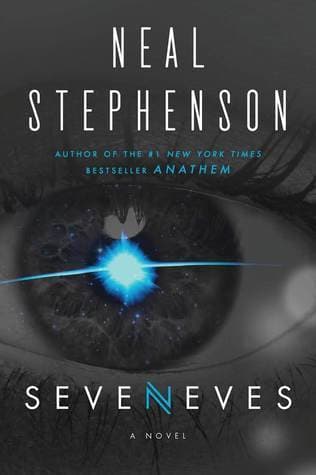
- Seveneves
Neal Stephenson
4.0 (95k) average on GoodreadsFantasySeveneves offers a much more detailed, scientifically rigorous, and sociologically speculative exploration of an apocalyptic event, with extensive world-building and character arcs spanning generations. Winter World is more immediate, action-oriented, and less concerned with deep scientific or philosophical exposition, aiming for a more accessible thriller experience.
- Angels & Demons
Dan Brown
3.9 (2.7M) average on GoodreadsThrillerA Harvard symbologist races through Rome's ancient sites, deciphering cryptic clues to unmask the Illuminati and stop a vengeful plot to destroy the Vatican with a stolen antimatter weapon.
- Gone Girl
Gillian Flynn
4.1 (2.3M) average on GoodreadsThrillerA wife's sudden disappearance on her fifth anniversary reveals a web of lies and psychological warfare, exposing the secrets within a seemingly perfect marriage.
- The Girl on the Train
Paula Hawkins
3.9 (2.1M) average on GoodreadsThrillerA woman’s fascination with a seemingly perfect couple she watches from her daily train commute leads her into a dark investigation when she witnesses something that shatters their idyllic image.





Enjoyed the summary?
A summary gives you the shape of the book. The book itself has the detail, the examples and the voice.
Find Winter World on AmazonAs an Amazon Associate, BookBrief earns from qualifying purchases. How we're funded