
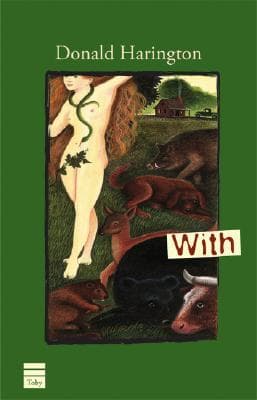
Synopsis
Covers the whole plot, including the ending.
- Difficulty
- Medium
- Pacing
- Moderate
- Mood
- Whimsical, contemplative, quirky, isolated, philosophical
With Plot Summary
Covers the whole plot, including the ending.
The Abduction of Withrowee
The story starts when Withrowee, a young woman from the Ozark village of Stay More, is taken by a group of strange, isolated men called the 'Wilder Men.' They want to bring a woman into their all-male community, which they call 'With,' to have children. But the abduction goes wrong. Withrowee is not a scared victim; she quickly shows her strong will and intelligence. She is not a passive captive but an active participant, watching her captors carefully. Her initial fear soon turns into curiosity and a practical look at her new, strange situation, leading to her remarkable entry into their lives.
Arrival at 'With'
When Withrowee arrives at 'With,' a secluded settlement deep in the Ozark wilderness, she finds a community unlike any she has known. The 'Wilder Men' are a varied group of hermits, outcasts, and oddballs, each with his own past and personality. They live a simple, self-sufficient life, mostly cut off from the outside world. Withrowee, at first a stranger, begins to learn their customs, their language (a unique Ozark English dialect), and their individual quirks. Her presence immediately disrupts the established order, as the men, who have lived without women for decades, struggle to adapt to her and their original reason for taking her.
Withrowee's Integration and Influence
Instead of fighting or trying to escape, Withrowee begins to join the community of 'With,' changing it in quiet but important ways. She brings in order, hygiene, and domesticity that were missing before. She teaches the men basic manners, improves their diet, and even starts to educate them, reading from the few books they have. Her intelligence, resourcefulness, and calm way earn their respect, slowly changing how they see her from just a 'female' to an essential member of their society. Her influence goes beyond practical matters; she starts to soften their rough edges and create a sense of community.
The Question of Procreation
The 'Wilder Men' first took Withrowee to continue their family line. As time passes and Withrowee becomes an important part of 'With,' the question of having children comes up again. This delicate issue is handled with awkwardness, biological necessity, and an unexpected respect from the men. Withrowee, always practical, understands their wish but handles the situation with both compassion and self-preservation. The novel explores the complexities of consent, desire, and the making of a new kind of family in these unusual circumstances, without easy answers. Her choices become key to the community's future.
The Outside World Intrudes
Even in their remote spot, the peace of 'With' is eventually threatened by the outside world. Rumors of a 'lost girl' from Stay More start to spread, and search parties sometimes go into the nearby wilderness. The 'Wilder Men' become more watchful, their desire for isolation growing. This outside pressure forces Withrowee and the men to face the reality of their unique arrangement and think about its long-term future. The threat of being found shows how fragile their constructed peace is and tests the loyalty and bonds that have formed between Withrowee and her unusual companions. They must decide how to protect their home.
The Nature of 'With'
Withrowee's presence changes not only the men but also the identity of their settlement. She names their community 'With,' reflecting her own name and the growing sense of togetherness and shared life. This naming solidifies their collective identity, making them more than just a group of recluses, but a recognized, though secret, community. She introduces traditions and rituals, further strengthening their unique culture. The 'Wilder Men' begin to see themselves not just as individual hermits, but as members of 'With,' connected by their shared experience and their link to Withrowee, who has become their leader and matriarch.
The Passing of Time and Generations
The story of 'With' happens over several years, showing the slow development of the community. Withrowee's children are born, creating a new generation in the isolated settlement. These children grow up knowing only the unique world of 'With,' raised by a group of 'fathers' and their intelligent, kind mother. Time brings both happiness and sadness, as some of the older 'Wilder Men' die, and the younger ones grow up. The novel looks at life's cycles, the strength of human connection, and the lasting impact of Withrowee's influence on this extraordinary, self-contained society. The community adapts and thrives.
Withrowee's Leadership
As years pass, Withrowee becomes the clear matriarch and leader of 'With.' Her practical wisdom, foresight, and calm way make her the main decision-maker for the community. She settles disagreements, plans for the future, and ensures everyone's well-being, including her children and the aging 'Wilder Men.' Her leadership is not bossy but collaborative, built on mutual respect and affection. She is the spirit of 'With,' keeping its peace and isolation while helping it grow. Her ability to handle complex social situations and practical problems ensures the community's survival and success.
The Legacy of 'With'
The story ends by looking at the lasting impact of 'With' and the extraordinary life Withrowee made. The community, born from a strange abduction, becomes an example of human adaptability, the power of connection, and the chance to create a different way of life. Withrowee's children and grandchildren carry on her spirit, showing a mix of Ozark wisdom and her own intelligence. The novel makes the reader think about family, home, and what a 'civilized' life means, suggesting that true happiness can be found in the most unexpected places. Its existence remains a secret.
The Searchers' Folly
Over the years, various people and officials from Stay More and beyond try to find Withrowee, who is thought to be lost or dead. These searches are always stopped by the wilderness, the cleverness of the 'Wilder Men,' and the community's own efforts to stay hidden. The searchers often misunderstand clues, get lost, or simply give up, unable to grasp that a thriving society exists so close yet completely cut off. This ongoing failure of the outside world to find 'With' highlights its deep isolation and the success of its people in making their own destiny, undisturbed by outside judgment.
With Characters
Withrowee
Protagonist
The abducted woman who becomes the matriarch of 'With'.
Withrowee is a young woman from Stay More, abducted by the 'Wilder Men.' Intelligent, resourceful, and remarkably adaptable, she is far from a helpless victim. She possesses a pragmatic mind, a strong sense of self-preservation, and an innate ability to observe and understand human nature. She quickly assesses her situation in 'With' and, instead of fighting it, begins to subtly reshape the community and its inhabitants. She is compassionate but firm, capable of both domesticity and leadership, and becomes the central figure around whom the entire 'With' society revolves. Her presence brings order, culture, and a future to the isolated men.
Relationships: The Wilder Men (captors, later companions, partners, and 'fathers' to her children); Her children (mother)
L.D. Jones
Supporting
One of the older, more articulate 'Wilder Men' who facilitates Withrowee's integration.
L.D. Jones is one of the more prominent 'Wilder Men,' distinguished by his relative articulateness and his role in the initial abduction. He is a complex character, embodying both the rough, unrefined nature of the hermits and a surprising capacity for respect and understanding. He is one of the first to recognize Withrowee's intelligence and worth beyond her initial purpose, and often acts as an intermediary between her and the more reticent or bewildered men. He is a figure of quiet authority within the group, and his interactions with Withrowee are marked by a unique blend of awe and paternal affection. He becomes a loyal protector.
Relationships: Withrowee (initial captor, later companion and protector); Other Wilder Men (fellow reclusive community member)
Brother Joe
Supporting
A 'Wilder Man' who brings a spiritual, albeit eccentric, dimension to 'With'.
Brother Joe is one of the more overtly religious (or at least spiritually inclined) of the 'Wilder Men.' His beliefs are a peculiar blend of traditional Ozark fundamentalism and his own idiosyncratic interpretations, often expressed in poetic or prophetic pronouncements. He adds a layer of mystical, sometimes foreboding, atmosphere to the community. While his understanding of the world is distinct from Withrowee's pragmatism, he respects her influence and often provides a moral, if unconventional, compass for the group. His presence highlights the diverse personalities within 'With' and their unique coping mechanisms for isolation.
Relationships: Withrowee (spiritual follower, community member); Other Wilder Men (fellow reclusive community member)
The Children of Withrowee
Supporting
The new generation born and raised within the isolated community.
Withrowee's children represent the future of 'With' and the success of her integration. They are raised in a unique environment, with a collective of 'fathers' and a highly intelligent mother. They embody the blend of Ozark wilderness wisdom and Withrowee's cultivated knowledge. Their upbringing is unconventional, devoid of many modern amenities but rich in natural education and communal support. They grow up with a deep understanding of their isolated world and a strong connection to the land and their unusual family. Their existence validates Withrowee's choices and the viability of the 'With' experiment.
Relationships: Withrowee (mother); The Wilder Men (collective 'fathers')
The Narrator (implied)
Supporting
The unseen voice recounting the history of 'With' and its inhabitants.
While not a character in the traditional sense, the implied narrator plays a crucial role in shaping the reader's understanding of 'With.' This voice often possesses a deep, almost anthropological knowledge of Ozark culture, dialect, and the specific histories of the characters. The narrator's tone is often detached yet empathetic, providing context, historical detail, and occasional wry observations. This narrative voice lends authority and a sense of legend to the story, suggesting that 'With' is a real, albeit hidden, part of the Ozark landscape and its folklore. The narration is rich with the distinctive cadence and vocabulary of the region.
The Stay More Community
Antagonistic/Supporting
The outside world that Withrowee left behind and occasionally threatens 'With'.
The community of Stay More, while never directly interacting with 'With' after the abduction, represents the 'outside world' that Withrowee came from and that occasionally intrudes upon the isolation of the 'Wilder Men.' It embodies conventional society, with its laws, expectations, and search efforts. For the 'Wilder Men,' Stay More is both a source of past grievances and a potential threat to their way of life. For Withrowee, it is a memory of her former life, a contrast to the freedom and unique family she finds in 'With.' Its presence highlights the theme of isolation versus civilization.
Relationships: Withrowee (former community/origin); The Wilder Men (source of past conflict and potential discovery)
The Wilder Men (collective)
Supporting
The group of reclusive men who form the initial community of 'With'.
The 'Wilder Men' are a diverse collection of hermits, outcasts, and eccentrics who have chosen to live in isolation. Each has his own reasons for retreating from society, and they range in age, temperament, and intelligence. Initially crude and unrefined, their lives are transformed by Withrowee's presence. They are fiercely protective of their home and, eventually, of Withrowee and her children. Despite their rough exteriors, they possess a deep-seated humanity and a capacity for loyalty and affection. They represent a primal, untamed aspect of humanity, softened and civilized by female influence.
Relationships: Withrowee (captors, later companions, protectors, and 'fathers'); The Children of Withrowee (collective 'fathers')
Grandpa Lute
Supporting
An elderly 'Wilder Man' who embodies the traditional Ozark folk wisdom.
Grandpa Lute is one of the oldest and most traditional of the 'Wilder Men.' He embodies the deep-rooted folk wisdom, superstitions, and oral traditions of the Ozarks. His presence connects 'With' to a longer history of self-sufficiency and a particular way of understanding the natural world. He is often a source of stories, remedies, and ancient lore, adding a layer of cultural depth to the community. While initially wary of Withrowee, he eventually comes to respect her, seeing her as a force of nature in her own right, capable of bringing new life and order to their secluded world. He represents the living history of the Ozarks.
Relationships: Withrowee (community elder, later respectful follower); Other Wilder Men (fellow reclusive community member, elder figure)
With Themes
The Nature of Civilization and Community
The novel explores what truly makes a 'civilized' society. The 'Wilder Men' are at first seen as uncivilized, but Withrowee's integration shows that civilization is not just about comfort but about order, respect, communication, and shared purpose. The community of 'With,' despite its isolation and unusual start, becomes a more harmonious and functional society than many traditional ones. It suggests that real community comes from shared experience, mutual respect, and creating a unique culture, rather than following outside societal rules.
“It was Withrowee who understood that a place needed a name to truly be a place, and a people needed a name to truly be a people.”
Adaptation and Resilience
Withrowee's story is about human adaptability and resilience. Taken and placed in a completely foreign environment, she does not give up but adapts, learns, and eventually thrives. Her ability to assess her situation practically and to find agency in extreme circumstances is central to the story. The 'Wilder Men' also adapt, changing from crude recluses to a functioning family unit under Withrowee's influence. The theme highlights humanity's ability to not only survive but to create meaning and happiness in the most unexpected and challenging situations.
“She had fallen into a world without women and had, by her very presence, begun to create one.”
The Power of the Feminine
The novel deeply explores the transformative power of the feminine. Withrowee's arrival in an all-male, rough community brings order, cleanliness, domesticity, and emotional balance. She softens the men, teaches them, and provides the nurturing needed for the community's continuation and growth. Her intelligence, compassion, and practical skills are essential for 'With' to survive and flourish. This theme is not about female superiority but about the essential, complementary role of the feminine in creating a complete and lasting human society, emphasizing its capacity for creation, nurturing, and cultural refinement.
“Before Withrowee, there was only a collection of men. After Withrowee, there was With.”
Isolation vs. Connection
A main tension in the novel is the balance between isolation and human connection. The 'Wilder Men' initially seek extreme isolation, but taking Withrowee reveals a deep need for connection and continuity. While 'With' stays isolated from the outside world, it builds strong internal connections, forming a close-knit, though unusual, family. The novel suggests that while isolation can offer peace and freedom from societal limits, true human flourishing needs meaningful relationships and a sense of belonging, even if those connections are made in the most unusual situations. The community's survival depends on its internal bonds.
“They had fled the world to find themselves, but it was Withrowee who showed them how to truly live, with one another.”
The Ozark Identity and Folklore
Donald Harington's work is rich in the culture, dialect, and stories of the Arkansas Ozarks, and 'With' is no different. The novel celebrates and examines the region's unique identity, its traditions of self-sufficiency, its distinct language, and its often-eccentric people. The 'Wilder Men' embody a certain kind of Ozark reclusiveness, while Withrowee shows the resilience and resourcefulness often found in its people. The story itself often sounds like Ozark storytelling, giving the book a strong sense of place and cultural authenticity, making 'With' feel like a legendary tale from the region's history.
“The hills hold their secrets close, and some folks are just as good at keeping them.”
Plot Devices & Literary Techniques
The Unreliable Abduction
A kidnapping that defies conventional victim narratives.
The initial abduction of Withrowee serves as a pivotal plot device, but it is rendered 'unreliable' in the sense that it immediately subverts reader expectations. Instead of a horrific ordeal, it quickly becomes a catalyst for Withrowee's agency and the formation of a unique society. The 'Wilder Men' are comically inept, and Withrowee's reaction is one of pragmatic assessment rather than terror. This device immediately establishes the novel's unconventional tone and its exploration of moral ambiguity, setting up a narrative where a seemingly negative event leads to unexpected positive outcomes and a redefinition of what constitutes 'captivity' or 'freedom.'
The Isolated Community
A self-contained society cut off from the outside world.
The device of an isolated community is central to 'With,' allowing Harington to explore themes of social construction, human nature, and alternative ways of living without the constant interference of conventional society. The physical remoteness of 'With' allows for the development of its unique culture, language, and social dynamics, unburdened by external judgments or rules. This isolation creates a microcosm where the fundamental needs and desires of humanity can be examined in a raw, unadulterated form, highlighting the resilience of human connection and the power of a shared identity to create a functioning 'peaceable kingdom' outside the norm.
Dialect and Vernacular
The rich, distinctive language of the Ozarks.
Harington's masterful use of Ozark dialect and vernacular is a significant plot device, immersing the reader in the specific cultural world of the novel. The unique speech patterns, vocabulary, and grammatical constructions of the 'Wilder Men' and the narrator not only lend authenticity but also serve to characterize the inhabitants of 'With' and their connection to the land. This linguistic detail creates a barrier between 'With' and the outside world, emphasizing its isolation, while simultaneously drawing the reader into its intimate, distinct reality. It makes the world of 'With' feel tangible and deeply rooted in its specific geographical and cultural context.
Matriarchal Transformation
The presence of one woman fundamentally alters an entire male community.
The device of matriarchal transformation is critical to the novel's core message. Withrowee's singular presence in an all-male society acts as a catalyst for profound change. Her intelligence, domestic skills, and nurturing capabilities bring order, purpose, and a future to the 'Wilder Men' who were previously living a chaotic, stagnant existence. This device demonstrates the essential role of the feminine in creating a balanced and sustainable society, highlighting how one individual, through sheer force of personality and capability, can reshape an entire community, turning a group of recluses into a functioning, loving family unit with a clear path forward.
Quiz
10 questions on the plot and the characters. Each answer comes with a short explanation.
Question 1
What is the name of the mythical village in Donald Harington's novels?
- Stay More
- Ozark Haven
- Crystal Creek
- Whispering Pines
Show answer
A. Stay More Donald Harington is known for his fictional village of Stay More, located in the Arkansas Ozarks.
Question 2
In the book 'With', what event disrupts the peaceable kingdom?
- A natural disaster
- An invasion from a neighboring town
- A bizarre abduction gone wrong
- A political uprising
Show answer
C. A bizarre abduction gone wrong The provided description states that a 'bizarre abduction gone wrong' disrupts the peaceable kingdom.
Question 3
What is the primary setting for Donald Harington's 'With'?
- A bustling city in the Midwest
- A secluded village in the Arkansas Ozarks
- A coastal town in the Pacific Northwest
- A remote island in the Caribbean
Show answer
B. A secluded village in the Arkansas Ozarks The description explicitly mentions 'Harington's mythical village in the Arkansas Ozarks' as the setting.
Question 4
Which of the following genres best describes 'With' by Donald Harington?
- Science Fiction
- Historical Fiction
- Fantasy
- Mystery
Show answer
C. Fantasy The prompt states that the book is 'Fantasy'.
Question 5
The phrase 'master of Stay More' suggests Donald Harington is known for creating what type of literary world?
- Realistic portrayals of everyday life
- Complex political thrillers
- Imaginative and unique fictional settings
- Gritty crime dramas
Show answer
C. Imaginative and unique fictional settings Being the 'master of Stay More', a mythical village, indicates his skill in creating unique and imaginative fictional worlds.
Question 6
What is implied about the nature of the 'abduction gone wrong' in 'With'?
- It was a carefully planned and executed event
- It was an accidental occurrence with unforeseen consequences
- It was a common event in the history of Stay More
- It was a minor incident with little impact
Show answer
B. It was an accidental occurrence with unforeseen consequences The phrase 'gone wrong' suggests that the abduction was not successful as intended and likely led to unexpected outcomes.
Question 7
The description of Stay More as a 'peaceable kingdom' suggests its inhabitants value what?
- Constant conflict and competition
- Harmony and tranquility
- Rapid technological advancement
- Aggressive expansion
Show answer
B. Harmony and tranquility A 'peaceable kingdom' inherently implies a society that prioritizes peace, harmony, and a lack of conflict.
Question 8
Considering the context of 'With' and Harington's other works, the 'bizarre abduction' is likely to be interpreted as:
- A literal, mundane criminal act
- A supernatural or fantastical event
- A metaphor for societal changes
- A historical event that actually occurred
Show answer
B. A supernatural or fantastical event Given the book's genre is fantasy and Harington's tendency to create mythical settings, a 'bizarre abduction' is most likely to be a fantastical or supernatural element rather than a mundane one.
Question 9
The isolation of Stay More, mentioned in the description, serves what narrative purpose in fantasy literature?
- To make the setting less believable
- To allow for the development of unique customs and rules
- To limit the scope of the story
- To emphasize the mundane aspects of life
Show answer
B. To allow for the development of unique customs and rules Isolation in fantasy settings often allows authors to create distinct societies with their own unique rules, beliefs, and ways of life, free from outside influence.
Question 10
How does the description of 'With' suggest it fits within Donald Harington's established literary style?
- By deviating completely from his previous themes
- By introducing entirely new characters and settings
- By continuing to explore the mythical world of Stay More with fantastical elements
- By shifting focus to realistic social commentary
Show answer
C. By continuing to explore the mythical world of Stay More with fantastical elements The description explicitly links 'With' to Harington's 'mythical village' of Stay More and mentions it as his 'newest novel', indicating a continuation of his established world and themes.
With FAQ
What is Donald Harington's "With" about?
"With" is a fantasy novel set in the mythical village of Stay More, Arkansas. It tells the story of a bizarre abduction that goes wrong, ultimately leading to the creation of a peaceable kingdom in isolation.
Where does the story of "With" take place?
The story is set in Stay More, a mythical village located in the Arkansas Ozarks, a recurring setting in Donald Harington's works.
Is "With" a standalone novel or part of a series?
"With" is the newest novel by Donald Harington and is part of his collection of stories centered around the mythical village of Stay More, though it can be read as a standalone.
What kind of fantasy elements are in "With"?
The novel features elements of fantasy rooted in the unusual circumstances of an abduction gone wrong, leading to the creation of an isolated and peaceable kingdom.
What is the tone of Donald Harington's "With"?
While specific details about the tone are not provided, Harington's works often blend humor, the surreal, and a deep sense of place, suggesting a unique and engaging tone for "With."
Who would enjoy reading "With"?
Readers who enjoy unique fantasy settings, the works of Donald Harington, and stories with a touch of the bizarre and the creation of idyllic societies would likely enjoy "With."
What makes the abduction in "With" bizarre?
The abduction itself is described as 'bizarre' and it's the unexpected outcome of this event that leads to the novel's central premise of an isolated, peaceable kingdom.
How does "With" relate to other Donald Harington books?
"With" is set in the same mythical village of Stay More as many of Harington's other acclaimed novels, allowing readers to revisit a beloved setting.
Does "With" explore themes of isolation?
Yes, the premise of "With" explicitly mentions the creation of a 'peaceable kingdom in isolation,' suggesting isolation is a key theme explored in the novel.
What is the central conflict or premise of "With"?
The central premise revolves around a bizarre abduction that unexpectedly results in the formation of an isolated, peaceable kingdom.
Similar books
- Mythago Wood
Robert Holdstock
3.8 (8k) average on GoodreadsFantasyWhile both 'With' and 'Mythago Wood' explore deep connections between humans and ancient forests, Harington's approach is far more intimate and character-driven, focusing on a single individual's transformation and belonging within a specific community. Holdstock's work is more overtly mythological and archetypal, delving into the primal forces of the forest and its ancient inhabitants, with a darker, more mysterious tone. 'With' is grounded in a recognizable, albeit fantastical, reality, whereas 'Mythago Wood' plunges into a more surreal and dangerous realm of the collective unconscious.
- A Wizard of Earthsea
Ursula K. Le Guin
4.0 (241k) average on GoodreadsFantasyBoth 'With' and 'A Wizard of Earthsea' are character-focused fantasies exploring identity and self-discovery. However, Le Guin's novel follows a more traditional hero's journey with a clear moral arc and a more conventional magic system (spells, true names). 'With' offers a more internal and less externally driven narrative, with its magic being an intrinsic part of the protagonist's being rather than a learned skill. Le Guin's world-building is expansive and philosophical, while Harington's is intensely localized and deeply rooted in a specific cultural milieu, making its magic feel more organic and less codified.
- Harry Potter and the Sorcerer's Stone
J.K. Rowling
4.5 (7M) average on GoodreadsFantasyRescued from a miserable life under the stairs, an orphaned boy discovers he's a wizard destined for a magical school, where he uncovers a dangerous secret tied to the dark wizard who murdered his parents.
- The Hunger Games
Suzanne Collins
4.3 (6.4M) average on GoodreadsFantasyIn a future where children fight to the death on live television, Katniss Everdeen volunteers for the arena, turning a death sentence into a fight for survival and a spark of rebellion.
- 1984
George Orwell
4.2 (3.1M) average on GoodreadsPoliticsIn a future where surveillance and thought control are absolute, a man's search for truth clashes with the Party, showing that hope can be a form of rebellion.
- Divergent
Veronica Roth
4.2 (2.9M) average on GoodreadsFantasyIn a society divided by virtues, a sixteen-year-old's difference from the norm starts a rebellion that threatens her world.





Enjoyed the summary?
A summary gives you the shape of the book. The book itself has the detail, the examples and the voice.
Find With on AmazonAs an Amazon Associate, BookBrief earns from qualifying purchases. How we're funded