
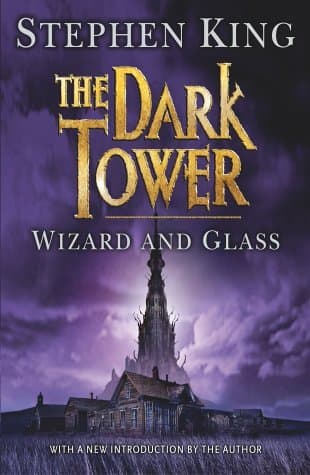
Synopsis
Covers the whole plot, including the ending.
- Difficulty
- Medium
- Pacing
- Variable
- Mood
- Epic, Romantic, Tragic, Melancholy, Adventurous
- Read it if
- You want a deep dive into Roland's tragic past and the origins of his quest, enjoy epic fantasy romances, and are invested in the overarching 'Dark Tower' saga.
- Skip it if
- You prefer fast-paced action over extensive backstory, are sensitive to tragic love stories, or haven't read the preceding books in the series.
Wizard and Glass Plot Summary
Covers the whole plot, including the ending.
Blaine's Aftermath and the Topeka Wasteland
After beating Blaine the Mono in a riddle contest, Roland Deschain, Eddie Dean, Susannah Dean, Jake Chambers, and Oy the bumbler arrive in an alternate Topeka, Kansas. This Topeka is empty, a wasteland destroyed by the superflu virus, which killed most people. They find that the world has 'moved on' greatly, with remains of an advanced but decaying civilization. The ka-tet is confused and unsure what to do next, realizing they are not in their Mid-World. They search for supplies in the ruins of a post-apocalyptic city. This is a stark contrast to Blaine, but also alien to them.
Encountering the Green Palace and a Thinny
Following a deserted I-70, the ka-tet sees a distant, shimmering green palace made of glass. It seems to draw them in. As they get closer, they hear the unsettling, off-key sound of a thinny — a place where reality is thin, threatening to pull anything nearby into nothing. Roland recognizes the danger, having met such things before. The thinny reminds them that existence is fragile and their many worlds are unpredictable. They camp near its edge, the eerie wail a constant, unsettling sound, and a reason for Roland's memories.
Roland's Tale: The Journey to Hambry
While camped by the thinny, Roland tells his ka-tet a long story from his youth, a tale of his first love and early days as a gunslinger. This story takes place over several nights and is the book's core. Roland recounts how, after Marten Broadcloak tricked him into taking his manhood trial early and passing it, his father, Steven Deschain, sent him and his original ka-tet — Cuthbert Allgood and Alain Johns — to the distant Barony of Mejis. Their stated mission was to take a census, but their real purpose was to investigate reports of an alliance between rancher Rhea of the Coos and John Farson, a rising rebel leader known as 'the Good Man,' who threatened to destabilize the Affiliation and start a war.
Arrival in Hambry and Meeting Susan Delgado
When they arrive in the Barony of Mejis, specifically the town of Hambry, Roland, Cuthbert, and Alain pretend to be 'ranch hands' or 'cowboys' to hide their identities as gunslingers. The town's strange customs and isolated nature strike them immediately. During a local festival, Roland first meets Susan Delgado, a beautiful young woman who is to be the 'Sacrifice' — a concubine for the corrupt Mayor Thorin, a ritual to ensure good harvests. Roland is instantly smitten by Susan, and she by him. Their strong mutual attraction quickly becomes a passionate, forbidden romance, setting up tragic events.
The Coven of the Coos and Maerlyn's Grapefruit
As the young gunslingers investigate, they find a plot by Rhea of the Coos, a local witch-like figure, with Coral Thorin and Olive Thorin, the Mayor's wife and sister, and Sheriff Avery. This group works with John Farson's men, smuggling oil and other resources to him. They find that Rhea has one of the thirteen Bends of the Rainbow — powerful seeing spheres made by Maerlyn, known as 'Maerlyn's Grapefruit.' This Grapefruit is a malevolent object that affects those who look into it, showing them future visions and driving them mad. Roland is dangerously drawn to the Grapefruit, using it despite his ka-mates' warnings.
Roland's Romance and the Grapefruit's Influence
Roland's romance with Susan Delgado grows, becoming the main emotional part of his time in Hambry. Their secret meetings and declarations of love are passionate, but also dangerous because of Susan's arranged marriage to Mayor Thorin and the boys' secret mission. At the same time, Roland becomes more obsessed with Maerlyn's Grapefruit. Despite its seductive and often terrifying visions, he repeatedly looks into it, seeking information about Farson and his own destiny. The Grapefruit's dark influence begins to change Roland's judgment, making him more withdrawn and focused, straining his relationships with Cuthbert and Alain.
The Battle of the Drop and Farson's Advance
The gunslingers' cover is eventually revealed, leading to a direct fight with Farson's forces and local corrupt officials. They fight a battle at the Drop, the oil-drilling station, where they destroy much of Farson's oil supply. However, this victory comes at a cost, and their identities as gunslingers are fully known. In the chaos, Susan Delgado becomes a pawn and a target. Her relationship with Roland is exposed, making her a traitor to Hambry and an accomplice to the 'outlaws.' She is imprisoned and condemned to be burned as a witch, a brutal result of her forbidden love and the town's superstition.
Susan's Tragic Fate
Despite Roland's efforts to save her, he cannot save Susan Delgado from the townspeople's anger, fueled by Rhea of the Coos and the Mayor's family. Susan is brought to the Reap, a harvest festival, and burned at the stake as a 'witch' and 'traitor.' Her death is a deeply traumatic event for Roland. It is his first great personal loss and leaves a lasting mark on him. The image of her burning, especially her last cries, haunts him throughout his life, shaping his calm manner and strengthening his often ruthless dedication to the Path of the Beam. This event is a key moment in Roland's past, solidifying his commitment to his quest.
Retribution and Escape from Hambry
Angry and sad about Susan's death, Roland, Cuthbert, and Alain, helped by Susan's friend Sheemie Ruiz, take revenge on those responsible. They confront and kill Rhea of the Coos, Sheriff Avery, and other corrupt officials. After their acts of vengeance, they must flee Hambry, pursued by Farson's men, led by Roy Depape and Latigo. The young gunslingers, though winning their immediate fights, are now outlaws. Their mission is compromised, and their innocence is gone. They start a long, difficult journey through the Outer Dark, strengthening their bond as a ka-tet and Roland's grim determination.
The Battle of Jericho Hill and the Fall of Mid-World
Roland's story, though focused on Hambry, hints at the larger conflict with Farson. He briefly mentions the future, hinting at the Battle of Jericho Hill. This battle was a moment where the gunslingers, including his father Steven Deschain, made their last stand against Farson's forces. This battle nearly destroyed the gunslingling order and gave John Farson victory, leading to Mid-World's decay and fall. Roland's tale shows these events' tragic inevitability, driven by fate and the Crimson King's evil influence. It sets the stage for his lifelong quest for the Dark Tower.
The Return to Topeka and the Emerald City
As Roland finishes his long and painful story, the ka-tet in Topeka is deeply affected by his past. The shared experience strengthens their bond, and they recognize Roland's sacrifices. With the thinny still wailing nearby, they decide to continue their journey toward the shimmering green glass palace. Roland now calls this the Emerald City, a place tied to Maerlyn's Rainbow and possibly the Crimson King. They prepare to face whatever dangers lie ahead, their understanding of Roland and their quest deepened by the harrowing tale of his youth and lost love.
Wizard and Glass Characters
Roland Deschain
Protagonist
The last gunslinger, recounting his formative tragic love story.
In 'Wizard and Glass,' Roland is presented both as the stoic, hardened gunslinger of the present and the passionate, somewhat naive youth of the past. His younger self is fiercely loyal, deeply in love with Susan Delgado, and grappling with the responsibilities of his gunslinger heritage. He is driven by a nascent sense of duty to the Affiliation but also by a powerful personal desire for justice and revenge. His older self is haunted by the past, using the act of storytelling to process his trauma and teach his ka-tet about the weight of their journey. He is a man shaped by profound loss, particularly Susan's death, which forged his unwavering, sometimes ruthless, dedication to the Dark Tower.
Relationships: Susan Delgado (First and deepest romantic love); Cuthbert Allgood (Childhood best friend and ka-mate); Alain Johns (Childhood ka-mate, empathic and loyal); Steven Deschain (Father and mentor, a respected gunslinger); Eddie Dean (Present ka-mate, brotherly bond); Susannah Dean (Present ka-mate, complex and supportive); Jake Chambers (Present ka-mate, surrogate son); Oy (Present ka-mate, loyal animal companion)
Susan Delgado
Supporting
Roland's first love, a beautiful, tragic figure destined for sacrifice.
Susan Delgado is a spirited and beautiful young woman from Hambry, destined to be the 'Sacrifice' for Mayor Thorin, a ritualistic concubine. Despite her difficult circumstances and the rigid social structures of Mejis, she possesses a strong will, kindness, and a deep longing for a different life. She falls deeply in love with Roland, a forbidden romance that becomes the emotional heart of his youthful narrative. Her innocence and purity contrast sharply with the corruption of Hambry. Her tragic death at the stake, a consequence of her love for Roland and the town's superstition, is a pivotal event that profoundly shapes Roland's character and future quest.
Relationships: Roland Deschain (First and deepest romantic love); Rhea of the Coos (Antagonistic, her tormentor and executioner); Sheemie Ruiz (Loyal, protective friend)
Cuthbert Allgood
Supporting
Roland's best friend and ka-mate, known for his wit and loyalty.
Cuthbert is Roland's childhood best friend and a member of his original ka-tet. He is characterized by his sharp wit, playful nature, and a tendency towards irreverence, often using humor to cope with stress. Despite his lighthearted demeanor, Cuthbert is a skilled gunslinger, fiercely loyal to Roland, and courageous in battle. He frequently challenges Roland's growing obsession with Maerlyn's Grapefruit, acting as a moral compass and a voice of reason. His bond with Roland is deep, and he struggles with Roland's increasing distance and single-mindedness, yet remains devoted until his tragic end at Jericho Hill (alluded to).
Relationships: Roland Deschain (Best friend and ka-mate); Alain Johns (Ka-mate, close friend)
Alain Johns
Supporting
Roland's empathic ka-mate, possessing the 'touch'.
Alain is the third member of Roland's original ka-tet, known for his quiet demeanor and his extraordinary ability to 'touch' minds – a form of empathy or telepathy that allows him to sense others' thoughts and emotions. This 'touch' makes him particularly sensitive to the dark influences surrounding them in Hambry, especially from Maerlyn's Grapefruit. He is a steadfast and loyal friend, often acting as a calming presence and a source of insight through his unique abilities. Alain's insights often corroborate Cuthbert's concerns about Roland, further highlighting the Grapefruit's corrupting power.
Relationships: Roland Deschain (Ka-mate, close friend); Cuthbert Allgood (Ka-mate, close friend)
Rhea of the Coos
Antagonist
A malevolent witch-like figure and keeper of Maerlyn's Grapefruit.
Rhea of the Coos is a grotesque and malevolent old woman, often described as a witch, who serves as a primary antagonist in the Hambry storyline. She is the keeper of Maerlyn's Grapefruit, using its power and her local influence to manipulate events and serve John Farson's cause. Rhea is intensely cruel, particularly towards Susan Delgado, whom she torments and ultimately orchestrates her execution. Her appearance is repulsive, reflecting her inner depravity. She embodies the corruption and dark magic that has begun to infest Mid-World, and her death is a moment of grim satisfaction for the young gunslingers.
Relationships: Susan Delgado (Tormentor and executioner); John Farson (Ally and agent); Roland Deschain (Antagonist)
John Farson
Antagonist
The charismatic rebel leader known as 'the Good Man,' threatening the Affiliation.
John Farson, known as 'the Good Man,' is a charismatic and ruthless rebel leader who seeks to overthrow the Affiliation and establish his own rule in Mid-World. Though he does not directly appear in the Hambry narrative (he is off-screen, controlling events from afar), his presence is deeply felt as the orchestrator of the chaos and corruption. He uses figures like Rhea and the Thorins to further his agenda, accumulating resources like oil to fuel his war machine. Farson represents the encroaching darkness and the forces that will ultimately bring about the fall of Roland's world, making him a central, albeit unseen, antagonist.
Relationships: Rhea of the Coos (Agent and conspirator); Mayor Thorin (Agent and conspirator); Roland Deschain (Primary antagonist, a looming threat)
Eddie Dean
Supporting
Roland's ka-mate, a former junkie from New York.
Eddie is one of Roland's current ka-mates, a former heroin addict from New York. In 'Wizard and Glass,' he acts as a crucial sounding board and emotional support for Roland during the storytelling. He frequently interjects with questions, comments, and modern-day slang, providing comic relief and grounding the fantastic tale in a contemporary perspective. Eddie's intelligence and quick wit are evident as he helps Roland navigate the cultural differences between their worlds and offers insights into the psychological toll of Roland's past. His bond with Roland deepens through their shared experience of hearing the painful history.
Relationships: Roland Deschain (Ka-mate, brotherly bond); Susannah Dean (Wife and ka-mate); Jake Chambers (Ka-mate, protective bond)
Susannah Dean
Supporting
Roland's ka-mate, a strong-willed woman with a dual personality.
Susannah is another of Roland's current ka-mates, a strong and resilient woman who embodies two personalities: Odetta Holmes and Detta Walker. In 'Wizard and Glass,' she is deeply engaged in Roland's story, often offering insightful observations and emotional reactions. Her practical nature and sharp mind help to analyze the unfolding events of Roland's past, particularly the dynamics between the characters. She acts as an anchor for Roland, providing comfort and understanding as he recounts his painful memories, and her presence in the present-day narrative offers a stark contrast to the old-world setting of Hambry.
Relationships: Roland Deschain (Ka-mate, complex and supportive); Eddie Dean (Husband and ka-mate); Jake Chambers (Ka-mate, protective bond)
Jake Chambers
Supporting
Roland's ka-mate, a young boy from New York, and his surrogate son.
Jake is the youngest member of Roland's current ka-tet, a sensitive and intelligent boy from New York. In 'Wizard and Glass,' he listens intently to Roland's story, often asking thoughtful questions that reveal his growing understanding of the gunslinger's world and his past. Jake represents a new generation of gunslingers, learning from Roland's experiences. His presence in the present-day narrative highlights the contrast between the innocence of youth and the harsh realities of Roland's life. He shares a strong, almost father-son bond with Roland, and the story of Susan's fate deeply affects him, further cementing his loyalty to Roland.
Relationships: Roland Deschain (Ka-mate, surrogate son); Eddie Dean (Ka-mate, brotherly bond); Susannah Dean (Ka-mate, protective bond); Oy (Pet and loyal companion)
Oy
Supporting
Jake's pet bumbler, a highly intelligent, raccoon-like creature.
Oy is a bumbler, a highly intelligent, badger/raccoon-like creature native to Mid-World, and Jake's beloved pet and loyal companion. In 'Wizard and Glass,' Oy's presence in the present-day narrative provides moments of warmth and comic relief. He listens to Roland's story with apparent understanding, demonstrating his unusual intelligence and deep connection to the ka-tet. Oy's loyalty and affection for Jake, and by extension the entire group, underscore the theme of companionship in their desolate journey. His braying and distinctive 'Ake!' sound are unique characteristics.
Relationships: Jake Chambers (Owner and closest companion); Roland Deschain (Ka-mate)
Wizard and Glass Themes
Loss and Grief
Loss is a main theme in 'Wizard and Glass,' mostly through Roland's story of Susan Delgado's tragic death. Her burning shapes Roland's character, explaining his calm nature and his dedication to the Tower. The Hambry story has a sense of unavoidable loss, showing Mid-World's decay. The present-day setting of plague-ridden Topeka also shows this theme, showing a world that has lost its life and most of its people, mirroring Roland's losses.
“Go then, there are other worlds than these.”
Love and Sacrifice
Roland's passionate, forbidden love for Susan Delgado shows this theme. Their romance grows amid danger and political trouble, showing how people can connect even in a dying world. Susan's sacrifice, being burned as a witch because of her love for Roland and others' plans, shows the tragic cost of love in a world that has 'moved on.' Her willingness to stand by Roland, despite deadly results, shows the sacrificial nature of their bond, leaving a lasting impact on Roland and his idea of devotion.
“Love is a game, they say. One plays, then one loses. And what is left is a cold, cold fire.”
The Corrupting Power of Evil
This theme is clear in Maerlyn's Grapefruit, one of the Bends of the Rainbow. The Grapefruit is not just a powerful object but an evil thing that corrupts those who look into it, showing them visions that drive them mad and obsessed. Roland's dangerous interest in the Grapefruit shows how even a gunslinger can be swayed by dark forces, leading him to ignore his friends and lose sight of his immediate mission. Rhea of the Coos and John Farson also show how evil can appear through manipulation, cruelty, and the desire for power, slowly eroding society's moral structure.
“The Grapefruit showed him things... things that were and things that would be, and things that might be if he looked too long.”
Destiny and Ka
The idea of 'ka' — destiny or fate — is central in 'Wizard and Glass.' Roland's entire journey, from his early trial to his arrival in Hambry and his meetings with Susan and the Grapefruit, happens as ka unfolds. The gunslingers' understanding that 'ka is a wheel' means that events, even sad ones, are part of a larger, set cycle. Roland's attempts to defy or understand his ka, especially through the Grapefruit, show humanity's struggle against what must happen. The present-day ka-tet's survival of Blaine and their arrival in Topeka are also seen as their collective ka, guiding them to the Dark Tower.
“Ka is a wheel, and it always turns. Ka has its way.”
The End of an Era and the Decay of Worlds
'Wizard and Glass' has the sadness of a world that has 'moved on.' Roland's story of Hambry shows the last days of the Affiliation, with corruption and rebellion on its edges, hinting at Mid-World's eventual fall. The present-day setting of a post-apocalyptic Topeka, destroyed by the superflu, is a clear parallel, showing that decay and destruction are not just in Mid-World but are universal across dimensions. This theme reinforces the idea of entropy, the slow breakdown of order, and the desperate need for the Dark Tower to stop total collapse.
“The world had moved on, and it had left them behind, like so many broken toys.”
Plot Devices & Literary Techniques
Frame Narrative
Roland's past story nested within the present journey of the ka-tet.
The novel primarily utilizes a frame narrative, where the present-day journey of Roland's ka-tet through the Topeka wasteland after Blaine's crash serves as the outer frame. Within this frame, Roland recounts his lengthy, detailed story of his youth in Hambry, his first love Susan Delgado, and his early gunslinger trials. This structure allows King to provide crucial backstory for Roland, explaining his motivations and emotional scars, while still advancing the main quest for the Dark Tower. The frame narrative also creates tension, as the present dangers (like the thinny) occasionally interrupt the flashback.
Maerlyn's Grapefruit (Seeing Sphere)
A malevolent crystal ball that influences and corrupts its users.
Maerlyn's Grapefruit is one of the thirteen Bends of the Rainbow, a powerful and malevolent seeing sphere. It acts as a significant plot device by revealing visions of the past, present, and future, but at a terrible cost: it corrupts and drives its users to madness. For young Roland, it serves as a temptation and a source of dangerous information, leading him to make rash decisions and alienate his friends. The Grapefruit is a symbol of forbidden knowledge and the corrupting influence of power, directly contributing to the tragic events in Hambry and foreshadowing the larger conflict with the Crimson King.
The Thinny
A dangerous tear in the fabric of reality, linking worlds.
A thinny is a place where the fabric of existence has worn thin, creating a dangerous, atonal wail and threatening to draw anything nearby into oblivion. In 'Wizard and Glass,' the thinny encountered in Topeka serves as a direct catalyst for Roland to begin his story, as he recalls another thinny from his youth. It functions as a symbol of the fragility of reality and the encroaching chaos in the multiverse. The thinny also emphasizes the peril of the ka-tet's journey, highlighting the unpredictable and dangerous nature of the worlds they traverse on their way to the Dark Tower.
The Yellow Brick Road / Emerald City Motif
Allusions to 'The Wizard of Oz' to signify their journey and destination.
The novel heavily employs allusions to 'The Wizard of Oz,' particularly through the ka-tet's journey along I-70 (the 'Yellow Brick Road') towards the distant glass palace (the 'Emerald City') in Topeka. This motif serves several purposes: it provides a familiar, albeit twisted, framework for their surreal journey through an alternate America; it hints at the deceptive nature of their destination, much like Oz itself; and it subtly connects the disparate worlds of the Dark Tower saga through shared cultural touchstones. Roland even refers to himself as 'the Wizard,' and the Crimson King's influence is hinted at through this imagery.
Ka-tet
A group of individuals bound by fate and purpose.
The concept of 'ka-tet' is a fundamental plot device and theme in the Dark Tower series, signifying a group of people bound together by fate for a common purpose. In 'Wizard and Glass,' we see two distinct ka-tets: Roland's original group with Cuthbert and Alain, and his current group with Eddie, Susannah, and Jake. The narrative explores the dynamics, loyalties, and tensions within these groups. The tragic dissolution of Roland's first ka-tet and the strengthening of his current one through shared storytelling and peril are central to the plot, emphasizing the power and necessity of their bond for the quest to the Dark Tower.
Wizard and Glass Quotes
“Go then, there are other worlds than these.”
“The world had moved on.”
“Love is a force, not a sentiment.”
“The greatest danger in the world is to lose your story.”
“The door to the past is always open, but the door to the future is always closed.”
“Ka is a wheel. Its turnings are many and strange.”
“Some things were true, others were not. Some things were real, others were not. But it was all beautiful.”
“There are no easy answers, only hard choices.”
“The world was full of magic, but it was a dying magic.”
“The past is a foreign country; they do things differently there.”
“Don't you understand, sai? We are the last true gunslingers.”
“The future, like the past, is a road laid out by ka. But the present, that's where we make our choices.”
“A man who forgets his past is condemned to repeat it.”
“The world was a place of ghosts, and Roland was one of them.”
Quiz
10 questions on the plot and the characters. Each answer comes with a short explanation.
Question 1
After surviving Blaine the Mono's crash, in what alternate version of a real-world city do Roland and his ka-tet find themselves stranded?
- New York City, ravaged by war
- Topeka, Kansas, ravaged by the superflu virus
- Los Angeles, devastated by an earthquake
- Des Moines, Iowa, suffering from a nuclear fallout
Show answer
B. Topeka, Kansas, ravaged by the superflu virus The ka-tet lands in an alternate Topeka, Kansas, which has been severely affected by the superflu virus, a key detail from the beginning of the book.
Question 2
What is the name of the 'seeing sphere' that John Farson uses, which Roland's story reveals?
- The Crimson Eye
- Maerlyn's Grapefruit
- The Oracle's Orb
- The Wizard's Glass
Show answer
B. Maerlyn's Grapefruit Roland's flashback story details how John Farson used 'Maerlyn's Grapefruit,' a powerful seeing sphere, to further his war efforts.
Question 3
What kind of natural phenomenon, described as 'atonal squalling,' do the ka-tet encounter on their journey through the alternate Topeka?
- A temporal distortion
- A localized tornado
- A thinny
- An electromagnetic pulse
Show answer
C. A thinny While following I-70, they hear the 'atonal squalling of a thinny,' a place where the fabric of existence has almost entirely worn away.
Question 4
In Roland's flashback story, what is the name of the seaside town where he falls in love with Susan Delgado?
- Gilead
- Mejis
- Hambry
- Calaveras
Show answer
C. Hambry Roland's long story is set in the seaside town of Hambry, where his fateful romance with Susan Delgado unfolds.
Question 5
Who are Roland's old tet-mates that accompany him to Hambry in his flashback story?
- Cuthbert and Jamie
- Alain and Cort
- Alain and Cuthbert
- Jamie and Cort
Show answer
C. Alain and Cuthbert In his flashback, Roland recounts his adventures with his old tet-mates Alain and Cuthbert in Hambry.
Question 6
What is the primary reason Roland tells his ka-tet the long story about his youth?
- To distract them from their current perilous situation
- To reveal a hidden map to the Dark Tower
- To teach them a lesson about Mid-World history
- To confess a secret about his father
Show answer
A. To distract them from their current perilous situation Roland tells his extensive story over 'one long magical night' while they are camping near the thinny, primarily to distract his ka-tet from the danger and fear of their current predicament.
Question 7
What is the significance of the 'glass palace' mentioned in the initial setting description?
- It is a metaphor for the Dark Tower
- It is the ka-tet's ultimate destination in the alternate Topeka
- It is a memory from Roland's childhood
- It is where the superflu virus originated
Show answer
B. It is the ka-tet's ultimate destination in the alternate Topeka The ka-tet is 'following the deserted I-70 toward a distant glass palace,' indicating it is their immediate objective or destination in the alternate Topeka.
Question 8
How does John Farson, the harrier, relate to Mid-World's final war, according to Roland's story?
- He was a reluctant participant, forced into leadership
- He was a peacemaker who tried to prevent it
- He ignited Mid-World's final war with the aid of a seeing sphere
- He was a forgotten figure whose role was minimal
Show answer
C. He ignited Mid-World's final war with the aid of a seeing sphere The text explicitly states that John Farson, 'with a little help from a seeing sphere called Maerlyn’s Grapefruit—ignited Mid-World’s final war,' establishing him as a key antagonist and catalyst.
Question 9
What is the primary thematic significance of the 'thinny' in the context of the book's initial setting?
- It represents a safe haven from the superflu virus
- It symbolizes the weakening fabric of reality and the dangers of the journey
- It is a portal back to their original world
- It serves as a natural barrier protecting the glass palace
Show answer
B. It symbolizes the weakening fabric of reality and the dangers of the journey A thinny is described as 'a place where the fabric of existence has almost entirely worn away,' making it a powerful symbol of the decaying realities and the inherent dangers of the ka-tet's quest across collapsing worlds.
Question 10
How does the structure of 'Wizard and Glass' begin, based on the provided summary?
- With Roland's ka-tet immediately engaging in battle with Farson's forces
- With Roland telling a long flashback story to his ka-tet about his youth
- With the ka-tet searching for a cure for the superflu virus
- With a detailed description of the Dark Tower itself
Show answer
B. With Roland telling a long flashback story to his ka-tet about his youth After their initial arrival in Topeka and encountering the thinny, Roland begins to tell 'his ka-tet a story about another thinny, one that he encountered when he was little more than a boy,' which forms the bulk of the book.
Wizard and Glass FAQ
What is "Wizard and Glass" about?
"Wizard and Glass" is primarily a flashback story where Roland Deschain recounts the tale of his first love, Susan Delgado, and his initial confrontation with the forces of John Farson in the town of Hambry. This epic flashback occurs while Roland and his current ka-tet are stranded in an alternate, superflu-ravaged Topeka, Kansas, after defeating Blaine the Mono.
Why should I read "Wizard and Glass"?
You should read "Wizard and Glass" to understand Roland's origins, his deep connection to Mid-World's past, and the tragic love story that profoundly shaped him into the stoic gunslinger he is. It offers crucial character development for Roland and provides context for his relentless quest for the Dark Tower, revealing the personal sacrifices he made along the way.
What is the background/setting of "Wizard and Glass"?
The book has two primary settings: a post-apocalyptic, alternate Topeka, Kansas, ravaged by the Superflu virus, where Roland's current ka-tet is stranded, and the vast majority takes place in a past Mid-World, specifically the barony of Mejis and the seaside town of Hambry. This past Mid-World is a desolate, dying land, but Hambry still holds remnants of its former glory, intertwined with the sinister machinations of Farson's allies.
What are the most memorable quotes?
One memorable quote is Roland's mantra, 'Go then, there are other worlds than these,' which encapsulates the multiverse theme. Another is 'The world has moved on,' often repeated to signify the decay of Mid-World. The tragic 'Say thankya, big-big' from Susan Delgado also resonates deeply, highlighting her innocence and ultimate fate.
What writing style does the author use?
Stephen King employs a rich, descriptive prose, often blending elements of Westerns, fantasy, and horror. He uses a conversational, storytelling tone, especially during Roland's narrative, which makes the extensive flashback feel intimate and immersive. The language is often poetic and melancholic, reflecting the 'moving on' of Roland's world.
What minor details add significant meaning?
The repeated mention of 'thinny' not only connects the current narrative to Roland's past but also emphasizes the fragility of reality. The presence of the Big Coffin Hunters' hats and their symbolic 'coffin' imagery subtly foreshadows the death and decay they bring to Hambry. The children's rhyme about 'Maerlyn's Rainbow' hints at the true nature and danger of the seeing sphere.
What are some subtle foreshadowing moments?
The oracle's prophecy to Roland about his future love and loss subtly foreshadows Susan Delgado's tragic end. The recurring dreams and visions Roland experiences, often involving the Dark Tower or his destiny, hint at the profound sacrifices he will make. Even the mention of the pink 'Maerlyn's Grapefruit' by the Big Coffin Hunters early on portends its significant, destructive role.
What unexpected character connections exist?
The most significant unexpected connection is Rhea of the Cöos's relationship with the Big Coffin Hunters and her role in Susan's demise, directly linking a seemingly minor, grotesque character to the central tragedy. Also, the revelation that Eldred Jonas, one of the Big Coffin Hunters, has a past with Cort, Roland's teacher, adds a layer of history and animosity to their conflict.
What are unspoken character motivations?
Susan Delgado's unspoken motivation to accept her role as the 'sacrifice' for the harvest is driven by a deep sense of duty and love for her family and community, despite her personal desires. Roland's initial reluctance to fully embrace his feelings for Susan stems from an unspoken fear of attachment, knowing his destiny on the Path of the Beam demands ultimate sacrifice.
What psychological complexities do characters exhibit?
Roland exhibits immense psychological complexity, torn between his gunslinger duty and his passionate love for Susan. His internal conflict leads to moments of both heroic action and tragic indecision. Susan, despite her youth, displays remarkable resilience and agency, grappling with societal expectations, her faith, and her burgeoning love for Roland, ultimately making profound personal choices.
What are the major emotional turning points?
A major emotional turning point is Roland and Susan's first true declaration of love at the riding stables, signifying their deep connection. Another is the moment Roland realizes Susan is in mortal danger and he must choose between his quest and saving her. The most poignant is Susan's death, which irrevocably hardens Roland and solidifies his commitment to the Tower.
How do relationship dynamics evolve?
The relationship between Roland and his ka-tet evolves significantly; they become deeply invested in his past, strengthening their bond through shared empathy and understanding. Roland's relationship with Susan transforms from a clandestine, passionate romance into a tragic, fated love. His bond with his original tet-mates, Cuthbert and Alain, is tested by their differing views on strategy and Roland's emotional entanglement.
Which parts remain ambiguous or open-ended?
The precise nature of Maerlyn's Grapefruit's influence and its ultimate origin remain somewhat ambiguous, hinting at a power beyond human comprehension. The future of Roland's current ka-tet in the superflu-ravaged Topeka is left open-ended at the book's conclusion, as they have yet to find a way out of that alternate reality, creating suspense for the next installment.
What are controversial scenes or decisions?
The most controversial decision is Roland's perceived inaction or delay in saving Susan Delgado, leading some readers to question his commitment to her versus his destiny. The graphic depiction of Susan's burning at the stake, while pivotal, is also a deeply disturbing and emotionally charged scene that sparks debate about its necessity and impact.
"Wizard and Glass" ending explained: how it ends & what it means
The flashback ends with Susan Delgado's tragic death by immolation, leading Roland and his surviving ka-tet (Cuthbert and Alain) to flee Hambry, forever changed. Roland then concludes his story, returning to the present where his ka-tet is still stranded in Topeka. The ending means Roland has finally shared the deepest wound of his past, allowing his current ka-tet to understand the true cost of his quest and solidifying their bond through this shared, painful history. It underscores that love, loss, and duty are inextricably linked on the path to the Dark Tower.
About the author
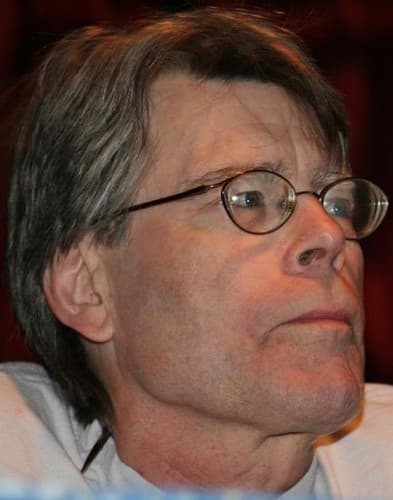
Stephen Edwin King is an American author of horror, supernatural fiction, suspense, crime, science-fiction, and fantasy novels. Described as the "King of Horror", his books have sold more than 350 million copies as of 2006, and many have been adapted into films, television series, miniseries, and comic books. King has published over 65 novels/novellas, including seven under the pen name Richard Bachman, and five non-fiction books. He has also written approximately 200 short stories, most of which have been published in book collections.
Similar books
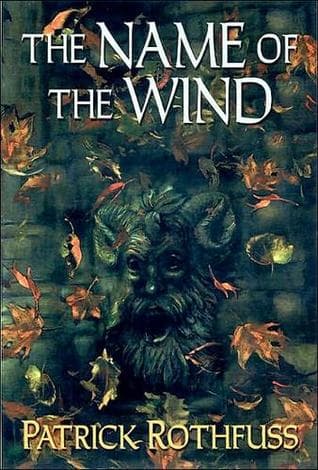
- The Name of the Wind
Patrick Rothfuss
4.5 (716k) average on GoodreadsFantasyFeatures a protagonist recounting their legendary past, combining epic fantasy with a strong romantic element.
- A Game of Thrones
George R.R. Martin
4.5 (2M) average on GoodreadsFantasyExplores political intrigue, dark magic, and the fall of an old world order through multiple perspectives.
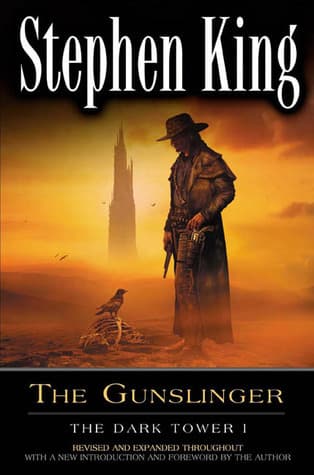
- The Gunslinger
Stephen King
4.0 (515k) average on GoodreadsThrillerProvides essential context for Roland's character and the world of the Dark Tower, though 'Wizard and Glass' is a much longer, more detailed origin story.
- Harry Potter and the Sorcerer's Stone
J.K. Rowling
4.5 (7M) average on GoodreadsFantasyRescued from a miserable life under the stairs, an orphaned boy discovers he's a wizard destined for a magical school, where he uncovers a dangerous secret tied to the dark wizard who murdered his parents.
- The Hunger Games
Suzanne Collins
4.3 (6.4M) average on GoodreadsFantasyIn a future where children fight to the death on live television, Katniss Everdeen volunteers for the arena, turning a death sentence into a fight for survival and a spark of rebellion.
- 1984
George Orwell
4.2 (3.1M) average on GoodreadsPoliticsIn a future where surveillance and thought control are absolute, a man's search for truth clashes with the Party, showing that hope can be a form of rebellion.



Enjoyed the summary?
A summary gives you the shape of the book. The book itself has the detail, the examples and the voice.
Find Wizard and Glass on AmazonAs an Amazon Associate, BookBrief earns from qualifying purchases. How we're funded