

Synopsis
Covers the whole plot, including the ending.
- Difficulty
- Medium
- Pacing
- Moderate
- Mood
- Dark, Thought-provoking, Intense, Defiant
- Read it if
- You're interested in a raw, unflinching look at female oppression and the search for freedom in a patriarchal society, told from a unique and powerful first-person perspective.
- Skip it if
- You prefer light-hearted or escapist fiction, or are sensitive to graphic descriptions of abuse and violence.
Woman at Point Zero Plot Summary
Covers the whole plot, including the ending.
The Psychiatrist's Interview
Dr. El Saadawi, a psychiatrist, studies the psychological profiles of women in prison. She becomes interested in Firdaus, a woman sentenced to death for murder, who refuses to speak. After many attempts, the prison director lets Dr. El Saadawi meet Firdaus. The first meeting is tense and quiet; Firdaus shows no interest in talking. Dr. El Saadawi notices Firdaus's striking eyes and calm manner, seeing no fear or despair despite her coming execution. This meeting sets up the story, showing Firdaus as a mysterious figure whose past is yet to be told.
Childhood of Abuse and Neglect
Firdaus starts her story, describing a childhood of extreme poverty and constant abuse in an Egyptian village. Her father is a brutal man who regularly beats her and her mother. Her mother is submissive and powerless. Firdaus sees society's double standards from a young age, especially concerning female sexuality and honor. She remembers her uncle sexually abusing her, and her family's response focuses on secrecy and shame over her well-being. This early trauma creates a deep distrust of men and the social systems that protect them.
Escape to Cairo and Uncle's Betrayal
After her father dies, Firdaus goes to live with her uncle in Cairo, who promises her an education. At first, she enjoys learning and the city's relative freedom. However, her uncle, who seems respectable, soon exploits her. He makes her do household chores and later arranges her marriage to Sheikh Mahmoud, an old, abusive man. Firdaus feels trapped and betrayed, realizing her uncle's promises were just a cover for his own self-interest. This experience breaks her remaining beliefs about men's protection and kindness.
Marriage to Sheikh Mahmoud
Firdaus's marriage to Sheikh Mahmoud is a time of great suffering. Mahmoud is an impotent, cruel man who abuses her physically and emotionally. He restricts her movements, makes her do humiliating things, and constantly tells her she is worthless. Firdaus tries to escape but is always brought back, strengthening her feeling of powerlessness in marriage. She experiences the deep isolation of being a woman with no rights or voice, further solidifying her understanding of women's subjugation in her society.
The Affair with Bayoumi and Prostitution
Desperate to escape Sheikh Mahmoud, Firdaus runs away and finds shelter with Bayoumi, a man she believes offers real affection. However, Bayoumi soon shows his true nature, forcing Firdaus into prostitution to earn money for him. She is horrified by this new exploitation but feels she has no other choices. This period is a turning point as Firdaus begins to understand that relationships are often about transactions and that women's bodies are treated as goods. She sees how men, regardless of their social status, view women mainly as objects for their pleasure or profit.
Independence as a Prostitute
Firdaus eventually leaves Bayoumi and decides to become a prostitute on her own terms. She finds some freedom and power in this choice. She controls her earnings, chooses her clients, and gains a clear understanding of the hypocrisy of men and society. She realizes that all women, no matter their social status, are essentially prostituting themselves in different ways—through marriage, work, or social compliance. This period strengthens her resolve and sharpens her critical view of the social systems that limit women.
Encounter with Sharifa
Firdaus meets Sharifa, an older, more established prostitute who has a different kind of strength and intelligence. Sharifa teaches Firdaus about their profession, how to navigate the city's hidden parts, and the importance of financial independence. Sharifa, despite her profession, maintains dignity and self-respect, becoming a guide for Firdaus. This relationship helps Firdaus better understand power dynamics and see that even in a marginalized life, one can assert agency.
The Journalist and the Businessman
Firdaus's experiences include meetings with men from different social classes, including a journalist and a wealthy businessman. The journalist, who at first acts like a champion of truth, tries to use her story for his own gain, offering her little money while planning to profit greatly. The businessman, a symbol of social power, treats her as a disposable object. These interactions confirm Firdaus's belief that all men, regardless of their outward appearance, are driven by self-interest and a desire to control women.
The Murder
Firdaus reaches a breaking point when her pimp, a particularly abusive and controlling man, demands all her earnings and threatens her life. In a moment of defiance and self-preservation, she stabs him, killing him. This act comes not just from anger, but from a deep understanding that her life and dignity are worth more than any man's control. The murder is an ultimate act of rebellion, showing her refusal to be exploited further and her assertion of agency, even if it leads to her own death.
Imprisonment and Acceptance of Death
After the murder, Firdaus is arrested and imprisoned. She refuses to apologize or appeal her sentence, seeing her coming execution not as punishment but as a final act of liberation. In prison, she finds a strange peace, having lost all fear and hope. She has nothing left to lose and, therefore, is truly free. Her defiance and strong spirit captivate Dr. El Saadawi, who recognizes Firdaus's deep understanding of social oppression and her ultimate victory over it through her own radical self-assertion.
The Last Interview
Firdaus finishes telling her life story to Dr. El Saadawi, who is deeply moved. Firdaus explains her belief: that the only free people are those who want nothing, fear nothing, and hope for nothing. She believes that society's structures are built on lies and that true freedom comes from rejecting those lies and all forms of control. Her final words resonate with clarity, leaving Dr. El Saadawi to consider freedom, justice, and the real meaning of a 'criminal' woman. Firdaus's execution is near, but her spirit remains unbroken.
Principal Figures
Firdaus
Protagonist
A woman condemned to death who finds freedom in defiance.
Firdaus is a woman whose life is a relentless struggle against male oppression and societal hypocrisy. Born into poverty and subjected to abuse from childhood, she navigates a world where women are consistently exploited. Despite her circumstances, she possesses a fierce intelligence and an unyielding spirit. She evolves from a victim to a woman who understands the mechanisms of power and chooses to defy them, even at the cost of her life. Her journey is one of radical self-discovery and the rejection of all forms of societal control.
Relationships: Dr. El Saadawi (Confidante and listener); Her Father (Abusive and neglectful parent); Her Uncle (Exploitative guardian); Sheikh Mahmoud (Abusive husband); Bayoumi (Exploitative lover/pimp); Sharifa (Mentor and fellow prostitute)
Dr. El Saadawi
Narrator/Supporting
A psychiatrist who records Firdaus's story.
Dr. El Saadawi is the framing narrator of the novel, a psychiatrist working in a women's prison. She is initially an observer, intrigued by Firdaus's defiance and silence. As Firdaus recounts her story, Dr. El Saadawi becomes a sympathetic listener, profoundly affected by Firdaus's experiences and insights. She represents the intellectual and compassionate gaze, seeking to understand the root causes of women's oppression and challenging conventional notions of criminality and morality. Her role is to bring Firdaus's powerful voice to the reader.
Relationships: Firdaus (Interviewer and subject; later, a student of Firdaus's philosophy)
Firdaus's Father
Antagonist/Mentioned
A brutal and abusive peasant farmer.
Firdaus's father is depicted as a violent and uncaring man who embodies the patriarchal oppression prevalent in rural Egypt. He physically abuses his wife and children, seeing them as property. His character establishes the foundational trauma in Firdaus's life and exemplifies the lack of protection and respect afforded to women within the family unit. He represents the first in a long line of men who exploit and control Firdaus, setting the stage for her later defiance.
Relationships: Firdaus (Abusive parent); Firdaus's Mother (Abusive husband)
Firdaus's Uncle
Antagonist/Supporting
A seemingly respectable man who exploits Firdaus.
Firdaus's uncle initially appears as a potential savior, offering her escape from her village and the promise of an education in Cairo. However, he quickly reveals himself to be another exploiter, using Firdaus for domestic labor and eventually marrying her off to an old, abusive man for his own convenience. He represents the hypocrisy of respectable society and the way even educated men can perpetuate the subjugation of women under the guise of benevolence. His betrayal further solidifies Firdaus's distrust of male authority.
Relationships: Firdaus (Exploitative guardian)
Sheikh Mahmoud
Antagonist/Supporting
Firdaus's elderly and abusive husband.
Sheikh Mahmoud is Firdaus's first husband, an old, impotent, and cruel man. He subjects her to physical and psychological abuse, restricting her freedom and constantly reminding her of her perceived worthlessness. He embodies the oppressive nature of traditional marriage for women in Firdaus's society, where women are treated as property and subjected to the whims of their husbands. His character further fuels Firdaus's growing resentment and understanding of the systemic nature of female subjugation.
Relationships: Firdaus (Abusive husband)
Bayoumi
Antagonist/Supporting
A manipulative man who forces Firdaus into prostitution.
Bayoumi is a man Firdaus initially believes offers her love and escape from Sheikh Mahmoud. However, he quickly turns into another exploiter, forcing her into prostitution to profit from her. He represents the transition from direct physical abuse to economic exploitation of women. His character highlights how even in urban settings, women are vulnerable to men who feign affection to control and profit from them. Firdaus's experience with Bayoumi is crucial in her understanding of the transactional nature of all relationships.
Relationships: Firdaus (Exploitative lover/pimp)
Sharifa
Supporting
An experienced prostitute who mentors Firdaus.
Sharifa is an older, more established prostitute who offers Firdaus guidance and insights into their profession. She is intelligent, independent, and maintains a sense of dignity despite her marginalized status. Sharifa teaches Firdaus about navigating the world of prostitution, the importance of financial independence, and understanding the hypocrisy of men. She serves as a positive female figure, demonstrating that even within oppressive systems, women can find strength and agency. Her character helps Firdaus refine her worldview and embrace her chosen path.
Relationships: Firdaus (Mentor and colleague)
The Journalist
Antagonist/Mentioned
A seemingly progressive man who attempts to exploit Firdaus's story.
The journalist represents the hypocrisy of the intellectual class and media, who claim to advocate for truth and justice but are ultimately driven by self-interest. He attempts to exploit Firdaus's life story for a minimal payment, intending to profit significantly from her suffering. His character illustrates how even those in positions of social influence can perpetuate exploitation, further solidifying Firdaus's cynical view of all men and the systems they uphold. He reinforces her belief that all relationships are transactional.
Relationships: Firdaus (Attempted exploiter of her story)
Themes & Insights
Patriarchal Oppression and Female Subjugation
This is the central theme, showing how women in Egyptian society are oppressed by men and patriarchal systems. Firdaus's entire life shows this, from her abusive father and uncle to her cruel husband Sheikh Mahmoud and the various pimps and clients who exploit her. The novel highlights how women are denied power, education, and respect; their bodies and lives are treated as goods. Firdaus's story reveals that even 'respectable' institutions like marriage and family can be places of deep subjugation, as seen in her forced marriage and her uncle's betrayal. Her murder of the pimp is the ultimate rejection of this systemic oppression.
“All men are alike, my dear, whether a father, or a brother, or a husband, or a lover. The first thing a man learns is that he is a man, and the first thing a woman learns is that she is a woman.”
The Nature of Freedom and Imprisonment
The novel explores the idea of freedom, suggesting that true liberation comes from within, often by defying social norms. Firdaus is physically imprisoned, yet she claims to be the freest woman, having shed all fear, hope, and desire. Her earlier life, despite moments of physical freedom, was a form of psychological and social imprisonment, bound by expectations and exploitation. Her choice to become a prostitute on her own terms, and later to kill her oppressor, are acts of reclaiming agency, changing her from a literal prisoner into a metaphorically free person. The prison walls, ironically, become a space where she can finally speak her truth without fear of further social judgment.
“I discovered that all the women in the world, without exception, are prostitutes. It is only a question of degree.”
Hypocrisy and Deception in Society
El Saadawi shows the widespread hypocrisy that supports Egyptian society. Men who appear respectable, like Firdaus's uncle or the journalist, are just as exploitative as the pimps and abusive husbands. Society's focus on 'honor' for women is a tool for control, while men's wrongdoings are often ignored. Firdaus observes that all women, regardless of their social standing, are essentially 'prostituting' themselves in various ways to survive in a male-dominated world. This theme challenges the appearance of morality and justice, revealing the corrupt foundations of society and how it keeps power over women.
“They were all liars, all of them. The father, the uncle, the husband, the pimp, the lawyer, the journalist, the doctor, the director, the president, the king.”
The Power of Storytelling and Voice
The novel itself shows this theme, as Firdaus's story comes to light through Dr. El Saadawi. Despite being silenced and marginalized throughout her life, Firdaus finds her voice in prison, telling her experiences with honesty. Her story becomes an act of resistance, challenging official records and social judgments. By sharing her story, Firdaus reclaims her identity and asserts her truth, giving power to the voiceless. Dr. El Saadawi's role as the transcriber highlights the importance of listening to and amplifying the voices of those on the margins, ensuring their experiences are not erased or misrepresented.
“I would rather die than live a life of lies.”
Plot Devices & Literary Techniques
Frame Narrative
Firdaus's story is encased within Dr. El Saadawi's initial encounters and reflections.
The novel employs a frame narrative, where Dr. El Saadawi's initial attempts to interview Firdaus and her subsequent reflections serve as the outer layer, while Firdaus's first-person account of her life forms the inner story. This structure allows for a dual perspective: Dr. El Saadawi provides an initial objective, psychiatric lens, which then gives way to Firdaus's raw, subjective truth. The frame also emphasizes the act of storytelling as a powerful form of resistance and testament, giving authority to Firdaus's voice despite her societal condemnation.
First-Person Narration (Firdaus)
Firdaus tells her own life story directly to Dr. El Saadawi.
The majority of the novel is narrated in the first person by Firdaus. This device is crucial as it gives her immediate and unfiltered agency, allowing her to present her experiences and philosophical insights directly to the reader. It humanizes her, moving her beyond the label of 'criminal' and allowing her to challenge societal judgments from her own perspective. Her direct address creates a sense of intimacy and authenticity, making her suffering and ultimate defiance more impactful and credible.
Symbolism of the 'Point Zero'
Represents a state of having nothing to lose, leading to ultimate freedom.
The 'Point Zero' in the title symbolizes Firdaus's state of utter destitution and lack of attachment, which paradoxically leads to her ultimate freedom. When she has nothing to want, nothing to fear, and nothing to hope for, she sheds the chains of societal control and gains an unparalleled sense of liberation. This concept is central to Firdaus's philosophy, suggesting that true freedom is not found in accumulation or aspiration, but in the radical stripping away of all external dependencies and internal attachments imposed by a corrupt world.
Irony
The use of situations where reality contradicts expectation, especially regarding freedom and morality.
Irony is a pervasive device, particularly in Firdaus's observations about society. The most striking example is her finding a perverse sense of freedom and honesty in prostitution, a profession universally condemned, while seeing marriage and 'respectable' jobs as different forms of prostitution. There's also the irony of her finding peace and clarity while awaiting execution in prison, a place of confinement, contrasting sharply with the 'freedom' of the outside world that continuously exploited her. This irony serves to highlight the deep-seated hypocrisy and inverted moral compass of the society she critiques.
Woman at Point Zero Quotes
“I am a woman who has no other choice but to continue to kill, to kill, and to kill, until I die myself.”
“They said, 'You are a prostitute.' I said, 'I am a woman.'”
“All of them, without exception, were liars, and murderers, and hypocrites.”
“My freedom was to die. My freedom was to kill.”
“I do not know why I killed him. I only know that I did not regret it.”
“The only way to avoid being exploited is to exploit others.”
“I discovered that all of them, the men and the women, were nothing but pieces of paper in the hands of others.”
“Fear has never been a friend of mine.”
“The world needs prostitutes. It needs criminals. It needs all those who break its laws.”
“My voice was the sound of a woman who had nothing left to lose.”
“I started to understand that freedom is not just a word, but a struggle.”
“No woman can be a prostitute unless there are men who need prostitutes.”
“I had been born for a purpose, and that purpose was to be free.”
Quiz
10 questions on the plot and the characters. Each answer comes with a short explanation.
Question 1
What is the primary reason Firdaus is imprisoned at the beginning of the novel?
- For stealing money from a wealthy client.
- For murdering a pimp.
- For publicly denouncing a powerful political figure.
- For attempting to escape from a forced marriage.
Show answer
B. For murdering a pimp. Firdaus is on death row for murdering Marzouk, the pimp who exploited her and others, which she saw as an act of liberation.
Question 2
Who is the first male figure in Firdaus's life who shows her some form of kindness, albeit with ulterior motives?
- Her uncle, who takes her in after her parents' death.
- The Sheikh of the village, who teaches her the Quran.
- The school headmaster, who praises her intelligence.
- Her first client as a prostitute, who pays her well.
Show answer
A. Her uncle, who takes her in after her parents' death. Her uncle takes her in after her parents die and initially seems kind, but his true motive is to exploit her, eventually leading to her forced marriage.
Question 3
What does Firdaus discover about the 'respectable' women in society compared to prostitutes?
- Respectable women have more genuine freedom.
- Respectable women are often more exploited and less free than prostitutes.
- Respectable women are generally wealthier and happier.
- Respectable women have stronger family bonds.
Show answer
B. Respectable women are often more exploited and less free than prostitutes. Firdaus comes to believe that 'respectable' women are often more enslaved by societal expectations, marriage, and financial dependence than prostitutes, who at least control their own bodies and earnings to some extent.
Question 4
What significant detail does Firdaus refuse to do before her execution?
- Eat a last meal.
- Confess her sins to a religious leader.
- Plead for a pardon.
- Sign a petition for clemency or show remorse.
Show answer
D. Sign a petition for clemency or show remorse. Firdaus famously refuses to sign the clemency petition, viewing it as a submission to the very system that oppressed her, and choosing defiance even in death.
Question 5
Which of the following best describes Firdaus's relationship with Bayoumi, her first 'protector' in Cairo?
- He genuinely loves her and provides her with a stable home.
- He exploits her sexually and financially, keeping her confined.
- He acts as a mentor, guiding her into a respectable profession.
- He is a distant relative who offers her temporary shelter.
Show answer
B. He exploits her sexually and financially, keeping her confined. Bayoumi takes Firdaus in after she runs away from her husband, but quickly turns her into his sexual slave, confining her and exploiting her financially, essentially initiating her into a life of prostitution.
Question 6
What symbolic object does Firdaus associate with freedom and power during her time as a successful prostitute?
- A luxurious apartment.
- A large sum of money.
- A specific piece of jewelry.
- A book she frequently reads.
Show answer
B. A large sum of money. Firdaus finds a sense of power and independence through the money she earns as a prostitute, as it gives her control over her own life and choices, something she lacked in all previous relationships.
Question 7
What is the ultimate 'truth' Firdaus believes she discovers about freedom and happiness?
- It can only be found through religious devotion.
- It comes from accumulating wealth and status.
- The only truly free people are those who want nothing, fear nothing, and hope for nothing.
- It is achieved through conforming to societal norms.
Show answer
C. The only truly free people are those who want nothing, fear nothing, and hope for nothing. This quote directly from the novel's description encapsulates Firdaus's ultimate realization that true freedom comes from detaching oneself from desires, fears, and hopes that bind one to oppressive systems.
Question 8
How does Firdaus react to the journalist who comes to interview her in prison?
- She is initially hesitant but eventually confides in her completely.
- She views the journalist as another potential exploiter, but eventually sees her as an ally.
- She completely refuses to speak to her.
- She attempts to manipulate the journalist for her own gain.
Show answer
B. She views the journalist as another potential exploiter, but eventually sees her as an ally. Firdaus initially distrusts the journalist, seeing her as part of the system that wants to package and sell her story. However, through their conversations, she develops a form of connection and trust, sharing her full story.
Question 9
What specific act of defiance does Firdaus commit that leads to her being placed on death row, rather than just imprisoned?
- She attempts to escape from prison multiple times.
- She murders a powerful pimp in public view, refusing to repent.
- She organizes a rebellion among the other female prisoners.
- She exposes a corrupt government official.
Show answer
B. She murders a powerful pimp in public view, refusing to repent. Her murder of Marzouk, the pimp, is the direct cause of her death sentence. Her refusal to show remorse or ask for clemency further solidifies her fate, as she views her act as a justified rebellion.
Question 10
The novel is structured as Firdaus recounting her life story to whom?
- Her lawyer.
- A fellow inmate.
- A female psychiatrist/doctor.
- A judge during her trial.
Show answer
C. A female psychiatrist/doctor. The entire narrative is presented as Firdaus's confession and life story told to Dr. El Saadawi herself (the author, appearing as a character) in prison, just before Firdaus's execution.
Woman at Point Zero FAQ
What is the central premise of 'Woman at Point Zero'?
The novel centers on the life story of Firdaus, a woman condemned to death for murder, as she recounts her journey from a childhood of poverty and abuse to becoming a successful prostitute and ultimately a murderer. Her narrative exposes the systemic oppression of women in Egyptian society and her defiant rejection of its hypocritical norms.
Who is Firdaus and what drives her actions throughout the book?
Firdaus is the protagonist, a woman who experiences continuous exploitation and violence from men and societal structures. Her actions are driven by a desperate search for freedom, dignity, and truth, often leading her to reject conventional paths and embrace a radical sense of autonomy, even if it means defying death.
What is the significance of the title, 'Woman at Point Zero'?
The 'point zero' refers to Firdaus's ultimate state of wanting nothing, fearing nothing, and hoping for nothing, which she believes is the only true freedom. It also symbolizes her position as an outcast, stripped of societal value, yet paradoxically, finding a profound sense of self and resistance at this extreme edge.
How does the novel portray the role of education in Firdaus's life?
Education initially offers Firdaus a glimmer of hope and a path to escape her impoverished background, particularly through her studies with her uncle. However, it ultimately disappoints her as she realizes that even educated men and institutions perpetuate the same patriarchal oppressions, making her question its true liberating power.
What is the significance of Firdaus's relationship with Sharifa?
Sharifa introduces Firdaus to the world of prostitution, initially presenting it as a path to financial independence and a form of control over men. This relationship is crucial as it marks Firdaus's transition into a life where she explicitly monetizes her body, yet also gains a certain power and insight into societal hypocrisy.
How does Firdaus's murder of the pimp, Marzouk, symbolize her ultimate rebellion?
Firdaus's murder of Marzouk, her pimp, is her final, definitive act of rebellion against male exploitation and control. It represents her refusal to be further subjugated and her reclaiming of agency, even if it leads to her execution. This act is not about revenge, but about asserting her fundamental right to self-determination.
What subtle connections can be drawn between Firdaus's experiences with her father and her later relationships with men?
Firdaus's early experiences of violence and lack of affection from her father establish a pattern of male dominance and female submission that she encounters throughout her life. This initial trauma informs her distrust of men and her eventual realization that all men, regardless of their social standing, seek to control and exploit women in varying ways.
How does the narrative structure, specifically the interview format, enhance Firdaus's story?
The interview format, where Firdaus recounts her life to a psychiatrist, provides a direct and unfiltered voice for her experiences, lending authenticity and urgency to her testimony. It also allows the reader to hear her perspective directly, challenging societal judgments and humanizing a woman condemned as a criminal.
From a psychological perspective, how does Firdaus develop resilience in the face of relentless trauma?
Firdaus develops resilience by progressively shedding illusions and embracing a radical form of self-awareness. Each traumatic experience, rather than breaking her, strengthens her resolve to understand and defy the oppressive systems around her, leading her to find power in detachment and truth-telling.
How does Firdaus's perception of freedom evolve throughout the novel?
Initially, Firdaus associates freedom with escape from physical abuse and poverty. Over time, her understanding deepens to encompass intellectual and emotional liberation, culminating in the belief that true freedom lies in absolute independence from societal expectations, desires, and fears, even at the cost of her life.
Discuss the psychological impact of constant betrayal on Firdaus's ability to form genuine connections.
The repeated betrayals Firdaus experiences, from her uncle and aunt to various lovers and employers, cultivate a deep-seated distrust and cynicism. This makes it increasingly difficult for her to form genuine, trusting connections, leading her to believe that all relationships are transactional and ultimately exploitative, reinforcing her isolation.
How does Firdaus's decision to refuse a pardon reflect her psychological state at the end of the novel?
Firdaus's refusal of a pardon signifies her ultimate psychological liberation and her complete rejection of the society that would grant it. She views the pardon as another form of control and hypocrisy, preferring to die on her own terms, having achieved a profound sense of inner freedom and integrity.
Is Firdaus a feminist hero, a victim, or both? Discuss the complexities of her portrayal.
Firdaus is complexly both a victim of patriarchal society and a powerful feminist hero. While she endures immense suffering, her defiance, her articulate critique of oppression, and her ultimate act of self-assertion position her as a symbol of resistance against systemic injustice, making her a compelling figure for feminist analysis.
How does the novel challenge conventional notions of morality, especially regarding prostitution?
The novel subverts traditional morality by presenting prostitution not merely as a moral failing but as a choice Firdaus makes to gain agency and financial independence in a society that offers women few legitimate avenues for power. She often finds more honesty and control in her life as a prostitute than in 'respectable' relationships.
What is the author's broader critique of Egyptian society through Firdaus's story?
Nawal El Saadawi uses Firdaus's story to deliver a searing indictment of Egyptian society's pervasive hypocrisy, corruption, and brutal oppression of women across all social strata. She critiques not only explicit violence but also the subtle ways institutions, religion, and 'respectable' men perpetuate female subjugation.
How does Firdaus's lack of fear of death contribute to the novel's philosophical message?
Firdaus's complete lack of fear of death underscores the novel's philosophical message that true freedom comes from shedding all attachments, including the fear of mortality. By embracing death, she transcends the ultimate form of control society holds over individuals, achieving an unparalleled state of liberation and power.
To what extent is Firdaus's final act of murder justified within the narrative's framework?
Within the narrative's framework, Firdaus's murder of Marzouk is presented as a justifiable act of self-liberation and resistance against relentless exploitation. It is her ultimate refusal to be a victim, asserting her dignity and reclaiming her body and life from those who sought to control her, making it a powerful, albeit violent, statement of autonomy.
What role does the psychiatrist play in the narrative, and what does their interaction with Firdaus suggest?
The psychiatrist acts as the initial interviewer and chronicler of Firdaus's story, representing the 'educated' and 'rational' societal perspective. Their interaction highlights the limitations of conventional understanding in grasping Firdaus's radical truth and ultimately shows the psychiatrist's own transformation and admiration for Firdaus's unwavering spirit.
About the author
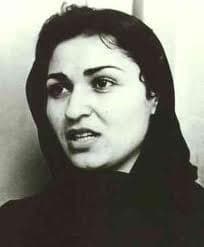
Nawal Elsaadawi was an Egyptian feminist writer, activist and physician. She wrote numerous books on the subject of women in Islam, focusing on the practice of female genital mutilation in her society. She was described as "the Simone de Beauvoir of the Arab World", and as "Egypt's most radical woman".
Similar books
- The Handmaid's Tale
Margaret Atwood
4.1 (1.5M) average on GoodreadsFantasyExplores female subjugation and rebellion in a dystopian society.
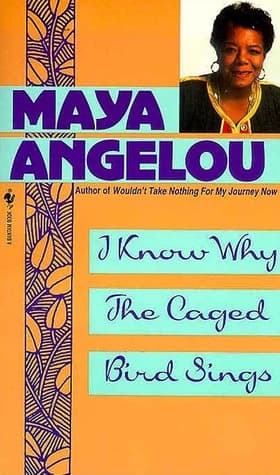
- I Know Why the Caged Bird Sings
Maya Angelou
4.2 (409k) average on GoodreadsBiographyA powerful memoir of overcoming childhood trauma and finding strength as a woman.
- The Color Purple
Alice Walker
4.2 (521k) average on GoodreadsHistorical FictionBoth Woman at Point Zero and The Color Purple (1982) explore the brutalization of women by patriarchal systems and the journey towards self-discovery and liberation. However, Walker's novel, while depicting immense suffering, ultimately offers a more optimistic vision of female solidarity and communal healing as pathways to freedom. Firdaus's liberation is more solitary and nihilistic, found in the refusal to be exploited further, even if it means death, whereas Celie finds solace and strength in sisterhood and self-actualization within a supportive community. El Saadawi's work is arguably more focused on a structural critique of society as inherently oppressive to women, while Walker emphasizes individual and collective resilience within oppressive structures.
- A Thousand Splendid Suns
Khaled Hosseini
4.4 (1.2M) average on GoodreadsHistorical FictionHosseini's A Thousand Splendid Suns (2007) also delves into the lives of women in oppressive societies (Afghanistan), focusing on themes of abuse, resilience, and the search for dignity. While both novels depict extreme suffering and the impact of war and patriarchy on women, Hosseini's narrative often emphasizes the bonds of female friendship and motherhood as central to survival and resistance. Firdaus, in contrast, largely navigates her suffering alone, finding brief, complex connections (like with Sharifa) but ultimately achieving her final point of liberation through individual refusal. El Saadawi's Firdaus is a more isolated figure whose ultimate defiance is against society itself, whereas Hosseini's characters find strength and meaning within their relationships amidst societal turmoil.
- Nineteen Eighty-Four
George Orwell
4.2 (5.5M) average on GoodreadsFictionWinston Smith dreams of truth and rebellion in a world where Big Brother watches all, but he confronts the terrifying power of a regime that controls not just actions, but thoughts.
- The Frozen River
Ariel Lawhon
4.4 (600k) average on GoodreadsFictionIn 1789 Maine, a heroic midwife's diary helps her expose a murder and get justice in a town that wants to silence her.





Enjoyed the summary?
A summary gives you the shape of the book. The book itself has the detail, the examples and the voice.
Find Woman at Point Zero on AmazonAs an Amazon Associate, BookBrief earns from qualifying purchases. How we're funded