

Synopsis
Covers the whole plot, including the ending.
- Difficulty
- Medium
- Pacing
- Moderate
- Mood
- Heartbreaking, Resilient, Empowering, Hopeful, Historical
- Read it if
- You want a powerful, character-driven story of resilience, female empowerment, and overcoming adversity, set against a rich historical backdrop.
- Skip it if
- You are sensitive to themes of abuse, racism, and sexism, as these are depicted unflinchingly.
The Color Purple Plot Summary
Covers the whole plot, including the ending.
Celie's Childhood of Abuse and Loss
The story begins in rural Georgia in the early 1900s, told through letters written by a fourteen-year-old Celie to God. Celie's stepfather, Alfonso, repeatedly rapes her, and she believes he is her biological father. She has two children, Olivia and Adam, who Alfonso immediately takes away, claiming he killed them. Celie is uneducated, isolated, and believes herself to be ugly and unloved. Her younger sister, Nettie, is bright, beautiful, and the only source of comfort and protection for Celie. Alfonso also tries to molest Nettie, leading Celie to intervene and protect her sister, strengthening their deep bond.
Marriage to Mister and Nettie's Escape
When a local farmer, Mister (Albert Johnson), asks Alfonso to marry Nettie, Alfonso offers Celie instead. He claims she is ugly, infertile, and a poor housekeeper. Celie, desperate to protect Nettie from Alfonso's abuse, agrees to marry Albert, seeing it as a way for Nettie to escape. Albert is a cruel and neglectful husband. He brings his children, Harpo, Henrietta, and Buster, into the household, and Celie is expected to care for them all. Nettie soon comes to live with them, but Albert tries to force himself on her. Nettie resists and leaves, promising to write. Albert, out of jealousy and spite, hides all of Nettie's letters from Celie. This makes Celie believe her sister has forgotten her or died.
Shug Avery's Arrival and Influence
Albert brings his long-time lover, Shug Avery, to live in their home when she falls ill. Shug is a glamorous, independent, blues singer, disliked by the community for her lifestyle but admired by Celie. Initially, Shug treats Celie with disdain. But as Celie nurses her back to health, they form a deep bond. Shug's confidence, sensuality, and defiance inspire Celie. This makes Celie question her own submissiveness and the nature of God. Shug encourages Celie to find her voice and helps her see her own worth. This is a turning point in Celie's self-perception.
The Discovery of Nettie's Letters
While cleaning Albert's room, Shug discovers a hidden stash of letters addressed to Celie, concealed for years. These are the letters from Nettie. After leaving Albert's house, Nettie was taken in by missionaries, Samuel and Corrine, the same couple who adopted Celie's children, Olivia and Adam. Nettie has been living with them in Africa, working as a missionary and teacher, and has written to Celie all this time. The letters reveal that Samuel and Corrine are her children's adoptive parents and that Nettie has been helping raise them. This gives Celie hope that her children are alive and well.
Celie's Awakening and Departure
The discovery of Nettie's letters starts a transformation in Celie. She confronts Albert, publicly cursing him and declaring her independence. With Shug's encouragement and financial support, Celie decides to leave Albert, taking Shug and her new lover, Grady, with her. This act of defiance is huge, as Celie has never before challenged authority or made a decision for herself. She moves to Memphis with Shug, where she develops her talent for sewing. She designs and makes pants, which she eventually turns into a successful business.
Celie's Business and Personal Growth
In Memphis, Celie thrives. She starts 'Celie's Pants,' a business creating unique and comfortable trousers for both men and women. Her business is successful, giving her financial independence and purpose. She continues to write letters, now to Nettie, sharing her experiences and newfound freedom. Her relationship with Shug changes, and while Shug eventually leaves to pursue other relationships, their bond remains strong. Celie's confidence grows, and she finds joy in her work and her friendships, building a community of supportive women around her.
Albert's Redemption and Celie's Forgiveness
Meanwhile, Albert's life falls apart after Celie leaves. He becomes depressed and neglected, thinking about his past cruelty. Over time, he begins to change, showing remorse for his actions and trying to make amends. He starts to garden, play music, and even develops a friendship with Celie, recognizing her strength and resilience. Celie, having found peace and success, is able to forgive Albert, seeing his genuine change. Their relationship moves from abuse to a quiet, respectful friendship, showing Celie's capacity for compassion and healing.
Nettie's Return and Family Reunion
After many years, Nettie's letters describe her return journey from Africa. Samuel, Corrine, Olivia, and Adam are making their way back to America. Celie, now a successful businesswoman and a confident woman, waits for them with great anticipation. The reunion is emotional and joyful, as Celie finally meets her grown children and is reunited with her beloved sister. Olivia and Adam are well-educated and raised, and they embrace Celie as their mother. This reunion is the end of Celie's long journey of suffering and hope, bringing her full circle to the family she thought she had lost forever.
The Color Purple Characters
Celie
Protagonist
A submissive, abused woman who finds her voice and independence.
Celie begins the story as a young, uneducated, and severely abused girl, believing herself to be ugly and worthless. She endures rape, forced childbirth, and a brutal marriage to Albert. Her initial form of expression is through letters to God, where she shares her deepest pain and observations. Throughout the novel, Celie's journey is one of profound transformation, sparked by the love and influence of Shug Avery and the eventual discovery of her sister's letters. She evolves into a strong, independent woman, a successful businesswoman, and a survivor who ultimately finds peace and forgiveness.
Relationships: Nettie (Beloved younger sister, her only solace and connection); Albert (Mister) (Abusive husband, later a transformed friend); Shug Avery (Lover, mentor, and catalyst for Celie's awakening); Olivia (Daughter, separated at birth, reunited); Adam (Son, separated at birth, reunited)
Nettie
Supporting
Celie's beloved sister, a resilient and educated missionary in Africa.
Nettie is Celie's younger sister, beautiful, intelligent, and fiercely protective of Celie. When forced to flee Albert's abuse, she is taken in by missionaries, Samuel and Corrine, and accompanies them to Africa. She becomes a teacher and a witness to African culture, meticulously documenting her experiences in letters to Celie. Her unwavering faith and dedication to education allow her to thrive despite her separation from her sister. She serves as Celie's link to the outside world and the ultimate source of hope and reunion.
Relationships: Celie (Beloved older sister, her primary concern and connection); Samuel (Missionary, adoptive father to Celie's children, later her husband); Corrine (Missionary, adoptive mother to Celie's children, Nettie's friend); Olivia (Celie's daughter, whom Nettie raises); Adam (Celie's son, whom Nettie raises)
Shug Avery
Supporting
A glamorous blues singer and Albert's mistress, who becomes Celie's lover and mentor.
Shug Avery is a powerful, independent, and sexually liberated blues singer who embodies defiance against societal norms. Initially Albert's mistress, she becomes a pivotal figure in Celie's life. Shug's sensuality, confidence, and rejection of traditional religion inspire Celie to question her own submissive existence. She is the first person to truly see and love Celie, physically and emotionally, and she helps Celie discover her voice, her self-worth, and her hidden letters from Nettie. Shug represents freedom and self-acceptance.
Relationships: Celie (Lover, mentor, and deep friend); Albert (Mister) (Long-time lover, eventually a platonic friend); Grady (Husband after Celie and Albert)
Albert (Mister)
Antagonist/Supporting
Celie's abusive husband, who undergoes a remarkable transformation.
Albert, referred to as 'Mister' by Celie, is initially a cruel, abusive, and neglectful husband. He forces Celie into marriage, beats her, and hides Nettie's letters, effectively isolating Celie from her only source of hope. His actions are driven by insecurity, jealousy, and traditional patriarchal beliefs. However, after Celie leaves him, Albert undergoes a significant transformation. He becomes depressed and introspective, eventually recognizing the harm he has caused. He begins to change, developing a more gentle and respectful nature, and ultimately forms a platonic friendship with Celie, earning her forgiveness.
Relationships: Celie (Abusive husband, later a transformed friend); Shug Avery (Long-time mistress); Harpo (Son)
Harpo
Supporting
Albert's eldest son, who struggles with asserting his masculinity.
Harpo is Albert's eldest son and Celie's stepson. He is initially influenced by his father's patriarchal views, attempting to assert dominance over his wife, Sofia. However, Harpo is fundamentally a gentler soul who struggles with this role. He builds a juke joint, which becomes a symbol of community and entertainment. Harpo genuinely loves Sofia and eventually learns to respect her independence, even after their separation. He represents a man grappling with inherited gender roles and striving for a more equitable partnership.
Relationships: Sofia (Wife, later separated but still connected); Celie (Stepmother, whom he respects); Albert (Mister) (Father)
Sofia
Supporting
A strong-willed, defiant woman who refuses to be subservient.
Sofia is Harpo's wife, a fiercely independent and outspoken woman who refuses to be controlled by any man. Her strength and defiance are a stark contrast to Celie's initial submissiveness. She famously tells Harpo, 'I likes a man that's not afraid to let me be myself.' Sofia faces immense hardship, including a brutal beating and imprisonment for defying a white mayor, which leaves her physically and emotionally scarred. Despite her suffering, she retains her spirit and remains a symbol of resilience and resistance against oppression.
Relationships: Harpo (Husband, later separated but still connected); Celie (Friend, whom she inspires); Squeak (Mary Agnes) (Sister-in-law, later a friend)
Samuel
Supporting
A missionary and adoptive father to Celie's children, later Nettie's husband.
Samuel is a kind and devout missionary who, along with his wife Corrine, adopts Celie's children, Olivia and Adam. He takes Nettie under his wing when she flees Albert, and together they travel to Africa to do missionary work. Samuel is a good man who genuinely cares for the children and for Nettie. After Corrine's death, he and Nettie fall in love and marry. He serves as a loving paternal figure and a moral compass, providing stability and education for the children.
Relationships: Nettie (Fellow missionary, later husband); Corrine (First wife, fellow missionary); Olivia (Adoptive daughter); Adam (Adoptive son)
Corrine
Supporting
Samuel's first wife and adoptive mother to Celie's children.
Corrine is Samuel's first wife and a dedicated missionary. She and Samuel adopt Olivia and Adam, believing them to be her sister's children. She initially struggles with jealousy and suspicion when Nettie arrives, fearing that Nettie is the biological mother of the children. However, she eventually accepts Nettie and her role, and they become close friends. Corrine's death creates a void that eventually leads to Samuel and Nettie's marriage, but her kindness in raising Celie's children is crucial to the plot.
Relationships: Samuel (Husband, fellow missionary); Nettie (Friend and fellow missionary); Olivia (Adoptive daughter); Adam (Adoptive son)
Olivia
Supporting
Celie's daughter, raised by missionaries in Africa.
Olivia is Celie's first child, taken from her at birth by Alfonso and adopted by Samuel and Corrine. She grows up in Africa with Nettie as her teacher and mother figure. Olivia is intelligent and well-educated, representing the potential and future that Celie was denied. Her reunion with Celie is a powerful moment, symbolizing the restoration of Celie's lost family and the healing of past wounds.
Relationships: Celie (Biological mother); Nettie (Teacher and mother figure); Samuel (Adoptive father); Corrine (Adoptive mother); Adam (Brother)
Adam
Supporting
Celie's son, raised by missionaries in Africa.
Adam is Celie's second child, also taken from her at birth and adopted by Samuel and Corrine. Like Olivia, he is raised in Africa and receives an education from Nettie. Adam eventually marries Tashi, an African woman, and navigates the complexities of cultural identity. His return to America with his family completes the reunion for Celie, bringing her entire lost family back together. He embodies the connection between African and African-American heritage.
Relationships: Celie (Biological mother); Nettie (Teacher and mother figure); Samuel (Adoptive father); Corrine (Adoptive mother); Olivia (Sister); Tashi (Wife)
The Color Purple Themes
Identity and Self-Discovery
The novel explores Celie's journey of self-discovery from a voiceless, abused girl to an independent woman. Initially, Celie's identity is shaped by the abuse she endures and the roles forced upon her. Through her letters, her relationship with Shug Avery, and the discovery of Nettie's letters, she slowly learns to define herself outside of her circumstances. Her creation of 'Celie's Pants' symbolizes her embracing her own creativity and forging an identity based on her talents and desires, rather than external expectations. This theme is central to her transformation and freedom.
“I think us here to enjoy ourselves. God want to see us git up and shout. God don't need no more part time love. God got all the love it can use. What God need is a good time.”
The Power of Sisterhood and Female Bonds
The lasting bond between Celie and Nettie is the emotional core of the novel, giving Celie her only source of hope and love during her darkest times. Beyond this, the relationships Celie forms with other women—Shug Avery, Sofia, and Mary Agnes (Squeak)—are important for her survival and growth. Shug teaches Celie about love, spirituality, and self-worth, while Sofia's fierce independence inspires her. These female alliances offer mutual support, shared understanding, and a collective strength against patriarchal oppression. They show the power of women empowering each other.
“But I don't know how to fight. All I know how to do is stay alive.”
Spirituality and Redefining God
Celie begins by writing letters to a traditional, patriarchal God, reflecting her suffering and a sense of abandonment. Shug Avery challenges Celie's conventional understanding of God, suggesting that God is not an old white man but an omnipresent force of nature, beauty, and joy. This new definition of spirituality allows Celie to find God in everyday experiences, in nature, in love, and in herself, rather than through fear or dogma. This shift is important for her freedom, letting her connect with a more personal and empowering sense of faith.
“God is inside you and inside everybody else. You come into the world with God. But only them that search for it ever find it.”
Race and Racism
The novel is set in the early 20th century American South, and the widespread racism of the era is a constant background to the characters' lives. Celie and her community face systemic discrimination and violence from white society. Sofia's brutal beating and imprisonment for defying a white mayor and his wife is a clear example of the racial injustice and brutality faced by African Americans. Nettie's letters from Africa also show the complexities of race and colonialism, showing how African people deal with their own heritage and the impact of European influence. Race shapes opportunities, interactions, and experiences throughout the story.
“They got a lot of colored people in Africa, but they not like us. They more like white people, in a way.”
Abuse and Resilience
The widespread theme of abuse—sexual, physical, and emotional—is central to Celie's early life, at the hands of her stepfather and then her husband. The story shows the devastating impact of this violence on individuals and communities. However, equally prominent is the theme of resilience. Celie's ability to survive, to find small joys, and ultimately to transform her life despite deep trauma shows the strength of the human spirit. Sofia's endurance of violence and imprisonment also shows a fierce, though different, form of resilience.
“I'm pore, I'm black, I may be ugly, but I'm here.”
Plot Devices & Literary Techniques
Epistolary Narrative
The story is told entirely through letters, primarily from Celie to God and later to Nettie.
The novel's structure as a series of letters is a crucial plot device. It allows the reader intimate access to Celie's inner thoughts, feelings, and experiences, particularly when she is voiceless in her external life. The shift from letters to God to letters to Nettie marks Celie's growth and her developing understanding of connection and communication. Nettie's letters, introduced later, provide an external perspective, expanding the world of the novel and revealing crucial plot details that Albert had hidden, driving Celie's transformation and the eventual family reunion.
Symbolism of Pants
Celie's creation and business of making pants symbolizes her independence and self-expression.
Initially, Celie is forced into traditional female roles, wearing dresses and being confined. Her talent for sewing and her eventual business, 'Celie's Pants,' become a powerful symbol of her liberation. Pants, traditionally associated with men, represent freedom, agency, and the ability to move freely in the world. By making pants for both men and women, Celie literally and figuratively 'clothes' herself and others in newfound independence and self-determination. It's her creative outlet, her economic freedom, and a tangible manifestation of her transformed identity.
The Color Purple
A recurring motif representing beauty, joy, and the overlooked wonders of God's creation.
The color purple, as discussed by Shug Avery, symbolizes the small, everyday beauties and pleasures in life that people often overlook or take for granted. Shug explains that God wants people to notice and appreciate these things, like 'the color purple,' rather than just focusing on strict religious dogma. It represents joy, sensuality, and the richness of existence. For Celie, discovering the 'color purple' signifies her awakening to the beauty in the world and within herself, moving beyond a life of suffering to one of appreciation and delight.
The Juke Joint
Harpo's establishment serves as a community hub and a site of both joy and conflict.
Harpo's juke joint is a significant setting where many pivotal events unfold. It's a place of music, dancing, and communal gathering, symbolizing a space for black joy and cultural expression outside the confines of white society. It's where Shug Avery performs, solidifying her status as a local legend. It also becomes a site of conflict and reconciliation, as characters like Sofia, Harpo, and Squeak navigate their relationships there. The juke joint represents a microcosm of the community's social dynamics, evolving as the characters themselves evolve.
The Color Purple Quotes
“I think it pisses God off if you walk by the color purple in a field somewhere and don't notice it.”
“All my life I had to fight. I had to fight my daddy. I had to fight my brothers. I had to fight my cousins and my uncles. A girl child ain't safe in a family of men.”
“I'm pore, I'm black, I may be ugly and can't cook, a voice say to everything listening. But I'm here.”
“You have to git man off your eyeball, before you can see anything a'tall.”
“I don't know how to fight. All I know how to do is stay alive.”
“The more I wonder, the more I love.”
“I'm a woman, I'm a woman. I'm a woman.”
“I curse you, I say. What that mean? He say. It mean you going to die.”
“Everything want to be loved. Us sing and dance, make faces and give flower bouquets, trying to be loved.”
“I'm black, I may be ugly and can't cook, but I'm here.”
“You better not never tell nobody but God. It'd kill your mammy.”
“I have never felt so loved, so cherished, so beautiful.”
“The Olinka people do not believe girls should be educated.”
“I thank you, Miss Celie, for everything you have done for me.”
Quiz
10 questions on the plot and the characters. Each answer comes with a short explanation.
Question 1
What is the primary format of Celie's narrative in the novel?
- Third-person omniscient narration
- A series of letters to God and later to her sister Nettie
- A diary addressed to her husband Albert
- Oral storytelling to her children
Show answer
B. A series of letters to God and later to her sister Nettie Celie's story unfolds through letters she writes first to God and then to her sister Nettie, which creates an intimate, first-person perspective that reveals her inner thoughts and growth.
Question 2
Who is the first person to show Celie genuine love and kindness, helping her gain self-worth?
- Her husband Albert
- Her sister Nettie
- Shug Avery
- Her stepfather Alphonso
Show answer
C. Shug Avery Shug Avery, a blues singer and Albert's former lover, becomes Celie's friend and lover, teaching her about love, sexuality, and self-respect, which is pivotal to Celie's transformation.
Question 3
What event leads to Celie finally standing up to Albert and leaving him?
- Albert beats her severely
- She discovers Nettie's hidden letters
- Shug Avery moves away
- Her children return to her
Show answer
B. She discovers Nettie's hidden letters Celie finds letters from Nettie that Albert had been hiding for years, revealing that Nettie is alive and well in Africa. This betrayal gives Celie the courage to confront Albert and assert her independence.
Question 4
What is the significance of the color purple in the novel's themes?
- It represents the bruises from Celie's abuse
- It symbolizes royalty and the beauty in everyday life that God creates
- It refers to the dye used in African textiles
- It is the color of Shug Avery's favorite dress
Show answer
B. It symbolizes royalty and the beauty in everyday life that God creates Shug tells Celie that God gets angry if people walk by the color purple in a field without noticing it, emphasizing the theme of finding beauty, spirituality, and self-worth in the ordinary world.
Question 5
How does Sofia's character challenge gender and racial stereotypes in the novel?
- By becoming a successful businesswoman in Memphis
- By refusing to submit to white authority and asserting her independence, even at great cost
- By marrying a wealthy white man
- By leading a protest for women's suffrage
Show answer
B. By refusing to submit to white authority and asserting her independence, even at great cost Sofia's defiance, such as when she stands up to the mayor's wife and suffers brutal consequences, highlights the intersection of racism and sexism, showing her strength and resistance against oppression.
Question 6
What role does Nettie's storyline in Africa play in the novel?
- It provides a contrast to Celie's life, exploring themes of colonialism, identity, and family
- It serves as a romantic subplot with a European missionary
- It details Nettie's escape from slavery
- It focuses on Nettie's career as a teacher in the American South
Show answer
A. It provides a contrast to Celie's life, exploring themes of colonialism, identity, and family Nettie's letters from Africa expose Celie (and readers) to issues of colonialism, cultural identity, and the African diaspora, enriching the novel's exploration of Black experience and sisterhood.
Question 7
Why does Celie start her own pants-making business?
- To compete with Albert's farm
- As a hobby suggested by Shug to pass time
- To gain economic independence and self-sufficiency after leaving Albert
- To supply uniforms for the local church
Show answer
C. To gain economic independence and self-sufficiency after leaving Albert After leaving Albert, Celie uses her sewing skills to start a business making pants, symbolizing her empowerment, creativity, and break from traditional gender roles, which leads to financial and personal freedom.
Question 8
How does Albert's character change by the end of the novel?
- He becomes a violent recluse, shunned by the community
- He remains unchanged, still abusive and bitter
- He undergoes a redemption, learning to respect Celie and others, and even helps with her business
- He moves to Africa to find Nettie
Show answer
C. He undergoes a redemption, learning to respect Celie and others, and even helps with her business Albert experiences growth and redemption, influenced by Celie's transformation and his own reflections. He becomes more humble, helps Celie, and seeks forgiveness, showing the novel's theme of personal change.
Question 9
What is the significance of Celie's relationship with God evolving throughout the novel?
- It shows her losing faith entirely due to her suffering
- It reflects her journey from seeing God as a distant, male authority to a more personal, genderless presence in nature and love
- It indicates her conversion to a specific organized religion
- It is used to criticize all religious beliefs as oppressive
Show answer
B. It reflects her journey from seeing God as a distant, male authority to a more personal, genderless presence in nature and love Celie starts by writing to a traditional, patriarchal God but, guided by Shug, redefines her spirituality to find God in everyday beauty and human connections, symbolizing her empowerment and rejection of oppressive structures.
Question 10
In what way does the novel address the theme of sisterhood beyond biological ties?
- By focusing only on Celie and Nettie's blood relationship
- Through the bonds between Celie, Shug, Sofia, and other women who support and empower each other
- By depicting women as constantly in competition with each other
- Through male characters forming brotherhoods to protect women
Show answer
B. Through the bonds between Celie, Shug, Sofia, and other women who support and empower each other The novel highlights how women like Shug, Sofia, and others form a community that provides emotional support, challenges oppression, and fosters growth, illustrating sisterhood as a key source of strength and resilience.
The Color Purple FAQ
What is 'The Color Purple' about?
'The Color Purple' follows Celie, a poor Black woman in early 20th-century rural Georgia, as she endures abuse from her stepfather and husband, Albert. Through letters to God and her sister Nettie, Celie's journey explores her self-discovery, resilience, and eventual empowerment through relationships with strong women like Shug Avery and Sofia.
Why should I read 'The Color Purple'?
The novel offers a powerful, unflinching portrayal of Black women's struggles against racism, sexism, and domestic violence, while celebrating themes of love, sisterhood, and personal liberation. Alice Walker's Pulitzer Prize-winning epistolary style gives intimate voice to marginalized experiences, making it a landmark in feminist and African-American literature.
What is the background/setting of 'The Color Purple'?
Set primarily in rural Georgia from the early 1900s to the 1940s, the story unfolds against the backdrop of Jim Crow segregation, poverty, and patriarchal oppression in the American South. Celie's world expands through Nettie's letters from Africa, contrasting American racism with colonial exploitation in Olinka village.
What are the most memorable quotes from 'The Color Purple'?
Key quotes include Celie's realization 'I'm poor, I'm black, I may be ugly... but I'm here' and Shug's spiritual insight 'I think it pisses God off if you walk by the color purple in a field and don't notice it.' These lines encapsulate themes of existence, beauty, and divine connection in everyday life.
What writing style does Alice Walker use in 'The Color Purple'?
Walker employs an epistolary format, with Celie's letters to God and later to Nettie written in Black Southern dialect, reflecting her limited education and raw emotional voice. This style evolves as Celie gains confidence, mirroring her growth from silence to self-expression.
What minor details add significant meaning in 'The Color Purple'?
Small details like Celie's initial inability to look people in the eye symbolize her subjugation, while her eventual business sewing pants represents economic independence. The recurring color purple itself—noticed in flowers or fabrics—subtly signifies beauty, spirituality, and resilience in harsh environments.
What are some subtle foreshadowing moments in 'The Color Purple'?
Early on, Celie's stepfather warns 'You better not never tell nobody but God' about his abuse, foreshadowing her lifelong secrecy and letter-writing. Shug's initial illness and recovery hint at her role in healing Celie, while Nettie's education foreshadows her missionary work in Africa.
What unexpected character connections exist in 'The Color Purple'?
A surprising link is revealed when Celie discovers that Albert had been hiding Nettie's letters for years, connecting the sisters' separation to his cruelty. Additionally, Shug's past relationship with Albert adds complexity to her bond with Celie, blending rivalry and solidarity.
What are unspoken character motivations in 'The Color Purple'?
Albert's abuse stems from his own emasculation by racism and patriarchal expectations, though he rarely admits this. Celie's early submission is driven by fear and internalized worthlessness, while Shug's care for Celie may partly atone for her neglectful parenting of her own children.
What psychological complexities do characters exhibit in 'The Color Purple'?
Celie displays dissociative coping, addressing letters to an absent God as a survival mechanism. Sofia's defiant pride masks trauma from systemic oppression, and Harpo's attempts to dominate Sofia reflect his confusion over masculinity modeled by his abusive father, Albert.
What are the major emotional turning points in 'The Color Purple'?
Key moments include Celie's rage upon discovering Albert hid Nettie's letters, catalyzing her independence; Shug teaching Celie about sexuality and self-love; and Celie's reconciliation with Albert, where she acknowledges 'I curse you, Mr. ___' but ultimately finds peace.
How do relationship dynamics evolve in 'The Color Purple'?
Celie and Albert's relationship shifts from master-slave to a grudging mutual respect after Celie leaves him. Celie and Shug's bond grows from caregiver-patient to lovers and equals, while Sofia and Harpo's marriage deteriorates from love to violence before finding uneasy balance.
Which parts of 'The Color Purple' remain ambiguous or open-ended?
The novel leaves ambiguous whether Celie and Shug's romantic relationship continues long-term after Shug's new lover appears. The fate of the Olinka village in Africa is unresolved, and it's unclear if Celie fully forgives Albert or merely accepts their shared history.
What are controversial scenes or decisions in 'The Color Purple'?
Controversial elements include graphic depictions of incest and domestic violence, which some critics argued reinforced stereotypes. Celie's lesbian relationship with Shug sparked debates about Black sexuality, and the portrayal of Black men as abusive led to accusations of bias, though Walker intended to critique patriarchy, not race.
'The Color Purple' ending explained: how it ends & what it means
The novel ends with Celie reunited with Nettie and her children from Africa, running a successful business, and at peace with Albert. This conclusion symbolizes healing through community and self-sufficiency, with Celie's final letter addressing 'Dear God. Dear stars, dear trees, dear sky, dear peoples' reflecting her expanded, pantheistic spirituality.
About the author
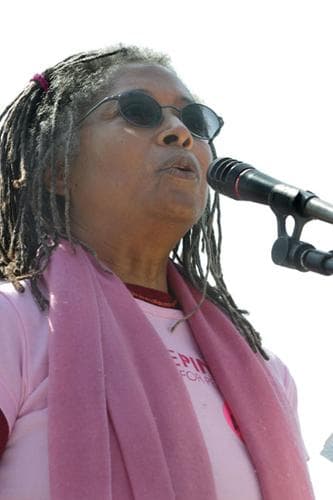
Alice Malsenior Tallulah-Kate Walker is an American novelist, short story writer, poet, and social activist. In 1982, she became the first African-American woman to win the Pulitzer Prize for Fiction, which she was awarded for her novel The Color Purple. Over the span of her career, Walker has published seventeen novels and short story collections, twelve non-fiction works, and collections of essays and poetry.
Similar books
- Beloved
Toni Morrison
3.9 (325k) average on GoodreadsLiterary FictionExplores themes of trauma, motherhood, and the legacy of slavery with profound emotional depth.
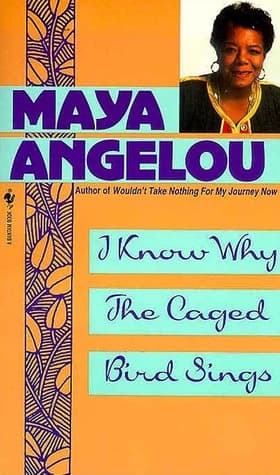
- I Know Why the Caged Bird Sings
Maya Angelou
4.2 (409k) average on GoodreadsBiographyA powerful memoir of resilience and self-discovery by a Black woman facing adversity in the American South.
- The Grapes of Wrath
John Steinbeck
4.0 (750k) average on GoodreadsHistorical FictionDepicts the struggles of a poor family facing immense hardship and injustice, finding strength in community.
- Their Eyes Were Watching God
Zora Neale Hurston
3.9 (266k) average on GoodreadsReferenceHurston's Their Eyes Were Watching God (1937) also follows a Black woman's journey of self-discovery and love in the early 20th century American South. Janie Crawford, like Celie, seeks independence and authentic relationships. However, Hurston's novel is characterized by its lyrical prose, rich use of dialect, and focus on romantic love and community life as central to Janie's awakening. Walker's The Color Purple is often considered more explicit and confrontational in its depiction of violence and abuse, particularly sexual abuse, making it a more challenging read but arguably a more direct examination of patriarchal oppression compared to Hurston's more nuanced portrayal of gender dynamics within relationships.
- To Kill a Mockingbird
Harper Lee
4.3 (4.5M) average on GoodreadsHistorical FictionIn the 1930s Jim Crow South, Harper Lee writes about racial injustice, moral growth, and the quiet courage of a lawyer father, Atticus Finch, as seen through his young daughter's eyes.
- The Great Gatsby
F. Scott Fitzgerald
3.9 (3.8M) average on GoodreadsHistorical FictionIn the opulent Roaring Twenties, a mysterious millionaire's lavish parties hide his desperate, tragic pursuit of a lost love, exposing the emptiness within the American Dream.





Enjoyed the summary?
A summary gives you the shape of the book. The book itself has the detail, the examples and the voice.
Find The Color Purple on AmazonAs an Amazon Associate, BookBrief earns from qualifying purchases. How we're funded