

Synopsis
Covers the whole plot, including the ending.
- Difficulty
- Easy
- Pacing
- Moderate
- Mood
- Bittersweet, Reflective, Heartwarming, Hopeful
- Read it if
- You love character-driven stories about grief, healing, and the power of books, set in a charming, quirky bookstore.
- Skip it if
- You prefer fast-paced plots with high stakes and minimal internal reflection.
Words in Deep Blue Plot Summary
Covers the whole plot, including the ending.
The Return to Howling Books
Rachel Sweetie returns to Gracetown after a year away, following her older brother Cal's sudden death. She immediately goes to Howling Books, the used bookstore owned by the family of her former best friend, Henry Jones. The bookstore means a lot to Rachel and Henry, who spent much of their childhood there, leaving notes in books. Rachel still grieves Cal and feels disconnected from her family. She finds comfort in the smell of old paper and the chance of finding hidden messages from others, or even Cal, in the books.
A Painful Reunion
Rachel's reunion with Henry Jones is strained. A year earlier, before she moved, Rachel told Henry she loved him, but he didn't feel the same. Henry, still dealing with his breakup from his long-term girlfriend, Amy, also struggles with his parents' decision to close Howling Books. He doesn't fully grasp Rachel's grief, thinking her sadness is mainly about their broken friendship and the bookstore's future. Their interactions are tense; both hesitate to discuss the past or their current feelings, preferring to communicate through the silent language of the books.
The Bookstore's Fate
Henry is upset by his parents' decision to close Howling Books. The bookstore is more than a business; it is full of his family's history, his memories, and the 'Letter Library' — a system where customers write notes to strangers, loved ones, or the books themselves. Henry feels a strong duty to save the bookstore for himself and the community. He struggles to understand his parents' reasons, especially his father's sudden distance, and feels increasingly alone in his efforts to save what he considers a vital part of his world.
Working Among the Words
Rachel gets a job at Howling Books, which makes Henry uncomfortable at first. Working there lets her explore the 'Letter Library,' a system she and Henry helped create. She carefully reads the letters, looking for connection and understanding in their words, and hoping to find a message from Cal. This immersion into the hidden lives of books and readers helps her cope with grief, offering glimpses into other people's joys, sorrows, and hopes. Her presence in the bookstore, despite the ongoing tension with Henry, subtly changes the atmosphere, bringing a quiet energy to the impending closure.
The Weight of Grief and Guilt
Rachel is haunted by her last conversation with Cal before he died. She had been angry with him, and her final words were harsh. This memory fuels her guilt and deepens her grief, making it hard to move on. She constantly rethinks the conversation, wishing she could take back her words and have one last chance to express her love. This internal struggle blocks her emotional healing and her ability to fully reconnect with her family and friends, including Henry, who does not know the specific nature of her torment about Cal's death.
Amy's Shadow and New Connections
Henry is still affected by his breakup with Amy, who now works at the rival chain bookstore, The Big Store. He often sees her and struggles with jealousy and regret, making it hard for him to be open to new possibilities, including rekindling his friendship with Rachel. Meanwhile, Rachel, through her work at Howling Books, starts to connect with regular customers, like Mr. Golding and George. These interactions give her a sense of purpose and community outside her strained relationship with Henry and her overwhelming grief.
Uncovering Family Secrets
Henry eventually learns the real reason his parents are closing Howling Books: his father has cancer. This news shatters Henry's previous assumptions and explains his father's withdrawn behavior and his mother's quiet resolve. The discovery forces Henry to face life's fragility and the importance of family, shifting his focus from just the bookstore to understanding his parents' deeper struggles. This adds another layer of grief and responsibility to Henry's already burdened shoulders, pushing him to support his family in new ways.
The Power of Shared Words
As they work together in the closing bookstore, Rachel and Henry start to communicate in their old way: leaving notes for each other in books. These hidden messages, often responses to letters left by others in the 'Letter Library,' allow them to express feelings and thoughts they cannot say directly. This shared language of words and paper slowly breaks down the wall between them, reminding them of their deep, shared history and unique bond. It is a slow, tender process of reconnection, fueled by nostalgia and the quiet understanding only they share.
A Community United
News of Howling Books' impending closure spreads, and the community responds with support and affection. Regular customers, local artists, and former employees organize events to celebrate the bookstore's history. This collective act of remembrance shows the deep impact Howling Books has had on many lives, highlighting its role as a cultural and emotional center. Rachel and Henry, seeing this community outpouring, begin to understand the wider meaning of the bookstore they have always known, and the importance of its 'Letter Library' as a collection of shared human experience.
Confessions and Forgiveness
Overwhelmed by guilt and grief, Rachel finally breaks down and tells Henry about her last conversation with Cal. She reveals the harsh words she spoke, expressing deep regret and the belief that her anger might have contributed to his decision to go surfing that day, leading to his death. Henry listens with compassion, offering comfort and reassurance. This honest confession marks a turning point for Rachel, allowing her to voice her deepest pain and begin to forgive herself, helped by Henry's steady support and understanding.
A New Beginning for Howling Books
Inspired by the community's passion and his desire to keep the spirit of Howling Books alive, Henry makes a plan. Instead of letting the bookstore disappear, he decides to turn it into a mobile bookstore, using a refurbished van. This solution allows the 'Letter Library' and the unique experience of Howling Books to continue, though in a different form. It shows Henry's growth and his commitment to carrying on his family's legacy while adapting to new circumstances, ensuring that the magic of shared words will last in Gracetown and beyond.
Reconciliation and Hope
With the bookstore's future secure in its new mobile form, and Rachel having released her guilt, their relationship deepens. Henry expresses his true feelings for Rachel, acknowledging his past mistakes and the depth of his affection. Rachel, now able to grieve Cal more openly and forgive herself, returns his feelings. They share a tender moment, symbolizing their renewed connection and the promise of a future together. The ending is hopeful, suggesting that while grief and change are inevitable, love, friendship, and the power of words can help navigate life's complexities and lead to new, meaningful beginnings.
Words in Deep Blue Characters
Rachel Sweetie
Protagonist
A grieving young woman who finds solace and connection in books.
Rachel is a sensitive and introverted young woman, deeply affected by the sudden death of her older brother, Cal. She carries immense guilt over their last conversation, which colors her perception of the world and her ability to connect with others. Books are her refuge and her primary means of processing emotions and seeking understanding. She is observant and empathetic, often finding profound meaning in the words left by strangers. Her journey involves confronting her grief, forgiving herself, and relearning how to open her heart to love and friendship.
Relationships: Henry Jones (Childhood best friend, former crush, later romantic interest.); Cal Sweetie (Beloved older brother, whose death is the catalyst for her grief.); George (Eccentric customer and mentor figure, offering quiet wisdom.); Her Parents (Strained relationship due to shared and individual grief.)
Henry Jones
Protagonist
The owner's son of Howling Books, struggling with loss and the future of his family legacy.
Henry is kind-hearted, intelligent, and deeply devoted to Howling Books, which he sees as an extension of himself and his family's identity. He is initially portrayed as somewhat emotionally guarded, especially after his breakup with Amy and his parents' decision to close the bookstore. He struggles with communication, often preferring to express himself through actions or the silent language of books. Henry is fiercely loyal and, despite his awkwardness, possesses a deep capacity for empathy and understanding, especially when it comes to Rachel's pain. He matures throughout the story, learning to articulate his feelings and take charge of his future.
Relationships: Rachel Sweetie (Childhood best friend, former crush, later romantic interest.); Amy (Former girlfriend, whose breakup deeply affected him.); His Parents (Initially strained due to the bookstore's closure, later understanding and supportive.); George (Long-time customer and friend of the family.)
Cal Sweetie
Supporting/Mentioned
Rachel's deceased older brother, whose memory profoundly impacts the narrative.
Cal is Rachel's beloved older brother, whose death from a surfing accident before the story begins is the central catalyst for Rachel's grief and guilt. Though never physically present, his memory permeates Rachel's thoughts and actions. He is remembered as a adventurous, free-spirited, and loving brother, but also as someone who could be frustrating. Rachel's guilt stems from their last argument, which makes his presence a heavy, lingering force in her life. He represents the irreversible nature of loss and the power of unspoken words.
Relationships: Rachel Sweetie (Younger sister, with whom he shared a close but sometimes complicated bond.)
Amy
Supporting
Henry's ex-girlfriend, whose presence creates tension and highlights Henry's lingering feelings.
Amy is Henry's former long-term girlfriend. She is practical and seemingly more grounded than Henry, having moved on to work at a chain bookstore. Her presence in the narrative serves primarily to illustrate Henry's lingering heartbreak and his difficulty in moving on. While not malicious, her interactions with Henry often highlight his emotional stagnation and his struggle to let go of the past. She represents a path Henry chose that ultimately didn't work out, allowing for his eventual reconciliation with Rachel.
Relationships: Henry Jones (Former girlfriend, whose breakup is a significant event for Henry.)
George
Supporting
An enigmatic and wise customer of Howling Books, who offers quiet guidance.
George is an elderly, quietly observant, and philosophical regular customer at Howling Books. He often interacts with Rachel, offering cryptic but insightful advice and sharing his own experiences with loss and the power of words. He is a gentle soul who understands the unique magic of the bookstore and the comfort it provides. George serves as a mentor figure for Rachel, helping her process her grief and find meaning in the letters left behind by others, including his own. He embodies the wisdom and interconnectedness found within the 'Letter Library'.
Relationships: Rachel Sweetie (Customer and confidante, offering her guidance.); Henry Jones (Long-time customer and friend of the family.)
Henry's Parents
Supporting
The owners of Howling Books, facing their own challenges and decisions.
Henry's parents are the owners of Howling Books. His father, initially withdrawn and quiet, is later revealed to be battling cancer, which is the true reason for their decision to close the bookstore. His mother is a supportive but also weary figure, trying to navigate her husband's illness and the difficult decision about their family business. They represent the adult world of difficult choices and unspoken burdens, and their actions drive much of Henry's initial conflict. Their eventual openness about their struggles allows Henry to mature and take on a new role within the family.
Relationships: Henry Jones (Parents, whose decisions deeply impact his life.); Rachel Sweetie (Employers and long-time family friends.)
Words in Deep Blue Themes
Grief and Healing
The novel explores grief, especially through Rachel's experience with her brother Cal's death. It covers the guilt, anger, and deep sadness that come with loss, and the isolation it can cause. Rachel's journey shows that healing is not forgetting, but learning to live with absence and honoring memory while moving forward. Her confession to Henry about her last conversation with Cal (plot_summary 10) is a key moment in her healing, showing how sharing pain helps recovery.
“Grief is a house where the chairs have moved. The windows are different. The light falls in a way it never used to.”
The Power of Words and Stories
Words, written and spoken, are central to the novel. Howling Books shows this with its 'Letter Library' where readers leave notes between pages. This practice lets characters like Rachel connect with strangers' experiences, find comfort, and even communicate with Henry when direct talk is too hard (plot_summary 8). The story highlights how words preserve memories, bridge distances, express unspoken feelings, and help healing and understanding, showing their lasting impact on human connection.
“Sometimes I think the words in books are more real than anything else.”
Love and Friendship
The novel explores different kinds of love: the strong bond between siblings (Rachel and Cal), the lasting nature of childhood friendship (Rachel and Henry), and the start of romantic love. It covers the complexities of these relationships, including unspoken feelings, fear of rejection, and the challenges of rebuilding trust after a break. The slow, tender rekindling of Rachel and Henry's connection, often helped by their shared history with books and notes, shows how love can last through hardship and grief, offering comfort and a path to a shared future (plot_summary 12).
“He didn't just love books. He loved the spaces between the words, the silences, the things that were left unsaid.”
Change and Adaptation
The closing of Howling Books drives change, forcing characters, especially Henry, to face the impermanence of things they value. Initial resistance to change gives way to acceptance and, finally, innovation. Henry's decision to turn Howling Books into a mobile bookstore (plot_summary 11) symbolizes that while physical forms may change, the essence of something beloved can endure through adaptation. This theme also applies to personal growth, as Rachel learns to adapt to life without Cal and Henry adapts to a future without the traditional bookstore.
“The world keeps moving, even when you don't want it to. Even when you're stuck.”
Plot Devices & Literary Techniques
The Letter Library
A collection of notes and letters left by readers within the pages of books at Howling Books.
The Letter Library is a central plot device, serving as a unique form of communication and a repository of human experience. It allows characters like Rachel to process grief by reading others' stories and provides a safe, indirect way for Rachel and Henry to reconnect and express feelings they can't articulate face-to-face (plot_summary 8). It also symbolizes the interconnectedness of readers and the enduring power of words to transcend time and personal boundaries. The library's existence is a key reason for the community's attachment to Howling Books and Henry's desire to preserve its essence.
The Closing Bookstore (Howling Books)
The impending closure of the beloved used bookstore.
The threat of Howling Books closing is the primary external conflict driving much of the narrative. It forces Henry to confront his responsibilities and future, and it brings Rachel back into his orbit. The bookstore's closure symbolizes the end of an era and the challenges of preserving traditions in a changing world. It also acts as a catalyst for community engagement (plot_summary 9) and ultimately leads to Henry's innovative solution of the mobile bookstore, representing adaptation and the continuation of legacy rather than complete loss.
The Last Conversation
Rachel's final, angry exchange with her brother Cal before his death.
The 'last conversation' between Rachel and Cal is a powerful internal plot device, fueling Rachel's profound guilt and grief throughout the story. It is a secret she carries, preventing her from fully healing or connecting with others. The memory of her harsh words (plot_summary 5) serves as a constant emotional barrier. Its eventual revelation to Henry (plot_summary 10) is a crucial turning point, allowing Rachel to begin the process of self-forgiveness and opening the door for deeper emotional intimacy with Henry.
Words in Deep Blue Quotes
“Perhaps that's what books are, a way to have a conversation with someone you'll never meet.”
“Every book has a soul. The soul of the person who wrote it and the soul of those who read it and dream about it.”
“You can't just fall in love with a person. You have to fall in love with their books.”
“Books are a way to find your own voice, to find your own way of seeing the world.”
“Sometimes, the hardest part of letting go is realizing you were holding onto something that wasn't there.”
“The world is full of books, and sometimes, that's enough.”
“There are some people you meet, and you just know you're meant to know them. Even if you don't know why, or how, or what will happen next.”
“It's a strange thing, isn't it? To spend so much time with someone, and then suddenly, they're just... gone.”
“Maybe love isn't about grand gestures. Maybe it's about finding the small, quiet moments that make life worth living.”
“The best kind of letters are the ones you write to yourself, in a book, and then forget about until you find them again.”
“You can't live your life waiting for someone else to make you happy. You have to do that for yourself.”
“Sometimes you have to break things to make them better.”
“A book is never just a book. It's a memory, a conversation, a hope.”
“The quietest people often have the loudest thoughts.”
Quiz
10 questions on the plot and the characters. Each answer comes with a short explanation.
Question 1
What is the name of the bookstore where Rachel and Henry work and where much of the story takes place?
- The Book Nook
- Howling Books
- Sweetie's Reads
- Jones's Pages
Show answer
B. Howling Books The bookstore central to the story, where readers leave letters in books, is called Howling Books.
Question 2
What significant event has recently happened in Rachel's life that brings her back to the city and the bookstore?
- She broke up with her boyfriend.
- She graduated from high school.
- Her brother, Cal, passed away.
- She got a new job offer.
Show answer
C. Her brother, Cal, passed away. Rachel returns to the city and works at Howling Books while grieving the recent death of her brother, Cal.
Question 3
What unique practice do customers and staff at Howling Books engage in to communicate with others?
- They host weekly poetry slams.
- They leave anonymous reviews on a shared online platform.
- They write letters and leave them inside books for others to find.
- They communicate through a secret code written on bookmarks.
Show answer
C. They write letters and leave them inside books for others to find. A core element of the bookstore's charm and the plot is the practice of leaving letters inside books for others to discover.
Question 4
What is Henry's initial reaction to Rachel's return and her working at Howling Books?
- He is overjoyed and immediately welcoming.
- He is indifferent, barely acknowledging her presence.
- He is distant and somewhat cold, still hurt by her sudden departure years ago.
- He tries to avoid her by taking on extra shifts outside the bookstore.
Show answer
C. He is distant and somewhat cold, still hurt by her sudden departure years ago. Henry is initially distant and hurt by Rachel's past departure, which creates tension between them at the beginning of the story.
Question 5
What specific book does Rachel discover a letter in that was written by Henry to her, years ago?
- Wuthering Heights
- Pride and Prejudice
- The Book Thief
- The Odyssey
Show answer
D. The Odyssey Rachel finds a letter from Henry to her in a copy of 'The Odyssey', which reveals his long-held feelings.
Question 6
Beyond her grief for Cal, what other personal struggle does Rachel face regarding her future and aspirations?
- She is trying to decide between becoming a doctor or a lawyer.
- She is struggling with her identity as an artist and whether to pursue it.
- She is unsure about going to university and what she wants to study.
- She is trying to find a new place to live after moving back.
Show answer
C. She is unsure about going to university and what she wants to study. Rachel is at a crossroads in her life, unsure about her educational and career path, adding to her emotional turmoil.
Question 7
How does the theme of 'words' and 'stories' contribute to Rachel's healing process throughout the novel?
- She learns to write her own stories as a form of therapy.
- She finds solace and understanding in the letters left in books, connecting with others' experiences and emotions.
- She uses words to construct a new identity for herself, separate from her past.
- She finds a hidden message in a book that reveals Cal's last wishes.
Show answer
B. She finds solace and understanding in the letters left in books, connecting with others' experiences and emotions. The letters in books and the stories they contain allow Rachel to process her grief and connect with universal human experiences, aiding her healing.
Question 8
What is the significance of the 'Discarded' section of Howling Books for both Rachel and Henry?
- It's where they hide their most valuable rare books.
- It becomes a symbolic space for them to process their past and reconcile their differences, much like discarded words or feelings.
- It's a place where they secretly meet after hours without anyone knowing.
- It's where they discover a new genre of literature that inspires them.
Show answer
B. It becomes a symbolic space for them to process their past and reconcile their differences, much like discarded words or feelings. The 'Discarded' section, filled with books deemed unworthy, becomes a poignant backdrop for Rachel and Henry to confront their 'discarded' feelings and past hurts, and ultimately find reconciliation.
Question 9
How does Henry's character evolve throughout the story in his relationship with Rachel?
- He remains cold and distant, never fully forgiving Rachel.
- He transitions from hurt and guarded to open and vulnerable, eventually admitting his long-standing feelings for her.
- He becomes increasingly frustrated with Rachel, leading to more conflict.
- He finds love with someone else, moving on from Rachel completely.
Show answer
B. He transitions from hurt and guarded to open and vulnerable, eventually admitting his long-standing feelings for her. Henry's journey is marked by his gradual letting go of past hurt and opening up to Rachel, culminating in the rekindling of their friendship and the development of their romance.
Question 10
What specific literary device or concept is heavily utilized throughout the novel to symbolize unspoken emotions and connections?
- Foreshadowing, through recurring dreams.
- Metaphor, comparing characters to mythological figures.
- Epistolary elements, through the letters left in books.
- Stream of consciousness, detailing characters' internal monologues.
Show answer
C. Epistolary elements, through the letters left in books. The novel heavily uses epistolary elements, specifically the letters left inside books, to reveal characters' inner thoughts, past feelings, and to forge connections between them, often in lieu of direct communication.
Words in Deep Blue FAQ
What is the central premise of 'Words in Deep Blue' and where does most of the story take place?
The central premise revolves around grief, healing, and rekindled love, set primarily within the unique independent bookstore, Howling Books. This store allows customers to write notes in the margins of books and leave letters for others within their pages, creating a living, evolving dialogue among readers.
Who are the two main protagonists, and what is their past relationship?
The two main protagonists are Rachel Sweetie and Henry Jones. They were best friends for many years before Rachel moved away to live by the sea. Their past relationship was close and affectionate, with an underlying, unspoken romantic tension that was never fully explored.
What significant event brings Rachel back to the town and Howling Books?
Rachel returns to her hometown and begins working at Howling Books following the tragic death of her younger brother, Cal. She is deeply grieving and finds solace, and a new sense of purpose, in the bookstore's unique environment and the words left behind by others.
What is Henry's initial reaction to Rachel's return and her presence in his family's bookstore?
Henry is initially conflicted and somewhat distant when Rachel returns. He's still hurt by her sudden departure years ago and her prolonged silence, despite his continued feelings for her. He struggles to reconcile his past feelings with the present, grieving Rachel.
How does the 'letters in books' concept contribute to the plot and character development?
The 'letters in books' concept is crucial; it allows characters to communicate indirectly, reveal hidden thoughts, and discover shared histories or feelings. Rachel, in particular, uses these notes to connect with strangers and to process her grief, while also finding old letters from Cal.
What is the significance of the specific book where Rachel finds Cal's last letter?
Rachel finds Cal's last letter in a copy of 'The Odyssey,' a book they shared a personal connection with. This specific location is significant because it's a story about a long journey home and enduring love, mirroring Rachel's own journey through grief and her search for connection.
Are there any other notable side characters whose 'book notes' or letters play a role in the story?
Yes, George, Henry's younger sister, leaves notes and letters, particularly to a mysterious 'crush,' which adds a layer of youthful romance and humor. Also, the notes from various anonymous customers create a tapestry of human experience that Rachel often interacts with or finds comfort in.
How does the author use the physical setting of Howling Books to reflect the characters' emotional states?
Howling Books, with its cozy, lived-in atmosphere and the constant presence of written words, acts as a sanctuary for Rachel's grief and a catalyst for her healing. The books themselves, filled with the voices of others, mirror the internal dialogues and unspoken feelings of the characters.
What role do Henry's parents play in the narrative, beyond owning the bookstore?
Henry's parents provide a stable, loving, yet sometimes subtly strained, backdrop. His father is often absorbed in his own writing, reflecting a different kind of authorial passion, while his mother tries to mediate family dynamics, often through quiet observation and support.
How does Rachel's grief for Cal manifest psychologically throughout the book?
Rachel's grief is depicted as multi-faceted, including numbness, anger, guilt, and a desperate need for connection. She projects her longing for Cal onto the letters in books, seeking his voice and a sense of his continued presence, which is a common psychological coping mechanism for loss.
What psychological barriers prevent Henry and Rachel from immediately rekindling their relationship?
Henry's psychological barriers stem from past hurt and a fear of rejection, making him guarded. Rachel's are rooted in her overwhelming grief, which consumes much of her emotional energy, and a sense of guilt that makes her hesitant to move forward with new romance.
How does the act of reading and writing in books serve as a form of therapy for Rachel?
Reading the notes left by others allows Rachel to feel less alone in her grief, finding shared human experiences. Writing her own notes and letters provides an outlet for her unspoken thoughts and feelings, acting as a direct form of journaling and emotional processing, which is highly therapeutic.
What psychological impact does Henry's unrequited love for Rachel have on his actions and personality?
Henry's long-standing unrequited love makes him reserved and somewhat melancholic, often leading him to observe rather than actively participate. It fuels his protectiveness towards the bookstore and his family, but also makes him hesitant and cautious in pursuing his desires with Rachel.
Is the ending of the book definitive for Rachel and Henry, or is there room for interpretation?
While the ending offers a strong sense of hope and a clear indication of Rachel and Henry's rekindled and developing relationship, it doesn't tie up every loose end. There's room to interpret their future as one of continued growth, understanding, and navigating life together, rather than a perfectly resolved 'happily ever after.'
How does the book explore the concept of memory and its reliability?
The book subtly explores memory's reliability through Rachel's grief-stricken recollections of Cal and her past with Henry. She often re-evaluates past events through her present emotional state, highlighting how memory can be colored by loss and longing, and how shared memories can differ.
Could the 'ghost' of Cal be interpreted in a more metaphorical sense, rather than strictly as a deceased character?
Yes, Cal's 'ghost' can be interpreted metaphorically as the lingering presence of grief and the profound impact of loss on the living. His letters and memories serve as a constant reminder, representing the way loved ones continue to shape our lives even after they are gone.
What broader message about human connection does 'Words in Deep Blue' convey through its unique bookstore setting?
'Words in Deep Blue' conveys that human connection can be found in unexpected places, even across time and between strangers, through shared stories and written words. It emphasizes the profound power of literature to bridge gaps, foster empathy, and create a sense of community.
How does the novel challenge or uphold typical YA romance tropes?
The novel upholds the 'friends-to-lovers' trope but challenges the typical fast-paced romance by grounding it deeply in grief and personal growth. The romantic development is slow and earned, prioritizing emotional healing and self-discovery alongside the rekindling of love, making it a more mature and nuanced YA romance.
Similar books
- Every Day
David Levithan
3.9 (196k) average on GoodreadsFantasyExplores complex relationships and the search for connection amidst unique circumstances.
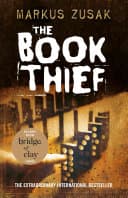
- The Book Thief
Markus Zusak
4.4 (1.8M) average on GoodreadsHistorical FictionWhile both 'Words in Deep Blue' and 'The Book Thief' utilize books as central elements and explore themes of grief and loss, their approaches differ significantly. Zusak's novel is a historical fiction narrated by Death, offering a much darker, more profound, and allegorical examination of human resilience amidst extreme suffering. Crowley's book, conversely, is a contemporary romance with a lighter tone, using books as a conduit for personal connection and healing within a more intimate, character-focused setting. 'The Book Thief' has a broader scope and a more devastating emotional impact, whereas 'Words in Deep Blue' focuses on the personal journey of healing and finding love within a specific community. (Nodelman, P. (2012). The pleasures of children's literature. Pearson Education.)
- Eleanor & Park
Rainbow Rowell
4.0 (860k) average on GoodreadsYoung Adult'Words in Deep Blue' shares with Rainbow Rowell's 'Eleanor & Park' a focus on a tender, character-driven young adult romance. Both novels excel at creating authentic, relatable adolescent voices and exploring the complexities of first love. However, 'Eleanor & Park' is set in the 1980s and delves into more intense themes of domestic abuse and social alienation, providing a grittier and more challenging portrayal of teenage life. Crowley's book, while addressing grief, maintains a more wistful and hopeful tone, centered around the comforting, almost magical, atmosphere of the bookstore. The communication in 'Eleanor & Park' is primarily direct and through shared interests, while Crowley innovates with the indirect, hidden messages within books, offering a different dynamic of revelation and connection.
- Harry Potter and the Sorcerer's Stone
J.K. Rowling
4.5 (7M) average on GoodreadsFantasyRescued from a miserable life under the stairs, an orphaned boy discovers he's a wizard destined for a magical school, where he uncovers a dangerous secret tied to the dark wizard who murdered his parents.
- The Hunger Games
Suzanne Collins
4.3 (6.4M) average on GoodreadsFantasyIn a future where children fight to the death on live television, Katniss Everdeen volunteers for the arena, turning a death sentence into a fight for survival and a spark of rebellion.
- To Kill a Mockingbird
Harper Lee
4.3 (4.5M) average on GoodreadsHistorical FictionIn the 1930s Jim Crow South, Harper Lee writes about racial injustice, moral growth, and the quiet courage of a lawyer father, Atticus Finch, as seen through his young daughter's eyes.





Enjoyed the summary?
A summary gives you the shape of the book. The book itself has the detail, the examples and the voice.
Find Words in Deep Blue on AmazonAs an Amazon Associate, BookBrief earns from qualifying purchases. How we're funded