

Synopsis
Covers the whole plot, including the ending.
- Difficulty
- Medium
- Pacing
- Moderate
- Mood
- Atmospheric, Suspenseful, Dark, Claustrophobic
- Read it if
- You enjoy atmospheric, isolated-setting thrillers with a strong forensic element and escalating tension.
- Skip it if
- You dislike graphic descriptions of human remains or stories set in claustrophobic, storm-bound environments.
Written in Bone Plot Summary
Covers the whole plot, including the ending.
Arrival on Runa and the Incinerated Body
Forensic anthropologist Dr. David Hunter, still dealing with past traumas, travels to the isolated Scottish Hebridean island of Runa. His colleague, Dr. Sophie Anderson, asked him to help local police with a puzzling case. A body, believed to be that of local recluse Jed Macleod, was found almost completely burned in his cottage, with only the feet and one hand somewhat intact. Local police, led by Inspector Fraser, quickly called it spontaneous human combustion or an accidental fire. Hunter, however, is immediately skeptical. The scene does not match accidental fires he has seen, and the unusual burn pattern raises his suspicions, setting the stage for his deeper investigation into the island's secrets.
Initial Examination and Doubt
Hunter begins his detailed examination of the remains and the cottage. Despite severe damage, he uncovers important details. The body's position, the nature of the charring, and the lack of certain fire indicators lead him to strongly doubt the accidental fire theory. He notes no 'wick effect' evidence for spontaneous combustion and finds no accelerants that would explain the intensity and pattern of the burn. He also observes that the few unburnt areas, like the feet, do not fit with a person caught in an uncontrolled blaze. His findings challenge Inspector Fraser's initial assessment, suggesting a more sinister cause for Jed Macleod's death. Hunter senses the growing unease among the close-knit islanders as his investigation continues.
The Storm Hits and Communication Cuts Off
As Hunter continues his work and speaks his suspicions more openly, a violent storm hits Runa. High winds and heavy rain batter the island, quickly becoming a full hurricane. Power lines fall, and the single ferry service stops, completely cutting off Runa from the mainland. Communications, including mobile phone service, fail, plunging the island into darkness and isolation. This sudden and extreme weather intensifies the already tense atmosphere, creating a claustrophobic setting. Hunter realizes that he, Sophie, and the other islanders are now trapped with a potential murderer among them, greatly increasing the stakes of his investigation.
A Second Body Discovered
The isolation caused by the storm is soon made worse by a terrifying discovery. Another body is found – this time, clearly a murder victim. The victim is Hamish, a local fisherman known for his rough manner and knowledge of the island. Unlike Jed Macleod, Hamish's death is violent and obvious, with clear signs of a struggle and blunt force trauma. This discovery confirms Hunter's earlier suspicions that Jed's death was also murder, and that a killer is actively operating on Runa. Panic begins to spread through the small community, and loyalties are tested as the islanders realize the danger is immediate and personal. Hunter must now work quickly to find connections between the two deaths.
The Island's Secrets and Suspects
With two murders confirmed, Hunter, alongside Sophie and the increasingly overwhelmed Inspector Fraser, begins investigating the islanders themselves. They learn about the complex relationships, old grudges, and dark secrets beneath Runa's calm surface. Suspects emerge: the reclusive lighthouse keeper, the local doctor with a troubled past, the owner of the island's only pub, and various other residents with motives from land disputes to illicit activities. Hunter starts to connect the victims and their roles within the tight-knit community, realizing the killer is likely someone known to them all. The storm outside reflects the growing internal chaos and suspicion among the trapped islanders.
Hunter's Personal Connection and Growing Danger
As Hunter digs deeper, his own painful past, especially the death of his wife and daughter, begins to resurface. This is made worse by the claustrophobic atmosphere and the brutality of the murders. He feels a strong connection to the victims and a desperate need to stop the killer. The danger becomes more personal when he finds evidence suggesting the killer knows about his investigation and might even be taunting him. Hunter finds subtle clues left at crime scenes that seem directed at him, increasing the psychological tension. He realizes he is not just solving a crime; he is in a deadly game with a very intelligent and ruthless person who knows the island well.
Uncovering a Pattern and a Motive
Hunter, using his forensic expertise, starts to identify a disturbing pattern linking the victims. He realizes the murders are not random acts of violence but are carefully planned and executed, possibly connected to a specific event or secret from the island's past. He uncovers hints of a long-buried incident, perhaps an old crime or a collective cover-up, that might be fueling the killer's rage. The motive appears to be revenge, targeting those involved or complicit in this past wrongdoing. This realization narrows the field of suspects and gives Hunter a clearer direction, but also puts him in greater danger as he gets closer to the truth the killer desperately wants to keep hidden.
The Killer's Reveal and Confrontation
Through forensic evidence, witness testimonies, and his own deductions, Hunter finally unmasks the killer. The perpetrator is someone unexpected, deeply part of the island community. Their seemingly ordinary appearance hid a dark and vengeful core. The killer's motive is a complex mix of past trauma, perceived injustice, and a desire for retribution against those they held responsible for a devastating event years ago on Runa. The confrontation is tense and dangerous, happening during the ongoing storm, as Hunter tries to reason with the unstable killer, who believes their actions are justified and that they are delivering long-overdue justice to the island's inhabitants.
Climax and Resolution of the Storm
The climax shows Hunter in a desperate fight for survival against the killer, who wants to silence him and complete their mission. The raging storm outside reflects the internal turmoil and violence of the confrontation. Hunter uses his wits and scientific knowledge to outsmart the killer, narrowly escaping several attempts on his life. With the help of Sophie Anderson and a few loyal islanders, he manages to subdue the perpetrator. The immediate threat ends as the storm finally breaks, symbolizing a tentative return to order and the lifting of the oppressive atmosphere that had gripped Runa. The island is damaged, but the immediate danger is over, and the truth has been revealed.
Aftermath and Departure
Afterward, Runa is left to deal with the devastating revelations and the physical damage from both the storm and the murders. Hunter oversees the final processing of the crime scenes and prepares to leave the island. He reflects on human darkness, the lasting power of secrets, and the fragile nature of justice. While the immediate threat is gone, the community will carry the scars. Hunter, though physically and emotionally drained, finds a renewed sense of purpose in his work, understanding that even in the bleakest circumstances, truth can still be uncovered. He leaves Runa, carrying the weight of its secrets, but also the satisfaction of having brought a killer to justice.
Written in Bone Characters
Dr. David Hunter
Protagonist
A forensic anthropologist haunted by personal tragedy, seeking truth in death.
Dr. David Hunter is a highly skilled forensic anthropologist who, after a personal tragedy involving his wife and daughter, retreats from active field work. He is meticulous, intelligent, and possesses a keen eye for detail, often seeing what others miss. Despite his scientific detachment, he is deeply empathetic, particularly towards victims, and is driven by a strong sense of justice. He is a rational thinker but is not immune to the psychological toll of his work, especially when it echoes his own past trauma. His resilience is tested by the isolation and danger on Runa.
Relationships: Dr. Sophie Anderson (Colleague and developing confidante); Inspector Fraser (Antagonistic at first, then cooperative law enforcement); Jenny (Love interest (mentioned, off-island))
Dr. Sophie Anderson
Supporting
A local doctor on Runa, initially overwhelmed but proves resourceful.
Dr. Sophie Anderson is the island's general practitioner and the one who initially requested Hunter's assistance. She is a dedicated and compassionate doctor, but initially out of her depth with the forensic aspects of the case. As the murders unfold and the storm isolates Runa, she demonstrates remarkable courage, resourcefulness, and a strong sense of responsibility towards her community. She becomes Hunter's most reliable ally, providing medical assistance and local insights, and often acts as a bridge between Hunter and the suspicious islanders. She is practical and grounded, a good foil for Hunter's more analytical approach.
Relationships: Dr. David Hunter (Colleague and ally); Inspector Fraser (Local authority figure); Islanders (Caregiver and community member)
Inspector Fraser
Supporting
The skeptical local police officer on Runa, initially resistant to Hunter's findings.
Inspector Fraser is the senior police officer on Runa, responsible for maintaining law and order on the remote island. He is initially portrayed as somewhat provincial and resistant to outside interference, particularly Hunter's suggestions that Jed Macleod's death was murder. He prefers simpler explanations and is wary of disrupting the tight-knit community's peace. However, as the evidence mounts and the second murder occurs, he is forced to confront the grim reality. He is dedicated to his duty but struggles with the scale and brutality of the crimes, as well as the isolation imposed by the storm. He represents the limited resources and challenges of policing a remote area.
Relationships: Dr. David Hunter (Antagonistic at first, then cooperative professional relationship); Dr. Sophie Anderson (Professional colleague); Islanders (Local authority figure)
Jed Macleod
Mentioned
The first victim, a reclusive islander whose death sparks the investigation.
Jed Macleod is the first victim whose incinerated remains bring Dr. Hunter to Runa. He was a reclusive and somewhat eccentric figure on the island, living alone in his cottage. His isolation made him an easy target and initially led local authorities to dismiss his death as accidental. However, his past connections to other islanders and to a long-buried secret prove crucial to unraveling the larger mystery. Though deceased, his presence and the circumstances of his death drive much of the initial plot, highlighting the hidden tensions within the community.
Relationships: The Killer (Victim); Islanders (Reclusive community member)
Hamish
Supporting
A local fisherman and the second murder victim, whose death confirms Hunter's suspicions.
Hamish is a gruff, outspoken local fisherman on Runa. He is the second victim discovered after the storm hits, and his death is clearly a murder, proving Hunter's theory about Jed Macleod. Hamish, like many islanders, has a complicated history and connections to the community's past secrets. His death escalates the urgency of the investigation and sends a clear message that a killer is actively at large. His character, though short-lived, serves to further expose the dark undercurrents of the island and the dangerous nature of the killer.
Relationships: The Killer (Victim); Islanders (Community member)
The Killer
Antagonist
A vengeful islander with a hidden past, orchestrating the murders on Runa.
The killer is a deeply disturbed individual from Runa, driven by a profound sense of injustice and a desire for vengeance for a past event. They are highly intelligent, meticulous in their planning, and ruthless in their execution, using the isolation of the island and the storm to their advantage. Their identity is concealed for much of the novel, allowing them to operate within the community, observing and manipulating. The killer's actions are fueled by a twisted moral code, believing they are delivering justice to those they hold responsible for a long-buried tragedy. Their cunning and ability to hide in plain sight make them a formidable adversary.
Relationships: Dr. David Hunter (Adversary); Victims (Jed, Hamish, etc.) (Target of vengeance); Islanders (Deceptive community member)
Written in Bone Themes
The Weight of the Past and Hidden Secrets
The novel explores how past events, especially unaddressed injustices or tragedies, can fester and lead to devastating consequences. Runa's peaceful exterior hides a dark history the community has tried to bury. The murders are directly linked to this hidden past, showing how secrets, when unresolved, can poison a community and lead to violent retribution. Hunter's investigation uncovers layers of old grievances and cover-ups, demonstrating that the past is never truly gone and always demands reckoning, as seen in the killer's motive for revenge.
“Secrets don’t stay buried forever, especially not on an island this small. Eventually, they always claw their way back to the surface.”
Isolation and Claustrophobia
The remote setting of Runa, combined with the extreme storm, creates intense isolation and claustrophobia. This theme is central to the thriller, trapping Hunter and the islanders with a killer. The physical isolation from the mainland reflects the emotional and psychological isolation many characters experience, especially the killer. The storm increases fear and suspicion, forcing characters to confront each other and their fears without escape. This sense of being cut off and having no exit intensifies the stakes and fuels paranoia, making every interaction dangerous, as seen when communications fail.
“The storm wasn’t just physical; it was a cage, trapping us all with whatever darkness lurked within.”
Justice vs. Vengeance
A core conflict in the novel is the difference between seeking justice and enacting vengeance. The killer believes they are delivering justice for a past wrong, taking matters into their own hands when the official system failed or was bypassed. Hunter, as a forensic scientist, represents the methodical and objective pursuit of truth and legal justice. The novel makes the reader consider the moral complexities of retribution, especially when a community has failed to address a significant injustice. The killer's actions, though horrific, stem from a strong sense of grievance, blurring the lines between what is right and what is simply revenge.
“There’s a difference between justice and revenge, though sometimes, in the darkest corners, that line can blur until it disappears completely.”
The Fragility of Community
Runa, initially presented as a close-knit island community, shows its weakness under pressure. The murders and the storm expose deep cracks, resentments, and suspicions below the surface. Trust quickly erodes, and paranoia sets in, turning neighbors against each other. The novel shows how a shared history, while often binding, can also hold destructive secrets that, once revealed, can tear a community apart. The islanders' initial reluctance to cooperate with Hunter highlights their insular nature and their desire to protect their own, even at the cost of justice, showing how easily unity can shatter.
“An island can feel like a family, but when fear takes hold, even family can turn on itself.”
Plot Devices & Literary Techniques
Red Herring
Misleading clues or characters designed to divert suspicion from the true killer.
The novel employs several red herrings to keep the reader guessing about the killer's identity and motive. Initial suggestions of spontaneous human combustion or accidental fire for Jed Macleod's death serve as a major red herring, diverting attention from murder. Various islanders with suspicious behaviors, grudges, or secretive pasts are introduced as potential suspects, leading Hunter and the reader down false trails. This device effectively builds suspense and ensures the killer's true identity remains a surprise until the climax, making the eventual reveal more impactful and unexpected. It highlights how initial assumptions can be dangerously misleading.
Foreshadowing
Hints or clues about future events, often creating suspense or a sense of dread.
Foreshadowing is used throughout the novel to build tension and hint at the dark secrets of Runa. Hunter's initial unease about Jed Macleod's death, despite others' dismissal, foreshadows the revelation of murder. Mentions of old disputes, cryptic comments from islanders about 'things best left buried,' and the impending storm all subtly prepare the reader for the escalation of violence and the uncovering of a long-held secret. The growing intensity of the weather itself foreshadows the increasing danger and chaos on the island, creating an atmosphere of impending doom and heightening the stakes.
Confined Setting
The use of a physically restricted location to heighten tension and psychological pressure.
The remote island of Runa serves as a classic confined setting. Once the storm hits and cuts off all communication and travel to the mainland, the characters are physically trapped. This geographical isolation intensifies the psychological pressure, creating a claustrophobic atmosphere where everyone is a potential suspect and escape is impossible. The confined setting ensures that the conflict remains internal to the island community, forcing characters to confront each other and the killer without external interference, thus amplifying the suspense and making the threat feel more immediate and personal for Hunter and the other inhabitants.
Unreliable Narrator (Subtle)
While Hunter is reliable, other characters' perspectives or testimonies are often unreliable or incomplete.
While Dr. Hunter himself is a reliable narrator in terms of his observations and deductions, the novel subtly uses the unreliability of other characters' accounts. Islanders often provide incomplete, biased, or deliberately misleading information due to fear, loyalty, or a desire to protect long-held secrets. Their initial dismissals of Jed's death, their reluctance to share information about the island's past, and their shifting allegiances contribute to the difficulty in solving the case. This forces Hunter to rely primarily on forensic evidence and his own deductions, highlighting the challenge of uncovering truth in a community steeped in secrecy and suspicion.
Written in Bone Quotes
“The dead don't care about your feelings. They just are.”
“Sometimes the greatest monster isn't the one you're looking for, but the one you've already found.”
“Every body tells a story, if you know how to listen.”
“The past is never truly buried; it just waits for the right moment to surface.”
“Fear is a powerful motivator, capable of making people do terrible things.”
“In the end, all that's left are the bones, the silent witnesses to what once was.”
“The truth is rarely simple, and often, it's the last thing people want to hear.”
“There are some places where darkness seems to cling, to seep into the very fabric of the earth.”
“Grief, like rust, can slowly erode everything it touches.”
“Sometimes you have to break a few rules to find the answers you need.”
“The most dangerous lies are the ones we tell ourselves.”
“You can't outrun your own shadow, no matter how fast you go.”
“The living often inflict more pain than the dead ever could.”
“Silence can be more terrifying than any scream.”
Quiz
10 questions on the plot and the characters. Each answer comes with a short explanation.
Question 1
Where is Dr. David Hunter initially located when he is asked to go to Runa?
- At a conference in Edinburgh
- At home in London
- Working in a lab in Manchester
- On holiday in the Scottish Highlands
Show answer
B. At home in London The synopsis states Dr. Hunter 'should be at home in London with the woman he loves' when he is called to Runa.
Question 2
What is the initial, unusual condition of the body Dr. Hunter is called to examine on Runa?
- It is perfectly preserved in peat.
- It is almost totally incinerated, except for the feet and a single hand.
- It is dismembered into several large pieces.
- It is found submerged in a bog, badly waterlogged.
Show answer
B. It is almost totally incinerated, except for the feet and a single hand. The synopsis describes the body as 'almost totally incinerated but for the feet and a single hand'.
Question 3
What initial conclusion do the local police on Runa draw about the first body found?
- It's a ritualistic killing.
- It's a case of spontaneous human combustion.
- It's an accidental death.
- It's a mainland killer who fled.
Show answer
C. It's an accidental death. The synopsis mentions, 'The local police are certain it's an accidental death but Hunter is not convinced.'
Question 4
What specific evidence does Dr. Hunter find that contradicts the local police's initial assessment of the first body?
- Traces of a rare poison.
- Forensic evidence proving it was murder.
- A weapon hidden near the remains.
- No evidence, just a strong intuition.
Show answer
B. Forensic evidence proving it was murder. Hunter 'examining the scorched remains, he finds the evidence he feared. It's clear to him that this was no accident, this was murder.'
Question 5
What catastrophic event occurs on Runa after Hunter's initial findings, isolating the island?
- A massive earthquake.
- A volcanic eruption.
- A catastrophic storm.
- A chemical spill.
Show answer
C. A catastrophic storm. The synopsis states, 'a catastrophic storm hits the island. The power goes down, communication with the mainland ceases'.
Question 6
What is Dr. David Hunter's profession?
- Forensic pathologist
- Forensic anthropologist
- Homicide detective
- Archaeologist
Show answer
B. Forensic anthropologist The synopsis explicitly introduces him as 'Forensic anthropologist Dr David Hunter'.
Question 7
What is the primary reason Dr. Hunter goes to Runa?
- To investigate a missing person case.
- To assist a beleaguered colleague with a grisly discovery.
- To take a much-needed vacation.
- To study ancient burial sites.
Show answer
B. To assist a beleaguered colleague with a grisly discovery. He goes 'as a favour to a beleaguered colleague' to inspect a grisly discovery.
Question 8
What significant event begins 'in earnest' after the storm isolates the island?
- A search and rescue operation.
- The killing begins.
- An evacuation effort.
- A full-scale police investigation.
Show answer
B. The killing begins. The synopsis states, 'and then the killing begins in earnest...'.
Question 9
What is the name of the remote Hebridean island where the events unfold?
- Skye
- Lewis
- Runa
- Harris
Show answer
C. Runa The setting is clearly identified as 'the remote Hebridean island of Runa'.
Question 10
The synopsis implies a shift in the nature of the crime on Runa. What is the progression of events following Hunter's arrival?
- A single murder, followed by a cover-up attempt.
- An accidental death, then a discovery of murder, followed by further killings.
- Multiple murders, then a storm, then a rescue.
- A natural disaster, then a single murder investigation.
Show answer
B. An accidental death, then a discovery of murder, followed by further killings. Initially, the local police believe it's an accidental death. Hunter finds evidence of murder. Then, after the storm, 'the killing begins in earnest', implying more victims.
Written in Bone FAQ
What is Dr. David Hunter's initial reason for traveling to Runa?
Dr. David Hunter travels to the remote Hebridean island of Runa as a favour to a beleaguered colleague. He is called to inspect a grisly discovery: a body almost totally incinerated, with only the feet and a single hand remaining, which some suspect is a case of spontaneous human combustion.
What is the initial assessment of the incinerated body by the local police, and why does Hunter disagree?
The local police on Runa initially believe the incinerated body is a case of accidental death, possibly spontaneous human combustion. However, Dr. Hunter, upon examining the scorched remains, finds specific evidence that leads him to conclude it was a deliberate act of murder, not an accident.
What catastrophic event isolates Runa during Hunter's investigation?
During Dr. Hunter's investigation, a catastrophic storm hits the island of Runa. This storm causes a complete power outage, cuts off all communication with the mainland, and effectively traps everyone on the island, escalating the sense of danger and isolation.
Who is the first victim discovered on Runa, and what makes their death particularly unusual?
The first victim discovered on Runa is a body almost entirely incinerated, except for the feet and a single hand. This unusual state initially leads to speculation of spontaneous human combustion among the local police, before Dr. Hunter determines it was murder.
What is the primary role of forensic anthropology in Dr. Hunter's investigation on Runa?
Forensic anthropology is crucial as Dr. Hunter uses his expertise to analyze the severely burned remains, determining the cause and manner of death. His ability to interpret bone and tissue evidence allows him to differentiate between accidental incineration and deliberate murder, contradicting initial police theories.
How does the killer use the isolated environment of Runa to their advantage?
The killer exploits Runa's isolation, exacerbated by the storm, by cutting off communication and power, creating an environment of fear and chaos where their violent acts can go unchecked. The limited resources and lack of external help make it easier for them to operate and evade immediate capture.
Are there any specific cultural or historical elements of the Hebridean island of Runa that play into the mystery?
The book hints at the insular nature of small, remote island communities, where secrets are tightly kept and outsiders are viewed with suspicion. This cultural dynamic contributes to the difficulty of Hunter's investigation, as trust is hard to earn and local allegiances run deep.
What is the significance of the initial 'spontaneous human combustion' theory, beyond being a red herring?
The initial 'spontaneous human combustion' theory serves to highlight the initial ignorance and misdirection of the local authorities, contrasting sharply with Dr. Hunter's scientific rigor. It also establishes the extreme nature of the crime, setting a high bar for the brutality and cunning of the eventual killer.
Does the storm have any symbolic meaning beyond its practical plot function?
The storm can be interpreted symbolically as mirroring the rising chaos and darkness within the human psyche, reflecting the escalating violence and the unraveling of the community's peace. It externalizes the internal turmoil and the destructive forces unleashed by the killer.
How does Dr. Hunter's past experiences influence his approach to the Runa murders?
Dr. Hunter's past experiences with death and his own personal traumas make him resilient but also sensitive to the human element of the crimes. His deep understanding of human suffering and the mechanics of death allows him to remain objective while still feeling the weight of the atrocities he investigates.
What psychological impact does the isolation and lack of communication have on the characters on Runa?
The isolation and loss of communication intensify fear, paranoia, and distrust among the characters on Runa. It strips away their sense of security and exposes raw human reactions to extreme stress, revealing both hidden strengths and weaknesses within the community.
How does the killer's motivation potentially reflect a deeper societal issue or personal grievance?
The killer's motivation, once revealed, often stems from a deep-seated personal grievance or a warped sense of justice, potentially reflecting themes of past injustices, revenge, or the destructive consequences of unchecked secrets within a closed community. This suggests a commentary on how unresolved issues can fester.
Is there a specific 'turning point' in Hunter's investigation where his understanding of the case shifts dramatically?
A significant turning point occurs when Hunter uncovers specific forensic evidence that definitively rules out accident and confirms murder, challenging the local police's initial assessment. This discovery forces a complete re-evaluation of the case and sets him on the true path of investigation.
How does the title 'Written in Bone' relate to the core themes of the novel?
The title 'Written in Bone' directly relates to Dr. Hunter's profession as a forensic anthropologist, as he literally reads the story of a person's life and death from their skeletal remains. Metaphorically, it suggests that truth, no matter how deeply buried or obscured, is ultimately inscribed and discoverable.
To what extent does the book explore the moral ambiguities of justice in a remote setting?
The book explores moral ambiguities by presenting a situation where traditional justice systems are cut off, forcing characters to confront difficult choices and question what constitutes 'justice' when faced with extreme violence and limited resources. It highlights the blurred lines between right and wrong under duress.
Does Dr. Hunter face any personal ethical dilemmas during his time on Runa?
Dr. Hunter faces personal ethical dilemmas as the lines between professional duty and personal safety blur amidst the escalating violence. He might grapple with the responsibility of protecting others versus his own survival, or the moral implications of withholding or revealing information.
How does the author build suspense and tension throughout the novel, especially with the isolated setting?
The author builds suspense through the escalating body count, the complete isolation caused by the storm, and the constant threat of the unknown killer lurking within the small community. The sense of claustrophobia and the inability to escape or call for help significantly heighten the tension.
Is there a sense of redemption or resolution for any of the characters by the end of the story?
While the mystery is resolved, the extent of redemption or complete resolution for characters varies. Hunter typically finds a degree of closure through solving the case, but the lasting psychological scars from the events on Runa, especially for the survivors, might linger, leaving a more nuanced sense of resolution.
Similar books
- The Dry
Jane Harper
4.0 (156k) average on GoodreadsThrillerIsolated setting, a protagonist returning to a troubled community to solve a mystery.
- The Chemistry of Death
Simon Beckett
4.1 (22k) average on GoodreadsThrillerAs the first book in the Dr. David Hunter series, 'The Chemistry of Death' shares Beckett's signature forensic detail and atmospheric tension. 'Written in Bone' builds on this foundation by further developing Hunter's character and placing him in an even more isolated and perilous environment. While 'Chemistry' introduces the forensic science and Hunter's backstory, 'Written in Bone' deepens the psychological stakes and amplifies the 'locked-room' mystery feel with its island setting and storm, arguably offering a more intense and claustrophobic experience.
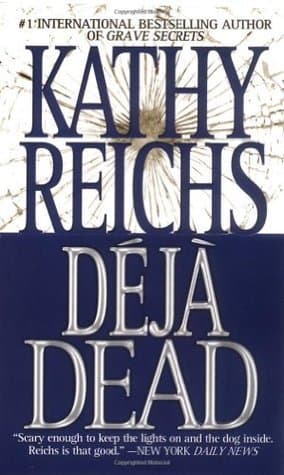
- Déjà Dead
Kathy Reichs
3.9 (133k) average on GoodreadsThrillerKathy Reichs' 'Déjà Dead' also features a forensic anthropologist protagonist, Dr. Temperance Brennan, and excels in its accurate portrayal of forensic science. Both authors are lauded for their technical detail, but Reichs often places Brennan in more urban or international settings, dealing with larger-scale investigations. 'Written in Bone' distinguishes itself with its intense focus on a singular, remote location and the psychological impact of isolation, creating a different kind of tension compared to Brennan's more globetrotting, often politically charged, investigations. Beckett's work tends to lean more heavily into the psychological thriller aspect within a confined space, while Reichs often balances forensic detail with broader criminal conspiracies.
- Angels & Demons
Dan Brown
3.9 (2.7M) average on GoodreadsThrillerA Harvard symbologist races through Rome's ancient sites, deciphering cryptic clues to unmask the Illuminati and stop a vengeful plot to destroy the Vatican with a stolen antimatter weapon.
- Gone Girl
Gillian Flynn
4.1 (2.3M) average on GoodreadsThrillerA wife's sudden disappearance on her fifth anniversary reveals a web of lies and psychological warfare, exposing the secrets within a seemingly perfect marriage.
- The Girl on the Train
Paula Hawkins
3.9 (2.1M) average on GoodreadsThrillerA woman’s fascination with a seemingly perfect couple she watches from her daily train commute leads her into a dark investigation when she witnesses something that shatters their idyllic image.





Enjoyed the summary?
A summary gives you the shape of the book. The book itself has the detail, the examples and the voice.
Find Written in Bone on AmazonAs an Amazon Associate, BookBrief earns from qualifying purchases. How we're funded