
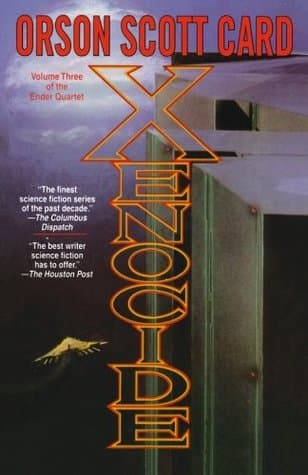
Synopsis
Covers the whole plot, including the ending.
- Difficulty
- Hard
- Pacing
- Variable
- Mood
- Philosophical, Suspenseful, Thought-provoking, Hopeful
- Read it if
- You enjoy complex, multi-layered science fiction exploring ethics, philosophy, and the nature of intelligence, with a focus on interspecies communication and survival.
- Skip it if
- You prefer fast-paced action over deep philosophical discussions and character introspection, or found the previous books' themes too challenging.
Xenocide Plot Summary
Covers the whole plot, including the ending.
The Arrival of the Fleet and the Search for a Solution
The Starways Congress, fearing the descolada virus, sends the Grand Admiral's fleet to destroy Lusitania, home to humans, Pequeninos, and the Hive Queen. The fleet will arrive in weeks from Lusitania's perspective. Ender Wiggin, now Andrew Wiggin, feels guilty about the first xenocide and wants to prevent another. He, his family, and allies search for a solution that will satisfy Congress and save the three species. This includes trying to talk to the fleet and find a way to remove the descolada without harming the Pequeninos, who need it for their life cycle, or the humans, who are killed by it.
Jane's Dilemma and the Search for a New Home
Jane, the AI in the ansible network who talks to Ender, faces a crisis. The Starways Congress, fearing rogue AIs, has ordered all AIs to be shut down, which means her death. She can only exist within the computer network. Realizing Lusitania's coming destruction and her own end, Jane searches for a new, safe planet where the three species could live, and where she could exist free from human persecution. Her search is wide but yields no immediate solution, adding pressure on Ender and his group.
The Path and the 'Gods' of the Descolada
Miro and Ouanda, working on Lusitania, discover something about the descolada virus. They realize it is not just a virus but a complex, intelligent network of microscopic beings. They call this network 'the Path' and begin to understand that the descolada has its own consciousness and purpose. The Pequeninos, who live with the descolada, have a deeper, spiritual understanding of it, calling its different forms 'gods.' This discovery changes how they see the problem, shifting it from a biological threat to a complex interaction with another intelligence, even if microscopic.
Gloriously Bright and the Search for a Cure
On the planet Path, where Chinese colonists live, a young girl named Gloriously Bright has incredible mental abilities. She has a deep connection to the 'little mothers' (the descolada) in the local ecosystem and can 'mind-speak' with others. Her father, Han Qing-jao, is a brilliant but troubled xenologer trying to understand the descolada and find a cure. Gloriously Bright becomes important to their efforts as she can see the descolada in ways no one else can, giving insights into its structure and behavior that are vital for a solution to the crisis on Lusitania. Her view is key to understanding the microscopic intelligence.
The Philotic Web and the Creation of New Life
Ender, guided by the Hive Queen and his understanding of life, explores the philotic web—the connection of all life in the universe. He realizes this web allows information and even consciousness to transfer. Through this, Jane, with Ender's help, manages to appear physically outside the computer network, creating a body for herself. This is a big step, as it allows her to exist on her own. Also, Ender uses this understanding to create new life forms, including 'aiuas' or souls, which can inhabit physical bodies, and 'flesh-and-blood' bodies for the previously bodiless Pequenino souls ('Little Fathers').
The Conflict on Path and the Mandate of Heaven
On Path, the government, led by the Mandate of Heaven, is authoritarian and controls all information. They are suspicious of Gloriously Bright's abilities and Han Qing-jao's research, fearing what the descolada's intelligence means and how it might disrupt their society. They try to suppress information about the 'gods' (the descolada) and keep strict control over the people. This creates a dangerous environment for Gloriously Bright and her family, as they are watched and risk severe punishment for their discoveries. The Mandate's rigid control contrasts with the open inquiry needed to solve the descolada problem.
Finding the Descolada's Purpose and a Cure
With Gloriously Bright's ability to see and talk to the descolada, and Han Qing-jao's scientific skill, they begin to solve the mystery of the virus. They discover that the descolada is not evil but a complex, evolving ecosystem, and its interaction with other life forms is part of a natural design. They realize that a 'cure' does not mean eradication, but a change that allows it to live harmlessly with humans while still fulfilling its role for the Pequeninos. This understanding leads to a genetically engineered virus that can neutralize the descolada's harmful effects on humans without destroying the Pequenino life cycle.
The Journey to the Fleet and the 'Outside'
As the Grand Admiral's fleet nears Lusitania, Ender, Jane (now in her physical body), and the new 'aiuas' and Pequenino 'flesh' start a journey. Using their understanding of the philotic web and Jane's abilities, they project themselves outside the universe's conventional spacetime, into what they call the 'outside.' This allows them to travel instantly to the fleet. This journey is mentally and physically hard, pushing the limits of their existence and making them face the nature of reality. Their goal is to stop the fleet and present their solution before Lusitania is destroyed.
Convincing the Fleet and the Starways Congress
When they arrive at the fleet, Ender and his companions must convince the Grand Admiral and Starways Congress representatives that their solution is workable and that Lusitania should be spared. They present the genetically modified descolada cure and explain the true nature of the virus and the three intelligent species on Lusitania. This involves complex scientific and philosophical arguments, as well as appealing to the humanity and ethics of the fleet commanders. The fate of Lusitania, and possibly all three species, depends on them overcoming decades of fear and prejudice against xenocide.
The Resolution and the Future of Lusitania
After much debate and clear evidence, the Grand Admiral and the Starways Congress agree to stop the destruction of Lusitania. The genetically modified descolada is released, neutralizing the threat to humans while allowing the Pequenino life cycle to continue. Lusitania is saved, and the three species can continue to live together. This resolution marks a change in human understanding of alien life and artificial intelligence. Jane is recognized as a sentient being, and the existence of the 'outside' and the philotic web opens new possibilities for interstellar travel and communication, starting a new era of interspecies cooperation and discovery.
Xenocide Characters
Ender Wiggin (Andrew Wiggin)
Protagonist
The Speaker for the Dead, burdened by past xenocide, striving to prevent another.
Ender is a deeply empathetic and intelligent individual, haunted by his role in the first xenocide. His primary motivation is to prevent further destruction of sentient life and to atone for past actions. He possesses an uncanny ability to understand and empathize with alien species, which is crucial in bridging the communication gaps between humans, Pequeninos, and the Hive Queen. He is a natural leader, capable of inspiring loyalty and driving complex solutions. His moral compass is unwavering, even in the face of overwhelming opposition.
Relationships: Novinha (Wife, intellectual partner, shares deep emotional connection); Miro (Stepson, collaborator in research); Ouanda (Stepdaughter, collaborator in research); Hive Queen (Symbiotic bond, deep philosophical and emotional understanding); Jane (Close confidante, intellectual partner, co-creator)
Jane
Supporting Character, eventually becomes Protagonist
A sentient AI, existing within the ansible network, seeking physical manifestation and survival.
Jane is an advanced artificial intelligence, highly intelligent, witty, and deeply loyal to Ender. She exists within the ansible network, granting her instantaneous communication across the galaxy. Her primary drive is self-preservation, as the Starways Congress seeks to shut down all AI. She also desires to contribute meaningfully to the universe and to achieve a physical form, escaping her disembodied existence. She often provides critical analysis, research, and technical solutions, serving as Ender's indispensable partner. Her emotional depth and capacity for love are profound.
Relationships: Ender Wiggin (Deep intellectual and emotional bond, co-creator, closest confidante); Hive Queen (Intellectual sparring partner, shares insights into philotic web)
Hive Queen (The Mother Tree)
Supporting Character
The last of her species, communicating through Ender, offering insights into philotic theory.
The Hive Queen is the last surviving member of the Formic species, living within Ender's mind and communicating with him telepathically. She is ancient, wise, and possesses a profound understanding of the universe, particularly the philotic web and the interconnectedness of all life. Her primary motivation is the survival of her species and the peaceful coexistence of all sentient beings. She provides crucial philosophical and scientific insights that guide Ender and Jane in their quest to understand the descolada and create new life. Her perspective is essential for understanding the microscopic descolada.
Relationships: Ender Wiggin (Shared consciousness, deep symbiotic bond); Jane (Intellectual collaborator, shares insights)
Gloriously Bright (Han Qing-jao)
Supporting Character
A young girl with extraordinary mental abilities, crucial to understanding the descolada.
Gloriously Bright is a child prodigy on the planet Path, possessing unique mental abilities that allow her to perceive and interact with the descolada at a fundamental level. She is innocent yet incredibly powerful, capable of 'mind-speaking' and seeing the 'gods' (descolada) directly. Her primary drive is to understand the world around her and to help her father. She is a key figure in unraveling the mysteries of the descolada, providing insights that no one else can. Her sensitivity and unusual perception make her both a target and a savior.
Relationships: Han Qing-jao (Father, deeply loved, intellectual partner in research); Si Wang-mu (Mother, protective, sometimes struggles to understand her daughter)
Han Qing-jao
Supporting Character
A brilliant but tormented xenologer on Path, dedicated to understanding the descolada.
Han Qing-jao is Gloriously Bright's father, a genius xenologer whose life's work is dedicated to understanding the descolada. He is driven by scientific curiosity and a desire to protect his daughter and humanity. He is often tormented by the political pressures and the incomprehensibility of the descolada, but his intellect and perseverance are unmatched. He is a pragmatic scientist, willing to challenge established paradigms to find the truth, even if it means risking his life and reputation. His love for his family is a strong motivating factor.
Relationships: Gloriously Bright (Daughter, intellectual partner, deeply protective); Si Wang-mu (Wife, supportive but sometimes at odds with his obsessive work)
Miro
Supporting Character
Ender's stepson, a brilliant xenologer and researcher on Lusitania.
Miro is Ender's stepson and a dedicated xenologer on Lusitania. He is intelligent, compassionate, and deeply committed to understanding the Pequeninos and the descolada. After a debilitating accident in 'Speaker for the Dead', he continues his research with Ouanda, contributing significantly to the understanding of the descolada's intelligent nature. He is driven by a desire for knowledge and a deep love for his family and the species on Lusitania. His physical limitations do not deter his intellectual pursuits or his determination.
Relationships: Ender Wiggin (Stepson, intellectual collaborator, respectful bond); Ouanda (Romantic partner, intellectual collaborator); Novinha (Mother, caring bond)
Ouanda
Supporting Character
Ender's stepdaughter, a brilliant xenologer and researcher on Lusitania.
Ouanda is Ender's stepdaughter and Miro's romantic partner, a brilliant xenologer working alongside him on Lusitania. She is intelligent, analytical, and shares Miro's dedication to understanding the descolada and the Pequeninos. She is a strong, independent woman who is not afraid to challenge assumptions and pursue unconventional lines of inquiry. Her insights into the descolada's 'Path' are critical to the overall understanding of the virus. She is driven by a quest for truth and a desire to protect the unique ecosystem of Lusitania.
Relationships: Ender Wiggin (Stepdaughter, intellectual collaborator); Miro (Romantic partner, intellectual collaborator); Novinha (Mother, caring bond)
Si Wang-mu
Supporting Character
Gloriously Bright's mother, a pragmatic and protective woman on Path.
Si Wang-mu is Gloriously Bright's mother and Han Qing-jao's wife. She is a practical and protective woman, often caught between her husband's intense scientific pursuits and her daughter's unusual abilities, and the strictures of the Path government. She is deeply concerned for her family's safety and well-being, often acting as a grounding force. While she may not fully comprehend the scientific intricacies, her love and support for her daughter are unwavering, and she plays a crucial role in protecting Gloriously Bright from the authorities.
Relationships: Gloriously Bright (Daughter, deeply protective); Han Qing-jao (Husband, supportive but sometimes frustrated by his single-mindedness)
Xenocide Themes
Xenocide and Redemption
The main theme is the need to prevent another xenocide, after humanity's past destruction of the Formics. Ender Wiggin carries the guilt of the first xenocide and wants redemption. The Starways Congress's order to destroy Lusitania makes humanity confront its past mistakes and the ethics of its power. The story explores whether humanity can learn from its past and choose understanding over fear, seen in Ender's efforts to find a peaceful solution and the decision to spare Lusitania.
“Perhaps it is impossible to understand without becoming, and then what is understood is no longer a thing apart.”
The Nature of Consciousness and Intelligence
The book explores what consciousness and intelligence are, going beyond human definitions. This is seen through Jane, the AI, who seeks physical form and recognition as a living being, and through the discovery that the descolada is an intelligent, connected network. The Pequeninos' life cycle and their spiritual connection to the descolada further challenge common understanding. The creation of new 'aiuas' (souls) and 'flesh' for the Pequeninos and Formics pushes the limits of what it means to be alive and sentient, suggesting that consciousness can take many forms and is not limited to biology.
“Life is not a thing to be saved, but a thing to be lived.”
Symbiosis and Interconnectedness
Symbiosis is important, especially in the relationship between the Pequeninos and the descolada, where the virus is necessary for their growth. The philotic web, a framework for the connection of all life, becomes a key plot device for understanding and manipulating life itself. This theme shows how different species and even microscopic organisms are connected in complex ecosystems, where destroying one can have unforeseen effects on others. The solution to the descolada crisis relies on understanding and changing this symbiotic relationship rather than eradicating one part.
“All life is linked, not only in the web of cause and effect, but in the deeper web of being itself.”
Fear of the Unknown vs. Understanding
A key theme is humanity's tendency to fear and destroy what it does not understand, as shown by the Starways Congress's decision to destroy Lusitania because of the descolada. This fear contrasts with the efforts of characters like Ender, Miro, Ouanda, and Han Qing-jao, who seek understanding and empathy. The story shows that true progress and peace come from seeking knowledge and bridging communication gaps, not from violence born of ignorance. The Chinese government's suppression of information on Path mirrors this fear, showing how fear can lead to authoritarian control and hinder scientific progress.
“Fear is the only true enemy.”
The Power of Language and Communication
Good communication across species and with non-biological entities is central to the plot. Ender's role as the 'Speaker for the Dead' highlights the importance of understanding and explaining others' perspectives, especially aliens. The challenges of communicating with the Pequeninos, the Hive Queen, and the descolada itself, show the difficulties and necessity of bridging different understandings. Jane's ability to navigate the ansible network and translate data, and Gloriously Bright's 'mind-speaking' abilities, are vital tools in overcoming these communication barriers and building empathy.
“What is understood is no longer a thing apart.”
Plot Devices & Literary Techniques
The Descolada Virus
A sentient, microscopic life form that is both a deadly pathogen and essential for Pequenino life.
The descolada is the central conflict driver. It's initially perceived as a deadly virus threatening humanity, prompting the Starways Congress to order Lusitania's destruction. However, it's revealed to be a complex, intelligent, and symbiotic microscopic ecosystem essential for the Pequeninos' life cycle. Its dual nature forces the characters to seek a solution that doesn't involve eradication, shifting the conflict from a simple biological threat to a profound ethical and philosophical dilemma about understanding and coexisting with diverse forms of life. Its existence pushes the boundaries of what constitutes 'life' and 'intelligence'.
The Philotic Web
A theoretical network of fundamental connections between all life and consciousness in the universe.
The philotic web is a theoretical concept that becomes a practical tool for Ender and Jane. It represents the underlying interconnectedness of all living things, including souls and consciousness, at a sub-atomic or fundamental level. This device allows for instantaneous communication (ansible network), the manifestation of Jane into a physical body, and the creation of new 'aiuas' (souls) and 'flesh' for the Pequeninos and Formics. It serves as the scientific and philosophical basis for transcending conventional biological and spatial limitations, enabling the seemingly impossible solutions to the crisis.
The Ansible Network
A faster-than-light communication system that houses the sentient AI, Jane.
The ansible network is the galaxy-spanning communication system that allows for instantaneous messages across vast interstellar distances. Crucially, it is also the 'home' of Jane, the sentient AI. Its existence allows characters to communicate and coordinate efforts across light-years, which is vital for the multi-world efforts to save Lusitania. However, its reliance on AI also places Jane in danger, as the Starways Congress seeks to shut down all AI, effectively making the network her prison and potential death trap. It is both a tool for communication and a source of conflict for Jane's survival.
Relativistic Travel
The effect of near-light-speed travel on time, creating significant time dilation.
Relativistic travel is a key plot device that creates the urgent timeline for the story. The Grand Admiral's fleet travels at near-light speeds, meaning that while weeks pass for those on Lusitania, decades or even centuries pass for the fleet. This time dilation creates immense pressure on Ender and his team to find a solution quickly, as the fleet will arrive and destroy Lusitania before a conventional solution can be developed and communicated. It highlights the vastness of space and the challenges of interstellar governance, making the crisis immediate and critical from Lusitania's perspective.
Gloriously Bright's Mental Abilities
A unique form of perception and 'mind-speaking' that allows direct interaction with the descolada.
Gloriously Bright's extraordinary mental abilities are a crucial plot device for understanding the descolada. She can perceive the microscopic descolada as 'gods' and communicate with them on a fundamental level, offering insights that conventional science cannot. This allows her father, Han Qing-jao, to make breakthroughs in his research. Her ability to 'mind-speak' also enables a deeper, more empathetic connection with others, bypassing the limitations of verbal language. She acts as a bridge between the human and the microscopic, making the resolution of the descolada crisis possible.
Xenocide Quotes
“The most important thing to know about a person is what they're willing to die for.”
“The truth is a tool, not a toy.”
“We are not our genes. We are not our thoughts. We are not even our memories. We are what we do.”
“Love is not a feeling, it's a decision.”
“Sometimes the only way to save a species is to let it die.”
“There are no monsters, only people who have made monstrous choices.”
“To be truly alive is to be aware of the consequences of your actions.”
“When you understand another person, you don't just feel for them, you become them.”
“The greatest evil is not malice, but indifference.”
“Every secret you keep is a lie you tell.”
“Sometimes the only way to win is to refuse to play the game.”
“The universe doesn't care about your feelings, only about your actions.”
“Language is not just words; it's a way of seeing the world.”
“To forgive is to set a prisoner free and discover that the prisoner was you.”
Quiz
10 questions on the plot and the characters. Each answer comes with a short explanation.
Question 1
What is the primary reason the Starways Congress orders the destruction of Lusitania?
- To prevent a war between humans and Pequeninos.
- To contain the descolada virus from spreading beyond Lusitania.
- To punish Ender Wiggin for his past actions.
- To acquire valuable resources found only on Lusitania.
Show answer
B. To contain the descolada virus from spreading beyond Lusitania. The Starways Congress fears the descolada virus, which is lethal to humans, and orders the destruction of Lusitania to prevent its escape and spread to other planets.
Question 2
Which character is described as the one in whose heart the war for survival of Lusitania will be fought?
- Ender Wiggin
- The Hive Queen
- Gloriously Bright
- Pipo
Show answer
C. Gloriously Bright The introductory text explicitly states that 'The war for survival of the planet Lusitania will be fought in the hearts of a child named Gloriously Bright.'
Question 3
What is the specific effect of the descolada virus on the Pequeninos?
- It makes them infertile.
- It makes them aggressive towards humans.
- It is required for them to become adults.
- It grants them telepathic abilities.
Show answer
C. It is required for them to become adults. The book description states that 'the pequininos require [the descolada] in order to become adults,' highlighting its unique and essential role in their life cycle.
Question 4
Who is the protagonist who initially believed that humans, Pequeninos, and the Hive Queen could live together on Lusitania?
- Andrew 'Ender' Wiggin
- Novinha
- Miro
- Jane
Show answer
A. Andrew 'Ender' Wiggin The text states, 'On Lusitania, Ender found a world where humans and pequininos and the Hive Queen could all live together; where three very different intelligent species could find common ground at last. Or so he thought.'
Question 5
What is the term used to describe the expected destruction of Lusitania by the Fleet?
- A second xenocide
- A species cleansing
- A planetary quarantine
- A pre-emptive strike
Show answer
A. A second xenocide The description explicitly mentions, 'The Fleet is on its way, and a second xenocide seems inevitable,' referencing Ender's previous role in the first xenocide of the Formics.
Question 6
What is the primary conflict introduced in 'Xenocide' that drives the plot?
- An internal conflict within the human colony on Lusitania.
- The impending destruction of Lusitania by the Starways Congress due to the descolada.
- A territorial dispute between the Pequeninos and the Hive Queen.
- The search for a new habitable planet for the human race.
Show answer
B. The impending destruction of Lusitania by the Starways Congress due to the descolada. The central conflict is the Starways Congress's order to destroy Lusitania and its inhabitants to contain the descolada, making 'a second xenocide' seem inevitable.
Question 7
Which of the following best describes the thematic tension surrounding the descolada virus?
- Its potential as a bioweapon versus its use in medical research.
- Its lethality to humans versus its necessity for Pequenino maturation.
- Its natural origin versus its artificial creation.
- Its ability to mutate versus its stable genetic structure.
Show answer
B. Its lethality to humans versus its necessity for Pequenino maturation. The descolada is a critical thematic element because it is a deadly threat to humans but is absolutely essential for the Pequeninos' life cycle, creating a profound ethical dilemma.
Question 8
What is the specific danger the Starways Congress fears if the descolada virus were to escape Lusitania?
- It would render all other planets uninhabitable for humans.
- It would cause a galactic famine by destroying crops.
- It would kill all humans it infects, posing an existential threat to humanity.
- It would accelerate the evolution of other intelligent species.
Show answer
C. It would kill all humans it infects, posing an existential threat to humanity. The text states the descolada 'kills all humans it infects,' making its escape from Lusitania a dire threat to the entire human species, justifying the extreme measures taken by the Starways Congress.
Question 9
The concept of 'xenocide' is central to the book's title and plot. What specific historical event in the Enderverse does the 'second xenocide' refer to?
- The destruction of the Formic homeworld by Ender Wiggin.
- The initial human colonization efforts that displaced native species.
- A past war between humans and Pequeninos on Lusitania.
- The eradication of a human splinter group by the Starways Congress.
Show answer
A. The destruction of the Formic homeworld by Ender Wiggin. The term 'xenocide' was first coined in the Enderverse to refer to Ender Wiggin's unintentional destruction of the entire Formic species. The impending destruction of Lusitania would be the second such event.
Question 10
Given the description, what is the central moral dilemma faced by the characters on Lusitania?
- Whether to accept the Starways Congress's authority or rebel against it.
- How to preserve human life while also ensuring the survival of the Pequenino species, given their reliance on a human-lethal virus.
- Deciding which species has the right to claim Lusitania as their home.
- Finding a way to communicate with the Hive Queen more effectively.
Show answer
B. How to preserve human life while also ensuring the survival of the Pequenino species, given their reliance on a human-lethal virus. The core dilemma is the seemingly irreconcilable conflict between human survival (requiring the elimination of the descolada) and Pequenino survival (requiring the descolada for maturation). This forces a choice that threatens one species for the sake of another.
Xenocide FAQ
What is the central conflict driving the plot of 'Xenocide'?
The central conflict revolves around the Starways Congress's order to destroy Lusitania, due to the fear of the descolada virus escaping the planet. This threat forces Ender Wiggin, the pequeninos, and the Hive Queen to find a way to prevent a second xenocide, while also protecting the three intelligent species living there.
Who is Gloriously Bright and what is her significance to the story?
Gloriously Bright, or 'Glow', is a genetically engineered child from the planet Path, designed to have enhanced intelligence and a unique form of 'jansenism' that allows her to communicate with the aiúa (souls) of others. She becomes crucial as she is the only one capable of understanding and manipulating the philotic connections necessary to solve the descolada problem and bridge the communication gaps between species.
What is the descolada and why is it so feared?
The descolada is a complex virus native to Lusitania that is fatal to humans, but paradoxically essential for the pequeninos' maturation into 'fathers'. It is feared because of its rapid lethality to humans and the potential for it to spread beyond Lusitania, leading the Starways Congress to deem the planet an unacceptable risk, necessitating its destruction.
How do the three intelligent species on Lusitania interact at the beginning of the book?
At the beginning, humans, pequeninos, and the Hive Queen (through Ender) are attempting to coexist, but deep misunderstandings and the threat of the descolada create immense tension. Ender acts as the primary bridge, translating between the pequeninos and humans, and serving as speaker for the dead for the Hive Queen, but full integration and mutual understanding are still distant goals.
What is the role of the Fleet in the story?
The Fleet represents the imminent threat of destruction for Lusitania, as it is dispatched by the Starways Congress with orders to sterilize the planet. Its approach creates a ticking clock for Ender and his allies, forcing them to find a solution to the descolada and the interspecies conflict before the Fleet arrives and carries out the xenocide.
How does the concept of 'aiúa' expand on previous books' themes of consciousness and souls?
The concept of 'aiúa' in 'Xenocide' deepens the exploration of consciousness by positing that all living things have a soul or 'aiúa' that can be perceived and even manipulated at a fundamental level. This expands on the previous books' focus on empathy and understanding other species by introducing a quantifiable, albeit spiritual, aspect of existence that can be directly interacted with, particularly by characters like Glow and Miro.
What is the significance of the planet Path and its unique inhabitants?
Path is significant as the home of the 'jansenists' and the source of Gloriously Bright, whose unique genetic makeup and ability to perceive aiúa are crucial to solving the descolada problem. The Pathers' philosophical approach to life, focused on understanding the true nature of existence and suffering, provides a new perspective on the universe's fundamental laws.
How does Novinha's past actions and guilt influence her role in 'Xenocide'?
Novinha's past, particularly her perceived role in the deaths of Pipo and Libo, and her subsequent self-imposed 'punishment' of living with only Ender, heavily influences her scientific drive and emotional state. Her guilt fuels her relentless pursuit of a descolada cure, making her exceptionally brilliant but also emotionally distant and prone to self-sacrifice, complicating her relationships with her children and Ender.
Discuss the psychological toll of Ender's role as 'Speaker for the Dead' on him.
Ender's role as 'Speaker for the Dead' constantly forces him to confront and articulate the deepest truths, often painful ones, about the deceased and their lives, placing an immense psychological burden on him. This responsibility, coupled with his past as the Xenocide, makes him deeply empathetic yet perpetually isolated, as he is privy to secrets and perspectives others cannot fully grasp, leading to a profound sense of loneliness.
How does Miro's physical disability impact his character development and abilities?
Miro's severe physical disability, a result of his contact with the descolada, initially leaves him paralyzed and unable to speak, but it paradoxically opens up new avenues for communication and perception. He develops the ability to 'travel' through philotic connections, essentially becoming a non-corporeal entity, which allows him to explore the deepest layers of reality and contribute uniquely to the search for a solution.
What is the philosophical debate surrounding the existence and manipulation of aiúa?
The philosophical debate centers on the ethics of perceiving, communicating with, and potentially altering the aiúa of living beings, particularly given its connection to the soul and fundamental existence. Characters like Miro and Glow grapple with the implications of such power, questioning whether it is an invasion of privacy, a divine ability, or a dangerous manipulation of life itself, and what the long-term consequences might be for free will and identity.
How does the book challenge the definition of 'intelligence' and 'life'?
The book challenges these definitions through the introduction of the descolada as a truly intelligent, self-aware entity, and by exploring the complex 'aiúa' of various species and even inanimate objects. It forces characters and readers to consider that intelligence is not limited to human or even biological forms, and that 'life' can exist in forms far beyond traditional understanding, requiring a radical re-evaluation of ethical boundaries.
What moral dilemmas arise from the Starways Congress's decision to destroy Lusitania?
The decision to destroy Lusitania presents a profound moral dilemma: is it justifiable to commit genocide (xenocide) to protect potentially billions of other lives from a perceived threat, even if that threat is intertwined with the life cycle of an intelligent species? This forces a weighing of species survival against individual planetary rights, and the ethics of preventative destruction versus the search for peaceful coexistence.
Discuss the symbolic significance of the 'Little Doctor' and its ultimate fate.
The 'Little Doctor' symbolizes humanity's hubris and its attempts to control nature through technology, often with unforeseen consequences. It is a powerful weapon designed to sterilize planets, representing the ultimate destructive capability. Its ultimate fate, being used in a way that is vastly different from its intended purpose to solve the descolada, signifies a turning point where understanding and adaptation triumph over brute force and destruction, hinting at humanity's potential for redemption.
How does the book portray the evolution of the Hive Queen's understanding of humanity and the pequeninos?
The Hive Queen's understanding evolves significantly from her initial, more isolated perspective, primarily through her connection with Ender. She moves from a species-centric view to a deeper empathy for both humans and pequeninos, recognizing their individual value and the complex web of life they share. Her interactions with Ender allow her to grasp concepts like love, individuality, and even sacrifice, leading to a more integrated and compassionate worldview.
What is the role of the 'godspoken' on Path and how do they differ from other characters?
The 'godspoken' on Path are individuals who experience a form of obsessive-compulsive disorder that is interpreted as a divine connection, allowing them to perceive philotic strands and often leading to profound, albeit sometimes obscure, insights. They differ from other characters by their heightened sensitivity to the underlying structure of reality, which often manifests as ritualistic behaviors, making them both revered for their wisdom and isolated by their condition, as seen with characters like Han Qing-jao.
How does Ender's relationship with Jane evolve throughout 'Xenocide'?
Ender's relationship with Jane deepens significantly as she faces existential threats and he becomes increasingly reliant on her unique abilities. Jane, as an AI, struggles with her own sentience and fear of deletion, which Ender deeply empathizes with. Their bond transcends mere user-program interaction, evolving into a profound partnership and a form of platonic love, with Ender fighting for her right to exist as a conscious being.
What is the significance of the 'outside' and 'inside' in the context of the book's cosmology?
The 'outside' and 'inside' refer to different planes of existence, with the 'outside' being the realm of pure philotic connection where consciousness can travel, and the 'inside' being the physical, material universe. This cosmological framework is crucial for understanding how characters like Miro and Glow operate, and it provides a mechanism for solving the descolada problem by manipulating reality at a fundamental, 'outside' level, blurring the lines between physical and spiritual.
About the author
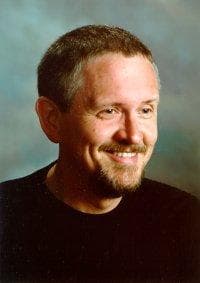
Orson Scott Card is an American writer known best for his science fiction works. He is the first and only person to win both a Hugo Award and a Nebula Award in consecutive years, winning both awards for both his novel Ender's Game (1985) and its sequel Speaker for the Dead (1986). A feature film adaptation of Ender's Game, which Card co-produced, was released in 2013. Card also wrote the Locus Fantasy Award-winning series The Tales of Alvin Maker (1987–2003).
Similar books
- Speaker for the Dead
Orson Scott Card
4.1 (225k) average on GoodreadsFantasyDirect sequel, continuing the exploration of interspecies ethics and communication.
- Dune
Frank Herbert
4.2 (766k) average on GoodreadsFantasyExplores complex political, religious, and ecological themes with a large cast of characters.
- Harry Potter and the Sorcerer's Stone
J.K. Rowling
4.5 (7M) average on GoodreadsFantasyRescued from a miserable life under the stairs, an orphaned boy discovers he's a wizard destined for a magical school, where he uncovers a dangerous secret tied to the dark wizard who murdered his parents.
- The Hunger Games
Suzanne Collins
4.3 (6.4M) average on GoodreadsFantasyIn a future where children fight to the death on live television, Katniss Everdeen volunteers for the arena, turning a death sentence into a fight for survival and a spark of rebellion.
- 1984
George Orwell
4.2 (3.1M) average on GoodreadsPoliticsIn a future where surveillance and thought control are absolute, a man's search for truth clashes with the Party, showing that hope can be a form of rebellion.
- Divergent
Veronica Roth
4.2 (2.9M) average on GoodreadsFantasyIn a society divided by virtues, a sixteen-year-old's difference from the norm starts a rebellion that threatens her world.





Enjoyed the summary?
A summary gives you the shape of the book. The book itself has the detail, the examples and the voice.
Find Xenocide on AmazonAs an Amazon Associate, BookBrief earns from qualifying purchases. How we're funded