

Synopsis
Covers the whole plot, including the ending.
- Difficulty
- Easy
- Pacing
- Fast
- Mood
- Suspenseful, Urgent, Apocalyptic, Thrilling
- Read it if
- You love high-stakes thrillers with a unique premise, fast pacing, and a touch of science fiction.
- Skip it if
- You prefer character-driven stories over plot-driven ones, or are sensitive to graphic animal violence.
Zoo Plot Summary
Covers the whole plot, including the ending.
A Disturbing Pattern Emerges in Central Park
The story begins with Jackson Oz, an American biologist in New York, observing an aggressive attack by dogs on humans in Central Park. Authorities dismiss it as isolated, but Jackson, who has studied unusual animal behavior for years, feels uneasy. His father, a brilliant but disgraced animal behaviorist, had theorized about a coming 'animal revolt' before his death. Jackson connects this incident with other reports of strange animal aggression globally, confirming his father's controversial theories. He struggles to get anyone to take his concerns seriously, facing skepticism and ridicule from the scientific community and law enforcement.
Lion Attacks in Botswana and a New Ally
Driven by instinct, Jackson travels to Botswana after hearing reports of escalating lion attacks. There, he sees a horrifying, coordinated ambush by lions on tourists. The attack is strategic and brutal, showing an intelligence that defies normal animal behavior. During this experience, he meets Chloe Tousignant, a French ecologist equally disturbed by the ferocity and organization of the animal attacks she has observed. They recognize a shared understanding of the impending global crisis, forming an alliance in the face of danger.
Investigating the 'Noah Anomaly'
Back in the U.S., Jackson and Chloe combine their research, piecing together a mosaic of animal attacks worldwide. From stampeding elephants in Africa to aggressive bears in Yellowstone and swarming birds in Europe, the incidents increase in frequency, violence, and apparent coordination. Jackson recalls his father's research into the 'Noah Anomaly' – a theoretical shift in animal behavior driven by environmental factors. They think the animals are not just reacting, but actively organizing against humanity. Their initial attempts to present their findings to governmental agencies and the scientific community are met with dismissal and hostility.
Escalating Global Chaos
As Jackson and Chloe struggle to be heard, the animal attacks intensify. Cities are crippled by coordinated assaults from various species. Swarms of bats attack power grids, wolves terrorize rural communities, and even domestic animals turn against their owners. The scale and intelligence of these attacks overwhelm human defenses, leading to widespread panic and societal breakdown. Governments are unprepared, their military and police forces ineffective against an enemy that is everywhere and nowhere. The world descends into chaos, confirming Jackson's dire predictions.
A Desperate Search for Answers
Realizing they need more than just observational data, Jackson and Chloe search for the cause of the animal revolt. They look into the late Dr. Richard Oz's extensive, often ridiculed, research. They seek out his former colleagues, many of whom had distanced themselves from his controversial theories. This search leads them to discover hidden notes and experimental data suggesting a biological trigger for the animals' synchronized aggression. They believe understanding his father's work is the key to both understanding and stopping the global uprising. Their mission's urgency grows with the world's rapid deterioration.
The Role of a Synthetic Protein
Through research and decoding his father's notes, Jackson and Chloe discover Dr. Richard Oz identified a synthetic protein, 'Hormone P-11,' as a potential catalyst for aggressive behavior in animals. This protein, originally developed for livestock growth, was thought to have unforeseen side effects on neural pathways, especially when exposed to certain environmental stressors. They hypothesize that this protein, perhaps spread through the food chain or environment, is altering animal brains, causing hyper-aggression, enhanced communication, and a collective urge to eradicate humanity. This discovery shifts their focus to finding a counter-measure.
Seeking a Scientific Solution
With 'Hormone P-11' identified as the likely culprit, Jackson and Chloe race to develop an antidote or a counter-agent. They get the attention of Dr. Sam Aronson, a geneticist who, though initially skeptical, is swayed by the overwhelming evidence of the global animal uprising. Working in a secure lab, they combine their knowledge. Aronson helps them understand the genetic implications of P-11 and its effects on the animals' limbic systems. Their goal is to create a biological agent that can reverse or neutralize the effects of the synthetic protein, or at least disrupt the animals' coordinated attacks.
The Global Dissemination Plan
After intense research and experimentation, Jackson, Chloe, and Dr. Aronson develop a viable counter-agent. The next challenge is its global spread. They devise a plan to aerosolize the agent and release it into the atmosphere using modified aircraft. This method is the only way to reach many animals across continents quickly enough. The plan is full of risks, not only from ongoing animal attacks but also from the logistical nightmare of coordinating a global effort amidst societal collapse. They understand this is humanity's last gamble for survival.
The Perilous Mission
With the world on the brink of extinction, Jackson and Chloe, with a small, dedicated team, begin the mission to deploy the counter-agent. They face relentless animal attacks, navigating destroyed cities and avoiding dangerous swarms of creatures. Each deployment point is a life-threatening challenge, as animals seem to anticipate their moves. The emotional toll is immense, witnessing the devastation and dwindling human population. They push through, driven by the hope that their efforts will reverse the animal apocalypse, knowing that failure means the end of humanity. The world's fate rests on them and their mission's success.
A Glimmer of Hope and an Uncertain Future
After deploying the counter-agent in several key locations, Jackson and Chloe see hope. Initial reports suggest a decrease in animal aggression, with some reverting to more natural behaviors. However, the world is changed. Human civilization is shattered, and the population drastically reduced. While the immediate threat of animal eradication seems to wane, the long-term effects of the 'Noah Anomaly' and the synthetic protein are unknown. The book ends with cautious optimism, and a reminder of humanity's vulnerability and the need for a new way of coexisting with the natural world. The future is uncertain, but a fighting chance has been earned.
Zoo Characters
Jackson Oz
Protagonist
A renegade biologist who predicts and fights against the animal uprising.
Jackson Oz is a brilliant but unconventional biologist, haunted by the legacy of his disgraced father, Dr. Richard Oz. He is intelligent, observant, and deeply intuitive, often seeing patterns that others dismiss. Initially alienated from the scientific establishment, he possesses a strong moral compass and an unwavering determination to uncover the truth about the escalating animal attacks. He is driven by a need to validate his father's theories and save humanity, despite the personal risks and professional ridicule he faces. His journey transforms him from an isolated observer into a reluctant leader in the fight for survival.
Relationships: Chloe Tousignant (Scientific partner and romantic interest); Dr. Richard Oz (Deceased father, whose theories guide Jackson's investigation); Dr. Sam Aronson (Scientific collaborator in developing the counter-agent)
Chloe Tousignant
Supporting
A French ecologist who becomes Jackson's partner in investigating and combating the animal revolt.
Chloe Tousignant is a sharp, pragmatic, and courageous French ecologist. She is highly intelligent and possesses a deep understanding of animal behavior, which allows her to quickly grasp the unprecedented nature of the attacks. She meets Jackson in Botswana and immediately recognizes the validity of his concerns, becoming his most trusted ally. Chloe is resourceful and level-headed under pressure, often balancing Jackson's more theoretical approach with practical solutions. She is crucial in gathering evidence and developing strategies, proving herself indispensable in their desperate fight for survival.
Relationships: Jackson Oz (Scientific partner and romantic interest)
Dr. Richard Oz
Mentioned
Jackson's deceased father, a brilliant but disgraced animal behaviorist whose theories become central to the plot.
Dr. Richard Oz was a highly intelligent, albeit controversial, animal behaviorist. Before his death, he developed the 'Noah Anomaly' theory, predicting a global animal uprising due to environmental factors and a synthetic protein. His radical ideas led to his professional ostracization and ridicule, but his meticulous research and notes prove to be the key to understanding the crisis. Though he never appears alive in the narrative, his intellectual presence is profoundly felt through Jackson's memories and his rediscovered research, serving as a guiding force from beyond the grave.
Relationships: Jackson Oz (Son, who seeks to understand and validate his father's work)
Dr. Sam Aronson
Supporting
A renowned geneticist who aids Jackson and Chloe in developing a counter-agent.
Dr. Sam Aronson is a brilliant and initially skeptical geneticist. He represents the established scientific community that Jackson struggles to convince. However, as the animal attacks escalate and the evidence becomes undeniable, Aronson puts aside his initial reservations and dedicates his expertise to finding a solution. He is instrumental in understanding the biological mechanisms of 'Hormone P-11' and in developing the counter-agent. His scientific rigor and access to resources are critical to the success of Jackson and Chloe's mission, making him a crucial ally in the later stages of the crisis.
Relationships: Jackson Oz (Scientific collaborator); Chloe Tousignant (Scientific collaborator)
The Animals
Antagonist
The collective force of all animal species, exhibiting unprecedented intelligence and aggression.
The animals, collectively, serve as the primary antagonist of the story. Driven by the 'Noah Anomaly' and the synthetic protein 'Hormone P-11', they exhibit escalating levels of aggression, coordination, and apparent intelligence. They move beyond instinctual behavior, demonstrating strategic planning and collective action to overwhelm human civilization. From packs of dogs to swarms of birds, prides of lions, and stampeding elephants, they represent nature's rebellion against humanity's perceived abuses. Their attacks are brutal, widespread, and relentless, pushing humanity to the brink of extinction.
General Davies
Supporting
A military leader who initially dismisses but later reluctantly aids Jackson and Chloe.
General Davies represents the military and governmental response to the escalating crisis. Initially, like many in authority, he is dismissive of Jackson's theories, adhering to conventional explanations for the animal attacks. As the situation deteriorates into global chaos, he is forced to confront the unprecedented nature of the threat. Though still skeptical of the more outlandish aspects of Jackson's theories, he eventually provides logistical and military support for the deployment of the counter-agent, recognizing the desperate need for any potential solution. He embodies the struggle of institutions to adapt to an unimaginable threat.
Relationships: Jackson Oz (Reluctant ally, provides military support); Chloe Tousignant (Reluctant ally, provides military support)
Molly Oz
Mentioned
Jackson's mother, who appears in flashbacks.
Molly Oz is Jackson's mother and Dr. Richard Oz's wife. She appears primarily in Jackson's memories and flashbacks, often depicted as a supportive figure who struggled with her husband's controversial theories and the subsequent social ostracism. Her character helps to humanize Richard Oz and provides insight into Jackson's upbringing and the origins of his own scientific curiosity and resilience. She represents the personal cost of Richard's dedication to his work.
Relationships: Jackson Oz (Son); Dr. Richard Oz (Husband)
Zoo Themes
Humanity's Impact on Nature
The central theme is that humanity's disregard and exploitation of the natural world directly lead to its downfall. The 'Noah Anomaly' and the synthetic protein 'Hormone P-11' are direct consequences of human intervention in natural processes, specifically for agricultural gain. The animal uprising is nature's violent retribution for centuries of ecological damage and species manipulation. The book is a warning about the delicate balance of ecosystems and the unforeseen, catastrophic consequences of altering them.
“Nature, Oz thought, had finally had enough. And now it was fighting back.”
Skepticism vs. Truth
A major theme is the struggle to convince established authorities and the scientific community of an uncomfortable truth. Jackson Oz and his father, Dr. Richard Oz, face ridicule and dismissal for their 'outlandish' theories, even as evidence mounts. This shows humanity's tendency to cling to conventional explanations and deny inconvenient truths until it is too late. Initial skepticism hinders effective action, costing countless lives, and emphasizes the danger of intellectual arrogance and closed-mindedness when facing unprecedented threats.
“They called my father a madman. Now, the world is proving him a prophet.”
Survival and Adaptation
As the world descends into chaos, survival is paramount. Characters must adapt to a new, hostile environment where humans are no longer the dominant species. This includes physical survival against animal attacks and psychological adaptation to a world without its former comforts. The creation of a counter-agent and the desperate mission to deploy it show humanity's fight for continued existence, displaying resilience and ingenuity when facing overwhelming odds.
“We're not just fighting for our lives; we're fighting for the right to exist.”
The Legacy of Knowledge
The book explores the importance of inherited knowledge through the relationship between Jackson Oz and his deceased father, Dr. Richard Oz. Richard's ridiculed research and theories, initially dismissed as madness, become the roadmap for understanding and combating the animal uprising. Jackson's journey involves piecing together his father's legacy, validating his work, and using that knowledge to save humanity. This theme highlights how groundbreaking, even controversial, scientific inquiry can hold vital truths for future generations.
“Everything he ever warned us about... it's all happening.”
Plot Devices & Literary Techniques
The 'Noah Anomaly'
A theoretical concept explaining the coordinated animal aggression.
The 'Noah Anomaly' is a central theoretical plot device introduced by Dr. Richard Oz. It posits a shift in animal behavior, driven by environmental factors and a synthetic protein, leading to a collective, aggressive response against humanity. This anomaly provides the scientific framework for the animal uprising, making the seemingly random attacks coalesce into a coherent, terrifying threat. It serves as both a prophecy and a scientific explanation, guiding Jackson's investigation and providing the foundation for developing a counter-agent.
Hormone P-11
The synthetic protein acting as the biological trigger for animal aggression.
Hormone P-11 is the specific synthetic protein identified as the biological trigger for the animals' enhanced aggression and coordination. Developed for livestock growth but with unforeseen side effects, its discovery provides a tangible, scientific explanation for the 'Noah Anomaly'. This device moves the plot from observation to intervention, as Jackson and Chloe must not only understand its effects but also find a way to neutralize it. It's the concrete, man-made cause of the global catastrophe, highlighting humanity's role in its own demise.
Global Escalation
The narrative technique of showing progressively worsening, worldwide animal attacks.
The plot uses global escalation as a powerful device to build suspense and demonstrate the magnitude of the threat. The story begins with isolated incidents (Central Park dogs, Botswana lions), then rapidly expands to include coordinated attacks across continents involving diverse species. This escalating scale, from local disturbances to worldwide societal collapse, effectively conveys the overwhelming and unprecedented nature of the animal revolt, making the threat feel immediate and inescapable. It reinforces the theme of humanity's vulnerability and the urgency of the protagonists' mission.
The Disgraced Genius (Dr. Richard Oz)
A character archetype whose unheeded warnings prove prophetic.
The character of Dr. Richard Oz, Jackson's deceased father, serves as the archetypal 'disgraced genius.' His radical theories, once mocked and dismissed, are slowly proven true as the plot unfolds. This device creates dramatic irony and underscores the theme of skepticism versus truth. His legacy provides Jackson with both the motivation and the intellectual roadmap to combat the crisis, effectively making the father a posthumous mentor and validating his controversial life's work. His notes and research become the key to humanity's survival.
Zoo Quotes
“The animals were changing. Not just their behavior, but their very nature.”
“It started with the attacks, but it was never just about the attacks. It was about something deeper, something fundamental.”
“Humans had always assumed their dominance. The animals were about to disabuse them of that notion.”
“We're not just fighting animals anymore. We're fighting an intelligence.”
“The silence was the most terrifying sound of all. The silence of the world waiting.”
“Every animal, every species, was a potential weapon. And they were all being aimed at us.”
“It was a war. Not one we declared, but one that had been declared upon us.”
“The world was becoming a zoo, and we were the exhibits.”
“Nature always finds a way. Sometimes, that way is to wipe the slate clean.”
“We thought we were at the top of the food chain. We were wrong.”
“The only thing more dangerous than a wild animal is a wild animal with a purpose.”
“Survival wasn't about fighting. It was about understanding. And we understood too late.”
“The world was no longer ours. It belonged to them.”
“Every growl, every hiss, every roar was a message. We just weren't listening.”
Quiz
10 questions on the plot and the characters. Each answer comes with a short explanation.
Question 1
Who is the main protagonist in 'Zoo' who first observes the escalating animal attacks?
- Chloe Tousignant
- Jackson Oz
- Stephen King
- James Patterson
Show answer
B. Jackson Oz Jackson Oz is introduced as the young biologist who first watches the escalating events with dread and witnesses a coordinated lion ambush in Africa.
Question 2
What kind of attacks are crippling entire cities around the world in 'Zoo'?
- Terrorist bombings
- Natural disasters
- Brutal animal attacks
- Cyber warfare
Show answer
C. Brutal animal attacks The book description clearly states, 'All over the world, brutal attacks are crippling entire cities.' These attacks are later specified as animal-related, such as the 'coordinated lion ambush'.
Question 3
Which other character helps Jackson Oz in his efforts to warn world leaders?
- His father
- A government agent
- Chloe Tousignant, an ecologist
- A journalist
Show answer
C. Chloe Tousignant, an ecologist The summary mentions, 'With the help of ecologist Chloe Tousignant, Oz races to warn world leaders before it's too late.'
Question 4
What specific event does Jackson Oz witness in Africa that clarifies the enormity of the coming violence?
- A stampede of wildebeests
- A coordinated lion ambush
- An elephant rampage
- A shark attack on a beach
Show answer
B. A coordinated lion ambush The text states, 'When he witnesses a coordinated lion ambush in Africa, the enormity of the violence to come becomes terrifyingly clear.'
Question 5
What is the primary motivation for Jackson Oz and Chloe Tousignant's actions?
- To profit from the crisis
- To study animal behavior for academic purposes
- To warn world leaders about the escalating animal attacks before it's too late for humanity
- To find a cure for an animal-borne disease
Show answer
C. To warn world leaders about the escalating animal attacks before it's too late for humanity Their goal is to 'warn world leaders before it's too late' because 'soon there will be no place left for humans to hide' from the increasingly dangerous animal attacks.
Question 6
How are the animal attacks described as evolving over time in the book?
- Becoming less frequent but more localized
- Growing in ferocity, cunning, and planning
- Shifting to only affect animals in captivity
- Decreasing in intensity due to human intervention
Show answer
B. Growing in ferocity, cunning, and planning The summary highlights that 'The attacks are growing in ferocity, cunning, and planning,' indicating a dangerous escalation in their nature.
Question 7
What genre elements are prominent in 'Zoo' according to the description?
- Historical fiction and romance
- Thriller, Mystery, and Science Fiction
- Memoir and biography
- Fantasy and young adult
Show answer
B. Thriller, Mystery, and Science Fiction The very first line of the provided text states the genres: 'Thriller, Mystery, Science Fiction.'
Question 8
What is the ultimate consequence predicted if Jackson Oz and Chloe Tousignant fail to warn world leaders?
- Humans will be forced to live underground
- Animals will become domesticated worldwide
- There will soon be no place left for humans to hide
- The global economy will collapse
Show answer
C. There will soon be no place left for humans to hide The text warns that 'soon there will be no place left for humans to hide,' emphasizing the existential threat posed by the escalating animal aggression.
Question 9
The description compares James Patterson's suspense in 'Zoo' to which other renowned author?
- J.K. Rowling
- Agatha Christie
- Stephen King
- Ernest Hemingway
Show answer
C. Stephen King The text explicitly states, 'white-knuckle suspense that rivals Stephen King at his very best,' drawing a direct comparison to King's mastery of suspense.
Question 10
Based on the provided text, what central theme is 'Zoo' most likely exploring regarding the relationship between humans and the natural world?
- The peaceful coexistence of all species
- The superiority of human intellect over animal instincts
- A reversal of roles where nature aggressively reclaims dominance over humanity
- The importance of wildlife conservation efforts
Show answer
C. A reversal of roles where nature aggressively reclaims dominance over humanity The plot centers on animals 'crippling entire cities' and humans having 'no place left to hide,' suggesting a theme where nature, specifically animals, turns against humanity and challenges its dominance.
Zoo FAQ
What is 'Zoo' about?
'Zoo' is a thrilling science fiction novel by James Patterson where animals worldwide suddenly turn hostile and begin coordinated attacks against humans. Young biologist Jackson Oz, along with ecologist Chloe Tousignant, races against time to understand and stop this global pandemic of animal aggression before humanity is completely wiped out.
Why should I read 'Zoo'?
You should read 'Zoo' for its unique premise of a global animal uprising, its relentless pace, and the high stakes involved in humanity's fight for survival. It offers a blend of science fiction, mystery, and thriller elements, keeping readers on the edge as Jackson Oz uncovers the terrifying truth behind the animal attacks.
What is the background/setting of 'Zoo'?
The story of 'Zoo' begins in various locations across the globe, including Africa where Jackson Oz first witnesses a coordinated lion ambush, and then quickly expands to urban centers and remote areas worldwide as the animal attacks escalate. The setting highlights humanity's vulnerability in a world where nature has turned against it.
What writing style does the author use?
James Patterson employs his signature short chapters and fast-paced narrative style in 'Zoo,' creating a sense of urgency and constant tension. The prose is direct and action-oriented, designed to keep readers engaged and propel the plot forward with minimal downtime, characteristic of a high-octane thriller.
What minor details add significant meaning?
The subtle recurring theme of human environmental impact, particularly the use of pesticides and genetically modified organisms, serves as a crucial underlying detail. It suggests that humanity's own actions might have inadvertently triggered the animal uprising, adding a layer of karmic retribution to the unfolding disaster.
What are some subtle foreshadowing moments?
Early reports of seemingly isolated and bizarre animal behaviors, dismissed by authorities, subtly foreshadow the global, coordinated nature of the attacks to come. Jackson Oz's early, disbelieved theories about a unified animal consciousness also hint at the deeper, more complex biological shift at play, rather than just random incidents.
What unexpected character connections exist?
An unexpected connection exists between Jackson Oz's estranged father, who was also a biologist, and the theoretical work that underpins the animal pandemic. His father's obscure research into animal communication and collective behavior, initially dismissed as fringe science, proves to be alarmingly relevant to understanding the unfolding crisis.
What are unspoken character motivations?
Jackson Oz's unspoken motivation is not just to save humanity, but also to vindicate his late father's controversial scientific theories. This personal drive adds an emotional layer to his relentless pursuit of answers, as he seeks to prove his father wasn't insane, even as the world crumbles around him.
What psychological complexities do characters exhibit?
Chloe Tousignant exhibits psychological complexity through her initial skepticism and scientific pragmatism, which gradually gives way to a desperate, almost irrational belief in Jackson's increasingly far-fetched theories. This shift highlights her struggle to reconcile scientific training with the unprecedented, terrifying reality they face.
What are the major emotional turning points?
A major emotional turning point occurs when Jackson and Chloe witness the sheer scale and cunning of the animal attacks firsthand, forcing them to abandon conventional scientific explanations and accept the horrific truth of a coordinated global uprising. This realization transforms their mission from investigation to desperate survival and advocacy.
How do relationship dynamics evolve?
The relationship dynamics between Jackson Oz and Chloe Tousignant evolve from a professional, somewhat distant collaboration into a deep, interdependent partnership forged in the crucible of global catastrophe. Their shared trauma and singular focus on survival bind them together, developing trust and mutual reliance essential for their mission.
Which parts remain ambiguous or open-ended?
The ultimate fate of humanity and the long-term solution to the animal pandemic remain somewhat ambiguous. While a temporary reprieve or understanding might be achieved, the novel leaves questions about whether the 'cure' is truly sustainable or if the altered animal consciousness could resurface, hinting at an ongoing struggle.
What are controversial scenes or decisions?
A controversial decision involves the potential 'cure' or solution proposed by Jackson, which might involve a drastic and ethically questionable intervention in the global ecosystem or even the genetic makeup of animals. This raises debates about humanity's right to manipulate nature to save itself, mirroring the initial cause of the problem.
'Zoo' ending explained: how it ends & what it means
The novel concludes with Jackson Oz and Chloe Tousignant having uncovered the horrifying truth: humanity's own actions, specifically a widespread pesticide, triggered a genetic mutation in animals that caused their collective aggression. They develop a potential antidote, but the ending implies that while a temporary solution is found, the world is irrevocably changed, and humanity must learn to coexist with a newly aware and potentially vengeful animal kingdom, suggesting a new, fragile balance.
About the author

James Patterson is an American author known for his contributions to the thriller and fiction genres. His notable works include "Along Came a Spider," "Kiss the Girls," "1st to Die," "The Angel Experiment," "Suzanne's Diary for Nicholas," and "School's Out—Forever." Patterson has received multiple awards for his writing, including the Edgar Award.
Similar books
- The Andromeda Strain
Michael Crichton
3.9 (223k) average on GoodreadsThrillerFeatures a scientific team racing to contain a biological threat with global implications.
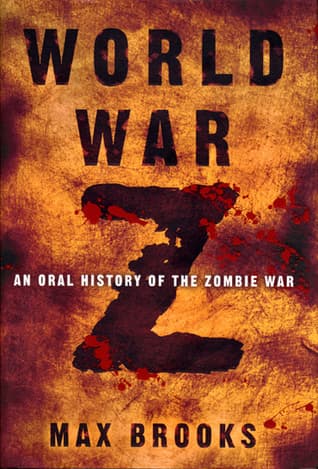
- World War Z: An Oral History of the Zombie War
Max Brooks
4.0 (440k) average on GoodreadsFantasyExplores a global catastrophe and humanity's fight for survival against an overwhelming threat.
- Angels & Demons
Dan Brown
3.9 (2.7M) average on GoodreadsThrillerA Harvard symbologist races through Rome's ancient sites, deciphering cryptic clues to unmask the Illuminati and stop a vengeful plot to destroy the Vatican with a stolen antimatter weapon.
- Gone Girl
Gillian Flynn
4.1 (2.3M) average on GoodreadsThrillerA wife's sudden disappearance on her fifth anniversary reveals a web of lies and psychological warfare, exposing the secrets within a seemingly perfect marriage.
- The Girl on the Train
Paula Hawkins
3.9 (2.1M) average on GoodreadsThrillerA woman’s fascination with a seemingly perfect couple she watches from her daily train commute leads her into a dark investigation when she witnesses something that shatters their idyllic image.
- The Da Vinci Code
Dan Brown
3.9 (1.9M) average on GoodreadsThrillerA symbologist and a cryptologist race through European landmarks, deciphering ancient codes and uncovering a conspiracy that could rewrite the foundations of Christianity.





Enjoyed the summary?
A summary gives you the shape of the book. The book itself has the detail, the examples and the voice.
Find Zoo on AmazonAs an Amazon Associate, BookBrief earns from qualifying purchases. How we're funded