

Synopsis
Covers the whole plot, including the ending.
- Difficulty
- Easy
- Pacing
- Fast
- Mood
- Epic, Brutal, Heroic, Grim, Intense
- Read it if
- You love epic tales of underdog heroism, stylized violence, and dramatic historical retellings with a focus on individual courage against overwhelming odds.
- Skip it if
- You prefer historically accurate accounts over dramatic interpretation, or are put off by extreme violence and a bleak, fatalistic tone.
300 Plot Summary
Covers the whole plot, including the ending.
The Oath and the Oracle's Warning
The story begins with King Leonidas of Sparta, a strong warrior, thinking about his training and the Spartan way. News arrives about the coming invasion by the large Persian Empire, led by King Xerxes. Leonidas talks to the Ephors, Sparta's five elders, who are influenced by the Oracle. The Oracle, a young, deformed girl, gives a prophecy saying Sparta must not go to war during the holy festival of Carneia, or the gods will be angry. Leonidas sees the Ephors' corruption and the Oracle's manipulation by Persian money. He ignores their order and decides to march with 300 of his best warriors, calling their mission a 'walk' to avoid directly breaking the law.
The March to Thermopylae
Leonidas, with his 300 Spartan guards, all fathers with sons to carry on their names, leaves Sparta. Queen Gorgo, Leonidas's wife, says goodbye, understanding the seriousness of his mission. As they march towards Thermopylae, the 'Hot Gates,' Arcadian soldiers, led by Daxos, meet them and offer support. The Arcadians are many, but not as well-trained or equipped as the Spartans, a fact Leonidas notes with gratitude and practical assessment. The combined Greek forces get ready to hold the narrow pass against the huge Persian army.
First Contact and Xerxes's Demands
At Thermopylae, Leonidas and his men set up their positions. The large Persian army soon arrives, a seemingly endless group of soldiers, beasts, and warriors from across their empire. King Xerxes, a powerful, heavily adorned figure, sends a messenger to demand Sparta's surrender, offering wealth and power for submission. Leonidas, in a famous act of defiance, kicks the messenger into the 'Pit of Death,' saying, 'This is Sparta!' He makes it clear the Spartans will not give up, setting the stage for battle and strengthening their resolve to fight to the last man for their freedom.
The First Day of Battle
The battle starts, and the Spartans, using the narrow pass to counter the Persian numbers, form a strong phalanx. They destroy the first waves of Persian infantry, including the 'slave soldiers,' with their training, discipline, and weapons. The Persians, despite their numbers, cannot break the Spartan shield wall. Leonidas and his men fight fiercely, surprising the Persian commanders. The first day ends with many Persian losses and the Spartan line holding firm, showing their strong resolve and good tactics.
The Second Day: Immortals and Beasts
On the second day, Xerxes, angry about his losses, sends in his 'Immortals' – his personal guard, feared throughout the empire. The Immortals, though strong, also fall to the Spartan's disciplined tactics and the narrow land. Xerxes then uses war beasts, including rhinos and elephants, against the Greek lines. Even these creatures are eventually beaten by the Spartans' teamwork and individual courage. Ephialtes, a deformed Spartan outcast seeking acceptance, approaches Leonidas, offering his help, but Leonidas rejects him because he cannot hold the shield wall. This decision will have serious results.
Ephialtes's Betrayal
Filled with anger and a wish for acceptance, Ephialtes, the deformed Spartan Leonidas rejected, is approached by Xerxes's commanders. Tempted by promises of wealth, women, and a uniform, Ephialtes reveals a secret goat path that goes around the main pass of Thermopylae. This path, known only to locals, would let the Persians flank the Greek forces, making their strategic advantage useless. His betrayal changes the battle, deciding the fate of Leonidas and his 300.
The Flank Attack and the Allies' Retreat
Leonidas learns that Ephialtes has betrayed them and the Persians are now using the goat path, threatening to surround the Greek forces. Seeing their position is now impossible, Leonidas decides to order the Arcadians and other Greek allies to retreat, saving their lives to fight later. He and his 300 Spartans, with a few remaining Thespians who refuse to leave, prepare for their final, glorious stand. This act allows the other Greeks to escape and tell the story of Spartan bravery back to their cities.
The Last Stand of the 300
With Persians attacking from front and rear, the 300 Spartans are surrounded. They fight with great ferocity, causing many casualties to the Persian army even in their final moments. Leonidas, though badly wounded by arrows, keeps fighting, inspiring his remaining men. In a final, defiant act, he throws his spear at Xerxes, narrowly missing him and scratching his face. The Spartans are eventually overwhelmed by the sheer number of enemies, falling one by one, but not before becoming legends.
Queen Gorgo's Plea
While the battle happens at Thermopylae, Queen Gorgo speaks to the Spartan Council. She confronts a Persian messenger who tries to belittle Leonidas's actions and demand Sparta's surrender. Gorgo gives a strong, passionate speech, reminding the council of Spartan honor, freedom, and the sacrifice made by Leonidas and his men. Her words, with the news of the heroic stand, ignite the spirit of the Spartan people and other Greek city-states, convincing them to unite and fight the Persian threat.
The Battle of Plataea
The story ends with Dilios, the one-eyed Spartan sent back by Leonidas to tell their story, speaking to a large united Greek army a year later. He tells the story of Thermopylae, focusing on the bravery and sacrifice of Leonidas and the 300. His speech strengthens the Greek forces, who are now inspired to fight for their lives, for the memory of the fallen, and for Greece's freedom. The final panels show the Greeks charging into the Battle of Plataea, ready to face the Persians and avenge the 300. This battle saw the Persian army defeated and driven from Greece.
300 Characters
King Leonidas
Protagonist
The stoic and fiercely courageous King of Sparta, leading his 300 into battle.
Leonidas is the epitome of Spartan warrior culture: disciplined, unyielding, and devoted to his city-state's freedom. He is a man of few words but immense presence, inspiring unwavering loyalty in his men. Despite the Oracle's warnings and the Ephors' corruption, he makes the strategic decision to confront the Persians at Thermopylae, understanding the symbolic importance of his stand. His leadership is characterized by a blend of tactical brilliance, raw strength, and an unbreakable will, even in the face of certain death. He values honor and freedom above all else, embodying the Spartan ideal.
Relationships: Queen Gorgo (Wife and trusted confidante); Dilios (Loyal captain and storyteller); Xerxes (Antagonist, opposing king)
Queen Gorgo
Supporting
Leonidas's strong and intelligent wife, who rallies Sparta in his absence.
Gorgo is a formidable Spartan queen, matching Leonidas in spirit and resolve. She is astute, politically savvy, and fiercely loyal to her husband and Sparta. While Leonidas fights, she navigates the treacherous political landscape back home, confronting corruption and inspiring her people. Her intelligence and unwavering courage are evident in her powerful speech to the Spartan Council, which galvanizes the city-state to fully commit to war against Persia. She is a symbol of Spartan strength, not just on the battlefield but in the heart of the polis.
Relationships: King Leonidas (Husband and political partner); Theron (Political adversary)
Dilios
Supporting
A Spartan captain, the narrator of the story, and the sole survivor of the 300.
Dilios is one of Leonidas's most trusted captains, a skilled warrior, and a gifted storyteller. He is initially part of the 300, fighting valiantly, but Leonidas orders him to return to Sparta before the final stand, tasking him with recounting their heroic sacrifice to inspire the rest of Greece. He loses an eye in battle, a physical manifestation of his experiences. His narrative frames the entire story, transforming the battle of Thermopylae from a defeat into a rallying cry for Greek unity and vengeance. He embodies the legacy of the 300.
Relationships: King Leonidas (Commander and mentor); Stelios (Fellow Spartan warrior)
Xerxes
Antagonist
The flamboyant and tyrannical 'God-King' of Persia, leading a vast army.
Xerxes is presented as the ultimate antagonist, a towering, heavily adorned figure who believes himself to be a god. He commands an immense, diverse army drawn from every corner of his vast empire, embodying tyranny and overwhelming power. He is arrogant, cruel, and initially dismissive of the Spartans, viewing them as mere barbarians. His elaborate appearance and claims of divinity contrast sharply with Leonidas's austere warrior ethos. His ultimate goal is the subjugation of all Greece, and he is enraged by Leonidas's defiance, leading to a personal vendetta against the Spartan king.
Relationships: King Leonidas (Primary adversary); Ephialtes (Betrayer and tool)
Ephialtes
Supporting
A deformed Spartan outcast who betrays his people to the Persians.
Ephialtes is a physically deformed Spartan, unable to properly hold a shield in the phalanx formation, which is crucial for a Spartan warrior. This physical limitation leads to his rejection by Leonidas, fueling deep resentment and a desperate desire for acceptance and recognition. He is easily swayed by Xerxes's promises of wealth and status, leading him to betray the secret goat path to the Persians. His act of betrayal is pivotal, directly leading to the encirclement and eventual defeat of the 300. He serves as a tragic figure, driven by his physical shortcomings and social ostracism.
Relationships: King Leonidas (Rejecting figure); Xerxes (Manipulator and temporary benefactor)
Stelios
Supporting
A fierce and loyal Spartan warrior, Dilios's close companion.
Stelios is one of the 300, a boisterous and exceptionally skilled Spartan warrior. He is often seen fighting alongside Dilios and embodies the raw, almost joyful ferocity of the Spartan fighting spirit. He is quick with a joke, even in the direst situations, and demonstrates unwavering loyalty to Leonidas and his fellow Spartans. Stelios's combat prowess and defiant attitude are highlighted throughout the battle, particularly in his memorable last stand, where he expresses pride in dying for Sparta. He represents the common Spartan soldier's bravery and dedication.
Relationships: Dilios (Close comrade-in-arms); King Leonidas (Commander)
Daxos
Supporting
The leader of the Arcadian contingent allied with the Spartans.
Daxos leads the Arcadian forces who join Leonidas at Thermopylae. While he and his men are brave, their training and discipline are clearly inferior to that of the Spartans, a fact that Leonidas subtly acknowledges. Daxos represents the broader Greek resistance, willing to fight but lacking the specialized warfare skills of the Spartans. He respects Leonidas's leadership and ultimately follows his order to retreat, ensuring that other Greek forces survive to continue the fight. He is a testament to the initial, albeit imperfect, unity against the Persian threat.
Relationships: King Leonidas (Commander and allied leader)
The Oracle
Mentioned
A young, deformed girl manipulated by the Ephors to deliver prophecies.
The Oracle is a young, beautiful, but physically deformed girl who serves as the mouthpiece for the gods in Sparta. However, she is explicitly shown to be manipulated and sexually exploited by the corrupt Ephors, who use her prophecies to serve their own interests, often influenced by Persian gold. Her pronouncements against going to war during the Carneia festival are what Leonidas defies, highlighting the theme of corruption versus true Spartan values. She is a tragic figure, a victim of those in power.
Relationships: Ephors (Abusers and manipulators)
Theron
Supporting
A corrupt Spartan politician who opposes Leonidas and Gorgo.
Theron is a member of the Spartan Council and a prominent political adversary to Queen Gorgo. He is depicted as opportunistic and likely swayed by Persian influence, actively working against Leonidas's war efforts. He attempts to discredit Leonidas's actions and undermine Gorgo's authority, representing the internal political struggles and potential for corruption within Sparta itself. His character serves to highlight the political obstacles faced by Gorgo in rallying support for the war back home.
Relationships: Queen Gorgo (Political adversary)
300 Themes
Freedom vs. Tyranny
This is the main conflict of '300.' Sparta, shown by Leonidas and his 300, stands for freedom, self-rule, and a hard but honorable way of life. Persia, under Xerxes, shows tyranny, slavery, and the control of all people by a 'god-king.' The battle at Thermopylae is a clash of ideas. Leonidas's defiance, his 'This is Sparta!' kick, and the Spartans' willingness to die rather than kneel, all show their commitment to freedom against Persian control.
“Freedom isn't free. It costs a great deal. And the 300 paid for it in blood.”
Sacrifice and Legacy
The story is about ultimate sacrifice for a cause. Leonidas and his 300 Spartans knowingly march to their deaths, not foolishly, but to gain time, inspire their countrymen, and create a legend. Their sacrifice at Thermopylae is not a defeat but a spark, bringing the rest of Greece together to fight. Dilios's role as storyteller shows the importance of legacy, ensuring the Spartans' bravery is remembered and inspires future generations and the eventual win at Plataea.
“We are but 300... but we are enough. We are Sparta!”
The Power of Storytelling and Myth
Dilios, the one-eyed Spartan, is told by Leonidas to return and tell the story of the 300. His narration frames the comic, turning a historical defeat into an epic, mythical tale. The film notes that the 'truth' of the battle is less important than the 'truth' of its impact and inspiration. The exaggerated images, the larger-than-life characters, and the dramatic telling all raise the event beyond mere history, creating a powerful myth that unites and motivates the Greek forces for their eventual win.
“A new age has begun. An age of freedom. And all will know that 300 Spartans gave their last breath to defend it!”
Discipline vs. Numbers
The contrast between the disciplined Spartan phalanx and the large, diverse, but often chaotic Persian army is a repeated theme. The Spartans, though greatly outnumbered, hold the narrow pass for days because of their training, discipline, and use of the land. This theme shows that quality and good tactics can initially overcome sheer numbers. It shows the Spartan way of life, where every man is a warrior, compared to the Persian army's use of conscripts and less unified units.
“A single Persian arrow could blot out the sun. Our battle will be fought in the shade.”
Corruption and Betrayal
Corruption is clear in the Spartan Ephors, who are swayed by Persian money and make the Oracle give prophecies against war. This shows internal weaknesses in Greek society. The clearest example is Ephialtes's betrayal, caused by his anger and wish for acceptance. His act of showing the secret path directly leads to the Spartans' end. This theme shows that outside threats are often helped by internal weaknesses and moral failures, making the Spartans' ultimate sacrifice even more moving.
“This is where we hold them! This is where we fight! This is where they die!”
Plot Devices & Literary Techniques
Limited Perspective and Unreliable Narration
The story is primarily told through the subjective lens of Dilios.
The entire narrative is framed as Dilios's recounting of the Battle of Thermopylae, addressed to the unified Greek army before the Battle of Plataea. This allows for heroic exaggeration, mythologizing, and a focus on the emotional and inspirational aspects of the story rather than strict historical accuracy. Dilios's perspective shapes the audience's understanding of events, emphasizing the Spartans' bravery and the Persians' monstrousness, effectively turning a historical event into a powerful legend meant to inspire. This narrative choice underscores the theme of storytelling's power.
Visual Hyperbole and Stylization
Exaggerated art style to convey epic scale and intensity.
Frank Miller's distinctive art style employs extreme visual hyperbole, from the towering, god-like portrayal of Xerxes to the grotesque deformities of some characters and the sheer, overwhelming scale of the Persian army. The use of highly stylized, almost sculptural figures, dramatic lighting, and stark contrasts in color (often sepia tones with splashes of blood red) amplifies the epic and mythical feel of the story. This visual language is crucial in conveying the superhuman effort and sacrifice of the Spartans, making the battle feel larger than life and more impactful than a literal depiction.
The Choke Point (Thermopylae Pass)
A critical geographical feature that equalizes the numerical disparity.
The narrow pass of Thermopylae, the 'Hot Gates,' is a crucial plot device. Its geographical constraints (a narrow strip of land between mountains and the sea) negate the Persians' overwhelming numerical advantage. This allows the 300 Spartans to form an impenetrable phalanx, holding back an army of millions for days. The pass is not just a battleground but a character in itself, dictating tactics and highlighting the Spartans' strategic genius in choosing where to make their stand. The discovery of the secret goat path, bypassing this choke point, is the ultimate turning point.
The 'Pit of Death' and 'This is Sparta!'
Symbolic acts of defiance establishing the Spartans' unyielding will.
The 'Pit of Death' is a literal and symbolic hole in Sparta into which emissaries are cast. Leonidas's act of kicking the Persian emissary into it, declaring 'This is Sparta!', is a powerful moment of defiance. It's not just a rejection of Persian demands but a declaration of Spartan identity and an unyielding commitment to freedom. This act serves as an opening salvo, setting the tone for the entire conflict and establishing Leonidas's resolute character. It's an iconic moment that encapsulates the Spartan spirit of resistance against overwhelming odds.
300 Quotes
“Spartans! Ready your breakfast and eat hearty... For tonight, we dine in hell!”
“Give them nothing! But take from them everything!”
“A new age has begun, an age of freedom, and all will know, that 300 Spartans gave their last breath to defend it!”
“The world will know that free men stood against a tyrant, that few stood against many, and before this battle was over, even a god-king can bleed.”
“Spartan, come back with your shield, or on it.”
“This is where we hold them! This is where we fight! This is where they die!”
“We are at war, my queen. And in war, we must make sacrifices.”
“The enemy outnumber us a paltry three to one, good odds for any Greek.”
“You there, Ephialtes. May you live forever.”
“We Spartans have descended from Hercules himself. Taught from birth that we are born of war.”
“The Persian is not so different from us. Speak, and he will listen.”
“Remember this day, men, for it will be yours for all time.”
“It is not the walls that make the city, but the men who defend them.”
Quiz
10 questions on the plot and the characters. Each answer comes with a short explanation.
Question 1
What is the primary reason King Leonidas gives for Sparta's refusal to submit to Xerxes' demands?
- Sparta has a larger army than Persia
- Sparta values freedom and self-governance over Persian tyranny
- Sparta has a secret alliance with Athens
- Sparta is protected by divine intervention from the gods
Show answer
B. Sparta values freedom and self-governance over Persian tyranny Leonidas explicitly rejects Xerxes' offer of wealth and power, stating that Spartans fight for freedom and their own laws, not for Persian subjugation. This reflects the book's central theme of Greek reason and liberty versus Persian tyranny.
Question 2
How many Spartan warriors does King Leonidas lead to Thermopylae?
- 100
- 300
- 500
- 1,000
Show answer
B. 300 The title and story center on exactly 300 Spartan warriors, as Leonidas selects only those with living sons to ensure their bloodlines continue, emphasizing Spartan sacrifice and duty.
Question 3
What role do the Ephors play in the story?
- They are Persian spies who betray Sparta
- They are Spartan generals who lead the army
- They are corrupt priests who forbid Leonidas from going to war
- They are Athenian diplomats who negotiate with Persia
Show answer
C. They are corrupt priests who forbid Leonidas from going to war The Ephors, depicted as grotesque and corrupt, consult the Oracle and declare that Sparta cannot go to war during the Carneia festival, forcing Leonidas to take a small force unofficially.
Question 4
Why does Leonidas kill the Persian messenger early in the story?
- The messenger insults Leonidas' wife
- The messenger demands earth and water as tokens of submission
- The messenger attempts to assassinate Leonidas
- The messenger reveals Spartan military secrets
Show answer
B. The messenger demands earth and water as tokens of submission The Persian messenger arrives with Xerxes' demand for Sparta's submission, symbolized by offering earth and water. Leonidas kills him by throwing him into a well, saying 'Then we will fight in the shade,' a defiant act that sparks the conflict.
Question 5
What is the significance of the phrase 'Come back with your shield, or on it' in the book?
- It is a Persian battle cry to intimidate enemies
- It reflects Spartan values of honor, where retreat or surrender is unacceptable
- It is a secret code used by Spartan spies
- It refers to a specific military tactic used at Thermopylae
Show answer
B. It reflects Spartan values of honor, where retreat or surrender is unacceptable This phrase, spoken by Spartan women to their warriors, means that a soldier should either return victorious with his shield (not abandoning it) or die in battle and be carried back on it, highlighting the extreme Spartan ethos of no surrender.
Question 6
How does Ephialtes betray the Spartans at Thermopylae?
- He poisons the Spartan water supply
- He leads a direct assault on the Spartan flank
- He shows the Persians a mountain path to outflank the Spartans
- He sabotages the Spartan weapons before the battle
Show answer
C. He shows the Persians a mountain path to outflank the Spartans Ephialtes, a deformed Spartan reject, approaches Leonidas offering to fight but is refused due to his inability to hold a shield properly. In revenge, he reveals the Anopaea path to Xerxes, allowing the Persians to surround the Spartans.
Question 7
What visual technique does Frank Miller use extensively in '300' to enhance the epic and stylized feel of the story?
- Full-color realistic paintings
- High-contrast, monochromatic art with limited color palettes
- Photographic collages mixed with drawings
- Abstract, non-representational imagery
Show answer
B. High-contrast, monochromatic art with limited color palettes Miller's art in '300' is known for its stark, high-contrast black-and-white style with splashes of color (like red for blood), creating a dramatic, mythic tone that emphasizes the heroic and brutal nature of the battle.
Question 8
What is the fate of the Spartan warrior Dilios after the battle of Thermopylae?
- He is killed in the final Persian assault
- He surrenders to Xerxes and becomes a Persian slave
- He is sent away by Leonidas before the final battle to tell the story
- He escapes and leads a rebellion in Sparta
Show answer
C. He is sent away by Leonidas before the final battle to tell the story Leonidas orders Dilios, who loses an eye in battle, to return to Sparta to inspire the Greeks with the tale of the 300's sacrifice. Dilios serves as the narrator in the book, framing the story.
Question 9
How does Xerxes try to persuade Leonidas to surrender during their parley?
- By offering him command of the Persian army
- By threatening to destroy all of Greece immediately
- By promising him wealth, power, and rule over all Greece as a Persian satrap
- By revealing a secret weakness in the Spartan defense
Show answer
C. By promising him wealth, power, and rule over all Greece as a Persian satrap Xerxes, depicted as a giant, god-like figure, offers Leonidas a position of great authority and luxury if he submits, contrasting Persian decadence with Spartan austerity and highlighting the theme of freedom versus tyranny.
Question 10
What historical inaccuracy does Frank Miller incorporate in '300' to emphasize the mythic quality of the story?
- The Spartans use gunpowder weapons
- The battle takes place in a fictional location
- The Persians are depicted as monstrous or inhuman, with giants and mutants in their ranks
- Leonidas survives the battle and returns to Sparta
Show answer
C. The Persians are depicted as monstrous or inhuman, with giants and mutants in their ranks Miller stylizes the Persians as grotesque, including giants, ogres, and mutants, to portray them as a 'sea of madness and tyranny' opposed to Greek 'reason and freedom,' enhancing the epic, allegorical nature rather than strict historical accuracy.
300 FAQ
What is '300' by Frank Miller about?
'300' is a graphic novel that retells the Battle of Thermopylae in 480 BC, where King Leonidas leads 300 Spartan warriors to defend Greece against the massive Persian army of Xerxes. It focuses on their heroic last stand at the narrow pass of Thermopylae, emphasizing themes of sacrifice, freedom, and Spartan valor against overwhelming odds.
Why should I read '300'?
You should read '300' for its visually striking artwork, epic storytelling, and exploration of themes like courage, sacrifice, and the clash between freedom and tyranny. Frank Miller's stylized retelling brings historical events to life with dramatic intensity, making it a compelling read for fans of historical fiction, graphic novels, and action-packed narratives.
What is the background/setting of '300'?
The story is set in ancient Greece during the Greco-Persian Wars, specifically at the Battle of Thermopylae. The setting includes Sparta, known for its rigorous military culture, and the narrow coastal pass of Thermopylae, where the Spartans make their stand against the Persian invasion led by King Xerxes.
What are the most memorable quotes from '300'?
Memorable quotes include Leonidas's defiant 'This is where we fight! This is where they die!' and his rallying cry 'Spartans! Prepare for glory!' These lines encapsulate the Spartans' unwavering resolve and the epic scale of their sacrifice against the Persian horde.
What writing style does Frank Miller use in '300'?
Frank Miller employs a terse, dramatic narrative style with minimal dialogue, emphasizing visual storytelling through bold, high-contrast artwork. The prose is often poetic and grandiose, mirroring the epic nature of the battle and the Spartan ethos of laconic speech.
What minor details add significant meaning in '300'?
Minor details like the Spartans' red cloaks symbolize their blood and unity, while the Persian emissaries' mutilation by Leonidas foreshadows the brutal conflict. The depiction of Ephialtes, a deformed Spartan reject, highlights themes of betrayal and the harsh standards of Spartan society.
What are some subtle foreshadowing moments in '300'?
Foreshadowing includes early scenes of Spartan training emphasizing death in battle as glorious, hinting at their fate. The oracle's prophecy warning against war during the Carneia festival sets up the Spartans' limited numbers, and Leonidas's calm acceptance of death foreshadows the inevitable massacre.
What unexpected character connections exist in '300'?
Unexpected connections include Ephialtes, a Spartan-born outcast, betraying the Greeks to the Persians out of rejection, and Queen Gorgo's political maneuvering in Sparta to support Leonidas's campaign, showing the interplay between homefront and battlefield.
What are unspoken character motivations in '300'?
Leonidas is motivated by a deep-seated duty to Spartan honor and freedom, beyond mere glory. Xerxes seeks to conquer Greece not just for empire, but to assert his god-like status and crush the symbol of Greek defiance. Ephialtes's betrayal stems from a desire for recognition and revenge against Spartan society.
What psychological complexities do characters exhibit in '300'?
Leonidas displays stoic resolve masking the weight of leading men to certain death, while Xerxes exhibits megalomania and insecurity, using opulence to compensate for fear of defiance. The Spartans collectively show a blend of fierce loyalty and acceptance of mortality, shaped by their harsh upbringing.
What are the major emotional turning points in '300'?
Key emotional turning points include Leonidas's decision to defy the Persian emissaries, rallying his men; the betrayal by Ephialtes, which seals the Spartans' fate; and the final stand where each Spartan falls, culminating in Leonidas's death and the somber aftermath of their sacrifice.
How do relationship dynamics evolve in '300'?
The bond among the Spartans strengthens through shared sacrifice, while Leonidas and Gorgo's relationship is tested by separation and political strife. The dynamic between Greeks and Persians shifts from diplomatic tension to all-out war, with Ephialtes's betrayal adding a layer of personal conflict to the larger battle.
Which parts of '300' remain ambiguous or open-ended?
The exact historical accuracy is stylized, leaving ambiguity in events like the oracle's influence and Ephialtes's full backstory. The ending, with the Spartans' deaths and Greece's eventual victory, is presented as legendary, leaving room for interpretation on the true impact of their sacrifice.
What are controversial scenes or decisions in '300'?
Controversial elements include the graphic violence and portrayal of Persians as monstrous or decadent, which some critics see as orientalist. Leonidas's brutal killing of Persian emissaries and the depiction of Ephialtes as a deformed traitor have sparked debate over historical representation and moral complexity.
'300' ending explained: how it ends & what it means
The story ends with all 300 Spartans, including Leonidas, killed at Thermopylae, but their sacrifice inspires Greece to unite and ultimately defeat Persia. It symbolizes the triumph of freedom and valor over tyranny, with the Spartans' legacy immortalized as a beacon of courage and resistance.
About the author
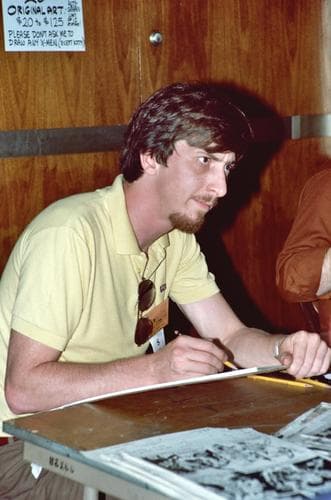
Frank Miller is an American comic book writer and artist known for his influential work in the graphic novel genre. He is best known for "Batman: Year One," "Batman: The Dark Knight Returns," and "300," which have significantly shaped modern comic storytelling and aesthetics. His contributions have earned him a prominent place in the comic book industry.
Similar books
- The Histories
Herodotus
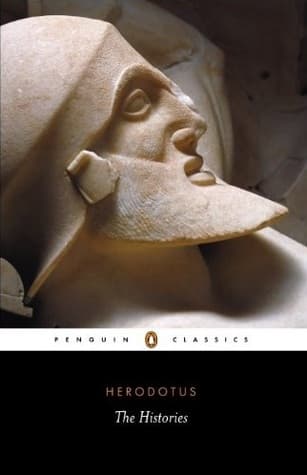
4.0 (42k) average on GoodreadsHistoryHerodotus's The Histories is the foundational ancient source for the Battle of Thermopylae, providing the raw material that Miller adapted. Herodotus, often considered the 'Father of History,' attempts to present a comprehensive, if sometimes anecdotal, account of the Greco-Persian Wars, including details about various cultures involved. While 300 draws its core narrative from Herodotus, it drastically distorts and simplifies many aspects for dramatic effect. Herodotus offers a broader, more detailed, and less biased (though still from a Greek perspective) view of the conflict and its participants, including more balanced descriptions of Persian power and culture. Miller's work is an artistic reinterpretation, prioritizing a specific aesthetic and narrative arc over the detailed historical inquiry found in Herodotus.
- Harry Potter and the Sorcerer's Stone
J.K. Rowling
4.5 (7M) average on GoodreadsFantasyRescued from a miserable life under the stairs, an orphaned boy discovers he's a wizard destined for a magical school, where he uncovers a dangerous secret tied to the dark wizard who murdered his parents.
- The Hunger Games
Suzanne Collins
4.3 (6.4M) average on GoodreadsFantasyIn a future where children fight to the death on live television, Katniss Everdeen volunteers for the arena, turning a death sentence into a fight for survival and a spark of rebellion.
- 1984
George Orwell
4.2 (3.1M) average on GoodreadsPoliticsIn a future where surveillance and thought control are absolute, a man's search for truth clashes with the Party, showing that hope can be a form of rebellion.
- Divergent
Veronica Roth
4.2 (2.9M) average on GoodreadsFantasyIn a society divided by virtues, a sixteen-year-old's difference from the norm starts a rebellion that threatens her world.
- The Hobbit, or There and Back Again
J.R.R. Tolkien
4.3 (2.9M) average on GoodreadsFantasyA comfort-loving hobbit named Bilbo Baggins is whisked away by a mischievous wizard and a band of dwarves on an unexpected journey to reclaim stolen treasure from a fearsome dragon, discovering courage and a magical ring along the way.





Enjoyed the summary?
A summary gives you the shape of the book. The book itself has the detail, the examples and the voice.
Find 300 on AmazonAs an Amazon Associate, BookBrief earns from qualifying purchases. How we're funded