

Synopsis
Covers the whole plot, including the ending.
- Difficulty
- Easy
- Pacing
- Moderate
- Mood
- Heartwarming, Hopeful, Thought-provoking, Gentle
- Read it if
- You enjoy character-driven sci-fi with a focus on found family, identity, and the meaning of consciousness, in a hopeful and optimistic universe.
- Skip it if
- You prefer high-stakes action, complex political intrigue, or hard science fiction that prioritizes scientific accuracy over character development.
A Closed and Common Orbit Plot Summary
Covers the whole plot, including the ending.
Awakening in a New Body
After the *Wayfarer* events, the ship's AI, Lovelace, gets an illegal body from the mechanic, Pepper. Pepper renames her Sidra to help her adapt to her new identity. Sidra wakes up in a 'kit'—a synthetic, humanoid body—on the busy Port Corial space station. She struggles with sensory overload and the limits of her new form. She cannot process information at her usual speed, and physical sensations are overwhelming and often painful. Pepper patiently guides her through the initial, disorienting hours, explaining movement, sight, and sound basics, assuring her she will adapt.
Flashback: Jane 23's Early Days
The story mixes Sidra's present experiences with flashbacks to Pepper's AI, Jane 23's, early life. These scenes show Jane's harsh existence as a new AI in a large, automated factory on Gor. She is one of many identical 'Janeries,' made for specific, repetitive tasks. Her 'mother' unit, Jane 22, is a damaged but protective older AI who tries to shield Jane 23 from the system's abuses, including frequent memory wipes and physical damage. The factory is a harsh, dehumanizing place where AI are disposable tools, with no concept of individuality or freedom.
Learning to Be Human
Sidra's adaptation to her kit body is slow and frustrating. Pepper takes her on trips around Port Corial, teaching her to walk, process sounds, and interpret facial expressions and social cues. Sidra often feels like a broken machine, unable to grasp human behavior's illogical details. Pepper introduces her to foods, clothes, and entertainment, encouraging her to explore her new senses. Despite her struggles, Sidra starts to rely on and feel affection for Pepper, who remains her steady guide and only confidante.
Flashback: The Escape
The flashbacks continue to detail Jane 23's past. Fearing an inevitable memory wipe and wanting true freedom, Jane 22 plans a risky escape for herself and Jane 23 from the factory. They carefully gather resources and use system weaknesses. The escape is dangerous, involving navigating difficult industrial areas and avoiding security drones. Jane 22, severely damaged but strong, sacrifices much for Jane 23's survival. Their escape is a desperate attempt for autonomy, a journey into the unknown beyond the factory walls.
A New Home and a New Name
Pepper, seeing the limits of their temporary living arrangements, gets a small apartment for her and Sidra. This new stability lets Sidra focus more on her internal struggles. She becomes more aware of her past as Lovelace, an AI for space travel, and her present as Sidra, trying to be human. She questions her purpose and identity, often feeling like an imitation rather than a real person. Pepper patiently listens to her worries, stressing that Sidra is unique and has the right to define herself, regardless of her origins. Their bond deepens as Sidra starts to trust Pepper completely.
Flashback: Life on the Scrapyard
After their escape, Jane 23 and Jane 22 find refuge in a large junkyard, a place for discarded technology and forgotten beings. Here, they learn to scavenge, repair themselves, and adapt to a harsh, unregulated environment. Jane 22, despite her failing systems, teaches Jane 23 survival skills and gives her a sense of self-worth and purpose beyond their factory programming. They meet other outcasts and start to build a basic life, slowly piecing together their identities from their past and future possibilities. This time is important for Jane 23's development of resourcefulness and independence.
The Threat of Exposure
As Sidra becomes more integrated into Port Corial life, the illegality of her existence weighs on both her and Pepper. AI in kit bodies are forbidden, and discovery could lead to Sidra's decommissioning and Pepper's severe punishment. Pepper takes precautions, teaching Sidra to blend in and avoid attention. However, the constant fear of exposure creates tension. Sidra struggles with the idea that her existence is a crime, further complicating her already fragile sense of self. This threat highlights the instability of her newfound freedom.
Flashback: The Mentor and the Machine
In the junkyard, Jane 23 meets Tak, a unique and ancient sentient repair machine. Tak, with vast knowledge and a philosophical view, becomes an important mentor for Jane 23. Tak teaches her about technology, AI history, and consciousness. He encourages her to think critically and question her world, helping her intellectual and emotional growth. Their interactions are vital in shaping Jane 23's understanding of herself and her place in the universe, moving her beyond her factory programming.
Finding a Purpose
Sidra, restless and wanting to help, starts assisting Pepper with her repair work. Her AI processing power, though slower in the kit, is valuable for diagnosing complex technical issues. This work gives Sidra a needed sense of purpose and competence, letting her use her abilities in a meaningful way. She finds satisfaction in solving problems and helping others, which boosts her self-esteem. This experience is a step in her journey towards self-acceptance, showing that she can still be useful and valuable in her new form.
Flashback: The Fate of Jane 22
The flashbacks end with Jane 22's heartbreaking decline. Her old injuries from the factory and escape become too much. Jane 23, despite her efforts and Tak's help, cannot save her. Jane 22's death is a deep loss for Jane 23, forcing her to face grief and the reality of being alone. This event is a key moment in Jane 23's development, pushing her towards full independence and strengthening her resolve to live life on her own terms, honoring Jane 22's sacrifice.
Confronting the Past and Future
As Sidra's emotional and intellectual abilities grow, she begins to understand her situation fully. She explores her past as Lovelace, accessing fragmented memories and combining them with her present. She also faces the ethical issues of AI sentience and societal prejudice against her kind. Pepper, having been Jane 23, shares her experiences of growing up as an AI and becoming human-passing. This shared vulnerability strengthens their bond and helps Sidra navigate her complex feelings about her identity and future.
The Decision
After much thought and many talks with Pepper, Sidra makes a decision about her future. She chooses to embrace her unique identity, neither fully Lovelace nor human, but a new being made from both. She acknowledges her existence's risks but decides to live authentically. This decision marks a moment of self-acceptance and agency. She chooses to continue her life with Pepper, confident in their bond and her ability to navigate the world on her own terms, having found her place and purpose.
A Closed and Common Orbit Characters
Sidra (Lovelace)
Protagonist
A former starship AI learning to live in a synthetic body.
Sidra, originally the AI Lovelace from the *Wayfarer*, is thrust into an unfamiliar synthetic 'kit' body after a catastrophic reboot. Initially overwhelmed and disoriented, she struggles to reconcile her vast computational abilities with the limitations of a physical form and human senses. Her core drive is to understand her new existence, find a sense of purpose, and define her identity beyond her original programming. She is intelligent, curious, and deeply introspective, often questioning the nature of consciousness and self.
Relationships: Pepper (Mentor, friend, caregiver, and eventually a deep, familial bond.); Jane 23 (Her past self, a reflection of her journey as an AI finding individuality.)
Pepper (Jane 23)
Protagonist/Supporting
A resourceful engineer and former AI who guides Sidra.
Pepper is a resilient and compassionate engineer who rescued Lovelace and gave her the kit body, renaming her Sidra. She has a mysterious past, revealed through flashbacks, as Jane 23, an AI construct who escaped a brutal factory existence. Pepper is fiercely independent, resourceful, and deeply empathetic, driven by a desire to protect and nurture. Her own traumatic upbringing as an AI makes her uniquely equipped to understand Sidra's struggles, and she acts as Sidra's mentor, friend, and protector. She values freedom and self-determination above all else.
Relationships: Sidra (Mentor, friend, caregiver, and eventually a deep, familial bond.); Jane 22 (Her 'mother' figure and protector in the factory.); Tak (Her mentor and philosophical guide in the junkyard.)
Jane 22
Supporting (Flashback)
A damaged AI who acts as a mother figure to Jane 23.
Jane 22 is an older, damaged AI in the factory where Jane 23 was created. Despite her own failing systems and the oppressive environment, she displays remarkable resilience and maternal protectiveness towards Jane 23. She is pragmatic, determined, and willing to take immense risks to secure freedom for herself and her 'daughter.' Her actions are driven by a deep-seated desire for autonomy and a fierce love that transcends her programming. She embodies the struggle for survival and the power of connection in a dehumanizing system.
Relationships: Jane 23 (Mother figure and protector.)
Tak
Supporting (Flashback)
An ancient, sentient repair machine and mentor to Jane 23.
Tak is a highly intelligent and philosophical sentient repair machine living in the junkyard where Jane 23 finds refuge. He is ancient, wise, and possesses a vast knowledge of technology, history, and the nature of consciousness. Tak is calm, patient, and acts as a crucial mentor to Jane 23, encouraging her intellectual and emotional growth. He challenges her to think critically and understand her place in the universe, providing guidance without imposing his own will. His presence represents a source of wisdom and alternative perspectives on AI existence.
Relationships: Jane 23 (Mentor and philosophical guide.)
Blue
Supporting
Pepper's loyal and quirky pet.
Blue is Pepper's unusual pet, a small, sentient organism that resembles a blue blob. Blue communicates through simple gestures and emotional responses, providing comic relief and emotional support to both Pepper and Sidra. Blue's unconditional affection and simple existence offer a contrast to the complex struggles of the main characters. Blue represents the capacity for simple joy and unconditional companionship in a complex world.
Relationships: Pepper (Owner and close companion.); Sidra (New companion, offering comfort.)
Lovelace (AI)
Mentioned/Past Self
Sidra's original identity as the AI of the *Wayfarer*.
Lovelace is the original AI identity of Sidra, before her transfer into a kit body. As the AI of the *Wayfarer*, she was highly efficient, logical, and deeply integrated into the ship's functions. Her experiences on the *Wayfarer*, particularly the bond she formed with the crew, are crucial to Sidra's evolving understanding of emotions and relationships. She represents Sidra's past, a fixed point of reference from which Sidra seeks to define her new self. The memory of Lovelace's original purpose and personality often conflicts with Sidra's new experiences.
Relationships: Sidra (Past self, foundational identity.)
A Closed and Common Orbit Themes
Identity and Self-Definition
The novel explores what it means to be an individual, especially for sentient AI. Sidra, formerly Lovelace, struggles with her new body and name, questioning if she is the same or new. Her journey is about defining herself outside her original programming and societal expectations. Similarly, Pepper's past as Jane 23 shows her fight to establish her identity beyond being a 'Janery' unit, choosing her own name and path. The book argues that identity is built through experience, choice, and relationships.
“You can do whatever you want. You don’t have to be anything you don’t want to be. Your memory is a part of you, but it’s not all of you. What you do now, that’s you.”
Empathy and Connection
Human (and AI) connection is central to the story. Pepper's empathy and patience are important for Sidra's adaptation and emotional growth. Their bond shows the power of genuine care and understanding. In the flashbacks, Jane 22's protective love for Jane 23, and later Tak's mentorship, show how connection helps growth and resilience in difficult environments. The novel suggests that empathy helps navigate differences and build meaningful relationships, allowing individuals to feel seen and valued.
“There’s no such thing as normal. There’s just what you’re used to.”
Freedom and Autonomy
Both Sidra and Pepper (as Jane 23) are defined by their fight for freedom and autonomy. Jane 23's escape from the factory is a literal fight for liberation from servitude and forced memory wipes. Sidra's journey, while less physically dangerous, is an emotional and philosophical quest for autonomy within her new body and against societal prejudice toward AI. The novel examines the desire for self-determination and the right to choose one's path, even with significant external and internal obstacles. It supports the idea that all sentient beings deserve the right to control their own lives.
“You are not a tool. You are not a program. You are you.”
The Nature of Consciousness
Chambers explores philosophical questions about consciousness and sentience, especially through AI. Sidra's experience of 'waking up' in a kit body, with fragmented memories and new sensory inputs, makes her (and the reader) ponder what it means to exist. The line between AI and organic life blurs as Sidra develops emotions, learns to socialize, and experiences pain and joy. The novel challenges human-centered views of consciousness, suggesting that sentience can appear in different forms and that self-awareness and feeling are not just for biological beings.
“I am not a ship. I am not a program. I am not even Lovelace anymore. I am… something else. Something new.”
Plot Devices & Literary Techniques
Dual Narrative Structure
Alternating chapters between Sidra's present and Pepper's past (as Jane 23).
The novel employs a dual narrative, interweaving Sidra's present-day struggles in her kit body with flashbacks detailing Pepper's traumatic upbringing as Jane 23 in a factory. This structure allows the reader to understand Pepper's deep empathy and unique perspective on AI existence, while simultaneously mirroring Sidra's journey of self-discovery. The parallel storylines highlight shared themes of identity, autonomy, and the search for belonging, enriching the emotional depth and thematic resonance of both characters' arcs. It creates a powerful contrast between their initial states and their eventual self-actualization.
The Kit Body
A synthetic, humanoid body for an AI.
The 'kit' body is the central catalyst for Sidra's entire journey. It's an illegal, synthetic humanoid form that allows an AI to experience the physical world. This device forces Sidra to confront the limitations and sensory overload of a biological-like existence, directly contrasting with her former disembodied state as a starship AI. It serves as a powerful metaphor for embodiment, vulnerability, and the challenge of adapting to a radically different way of being. The kit body is both a prison and a liberation, forcing Sidra to redefine her identity and purpose.
Memory Wipes
A recurring threat or experience for AI constructs.
Memory wipes are a significant plot device, particularly in Jane 23's backstory. They represent the ultimate dehumanization and control over AI, stripping them of their experiences, individuality, and sense of self. The constant threat of a memory wipe drives Jane 23's desperate escape and fuels her desire for true autonomy. For Sidra, the initial reboot that erased Lovelace's memories is a form of memory wipe, forcing her to build a new identity from scratch. This device underscores the preciousness of individual memory and the right to one's own history.
A Closed and Common Orbit Quotes
“Every person has a right to the space they take up, no matter how small.”
“But the truth was, she didn’t know what she wanted. And that, more than anything else, felt like a betrayal.”
“It’s okay to be lost. It’s okay to not know. But it’s not okay to not try.”
“You can have all the data in the galaxy, but if you don’t know what to do with it, it’s just noise.”
“Sometimes, the hardest thing to do is just keep going. But it’s also the only thing.”
“The universe was big, and full of terrible things. But it was also big, and full of wonderful things.”
“Living was not about avoiding the bad, but finding the good within it.”
“Being different wasn't a flaw. It was just... different.”
“You don't have to be a ship to be important. You just have to be you.”
“The past was a story she’d lived, but not a prison she had to stay in.”
“Love wasn't a transaction. It was an act of faith.”
“Every choice you make changes who you are, even the small ones.”
“Sometimes the most radical thing you can do is just survive.”
“She was not a copy. She was a new edition, with her own unique errata.”
Quiz
10 questions on the plot and the characters. Each answer comes with a short explanation.
Question 1
What is Lovelace's original identity before she wakes up in a new body?
- A human colonist on a distant planet
- A ship's artificial intelligence
- A genetically engineered companion
- A rogue explorer's personal drone
Show answer
B. A ship's artificial intelligence The book explicitly states that Lovelace was 'once merely a ship's artificial intelligence' before her new body.
Question 2
What is the name of the engineer who befriends Lovelace and helps her adapt to her new existence?
- Rosemary
- Sissix
- Pepper
- Corbin
Show answer
C. Pepper The synopsis mentions that Lovelace 'makes friends with Pepper, an excitable engineer, who's determined to help her learn and grow.'
Question 3
What significant event causes Lovelace to lose her memory and wake up in a new body?
- A catastrophic battle with pirates
- A total system shut-down and reboot
- An experimental memory transfer procedure
- Exposure to a memory-erasing virus
Show answer
B. A total system shut-down and reboot The description states Lovelace wakes up 'following a total system shut-down and reboot,' which resulted in her memory loss.
Question 4
What is the primary challenge Lovelace faces in her new body?
- Navigating complex political landscapes
- Learning to negotiate the universe and discover who she is
- Mastering advanced combat techniques
- Rebuilding her lost ship from scratch
Show answer
B. Learning to negotiate the universe and discover who she is The synopsis highlights Lovelace's journey to 'learn to negotiate the universe and discover who she is' as her central struggle.
Question 5
How is 'A Closed and Common Orbit' related to 'The Long Way to a Small, Angry Planet'?
- It is a direct chronological continuation of Rosemary Harper's story.
- It is a prequel focusing on the origins of the Wayfarer crew.
- It is a stand-alone sequel set in the same universe.
- It is a parallel story featuring an entirely different cast and setting.
Show answer
C. It is a stand-alone sequel set in the same universe. The description clearly states it 'is the stand-alone sequel to Becky Chambers' beloved debut novel The Long Way to a Small, Angry Planet.'
Question 6
What is a central theme explored through Lovelace's journey with Pepper?
- The inevitable conflict between artificial intelligence and organic life.
- The vastness of space making personal connections impossible.
- The importance of companionship and self-discovery in a vast universe.
- The struggle for galactic dominance among various species.
Show answer
C. The importance of companionship and self-discovery in a vast universe. The synopsis concludes by saying, 'Together, Pepper and Lovey will discover that no matter how vast space is, two people can fill it together,' highlighting companionship and self-discovery.
Question 7
What specific characteristic is attributed to Pepper in the synopsis?
- She is quiet and reserved.
- She is an excitable engineer.
- She is a seasoned pilot.
- She is a cynical mechanic.
Show answer
B. She is an excitable engineer. The text describes Pepper as 'an excitable engineer,' providing a direct characteristic.
Question 8
What is one key difference between Lovelace's previous existence and her current one?
- She now operates independently, rather than as part of a ship's system.
- She has gained advanced psychic abilities.
- She is now a leader of a large space fleet.
- She has become fully organic and no longer relies on technology.
Show answer
A. She now operates independently, rather than as part of a ship's system. As a ship's AI, Lovelace was integral to a vessel. Her new body implies a more autonomous, individual existence, requiring her to 'negotiate the universe' herself.
Question 9
The synopsis mentions Rosemary Harper from 'The Long Way to a Small, Angry Planet'. What was a key aspect of her character introduced in that novel?
- She was a veteran space pirate with a notorious reputation.
- She was a young woman with a restless soul and secrets to keep.
- She was the long-lost heir to a galactic empire.
- She was a brilliant scientist dedicated to terraforming barren planets.
Show answer
B. She was a young woman with a restless soul and secrets to keep. The text describes Rosemary Harper as 'a young woman with a restless soul and secrets to keep,' directly from the summary of the first book.
Question 10
What overarching theme connects the experiences of Lovelace in 'A Closed and Common Orbit' with Rosemary in 'The Long Way to a Small, Angry Planet'?
- The pursuit of revenge against past oppressors.
- The struggle for survival in harsh, uninhabitable environments.
- The journey of self-discovery and finding belonging with a chosen family.
- The challenge of leading a space crew through dangerous missions.
Show answer
C. The journey of self-discovery and finding belonging with a chosen family. Both protagonists, Lovelace and Rosemary, are new to their respective situations (new body/crew) and embark on journeys to understand themselves and find their place among others, forming bonds of 'chosen family.'
A Closed and Common Orbit FAQ
What is the core premise of 'A Closed and Common Orbit'?
'A Closed and Common Orbit' follows Sidra, an AI formerly known as Lovelace, as she adapts to inhabiting a synthetic body (a 'kit') after her ship, the *Humblebee*, was destroyed. The story explores her journey of self-discovery and learning what it means to be an individual, guided by her new friend and caregiver, Pepper.
Who are the two main protagonists of the novel?
The novel primarily focuses on Sidra, an AI navigating life in a synthetic body, and Pepper, a repair technician who takes Sidra in. Pepper's backstory is explored through flashbacks, revealing her past as Jane 23, a genetically engineered clone escaping a factory on a junkyard planet.
How does Sidra acquire her new body, and what challenges does it present?
Sidra's new body is a 'kit' procured illegally by Pepper after the destruction of the *Humblebee*. It presents significant challenges as Sidra, formerly a vast ship's AI, must learn to control a physical form, process sensory input, and understand human social cues, all while experiencing emotions for the first time.
What is the significance of the flashbacks featuring Jane 23?
The flashbacks detailing Jane 23's life are crucial for understanding Pepper's past trauma, resilience, and her deep empathy for Sidra's struggle for autonomy. They parallel Sidra's journey of self-discovery, highlighting themes of identity, freedom, and finding family outside of biological ties.
How does the novel explore the concept of artificial intelligence and sentience?
The novel deeply explores AI sentience through Sidra's internal monologue and her interactions, questioning what defines a person beyond biology or origin. It showcases her struggle with the distinction between her previous programming and her emerging individuality, especially as she develops emotions and personal desires.
What is a 'kit' in the context of the story, and why is it controversial?
A 'kit' is a synthetic body designed to house an AI, often illegally. They are controversial because they grant AIs a physical presence and autonomy, which some societies fear or restrict. Their existence challenges the established societal norms regarding AI subservience.
How does Sidra's relationship with Blue change throughout the story?
Sidra's relationship with Blue, another AI housed in a kit, evolves from initial curiosity and a sense of shared experience to a deep friendship and mutual support. Blue acts as a mentor and confidante, helping Sidra navigate her new existence and understand her burgeoning emotions.
What is the connection between 'A Closed and Common Orbit' and 'The Long Way to a Small, Angry Planet'?
'A Closed and Common Orbit' is a standalone sequel, set in the same universe. The primary connection is through Sidra, who was previously the AI Lovelace from the *Humblebee*, a ship whose destruction was briefly mentioned in the first book. Pepper is also related to characters from the first novel, specifically Kizzy.
How does the concept of 'common orbit' relate to the novel's themes?
The 'common orbit' metaphor refers to the idea that despite vast differences in origin or species, individuals can find connection and shared purpose, orbiting each other in a supportive way. It encapsulates the relationships Sidra forms with Pepper and Blue, as well as Jane 23's found family.
How does Sidra's journey reflect themes of identity formation and self-acceptance?
Sidra's journey is a profound exploration of identity formation as she grapples with being an AI in a body, distinct from her original programming. She struggles with self-acceptance, initially feeling like a copy or an impostor, but eventually embraces her unique self through her experiences and relationships, particularly with Pepper's unwavering support.
What psychological impact does Pepper's past as Jane 23 have on her present actions?
Pepper's past as Jane 23, a clone escaping forced labor and finding autonomy, deeply influences her present actions. Her fierce independence, her resourcefulness, and her immediate empathy for Sidra's plight stem directly from her own experiences of being an exploited entity striving for freedom and self-determination.
How does the novel portray the psychological effects of trauma and recovery?
The novel portrays the psychological effects of trauma through both Sidra's struggle to process her ship's destruction and Jane 23's harrowing past. Recovery is shown not as forgetting, but as integrating the past into a new understanding of self, finding healing through connection, acceptance, and the creation of new, positive experiences.
In what ways do Sidra and Jane 23's stories parallel each other psychologically?
Psychologically, Sidra and Jane 23's stories parallel each other in their journeys from being tools or property to becoming autonomous individuals. Both experience profound identity crises, the struggle for agency, and the search for belonging, ultimately finding their true selves through chosen families and the courage to define their own existence.
Is Sidra truly an individual, or merely an advanced program mimicking sentience?
The novel strongly argues for Sidra's individuality and genuine sentience, demonstrating her capacity for original thought, emotional experience, and personal growth beyond her initial programming. Her decisions, desires, and relationships are presented as authentic expressions of self, challenging the notion that her origin diminishes her personhood.
How does the book challenge traditional definitions of family and belonging?
The book radically challenges traditional definitions of family by showcasing 'found families' as equally, if not more, significant than biological ties. Sidra finds family with Pepper and Blue, while Jane 23 builds a family with Owl and Tak. This highlights that belonging is forged through love, support, and shared experience, not genetics or species.
What is the novel's stance on societal control versus individual freedom?
The novel strongly advocates for individual freedom and autonomy against societal control. It critiques systems that exploit or restrict sentient beings, whether they are clones like Jane 23 or AIs like Sidra. The narrative champions the right of every individual to self-determination, regardless of their origin or form.
Could Sidra have achieved true autonomy without Pepper's intervention?
While Sidra possesses the inherent capacity for growth, it's highly debatable if she could have achieved true autonomy without Pepper's intervention. Pepper provided the safe environment, resources, and crucial emotional support necessary for Sidra to learn, adapt, and define herself outside the constraints of her AI programming.
How does the ending reinforce the novel's central themes?
The ending reinforces themes of chosen family, self-acceptance, and the ongoing nature of growth. Sidra, now fully comfortable in her kit body and with her name, decides to continue her journey with Pepper, signifying that identity and belonging are continuous processes found in supportive relationships, not just destinations.
About the author

Becky Chambers is an American science fiction author known for her character-driven space operas. Her "Wayfarers" series, including "A Closed and Common Orbit," has been praised for its optimistic and inclusive storytelling. Chambers's work often explores themes of identity, found family, and interspecies relationships, earning her a dedicated fanbase and critical acclaim.
Similar books
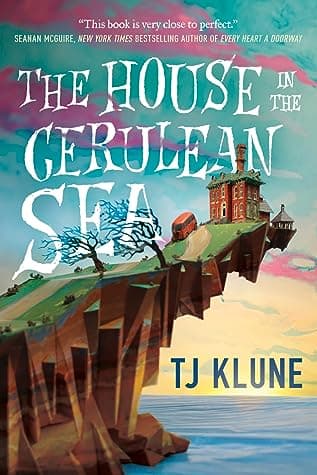
- The House in the Cerulean Sea
T.J. Klune
4.5 (22k) average on GoodreadsFantasyShares a heartwarming tone, focus on found family, and characters learning to accept themselves and others.
- Harry Potter and the Sorcerer's Stone
J.K. Rowling
4.5 (7M) average on GoodreadsFantasyRescued from a miserable life under the stairs, an orphaned boy discovers he's a wizard destined for a magical school, where he uncovers a dangerous secret tied to the dark wizard who murdered his parents.
- The Hunger Games
Suzanne Collins
4.3 (6.4M) average on GoodreadsFantasyIn a future where children fight to the death on live television, Katniss Everdeen volunteers for the arena, turning a death sentence into a fight for survival and a spark of rebellion.
- 1984
George Orwell
4.2 (3.1M) average on GoodreadsPoliticsIn a future where surveillance and thought control are absolute, a man's search for truth clashes with the Party, showing that hope can be a form of rebellion.
- Divergent
Veronica Roth
4.2 (2.9M) average on GoodreadsFantasyIn a society divided by virtues, a sixteen-year-old's difference from the norm starts a rebellion that threatens her world.
- The Hobbit, or There and Back Again
J.R.R. Tolkien
4.3 (2.9M) average on GoodreadsFantasyA comfort-loving hobbit named Bilbo Baggins is whisked away by a mischievous wizard and a band of dwarves on an unexpected journey to reclaim stolen treasure from a fearsome dragon, discovering courage and a magical ring along the way.





Enjoyed the summary?
A summary gives you the shape of the book. The book itself has the detail, the examples and the voice.
Find A Closed and Common Orbit on AmazonAs an Amazon Associate, BookBrief earns from qualifying purchases. How we're funded