
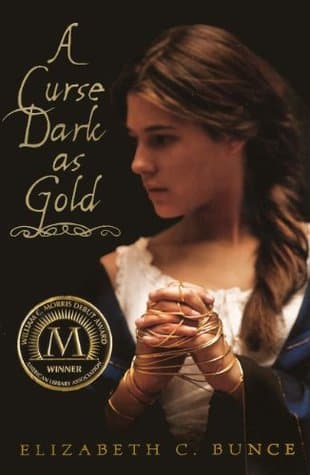
Synopsis
Covers the whole plot, including the ending.
- Difficulty
- Medium
- Pacing
- Moderate
- Mood
- Atmospheric, Suspenseful, Romantic, Determined
- Read it if
- You enjoy Rumpelstiltskin retellings with a strong, determined heroine, historical fantasy settings, and a touch of gothic romance.
- Skip it if
- You dislike fairy tale adaptations or prefer fast-paced, action-heavy plots over character-driven mysteries.
A Curse Dark as Gold Plot Summary
Covers the whole plot, including the ending.
The Miller's Mill and a Father's Legacy
Charlotte Miller, a practical and determined young woman, takes over the family's woolen mill, Golden Mill, after her father's sudden death. The mill is the lifeblood of their small town, Oakhaven, but it faces financial ruin due to an old, unpaid debt. Her overbearing Uncle Matthew arrives, threatening to sell the mill if Charlotte cannot make it profitable. This threat is worsened by local talk of a curse on the Miller family, which Charlotte has always dismissed as nonsense. Now, however, it seems to appear in a series of misfortunes, including workers leaving and supplies running low. Her younger sister, Rosie, reminds Charlotte of their family's uncertain situation.
The Arrival of Jack Spinner
As the mill's situation worsens and the debt collector, Mr. Hastings, demands payment, a mysterious and charming stranger named Jack Spinner appears in Oakhaven. He claims to be a master weaver and offers Charlotte an amazing deal: he can spin straw into gold thread, which would save the mill. Skeptical but desperate, Charlotte agrees to his terms. For his first night's work, he demands her mother's wedding ring as payment. Despite her doubts, the chance to save her family and town is too strong, and she reluctantly hands over the cherished heirloom, hoping for a miracle.
The Golden Threads and Growing Suspicion
True to his word, Jack Spinner turns bales of straw into beautiful gold thread overnight. The golden fabric revives the mill's business, bringing new orders and prosperity back to Oakhaven. However, Spinner's demands for payment increase. For the second batch of gold thread, he asks for Charlotte's silver thimble, a gift from her father. With each successful trade, Charlotte feels a growing unease. She tries to understand his methods, but he stays evasive, and his presence in the mill at night becomes a source of both relief and fear, as townspeople start to whisper about his unnatural abilities.
A Developing Romance and Deeper Bargains
Amidst the stress of the mill and Spinner's unsettling presence, Charlotte finds herself drawn to the local banker, Elias Thorne. Their shared concern for Oakhaven and Elias's kind nature offer comfort. Their romance grows, giving Charlotte a short break from her worries. Meanwhile, the mill's success demands more gold thread, and Spinner's final, frightening demand for his services is revealed: he wants Charlotte's firstborn child. Horrified, Charlotte tries to back out of the deal, but Spinner reminds her of her desperate promises, leaving her in an agonizing problem.
Unraveling the Curse's History
Determined to break free from Spinner's terrible bargain, Charlotte begins to research her family's history and the supposed curse on the Golden Mill. She looks through old ledgers, family journals, and town records, searching for any mention of similar deals or misfortunes. Her investigation reveals a pattern of strange events and sudden prosperity followed by ruin in previous generations of Millers. She learns that her ancestors also faced impossible debts and made desperate bargains, and that the 'curse' might be a result of these forgotten pacts, passed down through the family line.
The Truth of the Miller Curse
Charlotte's research leads her to realize that the 'curse' is not a supernatural problem but a series of bargains made with a fey creature, a 'Spinner,' who has targeted the Miller family for generations. This creature, Jack Spinner, is a trickster who grants impossible wishes in exchange for terrible prices, often asking for the family's children or their most cherished possessions. She discovers that her own father had made a bargain to save the mill, and the current debt was a result of that unresolved pact. The gold thread is not just spun; it is woven with the essence of the bargains themselves.
Rosie's Danger and a Desperate Plan
As Charlotte puts the truth together, she realizes that her younger sister, Rosie, is in great danger. Spinner's interest in Rosie becomes clear, as he subtly tries to charm and manipulate the innocent girl. Charlotte deduces that if she cannot fulfill her part of the bargain, Spinner might turn his attention to Rosie as a substitute. This realization strengthens Charlotte. She knows she must find a way to defeat Spinner and break the cycle of the curse, not just for herself, but to protect her sister and ensure no future Miller ever falls prey to his schemes again. She begins to form a desperate plan.
Confrontation and a Battle of Wits
Armed with her new knowledge of fey lore and her family's history of bargains, Charlotte confronts Jack Spinner. She uses what she learned about his true nature and the specific rules governing his magic. She challenges him, not with force, but with a battle of wits, trying to find a loophole in his contract. She learns that his power is tied to human fear and desperation and that he can only claim what is freely given or promised. She also understands that knowing his true name, though never explicitly stated, gives her some power over him.
The Price of Freedom
During the tense confrontation, Charlotte proposes a new bargain to Jack Spinner. Instead of her firstborn child, she offers him something else of great value, something she knows he wants and that would truly break the curse's hold: the mill itself, but on her terms. She negotiates, using her understanding of fey contracts to ensure that this final bargain will sever all ties between Spinner and the Miller family forever. This final act of defiance and sacrifice is Charlotte's desperate attempt to reclaim her family's destiny and free Oakhaven from its old burden, even if it means losing her beloved Golden Mill.
Breaking the Curse and New Beginnings
Through a clever use of fey law, Charlotte outwits Jack Spinner. The exact details of the final bargain are unclear, but it breaks Spinner's power over the Millers. He disappears, and the golden thread he spun turns back into straw, but the mill itself remains, though in a simpler state. The town understands the true nature of the 'curse' and the sacrifices made. Charlotte, having shown her strength and intelligence, is free. She embraces her future with Elias Thorne, looking forward to rebuilding the Golden Mill through honest hard work, free from the dark shadow of old bargains and curses.
A Curse Dark as Gold Characters
Charlotte Miller
Protagonist
The determined and practical manager of Golden Mill.
Charlotte is a strong-willed, intelligent, and fiercely loyal young woman who takes on the immense responsibility of her family's woolen mill after her father's death. Initially skeptical of the 'curse,' she is driven by a deep sense of duty to her family and the town of Oakhaven. She is pragmatic and resourceful, but also possesses a compassionate heart. Her journey forces her to confront her beliefs, challenge tradition, and make incredible sacrifices to protect those she loves. She values hard work, honesty, and community.
Relationships: Jack Spinner (Adversary, contractual partner); Elias Thorne (Love interest, ally); Rosie Miller (Younger sister, her primary motivation for sacrifice); Uncle Matthew (Antagonistic family member, presses for mill's sale)
Jack Spinner
Antagonist
A charming and dangerous fey creature who preys on desperation.
Jack Spinner is a captivating and enigmatic figure, a fey creature who thrives on human desperation and broken promises. He appears charming and helpful, offering miraculous solutions, but his true nature is that of a trickster who demands terrible prices. He is ancient, patient, and deeply knowledgeable about the nuances of human desire and fey contracts. His motives are not purely malicious, but rather a predatory adherence to the rules of his kind, seeking payment for his 'gifts' and perpetuating a cycle of bargains. He embodies the seductive danger of shortcuts and easy solutions.
Relationships: Charlotte Miller (Contractual adversary); Rosie Miller (Potential future victim)
Elias Thorne
Love Interest / Supporting
The kind and supportive local banker who falls for Charlotte.
Elias Thorne is the young, earnest, and principled local banker. He is genuinely concerned for the welfare of Oakhaven and its people, including Charlotte and her family. He represents stability, honesty, and a grounded perspective, contrasting sharply with Jack Spinner's fantastical offers. He is observant, intelligent, and supportive of Charlotte, offering her emotional solace and practical advice. His affection for Charlotte grows throughout the story, and he becomes a steadfast ally in her fight against the curse.
Relationships: Charlotte Miller (Love interest, ally); Mr. Hastings (Business associate (debt collector))
Rosie Miller
Supporting
Charlotte's innocent and vulnerable younger sister.
Rosie is Charlotte's younger sister, portrayed as innocent, sweet, and somewhat naive. She is a constant reminder of Charlotte's familial responsibilities and the stakes involved in saving the mill. Her vulnerability makes her a target for Jack Spinner, intensifying Charlotte's resolve to break the curse. Rosie often sees the world with a childlike wonder, which sometimes makes her susceptible to Spinner's charm, unknowingly putting her in danger. Her presence highlights the generational aspect of the curse and the need for Charlotte to end it permanently.
Relationships: Charlotte Miller (Older sister, protector); Jack Spinner (Potential victim)
Uncle Matthew
Supporting
Charlotte's overbearing uncle, focused on profits over legacy.
Uncle Matthew is Charlotte's paternal uncle who arrives after her father's death, representing the pragmatic, often ruthless, business world. He is primarily concerned with the financial solvency of the Golden Mill and is quick to suggest selling it off if it doesn't turn a profit. He embodies the pressure Charlotte faces from external forces, pushing her towards desperate measures. He is skeptical of Charlotte's abilities and dismissive of the family's legacy, focusing solely on the bottom line. He serves as an antagonistic force, albeit one driven by more mundane concerns than Jack Spinner.
Relationships: Charlotte Miller (Niece, business rival); Mr. Hastings (Business acquaintance)
Mr. Hastings
Mentioned
The stern and persistent debt collector.
Mr. Hastings is the town's debt collector, representing the immediate financial pressure on the Miller family. While not a major character, his persistent demands for payment highlight the dire situation of the Golden Mill and serve as a catalyst for Charlotte's initial desperation, which leads her to Jack Spinner. He embodies the unforgiving nature of financial obligations and the real-world consequences of the mill's failing fortunes.
Relationships: Charlotte Miller (Debtor); Elias Thorne (Business associate)
A Curse Dark as Gold Themes
The Price of Desperation and Shortcuts
This theme explores the dangerous appeal of quick fixes and the high cost of desperate bargains. Charlotte, driven by the mill's impending ruin and her family's legacy, turns to Jack Spinner, believing his magic is her only option. The golden threads he spins symbolize the superficial attraction of instant wealth, but each thread comes with a hidden, rising price, ending with the demand for her firstborn child. This shows how seemingly easy solutions can lead to much bigger, unforeseen problems, as seen in the repeated mistakes of previous Miller generations who also made similar pacts to avoid hard work or financial ruin.
“There's always a price, Miller. Always.”
Legacy vs. Responsibility
The novel explores the burden and privilege of inherited legacy. Charlotte is weighed down by her father's death and the failing Golden Mill, which is not just a business but the heart of Oakhaven and a symbol of her family's identity. She feels a great responsibility to uphold her family's name and save the mill, even if it means sacrificing her own future. The 'curse' itself is a dark legacy, a series of unfulfilled bargains passed down through generations, forcing Charlotte to confront not only her present challenges but also the unresolved mistakes of her ancestors. Her goal is to break this cycle, ensuring a healthier legacy for Rosie and future Millers.
“The mill was more than just wood and stone; it was the breath in Oakhaven's lungs, and it was dying.”
The Power of Knowledge and Wits
Charlotte's journey shows the power of intellect and research. Initially overwhelmed by magical forces, she refuses to be a passive victim. Instead, she diligently researches her family's history, looking through old books, ledgers, and local stories to understand the true nature of the 'curse' and Jack Spinner. Her intellectual curiosity and determination to uncover the truth give her the knowledge she needs to outsmart a powerful fey creature. It is not brute strength or magic that saves her, but her ability to analyze, learn, and use the rules of fey contracts against Spinner, proving that understanding is a powerful weapon against the unknown.
“Knowing the rules, even rules you didn't invent, was half the battle.”
Love, Sacrifice, and Community
The theme explores how personal love and sacrifice connect with the welfare of an entire community. Charlotte's love for her family—her father's memory, her sister Rosie—and her growing romantic love for Elias Thorne are strong motivators. However, her ultimate sacrifice is not just for her immediate family; it is to save Oakhaven, which relies on the Golden Mill. Her willingness to give up her firstborn, and later to risk the mill itself, shows a deep, selfless commitment to the greater good. This theme emphasizes that true love often requires sacrifice, and that a strong community is built on individuals' willingness to look beyond their own immediate desires for the benefit of all.
“Some things are worth more than gold, even if you can't hold them in your hand.”
Plot Devices & Literary Techniques
The Golden Mill
A symbolic setting that represents family legacy and community life.
The Golden Mill is more than just a setting; it's a central symbol in the story. It represents the Miller family's legacy, their prosperity, and their connection to the town of Oakhaven. Its decline signifies the family's troubles, and its revival through Jack Spinner's magic highlights the deceptive nature of easy wealth. Ultimately, it becomes the focal point of the curse, the bargaining chip, and the symbol of Charlotte's struggle to reclaim her family's destiny. The mill's fate is intrinsically linked to the fate of the Miller family and the entire community.
The Curse
A generational burden and a metaphor for unresolved past mistakes.
The 'curse' on the Miller family is initially presented as a supernatural affliction but is revealed to be a series of unfulfilled, generational bargains made with a fey creature. It functions as a plot device to drive Charlotte's investigation and desperation. It symbolizes the long-term consequences of making desperate choices and the burden of inherited debt, both literal and metaphorical. By unraveling the true nature of the curse, Charlotte gains the knowledge needed to break the cycle, transforming it from a mystical threat into a solvable problem through understanding and wit.
Straw into Gold
A magical ability that serves as a deceptive solution and a source of conflict.
The magical ability to spin straw into gold thread is the primary catalyst for the plot. It represents the seductive power of instant wealth and the temptation of shortcuts. While it temporarily solves the Miller family's financial woes, it comes with an escalating, sinister price, driving the central conflict between Charlotte and Jack Spinner. This device is a direct reference to the Rumpelstiltskin fairy tale, signaling to the reader that such magical solutions are rarely without dire consequences and that a hidden bargain is always at play.
The Bargain/Contract
A fey agreement that binds characters and drives the narrative's tension.
The bargain or contract is the fundamental mechanism through which Jack Spinner operates and the entire plot unfolds. It's a key element of fey lore, where promises, even unstated ones, hold immense power. Charlotte's agreement with Spinner, initially for her mother's ring, then a thimble, and finally her firstborn child, creates escalating tension and forces her to confront impossible choices. The intricacies of these contracts and the search for loopholes become central to Charlotte's strategy to defeat Spinner, highlighting the power of words and agreements in the story's magical framework.
A Curse Dark as Gold Quotes
“There are some things in this world that are not meant to be understood, only endured.”
“Gold is a hard master. It buys much, but it costs more.”
“A bargain is a bargain, and a promise is a promise, even when made to a monster.”
“Fear is a poison, Liesl. It twists what is good and makes it seem evil.”
“Sometimes the only way to save something is to let it go.”
“The past is a heavy cloak, but it doesn't have to smother you.”
“What you seek may not be what you find, and what you find may not be what you need.”
“Love, true love, is not about what you gain, but what you are willing to lose.”
“There is a difference between being strong and being unbreakable.”
“Every choice has a price, and sometimes that price is paid in blood.”
“The greatest magic is not in making gold, but in knowing what to do with it once it is made.”
“Even the darkest curse can be broken, if you are brave enough to face its heart.”
“Sometimes the monster is not what you expect, and sometimes it's yourself.”
“Hope is a fragile thing, but it is also the strongest.”
Quiz
10 questions on the plot and the characters. Each answer comes with a short explanation.
Question 1
What is the primary product of the Miller family's mill?
- Linen
- Wool
- Silk
- Cotton
Show answer
B. Wool The Miller family's business is a woolen mill, producing wool.
Question 2
What is the name of the stranger who offers to turn straw into gold thread for Charlotte?
- Julian Thorne
- Jack Spinner
- Silas Blackwood
- Arthur Finch
Show answer
B. Jack Spinner The mysterious stranger who offers his unique service is named Jack Spinner.
Question 3
What is the initial payment Jack Spinner demands for his first service of turning straw into gold thread?
- Charlotte's locket
- A lock of Charlotte's hair
- Her mother's ring
- A promise of future service
Show answer
C. Her mother's ring For his first bargain, Jack Spinner asks for Charlotte's mother's ring.
Question 4
After her father's death, what is one of the immediate problems Charlotte faces regarding the mill?
- A fire destroys a section of the mill
- Many workers begin to depart
- The river that powers the mill dries up
- A rival mill opens nearby, stealing business
Show answer
B. Many workers begin to depart The bad luck after her father's death includes departing workers, which contributes to the mill's decline.
Question 5
Which character does Charlotte develop a romantic relationship with over the course of the story?
- Jack Spinner
- Her overbearing uncle
- The local banker
- A traveling merchant
Show answer
C. The local banker The synopsis explicitly mentions Charlotte being drawn into a romance with the local banker.
Question 6
What is the central 'curse' that Charlotte initially scoffs at but later must confront?
- A curse on her family's land that prevents crops from growing
- A curse that causes all the gold her family acquires to disappear
- A curse specifically on her family's woolen mill
- A curse that prevents any Miller daughter from marrying
Show answer
C. A curse specifically on her family's woolen mill The core conflict revolves around a curse on her family's woolen mill, which Charlotte initially disbelieves.
Question 7
What is the ultimate goal Charlotte is trying to achieve by unraveling the truth of the curse and making bargains?
- To gain immense personal wealth and leave the town
- To impress Jack Spinner and win his affection
- To save the community and the mill that holds it together
- To expose her overbearing uncle's misdeeds to the authorities
Show answer
C. To save the community and the mill that holds it together Charlotte's motivation is to save her community and the mill, which is vital to its existence.
Question 8
The story is described as a retelling of which classic fairy tale?
- Cinderella
- Rumpelstiltskin
- Sleeping Beauty
- Beauty and the Beast
Show answer
B. Rumpelstiltskin The premise of turning straw into gold thread for a price is directly inspired by the fairy tale Rumpelstiltskin.
Question 9
What significant personal loss does Charlotte experience that triggers the onset of the 'bad luck' for the mill?
- The death of her mother
- The loss of her childhood home to debt
- The death of her father
- The betrayal by a close friend
Show answer
C. The death of her father The synopsis explicitly states that 'after her father's death, the bad luck piles up,' indicating this as the catalyst.
Question 10
Beyond financial woes, what does Charlotte's overbearing uncle represent as a challenge to her in managing the mill?
- A source of magical interference
- A romantic rival for the banker's affection
- An obstacle to her authority and decision-making
- A hidden ally who secretly helps her
Show answer
C. An obstacle to her authority and decision-making An 'overbearing uncle' typically implies someone who tries to control or dictate affairs, thus acting as an obstacle to Charlotte's leadership.
A Curse Dark as Gold FAQ
What is the central conflict Charlotte Miller faces at the beginning of the story?
Charlotte initially faces the imminent collapse of her family's woolen mill after her father's death. This includes mounting debts, dwindling workers, and the oppressive influence of her Uncle Miller, all threatening to destroy the business that is the lifeblood of her town.
Who is Jack Spinner and what is his initial offer to Charlotte?
Jack Spinner is a mysterious stranger who appears offering a miraculous solution to Charlotte's financial woes. He claims he can spin straw into gold thread, and his initial price for this service is her late mother's wedding ring, which Charlotte reluctantly gives him.
How does the 'curse' on the mill manifest itself before Spinner's arrival?
The 'curse' manifests as a series of misfortunes that plague the Miller family and the mill, including unexplained accidents, failing machinery, and a general air of bad luck that intensifies after Charlotte's father dies. This bad luck leads to workers leaving and the mill's productivity plummeting.
What role does the local banker play in Charlotte's life and the story?
The local banker, Frederick, initially represents the cold, hard reality of Charlotte's financial situation, holding the mill's mortgage. However, he also develops a romantic interest in Charlotte, offering her support and a potential escape from her desperate bargains with Spinner, complicating her choices.
What is the ultimate goal Charlotte is trying to achieve by the end of the book?
Charlotte's ultimate goal is to break the curse on the Miller family and the mill, save her community from economic ruin, and free herself and her family from Jack Spinner's manipulative bargains. She seeks to restore the mill's prosperity through legitimate means.
What is the true nature of Jack Spinner's magic, and how does it relate to the mill's history?
Jack Spinner's magic is not true creation but a parasitic transformation, turning existing materials into gold by consuming something precious in return. His magic is intrinsically linked to the mill's past, as he is revealed to be the embodiment of the curse itself, a malevolent entity feeding on the Miller family's desperation through generations.
How do the 'bargains' with Spinner escalate, and what do they ultimately demand from Charlotte?
The bargains with Spinner escalate from physical objects like a ring to more abstract and deeply personal sacrifices. He demands Charlotte's firstborn child as the ultimate price for his services, revealing the true, sinister nature of his agreements and the ancient pact with her family.
Are there any clues early in the story that hint at Spinner's true identity or the nature of the curse?
Early clues include the unusual speed and secrecy of Spinner's work, his unnatural appearance, and the way the 'gold' thread feels strangely cold or lifeless. The historical accounts of the mill's prosperity always being tied to some 'lucky' but unexplained event also hint at his long-standing involvement.
What is the significance of the Miller family's heirloom ring beyond being Spinner's initial payment?
The heirloom ring, initially a payment, symbolizes Charlotte's connection to her mother and her family's legacy, and its loss marks her first step into Spinner's trap. It also hints at the cyclical nature of the curse, suggesting previous generations might have made similar sacrifices.
How does Charlotte's initial skepticism about the curse evolve throughout the story?
Charlotte begins as a pragmatic skeptic, dismissing the curse as superstition. As she witnesses the mill's decline and experiences Spinner's 'magic,' her skepticism erodes, replaced by a growing dread and then a fierce determination to understand and break the very real supernatural threat.
Analyze Charlotte's internal struggle between duty to her family/community and her personal desires (e.g., romance with Frederick).
Charlotte is torn between her crushing duty to save the mill and her personal longing for a normal life and a relationship with Frederick. Her choices with Spinner are driven by duty, but her heart pulls her towards Frederick, creating a profound conflict between self-sacrifice and personal happiness.
How does the pressure of leadership and responsibility impact Charlotte's decision-making?
The immense pressure of leading the mill and being responsible for the town's livelihood forces Charlotte into desperate decisions. This pressure makes her vulnerable to Spinner's offers, as she prioritizes the community's survival above her own well-being and common sense.
What psychological toll do the escalating bargains take on Charlotte?
The escalating bargains take a severe psychological toll on Charlotte, leading to increasing isolation, paranoia, and a sense of entrapment. She experiences guilt, fear for her future, and the crushing burden of a secret that separates her from those she loves, including Frederick.
How does the book explore themes of greed and desperation through the Miller family's history?
The book explores greed and desperation by showing how the Miller family, through generations, succumbed to the temptation of easy wealth offered by Spinner. Their desperation to maintain prosperity led them into a cycle of increasingly costly bargains, highlighting the corrosive nature of unchecked ambition.
What is the author's message about the true cost of 'easy' solutions or shortcuts?
The author's message is that 'easy' solutions, especially those with hidden costs, are never truly free and often lead to greater suffering. Spinner's gold thread offers immediate relief but demands a terrifying price, illustrating that genuine prosperity requires hard work, integrity, and ethical choices.
How does the setting of a woolen mill in a small town contribute to the story's themes?
The woolen mill setting emphasizes themes of industry, community interdependence, and the value of honest labor. Its decline highlights the impact of economic hardship on a close-knit town, making Charlotte's fight to save it feel deeply personal and communal, contrasting with Spinner's unnatural 'gold'.
Is the ending truly a 'happy ever after,' or does it leave lingering questions about the future of the Miller family or the town?
While the ending offers a resolution to the immediate threat of Spinner, it implies that the Miller family must now rebuild through honest labor, without shortcuts. It suggests a future of hard-won prosperity, but also a lingering awareness of their past struggles and the vigilance required to avoid similar temptations.
How does Charlotte's journey challenge traditional fairy tale tropes, particularly the 'damsel in distress' and 'magical helper' archetypes?
Charlotte challenges the 'damsel in distress' by actively seeking solutions and fighting her own battles, rather than waiting to be rescued. Spinner, initially appearing as a 'magical helper,' is revealed to be the villain, subverting the trope and forcing Charlotte to rely on her own ingenuity and courage.
About the author
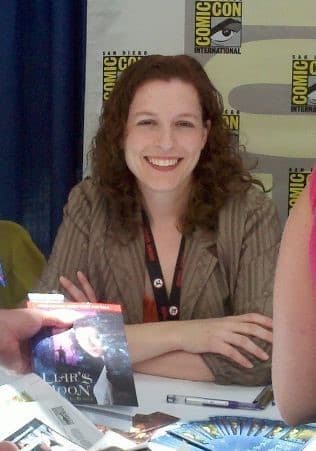
Elizabeth C. Bunce is an author known for her work in fiction, particularly for her novel "A Curse Dark as Gold," which explores themes of magic and folklore. Her writing often incorporates elements of fantasy and historical settings, appealing to readers who enjoy richly woven narratives.
Similar books
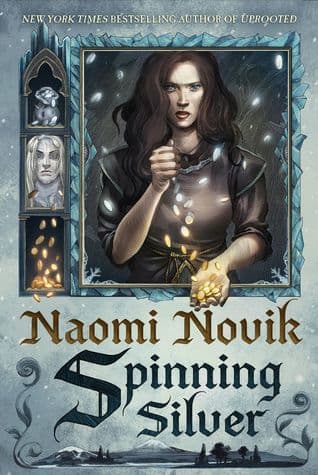
- Spinning Silver
Naomi Novik
4.2 (75k) average on GoodreadsFantasyFairy tale retelling with a strong female protagonist and a magical bargain.
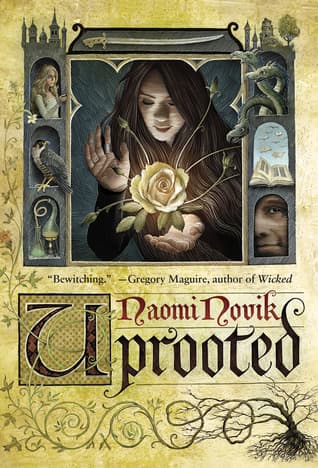
- Uprooted
Naomi Novik
4.1 (167k) average on GoodreadsFantasyFantasy story with a strong magical element, a protective male figure, and a cursed land.
- The Bear and the Nightingale
Katherine Arden
4.1 (119k) average on GoodreadsFantasyHistorical fantasy with folklore elements and a heroine fighting against supernatural forces.
- Harry Potter and the Sorcerer's Stone
J.K. Rowling
4.5 (7M) average on GoodreadsFantasyRescued from a miserable life under the stairs, an orphaned boy discovers he's a wizard destined for a magical school, where he uncovers a dangerous secret tied to the dark wizard who murdered his parents.
- The Hunger Games
Suzanne Collins
4.3 (6.4M) average on GoodreadsFantasyIn a future where children fight to the death on live television, Katniss Everdeen volunteers for the arena, turning a death sentence into a fight for survival and a spark of rebellion.
- 1984
George Orwell
4.2 (3.1M) average on GoodreadsPoliticsIn a future where surveillance and thought control are absolute, a man's search for truth clashes with the Party, showing that hope can be a form of rebellion.




Enjoyed the summary?
A summary gives you the shape of the book. The book itself has the detail, the examples and the voice.
Find A Curse Dark as Gold on AmazonAs an Amazon Associate, BookBrief earns from qualifying purchases. How we're funded