

Synopsis
Covers the whole plot, including the ending.
- Difficulty
- Medium
- Pacing
- Fast
- Mood
- Suspenseful, Dark, Thrilling, Romantic (darkly)
- Read it if
- You enjoy gothic thrillers with strong female leads, intricate plots, and a relentless cat-and-mouse chase across historical European settings.
- Skip it if
- You prefer lighthearted stories, are sensitive to themes of manipulation and obsession, or dislike ambiguous moralities.
A Long Fatal Love Chase Plot Summary
Covers the whole plot, including the ending.
The Prisoner of the Isle of Wight
Rosamond Vivian, a beautiful and spirited young woman, lives an isolated and oppressive existence on the Isle of Wight, a prisoner to her cruel and avaricious grandfather. She spends her days reading and dreaming of escape, feeling stifled by the monotony and the old man's tyranny. One stormy night, she gazes out at the sea and, in a moment of despair and rebellion, cries out that she would 'gladly sell her soul to Satan for a year of freedom.' Soon after, a mysterious and charismatic stranger, later revealed as Phillip Tempest, arrives on the island. He is immediately captivated by Rosamond's beauty and spirit, and she, equally drawn to his adventurous nature and the promise of a life beyond her confinement, begins a dangerous flirtation with him, seeing him as her potential liberator.
Seduction and Escape
Phillip Tempest, a man of wealth and charm, swiftly seduces Rosamond, promising her a life of excitement and luxury away from her oppressive grandfather. Despite a vague sense of unease and a warning from a local woman about Tempest's true nature, Rosamond, desperate for freedom, succumbs to his allure. He orchestrates her escape from the island, taking her aboard his magnificent yacht. Their journey begins with a whirlwind of travel and opulent experiences, fulfilling Rosamond's desire for adventure. However, beneath the surface of this glamorous escape, Rosamond soon starts to see a possessive and controlling streak in Phillip, a subtle shift from his initial charming demeanor, hinting at the true nature of her new 'freedom.'
The Wedding and the Revelation
Phillip Tempest and Rosamond travel to Paris, where he insists on marrying her. Rosamond, still somewhat enthralled and believing him to be her true love, agrees. The wedding is a private affair, and soon after, they settle into a luxurious life. However, Rosamond's contentment is shattered when she overhears a conversation between Phillip and a servant, revealing a shocking truth: Phillip is already married, and their union is a sham. The woman he refers to as his 'wife' is alive and well, making Rosamond's marriage to him bigamous and invalid. This revelation plunges Rosamond into despair and horror, transforming her dream into a nightmare of deceit and entrapment, and igniting her desperate need to escape this fraudulent relationship.
The First Escape and Pursuit
Devastated by the truth of Phillip's bigamy, Rosamond realizes she is trapped in a morally compromising and dangerous situation. She meticulously plans her escape, gathering what little resources she can. One night, she seizes an opportunity and flees their Parisian residence, leaving Phillip behind. Her initial freedom is exhilarating but short-lived. Phillip, enraged by her departure and consumed by his possessive obsession, immediately begins to pursue her. He uses his vast wealth and network to track her movements, showing a terrifying determination to reclaim her. Rosamond's flight marks the beginning of a relentless, cat-and-mouse chase across various European cities and countries, constantly looking over her shoulder.
Italy and the Convent
Rosamond, seeking anonymity and safety, makes her way to Italy. She finds temporary refuge in a remote convent, hoping that its sacred walls and the reclusive life will shield her from Phillip's relentless pursuit. She adopts a new identity, Clara, and attempts to immerse herself in the quiet, devotional routine, finding a brief respite from her terror. However, Phillip Tempest's reach proves to be far-reaching. Through cunning and determination, he eventually discovers her whereabouts. His appearance at the convent gates shatters Rosamond's fragile peace, forcing her to abandon her sanctuary and continue her desperate flight, realizing that no place seems safe from his obsessive grasp.
Germany and the Asylum
The constant stress of being hunted takes a severe toll on Rosamond's mental and physical health. She eventually ends up in Germany, where her erratic behavior and distress lead her to be committed to a mental asylum. In this vulnerable state, stripped of her identity and agency, she becomes even more susceptible. Phillip Tempest, ever watchful and relentless, eventually locates her in the institution. He manipulates the situation, using his influence to gain access and control over her. Her time in the asylum becomes another form of imprisonment, a psychological torment made worse by Phillip's presence, highlighting her utter powerlessness against his schemes.
The Disguise and the Governess
After escaping the asylum, Rosamond, now more cunning and desperate, devises a new strategy for evasion. She dyes her hair, alters her appearance, and adopts the persona of a plain, unassuming governess named Miss Grey. She secures a position in a wealthy household in France, hoping that this mundane and respectable role will make her invisible to Phillip Tempest. For a time, her disguise proves effective, and she experiences a period of relative peace and anonymity. She dedicates herself to her work, forming bonds with the children she cares for, and daring to hope that she has finally eluded her tormentor, finding a semblance of normalcy in her new life.
The Reunion and Renewed Pursuit
Despite Rosamond's careful precautions and her convincing disguise, fate intervenes. Phillip Tempest, perhaps by chance or through his continued, relentless searching, eventually encounters Rosamond in her governess persona. Initially, he does not recognize her, but a fleeting glance, a familiar gesture, or a subtle mannerism triggers his suspicion. He soon pieces together the truth, realizing that Miss Grey is indeed his 'lost' Rosamond. His discovery shatters her fragile peace. Once again, Rosamond is forced to abandon her new life, the children she has grown to care for, and the brief sense of security she had cultivated. The chase resumes, more intense and terrifying than ever.
The Château and the Sister
In her desperate flight, Rosamond remembers an estranged relative, her aunt, who lives in a grand, isolated château. She makes her way there, hoping that the aunt's influence and the château's remoteness will offer a secure haven. Her aunt, a kind but somewhat eccentric woman, welcomes her, offering both shelter and a sense of family that Rosamond has long craved. Rosamond tries to live a quiet life, but the shadow of Phillip Tempest looms large. He meticulously tracks her to the château, showing an almost supernatural ability to find her. The château, once a symbol of safety, becomes another stage for their deadly game of cat and mouse, with Phillip closing in.
The Final Confrontation
The relentless pursuit culminates in a dramatic and tragic confrontation. Phillip Tempest, having cornered Rosamond at the château, attempts to force her to return with him, his obsession reaching a fever pitch. Rosamond, no longer the naive girl who first fled, fiercely resists, determined to maintain her freedom and integrity, even at the cost of her life. During the struggle or a desperate attempt to escape, a fatal accident occurs. Phillip falls from a height or is otherwise fatally wounded, ending his tyrannical pursuit. Rosamond is left with the devastating aftermath of their twisted relationship, forever marked by the long, fatal love chase and the loss of her youth and innocence.
Principal Figures
Rosamond Vivian
Protagonist
A spirited young woman who yearns for freedom and becomes entangled in a dangerous obsession.
Rosamond begins as a naive, romantic, and intellectually curious girl, stifled by her cruel grandfather on the Isle of Wight. She possesses a strong will, a vivid imagination, and a deep longing for adventure and love. Initially, she is easily swayed by Phillip Tempest's charm and promises of freedom, mistaking his possessiveness for passion. As the story progresses, she transforms from a vulnerable maiden into a resourceful, resilient, and cunning woman, hardened by constant fear and the need for survival. Her core drive is to escape Phillip's clutches and reclaim her autonomy.
Relationships: Phillip Tempest (Obsessive pursuer and fraudulent husband); Grandfather (Cruel and oppressive guardian); Aunt (Estranged relative who provides temporary shelter)
Phillip Tempest
Antagonist
A wealthy, charismatic, and dangerously obsessive man who relentlessly pursues Rosamond.
Phillip Tempest is a complex and menacing figure. Initially appearing as a charming, sophisticated, and heroic liberator, he quickly reveals a darker, more sinister nature. He is immensely wealthy, intelligent, and resourceful, using his power and influence to manipulate and control those around him. His primary motivation is an all-consuming, pathological obsession with Rosamond, which borders on megalomania. He views her as his property and will stop at nothing to possess her, displaying a complete disregard for her will, happiness, or safety. He is a master of deceit and manipulation, making him a terrifying and relentless antagonist.
Relationships: Rosamond Vivian (Object of his obsessive and possessive 'love'); His True Wife (Legitimate wife, source of his bigamy)
Rosamond's Grandfather
Supporting
Rosamond's cruel and avaricious guardian on the Isle of Wight.
Rosamond's grandfather is a minor but significant character who sets the initial stage for her longing for freedom. He is depicted as a harsh, controlling, and financially motivated man who keeps Rosamond isolated and oppressed, treating her more as a possession than a grandchild. His cruelty and the restrictive environment he creates directly fuel Rosamond's desperate wish for escape and make her vulnerable to Phillip Tempest's initial allure. He represents the oppressive forces Rosamond seeks to flee, both literally and figuratively, at the beginning of the novel.
Relationships: Rosamond Vivian (Oppressive guardian)
The Aunt
Supporting
An estranged relative who offers temporary refuge to Rosamond.
Rosamond's aunt is a kind, albeit somewhat eccentric, woman who lives in a secluded château. She provides Rosamond with a brief period of safety and a sense of family connection during her flight from Phillip Tempest. Her existence highlights Rosamond's desperate search for sanctuary and the fleeting moments of peace she finds. The aunt represents a potential haven and a connection to a legitimate family, contrasting with the fraudulent and dangerous 'family' Rosamond experienced with Phillip. Her home becomes the setting for one of the final stages of the chase.
Relationships: Rosamond Vivian (Estranged but caring relative)
The True Wife of Phillip Tempest
Mentioned
The legitimate wife of Phillip Tempest, whose existence reveals his bigamy.
Phillip Tempest's true wife is never seen directly but her existence is crucial to the plot. She is mentioned by Phillip himself, confirming his bigamy and shattering Rosamond's illusions about their marriage. Her presence, even off-stage, serves as the catalyst for Rosamond's escape and the entire subsequent chase. She represents the legal and moral impediment to Phillip's desire to possess Rosamond, and her existence underscores his deceptive and manipulative nature. Her role is primarily to expose Phillip's villainy and validate Rosamond's flight.
Relationships: Phillip Tempest (Legitimate wife)
The Governess (Miss Grey)
Supporting
Rosamond's assumed identity during a period of hiding.
Miss Grey is not a separate character but an identity adopted by Rosamond. This persona is crucial to Rosamond's attempt to disappear from Phillip's radar. As Miss Grey, Rosamond is plain, unassuming, and dedicated to her work as a governess in a respectable household. This disguise allows her a period of temporary peace and a chance to experience a normal, albeit subdued, life. The creation of Miss Grey showcases Rosamond's growing resourcefulness, cunning, and desperate desire for anonymity. The eventual discovery of this identity by Phillip highlights his relentless nature.
Relationships: Rosamond Vivian (Alternate identity); The Children (Employer's children she cares for)
Themes & Insights
Obsessive Love vs. True Freedom
The central conflict is Phillip Tempest's destructive, possessive obsession with Rosamond, which he mislabels as love, and Rosamond's desperate quest for genuine freedom and autonomy. Phillip's 'love' is a cage, shown by his bigamy, his relentless pursuit, and his desire to control every aspect of Rosamond's life. Rosamond's initial wish for 'a year of freedom' quickly escalates into a lifelong struggle against emotional and physical imprisonment. Her journey across Europe, from convent to asylum to governess, is a constant battle to define and reclaim her own existence, proving that true love cannot exist without liberty.
“I'd gladly sell my soul to Satan for a year of freedom.”
Deception and Identity
Deception is a pervasive theme, starting with Phillip Tempest's bigamy and his elaborate lies to ensnare Rosamond. Rosamond herself is forced to adopt multiple false identities (Clara, Miss Grey) to evade her pursuer, highlighting the fluidity and fragility of identity when one is constantly on the run. Each new identity is a desperate attempt to become invisible and escape the shadow of her past. The novel explores how circumstances can strip away one's true self and force the adoption of masks for survival, blurring the lines between who one is and who one pretends to be.
“I was a nameless thing, a shadow, a ghost of myself.”
The Vulnerability of Women in Society
The novel powerfully illustrates the precarious position of women in the 19th century, particularly those without financial independence or strong male protectors. Rosamond's initial confinement by her grandfather, her susceptibility to Phillip's charms due to her desperation for escape, and her subsequent powerlessness against his wealth and influence underscore this vulnerability. Her experiences in the asylum and her need to hide as a governess show the limited options available to women seeking autonomy and safety. The story highlights how easily a woman's reputation, freedom, and even sanity could be jeopardized by manipulative men and societal structures.
“A woman's fate is often in the hands of the man who claims her.”
The Price of Desire and Recklessness
Rosamond's initial desperate wish for freedom, born of recklessness and despair, sets in motion a chain of tragic events. Her desire to escape her dreary life leads her to embrace a dangerous stranger, ignoring early warning signs. Similarly, Phillip Tempest's unchecked desire and obsession lead him to commit bigamy and pursue Rosamond relentlessly, destroying both their lives. The novel explores the consequences of impulsive decisions and unchecked passions, showing how a moment of desperate longing can lead to a 'long fatal love chase' with devastating and irreversible outcomes for all involved.
“Be careful what you wish for, lest it come true.”
Plot Devices & Literary Techniques
The Unreliable Narrator
The story is primarily told from Rosamond's perspective, colored by her emotional state.
While not strictly unreliable in the sense of intentionally misleading, Rosamond's intense emotional distress, fear, and initial naiveté mean her perception of events, particularly early on, is colored by her subjective experience. Her initial idealization of Phillip Tempest, her descent into paranoia in the asylum, and her desperate attempts to maintain her sanity all contribute to a narrative that reflects her internal state, making the reader experience the world through her terror and confusion. This device enhances the psychological thriller aspect of the novel, immersing the reader in her harrowing journey.
The MacGuffin (The 'Year of Freedom')
Rosamond's initial wish for freedom, which drives the entire plot.
Rosamond's desperate cry to 'sell her soul to Satan for a year of freedom' acts as a symbolic MacGuffin. While not a tangible object, it is the initial catalyst that sets the entire plot in motion. It represents her deepest desire and unknowingly invites the devil-like figure of Phillip Tempest into her life. The 'year of freedom' is never truly granted as she envisioned, but its pursuit defines her existence throughout the story. This wish serves as a powerful symbol of her yearning for escape and the ironic, tragic fulfillment of her desire through a dangerous bargain.
The Relentless Pursuit
Phillip Tempest's unceasing chase of Rosamond across Europe.
The relentless pursuit is the primary engine of the plot, creating constant suspense and a sense of claustrophobia. Phillip Tempest's ability to track Rosamond across countries, through various disguises and hiding places, makes him an almost supernatural force. This device emphasizes Rosamond's powerlessness and the pervasive nature of his obsession. It transforms the narrative into a high-stakes cat-and-mouse game, constantly raising the tension and highlighting the psychological toll it takes on Rosamond, showcasing her resilience while also demonstrating the inescapable nature of her tormentor.
Disguise and Assumed Identities
Rosamond's use of new personas to evade her pursuer.
Rosamond's repeated adoption of disguises and assumed identities (Clara, Miss Grey) is a crucial plot device for her survival and a thematic exploration of identity. Each new persona offers her temporary respite and a chance to reinvent herself, albeit briefly. This device allows for changes in setting and social class, showcasing Rosamond's adaptability and resourcefulness. It also highlights the precariousness of her situation, as each identity is ultimately vulnerable to Phillip's relentless tracking, emphasizing that true freedom comes not from changing her name, but from escaping her tormentor completely.
A Long Fatal Love Chase Quotes
“I will escape, and then I will be free.”
“Love is a dangerous game, and I am not afraid to play it.”
“My past is a shadow that follows me, but my future is mine to create.”
“There are some chains that bind tighter than iron.”
“Happiness is a fleeting butterfly, difficult to catch, easy to lose.”
“He thought he owned me, but my spirit was never his.”
“A woman's wit can be a sharper weapon than any sword.”
“The heart has its reasons that reason knows nothing of.”
“Sometimes, the most beautiful things hide the darkest secrets.”
“I would rather die free than live a slave.”
“Revenge is a dish best served cold, and I have a long memory.”
“Every step I take is a step towards my own liberation.”
“The world is a stage, and we are all merely players.”
“There is a wildness in me that cannot be tamed.”
Quiz
10 questions on the plot and the characters. Each answer comes with a short explanation.
Question 1
What is Rosamond Vivian's initial wish to her grandfather that sets the stage for her escape?
- To inherit his fortune immediately.
- To marry a man of her own choosing.
- To sell her soul to Satan for a year of freedom.
- To travel the world independently.
Show answer
C. To sell her soul to Satan for a year of freedom. Rosamond bitterly tells her grandfather she would 'gladly sell my soul to Satan for a year of freedom,' expressing her deep longing to escape her confined life.
Question 2
What is the primary motivation behind Phillip Tempest's relentless pursuit of Rosamond?
- He believes she stole his family jewels.
- He is obsessed with her and desires to possess her entirely.
- He wants to expose her grandfather's illicit dealings.
- He is seeking revenge for a past slight.
Show answer
B. He is obsessed with her and desires to possess her entirely. Phillip Tempest's pursuit is driven by an intense, almost maniacal obsession with Rosamond, wanting to control and possess her rather than truly love her.
Question 3
Under what alias was 'A Long Fatal Love Chase' originally serialized in a magazine?
- L.M. Alcott
- Jo March
- A.M. Barnard
- Louisa May
Show answer
C. A.M. Barnard The novel was published in 1866 under the pseudonym A.M. Barnard, before it was rediscovered among Alcott's papers over a century later.
Question 4
Which of these locations is NOT explicitly mentioned as a place where Rosamond flees during her chase?
- Italy
- England
- France
- Germany
Show answer
B. England The synopsis mentions Rosamond fleeing to Italy, France, and Germany, but not specifically England, though it is implied she starts from an island near there.
Question 5
What is the nature of Rosamond's relationship with Phillip Tempest at the very beginning, before his true character is fully revealed?
- He is a distant relative offering her an inheritance.
- He is a brooding stranger who seduces her from her remote island.
- He is a childhood friend she reunites with.
- He is a wealthy suitor introduced by her grandfather.
Show answer
B. He is a brooding stranger who seduces her from her remote island. Phillip Tempest is introduced as a 'brooding stranger' who seduces Rosamond from her remote island, initiating their tumultuous relationship.
Question 6
Which of the following describes a key theme explored in 'A Long Fatal Love Chase'?
- The importance of familial duty and tradition.
- The suffocating nature of patriarchal control and a woman's desperate fight for freedom.
- The simple joys of domestic life and sisterhood.
- The moral superiority of the aristocracy.
Show answer
B. The suffocating nature of patriarchal control and a woman's desperate fight for freedom. The entire narrative revolves around Rosamond's struggle against the control first of her grandfather, then of Phillip Tempest, highlighting a woman's fight for autonomy.
Question 7
What is a significant aspect of the novel's publication history?
- It was a bestseller upon its initial release, overshadowing 'Little Women'.
- It was published posthumously, discovered among Alcott's papers over a century after its serialization.
- It was initially published under the name 'Louisa May Alcott' but was later retracted due to controversy.
- It was a collaborative effort between Louisa May Alcott and another author.
Show answer
B. It was published posthumously, discovered among Alcott's papers over a century after its serialization. The book was 'buried among the author's papers over a century' after its 1866 serialization, only to be rediscovered and published posthumously under her true name.
Question 8
How does Rosamond's journey from a 'Paris garret to mental asylum, from convent to chateau' reflect the broader narrative of the book?
- It illustrates her successful upward social mobility.
- It shows her diverse career choices and independence.
- It emphasizes the varied, often desperate, and sometimes confining ways she attempts to escape and hide from Phillip.
- It signifies her commitment to religious life and charitable work.
Show answer
C. It emphasizes the varied, often desperate, and sometimes confining ways she attempts to escape and hide from Phillip. These diverse locations highlight Rosamond's desperate and continuous attempts to find refuge and escape Phillip Tempest, often leading her into new forms of confinement or danger.
Question 9
Considering the genres of the book (Thriller, Historical Fiction, Mystery, Romance), which element is most consistently present and drives the core tension of the narrative?
- The historical accuracy of the settings.
- The romantic development between Rosamond and Phillip.
- The thrilling, relentless chase and Rosamond's attempts to escape.
- The unraveling of a complex family secret or mystery.
Show answer
C. The thrilling, relentless chase and Rosamond's attempts to escape. The phrase 'stalked by obsessed Phillip Tempest' and 'trapped in a web of intrigue, cruelty, and deceit' points directly to the thriller aspect, with the chase being the central driving force.
Question 10
What distinguishes 'A Long Fatal Love Chase' from Alcott's more famous work, 'Little Women,' based on the provided description?
- Its focus on domestic life and family values.
- Its dark, gothic tone, intense psychological drama, and themes of obsession and escape.
- Its portrayal of strong, independent female characters.
- Its exploration of poverty in 19th-century Europe.
Show answer
B. Its dark, gothic tone, intense psychological drama, and themes of obsession and escape. Unlike the beloved 'Little Women,' 'A Long Fatal Love Chase' is characterized by its thriller elements, themes of obsession, deceit, and a desperate chase, giving it a much darker and more intense tone.
A Long Fatal Love Chase FAQ
What is the central premise of 'A Long Fatal Love Chase'?
The novel follows Rosamond Vivian, a young woman desperate for freedom from her tyrannical grandfather on a remote island. She makes a Faustian bargain, wishing for a year of freedom, which seemingly manifests in the form of the seductive and mysterious Phillip Tempest, who takes her away on his yacht, only for her to discover she has traded one prison for another in his obsessive pursuit.
Who is Phillip Tempest and what is his relationship with Rosamond?
Phillip Tempest is the enigmatic and wealthy stranger who seduces Rosamond from her island home. Initially, he appears as her liberator and lover, but his true nature is revealed to be possessive, manipulative, and cruel, trapping Rosamond in a 'fatal love chase' across Europe as she tries to escape his control and the dark secrets he harbors.
What kind of journey does Rosamond undertake to escape Phillip?
Rosamond's escape takes her across various European countries, including Italy, France, and Germany. She adopts multiple disguises and identities, seeking refuge in diverse settings like a Parisian garret, a mental asylum, and a convent, constantly fleeing Phillip's relentless pursuit and attempts to reclaim her.
What is the significance of Rosamond's initial wish to 'sell her soul to Satan for a year of freedom'?
This dramatic wish sets the supernatural and Gothic tone for the novel, framing Rosamond's subsequent entanglement with Phillip Tempest as a potential demonic bargain or a consequence of her desperate desire. It foreshadows the 'fatal' nature of her chase and the profound sacrifices she will make in her quest for true liberty, even if the 'Satan' is merely a metaphorical representation of Phillip's evil.
How does the novel's original serialization under A.M. Barnard connect to Alcott's other works?
'A Long Fatal Love Chase' was published under Alcott's pseudonym A.M. Barnard, a name she used for her more sensational, thrilling 'blood-and-thunder' tales. This directly contrasts with the wholesome, domestic themes of 'Little Women,' which she would publish two years later, showcasing Alcott's versatility and her need to earn money through different literary styles.
Are there any clues to Phillip Tempest's true identity or past before it is explicitly revealed?
Early in the narrative, Phillip's mysterious wealth, his control over his crew, and his almost supernatural ability to track Rosamond hint at a deeper, more sinister past. His lack of a clear family history and his sudden appearance on the remote island suggest he is not merely a wealthy adventurer but someone with secrets to protect, fueling the mystery surrounding his character.
What is the role of Rosamond's various disguises and adopted identities?
Rosamond's multiple disguises, such as a governess, a nun, and a peasant, are not just practical means of evasion but also represent her desperate attempts to shed her past and reinvent herself, to escape the identity Phillip Tempest tried to impose upon her. Each new persona is a temporary shield, reflecting her fragmented sense of self under duress.
How does Rosamond's experience in the mental asylum contribute to her psychological journey?
Her time in the asylum is a harrowing ordeal that tests Rosamond's sanity and resilience. It forces her to confront the psychological manipulation she's endured and the gaslighting from Phillip, making her question her own perceptions. This experience strengthens her resolve to prove her sanity and escape, highlighting the societal vulnerability of women labeled 'mad' during that era.
Analyze Phillip Tempest's obsession with Rosamond from a psychological perspective.
Phillip's obsession stems from a deep-seated need for control and possession, viewing Rosamond not as an individual but as an object to complete his life or fulfill a specific role. His inability to accept her independence and his relentless pursuit demonstrate a narcissistic personality disorder, where her defiance is a direct challenge to his perceived omnipotence, fueling his rage and determination.
How does Rosamond's initial isolation on the island prepare or hinder her for the subsequent challenges?
Her isolation makes Rosamond naive and vulnerable to Phillip's charms, as she has no experience of the world or other men. However, it also fosters a fierce independence and a strong desire for freedom, which ultimately fuels her resilience and determination to escape, even when faced with extreme adversity and psychological torment.
What psychological impact does the constant state of flight have on Rosamond?
The constant flight induces a profound sense of paranoia, anxiety, and exhaustion in Rosamond, eroding her trust in others and her sense of security. It forces her to develop extraordinary cunning and resilience, but also leaves her emotionally scarred, highlighting the long-term psychological damage inflicted by relentless persecution and trauma.
Is 'A Long Fatal Love Chase' a critique of patriarchal control and women's limited agency?
Absolutely. The novel can be read as a powerful critique of patriarchal control, exemplified by Rosamond's tyrannical grandfather and then magnified by Phillip Tempest's possessive pursuit. Rosamond's desperate fight for freedom, her forced disguises, and her struggles for independence against a man who believes he owns her highlight the limited agency and societal constraints placed upon women in the 19th century.
How does the novel blend elements of romance and thriller, and does it ultimately favor one genre?
The novel initially presents as a dark romance, with the seductive stranger whisking the maiden away. However, it quickly devolves into a psychological thriller, with the romance transforming into a terrifying obsession and a deadly chase. While romantic tropes are used, the pervasive sense of dread, pursuit, and psychological manipulation firmly places it in the thriller genre, subverting traditional romantic expectations.
What is the significance of the novel being 'buried' for over a century before publication?
Its late discovery reveals a darker, more sensational side of Louisa May Alcott's writing that was deemed unsuitable for her public image as the author of 'Little Women.' It challenges the perception of Alcott as solely a children's author and highlights the societal pressures on female writers to conform to specific genres or themes to be published and accepted.
Does Rosamond achieve true freedom by the end of the novel, or is her fate ambiguous?
While the novel culminates in a dramatic confrontation that seemingly ends Phillip Tempest's pursuit, Rosamond's freedom is hard-won and tinged with trauma. The ending, though offering release from her immediate tormentor, leaves the reader to ponder the lasting psychological scars and whether true, unburdened freedom is ever fully attainable after such an ordeal, making her ultimate peace somewhat ambiguous.
How does the European setting enhance the novel's atmosphere and plot?
The diverse European settings, from the picturesque Italian countryside to the bustling streets of Paris and the Gothic isolation of German chateaux, provide a rich, ever-changing backdrop for Rosamond's flight. They amplify the sense of adventure, danger, and anonymity, allowing her to assume various identities and making Phillip's ability to track her across continents even more chilling and impressive.
What is the role of Rosamond's 'Faustian bargain' in shaping the narrative's themes?
Rosamond's impulsive wish to 'sell her soul' for freedom directly introduces the theme of unintended consequences and the high price of desire. It sets up a moral dilemma, suggesting that her yearning for liberty might have inadvertently invited a demonic force in Phillip Tempest, thus exploring themes of good versus evil, temptation, and the nature of true freedom versus entrapment.
How does the novel challenge or conform to typical 19th-century Gothic romance tropes?
It conforms to tropes like the innocent heroine, the mysterious brooding hero, and the isolated settings. However, it challenges them by subverting the romantic ideal of the hero, revealing Phillip as a villain rather than a redeemable figure, and by empowering the heroine with agency and resilience in her active flight, rather than her passively waiting for rescue. It leans into the 'thriller' aspect more than typical Gothic romance.
About the author
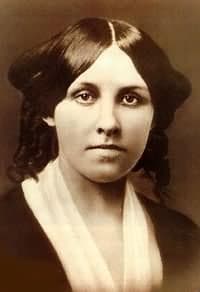
Louisa May Alcott was an American novelist best known for her works exploring themes of family and personal growth. Among her notable books are "Little Men," "Good Wives," "Rose in Bloom," "A Long Fatal Love Chase," and "A Modern Cinderella," which reflect her interest in the lives of women and children in the 19th century.
Similar books
- Rebecca
Daphne du Maurier
4.2 (450k) average on GoodreadsThrillerFeatures a young woman entangled with a mysterious, powerful man in a gothic setting with psychological suspense.
- Jane Eyre
Charlotte Brontë
4.1 (1.6M) average on GoodreadsHistorical FictionExplores themes of independence, pursuit of love, and dark secrets within a historical romantic suspense framework.
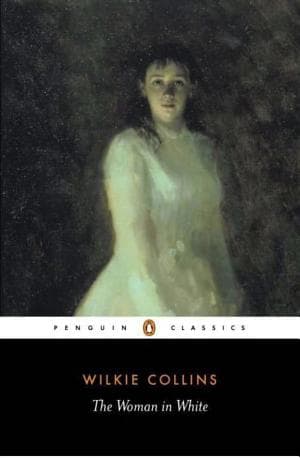
- The Woman in White
Wilkie Collins
4.0 (132k) average on GoodreadsHistorical FictionA Victorian sensation novel with mistaken identities, dark secrets, and a woman trying to escape a dangerous plot.
- Angels & Demons
Dan Brown
3.9 (2.7M) average on GoodreadsThrillerA Harvard symbologist races through Rome's ancient sites, deciphering cryptic clues to unmask the Illuminati and stop a vengeful plot to destroy the Vatican with a stolen antimatter weapon.
- Gone Girl
Gillian Flynn
4.1 (2.3M) average on GoodreadsThrillerA wife's sudden disappearance on her fifth anniversary reveals a web of lies and psychological warfare, exposing the secrets within a seemingly perfect marriage.
- The Girl on the Train
Paula Hawkins
3.9 (2.1M) average on GoodreadsThrillerA woman’s fascination with a seemingly perfect couple she watches from her daily train commute leads her into a dark investigation when she witnesses something that shatters their idyllic image.





Enjoyed the summary?
A summary gives you the shape of the book. The book itself has the detail, the examples and the voice.
Find A Long Fatal Love Chase on AmazonAs an Amazon Associate, BookBrief earns from qualifying purchases. How we're funded