
Synopsis
Covers the whole plot, including the ending.
- Difficulty
- Medium
- Pacing
- Moderate
- Mood
- Atmospheric, Brooding, Romantic, Resilient, Reflective
- Read it if
- You love classic Gothic romance with a strong, independent heroine, deep psychological exploration, and themes of social class, morality, and proto-feminism.
- Skip it if
- You prefer fast-paced modern thrillers or stories with clear-cut, unambiguous villains and heroes. The language is dense and the pacing can be slow for some.
Jane Eyre Plot Summary
Covers the whole plot, including the ending.
Childhood Hardship and Gateshead Hall
The novel opens with ten-year-old Jane Eyre, an orphan, living with her wealthy aunt, Mrs. Reed, and her three cousins at Gateshead Hall. Jane is mistreated by her aunt and cousins, especially the bullying John Reed. Her kind uncle, Mr. Reed, had made his wife promise to raise Jane as one of their own, but Mrs. Reed resents Jane's presence. After a fight with John, Jane is locked in the red-room, where her uncle died. She faints from terror, believing she sees his ghost. This incident leads Mrs. Reed to consult Mr. Brocklehurst, the hypocritical director of Lowood Institution, a school for orphaned girls, and Jane is sent away, which she welcomes.
Lowood Institution: Friendship, Loss, and Education
At Lowood, Jane struggles with the strict rules and poor conditions, including little food and freezing temperatures. Mr. Brocklehurst's cruelty is clear in his public shaming of Jane and his misuse of the school's money, which he uses for his own family while the students suffer. However, Jane finds a friend in Helen Burns, a pious and intelligent girl who teaches Jane about strength and Christian forgiveness. She also gains the respect of Miss Temple, the kind superintendent. A typhus epidemic sweeps through the school, killing many, including Helen Burns, who dies peacefully in Jane's arms. Despite the hardships, Jane does well academically, eventually becoming a teacher at Lowood for two years.
A New Beginning at Thornfield Hall
After eight years at Lowood—six as a student and two as a teacher—Jane wants new experiences and a broader world. She advertises for a governess position and accepts an offer from Thornfield Hall, in a remote part of England. When she arrives, she finds her charge is Adèle Varens, a young French girl. The master of the house, Mr. Rochester, is often away. She is looked after by the housekeeper, Mrs. Fairfax. Jane finds the old mansion interesting and is soon drawn into its mysteries. She hears strange laughter and experiences unsettling events, such as a fire in Mr. Rochester's bed, which she bravely puts out.
The Enigmatic Master and Growing Affection
Mr. Rochester returns to Thornfield and immediately interests Jane with his dark, thoughtful manner, sharp wit, and unusual personality. He often teases and provokes Jane, testing her intelligence and spirit, but also shows a deeper, vulnerable side. Their conversations, which cover their pasts and their views on life, create a strong intellectual and emotional connection. Jane finds herself more and more drawn to him, despite their social differences and his mysterious past. She begins to see beyond his rough exterior to the passionate man beneath, while he, in turn, is interested in her independent spirit and moral strength.
Mysteries and the Arrival of Blanche Ingram
The strange events at Thornfield increase: a servant, Richard Mason, is attacked and stabbed, and Jane hears maniacal laughter through the halls. Mr. Rochester dismisses her concerns, saying the events are due to the old servant Grace Poole. Soon after, Mr. Rochester hosts a large party of aristocratic guests, including the beautiful Blanche Ingram, whom everyone expects him to marry. Jane, feeling her social inferiority, watches their interactions from a distance, believing Mr. Rochester will choose Blanche. During this time, a mysterious old gypsy woman, who is actually Mr. Rochester in disguise, tells fortunes and subtly asks about Jane's feelings for him.
A Visit to Gateshead and Mrs. Reed's Deathbed Confession
Jane receives news that Mrs. Reed is very ill and wants to see her. She returns to Gateshead, where she finds her aunt dying. Mrs. Reed, feeling guilty, confesses that she withheld a letter from Jane's uncle, Mr. Eyre, who had intended to adopt Jane and leave her his fortune. This is important, as it shows Jane has living relatives and a possible inheritance. Mrs. Reed dies shortly after, and Jane, having forgiven her aunt, returns to Thornfield, where she finds Mr. Rochester more attentive and affectionate than before. His intentions regarding Blanche Ingram seem to change.
Mr. Rochester's Proposal and Jane's Acceptance
When Jane returns, Mr. Rochester continues his unclear behavior, sometimes hinting at a future with Blanche, other times expressing deep affection for Jane. One evening, as they walk in the garden, he finally tells her he loves her and proposes marriage. Jane, at first disbelieving and fearing he is still teasing her, is very happy when she realizes he is serious. Despite her worries about their social difference and her uncertainty about his past, she accepts his proposal, believing she has found true happiness and belonging. Wedding preparations begin, and Jane enjoys her new love.
The Wedding Day Revelation and Bertha Mason
On the morning of the wedding, as Jane and Mr. Rochester stand at the altar, two men, Mr. Briggs and Mr. Mason (Richard Mason's brother), interrupt the ceremony. Mr. Briggs reveals that Mr. Rochester is already married to Bertha Mason, who is still alive and living at Thornfield Hall. Mr. Rochester, seeing no other option, leads Jane and the others to a locked room on the third floor, where they confront Bertha—a violent, insane woman. He explains that his father arranged the marriage for Bertha's wealth, unaware of her inherited madness, and that he has kept her confined for years, cared for by Grace Poole.
Jane's Flight from Thornfield
Heartbroken and disappointed, Jane deals with Mr. Rochester's request for her to stay with him as his mistress. He argues that his marriage to Bertha is a legal technicality, not a true union. Despite her deep love for him, Jane's strong moral sense and desire for self-respect keep her from accepting. She believes that staying would go against her principles and lead to her downfall. In the dead of night, with only a small amount of money, Jane secretly leaves Thornfield Hall, enduring hunger and hardship as she travels far away, determined to make her own way.
Finding Family and Fortune at Moor House
After days of wandering and near-starvation, Jane collapses on the doorstep of Moor House, the home of the Rivers siblings: Diana, Mary, and St. John. They take her in, giving her shelter, food, and companionship, believing her to be a poor, nameless woman. Jane uses the name 'Jane Elliott.' St. John, a severe but devout clergyman, eventually offers Jane a position as a schoolmistress in Morton. During this time, Mr. Briggs reappears, revealing that Jane's uncle, John Eyre, has died and left his entire fortune of £20,000 to her. Also, it is discovered that the Rivers siblings are her cousins, making them co-heirs to her fortune, which she immediately shares with them.
St. John's Proposal and Jane's Dilemma
St. John, driven by his strong religious zeal and ambition to become a missionary in India, proposes marriage to Jane. He sees her as a good partner for his work, valuing her intelligence, strength, and moral character, but offers no love or passion. He pressures her to accept, saying it is her Christian duty. Jane, while admiring his dedication, feels no romantic love for him and fears that marrying him would suppress her own spirit and desires. She struggles with the decision, almost giving in to his arguments, but wants a love that includes both mind and heart.
A Voice from the Past and Return to Thornfield
Just as St. John's pressure increases, Jane experiences a powerful, almost supernatural event: she hears Mr. Rochester's voice calling her name from a great distance. Convinced it is a sign, she decides to return to Thornfield Hall to find out what happened to him. When she arrives, she finds Thornfield a burnt-out ruin. She learns from the innkeeper that Bertha Mason set the house on fire and killed herself by jumping. In his attempt to save Bertha and the servants, Mr. Rochester lost an eye and a hand and is now blind.
Reunion and Happy Ending at Ferndean
Jane travels to Ferndean, a secluded manor where Mr. Rochester now lives alone, attended by two old servants. She finds him broken, humbled, and very sorry for his past deceptions. Despite his injuries, Jane's love for him remains strong, and she is drawn to his vulnerability. She reveals her newfound fortune and her refusal of St. John's proposal. They reconcile, and Mr. Rochester, now truly free to marry, proposes again. Jane happily accepts, and they marry. In the concluding lines, Jane states they have been married for ten years, living in perfect equality and happiness, with Mr. Rochester having partially regained his sight, enough to see their first child.
Jane Eyre Characters
Jane Eyre
Protagonist
An intelligent, independent, and morally strong orphan seeking love and belonging.
Jane Eyre is the eponymous protagonist, a plain-looking but highly intelligent and resilient young woman. Orphaned and mistreated in childhood, she develops a fierce sense of self-worth and a strong moral compass. She values independence, intellectual stimulation, and genuine affection above social status or wealth. Her journey is one of self-discovery, navigating societal constraints, and striving for a love that respects her as an equal. Despite her quiet demeanor, she possesses a passionate inner life and an unwavering commitment to her principles, even when it means sacrificing her own happiness.
Relationships: Edward Rochester (Love interest, eventual husband); Helen Burns (Best friend and spiritual guide at Lowood); Mrs. Reed (Cruel aunt and guardian); St. John Rivers (Cousin and suitor, a foil to Rochester); Miss Temple (Kind mentor at Lowood)
Edward Fairfax Rochester
Love Interest/Protagonist
The brooding, Byronic master of Thornfield Hall with a dark secret.
Mr. Rochester is a wealthy, intelligent, and passionate man, but also cynical, impulsive, and burdened by a deeply hidden secret. He is physically imposing, with a dark, often melancholy demeanor, which makes him a classic Byronic hero. He is drawn to Jane's intellect and spirit, seeing beyond her plain appearance to her inner strength. His past marriage to Bertha Mason has left him jaded and emotionally scarred, leading him to unconventional behavior and a desperate search for true companionship. He seeks redemption and a love that can heal his broken spirit.
Relationships: Jane Eyre (Love interest, eventual husband); Bertha Mason (Legally married wife, kept confined); Adèle Varens (Ward, possibly his illegitimate daughter); Mrs. Fairfax (Housekeeper at Thornfield)
Bertha Mason
Antagonist/Symbolic Figure
Mr. Rochester's confined, insane first wife, a symbol of his past and the novel's gothic elements.
Bertha Mason is Mr. Rochester's first wife, a Creole woman from Jamaica, whom he married for her wealth. She is kept locked away in a hidden room at Thornfield Hall due to her severe mental illness, which manifests as violent, destructive, and animalistic behavior. She is the 'madwoman in the attic,' a gothic figure who embodies the secrets and moral decay of Thornfield. Her presence is the primary obstacle to Jane and Rochester's happiness, and her eventual death by suicide in the fire at Thornfield allows for their union, though at a great cost to Rochester.
Relationships: Edward Rochester (Legally married wife); Richard Mason (Brother)
St. John Rivers
Supporting/Antagonist
Jane's cousin, a zealous missionary who seeks to marry her for her suitability for his work.
St. John Rivers is Jane's cousin and a devoted, ambitious clergyman. He is handsome, intelligent, and deeply committed to his missionary work in India, but he is also cold, austere, and driven by a stern sense of duty rather than passion. He views Jane as a potential partner for his missionary endeavors, valuing her intellect and resilience, but offers her no romantic love. His proposal to Jane is based on practicality and religious obligation, acting as a foil to Mr. Rochester's passionate, if flawed, love. He represents a path of selfless, but emotionally barren, devotion.
Relationships: Jane Eyre (Cousin and suitor); Diana Rivers (Sister); Mary Rivers (Sister)
Mrs. Reed
Supporting/Antagonist
Jane's cruel aunt and guardian who resents her presence at Gateshead Hall.
Mrs. Reed is Jane's aunt and first guardian, who promised her dying husband to care for Jane but instead subjected her to years of emotional and physical abuse at Gateshead Hall. She is cold, selfish, and resentful of Jane, favoring her own spoiled children. Her cruelty stems from a mix of jealousy, class prejudice, and a desire to uphold appearances. Her deathbed confession about withholding Mr. Eyre's letter reveals her deep-seated malice and directly impacts Jane's eventual inheritance and discovery of her family.
Relationships: Jane Eyre (Aunt and guardian); John Reed (Son); Eliza Reed (Daughter); Georgiana Reed (Daughter)
Helen Burns
Supporting
Jane's pious and resilient friend at Lowood, who teaches her about faith and endurance.
Helen Burns is Jane's first and dearest friend at Lowood Institution. She is a gentle, intelligent, and deeply pious girl who endures the harsh conditions and injustice of the school with remarkable patience and forgiveness. Helen's philosophy, rooted in Christian faith and acceptance of suffering, profoundly influences Jane, teaching her the value of inner strength and spiritual resilience. Her premature death from typhus is a significant loss for Jane and a poignant moment that highlights the injustices of Lowood, but her spirit continues to guide Jane's moral development.
Relationships: Jane Eyre (Close friend)
Miss Temple
Supporting
The kind and compassionate superintendent at Lowood Institution.
Miss Temple is the superintendent of Lowood Institution and a beacon of kindness and fairness in an otherwise harsh environment. She provides Jane with much-needed warmth, encouragement, and intellectual stimulation. She treats the girls with respect, advocates for their well-being against Mr. Brocklehurst's cruelty, and helps Jane clear her name after being publicly shamed. Her integrity and compassion offer Jane a glimpse of true goodness and serve as an important early mentor figure, fostering Jane's intellectual and emotional growth during her formative years at the school.
Relationships: Jane Eyre (Mentor and friend); Mr. Brocklehurst (Superior, whom she often subtly defies)
Diana Rivers
Supporting
Jane's intelligent and kind cousin who offers her genuine affection.
Diana Rivers is one of Jane's cousins and a gentle, intelligent, and cultured young woman. Along with her sister Mary, she provides Jane with warmth, companionship, and intellectual stimulation during Jane's time at Moor House. Diana is a supportive and loving presence in Jane's life, offering her a sense of belonging and family that she had long craved. She represents a positive, healthy familial bond, contrasting sharply with Jane's experiences at Gateshead, and is instrumental in helping Jane find peace and happiness after her escape from Thornfield.
Relationships: Jane Eyre (Cousin and close friend); St. John Rivers (Brother); Mary Rivers (Sister)
Mary Rivers
Supporting
Jane's kind and educated cousin, a supportive companion at Moor House.
Mary Rivers is Jane's other cousin, sister to Diana and St. John. Like Diana, she is well-educated, kind, and offers Jane genuine friendship and intellectual companionship during her destitute period at Moor House. Mary, along with Diana, helps Jane regain her strength and provides a stable, loving environment. Their presence allows Jane to experience the warmth of a true family for the first time, contributing significantly to Jane's emotional healing and sense of belonging before she ultimately returns to Mr. Rochester.
Relationships: Jane Eyre (Cousin and close friend); St. John Rivers (Brother); Diana Rivers (Sister)
Mr. Brocklehurst
Antagonist
The hypocritical and cruel director of Lowood Institution.
Mr. Brocklehurst is the severe and hypocritical director of Lowood Institution. He preaches austerity, humility, and self-denial to the orphaned girls under his care, while his own family lives in luxury. He starves and poorly clothes the students, justifying it as a means of teaching them Christian virtue, yet he uses the school's funds for his personal gain. He publicly shames Jane and is responsible for the deplorable conditions that lead to the typhus epidemic. He embodies the corrupt and oppressive religious authority of the time, highlighting social injustices.
Relationships: Jane Eyre (Oppressor); Miss Temple (Subordinate)
Jane Eyre Themes
Identity and Self-Discovery
Jane's journey is about understanding herself and finding her place in the world. From her early struggles for self-worth at Gateshead and Lowood to her search for independence as a governess, she constantly defines herself against outside pressures. Her refusal to be Mr. Rochester's mistress, even when she loves him deeply, shows her commitment to her moral identity. Her inheritance and discovery of family at Moor House give her a secure sense of belonging and financial independence. This allows her to return to Rochester as an equal, a full individual.
“I am no bird; and no net ensnares me: I am a free human being with an independent will.”
Social Class and Inequality
The novel explores the strict social classes of 19th-century England and their effect on people, especially women. Jane, as an orphaned governess, is in a difficult position between servants and gentry, often feeling her social inferiority. Her struggles at Gateshead, her poor life at Lowood, and her initial hesitation to marry Mr. Rochester due to their class difference all show the constant influence of class. Her eventual inheritance and new wealth allow her to overcome these barriers, marrying Rochester on equal terms, rather than dependence.
“Do you think, because I am poor, obscure, plain, and little, I am soulless and heartless? You think wrong!”
Love vs. Independence
A central conflict in Jane's life is her desire for passionate love and companionship, balanced with her need for independence and self-respect. She wants a love that respects her intelligence and spirit, not one that lessens her. This conflict is most clear in her relationships with Mr. Rochester and St. John Rivers. She rejects Rochester's offer to be his mistress, choosing moral independence over an improper love, and refuses St. John's loveless, duty-bound proposal. Only when she has financial and family independence can she return to Rochester and marry him as an equal, having found a love that allows for both passion and freedom.
“I care for myself. The more solitary, the more friendless, the more unsustained I am, the more I will respect myself.”
Religion and Morality
The novel presents different forms of religious belief. Mr. Brocklehurst shows hypocritical, controlling religiosity, using faith to justify cruelty and personal gain. Helen Burns, in contrast, represents a gentle, forgiving, and lasting Christian faith that teaches strength and acceptance. St. John Rivers shows a rigid, duty-bound, and passionless evangelicalism, where personal desires are given up for a higher calling. Jane, while very moral, struggles to understand these different ideas. She ultimately makes her own way based on an inner sense of justice, empathy, and genuine love, rather than strict rules or cold duty.
“Conscience, too, was there, forcing on me the conviction that it was better to suffer the utmost extremity of want, than to commit a crime for relief.”
The Supernatural and Gothic Elements
Gothic elements fill the novel, creating a sense of mystery, suspense, and psychological intensity. The ghost of Mr. Reed in the red-room, the strange laughter and attacks at Thornfield Hall, and Bertha Mason all add to this eerie mood. These elements often hint at coming revelations and represent the hidden desires, secrets, and psychological trouble within the characters, especially Mr. Rochester. The 'voice' Jane hears calling her name is a moment of supernatural help, guiding her return to Thornfield and her eventual reunion with Rochester.
“A sound filled my ears, which I did not then know was the rushing of the wind: I might have told myself that this was the case, but the idea of something supernatural was stronger, for I had been told to fear it.”
Plot Devices & Literary Techniques
Bildungsroman (Coming-of-Age Story)
Traces Jane's moral and psychological growth from childhood to adulthood.
The novel is a quintessential Bildungsroman, meticulously detailing Jane Eyre's development from a vulnerable, oppressed orphan into an independent, self-possessed woman. It follows her through various formative experiences at Gateshead, Lowood, Thornfield, and Moor House, each stage contributing to her moral, intellectual, and emotional education. Her journey encompasses not only external events but also an internal evolution, as she learns to navigate societal expectations, define her own values, and ultimately find happiness on her own terms, achieving self-realization and an equal partnership.
First-Person Narration (Autobiographical Style)
Jane Eyre tells her own story, offering deep insight into her thoughts and feelings.
The novel is narrated entirely from Jane Eyre's perspective, using a highly intimate and reflective first-person voice. This allows readers direct access to Jane's complex inner world, her observations, judgments, and emotional responses to events. Her narrative style is often direct, passionate, and morally insightful, giving her agency and creating a strong bond with the reader. This technique not only enhances the psychological depth of the story but also frames it as an 'autobiography,' lending it authenticity and immediacy, as if Jane is speaking directly to the reader about her life experiences.
The 'Madwoman in the Attic' (Bertha Mason)
A gothic archetype representing suppressed female rage and societal secrets.
Bertha Mason, Mr. Rochester's first wife, confined to a secret room in Thornfield, is a classic example of the 'madwoman in the attic' trope. She serves multiple functions: she is the primary obstacle to Jane and Rochester's marriage, a source of gothic horror and mystery, and a symbolic representation. Her madness can be interpreted as the consequence of patriarchal oppression, a symbol of suppressed female rage, or the dark, untamed passions that Victorian society sought to control. Her existence reveals the deep, troubling secrets of Rochester's past and the moral ambiguities he carries.
Foil Characters
Characters who highlight Jane's qualities through contrast.
The novel effectively uses foil characters to illuminate Jane's unique characteristics and choices. Helen Burns's passive, forgiving Christianity contrasts with Jane's more active, justice-seeking morality. Blanche Ingram's superficial beauty, social status, and haughtiness serve as a foil to Jane's plainness, intellectual depth, and moral integrity, highlighting why Rochester is drawn to Jane's inner qualities. Most significantly, St. John Rivers's cold, duty-driven religiosity and loveless proposal stand in stark contrast to Mr. Rochester's passionate, flawed, but ultimately redemptive love, solidifying Jane's choice for a relationship based on mutual affection and equality.
Symbolism of Fire and Ice
Contrasting imagery representing passion vs. control, and life vs. death.
Throughout the novel, Brontë employs the contrasting symbolism of fire and ice. Fire often represents Jane's passionate inner spirit, her strong emotions, and the intensity of her love for Rochester, as well as destructive forces (Bertha's arson). Ice, conversely, symbolizes emotional coldness, repression, and death (Lowood's harshness, St. John's frigid demeanor, the Reed family's cruelty). Jane navigates a world where she must balance her fiery passions with the need for self-control and moral integrity, seeking a middle ground between the extremes of destructive fervor and emotional desolation.
Jane Eyre Quotes
“I am no bird; and no net ensnares me: I am a free human being with an independent will.”
“I would always rather be happy than dignified.”
“Do you think, because I am poor, obscure, plain, and little, I am soulless and heartless? You think wrong!”
“I care for myself. The more solitary, the more friendless, the more unsustained I am, the more I will respect myself.”
“Reader, I married him.”
“Life appears to me too short to be spent in nursing animosity or registering wrongs.”
“I have for the first time found what I can truly love—I have found you.”
“Prejudices, it is well known, are most difficult to eradicate from the heart whose soil has never been loosened or fertilized by education.”
“I am not an angel... and I will not be one till I die: I will be myself.”
“The soul, fortunately, has an interpreter—often an unconscious but still a faithful interpreter—in the eye.”
“Conventionality is not morality. Self-righteousness is not religion.”
“I have little left in myself—I must have you.”
“It is in vain to say human beings ought to be satisfied with tranquility: they must have action; and they will make it if they cannot find it.”
“I sometimes have a queer feeling with regard to you—especially when you are near me, as now: it is as if I had a string somewhere under my left ribs, tightly and inextricably knotted to a similar string situated in the corresponding quarter of your little frame.”
Quiz
10 questions on the plot and the characters. Each answer comes with a short explanation.
Question 1
Where does Jane Eyre first meet Mr. Rochester?
- In the drawing room of Thornfield Hall
- On the road near Thornfield when his horse slips on ice
- At Lowood School during his visit
- At Gateshead Hall when he visits the Reeds
Show answer
B. On the road near Thornfield when his horse slips on ice Jane first encounters Mr. Rochester when she is walking to mail a letter and helps him after his horse slips on ice. This dramatic meeting establishes their relationship before she knows he is her employer.
Question 2
What is the name of the charity school where Jane spends her childhood?
- Moor House School
- Lowood Institution
- Thornfield Academy
- Gateshead Orphanage
Show answer
B. Lowood Institution Lowood Institution is the harsh charity school where Jane is sent by her aunt Mrs. Reed. Here she endures poor conditions but forms important friendships, particularly with Helen Burns.
Question 3
Who is Bertha Mason in relation to Mr. Rochester?
- His former fiancée who died before their wedding
- His secret first wife who is mentally ill and locked in the attic
- His sister who helps manage Thornfield Hall
- A wealthy benefactor who supports his estate
Show answer
B. His secret first wife who is mentally ill and locked in the attic Bertha Mason is Mr. Rochester's first wife, whom he married in Jamaica. She suffers from mental illness and is secretly confined to the attic at Thornfield, creating the central conflict when Jane discovers her existence.
Question 4
Why does Jane leave Thornfield Hall after discovering Mr. Rochester's secret?
- She is fired by Mr. Rochester for disobedience
- She cannot morally accept being his mistress and chooses to preserve her self-respect
- She is forced to leave by Bertha Mason's family
- She inherits money and decides to travel independently
Show answer
B. She cannot morally accept being his mistress and chooses to preserve her self-respect After learning Mr. Rochester is already married to Bertha, Jane refuses his proposal to live with him as his mistress. Her decision highlights her strong moral principles and desire for equality in relationships.
Question 5
What significant event occurs at Thornfield Hall while Jane is away with the Rivers family?
- Mr. Rochester sells the estate and moves to France
- Bertha Mason sets fire to the house, leading to its destruction and Mr. Rochester's injuries
- A grand party is held where Mr. Rochester announces his engagement to Blanche Ingram
- Jane's aunt Mrs. Reed visits to reconcile with her
Show answer
B. Bertha Mason sets fire to the house, leading to its destruction and Mr. Rochester's injuries Bertha Mason starts a fire that burns down Thornfield Hall. Mr. Rochester is blinded and loses a hand while trying to save others, including Bertha, who dies in the fire.
Question 6
How does Jane discover she has inherited a fortune from her uncle John Eyre?
- A lawyer visits her at Thornfield Hall with the news
- She finds a hidden letter in Mr. Rochester's desk
- St. John Rivers informs her after discovering their familial connection
- Her aunt Mrs. Reed confesses it on her deathbed
Show answer
C. St. John Rivers informs her after discovering their familial connection St. John Rivers, who has been sheltering Jane, reveals that she has inherited £20,000 from her uncle John Eyre. He also discovers that Jane is his cousin, as John Eyre was their mutual uncle.
Question 7
Which character represents the theme of religious extremism and cold morality in the novel?
- Helen Burns
- Mr. Brocklehurst
- St. John Rivers
- Mrs. Fairfax
Show answer
C. St. John Rivers St. John Rivers embodies religious austerity and duty without warmth. He proposes to Jane not out of love, but to have a missionary companion, contrasting with Mr. Rochester's passionate but flawed love.
Question 8
What is the significance of the 'red-room' at Gateshead in Jane's development?
- It is where she first learns to read and write, fostering her independence
- It symbolizes the oppression and trauma of her childhood, fueling her desire for autonomy
- It is the room where she meets her kind uncle John Eyre
- It serves as a peaceful escape from her cousins' bullying
Show answer
B. It symbolizes the oppression and trauma of her childhood, fueling her desire for autonomy The red-room, where Jane is locked as punishment, represents the psychological and physical confinement she endures at Gateshead. Her terror and rebellion there foreshadow her lifelong struggle for freedom and self-respect.
Question 9
How does the novel's conclusion reflect its proto-feminist themes?
- Jane becomes a wealthy heiress and uses her money to fund women's education
- Jane returns to Mr. Rochester only after achieving financial independence and moral equality, not as a subordinate
- Jane rejects marriage entirely to focus on her career as a teacher
- Jane leads a public movement for women's rights in Victorian England
Show answer
B. Jane returns to Mr. Rochester only after achieving financial independence and moral equality, not as a subordinate Jane reunites with Mr. Rochester after she has inherited her own fortune and he has been humbled by his injuries. Their marriage is based on mutual dependence and equality, challenging traditional gender roles of the time.
Question 10
What literary technique is prominently used when Jane hears Mr. Rochester's voice calling her across the moors?
- Irony, as she is actually dreaming and the voice is imaginary
- Symbolism, representing the Gothic and supernatural elements in the novel
- Foreshadowing, hinting at their eventual reunion
- Psychic connection or telepathy, blending realism with spiritual intensity
Show answer
D. Psychic connection or telepathy, blending realism with spiritual intensity This moment uses a psychic or supernatural connection to show the deep bond between Jane and Rochester. It reflects the novel's 'internalisation of action' and heightened emotional realism, blurring lines between reality and spiritual experience.
Jane Eyre FAQ
What is 'Jane Eyre' about?
'Jane Eyre' follows the life of orphan Jane Eyre from her abusive childhood at Gateshead Hall and Lowood School to her employment as a governess at Thornfield Hall, where she falls in love with her employer, Mr. Rochester. The novel chronicles Jane's moral and emotional development as she navigates love, independence, and her principles, ultimately finding happiness after discovering Rochester's mad wife Bertha Mason and leaving him.
Why should I read 'Jane Eyre'?
You should read 'Jane Eyre' for its groundbreaking portrayal of a fiercely independent female protagonist who defies Victorian social norms. The novel combines gothic romance with profound psychological depth, exploring themes of morality, class, religion, and proto-feminism through Jane's compelling first-person narrative and her complex relationship with the Byronic Mr. Rochester.
What is the background/setting of 'Jane Eyre'?
The novel is set in early 19th-century England, primarily in Yorkshire and the Midlands. Key locations include the oppressive Gateshead Hall where Jane lives with her cruel aunt, the harsh Lowood School, the mysterious Thornfield Hall where she works as a governess, the desolate Moor House where she finds refuge with the Rivers family, and finally Ferndean Manor where she reunites with Rochester.
What are the most memorable quotes from 'Jane Eyre'?
Iconic quotes include Jane's declaration of equality: 'I am no bird; and no net ensnares me: I am a free human being with an independent will,' and her passionate statement to Rochester: 'I care for myself. The more solitary, the more friendless, the more unsustained I am, the more I will respect myself.' Another famous line is Rochester's plea: 'Jane, be still; don't struggle so, like a wild frantic bird that is rending its own plumage in its desperation.'
What writing style does Charlotte Brontë use in 'Jane Eyre'?
Brontë employs a first-person narrative from Jane's perspective, creating an intimate psychological portrait through what she called 'an autobiography.' The style blends gothic elements with realistic detail, using heightened emotional intensity and poetic language to internalize the action, focusing on Jane's moral and spiritual sensibility rather than external events alone.
What minor details add significant meaning to 'Jane Eyre'?
The recurring motif of the 'madwoman in the attic'—Bertha Mason—serves as Jane's dark double, representing repressed female rage and sexuality. The chestnut tree splitting during Rochester's proposal foreshadows their separation. Jane's portfolio of watercolor paintings, particularly one of a drowning corpse and another of a bleak Arctic scene, reveal her subconscious fears and isolation.
What are some subtle foreshadowing moments in 'Jane Eyre'?
The mysterious fire in Rochester's bedchamber early in Jane's stay at Thornfield foreshadows Bertha's destructive presence. The tearing of Jane's wedding veil by Bertha the night before her marriage to Rochester directly预示 the revelation that will prevent their wedding. Jane's dream of a crying child before receiving bad news becomes a pattern that foreshadows crises.
What unexpected character connections exist in 'Jane Eyre'?
St. John Rivers and his sisters Diana and Mary, who take in the destitute Jane, are revealed to be her cousins—the children of Jane's uncle John Eyre. This connection provides Jane with family and an inheritance that grants her independence. Additionally, Bertha Mason is revealed to be Rochester's legally bound wife, making Jane's relationship with him potentially bigamous.
What are unspoken character motivations in 'Jane Eyre'?
Mr. Rochester's initial manipulation of Jane—disguising himself as a fortune teller to learn her feelings—reveals his deep insecurity about their class difference and age gap. St. John Rivers' proposal to Jane masks his desire for a missionary companion rather than genuine love, contrasting with Rochester's passionate but flawed affection. Jane's aunt Mrs. Reed's cruelty stems from resentment toward Jane's mother who married beneath her.
What psychological complexities do characters exhibit in 'Jane Eyre'?
Jane exhibits remarkable psychological complexity as she balances her passionate nature with strict moral principles, particularly when she refuses to become Rochester's mistress despite her love for him. Rochester embodies the Byronic hero—charismatic but morally ambiguous, tormented by his past deception and Bertha's madness. Bertha Mason represents the 'madwoman' archetype, expressing through violence what Victorian society forced women to repress.
What are the major emotional turning points in 'Jane Eyre'?
Key emotional turning points include Jane's defiance of Mrs. Reed at Gateshead, her friendship with Helen Burns at Lowood, her first confession of love to Rochester, the interrupted wedding when Bertha's existence is revealed, Jane's flight from Thornfield and near-starvation on the moors, her rejection of St. John's marriage proposal, and finally her return to the blinded and maimed Rochester at Ferndean.
How do relationship dynamics evolve in 'Jane Eyre'?
Jane and Rochester's relationship evolves from employer-governess formality to intellectual equals, then to passionate lovers, before being shattered by the revelation of Bertha. After Jane's independence and Rochester's humbling injuries, they reunite as true equals. Jane's relationship with St. John Rivers moves from gratitude for rescue to tension as he pressures her into a loveless marriage, highlighting the contrast between cold duty and passionate love.
Which parts of 'Jane Eyre' remain ambiguous or open-ended?
Bertha Mason's perspective remains largely unexplored—we never hear her story directly. The supernatural elements, like Jane hearing Rochester's voice across miles when she rejects St. John, are left ambiguous as to whether they're psychological or mystical. The novel's ending, while showing Jane and Rochester reunited, leaves their future domestic life relatively undetailed compared to their earlier passionate conflicts.
What are controversial scenes or decisions in 'Jane Eyre'?
Jane's decision to leave Rochester after discovering Bertha is controversial—some see it as moral strength, others as excessive self-denial. Rochester's imprisonment and deception regarding Bertha raises questions about his morality and the colonial implications of his Jamaican marriage. The novel's proto-feminist elements were controversial in its time, particularly Jane's assertions of equality and independence from men.
'Jane Eyre' ending explained: how it ends & what it means
The novel ends with Jane returning to Rochester after hearing his voice call to her spiritually. She finds him blinded and maimed from the fire that destroyed Thornfield and killed Bertha. They marry as equals—Jane now financially independent through her inheritance, Rochester humbled and dependent on her. Their son is born, and Rochester partially regains his sight. The ending represents Jane's moral victory: she gains love without compromising her principles, achieving the equality she always sought.
How does 'Jane Eyre' address social class and gender roles?
The novel critiques Victorian class structure through Jane's position as a governess—educated but not a lady, employed but not a servant. Jane repeatedly asserts her spiritual equality with Rochester despite their class difference. Gender roles are challenged through Jane's independence, refusal of two marriage proposals that would compromise her self-respect, and her career as a teacher and governess when few occupations were available to women.
What is the significance of the various houses in 'Jane Eyre'?
Each house represents a stage in Jane's development: Gateshead symbolizes oppression and injustice, Lowood represents discipline and friendship, Thornfield embodies passion and deception, Moor House offers refuge and family, and Ferndean represents mature love and equality. The houses track Jane's journey from dependent orphan to independent woman who chooses her own home and relationships.
How does religion function in 'Jane Eyre'?
Religion appears in contrasting forms: Mr. Brocklehurst's hypocritical Calvinism at Lowood, Helen Burns' passive Christianity of endurance, St. John Rivers' cold missionary zeal, and Jane's personal faith that balances moral principle with compassion. Jane ultimately rejects religious extremes—both Brocklehurst's cruelty and St. John's lifeless duty—in favor of a faith that allows for human love and happiness.
About the author
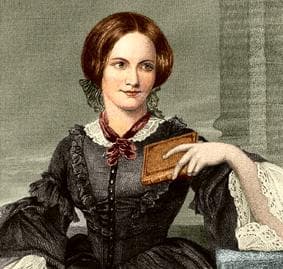
Charlotte Brontë was an English novelist and poet, the eldest of the three Brontë sisters who survived into adulthood and whose novels became classics of English literature.
Similar books
- Wuthering Heights
Emily Brontë
3.9 (1.3M) average on GoodreadsHistorical FictionExplores intense, passionate, and often dark romance within a Gothic setting, with strong-willed characters and a focus on social constraints.
- Rebecca
Daphne du Maurier
4.2 (450k) average on GoodreadsThrillerFeatures a young, inexperienced protagonist who becomes the wife of an enigmatic man and lives in a grand, mysterious estate haunted by the memory of his first wife.
- Pride and Prejudice
Jane Austen
4.3 (3M) average on GoodreadsHistorical FictionA classic romance with a strong, intelligent heroine who navigates societal expectations, class differences, and a complex relationship with a proud, wealthy man.
- To Kill a Mockingbird
Harper Lee
4.3 (4.5M) average on GoodreadsHistorical FictionIn the 1930s Jim Crow South, Harper Lee writes about racial injustice, moral growth, and the quiet courage of a lawyer father, Atticus Finch, as seen through his young daughter's eyes.
- The Great Gatsby
F. Scott Fitzgerald
3.9 (3.8M) average on GoodreadsHistorical FictionIn the opulent Roaring Twenties, a mysterious millionaire's lavish parties hide his desperate, tragic pursuit of a lost love, exposing the emptiness within the American Dream.
- Angels & Demons
Dan Brown
3.9 (2.7M) average on GoodreadsThrillerA Harvard symbologist races through Rome's ancient sites, deciphering cryptic clues to unmask the Illuminati and stop a vengeful plot to destroy the Vatican with a stolen antimatter weapon.



Enjoyed the summary?
A summary gives you the shape of the book. The book itself has the detail, the examples and the voice.
Find Jane Eyre on AmazonAs an Amazon Associate, BookBrief earns from qualifying purchases. How we're funded