
Synopsis
Covers the whole plot, including the ending.
- Difficulty
- Easy
- Pacing
- Moderate
- Mood
- Humorous, Nostalgic, Heartwarming, Witty
- Read it if
- You enjoy episodic, heartwarming stories about mischievous grandmothers and the funny adventures of childhood summers in a historical setting.
- Skip it if
- You prefer continuous, plot-driven narratives or stories with explicit, direct conflict and resolution.
A Long Way from Chicago Plot Summary
Covers the whole plot, including the ending.
Shotgun Cheatham's Last Stand
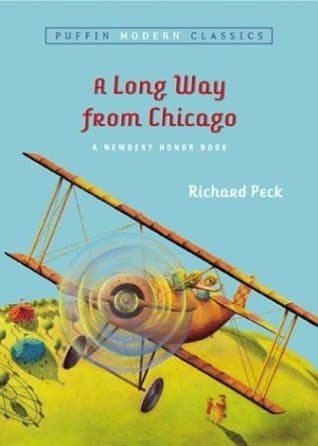
In 1929, ten-year-old Joey Dowdel and his younger sister, Mary Alice, go from Chicago to spend a week of their summer with their Grandma Dowdel in a small Illinois town. Their visit begins with the death of Shotgun Cheatham, the town drunk. Grandma Dowdel, always resourceful, arranges for Shotgun's wake to be held in her parlor to get a free coffin from the Ladies' Aid Society, which she plans to reuse. During the wake, Grandma finds Shotgun's false teeth and, to everyone's horror and Joey's fascination, puts them in the deceased's mouth. This causes a stir, but Grandma believes Shotgun would appreciate it, setting the tone for the children's unusual summers.
The Phantom Brakeman of the Wabash Cannonball
The next summer, 1930, Joey and Mary Alice return. Grandma Dowdel is determined to get free pie for her grandchildren. She creates a dramatic scene by having Joey lie across the train tracks, pretending an accident, just as the Wabash Cannonball approaches. The train's brakeman, at first terrified, stops the train, believing he has hit a child. Grandma then appears, pretending distress and demanding payment for her 'traumatized' grandchildren. The sympathetic brakeman, relieved Joey is unharmed, gives them a generous stack of pies from the train's dining car. Joey is embarrassed by the deception, but Mary Alice is quietly impressed by Grandma's cleverness.
A Day to Remember
In 1931, Joey and Mary Alice become involved in Grandma Dowdel's plan to deal with Ernie Cowgill, a local bully who has been bothering Mary Alice. Grandma takes the children fishing, but her real purpose becomes clear when she places a dead catfish in Ernie's fishing hole, then 'discovers' it and accuses Ernie of poaching. This public humiliation, along with Grandma's stern words, effectively ends Ernie's bullying. Joey is embarrassed but relieved, while Mary Alice, though initially upset, learns to appreciate Grandma's unusual methods of justice.
The Mouse in the Milk
The summer of 1932 sees Grandma Dowdel in a quiet conflict with Mrs. Effie Wilcox, a town gossip. When Mrs. Wilcox implies that Grandma's family is too poor to afford proper milk, Grandma responds. She places a dead mouse in a bottle of milk, then 'accidentally' delivers it to Mrs. Wilcox's doorstep. The resulting scandal, with Mrs. Wilcox loudly complaining about the 'contaminated' milk, forces Grandma to pretend outrage and demand an apology, effectively silencing Mrs. Wilcox's gossip about the Dowdel family's money for a time. Joey watches Grandma's cunning with a mix of awe and worry.
The Cow That Flew
In 1933, Grandma Dowdel helps her hired hand, Royce McNabb, and his sweetheart, Audrey Brubaker, elope. Audrey's wealthy and strict father disapproves of Royce. Grandma plans to distract Mr. Brubaker while the young couple escapes. She inflates a hot air balloon, attaches a cow to it, and releases it into the sky. The sight of a 'flying cow' draws everyone's attention, including Mr. Brubaker, creating a perfect diversion for Royce and Audrey to slip away and get married. Joey and Mary Alice are amazed by Grandma's elaborate and successful scheme, which shows her willingness to bend rules for love.
The Day of the Dead
During Halloween in 1934, Grandma Dowdel creates a memorable prank involving the town's snobbish banker, Mr. Weidenbach. She dresses as a ghost and, with Joey and Mary Alice's help, places a 'haunted' coffin in Mr. Weidenbach's yard, complete with spooky noises and a 'ghostly' presence. The banker is terrified, believing his house is truly haunted. The prank works, scaring Mr. Weidenbach into treating the townspeople with more respect and generosity. Joey and Mary Alice are active participants, experiencing the fun of Grandma's mischievous justice firsthand.
The Centennial
In 1935, the town prepares for its centennial celebration. Grandma Dowdel wants to ensure that her old friend, the reclusive but kind World War I veteran, Old Man Nyquist, receives proper recognition. The town initially overlooks him. Grandma, with her usual flair, ensures Nyquist is prominently featured in the parade, even giving him a suitable uniform and a place of honor. She also arranges for him to receive a medal. Through her efforts, Old Man Nyquist, who had long lived in obscurity, is finally acknowledged as a hero by the community. Joey and Mary Alice see Grandma's fierce loyalty and community spirit.
The War
The summer of 1942 brings big changes. World War II is happening, and Joey, now a young man, is preparing to enlist in the Air Force. Mary Alice, now seventeen, announces her decision to stay with Grandma Dowdel permanently, seeing the old woman not just as a relative but as a source of strength and wisdom. This is a turning point, as Joey realizes Mary Alice has found her own path and purpose with their grandmother. The coming war casts a shadow, but the bond between the three remains strong, showing the power of their summers.
The Homecoming
After serving in World War II, Joey returns home. He visits Grandma Dowdel and Mary Alice, who is now married to Royce McNabb. Joey thinks about the big impact their summers with Grandma had on him and Mary Alice. He realizes that Grandma's unusual, often scandalous, methods taught them important lessons about resilience, justice, and what community truly means. The book ends with Joey acknowledging that while Grandma Dowdel may have been 'the worst influence imaginable,' she was also the best, shaping them into the people they became. The stories are presented as his nostalgic memories.
A Long Way from Chicago Characters
Joey Dowdel
Protagonist/Narrator
The observant and often bewildered older brother, recalling his summers with Grandma Dowdel.
Joey is a young boy from Chicago who, along with his sister Mary Alice, spends his summers with his eccentric Grandma Dowdel. He is initially naive and somewhat timid, easily embarrassed by Grandma's outrageous antics. As he grows older, he becomes more observant and reflective, often trying to make sense of Grandma's unconventional logic. He is the primary narrator, looking back on these summers from the perspective of an adult, offering a blend of childhood wonder and mature understanding. He often struggles with the morality of Grandma's actions but ultimately comes to appreciate her unique wisdom.
Relationships: Grandma Dowdel (Grandson, initially bewildered, later appreciative of her wisdom); Mary Alice Dowdel (Older brother, protective yet often equally bewildered by Grandma)
Mary Alice Dowdel
Protagonist
Joey's younger sister, initially quiet but grows into a strong, independent young woman.
Mary Alice is Joey's younger sister. In her early summers, she is quiet and somewhat reserved, often observing Grandma's antics with a mixture of fear and fascination. As she matures, she becomes more assertive and independent, eventually choosing to stay with Grandma Dowdel permanently. She is less outwardly judgmental than Joey, often accepting Grandma's methods with a quiet understanding that suggests a deeper connection to the old woman's spirit. She is pragmatic and resilient, qualities nurtured by Grandma's influence, and ultimately finds her own path in the small town.
Relationships: Grandma Dowdel (Granddaughter, develops a deep bond and chooses to stay with her); Joey Dowdel (Younger sister, shares experiences and grows alongside him); Royce McNabb (Future husband and hired hand of Grandma Dowdel)
Grandma Dowdel
Protagonist/Mentor
The eccentric, resourceful, and fiercely protective grandmother who shapes Joey and Mary Alice's summers.
Grandma Dowdel is the unforgettable matriarch at the heart of the stories. She is a formidable, unconventional, and fiercely independent woman who lives by her own rules. She is resourceful, cunning, and possesses a unique moral compass that often involves bending the law or social norms to achieve what she believes is right. Her actions, though often outrageous and embarrassing to Joey, are always driven by a deep sense of justice, a desire to protect her family, or to help those in need. She teaches her grandchildren life lessons through her actions, rather than words, making a lasting impact on their characters.
Relationships: Joey Dowdel (Grandmother, teaches him life lessons through unconventional means); Mary Alice Dowdel (Grandmother, becomes a mentor and eventual permanent guardian); Mrs. Effie Wilcox (Neighbor and frequent target of Grandma's pranks/retaliations)
Mrs. Effie Wilcox
Supporting/Antagonist (minor)
The town gossip and frequent, unwitting participant in Grandma Dowdel's schemes.
Mrs. Effie Wilcox is a recurring character, known throughout the town as the primary source of gossip. She is nosy, often judgmental, and frequently finds herself on the receiving end of Grandma Dowdel's elaborate pranks and retaliations. Despite being a nuisance, she serves as a foil to Grandma's more direct and often morally ambiguous methods of justice. Her reactions to Grandma's schemes often highlight the humor and the effectiveness of Grandma's interventions, even if Mrs. Wilcox never quite learns her lesson.
Relationships: Grandma Dowdel (Neighbor, often at odds due to Mrs. Wilcox's gossip and Grandma's retaliations)
Royce McNabb
Supporting
Grandma Dowdel's hired hand and later Mary Alice's husband.
Royce McNabb is a young man who works for Grandma Dowdel as her hired hand. He is hardworking, kind, and respectful. He eventually falls in love with Audrey Brubaker, a girl from a wealthier family, and with Grandma's help, they elope. Royce represents a stable, good-hearted presence in the town, and his eventual marriage to Mary Alice further integrates the Dowdel family into the community, symbolizing the continuity of life and love within the small town setting. He is a quiet but steady character.
Relationships: Grandma Dowdel (Employer, receives her assistance in eloping); Mary Alice Dowdel (Future husband); Audrey Brubaker (Sweetheart, later wife)
Shotgun Cheatham
Mentioned
The deceased town drunk whose wake is held at Grandma Dowdel's house.
Shotgun Cheatham is the town drunk whose death marks the beginning of Joey and Mary Alice's first summer with Grandma Dowdel. Though deceased, his character serves as the catalyst for Grandma's initial memorable scheme: hosting his wake to secure a free coffin. He represents the less fortunate members of the community whom Grandma, in her own way, shows a form of respect and care, even in death. His false teeth become a significant prop in the opening chapter, setting the tone for the book's humor and Grandma's unusual methods.
Ernie Cowgill
Supporting/Antagonist (minor)
A local bully who is taught a lesson by Grandma Dowdel.
Ernie Cowgill is a local bully who torments Mary Alice during one of her summers. He is a symbol of the minor injustices and meanness that children often face. Grandma Dowdel, true to her nature, cannot stand by and let such behavior continue. She devises a clever and humiliating plan involving a dead catfish to put an end to his bullying. Ernie serves as a temporary antagonist, highlighting Grandma's protective instincts and her unique approach to dispensing justice.
Relationships: Mary Alice Dowdel (Tormentor)
A Long Way from Chicago Themes
The Nature of Justice and Morality
The book explores the idea that justice isn't always found within the law or conventional morality. Grandma Dowdel often bends rules, uses deception, and even commits small acts of trickery to achieve what she believes is a greater good. From getting a free coffin for Shotgun Cheatham to humiliating Ernie Cowgill, her actions challenge Joey's simple understanding of right and wrong. The story suggests that true justice sometimes requires unusual, even 'immoral,' means, especially when conventional systems fail. Joey's gradual acceptance of Grandma's methods reflects this complex view.
“Grandma knew what was right, and if the law got in the way, then so much the worse for the law.”
Coming of Age and Personal Growth
The nine summers Joey and Mary Alice spend with Grandma Dowdel are important for their growth. Each summer brings new challenges and lessons that shape their characters. Joey, as the narrator, reflects on how these experiences changed him from an easily embarrassed boy into a more understanding and appreciative young man. Mary Alice, initially shy, grows into a strong, independent woman who ultimately chooses to stay with Grandma. Their encounters with Grandma's unique personality, the townspeople, and the realities of small-town life during the Depression era build resilience, independence, and a deeper understanding of human nature.
“I was ten that first summer, and I went back every summer until I was eighteen, and then the war came. But I never went back to being a kid.”
Community and Belonging
Despite Grandma Dowdel's often solitary and independent nature, she is deeply connected to and fiercely protective of her community. Her actions, though sometimes scandalous, often strengthen community bonds, challenge snobbery, or correct wrongs within the town. She helps a young couple elope, ensures a war veteran is honored, and generally acts as a guardian of the town's less fortunate. Through her, Joey and Mary Alice learn about the web of relationships in a small town, the importance of looking out for neighbors, and what it means to truly belong somewhere, even if that belonging comes with its own set of peculiar rules.
“She didn't have much use for outsiders, but once you were in, you were family.”
The Power of Storytelling and Memory
The entire novel is Joey Dowdel's adult memory of his childhood summers. This narrative structure highlights the lasting power of memory and storytelling. Joey's recounting is full of nostalgia, humor, and a deep appreciation for his grandmother's impact on his life. The stories themselves, often exaggerated or embellished by Grandma's actions, become legends within the family and the town. Telling these stories allows Joey to process his past, understand the lessons learned, and keep Grandma Dowdel's spirit alive, showing how personal narratives shape identity and preserve history.
“Those summers were the best education I ever had.”
Plot Devices & Literary Techniques
Episodic Structure
Each chapter functions as a self-contained short story, detailing a specific summer incident.
The novel is structured as a series of distinct, self-contained episodes, each representing a summer visit from Joey and Mary Alice to Grandma Dowdel. While a chronological progression is maintained (from 1929 to 1942), each chapter can largely be read as its own short story, focusing on a particular event or Grandma's scheme. This episodic nature allows for a variety of humorous and poignant situations, showcases different facets of Grandma's character, and effectively captures the essence of childhood summers as a collection of memorable, distinct adventures rather than a continuous, linear plot.
First-Person Retrospective Narration
The story is told by an adult Joey looking back on his childhood experiences.
The entire narrative is presented through the eyes of an adult Joey Dowdel, recounting his summers with Grandma Dowdel. This allows for a blend of innocent childhood perspective and mature reflection. The adult Joey can comment on the significance of events, understand the deeper motivations behind Grandma's actions, and express the lasting impact these experiences had on him and Mary Alice. This retrospective lens adds depth, humor, and a sense of nostalgic warmth, allowing the narrator to deliver insights that a child character could not.
Situational Irony and Understatement
Humor is derived from the contrast between expectations and reality, and through subtle, dry observations.
Richard Peck frequently uses situational irony, where the outcome of events is contrary to what is expected, often for humorous effect (e.g., a wake held for a free coffin, a flying cow for a diversion). Grandma Dowdel's actions are often outrageous, creating ironic situations that highlight the absurdity of conventional behavior. Additionally, the narrator's (Joey's) dry, understated observations and reactions to Grandma's antics contribute significantly to the book's comedic tone. This contrast between the wild events and Joey's often bewildered or resigned internal commentary creates much of the novel's charm and wit.
Foil Characters
Characters like Mrs. Effie Wilcox and Ernie Cowgill highlight Grandma Dowdel's unique qualities.
Foil characters, such as the gossipy Mrs. Effie Wilcox and the bullying Ernie Cowgill, serve to highlight Grandma Dowdel's distinct personality and moral code. Mrs. Wilcox's conventional, often judgmental, nature provides a stark contrast to Grandma's unconventional and direct methods of problem-solving. Ernie Cowgill's meanness allows Grandma to demonstrate her protective instincts and her unique approach to justice. These characters, by opposing or provoking Grandma, allow her resourcefulness, wit, and fierce loyalty to shine through, emphasizing her role as the story's central, transformative figure.
A Long Way from Chicago Quotes
“She wasn't just my grandma; she was a force of nature, like a tornado in a flowered hat.”
“Grandma Dowdel believed in the power of a good story, especially if she was telling it.”
“In a small town, everybody knew your business, and if they didn't, they made it up.”
“Some people are born to be famous, and some are born to be interesting. Grandma was the second kind.”
“You can always tell a lot about a man by the way he treats his dog. Or, in Grandma's case, by the way she treats her shotgun.”
“Grandma Dowdel had a way of cutting corners and making them seem like the straightest path.”
“It was a time when summer lasted forever, and the only thing that mattered was what Grandma would do next.”
“She didn't believe in wasting anything, especially a good opportunity to stir things up.”
“Sometimes the best way to get people to do what you want is to let them think it was their idea all along.”
“Life with Grandma wasn't a picnic, it was a three-ring circus, and we were always in the front row.”
“She had a face that could curdle milk and a heart that was pure gold, though she'd never admit to the second part.”
“The past is never really gone. It's always waiting for you, like an old friend or a bad habit.”
“Grandma didn't just live in the present; she lived in the past, the future, and sometimes, in a world entirely of her own making.”
“There's a lot to be said for a good bluff, especially when you've got nothing else up your sleeve.”
Quiz
10 questions on the plot and the characters. Each answer comes with a short explanation.
Question 1
What is the name of Joey and Mary Alice's grandmother?
- Grandma Dowdel
- Grandma Peck
- Grandma Watson
- Grandma Evans
Show answer
A. Grandma Dowdel Joey and Mary Alice spend their summers with their eccentric Grandma Dowdel in rural Illinois.
Question 2
In which decade do the summers recounted in the book primarily take place?
- 1910s
- 1920s
- 1930s
- 1940s
Show answer
C. 1930s The stories span the Great Depression era, from 1929 to 1942, as indicated by various historical events mentioned.
Question 3
What unusual item does Grandma Dowdel use to win the boat in the fishing contest?
- A special lure she made herself
- Dynamite
- A net she smuggled in
- A very large, rare bait fish
Show answer
B. Dynamite Grandma Dowdel notoriously uses dynamite to win the fishing contest, demonstrating her unconventional methods.
Question 4
Which historical figure does Grandma Dowdel meet and have an encounter with involving her pie?
- Al Capone
- Franklin D. Roosevelt
- Pretty Boy Floyd
- John Dillinger
Show answer
C. Pretty Boy Floyd Grandma Dowdel shares a gooseberry pie with the notorious bank robber Pretty Boy Floyd, who stops at her house.
Question 5
What is the primary reason Joey and Mary Alice are sent to their grandmother's house each summer?
- Their parents wanted them to learn farm life skills.
- Their parents couldn't afford to keep them in Chicago during the Depression.
- They were misbehaving in Chicago and needed discipline.
- Grandma Dowdel was ill and needed their help.
Show answer
B. Their parents couldn't afford to keep them in Chicago during the Depression. The economic hardships of the Great Depression in Chicago are the primary reason their parents send them to live with Grandma Dowdel for the summers.
Question 6
What prank does Mary Alice play on Shotgun Cheatham, the undertaker, during one of her summers?
- She replaced his coffin with a giant pumpkin.
- She put a live mouse in his hat.
- She swapped the clothes on a deceased person with a scarecrow's.
- She painted his hearse bright pink.
Show answer
C. She swapped the clothes on a deceased person with a scarecrow's. Mary Alice, with Grandma's implicit approval, swaps the clothes on a deceased person, much to Shotgun Cheatham's chagrin, to get back at him for gossiping.
Question 7
How does Grandma Dowdel ensure her family gets enough milk during the milk strike?
- She buys it from a neighboring town.
- She starts milking her own cow, which she secretly owned.
- She 'borrows' milk from a farmer's cooling tank in the dark of night.
- She makes her own milk substitute from powdered ingredients.
Show answer
C. She 'borrows' milk from a farmer's cooling tank in the dark of night. During the milk strike, Grandma Dowdel takes Joey and Mary Alice on a nocturnal mission to 'acquire' milk directly from a farmer's cooling tank.
Question 8
What significant event marks the end of Joey's summer visits to Grandma Dowdel?
- He gets a job in Chicago and can no longer travel.
- He enlists in the Army during World War II.
- Grandma Dowdel moves away from her small town.
- Mary Alice gets married and moves away.
Show answer
B. He enlists in the Army during World War II. Joey's final summer visit is in 1942, as he leaves for the Army to fight in World War II, marking the end of his childhood summers with Grandma.
Question 9
What theme is most strongly represented by Grandma Dowdel's character and actions throughout the book?
- The importance of formal education and book learning.
- The value of strict adherence to societal rules and norms.
- Resourcefulness, independence, and a fierce protectiveness of family.
- The fleeting nature of childhood innocence.
Show answer
C. Resourcefulness, independence, and a fierce protectiveness of family. Grandma Dowdel consistently demonstrates resourcefulness, a strong independent spirit, and a deep, albeit unconventional, love and protectiveness for her family and community.
Question 10
In the chapter 'The Phantom Brakeman,' what does Grandma Dowdel do to help Mary Alice win the part of the Virgin Mary in the Christmas pageant?
- She bakes cookies for the director.
- She threatens the director with a shotgun.
- She uses her connections to get Mary Alice a private audition.
- She dresses up as a phantom brakeman and scares the other girls away.
Show answer
D. She dresses up as a phantom brakeman and scares the other girls away. To ensure Mary Alice gets the coveted role, Grandma Dowdel dresses as a 'phantom brakeman' and frightens the other girls competing for the part, leading them to drop out.
A Long Way from Chicago FAQ
What is the central premise of 'A Long Way from Chicago'?
The book chronicles the annual summer visits of Joey and his younger sister, Mary Alice, from Chicago to their eccentric Grandmother Dowdel's small rural Illinois town during the Great Depression. Each chapter covers a different summer, showcasing their grandmother's unconventional and often mischievous ways of navigating life and helping her community.
Who are the main characters and what are their roles?
The main characters are Joey Dowdel, the older brother and narrator, who is initially naive and slowly comes to understand his grandmother; Mary Alice Dowdel, the younger sister, who is sharp, observant, and often more complicit in their grandmother's schemes; and Grandma Dowdel, the formidable, resourceful, and often outrageous matriarch who drives most of the plot's events.
What historical period does the book cover and how does it influence the story?
The story spans nine summers from 1929 to 1942, encompassing the Great Depression and the beginning of World War II. These historical events deeply influence the setting and character actions, as Grandma Dowdel constantly finds creative, if sometimes illegal, ways to cope with poverty, help her neighbors, and support the war effort.
What is the relationship between Joey and Mary Alice like throughout the summers?
Initially, Joey acts as the protective older brother, often surprised or embarrassed by Grandma Dowdel's actions, while Mary Alice is more reserved. As they grow, Mary Alice becomes increasingly bold and participates more actively in their grandmother's schemes, sometimes even instigating them, while Joey remains the more cautious observer, though he eventually appreciates the adventures.
What kind of humor can readers expect from the book?
The humor is primarily situational and character-driven, stemming from Grandma Dowdel's outrageous antics, her deadpan delivery, and the children's reactions to her schemes. It's often dry, understated, and involves clever trickery, like her efforts to win the talent show or outsmart the county sheriff.
What is the significance of the mouse in the cheese in the 'Shotgun Cheatham's Last Stand' chapter?
The mouse in the cheese is a subtle detail that underscores Grandma Dowdel's resourcefulness and willingness to bend rules. She uses it to contaminate the cheese intended for the wake, ensuring that the undertaker, Shotgun Cheatham, won't be able to serve it, thus subtly undermining his attempt to profit from the community's grief and demonstrating her control over the situation.
How does the author subtly hint at the changing times and the approach of World War II?
The narrative gradually introduces elements like rationing, war bonds, and the enlistment of young men like Junior Stubbs, culminating in the final summer where Joey joins the Army Air Corps. These details are woven into the personal stories, showing how global events slowly reach even the small, isolated town, impacting the characters' lives directly.
What is the underlying reason Grandma Dowdel helps Mrs. Effie Wilcox with the 'haunted' house?
Grandma Dowdel likely knows the truth about the supposed haunting – that it's a prank or a scheme to scare Mrs. Wilcox. By 'exorcising' the ghost with her shotgun, she not only protects Mrs. Wilcox but also subtly asserts her own authority and demonstrates her readiness to defend her neighbors, regardless of the actual threat.
How does Grandma Dowdel's 'borrowing' of the boat for the fishing trip reveal her character?
Her 'borrowing' of the boat, which is implied to be without permission, highlights her pragmatic and unconventional approach to life. She sees a need (taking the children fishing) and finds a direct, albeit slightly illegal, solution without much concern for societal norms, showcasing her independent spirit and focus on getting things done.
How does Grandma Dowdel's parenting style impact Joey and Mary Alice's development?
Her unconventional and often challenging parenting style forces Joey and Mary Alice to become more adaptable, resourceful, and independent. They learn to question authority, think critically, and appreciate the value of community and family bonds, ultimately developing a deeper understanding of the world beyond their urban upbringing.
What psychological need does Grandma Dowdel fulfill for her community during the Depression?
Grandma Dowdel provides a sense of stability, protection, and justice in a time of widespread uncertainty and hardship. Her willingness to challenge authority, outsmart the greedy, and look out for her neighbors offers both practical aid and a psychological comfort, reassuring people that someone is looking out for them.
How does Joey's perspective on his grandmother evolve from the first summer to the last?
Joey initially views his grandmother with a mix of fear, embarrassment, and confusion, seeing her as an unpredictable force. By the final summer, he understands and appreciates her deeper wisdom, her fierce loyalty, and her unique methods, recognizing her as a powerful and loving figure who shaped him significantly.
What role does Mary Alice's quiet observation play in her character development?
Mary Alice's quiet observation allows her to absorb and internalize her grandmother's lessons, making her more cunning and decisive than Joey. She often understands the motivations behind Grandma Dowdel's actions more quickly and is quicker to embrace the adventurous spirit, demonstrating a keen psychological insight from a young age.
Is Grandma Dowdel a truly 'good' person, despite her law-bending actions?
This is debatable, but the book largely portrays her as good, operating on a moral code that prioritizes community welfare and justice over strict adherence to the law. Her actions, though unconventional or illegal, are almost always motivated by a desire to help others, right wrongs, or protect the vulnerable, making her a 'good' person in her own unique way.
What is the significance of the final chapter, 'A Long Way from Chicago,' where Joey leaves for the war?
The final chapter signifies the end of an era – both the children's innocent summers and the Depression era itself. Joey's departure represents his full maturation, his understanding of his grandmother's lessons, and his readiness to face the larger world, carrying the strength and wisdom gained from his time with her.
How does the book challenge traditional notions of heroism?
The book presents Grandma Dowdel as a hero who doesn't fit conventional molds. Her heroism isn't about grand, public acts, but about small, often mischievous, and deeply personal interventions that make a real difference in her community's daily lives. She redefines heroism as resourcefulness, resilience, and fierce loyalty, even if it means breaking a few rules.
Could the stories of Grandma Dowdel be exaggerated by Joey, the narrator?
It's plausible that Joey, as the narrator recalling these events from adulthood, might embellish or heighten certain details for narrative effect. However, the core of Grandma Dowdel's character and her actions likely remain true to his memory, as the impact she had on him is clearly profound and deeply felt.
What is the main message or theme Peck conveys through Grandma Dowdel's character?
Peck conveys themes of resilience, community, the importance of family, and finding humor and joy even in difficult times. Grandma Dowdel embodies the spirit of self-reliance and unconventional problem-solving, suggesting that true wisdom often lies outside strict societal norms and that love and loyalty can manifest in surprising ways.
About the author

Richard Peck is an American author known for his contributions to children's and young adult literature. His notable works include "A Long Way from Chicago," "A Year Down Yonder," "The River Between Us," "Ghosts I Have Been," and "Remembering the Good Times," which often explore themes of family and coming-of-age. Peck's storytelling is characterized by its humor and historical context.
Similar books
- A Year Down Yonder
Richard Peck
4.1 (28k) average on GoodreadsChildren'sSequel to 'A Long Way from Chicago' featuring Mary Alice and Grandma Dowdel.
- Rascal
Sterling North
4.1 (12k) average on GoodreadsChildren'sClassic episodic memoir of childhood adventures in a rural setting.
- Out of the Dust
Karen Hesse
3.8 (69k) average on GoodreadsChildren'sWhile both A Long Way from Chicago and Karen Hesse's Out of the Dust are set during the Great Depression, they offer vastly different perspectives and narrative styles. Peck's novel is told in third-person, lighthearted vignettes, emphasizing humor and the eccentricities of Grandma Dowdel to navigate hardship. Hesse's novel, written in free verse from the first-person perspective of Billie Jo Kelby, is significantly more somber and intensely personal, focusing on the devastating environmental and emotional toll of the Dust Bowl on a single family. Peck's book offers a more optimistic and humorous view of resilience, whereas Hesse's delves into profound grief, loss, and the struggle for survival against overwhelming odds. Peck's approach is often seen as more accessible for younger elementary readers due to its humor, while Hesse's provides a deeper, more poignant exploration suitable for middle school and up.
- Harry Potter and the Sorcerer's Stone
J.K. Rowling
4.5 (7M) average on GoodreadsFantasyRescued from a miserable life under the stairs, an orphaned boy discovers he's a wizard destined for a magical school, where he uncovers a dangerous secret tied to the dark wizard who murdered his parents.
- The Hobbit, or There and Back Again
J.R.R. Tolkien
4.3 (2.9M) average on GoodreadsFantasyA comfort-loving hobbit named Bilbo Baggins is whisked away by a mischievous wizard and a band of dwarves on an unexpected journey to reclaim stolen treasure from a fearsome dragon, discovering courage and a magical ring along the way.
- Harry Potter and the Goblet of Fire
J.K. Rowling
4.6 (2.6M) average on GoodreadsFantasyA bewildered Harry Potter, underage and thrust into a deadly Triwizard Tournament, must brave dragons, mermaids, and a resurgent dark magic to survive a year that will forever alter the wizarding world.




Enjoyed the summary?
A summary gives you the shape of the book. The book itself has the detail, the examples and the voice.
Find A Long Way from Chicago on AmazonAs an Amazon Associate, BookBrief earns from qualifying purchases. How we're funded