
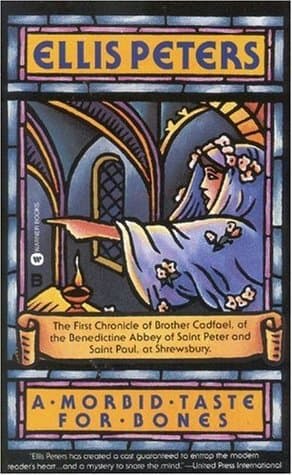
Synopsis
Covers the whole plot, including the ending.
- Difficulty
- Easy
- Pacing
- Moderate
- Mood
- Atmospheric, Intriguing, Historically Immersive, Thought-provoking
- Read it if
- You enjoy historical mysteries with a strong sense of place and well-developed characters, particularly if you're interested in medieval England and Wales.
- Skip it if
- You prefer fast-paced, action-driven mysteries or are put off by religious themes central to the plot.
A Morbid Taste for Bones Plot Summary
Covers the whole plot, including the ending.
The Abbey's Ambition for Saint Winifred
In 1137, Abbot Heribert of Shrewsbury Abbey wants to raise the abbey's standing and wealth. He decides to get Saint Winifred's relics from her burial place in Gwytherin, a remote Welsh village. He sends a small group, led by Prior Robert, with Brother Cadfael, a former crusader and herbalist, as their Welsh translator. The group also includes Brother Columbanus, a young monk, and a few lay brothers. Their journey to the isolated village is hard, setting the scene for a cultural clash between the monks and the traditional Welsh villagers.
Arrival in Gwytherin and Initial Resistance
When they arrive in Gwytherin, the Shrewsbury group gets a mixed welcome. Some villagers, like Father Huw and Sioned, are open to moving the saint. Others strongly protect their saint. Rhisiart, a respected elder, is the most vocal opponent. He sees the monks' plan as sacrilege and theft. He argues passionately against disturbing Winifred's peace, rallying the community against the monks. Cadfael observes the situation and understands the deep spiritual and cultural meaning Winifred has for the Welsh people.
Negotiations and Growing Tensions
Prior Robert wants to complete Abbot Heribert's mission. He uses persuasion and veiled threats, talking about spiritual benefits and possible wealth for the village. But his unyielding approach only strengthens Rhisiart's resolve and alienates many villagers. Cadfael, as translator, tries to mediate, understanding Welsh language and culture, but Prior Robert mostly ignores him. The talks become more bitter. Rhisiart refuses to let the relics be moved, setting up a conflict.
The Murder of Rhisiart
One morning, the community finds Rhisiart dead in the woods, an arrow in his chest. The murder throws the village into chaos and casts suspicion on the Shrewsbury monks, especially Prior Robert, due to his animosity with Rhisiart. Villagers also whisper about divine punishment, suggesting Saint Winifred herself killed her opponent. Brother Cadfael, with his sharp observation and practical experience, immediately sees this as a human crime, not a divine one, and begins his own quiet investigation.
Cadfael's Initial Investigation and Suspects
Cadfael examines the crime scene and the arrow, noting its unusual feathers. He starts questioning villagers, discreetly gathering information. He learns about local disputes and relationships, including a rivalry between Rhisiart and his nephew, Meriet, over land. He also finds that Sioned, who had been open to the translation, had a complex relationship with Rhisiart, her guardian. The arrow becomes a key clue, leading Cadfael to consider who in the village had such a weapon and the skill to use it, slowly narrowing down suspects.
The Discovery of the Archer's Identity
Through careful questioning and observation, Cadfael learns the arrow's distinct fletching is typical of a local style, known only to a few skilled archers in Gwytherin. He focuses on Meriet, Rhisiart's nephew, and Engelard, a traveling Norman bowman who had been in the area. Cadfael also thinks about a local hunter, but the precise shot suggests a more personal motive. His investigation shows the murder weapon was likely made locally, increasing suspicion within the community and ruling out outside possibilities.
Unraveling the Love Triangle
As Cadfael looks deeper, he uncovers a web of romantic relationships. He learns Sioned and Meriet were secretly in love, but Rhisiart, Sioned's guardian, strongly disapproved. He wanted her to marry someone else for political and social reasons. Engelard, the Norman archer, also liked Sioned, creating a tense love triangle. This discovery provides a strong motive for murder, as Rhisiart's death would remove the main obstacle to Sioned and Meriet's union. Cadfael realizes the murder is about human emotions, not the relics.
The Confession and the True Motive
Cadfael, with careful questioning and by showing his evidence, eventually confronts Meriet. Overwhelmed by Cadfael's deductions and his own guilt, Meriet confesses to killing Rhisiart. He explains that Rhisiart's firm opposition to his marriage with Sioned, along with his plans to force Sioned into another marriage, drove him to desperation. Meriet saw Rhisiart's death as the only way to secure his future with Sioned, believing it was an act of justice for their forbidden love. His confession brings a tragic end to the immediate mystery.
The Translation of Saint Winifred
With the killer identified and the authorities satisfied, the issue of Saint Winifred's relics comes up again. Despite the initial resistance and the tragedy, the villagers, perhaps tired from the events or seeing it as unavoidable, agree to the translation. The relics are carefully dug up and prepared for their trip to Shrewsbury Abbey. The process is serious, mixed with sadness for Rhisiart's death and a reluctant acceptance of the saint's departure. The Shrewsbury monks, having finished their mission, prepare to return.
Return to Shrewsbury and Reflection
The Shrewsbury group, now carrying Saint Winifred's relics, makes the long journey back to the abbey. Abbot Heribert is happy with their success, seeing it as a victory for the abbey. Cadfael, however, remains thoughtful. He thinks about human nature, the blurred lines between justice and revenge, and the power of faith, both true and manipulative. He carries the weight of the murder and the knowledge of the human cost involved in getting the saint's bones, a stark contrast to the triumphant mood of his fellow monks.
Principal Figures
Brother Cadfael
Protagonist
A Welsh Benedictine monk, former crusader, and herbalist with a keen mind for justice.
Brother Cadfael is a pragmatic, observant, and morally upright Benedictine monk. A man of the world before taking his vows, he served as a soldier and sailor in the Crusades, which gives him a unique perspective on human nature, law, and justice. He is a skilled herbalist, tending to the abbey's gardens and infirmary, and possesses a deep understanding of human psychology. He is deeply empathetic, particularly towards the Welsh people, and often finds himself at odds with the more rigid and ambitious members of his order. His intelligence and common sense make him an astute investigator.
Relationships: Prior Robert (Colleague; often in conflict due to differing moral and practical approaches.); Abbot Heribert (Superior; Cadfael respects his office but questions his ambition.); Rhisiart (Acquaintance; initially an adversary in the relic dispute, later the victim of murder.); Sioned (Acquaintance; a young woman whose fate is intertwined with the murder.)
Prior Robert
Antagonist (in the relic dispute)
The zealous, ambitious, and often insensitive leader of the Shrewsbury expedition.
Prior Robert is a devout but rigid and ambitious Benedictine monk. He is driven by a fervent desire to elevate Shrewsbury Abbey's status through the acquisition of holy relics, viewing the villagers of Gwytherin as obstacles to be overcome rather than people to be understood. He lacks Cadfael's worldly wisdom and empathy, often resorting to heavy-handed tactics and moralizing to achieve his goals. His insensitivity and lack of cultural understanding make him unpopular with the Welsh villagers and frequently put him at odds with Cadfael.
Relationships: Brother Cadfael (Colleague; frequently dismisses Cadfael's advice and insights.); Abbot Heribert (Superior; eager to please and fulfill the Abbot's directives.); Rhisiart (Adversary; their clash over the relics is intense and personal.)
Rhisiart
Victim
A respected and influential elder of Gwytherin, fiercely opposed to the relic's removal.
Rhisiart is a proud and traditional Welsh elder in Gwytherin, deeply respected by his community. He is fiercely protective of Saint Winifred's resting place and views the Shrewsbury monks' attempt to acquire her relics as a sacrilege and an insult to his people's heritage. He is a strong, unyielding figure who becomes the primary obstacle to Prior Robert's mission. His unwavering stance makes him a target, ultimately leading to his murder. He is also the guardian of Sioned, and his decisions about her future play a significant role in the events.
Relationships: Prior Robert (Bitter adversary over the relics.); Brother Cadfael (Initially an opponent, but Cadfael respects his conviction.); Meriet (Nephew and rival for land/Sioned's hand.); Sioned (Guardian; his decisions about her marriage are central to the plot.)
Sioned
Supporting
A young, devout Welsh maiden whose affections are central to the murder's motive.
Sioned is a young woman from Gwytherin, initially more open to the idea of Saint Winifred's translation than many of her peers. She is devout and gentle but also possesses an inner strength. She is in love with Meriet, but her guardian, Rhisiart, opposes their union, intending her for another man. Her romantic entanglements and her guardian's strong will become a key element in the murder investigation, revealing the deep personal stakes involved beneath the surface of the religious dispute. She represents the younger generation of Gwytherin, caught between tradition and personal desire.
Relationships: Rhisiart (Guardian; his decisions control her future.); Meriet (Lover; their forbidden love is the motive for murder.); Engelard (Admirer; another suitor for her hand.)
Meriet
Murderer
Rhisiart's nephew and Sioned's lover, driven to murder by desperation.
Meriet is Rhisiart's nephew, a young man of Gwytherin deeply in love with Sioned. He is portrayed as earnest and passionate, but also impulsive and desperate when faced with the prospect of losing Sioned. Rhisiart's unwavering opposition to their marriage, and his plans for Sioned to marry another, push Meriet to commit murder. He is skilled with a bow, making him a prime suspect, and his actions highlight the tragic consequences of thwarted love and familial conflict.
Relationships: Rhisiart (Uncle and rival; killed Rhisiart to clear the path to Sioned.); Sioned (Lover; the object of his intense affection and motivation.)
Abbot Heribert
Supporting
The ambitious head of Shrewsbury Abbey, instigator of the relic quest.
Abbot Heribert is the ambitious and politically astute head of Shrewsbury Abbey. He is dedicated to enhancing the prestige and wealth of his Benedictine order, viewing the acquisition of Saint Winifred's relics as a significant step towards this goal. While not directly involved in the events in Gwytherin, his directives set the entire plot in motion. He represents the institutional power and political maneuvering within the medieval church, contrasted with Cadfael's more grounded sense of justice and faith.
Relationships: Prior Robert (Subordinate; relies on him to execute the relic quest.); Brother Cadfael (Subordinate; values Cadfael's skills but is unaware of his deep moral conflicts.)
Brother Columbanus
Supporting
A young, devout monk accompanying the Shrewsbury party.
Brother Columbanus is a young, earnest, and deeply pious monk from Shrewsbury Abbey. He is part of the expedition to Gwytherin and represents the more innocent and devout aspect of monastic life, in contrast to Prior Robert's ambition and Cadfael's worldly pragmatism. He is often distressed by the worldly conflicts and the murder, struggling to reconcile them with his spiritual ideals. His reactions provide a foil for Cadfael's more experienced perspective.
Relationships: Brother Cadfael (Colleague; looks up to Cadfael for guidance.); Prior Robert (Superior; follows his lead but is sometimes uneasy with his methods.)
Father Huw
Supporting
The local priest of Gwytherin, caught between his parishioners and the Benedictines.
Father Huw is the elderly and somewhat weary local priest of Gwytherin. He is a respected figure in the village but finds himself caught between the strong opinions of his parishioners, particularly Rhisiart, and the demands of the powerful Benedictine monks from Shrewsbury. He tries to mediate the dispute over Saint Winifred's relics, but his influence is limited. He embodies the challenges faced by local clergy in dealing with the authority of larger monastic institutions and the deep-seated traditions of their flock.
Relationships: Rhisiart (Parishioner; respects Rhisiart's influence.); Prior Robert (Ecclesiastical peer; tries to negotiate with him.)
Engelard
Mentioned
A travelling Norman bowman, a brief suspect in the murder.
Engelard is a Norman bowman who is briefly a suspect in Rhisiart's murder. He is a skilled archer and also harbors an interest in Sioned, making him seem a plausible culprit for a time. His presence in the village and his specific skills with a bow contribute to the initial complexity of Cadfael's investigation, highlighting the possibility of an outsider's involvement before the focus shifts to local motives.
Relationships: Sioned (Admirer; his interest in her adds to the love triangle.); Brother Cadfael (Briefly investigated by Cadfael.)
Themes & Insights
Faith and Superstition vs. Pragmatism
The novel explores the tension between true religious faith, common superstitions, and the practical, often self-serving motives of institutions. Prior Robert shows a rigid, institutional faith focused on relics and power. The villagers' faith in Saint Winifred is personal and linked to their land. Cadfael bridges these views, understanding both spiritual longing and human flaws. The murder itself questions divine intervention versus human action, with some villagers believing Winifred killed Rhisiart, while Cadfael looks for a human culprit. The search for relics, seemingly an act of faith, is driven by the abbey's ambition.
“There are two ways of knowing God, Brother Cadfael. One is by the spirit, and the other is by the bones.”
Justice and Law
Justice is a main theme in the story. Cadfael's personal sense of justice, from his worldly experience and moral compass, drives his investigation. This often clashes with the formal, sometimes unfair, legal systems of the time, and the abbey's own idea of 'justice' as getting relics. Rhisiart's murder forces Cadfael to seek justice for a human crime, regardless of its effect on the abbey's mission. The ending, where the killer is found but the relics are still taken, raises questions about different forms of justice and their priorities.
“There is no justice save what we make for ourselves.”
Cultural Clash and Colonialism
The novel clearly shows the clash between the Norman-influenced Benedictine monks from Shrewsbury and the Welsh villagers of Gwytherin. The monks, representing a more central and powerful religious authority, try to impose their will and culture on the remote Welsh community. The language barrier, different customs, and contrasting views on the sanctity of land and saints highlight this cultural conflict. Getting Saint Winifred's relics can be seen as cultural appropriation or spiritual colonialism, where the dominant power tries to take over the symbols of the less powerful. Cadfael, as a Welshman, handles this divide with empathy.
“They are taking our saint, our solace, our very heart, and they call it an act of God.”
Human Passion and Its Consequences
Underneath the religious and cultural conflict, powerful human emotions drive the story: love, ambition, jealousy, and desperation. Rhisiart's murder is not about the relic dispute. It results from Meriet's desperate love for Sioned and Rhisiart's strong control over their future. Prior Robert's ambition for the abbey also causes much of the initial conflict. The novel shows how intense emotions can lead to tragic and unexpected outcomes, even overshadowing grand spiritual goals.
“It is not God who moves men to such deeds, but the devil in their own hearts.”
Plot Devices & Literary Techniques
The Locked Room Mystery (Psychological)
A murder occurs within a closed, isolated community, limiting suspects and forcing internal investigation.
While not a literal 'locked room,' the remote Welsh village of Gwytherin functions as a psychological locked room. Its isolation from the outside world means that the murderer must be one of its inhabitants or one of the few visitors. This device concentrates the tension and suspicion within the small community, allowing Cadfael to delve deeply into the personal histories, relationships, and hidden motives of a limited cast of characters. It emphasizes that the solution lies not in external factors, but in the intricate web of human connections within the village.
The Red Herring
Misleading clues or suspects designed to divert the reader and investigator from the true culprit.
The novel employs several red herrings. Initially, suspicion falls heavily on Prior Robert due to his contentious relationship with Rhisiart, and on the idea of divine retribution. The presence of Engelard, a skilled Norman bowman who also had an interest in Sioned, further complicates the investigation, suggesting an outsider might be responsible. These diversions force Cadfael, and the reader, to consider multiple possibilities before the true, more personal motive and perpetrator are revealed. This device builds suspense and allows for a more satisfying unraveling of the mystery.
The Outsider-Investigator
A detective figure who is not originally part of the community where the crime occurs, offering a fresh perspective.
Brother Cadfael serves as the outsider-investigator. Although Welsh by birth, he is a monk from Shrewsbury, a 'foreigner' in Gwytherin. This position allows him a degree of impartiality and detachment, enabling him to observe the villagers' customs and relationships without being fully entangled in their local politics or prejudices. His unique blend of monastic vows and worldly experience provides him with the necessary empathy to understand the local culture, while his outsider status grants him the critical distance required to piece together the truth without succumbing to local biases or superstitions.
The MacGuffin (The Relics)
An object or goal that drives the plot forward but is ultimately of secondary importance to the main conflict.
The relics of Saint Winifred act as the primary MacGuffin in the story. Their acquisition is the initial goal that sets the Shrewsbury monks on their journey to Gwytherin, leading to the conflict with Rhisiart and, indirectly, to his murder. While the relics are the ostensible reason for the expedition, the true heart of the story and the mystery lies in the human passions, jealousies, and moral dilemmas that arise around their presence. The relics themselves become less important than the human drama they provoke, effectively serving as a catalyst for the real plot.
A Morbid Taste for Bones Quotes
“For good or ill, the world would never be quite the same again. It had begun to change, and the change would not be stopped.”
“There are some things that even the most pious of men cannot resist, and a good mystery is one of them.”
“It is a strange thing, this human heart. It can hold so much love, and so much hate, sometimes for the same person.”
“Justice is not always a matter of law, but sometimes of what is right in the sight of God.”
“The past is never truly dead. It merely sleeps, waiting for a moment to stir.”
“God's will can be a fearsome thing, especially when men presume to know it.”
“Sometimes, the smallest of clues can unravel the largest of deceptions.”
“There is a great deal of difference between what is true and what men choose to believe.”
“Even in the holiest of places, the shadows of worldly desires can linger.”
“Life has a way of twisting the straightest paths into tangled mazes.”
“It takes a certain kind of courage to admit one's own folly.”
“The dead, alas, tell no tales, but they leave behind those who do.”
“Patience is a virtue, but sometimes a swift hand is more effective.”
“What is hidden in the earth will eventually come to light, one way or another.”
Quiz
10 questions on the plot and the characters. Each answer comes with a short explanation.
Question 1
What year does the story 'A Morbid Taste for Bones' primarily take place?
- 1066
- 1137
- 1215
- 1348
Show answer
B. 1137 The synopsis explicitly states, 'Now, in 1137, the ambitious head of Shrewsbury Abbey has decided to acquire the sacred remains for his Benedictine order.'
Question 2
What is the primary objective of the expedition from Shrewsbury Abbey to Gwytherin?
- To establish a new monastery
- To acquire the relics of Saint Winifred
- To conduct a diplomatic mission with local Welsh lords
- To investigate a series of local crimes
Show answer
B. To acquire the relics of Saint Winifred The head of Shrewsbury Abbey's ambition is 'to acquire the sacred remains for his Benedictine order,' specifically the grave of Saint Winifred.
Question 3
What is Brother Cadfael's role during the expedition to Gwytherin?
- He is the leader of the expedition.
- He is sent as a translator.
- He is a medical attendant for the monks.
- He is tasked with guarding the relics.
Show answer
B. He is sent as a translator. Brother Cadfael is described as being 'sent on the expedition to translate,' indicating his linguistic skills are crucial due to his Welsh heritage.
Question 4
Where is the remote Welsh mountain village where Saint Winifred's grave is located?
- Shrewsbury
- Gwytherin
- Chester
- Canterbury
Show answer
B. Gwytherin The synopsis clearly states, 'In the remote Welsh mountain village of Gwytherin lies the grave of Saint Winifred.'
Question 5
What is the initial reaction of the rustic villagers of Gwytherin to the Benedictine's offer for Saint Winifred's relics?
- They are unanimously enthusiastic about the offer.
- They are passionately divided by the offer.
- They are indifferent to the Benedictine's proposal.
- They immediately reject the offer without discussion.
Show answer
B. They are passionately divided by the offer. The text states that the villagers are 'passionately divided by the Benedictine's offer for the saint's relics,' indicating a strong disagreement among them.
Question 6
What happens to the leading opponent of moving Saint Winifred's grave?
- He is convinced to change his mind.
- He disappears mysteriously.
- He is shot dead with a mysterious arrow.
- He suffers from a natural illness.
Show answer
C. He is shot dead with a mysterious arrow. The synopsis reveals that 'The leading opponent to moving the grave has been shot dead with a mysterious arrow.'
Question 7
What is Brother Cadfael's initial reaction or suspicion regarding the death of the opponent to moving the grave?
- He believes Saint Winifred herself caused the death.
- He suspects a 'carnal hand' did the killing.
- He thinks it was a tragic accident.
- He assumes it was an act of divine judgment.
Show answer
B. He suspects a 'carnal hand' did the killing. Despite some saying 'Winifred herself held the bow,' Brother Cadfael, being 'canny, wise, and all too worldly,' 'knows a carnal hand did the killing.'
Question 8
What is the potential consequence for Brother Cadfael if his plan to unearth a murderer goes awry?
- He might be excommunicated from the church.
- He could face scandal or his own ruin.
- He might be forced to return to Shrewsbury Abbey immediately.
- He could be promoted within the Benedictine order.
Show answer
B. He could face scandal or his own ruin. The synopsis warns that Cadfael doesn't know 'that his plan to unearth a murderer may dig up a case of love and justice...where the wages of sin may be scandal or Cadfael's own ruin.'
Question 9
Which of the following describes Brother Cadfael's character as presented in the synopsis?
- Naive and easily fooled
- Overly spiritual and detached from worldly affairs
- Canny, wise, and all too worldly
- Ambitious and power-seeking
Show answer
C. Canny, wise, and all too worldly The text describes Brother Cadfael as 'Canny, wise, and all too worldly,' highlighting his practical and insightful nature.
Question 10
The conflict in Gwytherin arises from the villagers' differing views on:
- The taxation policies of the local lord.
- The Benedictines' offer to move Saint Winifred's relics.
- A dispute over land ownership in the village.
- The proper way to conduct a religious service.
Show answer
B. The Benedictines' offer to move Saint Winifred's relics. The core conflict mentioned is that the 'rustic villagers of Gwytherin [are] passionately divided by the Benedictine's offer for the saint's relics.'
A Morbid Taste for Bones FAQ
What is the central conflict that drives the plot of 'A Morbid Taste for Bones'?
The central conflict revolves around the Shrewsbury Abbey's controversial expedition to Gwytherin, Wales, to acquire the relics of Saint Winifred. This ambition creates deep divisions among the Welsh villagers, some of whom fiercely resist the removal of their local saint, leading to escalating tensions and ultimately murder.
Who is Brother Cadfael, and what is his role in the initial expedition?
Brother Cadfael is a Benedictine monk from Shrewsbury Abbey, originally a Welshman with a worldly past as a crusader and sailor. He is sent on the expedition to Gwytherin primarily as an interpreter and negotiator due to his native language skills, bridging the communication gap between the English monks and the Welsh villagers.
What event triggers the murder investigation in Gwytherin?
The murder investigation is triggered when Rhisiart, the most vocal and influential opponent of moving Saint Winifred's bones, is found shot dead by an arrow. This violent act immediately casts suspicion on various villagers and introduces the mystery Cadfael must solve.
Who is the primary suspect initially, and why?
Initially, the primary suspect is likely Father Huw, the local priest of Gwytherin, due to his staunch opposition to the Abbey's plans and his strong influence over the villagers. His emotional pleas against the removal of the relics make him an obvious, though not necessarily correct, target for suspicion.
How does Cadfael's past experiences influence his approach to solving the murder?
Cadfael's past as a soldier and sailor gives him a pragmatic, worldly perspective that contrasts with the more sheltered views of his fellow monks. He relies on observation, common sense, and an understanding of human nature rather than purely spiritual explanations, which helps him see beyond superficial clues.
What is the significance of the arrow used in the murder?
The arrow is significant because it is a common hunting tool in the region, making it difficult to trace to a specific owner. Its presence also fuels the superstitious belief among some villagers that Saint Winifred herself intervened, adding a layer of local folklore to the mystery.
Who is Annest, and what is her relationship to the victim and other key characters?
Annest is a young woman in Gwytherin who was engaged to Rhisiart, the murder victim. She also has a secret, deeper affection for Gildas, another young man in the village, creating a complex romantic entanglement that provides a strong motive for the murder.
What role do the local superstitions and beliefs play in the investigation?
Local superstitions, particularly the belief in Saint Winifred's active protection of her grave, complicate the investigation by suggesting supernatural involvement. Cadfael must navigate these beliefs to find the rational, human explanation for the crime, often using them to his advantage to observe reactions.
How does Gildas's character evolve throughout the story?
Gildas initially appears as a quiet, somewhat overshadowed young man, but as the investigation progresses, his deep love for Annest and his desperation to protect her drive his actions. He reveals a hidden strength and capacity for decisive, albeit misguided, action in the name of justice and love.
What is the true motive behind Rhisiart's murder?
The true motive behind Rhisiart's murder is not directly related to the relics but to a personal vendetta. He was killed by Gildas, who sought to prevent Rhisiart from exposing a past secret involving Annest's father and a crime for which he had been wrongly blamed and exiled, thus protecting Annest's family honor.
How does Cadfael ultimately deduce the killer's identity?
Cadfael deduces the killer's identity through careful observation of human behavior, inconsistencies in alibis, and an understanding of the emotional ties within the village. He notices the subtle interactions between Annest and Gildas, and pieces together the hidden love affair and the underlying motive of protecting Annest's father's reputation.
What moral dilemma does Cadfael face at the end of the book regarding the killer?
Cadfael faces a significant moral dilemma regarding Gildas. He understands the complex motives of love and justice that drove the murder and, recognizing the greater good of protecting Annest and her family from further scandal, ultimately chooses to allow Gildas to escape to exile rather than face public justice.
How does the resolution of the murder connect to the theme of justice versus law?
The resolution highlights the theme of justice versus law by showing Cadfael choosing a form of 'justice' that serves the emotional and communal well-being of Gwytherin over strict adherence to the law. He allows Gildas to escape, believing this outcome is more just for all involved, particularly Annest, than a formal conviction.
What is the ultimate fate of Saint Winifred's relics?
Despite the murder and the strong opposition, Saint Winifred's relics are ultimately acquired by Shrewsbury Abbey. The Abbey's determination, combined with the resolution of the murder, allows the expedition to proceed with its original goal, bringing the bones back to England.
What subtle clues did Cadfael pick up about Annest and Gildas's relationship?
Cadfael noticed subtle glances, protective behaviors, and unspoken understandings between Annest and Gildas that went beyond a simple friendship. He perceived a deep, hidden affection that explained their desperate actions and their mutual desire to shield each other from suspicion and scandal.
How does the book explore the clash between English and Welsh cultures?
The book explores this clash through the Abbey's English monks' attempts to impose their will on the Welsh villagers, who fiercely protect their local traditions and saint. Cadfael, as a Welshman serving an English order, acts as a bridge, understanding both perspectives and the inherent tensions.
What does the title 'A Morbid Taste for Bones' signify beyond the literal acquisition of relics?
The title signifies not just the literal desire for saintly relics, but also a more morbid taste for delving into the past, unearthing secrets, and confronting the darker aspects of human nature—jealousy, revenge, and hidden loves—that lie beneath the surface of seemingly pious pursuits.
How does Cadfael's decision regarding Gildas reflect his personal moral code?
Cadfael's decision reflects his pragmatic and compassionate moral code, which values mercy and understanding over rigid adherence to law when circumstances warrant. His past experiences have taught him that justice isn't always black and white, and sometimes, a different path serves a greater good, especially when love and honor are involved.
About the author
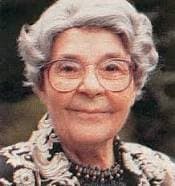
Ellis Peters was a British author known for her historical mystery novels, particularly the Brother Cadfael series. "A Morbid Taste for Bones" is the first book in this series, which features a medieval monk solving crimes in 12th-century England. Peters' work has garnered a dedicated readership and has been adapted into television series.
Similar books
- The Name of the Rose
Umberto Eco
4.1 (301k) average on GoodreadsHistorical FictionFeatures a medieval monastic setting and a friar detective solving a murder within the confines of an abbey.
- The Pillars of the Earth
Ken Follett
4.3 (649k) average on GoodreadsFantasyEpic historical fiction set in medieval England, exploring monastic life, politics, and human drama.
- To Kill a Mockingbird
Harper Lee
4.3 (4.5M) average on GoodreadsHistorical FictionIn the 1930s Jim Crow South, Harper Lee writes about racial injustice, moral growth, and the quiet courage of a lawyer father, Atticus Finch, as seen through his young daughter's eyes.
- The Great Gatsby
F. Scott Fitzgerald
3.9 (3.8M) average on GoodreadsHistorical FictionIn the opulent Roaring Twenties, a mysterious millionaire's lavish parties hide his desperate, tragic pursuit of a lost love, exposing the emptiness within the American Dream.
- Pride and Prejudice
Jane Austen
4.3 (3M) average on GoodreadsHistorical FictionIn a society focused on status and money, Elizabeth Bennet navigates love and pride, challenging Mr. Darcy and social expectations to find true affection.
- Angels & Demons
Dan Brown
3.9 (2.7M) average on GoodreadsThrillerA Harvard symbologist races through Rome's ancient sites, deciphering cryptic clues to unmask the Illuminati and stop a vengeful plot to destroy the Vatican with a stolen antimatter weapon.






Enjoyed the summary?
A summary gives you the shape of the book. The book itself has the detail, the examples and the voice.
Find A Morbid Taste for Bones on AmazonAs an Amazon Associate, BookBrief earns from qualifying purchases. How we're funded