
Synopsis
Covers the whole plot, including the ending.
- Difficulty
- Easy
- Pacing
- Fast
- Mood
- Suspenseful, Thought-provoking, Dark, Warning
- Read it if
- You enjoy classic science fiction short stories that explore the profound and often terrifying consequences of seemingly small actions.
- Skip it if
- You prefer longer narratives or dislike stories with dark, irreversible consequences.
A Sound of Thunder Plot Summary
Covers the whole plot, including the ending.
The Time Safari Office
In 2055, Travis, the safari leader, explains the strict rules of Time Safari, Inc. to the wealthy hunter Eckels. Eckels, an eager but somewhat proud man, pays a lot for the chance to hunt a Tyrannosaurus Rex. Travis stresses how important it is to stay on the anti-gravity Path, warning that even a small change could alter the future. He explains they only hunt dinosaurs already set to die, to minimize impact on the past. Eckels seems more interested in the thrill than the seriousness of the rules.
Journey into the Past
Eckels, Travis, and two other hunters, Billings and Kramer, along with Travis's assistant, Lesperance, enter the time machine. Lesperance, a 'time-traveling scout,' had found a Tyrannosaurus Rex that would die within minutes of their arrival, ensuring their hunt would not change history. The group travels sixty million years back to the Tertiary Period. The journey itself is disorienting and impressive. They arrive in a primeval landscape, very different from their future world.
The Path and the Warning
In the prehistoric jungle, Travis again stresses that everyone must stay on the anti-gravity Path, a shimmering metallic track above the ground. He explains that even one changed blade of grass could cause huge changes in the future, comparing it to the 'butterfly effect.' The Path keeps them from touching the past environment, preventing contamination. Eckels hears the warnings, but the vastness and strangeness of the past overwhelm him, and his initial confidence turns to unease and fear.
Encountering the Tyrannosaurus Rex
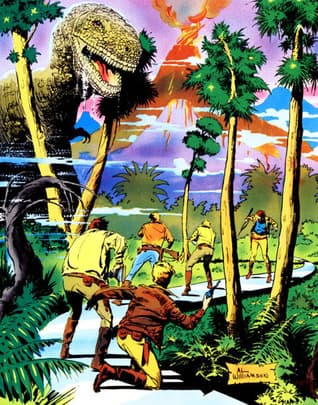
The group soon finds their target: a huge Tyrannosaurus Rex, described as a 'mountain of flesh' and 'death in a forest.' Its immense size and power are overwhelming. Eckels, at first confident, is frozen by fear. He sees the dinosaur's eyes, its huge jaws, and hears its loud roar. The reality of the beast breaks his composure, making him understand the true danger and scale of his undertaking. His courage completely disappears in the face of such raw power.
Eckels's Panic and Deviation
As the Tyrannosaurus Rex charges, Eckels, terrified, panics. He drops his rifle and, against all warnings, stumbles off the anti-gravity Path. Travis screams at him to return, but Eckels, in shock, runs into the jungle for safety. Billings and Kramer manage to shoot the dinosaur, killing it, but the harm is done. Eckels's careless act of leaving the Path, driven by his fear, has possibly started an irreversible chain of events, breaking the most important rule of Time Safari, Inc.
The Aftermath of the Hunt
After the Tyrannosaurus Rex dies, Travis is furious. He scolds Eckels for his fear and for leaving the Path, emphasizing the extreme danger Eckels caused and the possible future consequences. He forces Eckels to retrieve the bullets from the dinosaur's body, a grim task meant as punishment and to ensure no foreign material remains in the past. Eckels, now ashamed and afraid of Travis's anger, must face the scale of his mistake, understanding he broke a crucial rule.
The Return Journey
The group, including a shaken Eckels, boards the time machine to return to 2055. The tension inside the machine is thick. Travis remains angry at Eckels, who is now quiet and afraid. As they travel through time, the subtle shifts of temporal displacement are again described, but this time, they feel threatening. Everyone wonders if Eckels's mistake truly had an impact, or if they escaped consequences. Suspense builds as they near their own time.
Subtle Changes in the Present
When they arrive back in the Time Safari office, small changes are immediately clear. The air feels different, there's a strange chemical smell, and the Time Safari, Inc. sign looks slightly off. Travis and Lesperance notice these differences with growing alarm. Eckels also senses something wrong, a feeling of unease that grows with each observation. The familiar environment now feels subtly strange, suggesting the past has indeed changed, even if the full extent is not yet clear. Dread increases for everyone.
The Butterfly and the Altered Sign
Eckels feels a strange need to check the bottom of his mud-caked boots. There, stuck in the sole, is a small, dead, golden butterfly. This small detail explains the big changes. He realizes that when he stumbled off the Path, he accidentally stepped on this butterfly, changing the delicate balance of the prehistoric ecosystem. Travis, seeing the butterfly, is horrified and angry, confirming his worst fears. The Time Safari, Inc. sign now reads 'TYME SAFARI, INC.,' and the English language itself has subtly shifted.
The New President and the Sound of Thunder
The biggest and most alarming change is the result of the recent presidential election. Before they left, a liberal, democratic candidate had won, but now a fascist leader named Deutscher is in power. This drastic political shift confirms the catastrophic impact of Eckels's actions. Travis, devastated and enraged by the irreversible damage, raises his rifle. Eckels, understanding his fate, begs for his life, but it is too late. The story ends with 'A Sound of Thunder,' implying Travis shoots Eckels, the final, tragic result of a single, carelessly crushed butterfly.
Principal Figures
Eckels
Protagonist/Foil
A wealthy but cowardly hunter who inadvertently alters history.
Eckels is a wealthy, somewhat arrogant, and initially thrill-seeking individual who pays a significant sum for the ultimate hunting experience. He is characterized by his initial bravado, which quickly dissolves into paralyzing fear when confronted with the true danger of the Tyrannosaurus Rex. His lack of respect for the rules and his impulsive cowardice lead directly to the story's tragic climax. He represents humanity's potential for carelessness and arrogance in the face of profound power.
Relationships: Travis (Client/Guide; eventually victim/punisher); Lesperance (Fellow safari participant; less direct interaction)
Travis
Antagonist/Moral Compass
The strict, responsible leader of the Time Safari.
Travis is the stern, highly disciplined leader of Time Safari, Inc. He is deeply committed to preserving the integrity of the past and the future, meticulously explaining and enforcing the strict rules of time travel. He is pragmatic, serious, and unwavering in his belief that even the smallest deviation can have catastrophic consequences. His anger is a reflection of his profound understanding of the delicate balance of time and his responsibility to maintain it. He embodies the principle of cosmic responsibility.
Relationships: Eckels (Guide/Client; becomes judge/executioner); Lesperance (Colleague; shares understanding of time travel's gravity)
Lesperance
Supporting
Travis's assistant and the scout who identifies target dinosaurs.
Lesperance is Travis's assistant, responsible for the crucial task of scouting the past to identify dinosaurs that are already destined to die within minutes of the hunters' arrival. This meticulous planning is essential to minimize any impact on the timeline. He is presented as knowledgeable and professional, understanding the intricate science and ethical responsibilities of time travel. While less vocal than Travis, his role highlights the company's efforts to be responsible, despite the inherent risks.
Relationships: Travis (Colleague; shares responsibility for the safari); Eckels (Fellow safari participant; observes Eckels's transgression)
Billings
Supporting/Mentioned
One of the other hunters on the safari.
Billings is one of the other wealthy hunters who accompanies Eckels, Travis, and Kramer on the Time Safari. He is less developed as a character than Eckels or Travis, serving primarily to round out the group of clients. He is shown to be more composed than Eckels in the face of the Tyrannosaurus Rex, successfully firing his weapon. His presence helps to illustrate the typical client of Time Safari, Inc., one who adheres to the rules, unlike Eckels.
Relationships: Eckels (Fellow hunter); Travis (Client/Guide)
Kramer
Supporting/Mentioned
Another hunter on the prehistoric safari.
Kramer is the second of the two additional hunters on the Time Safari. Like Billings, he is not deeply characterized but serves to demonstrate the professional nature of the hunt and the reactions of other clients. He also manages to fire his rifle at the Tyrannosaurus Rex, indicating a level of competence and adherence to the plan that Eckels lacks. His inclusion reinforces the idea that most clients follow the rules, making Eckels's transgression stand out even more.
Relationships: Eckels (Fellow hunter); Travis (Client/Guide)
Deutscher
Mentioned
The fascist presidential candidate who wins the altered election.
Deutscher is a character who only exists in the altered future created by Eckels's actions. He is described as a 'dictator' and a 'strongman,' representing a totalitarian political ideology. His victory in the presidential election, which was previously won by a more liberal candidate, symbolizes the profound and negative shift in human history caused by the crushed butterfly. He is a symbolic figure, representing the worst possible outcome of unchecked historical alteration.
Themes & Insights
The Butterfly Effect and the Fragility of Time
Even the smallest change in the past can have huge and unpredictable consequences on the future. Travis explains this, warning that a crushed mouse could 'tip the scales of the future.' This is clearly shown when Eckels steps on a butterfly, leading to a changed language, a different political landscape, and a chilling shift in human civilization. The story emphasizes how all events are connected and the great responsibility that comes with altering the past.
“A mouse could destroy an earthquake. A butterfly could change the world.”
Human Arrogance and Irresponsibility
The story criticizes human arrogance and the belief that technology means freedom from consequences. Eckels shows this, paying a lot for a dangerous thrill, but lacking the respect and discipline needed. His initial confidence hides his fear, and his disregard for Travis's warnings about staying on the Path comes from a sense of entitlement and a failure to understand the seriousness of his actions. His carelessness leads to disaster, showing the dangers of human pride when using great power, like time travel.
“He's not a hunter. He's a fool.”
The Nature of Fear and Cowardice
Fear drives much of the story, especially for Eckels. At first confident, he is paralyzed by terror when faced with the raw power of the Tyrannosaurus Rex. His fear causes him to abandon his post and, importantly, to step off the Path. This act of fear is not just a personal failure but has cosmic results. The story explores how fear can override reason and responsibility, leading to choices with devastating, unforeseen consequences. Eckels's final punishment results directly from his inability to control his fear.
“It was a sound like a great volume of thunder. It was the sound of a Tyrannosaurus Rex.”
Consequences and Retribution
The story strongly emphasizes that actions have consequences, especially when they affect something as basic as the timeline. Travis's initial warnings are not suggestions but absolute rules, and when Eckels breaks them, the punishment is swift and final. The altered future, with its changed language and fascist leader, is a direct result of Eckels's single careless step. The story ends with Travis's execution, a grim form of justice and the ultimate price for altering existence.
“We don't belong here. We're an anachronism. We don't even belong in our own time anymore.”
Plot Devices & Literary Techniques
The Path
An anti-gravity track designed to prevent contact with the past.
The Path is a crucial plot device, serving as a physical manifestation of the rules of time travel. It is a shimmering, metallic track suspended above the prehistoric jungle, explicitly designed to prevent the hunters from touching anything in the past. It symbolizes the delicate balance of the timeline and the absolute necessity of non-interference. Eckels stepping off the Path directly triggers the story's central conflict and its devastating consequences, making it a pivotal element in demonstrating the 'butterfly effect'.
The Dead Butterfly
The seemingly insignificant object that causes monumental changes.
The dead butterfly found on Eckels's boot is the ultimate symbol of the 'butterfly effect' and the story's central plot device for revealing the altered future. Its discovery provides concrete proof that Eckels's transgression had a profound impact. The small, seemingly harmless act of crushing a butterfly sixty million years ago leads to drastic changes in language, politics, and potentially the entire course of human civilization, underscoring the story's theme about the fragility of time and the weight of even minor actions.
The Time Machine
The advanced technology enabling prehistoric safaris.
The time machine is the primary technological plot device that facilitates the entire premise of the story. It allows the characters to travel to the past, creating the opportunity for the conflict to unfold. While its mechanics aren't detailed, its existence highlights humanity's advanced technological capabilities. More importantly, it serves as a vehicle for exploring the ethical and existential dilemmas that arise when such power is wielded, especially by those who may not fully grasp its implications or dangers.
The Sound of Thunder
A recurring motif signifying danger, power, and finality.
The 'sound of thunder' serves as a powerful motif throughout the story. Initially, it refers to the terrifying roar and footsteps of the Tyrannosaurus Rex, signifying primal power and danger. Later, it subtly recurs when the time machine lands, hinting at the immense forces at play. Finally, it serves as the ambiguous but definitive ending, implying the sound of Travis's rifle shot as he executes Eckels. This recurring sound links the prehistoric threat, the act of time travel, and the ultimate, violent consequence, giving the title a profound double meaning.
A Sound of Thunder Quotes
“It's a wonder it didn't smash all the trees and turn the mountains to fire and blow the world over.”
“A sound of thunder.”
“We don't want to change the future. We don't want to kill a thing that has a future.”
“Every time you walk in the past, you're walking on eggs.”
“Step on one mouse and you crush a pyramid of mice toward the stars.”
“A little thing like that can change the world.”
“The past is an untouchable thing, a perfect thing, a thing that cannot be changed.”
“Does this safari guarantee I come back alive?”
“The sign on the wall seemed to shimmer under a film of oil, as if the letters were melting.”
“It was a tiny thing, a butterfly, of the most exquisite color and symmetry.”
“That was the sound of thunder.”
“History has changed!”
“He felt his heels sink into the wet soil, and he knew he was lost.”
“The air was cold, a cold that was not of the weather, but of the time.”
Quiz
10 questions on the plot and the characters. Each answer comes with a short explanation.
Question 1
What is the name of the time travel company that offers the dinosaur safaris?
- Time Safari, Inc.
- Prehistoric Journeys Ltd.
- Dinosaur Hunters International
- Epoch Expeditions
Show answer
A. Time Safari, Inc. The company's name, Time Safari, Inc., is clearly stated at the beginning of the story as the organization facilitating the time travel hunts.
Question 2
What is the primary rule that the hunters must follow while on the safari to avoid changing the future?
- Only hunt animals designated by the safari guides.
- Stay on the Anti-Gravity Path.
- Do not speak to any prehistoric creatures.
- Return to the time machine before sundown.
Show answer
B. Stay on the Anti-Gravity Path. Travis repeatedly emphasizes the importance of staying on the 'Path' to avoid disturbing the past, as even a single altered organism could have catastrophic ripple effects.
Question 3
What type of dinosaur is the primary target for the hunters?
- Velociraptor
- Stegosaurus
- Tyrannosaurus Rex
- Triceratops
Show answer
C. Tyrannosaurus Rex The story's climax involves the hunters tracking and attempting to kill a massive Tyrannosaurus Rex, which is described in vivid detail.
Question 4
What is the 'sound of thunder' that Eckels initially hears and later experiences with a different meaning?
- The roar of the Tyrannosaurus Rex.
- The time machine's engine powering up.
- The impact of the Tyrannosaurus Rex's footfalls.
- A distant storm brewing in the past.
Show answer
C. The impact of the Tyrannosaurus Rex's footfalls. The phrase 'a sound of thunder' is used to describe the terrifying, ground-shaking footsteps of the approaching Tyrannosaurus Rex, and later, the sound of the rifle shot that ends the story.
Question 5
Why does Travis become enraged with Eckels after the Tyrannosaurus Rex encounter?
- Eckels refused to pay the full safari fee.
- Eckels shot the Tyrannosaurus Rex prematurely.
- Eckels strayed from the Path and stepped on a butterfly.
- Eckels mocked the other hunters' fear.
Show answer
C. Eckels strayed from the Path and stepped on a butterfly. Travis discovers a dead butterfly on Eckels' boot, confirming that Eckels deviated from the Path and caused a catastrophic change to the timeline.
Question 6
What subtle change does Eckels first notice upon returning to his present time, before realizing the full extent of the alteration?
- The taste of the air is different.
- The sign for Time Safari, Inc. has a different spelling.
- The receptionist has a different hairstyle.
- The temperature in the office is colder.
Show answer
B. The sign for Time Safari, Inc. has a different spelling. Eckels' first clue that something is wrong is the subtle misspelling on the Time Safari, Inc. sign, which now reads 'TYME SAFARI, INC.'
Question 7
What is the ultimate political outcome in the altered future after Eckels' actions?
- A more benevolent and democratic leader is in power.
- The same president is in power, but with a different vice president.
- A tyrannical dictator named Deutscher has won the election.
- The election results are still undecided.
Show answer
C. A tyrannical dictator named Deutscher has won the election. Upon returning, Eckels discovers that the more fascist candidate, Deutscher, has won the presidential election, a stark contrast to the previous results.
Question 8
What philosophical concept is most strongly explored through the consequences of Eckels' actions?
- The ethics of animal hunting.
- The butterfly effect and chaos theory.
- The inherent greed of humanity.
- The appeal of dangerous adventures.
Show answer
B. The butterfly effect and chaos theory. The entire premise and tragic outcome of the story hinge on the 'butterfly effect,' where a minuscule change in the past (stepping on a butterfly) leads to massive, unforeseen consequences in the future.
Question 9
How does Travis rationalize the 'Path' and the specific dinosaurs marked for hunting?
- They are the most dangerous and exciting to hunt.
- They are creatures that would have died naturally within minutes anyway, having no future descendants.
- They are clones specifically bred for hunting to avoid paradoxes.
- They are chosen based on their size and trophy potential.
Show answer
B. They are creatures that would have died naturally within minutes anyway, having no future descendants. Travis explains that they carefully research and only allow the hunting of dinosaurs that are already about to die naturally, ensuring their removal from the timeline causes no disruption to future evolution or events.
Question 10
What is the final 'sound of thunder' that concludes the story?
- The time machine departing for another safari.
- Travis firing his rifle.
- Eckels collapsing from shock.
- The roar of a still-living dinosaur in the altered present.
Show answer
B. Travis firing his rifle. The story ends with Travis raising his rifle and firing, implying he shoots Eckels as punishment for irrevocably altering the timeline, with the gunshot being the final 'sound of thunder'.
A Sound of Thunder FAQ
What is the primary purpose of Time Safari, Inc. in 'A Sound of Thunder'?
Time Safari, Inc. offers wealthy clients the opportunity to travel back in time to hunt prehistoric creatures, primarily Tyrannosaurus Rex. They emphasize strict adherence to rules to prevent altering the past and charge a hefty sum, including a penalty for breaking regulations.
Who are the main characters on the dinosaur hunt, and what are their roles?
Eckels is the wealthy hunter, initially arrogant but quickly terrified. Travis is the stern safari guide and leader, obsessed with preserving the timeline. Lesperance is Travis's assistant, more empathetic and focused on practicalities like marking the path and targets. Billings and Kramer are also hunters, but they are less central to the plot.
What is the 'Path' and why is it so crucial for the time travelers?
The 'Path' is an anti-gravity metal road suspended ten feet above the prehistoric jungle. Its crucial purpose is to prevent the hunters from touching anything in the past, even a blade of grass, to avoid altering the future through the 'Butterfly Effect'.
What happens when Eckels first encounters the Tyrannosaurus Rex?
Upon seeing the massive Tyrannosaurus, Eckels is overwhelmed by fear and panics, abandoning his rifle and stumbling off the designated Path. His terror leads him to disregard Travis's strict instructions, setting in motion the catastrophic chain of events.
How does Travis punish Eckels for his initial transgression?
Travis is furious and threatens to leave Eckels in the past. He forces Eckels to retrieve the bullets from the dinosaur's corpse, humiliating him and emphasizing the gravity of his mistake, even before the true consequences are known.
What specific detail signals that the future has changed upon their return?
Upon returning to 2055, the first subtle change is a peculiar chemical smell in the air and a slight 'vibration' in the atmosphere. More overtly, the English language on the office sign is subtly altered, and the presidential election results have flipped.
What object does Eckels discover stuck to his boot, and what is its significance?
Eckels discovers a dead, crushed butterfly stuck to the sole of his boot. This butterfly, inadvertently killed when he stepped off the Path, is the seemingly insignificant catalyst for the massive changes observed in the present, embodying the 'Butterfly Effect'.
How did Time Safari, Inc. ensure they were only hunting dinosaurs that were 'meant' to die?
Lesperance explains that they meticulously research the past to identify dinosaurs that were already going to die within minutes, for example, by a falling tree. They mark these specific doomed creatures with red paint, ensuring their hunts do not prematurely remove any organism from the natural timeline.
What is the 'sound of thunder' mentioned at the very end of the story?
The 'sound of thunder' at the end is the sound of Travis firing his rifle. This shot is directed at Eckels, signifying Travis's ultimate and fatal punishment for Eckels's irreversible alteration of time, bringing the story to a dark and definitive close.
Analyze Eckels's psychological journey throughout the story.
Eckels begins as an arrogant and entitled figure, viewing the safari as a mere game to conquer. His encounter with the T-Rex shatters this facade, exposing a deep-seated cowardice and panic. He then devolves into regret and desperation upon realizing his mistake, culminating in a terrified acceptance of his fate.
What psychological impact does the 'Butterfly Effect' have on Travis?
The 'Butterfly Effect' fuels Travis's extreme paranoia and rigid adherence to rules. He understands the immense fragility of time and the potential for catastrophic consequences from even minor alterations. This knowledge makes him ruthless in his efforts to preserve the timeline, ultimately leading him to kill Eckels.
How does fear manifest differently in Eckels and Travis?
Eckels's fear is primal and immediate, manifesting as panic and flight when faced with the T-Rex. Travis's fear is intellectual and existential, a deep dread of disrupting the fabric of reality. This difference leads Eckels to make a mistake, while Travis's fear drives his decisive and brutal response.
What does the story suggest about humanity's relationship with power and responsibility?
The story suggests that humanity, especially when granted immense power like time travel, often struggles with commensurate responsibility. Eckels's casual disregard for the rules, despite warnings, highlights a dangerous hubris and a failure to comprehend the profound consequences of his actions.
Is Travis's final action against Eckels justifiable, or is it an overreaction?
This is debatable. From Travis's perspective, Eckels's action caused an irreversible, catastrophic alteration to history, making his death a necessary, albeit extreme, measure to 'correct' the damage or at least punish the transgressor. However, some might argue it's an overreaction, as Eckels clearly didn't intend to cause such harm, and the punishment is disproportionate to the 'crime' of stepping on a butterfly.
What is Bradbury's overarching message about the fragility of time and history?
Bradbury's message is that time and history are incredibly delicate and interconnected, with even the smallest disturbance capable of triggering vast, unpredictable changes. He emphasizes that humanity's attempts to manipulate or exploit these forces without absolute reverence and caution can lead to dire and irreversible consequences for the future.
How does the story use the setting of the prehistoric jungle to enhance its themes?
The prehistoric jungle serves as a stark, untamed backdrop that emphasizes the raw power of nature and the insignificance of humanity in comparison. It highlights the vast temporal distance and the profound risks involved, making the hunters' intrusion feel audacious and perilous, amplifying the consequences of their actions.
What political commentary might be inferred from the change in presidential election results?
The change from 'Deutscher' to 'Keith' winning the presidency, with Deutscher described as an 'anti-everything' dictator, suggests a commentary on the fragility of democratic processes and the ease with which political landscapes can be altered. It implies that a small change can shift society towards a more oppressive or less desirable future.
About the author
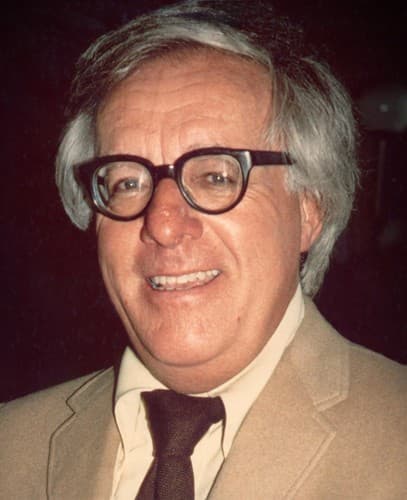
Ray Douglas Bradbury was an American author and screenwriter. One of the most celebrated 20th-century American writers, he worked in a variety of modes, including fantasy, science fiction, horror, mystery, and realistic fiction.
Similar books
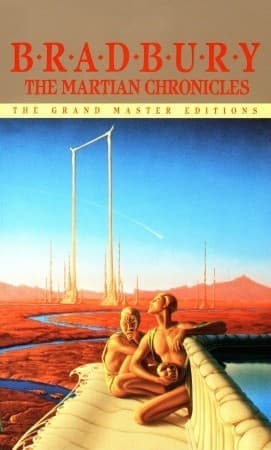
- The Martian Chronicles
Ray Bradbury
4.1 (210k) average on GoodreadsFantasyExplores philosophical themes and human nature through a series of interconnected science fiction stories.
- A Wrinkle in Time
Madeleine L'Engle
4.0 (1.1M) average on GoodreadsFantasyFeatures time travel and explores themes of good versus evil, though aimed at a younger audience.
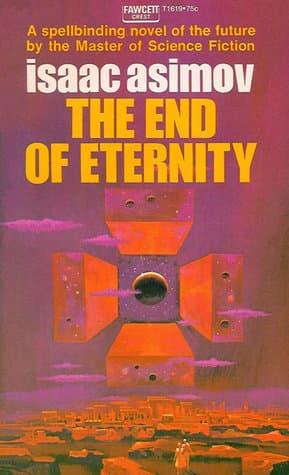
- The End of Eternity
Isaac Asimov
4.2 (44k) average on GoodreadsFantasyAsimov's The End of Eternity delves into intricate logical paradoxes and grand-scale temporal engineering by an organization designed to subtly alter history for humanity's benefit. Bradbury's story is less concerned with the mechanics of time travel or large-scale temporal intervention, instead emphasizing the visceral and emotional impact of a single, seemingly insignificant alteration and the ethical implications of tampering with the past.
- Harry Potter and the Sorcerer's Stone
J.K. Rowling
4.5 (7M) average on GoodreadsFantasyRescued from a miserable life under the stairs, an orphaned boy discovers he's a wizard destined for a magical school, where he uncovers a dangerous secret tied to the dark wizard who murdered his parents.
- The Hunger Games
Suzanne Collins
4.3 (6.4M) average on GoodreadsFantasyIn a future where children fight to the death on live television, Katniss Everdeen volunteers for the arena, turning a death sentence into a fight for survival and a spark of rebellion.
- 1984
George Orwell
4.2 (3.1M) average on GoodreadsPoliticsIn a future where surveillance and thought control are absolute, a man's search for truth clashes with the Party, showing that hope can be a form of rebellion.




Enjoyed the summary?
A summary gives you the shape of the book. The book itself has the detail, the examples and the voice.
Find A Sound of Thunder on AmazonAs an Amazon Associate, BookBrief earns from qualifying purchases. How we're funded