
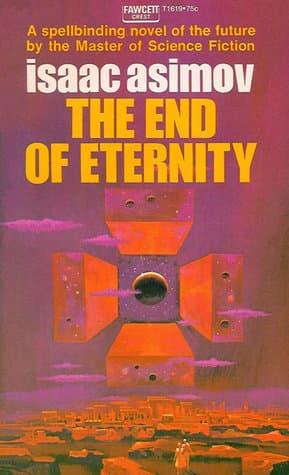
Synopsis
Covers the whole plot, including the ending.
- Difficulty
- Medium
- Pacing
- Moderate
- Mood
- Intriguing, Paradoxical, Romantic, Thought-provoking
- Read it if
- You enjoy classic time travel paradoxes, thought-provoking philosophical questions about free will vs. predetermined futures, and a tightly plotted story with a romantic core.
- Skip it if
- You prefer character-driven narratives over plot-driven ones, or are looking for extensive world-building beyond the core concept of time manipulation.
The End of Eternity Plot Summary
Covers the whole plot, including the ending.
Harlan's Routine and the Enigmatic Twissell
Andrew Harlan, a Technician and Eternal, works in the 24th Century, observing the 482nd Century in Eternity's complex, non-temporal realm. He is skilled but somewhat detached, dedicated to his role in 'Reality Changes' — altering the timeline to prevent bad futures. His mentor is Senior Computer Labran Twissell, who invented the 'Kettle' (time travel technology) and founded Eternity. Twissell often speaks in riddles and seems to have a hidden agenda, frequently testing Harlan's understanding of Eternity's purpose and its limits. Harlan feels some dissatisfaction with his life, finding comfort only in his work.
Enter Noÿs Lambent: A Forbidden Attraction
Harlan is assigned to train a young apprentice, Cooper, in the 24th Century. During this time, he meets Noÿs Lambent, a non-Eternal woman from the 27th Century, brought into Eternity as a secretary. Their relationship quickly becomes romantic, which is forbidden for Eternals, as attachments can affect their objectivity. Noÿs challenges Harlan's views and his acceptance of Eternity's mission. Their secret meetings bring Harlan both joy and worry, as he knows the severe consequences if their affair is discovered, given Eternity's strict rules against emotional involvement.
The Looming Reality Change and Noÿs's Disappearance
Eternity plans a major Reality Change that will erase the 27th Century, Noÿs's home, from existence. This means Noÿs will cease to exist. Devastated, Harlan seeks help from Twissell, who is unhelpful. Harlan then approaches Fikri, a Sociologist, hoping to find a way to save Noÿs by manipulating the change. Fikri, however, tells him the change is needed to prevent a bad future for humanity. Harlan, driven by love, decides to act on his own. He secretly moves Noÿs into a hidden, non-temporal 'pocket' of Eternity, hoping to protect her from the coming erasure, a dangerous and unauthorized act.
The Aftermath and the Unsettling 'Blank' Centuries
The Reality Change happens, and Noÿs's original century is erased. Harlan confirms her safety in his hidden refuge. However, a new problem arises: the centuries beyond the 100,000th Century are 'blank' — inaccessible to the Eternals. This anomaly troubles Harlan, as it suggests a flaw in Eternity's understanding of time. He tells Twissell, who seems aware of this 'blank' but offers no clear explanation, instead pushing Harlan to think about Eternity's larger purpose. Harlan starts to suspect there is a deeper secret to Eternity and its beginnings.
Harlan's Quest for the Genesis of Eternity
Harlan, with Noÿs safely hidden, becomes focused on understanding Eternity's origin and the Kettle. He thinks the blank centuries are a result of Eternity's interference, stopping humanity from inventing its own time travel or exploring space. He believes if he can find the 'Genesis Century' — the century Eternity was founded — he might find answers. He begins to study historical records within Eternity, looking for clues about the first Eternals and their creation. His research is risky, as questioning Eternity's founding principles is seen as wrong.
The Revelation of Twissell's Plan
Harlan eventually confronts Twissell with his findings. Twissell reveals his true plan: he arranged Harlan's actions, including his relationship with Noÿs and hiding her, to achieve a specific result. Twissell explains that Eternity, while preventing disasters, has stifled humanity's progress, leading to a static future where space travel never happens. The 'blank' centuries are a result of this stagnation. Twissell plans to send Harlan to the Genesis Century, not to observe, but to stop Eternity from ever being founded, letting humanity develop naturally and explore the galaxy.
The Mission to the 24th Century: Setting the Trap
Twissell tells Harlan to travel to the original 24th Century, the Genesis Century, before Eternity was established. His mission is to prevent the invention of the Kettle, the time-travel device that founded Eternity. Harlan is to meet a specific physicist, a key figure in the Kettle's development, and subtly discourage him from his research. Twissell stresses that the change must be small and natural, not a direct intervention that would create paradoxes. Harlan understands the great importance of this task, as it means giving up his own existence as an Eternal and potentially his memories of Noÿs, for humanity's future.
Noÿs's True Identity and the Ultimate Paradox
Before Harlan leaves, Noÿs reveals her true identity: she is not from the 27th Century, but from the far future, beyond the 'blank' centuries, a future where humanity has colonized the stars. She was sent back by this future humanity to ensure Eternity's end. She is a 'messenger' from the future, meant to fall in love with Harlan and motivate him to make the changes needed for her future to exist. She explains that the blank centuries are merely the centuries where Eternity *would have* existed, but didn't, in the timeline where Eternity is successfully prevented. This revelation creates a deep emotional and intellectual paradox for Harlan.
The Final Act: Preventing Eternity's Birth
Harlan, now fully understanding the grand design and his part in it, travels to the 24th Century. He approaches the physicist, Vikkor Mallansohn, who is about to invent the Kettle. Instead of directly stopping him, Harlan subtly introduces the idea of using the Kettle for energy transfer instead of time travel, suggesting it is a more useful and safer application. He plants the idea that time travel is too dangerous and complex, gently changing Mallansohn's research. This small change is enough to prevent the specific events that would have led to Eternity's founding. The change moves through time.
The End of Eternity, The Beginning of Infinity
As Harlan successfully alters the past, Eternity begins to disappear around him. The non-temporal realm, its personnel, and its records fade. The idea of 'Eternity' ceases to be. Harlan finds himself in a new reality, the true 24th Century, where humanity is already exploring space. Noÿs is there, by his side, her memories intact, as she was always a part of this future. They are now part of an expanding human civilization that has embraced the stars, free from the stagnation Eternity imposed. The novel ends with Harlan and Noÿs looking towards a future of many possibilities, having given up Eternity for humanity's true path.
The End of Eternity Characters
Andrew Harlan
Protagonist
A Technician and Eternal, initially dedicated to his work, but eventually driven by love to dismantle Eternity.
Harlan is a highly skilled Technician, responsible for making Reality Changes. He is initially a logical, somewhat detached individual, proud of his role in maintaining the stability of the timeline. Despite his competence, he harbors a quiet dissatisfaction with his life, feeling a lack of personal connection. His encounter with Noÿs Lambent profoundly changes him, awakening emotions and a desire for personal happiness that challenges his loyalty to Eternity. He becomes driven by love and a growing intellectual curiosity about Eternity's true purpose, ultimately accepting the monumental task of undoing its existence for the greater good of humanity. He embodies the internal conflict between duty and personal desire.
Relationships: Noÿs Lambent (Romantic partner, catalyst for his transformation); Labran Twissell (Mentor, orchestrator of the grand plan); Cooper (Apprentice, initial point of contact for Noÿs); Fikri (Sociologist, initially sought for help with Noÿs's fate)
Noÿs Lambent
Supporting/Catalyst
A woman from a distant future, sent back to ensure Eternity's destruction and humanity's expansion into space.
Initially presented as a 'primitive' secretary from the 27th Century, Noÿs quickly captures Harlan's attention and affection. She is intelligent, perceptive, and challenges Harlan's rigid adherence to Eternity's rules. Her existence becomes the primary motivation for Harlan's initial defiance of Eternity. Later, she is revealed to be a far more complex character: an agent from the true future, beyond the 'blank' centuries, specifically designed and sent back to ensure Eternity's dismantling. Her role is crucial in solidifying Harlan's resolve and providing the ultimate context for the mission. She represents the future that Eternity inadvertently suppressed.
Relationships: Andrew Harlan (Romantic partner, her target for influencing the timeline); Labran Twissell (Co-conspirator in the grand plan)
Labran Twissell
Supporting/Antagonist (initial perception)/Mastermind
The founder of Eternity and its most brilliant mind, who secretly orchestrates its demise for humanity's future.
Twissell is a Senior Computer and the inventor of the Kettle, making him the de facto founder of Eternity. He is an enigmatic figure, often speaking in philosophical riddles and appearing to be a strict enforcer of Eternity's rules. However, he secretly harbors a profound understanding of Eternity's long-term detrimental effects on humanity's progress. He meticulously plans and orchestrates the entire sequence of events, including Harlan's relationship with Noÿs, to achieve his ultimate goal: the dismantling of Eternity. He is a genius burdened by the consequences of his own creation, willing to sacrifice the present for humanity's true future. His actions are always for the greater good, even if they appear manipulative.
Relationships: Andrew Harlan (Mentor, his chosen agent for the final mission); Noÿs Lambent (Co-conspirator in the grand plan); Fikri (Subordinate, unaware of Twissell's true intentions)
Fikri
Supporting
A Sociologist Eternal who initially discourages Harlan from interfering with Reality Changes.
Fikri is a Sociologist within Eternity, responsible for analyzing the potential impacts of Reality Changes. He is a staunch defender of Eternity's mission, believing its interventions are always for the best. When Harlan approaches him about saving Noÿs from a Reality Change, Fikri provides logical, albeit cold, arguments against interference, emphasizing the catastrophic consequences if the change is not made. He is a representation of the ethical and practical dilemmas faced by Eternals, and his character highlights the difficult choices made in maintaining the timeline. He is unaware of Twissell's deeper plan or Noÿs's true nature.
Relationships: Andrew Harlan (Colleague, sought for advice); Labran Twissell (Superior)
Cooper
Supporting
Harlan's apprentice, whose assignment inadvertently leads to Noÿs's introduction into Eternity.
Cooper is a young, eager apprentice assigned to Harlan in the 24th Century. His presence is largely a plot device to facilitate the introduction of Noÿs Lambent, who is brought in as a 'primitive' secretary to assist him. Cooper represents the next generation of Eternals, diligently learning the ropes and adhering to the established protocols. He is a minor character but serves to ground Harlan's initial interactions with Noÿs within the context of Eternity's daily operations. He is oblivious to the complexities of Harlan's personal life or the larger machinations at play.
Relationships: Andrew Harlan (Master/Apprentice); Noÿs Lambent (Colleague, initially worked with her)
Vikkor Mallansohn
Mentioned/Pivotal
The physicist in the original 24th Century whose invention of the Kettle led to Eternity's founding.
Mallansohn is a crucial historical figure, though he only appears indirectly through Harlan's mission. He is the brilliant physicist in the original 24th Century who is on the verge of inventing the Kettle (time travel device). His research and eventual invention are the direct cause of Eternity's establishment. Harlan's final mission is to subtly influence Mallansohn, diverting his research away from time travel and towards energy transfer, thereby preventing Eternity's genesis. Mallansohn represents the pivotal point in humanity's history where its destiny diverged due to the intervention of time travel technology.
Relationships: Andrew Harlan (The target of Harlan's final intervention); Labran Twissell (The historical figure whose work Twissell sought to undo)
Hobbe Famin
Supporting
An Eternal who tries to expose Harlan's relationship with Noÿs.
Famin is a minor but significant character who represents the rigid, rule-bound nature of some Eternals. He is suspicious of Harlan's activities and attempts to expose his forbidden relationship with Noÿs Lambent. His actions highlight the strict protocols against emotional attachment within Eternity and the constant surveillance under which Eternals operate. Famin serves as an antagonist to Harlan's personal desires, reinforcing the dangers of breaking Eternity's rules. His attempt to expose Harlan ultimately fails due to Twissell's manipulations.
Relationships: Andrew Harlan (Colleague, adversary in terms of rules and regulations)
The End of Eternity Themes
Free Will vs. Determinism
The novel explores whether humanity has free will or if its destiny is set by outside forces, in this case, Eternity. The Eternals believe they are guiding humanity to an optimal future, but Twissell and Noÿs show that their actions have stifled true progress. Harlan's choice to dismantle Eternity represents a strong claim of free will, not just for himself but for all of humanity, letting it make its own path, even with unknown risks. The 'blank' centuries symbolize the predetermined stagnation Eternity caused.
“Eternity had eliminated all possibility of change, of adventure, of risk, and therefore of progress.”
Love and Sacrifice
Harlan's forbidden love for Noÿs Lambent starts his rebellion against Eternity. His willingness to risk everything to save her drives the initial plot. This personal sacrifice then grows when he agrees to dismantle Eternity itself, giving up his entire existence and known reality for humanity's future. Noÿs also makes a great sacrifice by living a lie and planning their relationship for a greater purpose. Their individual love connects with a collective love for humanity's potential, showing that personal connection can inspire grand, selfless acts.
“He loved her, and because he loved her, he was prepared to destroy the universe.”
The Price of Perfection/Safety
Eternity's mission is to create the 'safest' timeline for humanity by removing wars, plagues, and other disasters through Reality Changes. However, the novel argues that this pursuit of perfect safety comes at a high cost: stagnation. By removing all risks and challenges, Eternity removes the reason for innovation, exploration, and true progress. Humanity becomes isolated and never develops space travel. The 'blank' centuries represent the final result of this overprotective approach, where a sterile, unadventurous existence is considered 'optimal.' The book questions if a perfectly safe but unfulfilled existence is truly good.
“What good is a safe humanity if it is a humanity that does not live?”
The Nature of Time and Reality
Asimov looks at the philosophical effects of time travel and its impact on reality. Eternity itself is a non-temporal construct, existing 'between' centuries. Reality Changes constantly alter the past, present, and future, making the 'true' timeline fluid. The revelation of the 'blank' centuries, and Noÿs's origin from beyond them, challenges the Eternals' understanding of their own existence and the linearity of time. The novel suggests a cyclical view of time, where a future humanity can influence its own past to ensure its existence, creating a grand, self-fulfilling paradox.
“Time is not a road, you know. It's a river, and it can be dammed, or diverted, or even run dry.”
Humanity's Destiny: Stagnation vs. Expansion
A main theme is humanity's ultimate destiny. Eternity's actions lead to a future where humanity stays on Earth, safe but stagnant. Twissell and Noÿs, however, see a different destiny: one of interstellar exploration and colonization. The conflict between these two futures forms the core of the plot. The novel supports the idea that humanity's true potential is in venturing beyond its birthplace, embracing risk and discovery. The 'End of Eternity' is the necessary step for the 'Beginning of Infinity' — a future where humanity reaches its full potential among the stars.
“The future of humanity is not on Earth, Harlan. It is out there, among the stars.”
Plot Devices & Literary Techniques
The Kettle
The time-travel device that allows Eternals to move between centuries.
The Kettle is the fundamental technological invention that enables the existence of Eternity. It's not a ship but a personal field generator that allows an Eternal to step 'out of' their present century and into Eternity, and then 'into' any other desired century. Its invention by Labran Twissell in the original 24th Century is the genesis point of Eternity. The Kettle's capabilities are central to the plot, as its existence allows for Reality Changes, but its prevention is also the key to dismantling Eternity. It represents both ultimate control over time and the potential for unintended consequences.
Reality Changes
The alterations made to the timeline by Eternals to prevent undesirable futures.
Reality Changes are the core function of Eternity. They are calculated interventions in past centuries, designed to subtly alter events to avoid catastrophic outcomes (like wars, plagues, or societal collapse) in future centuries. These changes create ripples through time, resulting in entirely new realities. While seemingly beneficial, the novel reveals that the cumulative effect of countless Reality Changes is the stagnation of humanity. They are a powerful plot device that drives the conflicts and ethical dilemmas of the story, as well as being the very mechanism that Harlan must ultimately undo.
The 'Blank' Centuries
The inaccessible and seemingly non-existent centuries beyond the 100,000th Century.
The 'blank' centuries are a crucial mystery and plot driver. Initially, they are an anomaly that deeply troubles Harlan, suggesting a limitation or flaw in Eternity's power. They represent the unknown and the suppressed future. Later, their true nature is revealed by Noÿs: they are not empty, but rather the centuries that exist in the timeline where Eternity *never was*. They symbolize the unhindered, starfaring future of humanity that Eternity inadvertently prevented. This device creates suspense and provides the ultimate motivation for Twissell and Noÿs's plan, serving as a beacon for humanity's true destiny.
Paradoxical Causality / Bootstrap Paradox
The idea that future events cause past events, creating a self-consistent loop.
The entire premise of the novel relies on a complex bootstrap paradox. Noÿs Lambent, from the far future (which only exists because Eternity is dismantled), travels back in time to ensure Eternity *is* dismantled. Her actions, along with Twissell's manipulations, ensure the very conditions that lead to her own existence. Harlan's mission to prevent Eternity's founding is itself orchestrated by a future that would not exist if Eternity continued. This device creates a mind-bending, self-fulfilling prophecy where the 'end' of Eternity is paradoxically caused by its own future consequences, creating a stable, albeit complex, timeline.
The End of Eternity Quotes
“Eternity is the organization of time-traveling technicians who monitor and alter reality for the benefit of humanity.”
“Reality is that which, when you stop believing in it, doesn't go away.”
“The end of Eternity is the beginning of Infinity.”
“No change is too small to be important, and no change is too large to be impossible.”
“We are the shepherds of humanity, guiding it away from the cliffs of disaster.”
“The greatest danger to Eternity is not from without, but from within.”
“Time is a river, and we are the stones that divert its flow.”
“To know the future is to be trapped by it.”
“Humanity must be allowed to make its own mistakes, or it will never learn to fly.”
“The end of all our meddling is the silence of a universe without humanity.”
“Love is the one variable that Eternity cannot calculate.”
“We have become gods, but gods who are afraid of their own creation.”
“The path to the stars is paved with the risks we dare not take.”
“In the end, it is not time that we control, but ourselves.”
Quiz
10 questions on the plot and the characters. Each answer comes with a short explanation.
Question 1
What is the primary role of the Eternals in the novel?
- To prevent all wars throughout history
- To monitor and alter time's cause-and-effect relationships to minimize human suffering
- To ensure technological progress advances at a steady rate
- To eliminate all non-Eternals from existence
Show answer
B. To monitor and alter time's cause-and-effect relationships to minimize human suffering The Eternals are an organization that exists outside of normal time, tasked with making Reality Changes to alter history in ways that reduce human suffering, as established early in the book when Harlan explains his work.
Question 2
Who is the non-Eternal woman that Andrew Harlan falls in love with?
- Noÿs Lambent
- Mallansohn
- Twissell
- Cooper
Show answer
A. Noÿs Lambent Noÿs Lambent is a woman from the 482nd Century whom Harlan meets during his duties and becomes romantically involved with, driving much of the plot as he tries to save her from being erased by Eternity's changes.
Question 3
What is the 'Hidden Centuries' in the context of the story?
- Centuries where Eternals are forbidden to travel
- Centuries where time travel was first invented
- Centuries where all humans have become Eternals
- Centuries that were erased from history by a Reality Change
Show answer
A. Centuries where Eternals are forbidden to travel The Hidden Centuries are time periods beyond the 70,000th Century that Eternals are not allowed to access, which becomes a key plot point as Harlan and others investigate their secrets.
Question 4
Why does Senior Computer Twissell initially recruit Andrew Harlan for a special project?
- To help Twissell overthrow the ruling council of Eternity
- To teach a young Eternal named Cooper about primitive times
- To assassinate a non-Eternal who discovered time travel
- To retrieve a lost artifact from the 20th Century
Show answer
B. To teach a young Eternal named Cooper about primitive times Twissell assigns Harlan to tutor Cooper, a young Eternal from the far future, in the customs of the 20th Century, as part of a larger plan related to the founding of Eternity.
Question 5
What major discovery does Harlan make about Noÿs Lambent's origins?
- She is actually an Eternal in disguise
- She is from the Hidden Centuries and part of a plan to end Eternity
- She is a clone of Harlan's mother
- She invented time travel in her own Century
Show answer
B. She is from the Hidden Centuries and part of a plan to end Eternity Harlan learns that Noÿs is not an ordinary non-Eternal but comes from the Hidden Centuries, and she has been manipulating events as part of a conspiracy to bring about the end of Eternity.
Question 6
How does the novel resolve the conflict between Harlan's love for Noÿs and his duties as an Eternal?
- Harlan sacrifices Noÿs to preserve Eternity
- Harlan helps Noÿs complete her mission to destroy Eternity, allowing them to live together in a new timeline
- Harlan becomes the ruler of Eternity and changes the rules to keep Noÿs
- Noÿs is erased from time, and Harlan continues his work as an Eternal
Show answer
B. Harlan helps Noÿs complete her mission to destroy Eternity, allowing them to live together in a new timeline In the climax, Harlan realizes that Eternity's manipulations have stifled human progress, and he assists Noÿs in triggering a Reality Change that eliminates Eternity, creating a new reality where they can be together.
Question 7
What is the significance of the character Mallansohn in the story?
- He is the founder of Eternity who invented time travel
- He is Harlan's father who disappeared in time
- He is a rival Eternal trying to take over the organization
- He is a non-Eternal historian who documents Eternity's changes
Show answer
A. He is the founder of Eternity who invented time travel Mallansohn is the legendary figure who discovered time travel and established Eternity. His identity and role are central to the temporal paradoxes explored in the novel.
Question 8
What paradoxical revelation about Cooper's identity is uncovered near the end of the book?
- Cooper is actually Mallansohn, the founder of Eternity
- Cooper is Harlan's son from the future
- Cooper is a duplicate of Twissell created by time travel
- Cooper is an android designed to replace Eternals
Show answer
A. Cooper is actually Mallansohn, the founder of Eternity It is revealed that Cooper, the young Eternal tutored by Harlan, is actually Mallansohn. He is sent back in time to invent time travel, creating a closed time loop that establishes Eternity.
Question 9
How does the novel critique the concept of Eternity's mission to minimize human suffering?
- By showing that it leads to technological stagnation and prevents humanity from achieving greater heights
- By demonstrating that it causes more wars than it prevents
- By arguing that suffering is necessary for artistic creativity
- By proving that Eternals become corrupt and selfish over time
Show answer
A. By showing that it leads to technological stagnation and prevents humanity from achieving greater heights A key theme is that Eternity's well-intentioned manipulations remove challenges and risks from history, resulting in a safe but stagnant humanity that never develops space travel or other advancements, as highlighted in the Hidden Centuries plot.
Question 10
What crucial detail about the Reality Change that ends Eternity allows Harlan and Noÿs to survive together?
- The Change is set to occur in a time period where they both naturally exist
- They use a time machine to escape to a parallel universe
- Harlan secretly preserves a copy of Eternity in a time bubble
- Noÿs reveals she is immortal and cannot be erased
Show answer
A. The Change is set to occur in a time period where they both naturally exist The final Reality Change is carefully calculated to erase Eternity but leave a specific timeline (the 482nd Century) intact, where both Harlan and Noÿs originate, ensuring they can live together in the new reality.
The End of Eternity FAQ
What is 'The End of Eternity' about?
The novel follows Andrew Harlan, an Eternal who manipulates time to maintain human stability across centuries. His life changes when he falls in love with Noÿs Lambent, a non-Eternal woman from the 482nd Century, leading him to risk altering time to save their relationship, which ultimately reveals hidden truths about Eternity's purpose and humanity's future.
Why should I read 'The End of Eternity'?
It's a classic science fiction novel that explores complex themes of time travel, free will, and human progress through a tightly plotted narrative. Asimov masterfully blends a love story with philosophical dilemmas, creating suspense around how Harlan's actions might unravel or reshape reality itself.
What is the background/setting of 'The End of Eternity'?
The story is set in Eternity, a timeless realm outside normal time where Eternals monitor and alter reality across centuries from the 27th to the 70,000th Century. Key locations include the 482nd Century, where Harlan meets Noÿs, and various Reality Changes that showcase different human societies.
What are the most memorable quotes?
Notable quotes include: 'The end of Eternity is the beginning of Infinity,' reflecting the novel's climax about humanity's potential, and Harlan's realization: 'I had to choose between Eternity and Noÿs, and I chose Noÿs,' highlighting his personal conflict between duty and love.
What writing style does the author use?
Asimov employs a clear, logical prose style typical of hard science fiction, with detailed explanations of time-travel mechanics like Reality Changes and the Temporal Field. The narrative balances technical concepts with emotional depth, particularly in Harlan's internal struggles and the evolving mystery.
What minor details add significant meaning?
The repeated mention of 'Hidden Centuries' beyond the 70,000th Century subtly hints at humanity's suppressed potential. Noÿs's calm demeanor and knowledge of Eternity's workings, despite being a non-Eternal, foreshadow her true role in the plot's resolution.
What are some subtle foreshadowing moments?
Early scenes where Senior Computer Twissell discusses the 'Mallansohn paradox' hint at time loops and predestination. Harlan's initial discomfort with altering time for personal gain foreshadows his later rebellion, while Noÿs's mysterious background clues readers into her larger significance.
What unexpected character connections exist?
Noÿs is revealed to be an agent from the Hidden Centuries, sent to ensure Eternity's downfall. Twissell, Harlan's mentor, is secretly manipulating events to preserve Eternity, creating a conflict where both mentor and lover have hidden agendas that intersect with Harlan's actions.
What are unspoken character motivations?
Harlan is driven by a deep loneliness and desire for meaningful connection, which fuels his risk-taking for Noÿs. Twissell's actions are motivated by a fear of humanity's stagnation without Eternity, while Noÿs hides her mission to free humanity from Eternity's control for evolutionary progress.
What psychological complexities do characters exhibit?
Harlan grapples with guilt over betraying Eternity and anxiety about causing temporal paradoxes. Noÿs balances her love for Harlan with her duty to her mission, showing emotional conflict. Twissell embodies the tension between paternal care for Harlan and ruthless dedication to Eternity's ideals.
What are the major emotional turning points?
Harlan's decision to save Noÿs by altering time marks a shift from obedient Eternal to rebel. The revelation of Noÿs's true identity causes emotional turmoil, testing their relationship. The climax, where Harlan chooses to end Eternity with Noÿs, resolves his internal conflict between love and duty.
How do relationship dynamics evolve?
Harlan and Noÿs's relationship starts as a forbidden romance but deepens into a partnership against Eternity. Harlan's trust in Twissell deteriorates as he uncovers manipulations, shifting from mentor-student to adversaries. These changes drive the plot toward its revolutionary conclusion.
Which parts remain ambiguous or open-ended?
The exact nature of the Hidden Centuries and humanity's future after Eternity's end is left vague, inviting interpretation about whether progress or chaos follows. The moral implications of Harlan's actions—whether saving love justifies dismantling a system—are debated without clear resolution.
What are controversial scenes or decisions?
Harlan's use of Eternity's power for personal gain sparks debate on ethics versus emotion. The ending, where Eternity is destroyed to allow human risk and innovation, divides readers on whether it represents liberation or a dangerous loss of stability and control over time.
'The End of Eternity' ending explained: how it ends & what it means
Harlan and Noÿs trigger the end of Eternity, erasing it from existence to allow humanity to develop naturally across time. This symbolizes a rejection of controlled safety in favor of free will and potential growth, with Harlan choosing love and uncertainty over a sterile, managed reality.
About the author
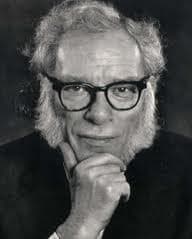
Isaac Asimov was an American writer and professor of biochemistry at Boston University. During his lifetime, Asimov was considered one of the "Big Three" science fiction writers, along with Robert A. Heinlein and Arthur C. Clarke. A prolific writer, he wrote or edited more than 500 books. He also wrote an estimated 90,000 letters and postcards. Best known for his hard science fiction, Asimov also wrote mysteries and fantasy, as well as much non-fiction.
Similar books
- 1984
George Orwell
4.2 (3.1M) average on GoodreadsPoliticsDeals with a powerful, controlling organization that manipulates reality and history.
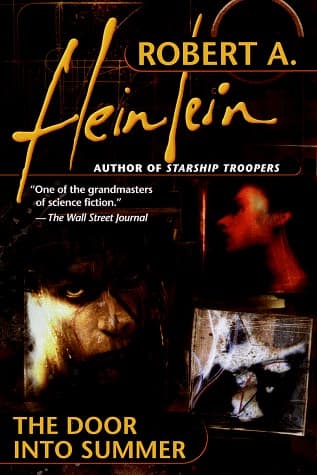
- The Door Into Summer
Robert A. Heinlein
4.0 (22k) average on GoodreadsFantasyHeinlein's work (1956) explores time travel primarily for personal gain and revenge, emphasizing individual agency and a more optimistic, albeit less philosophically rigorous, perspective on temporal manipulation. While Heinlein often celebrates individualism, Asimov's The End of Eternity delves into the collective consequences of societal control over time, presenting a more critical view of intervention.
- Harry Potter and the Sorcerer's Stone
J.K. Rowling
4.5 (7M) average on GoodreadsFantasyRescued from a miserable life under the stairs, an orphaned boy discovers he's a wizard destined for a magical school, where he uncovers a dangerous secret tied to the dark wizard who murdered his parents.
- The Hunger Games
Suzanne Collins
4.3 (6.4M) average on GoodreadsFantasyIn a future where children fight to the death on live television, Katniss Everdeen volunteers for the arena, turning a death sentence into a fight for survival and a spark of rebellion.
- Divergent
Veronica Roth
4.2 (2.9M) average on GoodreadsFantasyIn a society divided by virtues, a sixteen-year-old's difference from the norm starts a rebellion that threatens her world.
- The Hobbit, or There and Back Again
J.R.R. Tolkien
4.3 (2.9M) average on GoodreadsFantasyA comfort-loving hobbit named Bilbo Baggins is whisked away by a mischievous wizard and a band of dwarves on an unexpected journey to reclaim stolen treasure from a fearsome dragon, discovering courage and a magical ring along the way.





Enjoyed the summary?
A summary gives you the shape of the book. The book itself has the detail, the examples and the voice.
Find The End of Eternity on AmazonAs an Amazon Associate, BookBrief earns from qualifying purchases. How we're funded