
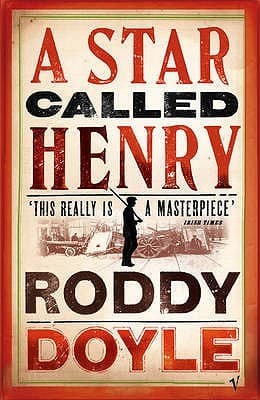
Synopsis
Covers the whole plot, including the ending.
- Difficulty
- Medium
- Pacing
- Variable
- Mood
- Gritty, Epic, Humorous, Melancholy, Rebellious
- Read it if
- You want a sprawling, character-driven historical epic told with raw, distinctive Irish wit and language, set against the backdrop of Ireland's fight for independence.
- Skip it if
- You prefer a straightforward, less chaotic narrative, or are put off by graphic violence and a protagonist with questionable morals.
A Star Called Henry Plot Summary
Covers the whole plot, including the ending.
Birth and Early Life in Dublin Slums
Henry Smart is born in Dublin in 1901, the second son of a one-legged bouncer, Henry Smart Sr., and his wife, Melody. His birth is chaotic, taking place in a squalid tenement as the new century begins. His father, a formidable figure, works for Alderman Barry, a corrupt politician who controls much of the city's underbelly. Henry's early childhood is marked by extreme poverty, hunger, and the harsh realities of slum life. He quickly learns to observe and navigate the dangerous streets of Dublin, developing a sharp wit and a defiant spirit. His older brother, Victor, is a more quiet and observant child, often overshadowed by Henry's boisterous nature. The family's existence is a constant struggle for survival, marked by his father's violent temper and Barry's pervasive influence.
Father's Influence and Early Rebellion
Henry's father, Henry Smart Sr., is a complex and often terrifying figure. A veteran of the Boer War, he lost a leg and now works as an enforcer for Alderman Barry. He is a man of immense physical strength and a brutal temper, frequently beating his wife and children. Despite the abuse, Henry holds a strange admiration for his father's power and ability to command respect (and fear). Henry witnesses his father's involvement in various illicit activities, including collecting protection money and intimidating voters for Barry. These experiences teach young Henry about power dynamics, injustice, and the need to fight back, even against overwhelming odds. He begins to develop his own rebellious streak, often defying his father in small but significant ways.
Working for Alderman Barry
As Henry and Victor grow, their father forces them to work for Alderman Barry. Their tasks range from delivering messages to collecting debts and even engaging in petty acts of intimidation. This exposure to Barry's criminal enterprise further immerses Henry in Dublin's dark underbelly. He becomes adept at navigating the city's hidden passages and understanding its unspoken rules. During this time, Henry also encounters other young boys involved in similar activities, forming a loose network of street children. His quick thinking and daring nature make him a valuable, though unwilling, asset to Barry's operations, even as he resents the exploitation. Victor, in contrast, remains more withdrawn, observing the world with quiet intensity.
The Easter Rising and Family Disintegration
The 1916 Easter Rising erupts in Dublin, catching Henry and his family in its violent throes. His father, initially loyal to Barry, is killed during the rebellion, shot by British soldiers while attempting to protect his family. This event is a turning point, leaving Henry and Victor orphaned and their mother, Melody, devastated. The Rising itself, though suppressed, ignites a spark of Irish nationalism and a desire for vengeance in Henry. He witnesses firsthand the brutality of the British forces and the courage of the Irish rebels. The family's tenement home is destroyed, forcing Melody and her remaining son, Victor, to flee the city. Henry, however, chooses a different path, drawn to the cause of Irish independence.
Joining the Irish Volunteers
After the Easter Rising and his father's death, a young Henry Smart, barely a teenager, fully commits to Irish independence. He seeks out and joins the Irish Volunteers (later the IRA), driven by patriotic fervor and a desire for revenge against the British. His street smarts, fearlessness, and surprising skill with firearms make him a valuable, if unconventional, recruit. He quickly becomes immersed in the secret world of guerrilla warfare, participating in raids, ambushes, and acts of sabotage against British forces and their collaborators. He adopts the persona of a hardened soldier, hiding his youth to appear more formidable, and begins to earn a reputation for daring and ruthlessness among his comrades.
Love and Loss with Miss O'Shea
During his time as a rebel, Henry falls deeply in love with a fellow revolutionary, Miss O'Shea, a fierce and intelligent woman also dedicated to the cause. Their relationship is passionate and intense, giving Henry a rare sense of solace and connection amid constant danger and violence. Miss O'Shea sees past Henry's rough exterior, recognizing his underlying vulnerability and his capacity for love. She becomes a significant influence, broadening his views and challenging his often-cynical outlook. However, their love is tragically cut short when Miss O'Shea is killed during a British raid, leaving Henry heartbroken and further hardened by grief. Her death strengthens his resolve, turning his personal loss into a deeper commitment to the fight for Irish freedom.
Escalating Violence and Moral Compromises
As the War of Independence intensifies, Henry's role within the IRA becomes more prominent and more violent. He participates in assassinations, bombings, and increasingly brutal engagements against the British Black and Tans and Auxiliaries. The lines between soldier and killer blur, and Henry must make difficult moral compromises. He witnesses atrocities committed by both sides, and the idealism that first fueled him is often tested by the grim realities of war. Despite the growing toll on his conscience, Henry continues to fight with fierce determination, driven by the memory of Miss O'Shea and the belief in a free Ireland. His reputation as a daring and effective fighter grows, but so does the weight of his actions.
The Truce and Treaty Split
A truce is declared in 1921, temporarily stopping the fighting and raising hopes for peace. Henry, along with many others, is cautiously optimistic. However, the subsequent Anglo-Irish Treaty, which establishes the Irish Free State but keeps Northern Ireland under British rule and requires an oath of allegiance to the British Crown, causes a devastating split within the republican movement. Henry, deeply committed to a fully independent and united Ireland, aligns himself with the anti-Treaty forces. This division pits former comrades against each other, leading to the brutal Irish Civil War. Henry finds himself fighting former friends and allies, a conflict even more painful and disillusioning than the war against the British.
Flight and Exile
The anti-Treaty side is ultimately defeated in the Civil War. Henry, now a hunted man and deeply disillusioned by the conflict, is forced to flee Ireland to escape capture and likely execution. He leaves behind the country he fought so fiercely for, heartbroken and carrying the heavy burden of his experiences. His escape is perilous, involving secret movements and narrow escapes. He is a ghost, a survivor haunted by the ghosts of his past – his father, Miss O'Shea, and the countless others lost in the struggle. This marks a significant turning point, as Henry's story moves beyond the direct conflict in Ireland, though the war's scars remain deeply etched upon him.
Life as an Expatriate and New Beginnings
After fleeing Ireland, Henry begins a new chapter of his life as an expatriate, seeking refuge in various countries, including America. He tries to shed his past as a revolutionary, adopting new identities and trying to live a normal life. He works odd jobs, always remaining vigilant and cautious, never fully trusting anyone. Despite his efforts, the trauma of his experiences in Ireland continues to haunt him. He grapples with the psychological scars of war, the loss of his loved ones, and the disillusionment of a revolution that did not deliver the utopia he envisioned. He carries with him a deep sense of rootlessness, a man without a true home, constantly searching for meaning and peace.
Reflecting on His Past
As an older man, Henry Smart reflects on his extraordinary and tumultuous life. His narrative voice is that of a survivor, a witness to history, and a man deeply marked by violence and loss. He recounts his story with raw honesty, often mixed with dark humor and deep melancholy. He grapples with the legacy of his actions, the choices he made, and the impact of the Irish struggle for independence on his soul. He questions the true cost of freedom and the sacrifices revolution demanded. His reflections show a man who has seen too much, loved deeply, lost everything, and yet, against all odds, has endured. He is still searching for understanding and a sense of belonging in a world forever changed by his past.
A Star Called Henry Characters
Henry Smart
Protagonist
A resilient, street-smart Irish revolutionary and survivor.
Henry Smart is the novel's narrator and protagonist, born in the Dublin slums in 1901. From a young age, he is characterized by his sharp wit, rebellious spirit, and an innate ability to survive. He's a keen observer, often using humor and cynicism to cope with the harsh realities of his life. Driven by a desire for justice and a fierce Irish nationalism, he becomes a key figure in the Irish War of Independence and the subsequent Civil War. He is both a ruthless fighter and a sensitive soul, capable of deep love and profound grief. His experiences harden him, but never entirely extinguish his capacity for reflection and a certain defiant optimism.
Relationships: Henry Smart Sr. (Abusive father, source of fear and grudging admiration); Melody Smart (Long-suffering mother, a source of love and concern); Victor Smart (Quiet, observant older brother); Alderman Barry (Corrupt employer of his father, early antagonist); Miss O'Shea (Fellow revolutionary, his first and great love)
Henry Smart Sr.
Supporting/Antagonist
Henry's one-legged, violent father, an enforcer for Alderman Barry.
Henry Smart Sr. is a towering, brutal figure, a one-legged veteran of the Boer War who works as an enforcer for Alderman Barry. He is a man of immense physical strength and a terrifying temper, frequently resorting to violence against his family. Despite his cruelty, he possesses a strange, almost mythical presence in young Henry's life, representing a raw, untamed power. His death during the Easter Rising is a pivotal moment for Henry, both freeing him and instilling a desire for vengeance.
Relationships: Henry Smart (Abusive father to the protagonist); Melody Smart (Abused wife); Alderman Barry (His employer and a corrupt power broker)
Melody Smart
Supporting
Henry's long-suffering and resilient mother.
Melody Smart is Henry's mother, a woman who endures immense hardship and abuse in the Dublin slums. Despite her circumstances, she possesses a quiet strength and resilience, trying to protect her children as best she can. She is often the recipient of her husband's violence but never entirely breaks. Her love for her children, particularly Henry and Victor, is evident, even if her ability to shield them from the harsh realities of their lives is limited. She represents the enduring spirit of the Irish working-class woman.
Relationships: Henry Smart (Mother to the protagonist); Henry Smart Sr. (Abused wife); Victor Smart (Mother to Victor)
Victor Smart
Supporting
Henry's quiet, observant older brother.
Victor Smart is Henry's older brother, a more reserved and introspective character compared to Henry's boisterous nature. He observes the world with a quiet intensity, often overshadowed by his younger brother's antics. He shares the same hardships as Henry but reacts to them differently, perhaps internalizing more. His presence provides a contrast to Henry's more direct and confrontational approach to life. After the Easter Rising, he flees Dublin with his mother, his fate diverging from Henry's path into rebellion.
Relationships: Henry Smart (Older brother to the protagonist); Melody Smart (Son to Melody Smart); Henry Smart Sr. (Son to Henry Smart Sr.)
Alderman Barry
Antagonist/Supporting
A corrupt Dublin politician and crime boss.
Alderman Barry is a powerful and corrupt Dublin politician who controls a vast criminal enterprise. He employs Henry Smart Sr. as an enforcer and later exploits young Henry and Victor. He embodies the systemic corruption and injustice that pervades Dublin's political and social landscape at the turn of the century. Barry represents the oppressive forces within Irish society that Henry rebels against, even before he turns his attention to the British.
Relationships: Henry Smart Sr. (Employer of Henry's father); Henry Smart (Early exploiter of Henry and Victor)
Miss O'Shea
Supporting
A fierce and intelligent female revolutionary, Henry's first love.
Miss O'Shea is a fellow Irish revolutionary and Henry's first and most profound love. She is depicted as intelligent, passionate, and fiercely dedicated to the cause of Irish independence. She offers Henry solace and emotional connection amidst the violence of war, seeing beyond his rough exterior. Her relationship with Henry is intense and provides him with a rare glimpse of happiness and normalcy. Her tragic death is a devastating blow to Henry, deepening his resolve but also leaving an indelible mark of grief and loss.
Relationships: Henry Smart (Lover and fellow revolutionary)
Michael Collins
Mentioned
A prominent historical figure in the Irish independence movement.
Michael Collins is a real historical figure and a key leader in the Irish independence movement, mentioned by Henry. He represents the pragmatic, military-focused wing of the republican movement. Henry's narrative often places him in proximity to or under the influence of figures like Collins, highlighting the historical context of his fictional journey. Collins's eventual role in signing the Anglo-Irish Treaty and his subsequent death in the Civil War are crucial historical events that shape Henry's experiences and disillusionment.
Relationships: Henry Smart (Leader whom Henry serves under during the rebellion (indirectly))
Liam Mellows
Mentioned
A prominent historical figure and anti-Treaty leader.
Liam Mellows is another significant historical figure mentioned in the novel, representing the more uncompromising republican stance, particularly against the Anglo-Irish Treaty. His eventual execution during the Irish Civil War serves as a stark reminder of the brutal divisions that tore the country apart. Henry, as an anti-Treaty combatant, would have aligned with the ideals represented by figures like Mellows, further emphasizing his disillusionment with the outcome of the war and the internal conflict.
Relationships: Henry Smart (Leader whose anti-Treaty stance Henry aligns with (indirectly))
A Star Called Henry Themes
The Brutality and Cost of Revolution
The novel vividly portrays the grim realities of the Irish War of Independence and Civil War, removing any romanticized notions of conflict. Henry's experiences, from witnessing his father's death during the Easter Rising to his own participation in assassinations and ambushes, show the constant violence, loss, and moral compromises war demands. The division caused by the Anglo-Irish Treaty, leading to former comrades fighting each other, highlights the profound and tragic cost of revolution, leaving Henry deeply disillusioned and scarred. The narrative consistently emphasizes the human toll, both physical and psychological, of fighting for freedom.
“We were fighting for Ireland, but Ireland was tearing itself apart.”
Survival and Resilience
From his birth in the squalid Dublin slums, Henry Smart's life shows the human capacity for survival and resilience. He endures poverty, abuse from his father, the death of loved ones, and the constant threat of violence during the wars. His street smarts, quick wit, and fierce determination allow him to adapt and persist through seemingly impossible challenges. Even after the disillusionment of the Civil War and his forced exile, Henry continues to find a way to live, showing an unbreakable spirit, though one heavily burdened by his past.
“I was a survivor. That's what I was. A survivor.”
The Search for Identity and Belonging
Henry's journey is a quest for identity and a place to belong. Born into a chaotic and impoverished family, he initially finds purpose and belonging within the republican movement. However, the violence and internal divisions of the war ultimately leave him rootless and exiled, stripped of the identity he fought to create. As an expatriate, he constantly grapples with who he is outside of his past as a revolutionary, searching for a new sense of self and a home, often feeling like a ghost in his own life. This theme is explored through his adoption of different personas and his constant internal reflection.
“I was a man without a country, a man without a name, just a star that had fallen.”
Memory and Storytelling
The entire novel is Henry Smart's retrospective account of his life, making memory and storytelling central themes. Henry, as the narrator, actively constructs his past, reflecting on the reliability of his own recollections and the subjective nature of history. He uses his sharp, often darkly humorous voice to shape his narrative, revealing his biases, regrets, and moments of pride. Telling his story is a way for Henry to process his trauma, make sense of his experiences, and perhaps find a form of redemption or understanding for a life lived on the edge. The vivid, often poetic language emphasizes the power of narrative.
“I remember everything. And I remember nothing. That's the way it is with memory.”
Plot Devices & Literary Techniques
First-Person Retrospective Narration
Henry Smart recounts his life from an older, reflective perspective.
The entire novel is told through the first-person voice of an older Henry Smart, looking back on his tumultuous youth. This allows for immediate, intimate access to Henry's thoughts, feelings, and experiences, filtered through the lens of memory and subsequent disillusionment. The retrospective nature enables Henry to comment on his younger self's actions with a knowing, often cynical, wit, and to foreshadow later events. It also highlights the subjective nature of history and personal memory, as Henry grapples with what he remembers and how he chooses to tell it.
Picaresque Structure
A series of episodic adventures, often involving a roguish protagonist.
The novel loosely follows a picaresque structure, with Henry Smart, a 'picaro' figure, moving through various social strata and engaging in a series of daring, often illicit, adventures. From his childhood as a street urchin to his role as a guerrilla fighter and later an exile, Henry's journey is characterized by episodic encounters and a constant struggle for survival. This structure allows Doyle to explore different facets of Irish society and the independence movement through Henry's eyes, while maintaining a sense of constant motion and unpredictability in the protagonist's life.
Historical Allusion and Real Figures
Incorporation of actual historical events and figures into the fictional narrative.
Doyle grounds Henry's fictional narrative in real historical events, such as the Easter Rising, the War of Independence, and the Irish Civil War, and references actual historical figures like Michael Collins and Liam Mellows. This device lends authenticity and gravitas to Henry's story, blurring the lines between fiction and historical reality. By placing a fictional character at the heart of these pivotal moments, the novel offers a personalized, gritty perspective on a crucial period in Irish history, making the grand historical narrative more immediate and human through Henry's personal experiences and observations.
Black Humor and Irony
The use of dark humor and irony to cope with grim realities.
Henry Smart frequently employs black humor and irony in his narration, particularly when describing the brutal realities of his life and the violence of war. This device serves multiple functions: it acts as a coping mechanism for Henry, allowing him to process and distance himself from trauma; it adds a distinct, engaging voice to the narrative; and it underscores the absurdity and futility often found amidst extreme suffering. The juxtaposition of grim events with Henry's sardonic commentary creates a unique tone that is both heartbreaking and darkly comedic.
A Star Called Henry Quotes
“I was born on the first day of the new century, a helpless, screaming baby, like all the others. But I was to be different.”
“My father was a giant of a man, and he smelled of porter and sawdust, and sometimes, if he'd been fighting, of blood.”
“Dublin was a city of ghosts, and we were the newest ones.”
“A man without a country is a man without a mother, and I had neither.”
“We were not fighting for Ireland. We were fighting for the right to fight for Ireland.”
“Love was a luxury we couldn't afford, a weakness that would get you killed.”
“History was just a story told by the winners, and I intended to be one of them.”
“The bullet had no name, but it knew my address.”
“God was a Dubliner, and he loved a good fight.”
“I was a soldier, a lover, a son, a brother, a killer. And I was only just beginning.”
“The past wasn't dead. It wasn't even past. It was still there, breathing down your neck.”
“To be Irish was to carry a burden, a history of hurt and defiance.”
“Every man carries his own hell with him. Mine had a Dublin address.”
“There were no heroes, only survivors. And I intended to be the best of them.”
Quiz
10 questions on the plot and the characters. Each answer comes with a short explanation.
Question 1
What significant historical event does Henry Smart's birth coincide with?
- The Easter Rising
- The outbreak of World War I
- The turn of the 20th century (January 1, 1900)
- The signing of the Anglo-Irish Treaty
Show answer
C. The turn of the 20th century (January 1, 1900) Henry Smart is famously born at the very beginning of the 20th century, specifically on January 1, 1900, symbolizing the birth of a new Ireland.
Question 2
What is Henry's father's profession, which contributes to Henry's early life experiences?
- A baker
- A Sinn Féin organizer
- A one-legged bouncer and enforcer for a Dublin slumlord
- A dockworker
Show answer
C. A one-legged bouncer and enforcer for a Dublin slumlord Henry's father, also named Henry, is a one-legged bouncer and enforcer, which shapes Henry's rough upbringing and early exposure to violence.
Question 3
Which prominent Irish revolutionary figure does Henry Smart become involved with and serve under?
- Éamon de Valera
- James Connolly
- Michael Collins
- Patrick Pearse
Show answer
C. Michael Collins Henry Smart becomes a soldier and operative under Michael Collins during the Irish War of Independence.
Question 4
What unique narrative style does Roddy Doyle employ in 'A Star Called Henry' that reflects Henry's voice?
- Third-person omniscient narration with a detached tone
- An epistolary format, told through letters
- First-person narration, characterized by a raw, colloquial, and often stream-of-consciousness style
- Multiple perspectives from different characters
Show answer
C. First-person narration, characterized by a raw, colloquial, and often stream-of-consciousness style The novel is told in Henry's own distinctive first-person voice, which is highly colloquial, immediate, and reflects his uneducated yet insightful perspective.
Question 5
What is the primary theme explored through Henry's journey from childhood on the streets to becoming a rebel soldier?
- The futility of war and revolution
- The loss of innocence and the forging of identity amidst political upheaval
- The corrupting influence of power
- The importance of family loyalty above all else
Show answer
B. The loss of innocence and the forging of identity amidst political upheaval Henry's life is a journey of self-discovery and growth, as he loses his childhood innocence and forms his identity against the backdrop of Ireland's fight for independence.
Question 6
Which of Henry's siblings is depicted as particularly vulnerable and often in need of Henry's protection?
- Victor
- Dolly
- Rupert
- George
Show answer
B. Dolly His younger sister, Dolly, is frequently depicted as fragile and dependent on Henry, especially after their mother's decline.
Question 7
What is the significance of the 'star' in the title, 'A Star Called Henry'?
- It refers to a specific celestial event that occurs during Henry's life.
- It symbolizes Henry's destined role as a guiding light or a figure of prominence in Irish history.
- It's a nickname given to him by his lover, reflecting his charisma.
- It represents a physical object he carries as a lucky charm.
Show answer
B. It symbolizes Henry's destined role as a guiding light or a figure of prominence in Irish history. The 'star' in the title suggests Henry's extraordinary nature and his belief, or others' belief, in his special destiny and significance, particularly in the context of a new Ireland.
Question 8
Henry's early childhood is marked by extreme poverty and a transient lifestyle. What specific act of survival does he learn and often rely on?
- Begging for alms outside churches
- Working odd jobs for local merchants
- Pickpocketing and petty theft on the streets of Dublin
- Selling newspapers
Show answer
C. Pickpocketing and petty theft on the streets of Dublin To survive the harsh conditions of his youth, Henry becomes adept at pickpocketing and other forms of petty theft, a skill that serves him later.
Question 9
Beyond the political conflict, what significant social issue of early 20th-century Dublin is vividly portrayed through Henry's family life?
- The rise of industrial labor unions
- The impact of the Great Famine
- Rampant poverty, alcoholism, and domestic violence within the working class
- Religious sectarianism between Catholics and Protestants
Show answer
C. Rampant poverty, alcoholism, and domestic violence within the working class The novel powerfully depicts the squalor, alcoholism, and violence that were pervasive in the impoverished working-class homes of Dublin during that era, particularly through Henry's parents.
Question 10
How does Henry's relationship with his mother, who suffers from a mental decline, impact his perception of women and love?
- It makes him wary of all women and leads him to avoid romantic relationships.
- It instills in him a deep desire for a stable, nurturing female presence, which he seeks in his lovers.
- It leads him to resent women, viewing them as weak and unreliable.
- He becomes indifferent to women, focusing solely on his political ambitions.
Show answer
B. It instills in him a deep desire for a stable, nurturing female presence, which he seeks in his lovers. Henry's complex and often traumatic relationship with his mother, who descends into madness, profoundly shapes his longing for love, stability, and a strong female partner, evident in his later romantic entanglements.
A Star Called Henry FAQ
What is the central premise of 'A Star Called Henry'?
'A Star Called Henry' follows the life of Henry Smart, born in Dublin in 1901, as he navigates the tumultuous early 20th century in Ireland. From a childhood of poverty and street smarts, he becomes a soldier and lover during the Irish War of Independence, experiencing pivotal historical moments through his unique, often exaggerated, perspective.
Who are Henry Smart's parents and what is their significance?
Henry's father is Henry Smart Sr., a notorious Dublin bouncer and enforcer for William Martin Murphy, a powerful businessman. His mother is Melody, a beautiful and resilient woman who often struggles with her husband's dangerous life. Their dynamic shapes Henry's early understanding of power, loyalty, and survival in a harsh urban environment.
How does Henry become involved in the Irish Republican Army (IRA)?
Henry's involvement with the IRA begins almost by accident, initially driven by a desire for belonging and a thirst for action, rather than deep political ideology. He is recruited by commanders like P.H. Pearse and Michael Collins, quickly becoming a trusted, albeit reckless, operative due to his fearlessness and resourcefulness.
Who is Miss O'Shea and what role does she play in Henry's life?
Miss O'Shea is a schoolteacher who becomes Henry's first lover and a significant figure during his early revolutionary days. She represents a blend of intellectualism and revolutionary zeal, offering Henry both emotional connection and a more articulate understanding of the cause, though their relationship is ultimately fraught with danger.
What is the significance of Henry's brother, Victor?
Victor is Henry's younger brother, who dies tragically young. His death profoundly impacts Henry, fueling his sense of injustice and his desire to fight for a better future, even if his methods are often violent. Victor's memory serves as a constant, somber reminder of the innocence lost in their brutal world.
What is the symbolism behind Henry's name, 'A Star Called Henry'?
The title suggests Henry's self-perception and his mother's initial hopes for him – that he is destined for greatness, a bright and unique entity. It also alludes to his often larger-than-life, almost mythical presence in his own narrative, shining brightly amidst the darkness of war and poverty.
How does Roddy Doyle use language to convey Henry's character and the historical setting?
Doyle employs a distinctive, often colloquial and unpunctuated stream-of-consciousness style that mirrors Henry's rapid thoughts and Dublin street dialect. This raw, immediate voice immerses the reader directly into Henry's perspective, reflecting both his unrefined upbringing and his vivid imagination, while grounding the historical events in a distinctly Irish idiom.
Are the historical figures mentioned in the book accurately portrayed?
While major figures like Patrick Pearse, James Connolly, and Michael Collins are present and participate in key historical events, Doyle often filters their portrayal through Henry's subjective, sometimes irreverent, lens. The novel blends historical fact with fictional embellishment, giving a personal, rather than strictly academic, view of these leaders.
What is the significance of Henry's relationship with his father, Henry Sr.?
Henry's relationship with his father is complex, marked by both fear and a strange admiration. Henry Sr. embodies a brutal, street-level power that Henry both rebels against and, in some ways, emulates in his own capacity for violence and survival. Their dynamic explores themes of inherited trauma and the cycle of aggression.
How does Henry's experience of violence impact his psychological development?
From a young age, Henry is desensitized to violence, witnessing and participating in it frequently. This constant exposure hardens him, making him adept at survival but also leading to emotional detachment and a pragmatic, sometimes cynical, view of human life. His psychological scars are often masked by his bravado.
Discuss Henry's relationship with women throughout the novel.
Henry's relationships with women, particularly with Miss O'Shea and later others, are often intense and passionate, but also fleeting and marked by the harsh realities of his life. He seeks connection and comfort, yet his revolutionary activities and psychological scars often prevent lasting intimacy, reflecting a struggle between vulnerability and self-preservation.
In what ways does Henry exhibit characteristics of a picaresque hero?
Henry embodies the picaresque hero through his episodic adventures, his low social status at birth, his reliance on wit and cunning to survive, and his journey through various social strata. He is often an outsider looking in, providing a satirical or cynical commentary on the society he navigates, even as he participates in its grand events.
How does the novel challenge traditional notions of heroism?
The novel challenges traditional heroism by presenting Henry as a flawed, often amoral protagonist driven by instinct and self-interest as much as by noble ideals. His 'heroism' is messy, violent, and deeply personal, questioning whether true heroism can exist amidst the chaos and brutality of war, or if it's merely survival by other means.
What is the novel's stance on Irish nationalism and the fight for independence?
The novel presents a nuanced view of Irish nationalism, showcasing the fervor and sacrifice of the revolutionaries but also hinting at the chaos, brutality, and personal cost of the struggle. It avoids simplistic glorification, instead focusing on the human experience of the conflict through Henry's subjective and often disillusioned eyes, suggesting that the fight for freedom is rarely clean or straightforward.
How does the ending of 'A Star Called Henry' set up the subsequent novels in the 'Last Roundup' trilogy?
The ending sees Henry escaping Ireland, leaving behind the immediate aftermath of the War of Independence and the Civil War. This physical departure signifies a new chapter for Henry, hinting at his continued journey as an exile and adventurer in America, setting the stage for his further exploits and evolution in 'Oh, Play That Thing!' and 'The Dead Republic'.
Discuss the role of Dublin city itself as a character in the novel.
Dublin is almost a living entity in the novel, shaping Henry's identity from his birth in a tenement to his escapades through its streets and back alleys. It's a character that is both brutal and nurturing, a backdrop for poverty, violence, and revolutionary fervor, deeply interwoven with Henry's sense of self and his understanding of Ireland.
What is the significance of Henry's occasional internal monologues or direct addresses to the reader?
These moments break the fourth wall, establishing a direct, intimate connection between Henry and the reader. They underscore Henry's role as a storyteller, allowing him to offer personal reflections, justifications, or even boastful asides, further emphasizing the subjective nature of his narrative and his desire to control his own legend.
How does the novel balance its tragic and comic elements?
Doyle masterfully blends profound tragedy with dark, often irreverent humor, reflecting the Irish tradition of finding levity amidst hardship. Henry's sharp wit and exaggerated tales provide comic relief from the grim realities of war and poverty, creating a dynamic reading experience that underscores the resilience and complexity of the human spirit.
About the author

Roddy Doyle is an Irish novelist, dramatist and screenwriter. He is the author of eleven novels for adults, eight books for children, seven plays and screenplays, and dozens of short stories. Several of his books have been made into films, beginning with The Commitments in 1991. Doyle's work is set primarily in Ireland, especially working-class Dublin, and is notable for its heavy use of dialogue written in slang and Irish English dialect. Doyle was awarded the Booker Prize in 1993 for his novel Paddy Clarke Ha Ha Ha.
Similar books
- Angela's Ashes
Frank McCourt
4.1 (540k) average on GoodreadsBiographyShares a similar focus on a difficult Irish childhood and a unique, often darkly humorous narrative voice.
- The Commitments
Roddy Doyle
4.0 (14k) average on GoodreadsLiterary FictionFeatures Roddy Doyle's signature Dublin voice, humor, and working-class perspective, though in a different setting.
- A Long Long Way
Sebastian Barry
4.2 (6k) average on GoodreadsLiterary FictionBarry's novel, also set during this period, focuses more on the psychological trauma and disillusionment of an ordinary Irish soldier in the British Army during WWI and the subsequent events. While both depict the era's violence, Barry offers a more internal, less overtly heroic, and arguably more nuanced portrayal of a character caught in historical currents, without Henry's extraordinary agency or direct involvement in every major event.
- The Old Man and the Sea
Ernest Hemingway
3.8 (831k) average on GoodreadsLiterary FictionA Cuban fisherman's long struggle with a giant marlin becomes a story of endurance and dignity, now retold for young adults with illustrations, phonetic guides, and writing prompts in Traditional Chinese.
- One Hundred Years of Solitude
Gabriel García Márquez
4.1 (753k) average on GoodreadsLiterary FictionThrough the multi-generational story of the Buendía family, a mythical town deals with the repeating patterns of time, love, and solitude, as the extraordinary mixes with the ordinary.
- The Goldfinch
Donna Tartt
3.9 (720k) average on GoodreadsLiterary FictionHaunted by a tragic explosion and clutching a stolen Dutch masterpiece, a young orphan navigates the opulent drawing rooms of New York and the gritty underbelly of the art world, desperately seeking connection and redemption amidst a life spiraling into crime and obsession.




Enjoyed the summary?
A summary gives you the shape of the book. The book itself has the detail, the examples and the voice.
Find A Star Called Henry on AmazonAs an Amazon Associate, BookBrief earns from qualifying purchases. How we're funded