

Synopsis
Covers the whole plot, including the ending.
- Difficulty
- Medium
- Pacing
- Moderate
- Mood
- Atmospheric, Introspective, Suspenseful, Melancholy
- Read it if
- You enjoy character-driven mysteries with a focus on psychological depth, complex relationships, and the world of art, set in a picturesque village.
- Skip it if
- You prefer fast-paced thrillers or mysteries with clear-cut heroes and villains, or if you dislike introspective narratives.
A Trick of the Light Plot Summary
Covers the whole plot, including the ending.
The Unveiling and a Discovery
The novel begins with Clara Morrow, an artist from Three Pines, getting ready for her solo exhibition's grand opening in Montréal. Her husband, Peter, a once-famous artist now struggling, is distant and critical. Villagers, including Olivier and Gabri, Ruth Zardo, Myrna Landers, and Reine-Marie Gamache, support Clara. But the celebration ends when a body is found in Clara's garden in Three Pines – Lillian Dyson, a former art critic and friend of Clara's, dead among the flowers. Chief Inspector Armand Gamache and his team are called to investigate this murder.
Gamache Arrives in Three Pines
Chief Inspector Armand Gamache, with Jean-Guy Beauvoir and Isabelle Lacoste, arrives in Three Pines. The quiet village is again the scene of a murder. Gamache immediately notices the complex relationships in the community, especially the tension around Clara's new success and Peter's clear jealousy. The initial scene examination shows no obvious weapon, and Lillian's body has signs of being hit. Gamache interviews the villagers, who all knew Lillian, and each offers a different view of her, showing her often critical and sometimes cruel nature.
Unraveling Lillian's Past
As the investigation continues, Gamache and his team start to uncover Lillian Dyson's complicated past. She was a controversial figure in the art world, known for her sharp, often harsh, critiques. It becomes clear that Lillian had a long, complex relationship with Clara, first as a mentor, then a rival. She had also recently been working on a book about art, which many thought would contain damaging information about artists, including Peter Morrow. The team learns that Lillian was good at finding people's weaknesses and using them, making a long list of possible enemies in Three Pines and the wider art community.
Peter Morrow's Jealousy
Peter Morrow's behavior becomes more erratic and suspicious. His jealousy of Clara's success is obvious, a sharp contrast to his own failing career. He makes several negative comments about Clara's art and their marriage, and his alibi for the murder is weak. Gamache sees the deep problems in the Morrows' marriage, noting how Peter seems to actively ruin Clara's moments of triumph. This makes Peter a main suspect, as Lillian Dyson had also criticized his work and was rumored to be including damaging information about him in her upcoming book.
The Art of Deception
Clara's art, especially the paintings at her Montreal exhibition, become important to the investigation. Gamache and Beauvoir study the pieces, looking for clues or hidden meanings. Lillian Dyson, as an art critic, greatly influenced Clara's early career, and their relationship was a constant mix of admiration and rivalry. The team discovers that Lillian had been particularly critical of Peter's work, which added to his resentment. The themes of light and shadow, truth and illusion, in Clara's paintings, seem to reflect the deceptive nature of the murder, where nothing is quite as it appears.
The Diary and the Revelation
A big clue appears when Lillian Dyson's diary is found. More than just critical notes, the diary shows a more vulnerable, thoughtful Lillian, one who struggled with her own insecurities and a strong desire for recognition. The diary also has entries hinting at a secret from Clara's past, specifically about an early painting Lillian believed was not entirely Clara's own. This revelation questions Clara's artistic honesty and provides a new reason for someone to silence Lillian before her book or diary could expose this secret.
The Old Painting
The focus shifts to an early painting by Clara, which Lillian's diary suggested was problematic. Gamache and his team carefully investigate its origins. It is revealed that the painting, a striking portrait, was a joint effort by Clara and her husband, Peter, from their student days. However, Peter had done most of the work, and Clara had taken sole credit for it, a deception that had bothered her for years. This secret, if exposed by Lillian, would not only hurt Clara's reputation but also confirm Peter's long-held bitterness and feeling of artistic betrayal.
The Confrontation and Confession
Gamache, having put together the puzzle pieces, sets up a series of subtle confrontations. He understands that Lillian Dyson's murder was not a crime of passion but a desperate attempt to protect a reputation and a career. The revelation about the shared painting and Clara's long-held secret becomes the key. The killer is Peter Morrow, driven by years of resentment, professional jealousy, and Lillian's impending exposure of Clara's artistic deception. He had confronted Lillian in the garden, and in a fit of rage, hit her, leading to her death.
Peter's Motives and the Aftermath
Peter Morrow confesses to Lillian's murder. His reason was a complex mix of professional jealousy, feeling overshadowed by Clara's success, and wanting to stop Lillian from exposing the truth about their collaborative painting from years ago. He felt that Lillian was about to take away Clara's hard-won fame and, in doing so, further lessen his own legacy. The confession brings great sadness and shock to Clara and the community. Clara must face her own part in the deception and its terrible impact on her husband, leading to a deep re-evaluation of her life and art.
A Village in Reflection
After Peter's confession, Three Pines deals with the tragedy. The village's perfect appearance is again broken, showing the complex, often painful, human emotions beneath. Clara Morrow, devastated by the loss and betrayal, begins the slow process of healing and self-discovery. She must accept her husband's crime and her own past deceptions. Gamache thinks about truth and illusion, and how a 'trick of the light' can hide dark realities. The novel ends with Clara starting to paint again, perhaps finding a new, more honest path for her art and her life.
Principal Figures
Chief Inspector Armand Gamache
Protagonist
Head of homicide at the Sûreté du Québec, a wise and empathetic investigator.
Chief Inspector Gamache is a seasoned and deeply philosophical detective. He possesses a keen intellect, an innate understanding of human nature, and an unwavering moral compass. He is known for his calm demeanor, his ability to see beyond the obvious, and his belief in the inherent goodness of people, even while confronting their darkest acts. He values truth and justice but also exhibits profound empathy for both victims and perpetrators.
Relationships: Jean-Guy Beauvoir (Mentee and son-in-law, close professional and personal bond); Isabelle Lacoste (Competent subordinate); Reine-Marie Gamache (Wife, loving and supportive)
Clara Morrow
Central Figure/Victim's Friend
A celebrated artist whose success exposes long-held tensions and secrets.
Clara Morrow is a talented, somewhat naive artist from Three Pines, known for her vibrant, often unsettling, paintings. She has recently achieved significant recognition with her solo exhibition, which brings her both joy and immense pressure. Clara is generally kind-hearted but has a hidden history of artistic deception that fuels her husband's resentment. She is deeply affected by the murder of Lillian Dyson, who was both a friend and a rival.
Relationships: Peter Morrow (Husband, complex and strained, marked by professional jealousy and shared secrets); Lillian Dyson (Friend and rival, mentor in the past); Ruth Zardo (Close friend and confidante); Myrna Landers (Close friend)
Peter Morrow
Antagonist/Killer
Clara's husband, a once-renowned artist consumed by jealousy and resentment.
Peter Morrow is Clara's husband, an artist whose career has stagnated while his wife's has soared. He is deeply insecure, bitter, and consumed by professional jealousy. He feels overshadowed by Clara's success and resentful of a past artistic deception that Clara took sole credit for. His pride and sense of betrayal drive him to increasingly erratic and ultimately violent behavior.
Relationships: Clara Morrow (Wife, strained and ultimately broken by his actions and their shared past); Lillian Dyson (Victim, seen as a threat to his and Clara's reputation)
Lillian Dyson
Victim
A controversial art critic whose murder instigates the investigation.
Lillian Dyson is the murder victim, a former art critic and friend of Clara Morrow. She is a complex character: often described as sharp-tongued, critical, and even cruel, but her diary reveals a more vulnerable, insecure side. She was working on a book that promised to expose secrets within the art world, making her a target for many. Her past relationship with Clara was one of mentorship, rivalry, and deep understanding.
Relationships: Clara Morrow (Friend and rival, mentor in the past); Peter Morrow (Known to him, a potential threat to his and Clara's reputation)
Jean-Guy Beauvoir
Supporting
Chief Inspector Gamache's second-in-command and son-in-law.
Jean-Guy Beauvoir is Gamache's loyal and capable second-in-command. He is more impetuous and direct than Gamache, often struggling with his own personal demons, including addiction. Despite his flaws, he is an intelligent detective who deeply respects and admires Gamache. He is learning to temper his cynicism with Gamache's wisdom.
Relationships: Chief Inspector Gamache (Mentor and father-in-law, close professional and personal bond); Annie Gamache (Wife)
Ruth Zardo
Supporting
An eccentric and often abrasive poet, a resident of Three Pines.
Ruth Zardo is one of Three Pines' most memorable residents. An elderly, foul-mouthed, and often drunk poet, she possesses a surprising depth of insight and a fiercely independent spirit. Despite her rough exterior, she cares deeply for her friends, especially Clara, and often offers cryptic but profound observations that aid Gamache's investigations. She has a pet duck named Rosa.
Relationships: Clara Morrow (Close friend); Myrna Landers (Friend)
Myrna Landers
Supporting
A former psychologist and bookstore owner in Three Pines.
Myrna Landers is a kind and grounded resident of Three Pines, who owns the local bookstore. A former psychologist, she often provides a calm, insightful perspective on human behavior and relationships. She is a loyal friend to Clara and a steady presence in the village, offering comfort and wisdom to those around her. Her quiet observations often help Gamache understand the underlying emotional dynamics of the community.
Relationships: Clara Morrow (Close friend); Ruth Zardo (Friend)
Olivier Brulé
Supporting
Co-owner of the bistro in Three Pines.
Olivier Brulé is the flamboyant and somewhat gossipy co-owner of the bistro in Three Pines, alongside his partner Gabri. He is deeply connected to the social fabric of the village and often has a pulse on the latest happenings and rumors. Despite his penchant for gossip, he is generally good-hearted and loyal to his friends.
Relationships: Gabri Dubeau (Partner and co-owner of the bistro); Villagers of Three Pines (Friend and confidante)
Gabri Dubeau
Supporting
Co-owner of the bistro in Three Pines.
Gabri Dubeau is Olivier's partner and the other co-owner of the Three Pines bistro. He is often depicted as the quieter, more sensible of the two, balancing Olivier's exuberance. Gabri is a steady and reliable presence in the village, offering support and a sense of normalcy amidst the recurring mysteries.
Relationships: Olivier Brulé (Partner and co-owner of the bistro); Villagers of Three Pines (Friend)
Themes & Insights
The Nature of Truth and Deception
This theme is important to the novel, showing how easily truth can be hidden by perception, self-deception, and lies. Lillian Dyson's murder is itself a 'trick of the light,' where initial appearances mislead. Clara's long-held secret about the co-authored painting, and Peter's resentment, show how one deception can harm relationships and lead to tragedy. Gamache constantly tries to tell the difference between what seems real and what is real, in both physical evidence and characters' emotions. The novel suggests that truth is often uncomfortable but needed for healing.
“And even when facts are slowly exposed, it is no longer clear to Gamache and his team if what they've found is the truth, or simply a trick of the light.”
Jealousy and Resentment
Jealousy and resentment drive the story. Peter Morrow's deep envy of Clara's artistic success, along with his bitterness over her past deception about their shared painting, consumes him. His resentment grows over years, turning him into a critical and violent person. Lillian Dyson's critical nature also came from her own professional struggles and perhaps intellectual jealousy. The novel shows how these negative emotions, when not dealt with, can ruin relationships, destroy lives, and cause lasting harm.
“Behind every smile there lurks a sneer. Inside every sweet relationship there hides a broken heart.”
Art, Criticism, and Legacy
The world of art and its subjectivity is a significant background. The novel explores art's power to express deep truths, but also how it can be used for deception or become a source of intense competition. Lillian Dyson, as a critic, had great power to shape an artist's legacy, often with severe personal impact. Clara's struggle with her own artistic integrity and Peter's obsession with his fading legacy highlight the pressures artists face. The story questions who truly owns art, and whether an artist's personal life should affect how their work is seen. The novel suggests that true art must come from authenticity, even if it means facing painful truths.
“Art is a lie that makes us realize truth, at least the truth that is given us to understand.”
The Complexity of Relationships
The novel looks at the complex nature of human relationships, especially in the close-knit community of Three Pines. The relationship between Clara and Peter, once loving, is shown to be broken by professional rivalry, unspoken resentments, and a shared secret. Lillian Dyson's connections with the villagers are equally complex, marked by friendship, mentorship, and sharp criticism. Gamache observes how even seemingly 'sweet relationships' can hide 'broken hearts' and hidden complaints. The story emphasizes that people are rarely simple, and their interactions are shaped by a lifetime of shared history, unspoken desires, and personal flaws.
“Hearts are broken. Sweet relationships are dead.”
Plot Devices & Literary Techniques
The Isolated Village Setting (Three Pines)
A seemingly idyllic, remote village that frequently becomes the stage for murder.
The village of Three Pines serves as more than just a setting; it's a character in itself. Its isolation creates a sense of intimacy and a contained environment where secrets are difficult to keep, yet often deeply buried. The recurring murders in this otherwise peaceful place highlight the contrast between its outward appearance and the darker aspects of human nature that can fester within any community. This device allows for a focus on character dynamics and the slow unraveling of personal histories, as Gamache is forced to delve into the lives of a small, interconnected group.
Art as a Mirror/Metaphor
Clara's paintings and the art world reflect the themes and characters of the story.
Art functions as a powerful plot device, not just as a backdrop but as a direct mirror to the characters' inner lives and the novel's themes. Clara's paintings, with their interplay of light and shadow, directly reflect the theme of truth and deception. The art world itself, with its critics, rivalries, and quest for legacy, provides a metaphorical framework for the jealousy and ambition that drive the plot. The investigation of the old, disputed painting is crucial to uncovering the central deception, making art integral to the mystery's resolution.
Lillian Dyson's Diary
A posthumously discovered diary that reveals the victim's true nature and crucial secrets.
Lillian Dyson's diary is a classic plot device that provides vital exposition and character development for the victim. Initially, Lillian is perceived as a harsh, one-dimensional critic. However, her diary entries reveal a more complex, vulnerable woman, challenging the initial perceptions of her character. More importantly, the diary contains the key revelation about Clara's early painting, providing Gamache with the crucial information needed to understand the motive behind the murder and the deep-seated resentments within the Morrow marriage.
The Disintegrating Marriage
The strained relationship between Clara and Peter Morrow as a central source of conflict.
The Morrow's disintegrating marriage is a core plot device that fuels much of the narrative's tension and directly leads to the murder. The visible cracks in their relationship – Peter's overt jealousy, his critical remarks, and Clara's growing discomfort – serve as red herrings and clues. The long-held secret about their collaborative painting acts as the catalyst for Peter's rage and the ultimate motive for killing Lillian, who threatened to expose it. This device allows the novel to explore themes of resentment, betrayal, and the destructive power of professional rivalry within a personal relationship.
A Trick of the Light Quotes
“Sometimes I think I was born with a written prescription for chocolate.”
“It’s not what you look at that matters, it’s what you see.”
“The greatest trick the devil ever pulled was convincing the world he didn't exist.”
“Art is not a mirror held up to reality, but a hammer with which to shape it.”
“Every secret comes with a cost.”
“The past is never dead. It’s not even past.”
“We are all broken, that's how the light gets in.”
“Sometimes the greatest kindness is to tell the truth, even when it hurts.”
“Grief is not a disorder, a disease or a sign of weakness. It is an emotional, physical and spiritual necessity, the price of love. The only cure for grief is to grieve.”
“It takes courage to grow up and become who you really are.”
“There are wounds that never show on the body that are deeper and more hurtful than anything that bleeds.”
“Sometimes we hold onto things, not because they’re good for us, but because we’re afraid of what will happen if we let go.”
“The only way out is through.”
“A lie can travel half way around the world while the truth is putting on its shoes.”
Quiz
10 questions on the plot and the characters. Each answer comes with a short explanation.
Question 1
Where is Lillian Dyson's body discovered?
- Inside Clara Morrow's studio
- Among the bleeding hearts and lilacs in Clara Morrow's garden
- In the village bistro, next to Gabri's oven
- At the Musée in Montréal during Clara's show
Show answer
B. Among the bleeding hearts and lilacs in Clara Morrow's garden Lillian Dyson's body is found in Clara Morrow's garden, specifically among the bleeding hearts and lilacs, during the celebrations of Clara's solo show.
Question 2
What significant event is Clara Morrow celebrating when Lillian Dyson's body is found?
- Her wedding anniversary
- The opening of a new gallery in Three Pines
- Her solo show at the famed Musée in Montréal
- The completion of a major art commission
Show answer
C. Her solo show at the famed Musée in Montréal Lillian Dyson's death shatters the celebrations of Clara Morrow's solo show at the famed Musée in Montréal.
Question 3
Who is the head of homicide at the Sûreté du Québec called to investigate Lillian Dyson's death?
- Agent Lacoste
- Chief Inspector Gamache
- Sergeant Beauvoir
- Isabelle Lacoste
Show answer
B. Chief Inspector Gamache Chief Inspector Gamache, the head of homicide at the Sûreté du Québec, is called to Three Pines to investigate Lillian Dyson's death.
Question 4
What phrase did Lillian Dyson underline in a book, foreshadowing her own death?
- 'Art is a lie that makes us realize truth.'
- 'Hearts are broken,' and 'Sweet relationships are dead.'
- 'The light always wins against the shadow.'
- 'Nothing is as it seems.'
Show answer
B. 'Hearts are broken,' and 'Sweet relationships are dead.' The book opens with the detail that Lillian Dyson had underlined the phrases 'Hearts are broken,' and 'Sweet relationships are dead.' in a book, a poignant detail given her subsequent death.
Question 5
What is the primary theme explored through the phrase 'a trick of the light' in the context of the investigation?
- The beauty of natural phenomena in Three Pines
- The deceptive nature of appearances and the difficulty of discerning truth
- The artistic techniques used in Clara Morrow's paintings
- The literal effect of light on a crime scene
Show answer
B. The deceptive nature of appearances and the difficulty of discerning truth The phrase 'a trick of the light' directly relates to the theme that nothing is as it seems, and that even when facts are exposed, it's difficult to know if it's the truth or a mere deception.
Question 6
What profession or world is gathered in Three Pines that Chief Inspector Gamache observes during his investigation?
- The literary world
- The culinary world
- The art world
- The fashion world
Show answer
C. The art world The text states that Gamache finds 'the art world gathered' in Three Pines, bringing with it 'a world of shading and nuance, a world of shadow and light.'
Question 7
What fundamental human experience is highlighted by the contrast between 'every smile' and 'a sneer,' and 'every sweet relationship' and 'a broken heart'?
- The beauty of genuine connection
- The inherent goodness of humanity
- The often-hidden complexities and darker undercurrents of human relationships
- The simplicity of village life
Show answer
C. The often-hidden complexities and darker undercurrents of human relationships The description 'Behind every smile there lurks a sneer. Inside every sweet relationship there hides a broken heart' emphasizes the hidden complexities, deceptions, and emotional pain often present beneath surface appearances in human interactions.
Question 8
How does the setting of Three Pines contribute to the novel's atmosphere and the investigation?
- Its bustling urban environment provides many witnesses.
- Its isolation and close-knit community intensify personal dramas and hidden histories.
- Its remote location makes it difficult for investigators to arrive.
- Its natural beauty distracts from the grim reality of the murder.
Show answer
B. Its isolation and close-knit community intensify personal dramas and hidden histories. Three Pines, a 'tiny Québec village,' is known for its seemingly idyllic facade which often conceals complex and sometimes dark secrets within its close-knit community, intensifying the personal dramas and hidden histories that Gamache must uncover.
Question 9
The title 'A Trick of the Light' specifically implies what about the resolution of the murder mystery?
- The killer used a light source to commit the crime.
- The truth about the murder will be straightforward and easily understood.
- The apparent facts or truths discovered might actually be misleading or incomplete.
- Clara Morrow's art holds the key to the solution.
Show answer
C. The apparent facts or truths discovered might actually be misleading or incomplete. The title 'A Trick of the Light' suggests that the 'truth' found by Gamache and his team might not be the absolute truth, but rather something distorted or incomplete, a deception created by appearances or misinterpretations.
Question 10
Given the psychological and Young Adult genre tags, what type of character development might be particularly prominent in the novel?
- Focus on rapid physical transformation of characters.
- Deep exploration of internal struggles, motivations, and emotional growth, especially among younger characters or those grappling with past traumas.
- Emphasis on characters acquiring new practical skills.
- Characters primarily serving as archetypes without much individual depth.
Show answer
B. Deep exploration of internal struggles, motivations, and emotional growth, especially among younger characters or those grappling with past traumas. Given the 'Psychology' and 'Young Adult' tags, the novel would likely delve into the internal worlds of characters, exploring their motivations, emotional complexities, and potential for growth, particularly in response to the traumatic event and the themes of broken hearts and relationships.
A Trick of the Light FAQ
What is the central mystery of 'A Trick of the Light'?
The central mystery revolves around the murder of Lillian Dyson, an art critic and former friend of Clara Morrow, who is found dead in Clara's garden during the celebrations for Clara's successful solo art exhibition. Chief Inspector Armand Gamache and his team must uncover who killed Lillian and why, amidst the complex relationships and rivalries within the art world gathered in Three Pines.
Who is Clara Morrow and what is her significance in the story?
Clara Morrow is a talented artist from Three Pines, whose solo exhibition at the Musée in Montréal marks a significant achievement in her career. She is a central figure due to her past friendship with the victim, Lillian Dyson, and the fact that the murder occurs on her property, drawing her and her husband, Peter, deeply into the investigation.
What role does the art world play in the narrative?
The art world serves as the backdrop and a crucial element of the narrative, introducing themes of perception, illusion, ambition, and the subjective nature of truth. The characters involved are often artists, critics, or patrons, whose perspectives and rivalries significantly influence the investigation and highlight the 'tricks of the light' in human interactions.
Who is Chief Inspector Armand Gamache and what are his key characteristics in this book?
Chief Inspector Armand Gamache is the head of homicide for the Sûreté du Québec, known for his calm demeanor, profound empathy, and keen observational skills. In this book, he navigates the deceptive world of art with his characteristic quiet wisdom, seeking truth not just in facts but in the nuances of human behavior and hidden emotions.
What is the significance of the quote Lillian Dyson underlined: 'Hearts are broken... Sweet relationships are dead'?
This underlined quote foreshadows the emotional landscape of the novel, hinting at the fractured relationships and deep-seated resentments among the characters, particularly between Lillian and her former friends. It suggests that beneath the surface of seemingly successful lives and 'sweet relationships' lie profound hurts and betrayals, directly relevant to the motive for her murder.
How does the 'trick of the light' theme manifest beyond the art world?
The 'trick of the light' extends beyond artistic illusion to represent the deceptive nature of appearances in human relationships and self-perception. Characters often present a façade, hiding their true feelings, ambitions, or past hurts. Gamache frequently encounters situations where what is seen or believed to be true is, in fact, a carefully constructed illusion or a misinterpretation of reality.
What is the hidden connection between Lillian Dyson and Peter Morrow?
Lillian Dyson and Peter Morrow, Clara's husband, share a complex history, including a past romantic relationship and professional rivalry. Peter, also an artist, harbored deep resentment towards Lillian for her critical reviews of his work and her perceived betrayal, which contributed significantly to the tension and suspicion surrounding him after her death.
Are there any subtle clues about the killer's identity or motive early in the book?
Subtle clues often involve the characters' reactions to Lillian's death, their evasiveness, or their carefully chosen words. For instance, the strained dynamics between Lillian and certain members of the art community, particularly those she had harshly criticized or betrayed, provide early indications of potential motives and suspects, though the killer's identity is cleverly concealed.
How does the setting of Three Pines contribute to the novel's atmosphere and themes?
Three Pines, typically a peaceful and idyllic village, becomes a stark contrast to the dark events unfolding, amplifying the sense of betrayal and hidden malevolence. The village's close-knit community means that secrets are harder to keep, yet easier to disguise, creating an intimate and claustrophobic atmosphere where personal histories are deeply intertwined.
How does Clara Morrow's artistic journey reflect her psychological state throughout the investigation?
Clara's art often reflects her inner turmoil and perception of reality. Her ability to see beyond the obvious in her paintings mirrors her eventual struggle to understand the complex truths surrounding Lillian's death. Her art becomes a vehicle for expressing her grief, confusion, and the gradual unmasking of illusions, both personal and communal.
What psychological impact does Lillian Dyson's murder have on the residents of Three Pines?
Lillian Dyson's murder shatters the perceived tranquility of Three Pines, forcing its residents to confront hidden resentments, betrayals, and the darker aspects of human nature within their own community. It creates a pervasive atmosphere of suspicion and distrust, compelling characters to re-evaluate their relationships and the true character of those around them.
Explore the psychological dynamics between Clara and Peter Morrow in the aftermath of the murder.
The murder severely strains Clara and Peter's marriage, exposing deep-seated insecurities and unaddressed issues. Peter's jealousy of Clara's success and his past with Lillian create a chasm of suspicion and resentment, forcing them to confront the fragile foundations of their relationship and the 'tricks of the light' they've allowed to obscure their true feelings.
How does Gamache's understanding of human psychology aid his investigation?
Gamache's profound understanding of human psychology allows him to look beyond superficial facts and discern the deeper motivations and hidden emotions driving the characters. He patiently observes body language, listens to what is unsaid, and seeks to understand the complex interplay of love, jealousy, and ambition, which ultimately leads him to the truth.
What is the ultimate 'trick of the light' revealed by the end of the novel?
The ultimate 'trick of the light' is the revelation that the truth about Lillian's murder is far more convoluted and emotionally driven than initially perceived, involving layers of manipulation, hidden identities, and a desperate act born out of a desire for revenge and recognition. It challenges the reader's, and Gamache's, initial assumptions about who is truly innocent or guilty, highlighting how easily reality can be distorted.
Is the killer's motive primarily revenge, ambition, or something else?
The killer's motive is a complex blend of revenge and a desperate desire for recognition, intertwined with profound personal hurt and a sense of betrayal. Lillian Dyson's harsh criticisms and perceived injustices against certain characters fueled a deep-seated resentment, culminating in a violent act driven by both professional and personal slights.
How does the book challenge the reader's perception of truth and justice?
The book constantly challenges the reader's perception of truth by presenting multiple, often conflicting, perspectives and highlighting how personal biases and emotions can distort reality. Justice, in this context, becomes less about clear-cut right and wrong and more about understanding the complex human motivations behind the crime, making the resolution feel nuanced rather than absolute.
What is the significance of the title, 'A Trick of the Light,' beyond its literal artistic meaning?
Beyond its literal artistic meaning, the title signifies the deceptive nature of appearances, both in art and in human relationships. It suggests that what one perceives as truth can often be an illusion, a carefully constructed façade, or a misinterpretation, encouraging the reader to look deeper beyond the surface to find the true motives and realities.
How does the resolution of the murder affect the relationships between the surviving characters?
The resolution of the murder forces the surviving characters to confront uncomfortable truths about themselves and each other, often leading to profound shifts in their relationships. Some relationships are irrevocably broken, while others, like Clara and Peter's, are forced to undergo a painful but necessary re-evaluation and rebuilding based on a more honest understanding.
About the author

Louise Penny is a Canadian author known for her mystery novels set in the fictional village of Three Pines. Her notable works include A Fatal Grace, The Cruelest Month, and Bury Your Dead, among others. Penny's writing has received significant recognition, including multiple awards for her contributions to the genre.
Similar books
- Still Life
Louise Penny
3.9 (2k) average on GoodreadsLiterary FictionFirst book in the Chief Inspector Gamache series, shares setting and characters.
- The Cuckoo's Calling
Robert Galbraith
3.9 (482k) average on GoodreadsThrillerFeatures a detective investigating a death in a specific, insular world (fashion/art), with a focus on character and atmosphere.
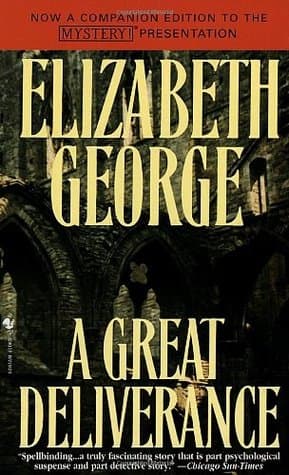
- A Great Deliverance
Elizabeth George
4.0 (40k) average on GoodreadsThrillerA traditional British procedural with strong character development, psychological insight, and intricate plotting.
- One of Us Is Lying
Karen M. McManus
4.0 (216k) average on GoodreadsThrillerMcManus's work exemplifies a faster-paced, high-stakes contemporary YA psychological thriller, focusing on immediate revelations and dramatic twists. Penny's 'A Trick of the Light' adopts a more literary, contemplative pace, prioritizing gradual character-driven psychological decay over rapid-fire plot sensationalism, appealing to readers who prefer depth over speed.
- The Perks of Being a Wallflower
Stephen Chbosky
4.2 (1.3M) average on GoodreadsPsychologyThrough letters, a shy high school freshman learns to navigate first love, trauma, and self-discovery, stepping off the sidelines and into life.
- Eleanor Oliphant Is Completely Fine
Gail Honeyman
4.3 (708k) average on GoodreadsLiterary FictionA lonely woman's structured life changes when an IT guy and an elderly man help her learn to open her heart.





Enjoyed the summary?
A summary gives you the shape of the book. The book itself has the detail, the examples and the voice.
Find A Trick of the Light on AmazonAs an Amazon Associate, BookBrief earns from qualifying purchases. How we're funded