

Core Idea
- Difficulty
- Easy
Key Takeaways from A Walk in the Woods
The Appalachian Trail: A Grand, Yet Imperfect, Wilderness
Bryson debunks romantic notions of the AT, revealing its ecological fragility and human-imposed challenges.
Bryson's hike on the Appalachian Trail shows how idealized views of nature meet harsh reality. He details the trail's environmental problems, like invasive species harming hemlocks and the constant issue of trash and human impact, even in remote areas. He points out that building and maintaining the trail, while well-intentioned, changes the wilderness it aims to protect. This idea is important for anyone considering a similar trip, highlighting that even protected wilderness areas face environmental pressures. His observations remind us that conservation needs constant attention and a clear understanding of how humans and nature interact.
“The Appalachian Trail, it turned out, was not just a walk in the woods. It was a walk through a vast, intricate, and often threatened ecosystem, punctuated by the sometimes-comical, sometimes-alarming realities of human interaction.”
In the book: Bryson frequently discusses the devastation wrought by the woolly adelgid on hemlock trees and the pervasive litter he encounters, contrasting the ideal of pristine wilderness with the visible signs of human impact.
Try this: When engaging with natural spaces, research the local ecological challenges and practice Leave No Trace principles diligently. Support conservation efforts that address specific threats to the environment.
The Unsung Heroism of Trail Maintainers
The immense, often invisible, effort required to keep the AT walkable is a testament to dedicated volunteers.
One of Bryson's best points is his focus on the volunteers who maintain the Appalachian Trail. He often sees signs of their hard work—fixed bridges, cleared paths, carefully placed markers—and is amazed by the scale of what they do. This part of the book shifts the story from a personal journey to a broader appreciation of community effort. Bryson makes it clear that the trail exists not as a natural feature but through ongoing human will and generosity. This shows how collective action, often by unknown individuals, supports large public goods.
“The existence of the Appalachian Trail, in its current form, is a miracle of sustained volunteer effort, a testament to the thousands of people who dedicate their time to making sure it remains a path for others.”
In the book: Bryson frequently mentions encountering sections of trail that have been recently cleared, bridges that have been repaired, or new blazes, all evidence of ongoing volunteer maintenance.
Try this: Seek out opportunities to volunteer for local parks or trails. Recognize and support organizations that rely on volunteer labor for community infrastructure and environmental preservation.
The Perils and Peculiarities of Human Company
Hiking with others introduces a unique blend of camaraderie, irritation, and unexpected revelations.
Bryson's choice to hike with his old friend Stephen Katz provides much of the book's humor and tension. Their relationship—Katz's physical struggles and questionable decisions against Bryson's more analytical, though often frustrated, viewpoint—is central to the story. This look at human companionship under stress reveals the complex mix of loyalty, annoyance, and shared experience. While Bryson often despairs over Katz's limits, there is an underlying affection and mutual reliance. This shows that even when seeking solitude, human connection, with all its flaws, deeply shapes the experience. The book suggests that challenges are often more bearable, and sometimes more memorable, when shared, even if sharing creates new problems.
“The thing about hiking with someone, especially for extended periods, is that you get to know them in ways you never would in normal life. All the little quirks, all the hidden strengths and weaknesses, come bubbling to the surface.”
In the book: The entire narrative arc of Bryson and Katz's hiking attempts, their frequent arguments, Katz's physical struggles, and their eventual separation and reunion, all illustrate the complexities of human companionship on the trail.
Try this: When embarking on challenging or long-term projects, carefully consider your companions and be prepared for both the benefits and frustrations that shared experiences entail. Practice patience and empathy.
America's Wildness: More Myth Than Reality?
Bryson scrutinizes the concept of vast, untouched American wilderness, revealing its fragmented and often managed nature.
Bryson consistently questions the romantic idea of America as an endless wilderness. Through his encounters with logging roads, clear-cut areas, and the surprisingly dense human presence near the trail, he shows that much of what we see as 'wild' is actually managed or broken-up land. This view is essential for a realistic understanding of environmental conservation. It moves past simple calls to 'preserve wilderness' and instead highlights the complexities of land use, ownership, and human interaction across large areas. His argument suggests that real conservation must deal with these realities, rather than holding onto an idealized, often incorrect, vision of untouched nature. This is a strong idea that cuts through national myths.
“The idea of America as a land of boundless, untamed wilderness is a powerful myth, but the reality, especially along the Appalachian Trail, is often a patchwork of managed forests, private lands, and surprisingly accessible areas.”
In the book: Bryson frequently describes encountering signs of human activity, such as logging roads, clear-cut areas, and even small towns or private properties, often surprisingly close to the trail itself.
Try this: Educate yourself on the land use policies and history of local 'wild' areas. Advocate for sustainable land management practices that balance conservation with human needs, acknowledging the interconnectedness of landscapes.
The Unexpected Humor and Absurdity of the Outdoors
Even in serious endeavors, the trail provides ample opportunity for comical mishaps and observations.
Bryson's humor is evident throughout the book, turning potential difficulties into comedy. From encounters with quirky hikers to his own clumsiness and the sheer absurdity of some trail situations (like getting lost or facing a bear), he finds humor in almost everything. This is not just for entertainment; it is a way to cope and make daunting situations approachable. The book suggests that embracing the absurd and finding humor in tough times is not only possible but necessary for endurance, whether on a long hike or in other life challenges. This idea resonates widely, making the book enjoyable even for those not interested in hiking.
“There's a certain kind of humor that only reveals itself when you're cold, wet, tired, and slightly delirious in the middle of nowhere. It's a primal, often dark, but utterly necessary kind of humor.”
In the book: Bryson recounts numerous humorous anecdotes, including his and Katz's repeated struggles with navigation, their awkward interactions with other hikers, and his often-exaggerated descriptions of discomfort and physical exertion.
Try this: Cultivate a sense of humor in the face of challenges. Learn to laugh at your own mistakes and the absurdities of life; it can be a powerful tool for resilience and maintaining perspective.
The Enduring Allure of the 'Why'
Despite hardships, the intrinsic draw of a monumental challenge continues to captivate human spirit.
Bryson often considers why people hike the Appalachian Trail, both for himself and for the thousands of others he meets or reads about. Despite the blisters, rain, bear fears, and physical effort, there is a clear draw. He offers not one simple answer, but hints at various reasons: self-discovery, an escape from modern life, a desire for nature, or simply the satisfaction of finishing a huge task. This look into intrinsic motivation is a key theme, suggesting that humans are drawn to challenges not just for external rewards, but for the inner growth and unique experiences they offer. This is a subtle but powerful insight into human psychology and goals.
“Why do people do it? Why do they put themselves through all that misery and discomfort? The answer, I suppose, is because it's there. And because, for all its difficulties, it offers something profoundly rewarding.”
In the book: Bryson often reflects on his own motivations for continuing the hike despite discomfort, and he observes the varied reasons other hikers give for undertaking the AT, from personal crises to simple love of the outdoors.
Try this: Reflect on your own motivations for pursuing difficult goals. Understand that intrinsic rewards often outweigh external ones, and allow that understanding to guide your choices and perseverance.
The Illusion of Control in the Wild
Even with meticulous planning, nature's unpredictability dictates the true course of any outdoor adventure.
A repeated lesson in Bryson's journey is how little control humans have when immersed in nature. Despite his research and preparations, he and Katz are constantly at the mercy of weather, terrain, and their own physical limits. Getting lost, facing unexpected dangers, or simply being soaked by endless rain are common. This shows the humbling power of the natural world and the importance of adapting rather than sticking rigidly to plans. While careful planning does reduce risk, Bryson effectively shows that a true wilderness experience involves accepting some unpredictability. It is a healthy reminder that nature is not just a backdrop for human activities but an active, powerful force.
“You can plan all you want, read all the books, buy all the gear, but in the end, the wilderness has its own agenda. And its agenda often involves making you feel small, wet, and utterly insignificant.”
In the book: Bryson recounts numerous instances of getting lost despite maps, being caught in torrential rain, and facing unexpected physical challenges, all demonstrating the unpredictability of the trail.
Try this: When planning outdoor activities, prioritize flexibility and contingency plans. Develop skills in improvisation and learn to adapt to changing circumstances rather than expecting perfect conditions.
A History Etched in Trees and Trails
The AT is not just a path, but a living museum of American natural and human history.
Bryson blends historical and ecological facts into his story, making a simple hike a rich learning experience. He explores the origins of the Appalachian Mountains, the history of logging and mining in the area, stories of early settlers, and the fascinating, often sad, tales of extinct or endangered species. This constant background information elevates the book beyond a travelogue, showing how deeply human history is connected with the natural world. This is a strong point, demonstrating Bryson's skill at making complex information engaging. He argues that to truly appreciate a landscape, one must understand its past, both natural and human.
“Every mile of the Appalachian Trail, it seemed, had a story to tell, a piece of history, a forgotten battle, a lost settlement, or a unique ecological struggle, all woven into the very fabric of the landscape.”
In the book: Bryson intersperses his hiking narrative with detailed historical accounts of the region's geology, flora and fauna, early settlements, and the impact of industries like logging and mining.
Try this: Before visiting a natural area, research its historical and ecological context. This enriches the experience and fosters a deeper appreciation for the landscape and its ongoing story.
The Impermanence of the Wilderness Experience
The 'trail magic' and profound moments are fleeting, often followed by a return to mundane realities.
Despite the grand adventure, Bryson's story subtly highlights that intense wilderness experiences are temporary. Moments of awe, deep accomplishment, and unique friendships with fellow hikers are often mixed with periods of boredom, discomfort, and the eventual return to civilization. This balanced view avoids overly romanticizing the trail, acknowledging that even the most transformative experiences have limits and eventually fit back into a larger, often less exciting, life. This suggests that the value of such an effort lies not just in the journey itself, but in how it subtly changes one's perspective upon returning to everyday life. It is a realistic view of personal growth through challenge.
“The magic of the trail, the heightened senses, the profound connections, they don't last forever. Eventually, you have to come back down, back to the world of cars and concrete and bills.”
In the book: Bryson frequently describes the contrast between moments of exhilaration or profound beauty on the trail and the mundane realities of setting up camp, dealing with bad weather, or the eventual return to towns and civilization.
Try this: After engaging in intense or transformative experiences, consciously reflect on how they have changed your perspective. Seek to integrate the lessons learned into your daily life, rather than expecting a permanent state of heightened awareness.
Quiz
10 questions on the main ideas. Each answer comes with a short explanation.
Question 1
What is the primary subject of Bill Bryson's book "A Walk in the Woods"?
- The history of bears in America
- A journey along the Appalachian Trail
- The ecology of the Rocky Mountains
- A guide to comfortable chairs
Show answer
B. A journey along the Appalachian Trail The book chronicles Bill Bryson's attempt to walk the Appalachian Trail and his experiences along the way.
Question 2
According to the book description, approximately how long is the Appalachian Trail?
- From New York to California
- From Florida to Canada
- From Georgia to Maine
- From Texas to Washington
Show answer
C. From Georgia to Maine The description explicitly states that the Appalachian Trail stretches from Georgia to Maine.
Question 3
Who is described as the 'most entertaining guide' for the Appalachian Trail in the book's summary?
- A seasoned park ranger
- A famous naturalist
- Bill Bryson
- A local hiker
Show answer
C. Bill Bryson The summary directly refers to Bill Bryson as the 'most entertaining guide you'll find'.
Question 4
Besides the terrain, what else does Bill Bryson introduce to the reader in "A Walk in the Woods"?
- Recipes for trail mix
- The history and ecology of the trail, and people he meets
- Tips for avoiding bears
- A comprehensive guide to camping gear
Show answer
B. The history and ecology of the trail, and people he meets The description mentions that Bryson introduces 'the history and ecology of the trail and to some of the other hardy (or just foolhardy) folks he meets along the way'.
Question 5
What kind of wildlife, besides humans, is mentioned as being encountered on the trail?
- Wolves and eagles
- Deer and squirrels
- Bears
- Mountain lions and snakes
Show answer
C. Bears The summary specifically states that Bryson meets 'a couple of bears'.
Question 6
The book's description suggests that the people Bryson meets on the trail are characterized as:
- Solely experienced hikers
- Mostly park rangers
- Hardy or foolhardy
- Uniformly unprepared
Show answer
C. Hardy or foolhardy Bryson introduces 'some of the other hardy (or just foolhardy) folks he meets along the way'.
Question 7
What is the overall effect the book is suggested to have on the reader?
- It makes them want to buy a comfortable chair
- It inspires a desire for the outdoors or relaxation
- It discourages them from hiking
- It teaches them advanced survival skills
Show answer
B. It inspires a desire for the outdoors or relaxation The description states it 'will make you long for the great outdoors (or at least a comfortable chair to sit and read in)'.
Question 8
What genre best describes "A Walk in the Woods" based on the provided information?
- Science Fiction
- Mystery
- Historical Fiction
- Memoir/Travelogue
Show answer
D. Memoir/Travelogue The book is about a personal journey and experiences on the trail, fitting the memoir and travelogue genres. The provided genres also list Memoir and History.
Question 9
The description implies that the Appalachian Trail itself is:
- A relatively flat and easy walk
- Primarily a historical landmark with little natural beauty
- A challenging but beautiful natural environment
- An urban hiking path
Show answer
C. A challenging but beautiful natural environment The description mentions 'breathtaking terrain,' 'majestic mountains,' and 'silent forests,' suggesting a challenging and beautiful natural environment.
Question 10
Considering the tone and content described, how might one characterize the book's approach to the Appalachian Trail?
- A purely scientific and objective analysis
- A humorous and personal reflection on a challenging endeavor
- A dry historical account of trail construction
- A survival guide for extreme wilderness conditions
Show answer
B. A humorous and personal reflection on a challenging endeavor The mention of Bryson as an 'entertaining guide,' the 'hardy (or just foolhardy) folks,' and the overall inviting yet realistic tone suggest a humorous and personal reflection.
A Walk in the Woods FAQ
What is A Walk in the Woods about?
A Walk in the Woods is a humorous travel memoir by Bill Bryson about his attempt to hike the Appalachian Trail. It chronicles his experiences, the people he meets, and the history and ecology of the trail.
Is A Walk in the Woods a true story?
Yes, A Walk in the Woods is a true account of Bill Bryson's personal journey attempting to thru-hike the Appalachian Trail, though it is told with his characteristic humor and observational wit.
What is the Appalachian Trail?
The Appalachian Trail is a marked hiking trail in the Eastern United States, extending between Springer Mountain in Georgia and Mount Katahdin in Maine. It traverses some of the most scenic and wild parts of the Appalachian Mountains.
Does Bill Bryson actually finish the Appalachian Trail in the book?
No, Bill Bryson does not complete the entire Appalachian Trail in the book. His journey is marked by challenges, humorous mishaps, and ultimately, a decision to end his thru-hiking attempt before reaching the final destination.
What kind of people does Bill Bryson meet on the trail?
Bryson encounters a colorful cast of characters, including fellow hikers with varying levels of experience and dedication, park rangers, and locals. These encounters often provide much of the book's humor and insight.
Is A Walk in the Woods a good book for someone who wants to hike the Appalachian Trail?
While entertaining, the book offers a humorous and often cautionary look at the realities of long-distance hiking, rather than a practical guide. It highlights the challenges and potential absurdities of the trail.
What historical and ecological information is in A Walk in the Woods?
Bryson weaves in fascinating historical facts about the creation and maintenance of the trail, as well as ecological details about the flora, fauna, and geology of the Appalachian region.
What is the tone of A Walk in the Woods?
The book is predominantly humorous and lighthearted, characterized by Bryson's witty observations, self-deprecating humor, and engaging storytelling style.
Is A Walk in the Woods similar to other travel memoirs?
It shares the personal narrative and journey aspect of travel memoirs but stands out with its specific focus on a challenging hiking trail and Bryson's unique blend of humor, history, and cultural commentary.
Who would enjoy reading A Walk in the Woods?
Anyone who enjoys humorous memoirs, travel writing, nature descriptions, or learning about American history and geography will likely find A Walk in the Woods highly enjoyable.
About the author

Bill Bryson is an American author known for his engaging non-fiction works that explore various subjects, including travel and science. His notable books include "A Walk in the Woods: Rediscovering America on the Appalachian Trail," which recounts his hiking experience, "A Short History of Nearly Everything," a popular science overview, "In a Sunburned Country," detailing his travels in Australia, and "Made in America," which examines the history of American English.
Similar books
- Wild: From Lost to Found on the Pacific Crest Trail
Cheryl Strayed
4.0 (615k) average on GoodreadsLifestyleWhile both books chronicle a long-distance hike, "Wild" is a much more introspective and emotionally raw account of personal grief and self-discovery. Strayed's journey on the PCT is a crucible for processing trauma, whereas Bryson's AT hike is primarily an intellectual and humorous exploration of nature and history. Bryson's tone is lighthearted and observational, while Strayed's is intense and deeply personal. Bryson focuses on external observations and shared experiences with Katz; Strayed delves into internal struggles and solitary reflection.
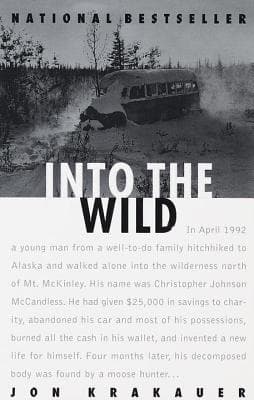
- Into the Wild
Jon Krakauer
3.7 (2k) average on GoodreadsFantasy"Into the Wild" is a journalistic investigation into the life and death of Chris McCandless, who ventured into the Alaskan wilderness. Both books explore themes of wilderness and escape from modern society, but Krakauer's work is a somber, cautionary tale about extreme idealism and unpreparedness, often with tragic consequences. Bryson, while acknowledging dangers, approaches the wilderness with a sense of wonder, skepticism, and humor, highlighting the accessible aspects of outdoor adventure rather than its ultimate perils, and he does so from a first-person, often self-deprecating, perspective rather than an investigative one.
- Eat, Pray, Love
Elizabeth Gilbert
3.6 (1.5M) average on GoodreadsLifestyleA heartbroken writer leaves her conventional life for a year-long global search for pleasure in Italy, spiritual devotion in India, and unexpected love and balance in Bali.
- Into Thin Air: A Personal Account of the Mount Everest Disaster
Jon Krakauer
4.2 (395k) average on GoodreadsLifestyleOn May 10, 1996, ambition and a sudden, violent storm turned Mount Everest into a deadly trap, leaving Jon Krakauer to tell the harrowing story of a disaster that took lives and shattered climbers' dreams.
- On The Road
Jack Kerouac
3.6 (349k) average on GoodreadsLifestyleDean Moriarty and Sal Paradise go on a wild, cross-country trip with jazz, drugs, and a desperate search for meaning on America's post-war roads.
- Three Cups of Tea: One Man's Mission to Promote Peace ... One School at a Time
Greg Mortenson
3.6 (326k) average on GoodreadsLifestyleA lost mountaineer's promise to build a school for impoverished villagers grows into a decade-long, dangerous effort to educate girls in Taliban territory, showing one person's dedication can build peace.





Enjoyed the summary?
A summary gives you the shape of the book. The book itself has the detail, the examples and the voice.
Find A Walk in the Woods on AmazonAs an Amazon Associate, BookBrief earns from qualifying purchases. How we're funded