
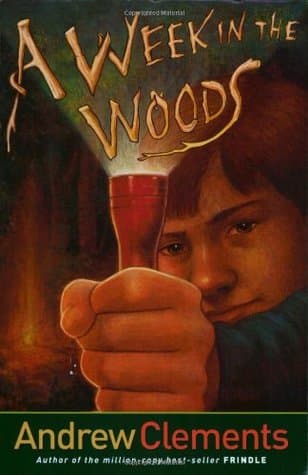
Synopsis
Covers the whole plot, including the ending.
- Difficulty
- Easy
- Pacing
- Moderate
- Mood
- Adventurous, Reflective, Hopeful
- Read it if
- You enjoy stories about overcoming prejudice, unexpected friendships, and survival in the wilderness, especially for a younger audience.
- Skip it if
- You prefer fast-paced action or don't enjoy character-driven stories with a focus on personal growth.
A Week in the Woods Plot Summary
Covers the whole plot, including the ending.
Mark Chelmsley Arrives at Hardy Elementary
Mark Chelmsley IV arrives at Hardy Elementary as a new fifth-grader, having recently moved from a private school. He quickly gets a reputation for being smart but also bored, distant, and a bit lazy, often finishing work fast and then reading his own book. His teacher, Mr. Maxwell, a dedicated educator who loves nature, immediately dislikes Mark. He sees Mark as another privileged, unmotivated child who does not appreciate his chances. Mr. Maxwell's first thought is that Mark is a 'snooty' rich kid, which causes immediate tension and dislike between them, setting up their future conflict.
The Announcement of 'A Week in the Woods'
Mr. Maxwell, with enthusiasm, announces the 'Week in the Woods,' an annual five-day camping and learning trip for fifth graders. He explains that it is a chance to experience nature, learn survival skills, and connect with the environment. For Mr. Maxwell, this trip is the best part of the school year and a personal tradition, showing his love for the outdoors. He talks about teamwork, respecting nature, and self-reliance, warning students it will be hard but good. Mark, at first not interested, sees the trip as just another school activity, but a small interest starts because it is an escape from the classroom and a chance to prove himself, even subtly, to Mr. Maxwell.
Mark's Hidden Talents and Mr. Maxwell's Misconceptions
During lessons before the Week in the Woods, Mark sometimes shows surprising knowledge about plants and animals, often correcting Mr. Maxwell or adding details from his reading. However, Mr. Maxwell is not impressed. He sees these contributions as Mark showing off or trying to challenge his authority. He dismisses Mark's ideas, thinking they come from memorization rather than real understanding. This constant dismissal of Mark's intelligence makes Mark more resentful and strengthens Mr. Maxwell's negative opinion of him. The teacher's prejudice stops him from seeing Mark's true abilities or unique perspective, creating a barrier between them.
The Camp Rules and Mark's Disobedience
The 'Week in the Woods' starts. At the campsite, Mr. Maxwell sets strict rules for safety, saying it is important to stay with the group and never go off alone. Mark, feeling restricted by the rules and Mr. Maxwell watching him, decides to explore a nearby stream alone while others set up camp. He thinks he is being careful and his knowledge of nature will keep him safe. However, Mr. Maxwell sees him. When he finds Mark has disobeyed, Mr. Maxwell gets angry. This act confirms Mr. Maxwell's worst thoughts about Mark, leading to a public argument where the teacher scolds Mark harshly, further embarrassing him.
The Argument and Mark's Reckless Escape
After the public scolding, Mr. Maxwell talks to Mark privately, but just as intensely. He expresses his disappointment and frustration with Mark's behavior, repeating his belief that Mark is a spoiled, irresponsible child. Mark, feeling unfairly targeted and humiliated, reaches his limit. In anger and wanting to escape his teacher's gaze, Mark runs from the campsite, deep into the woods, ignoring calls to stop. Mr. Maxwell, realizing Mark is in danger and feeling responsible, immediately goes after him, determined to bring him back before he gets seriously lost or hurt.
Lost in the Wilderness
Mark, running on adrenaline and anger, goes for a long time, eventually getting lost as the forest gets thicker and harder to move through. He knows he is lost but is too proud to admit it or turn back. Meanwhile, Mr. Maxwell, following Mark's tracks, also loses his way while trying to catch up. As evening comes, the woods get darker and colder, and the reality of their situation becomes clear to both of them. Mark, alone and vulnerable, starts to feel afraid, while Mr. Maxwell, despite his frustration with Mark, worries for the boy's safety and realizes they are both in a dangerous situation, far from camp.
An Uneasy Alliance for Survival
As darkness falls completely, Mark, cold and scared, finds Mr. Maxwell, who has been looking for him. The first meeting is tense, with lingering anger and mistrust. However, the immediate need to survive outweighs their personal dislike. Mr. Maxwell, using his outdoor knowledge, quickly takes charge, telling Mark how to build a basic shelter and start a fire. Mark, though still resentful, sees Mr. Maxwell's skill and follows his instructions. They spend a cold, uncomfortable night in the makeshift shelter, the shared difficulty forcing them to depend on each other and slowly start to connect, focusing on tasks rather than their conflict.
Facing the Elements and Finding Common Ground
The next day brings new problems, including hunger and a coming storm. Mr. Maxwell teaches Mark how to find edible plants and water, while Mark, using his observation skills, helps spot animal trails and possible dangers. As they move through the wilderness together, their talks slowly change from accusations to practical discussions about survival. Mark shares some of his knowledge, which Mr. Maxwell, now seeing Mark's insights differently, starts to appreciate. The shared struggle against nature's harshness makes them look past their initial ideas and see each other's strengths, building a respect that slowly becomes mutual understanding.
The Rescue and Its Aftermath
After another night in the woods, a search party from the camp, led by other teachers and rangers, finds Mark and Mr. Maxwell. Both are tired but safe. Back at the main camp, they are met with relief. The experience has changed both of them. Mr. Maxwell, seeing Mark's endurance and intelligence in a real crisis, realizes his first judgment was wrong. Mark, seeing Mr. Maxwell's courage and dedication, gains a new appreciation for his teacher. The dislike that defined their relationship is replaced by a quiet understanding and respect from their shared time in the wilderness.
A Changed Relationship and New Beginnings
After the 'Week in the Woods,' Mark and Mr. Maxwell return to Hardy Elementary. Their relationship is clearly different. The tension is gone, replaced by quiet respect. Mr. Maxwell no longer sees Mark as just a 'snooty' rich kid, but as a capable, smart, and resourceful young man. Mark, in turn, sees Mr. Maxwell not just as a strict teacher, but as a dedicated, passionate, and brave person. While their personalities are still distinct, they have found common ground. Mark starts to engage more genuinely in class, and Mr. Maxwell supports his independent learning. The incident in the woods becomes a turning point, creating an unexpected bond between student and teacher that goes beyond their initial conflict and assumptions.
Principal Figures
Mark Chelmsley IV
Protagonist
Intelligent but aloof new student, struggling with expectations and misjudgment.
Mark Chelmsley IV is a new fifth-grade student at Hardy Elementary, having previously attended an elite private school. He is exceptionally intelligent, well-read, and observant, with a deep, though often hidden, knowledge of nature and history. Mark often appears bored and detached, which Mr. Maxwell misinterprets as laziness and arrogance. He resents being misunderstood and constantly judged by his teacher. Mark's primary motivation is to prove his worth and intelligence, not just academically, but also as a capable individual, and to escape the shadow of his wealthy, demanding parents who have mapped out his future. His flight into the woods is an act of rebellion and a desperate cry for recognition.
Relationships: Mr. Maxwell (Antagonistic at first, evolving into mutual respect and understanding); Mr. and Mrs. Chelmsley III (Demanding, somewhat distant parents who have high expectations for Mark's future)
Mr. Maxwell
Protagonist/Antagonist
Passionate and dedicated fifth-grade teacher with a deep love for nature, prone to snap judgments.
Mr. Maxwell is a seasoned fifth-grade teacher at Hardy Elementary, known for his passion for the outdoors and his beloved 'Week in the Woods' program. He is a dedicated educator who genuinely cares about his students, but he harbors strong prejudices against what he perceives as privileged, unmotivated children. He initially sees Mark as the epitome of this type, leading to immediate animosity and frequent clashes. Mr. Maxwell is physically capable, knowledgeable about survival skills, and deeply committed to safety. His primary motivation is to instill a love for learning and nature in his students, and he takes his responsibility for their well-being very seriously.
Relationships: Mark Chelmsley IV (Antagonistic at first, evolving into mutual respect and understanding); Mrs. Zender (Supportive colleague, fellow chaperone on the trip)
Mrs. Zender
Supporting
Supportive fellow teacher and chaperone on the 'Week in the Woods' trip.
Mrs. Zender is another fifth-grade teacher at Hardy Elementary and a colleague of Mr. Maxwell. She participates as a chaperone on the 'Week in the Woods' trip. She is observant and often acts as a more level-headed counterpoint to Mr. Maxwell's intensity. While she respects Mr. Maxwell's passion, she occasionally offers subtle insights that suggest a more nuanced view of students like Mark. Her role is primarily to provide a secondary adult presence and to highlight Mr. Maxwell's initial biases through her more balanced perspective, though she doesn't directly challenge him.
Relationships: Mr. Maxwell (Colleague, supportive friend); Mark Chelmsley IV (Teacher, concerned observer)
Mr. Chelmsley III
Mentioned
Mark's wealthy and demanding father, whose expectations heavily influence Mark's life.
Mr. Chelmsley III is Mark's father, a successful and wealthy man who holds high expectations for his son. He is portrayed as somewhat distant and preoccupied with Mark's future, having already planned out Mark's education trajectory, including an exclusive prep school. His presence is felt through Mark's internal monologues and his fear of disappointing his parents. He represents the external pressures and the privileged background that contribute to Mr. Maxwell's initial negative perception of Mark.
Relationships: Mark Chelmsley IV (Father-son, demanding and somewhat distant); Mrs. Chelmsley III (Spouse)
Mrs. Chelmsley III
Mentioned
Mark's mother, who shares her husband's high expectations for their son.
Mrs. Chelmsley III is Mark's mother, who, like her husband, is part of the wealthy and socially prominent Chelmsley family. She shares her husband's ambitions for Mark's future, including his transfer to a prestigious boarding school. Her influence, though not directly seen, contributes to Mark's feelings of pressure and his desire to prove himself. She represents the home environment that has shaped Mark's guarded demeanor and his initial difficulty connecting with others.
Relationships: Mark Chelmsley IV (Mother-son, caring but also part of the demanding parental unit); Mr. Chelmsley III (Spouse)
Hardy Elementary Students
Supporting
Mark's classmates, observers of the conflict between Mark and Mr. Maxwell.
The other fifth-grade students at Hardy Elementary serve as the general peer group for Mark. They are present during the classroom scenes and, more prominently, during the 'Week in the Woods' trip. They witness the initial clashes between Mark and Mr. Maxwell and are indirectly affected by the tension. Their reactions, though not individually detailed, reflect the general student body's perception of Mark as somewhat different and Mr. Maxwell as a respected, if sometimes strict, authority figure. They are the reason Mr. Maxwell's initial reprimand of Mark is so humiliating.
Relationships: Mark Chelmsley IV (Classmates, some curiosity/distance); Mr. Maxwell (Students-teacher, generally respectful)
Themes & Insights
Prejudice and Misjudgment
The novel explores how initial ideas can prevent people from seeing the truth. Mr. Maxwell first judges Mark based on his wealth, assuming he is spoiled and unmotivated. He dismisses Mark's intelligence and interest in nature, thinking it is arrogance or memorization. Mark also sees Mr. Maxwell as a rigid, unfair teacher. Their shared experience in the woods makes them drop these ideas, showing each other's true character and abilities. This shows that real understanding means looking past appearances and assumptions.
“Mr. Maxwell had made up his mind about Mark Chelmsley on the first day of school, and he hadn't changed it since.”
Man vs. Nature / Survival
The 'Week in the Woods' and getting lost are central to this theme. The realities of nature — cold, hunger, being lost, and needing shelter — remove social norms and force Mark and Mr. Maxwell to face their need to survive. Nature is a neutral, demanding teacher, requiring cooperation and practical skills. Through their shared struggle against the elements, their true characters appear, and they learn to rely on each other. This shows nature's power to humble and change people.
“The woods didn’t care who you were or what your father did for a living. The woods just were.”
Identity and Self-Discovery
Both Mark and Mr. Maxwell learn about themselves. Mark, weighed down by his parents' expectations and Mr. Maxwell's labels, struggles to show his true self. Getting lost in the woods lets him show his resourcefulness, intelligence, and endurance, proving to himself and his teacher that he is more than a 'rich kid.' Mr. Maxwell, in turn, must confront his own biases and realize his judgment of Mark was flawed, leading to a deeper understanding of himself as an educator. The experience helps both characters see themselves and each other more clearly.
“He had spent his whole life trying to be what other people wanted him to be, or what they thought he was. Now, out here, he was just Mark.”
Communication and Understanding
Poor communication and understanding cause the conflict between Mark and Mr. Maxwell. Mark's attempts to share knowledge are seen as showing off, and Mr. Maxwell's concerns are seen as unfair criticism. They do not connect, unable to overcome their initial ideas. Only when forced into a dangerous situation, where clear communication is needed for survival, do they start to truly listen to and understand each other, leading to a change in their relationship and a lesson in empathy.
“It was amazing how much more clearly you could hear someone when your life depended on it.”
Plot Devices & Literary Techniques
The 'Week in the Woods' Program
The central setting and catalyst for conflict and resolution.
The annual 'Week in the Woods' program is not just a school trip; it's the primary plot device that drives the entire narrative. It serves as the unique environment where the conflict between Mark and Mr. Maxwell can escalate and, ultimately, be resolved. By taking the characters out of the structured classroom and into the unpredictable wilderness, the program strips away their usual roles and forces them to confront each other and themselves in a raw, authentic way. It provides the perfect backdrop for survival, self-discovery, and the breaking down of prejudices, making it indispensable to the story's development.
The Wilderness as a Neutralizer
The natural environment that strips away social hierarchies and forces genuine interaction.
The deep woods act as a powerful neutralizer, stripping away the social constructs and hierarchies that define Mark and Mr. Maxwell's relationship in the school setting. In the wilderness, wealth, social status, and teacher-student roles become irrelevant; only practical skills, cooperation, and resilience matter. This device forces both characters to rely on each other as equals in the face of danger, allowing them to see beyond their prejudices and appreciate each other's inherent worth and capabilities, something that would have been impossible in their usual environment. It's the crucible in which their characters are forged anew.
Foreshadowing through Classroom Interactions
Early classroom clashes hint at the deeper conflict to come.
Clements uses the early classroom interactions between Mark and Mr. Maxwell as a form of foreshadowing. Mark's initial boredom, his quick completion of assignments, his occasional corrections of Mr. Maxwell, and Mr. Maxwell's immediate negative judgment all build the tension and hint at the deeper conflict and misunderstanding that will later explode in the woods. These seemingly minor incidents establish their antagonistic dynamic and make their later, more dramatic confrontation and subsequent reconciliation feel earned and believable, as the groundwork for their opposing personalities has been carefully laid.
Dual Perspectives (Implied)
The narrative subtly shifts to reveal the internal thoughts and motivations of both Mark and Mr. Maxwell.
While not explicitly switching first-person narrators, the story often delves into the internal thoughts and feelings of both Mark and Mr. Maxwell. This device allows the reader to understand their individual motivations, frustrations, and prejudices from both sides. We see Mark's resentment at being misunderstood and Mr. Maxwell's genuine, if misguided, concern and frustration. This dual perspective is crucial for building empathy for both characters and for demonstrating how their individual biases contribute to their conflict, ultimately making their journey towards mutual understanding more impactful.
A Week in the Woods Quotes
“A person can't be a good citizen if they don't know how to take care of themselves.”
“Sometimes the hardest part of an adventure is just getting started.”
“Nature doesn't care about your plans. It just is.”
“You can learn more from a week in the woods than from a month in a classroom.”
“Being prepared isn't just about having the right gear; it's about having the right attitude.”
“In the woods, every decision matters. There's no undo button.”
“Friendship isn't about being the same; it's about standing together when things get tough.”
“The quiet of the woods can be the loudest teacher of all.”
“You don't have to love the woods to learn from them.”
“Sometimes getting lost is the best way to find yourself.”
“Respect for nature starts with respect for each other.”
“The woods don't judge you. They just show you who you are.”
“Adventure is what happens when plans fall apart.”
“Learning to listen is more important than learning to speak.”
Quiz
10 questions on the plot and the characters. Each answer comes with a short explanation.
Question 1
What is the name of the school tradition that serves as the main setting for the story?
- The Hardy Hike
- The Week in the Woods
- The Fifth-Grade Campout
- The Maxwell Expedition
Show answer
B. The Week in the Woods The entire story revolves around 'The Week in the Woods,' a beloved fifth-grade tradition at Hardy Elementary where students spend a week camping and learning outdoor skills.
Question 2
Why is Mark Chelmsley initially indifferent about the Week in the Woods?
- He is afraid of the outdoors
- He is moving to a prep school soon and doesn't see the point
- He dislikes his classmates
- He has already participated in similar trips
Show answer
B. He is moving to a prep school soon and doesn't see the point Mark knows his parents are sending him to an exclusive prep school, so he views his time at Hardy Elementary as temporary and doesn't invest in school activities like the Week in the Woods.
Question 3
What is Mr. Maxwell's initial opinion of Mark Chelmsley?
- He sees Mark as a hardworking student
- He views Mark as just another slacker rich kid he can't stand
- He believes Mark is exceptionally talented
- He thinks Mark is shy and needs encouragement
Show answer
B. He views Mark as just another slacker rich kid he can't stand Mr. Maxwell stereotypes Mark as a privileged, unmotivated student from a wealthy family, which creates tension between them from the start.
Question 4
What reckless action does Mark take on the first day of the Week in the Woods that puts lives in danger?
- He starts a campfire without supervision
- He wanders off alone into the woods
- He steals a map and compass from Mr. Maxwell
- He takes Mr. Maxwell's car and drives it recklessly
Show answer
D. He takes Mr. Maxwell's car and drives it recklessly In a moment of anger and frustration, Mark takes Mr. Maxwell's car without permission and drives it dangerously, leading to an accident that strands both of them in a perilous situation.
Question 5
How does Mark's attitude toward the Week in the Woods change after the incident?
- He becomes more determined to prove himself and cooperate
- He gives up entirely and waits for rescue
- He blames Mr. Maxwell for everything
- He focuses on getting revenge
Show answer
A. He becomes more determined to prove himself and cooperate The dangerous situation forces Mark to mature and take responsibility, shifting from indifference to a desire to work with Mr. Maxwell to survive and redeem himself.
Question 6
What key theme is explored through Mark and Mr. Maxwell's evolving relationship?
- The importance of wealth and status
- Overcoming prejudice and learning mutual respect
- The dangers of outdoor adventures
- The value of academic competition
Show answer
B. Overcoming prejudice and learning mutual respect The story highlights how initial stereotypes and conflicts can be overcome through shared challenges, leading to understanding and respect between Mark and Mr. Maxwell.
Question 7
What does Mark hope to achieve by participating in the Week in the Woods after his initial indifference?
- Win a trophy for best camper
- Prove to Mr. Maxwell that he's not just a slacker rich kid
- Impress his parents so they let him stay at Hardy Elementary
- Make new friends before leaving for prep school
Show answer
B. Prove to Mr. Maxwell that he's not just a slacker rich kid Mark realizes the Week in the Woods is an opportunity to change Mr. Maxwell's negative opinion of him and show that he is capable and responsible.
Question 8
In what way does the dangerous situation force Mark and Mr. Maxwell to interact differently?
- They must rely on each other for survival, breaking down their adversarial roles
- They compete to see who can find help first
- They ignore each other and focus on individual survival
- They argue more intensely about who is to blame
Show answer
A. They must rely on each other for survival, breaking down their adversarial roles The life-threatening circumstances compel them to set aside their conflict and work together, revealing new aspects of each other's character and fostering cooperation.
Question 9
What broader lesson does the story suggest about judging people based on first impressions?
- First impressions are always accurate and should be trusted
- People can change and surprise you when given a chance in challenging situations
- Wealth and background determine a person's character
- Teachers should never form opinions about their students
Show answer
B. People can change and surprise you when given a chance in challenging situations Through Mark and Mr. Maxwell's journey, the book illustrates that initial judgments can be misleading, and true character is revealed through actions and resilience under pressure.
Question 10
How does the resolution of the story address the initial conflict between Mark and Mr. Maxwell?
- Mark is expelled, and Mr. Maxwell is fired, leaving the conflict unresolved
- They part ways without speaking again, maintaining their dislike
- They develop mutual respect and understanding, transforming their relationship
- Mark's parents intervene and force an apology from Mr. Maxwell
Show answer
C. They develop mutual respect and understanding, transforming their relationship By working together to survive, Mark and Mr. Maxwell gain insight into each other's strengths and vulnerabilities, leading to a reconciled and respectful relationship by the end.
A Week in the Woods FAQ
What is 'A Week in the Woods' about?
The story follows fifth-grader Mark Chelmsley IV, a wealthy boy who is about to transfer to a prep school, as he participates in his school's annual Week in the Woods outdoor program. Mark initially sees it as a chance to prove himself to his strict teacher, Mr. Maxwell, but a reckless decision during a conflict puts both their lives in danger, forcing them to work together to survive.
Why should I read 'A Week in the Woods'?
This book offers a compelling exploration of prejudice, responsibility, and personal growth through an exciting survival story. It shows how initial judgments can be wrong and how adversity can bring out unexpected strengths in people, making it both thought-provoking and engaging for young readers.
What is the background/setting of 'A Week in the Woods'?
The story is set primarily during Hardy Elementary's annual Week in the Woods, a five-day outdoor education program in a forested area. The setting shifts from Mark's privileged home life to the rustic, challenging environment of the woods, which becomes crucial to the plot's survival elements.
What are the most memorable quotes?
Key quotes include Mr. Maxwell's early judgment, 'You're just another rich kid slacker,' and Mark's realization, 'Maybe the woods aren't about proving something to Mr. Maxwell, but about proving something to myself.' These lines highlight the themes of perception and self-discovery central to the story.
What writing style does the author use?
Andrew Clements uses a straightforward, accessible narrative style with vivid descriptions of the natural setting and internal monologues to reveal characters' thoughts. The pacing builds tension gradually, blending everyday school dynamics with high-stakes survival drama to keep readers engaged.
What minor details add significant meaning?
Mark's careful packing of high-tech gear, like his expensive multi-tool, initially seems to reinforce his 'rich kid' image but later becomes vital for survival. Similarly, Mr. Maxwell's meticulous planning of the Week in the Woods shows his dedication, which contrasts with his harsh initial view of Mark.
What are some subtle foreshadowing moments?
Early scenes where Mark ignores safety rules and Mr. Maxwell's warnings about the dangers of the woods foreshadow the eventual crisis. Mark's impulsive nature is hinted at when he acts out in class, setting up his reckless decision that leads to the life-threatening situation.
What unexpected character connections exist?
Despite their adversarial start, Mark and Mr. Maxwell discover shared traits like stubbornness and resourcefulness during their ordeal. Their connection deepens as they rely on each other for survival, revealing that their initial conflict stemmed from misunderstandings rather than fundamental differences.
What are unspoken character motivations?
Mark is driven by a deep-seated desire to be seen as more than just a privileged kid, wanting to earn respect through competence. Mr. Maxwell is motivated by a protective instinct for his students and a frustration with perceived laziness, which masks his own past struggles with judgment.
What psychological complexities do characters exhibit?
Mark grapples with insecurity beneath his confident exterior, while Mr. Maxwell shows a mix of strictness and hidden compassion. Their interactions reveal how pride and preconceptions can blind people to others' true qualities, leading to growth as they face extreme circumstances together.
What are the major emotional turning points?
Key moments include the initial explosion of tension between Mark and Mr. Maxwell, the realization of grave danger after Mark's reckless act, and the point where they must cooperate to survive. The climax involves a shared struggle that breaks down their barriers, leading to mutual respect.
How do relationship dynamics evolve?
The relationship shifts from hostility and mistrust to grudging cooperation and, ultimately, mutual reliance and understanding. Forced into a life-or-death situation, Mark and Mr. Maxwell learn to appreciate each other's strengths, transforming their dynamic from adversarial to supportive.
Which parts remain ambiguous or open-ended?
The book leaves some ambiguity about whether Mark will still transfer to prep school or if his experience changes his parents' plans. It also doesn't fully detail how other students perceive the resolved conflict, leaving room for readers to imagine the long-term impact on Mark and Mr. Maxwell's relationship.
What are controversial scenes or decisions?
Mark's reckless act that endangers both himself and Mr. Maxwell sparks debate about responsibility and consequences. Some readers might question Mr. Maxwell's harsh initial judgment of Mark as a 'slacker rich kid,' seeing it as an unfair stereotype that influences their early interactions.
'A Week in the Woods' ending explained: how it ends & what it means
The story concludes with Mark and Mr. Maxwell surviving their ordeal and gaining a newfound respect for each other. Mark proves his resilience and maturity, while Mr. Maxwell acknowledges his misjudgment. The ending emphasizes themes of redemption, the importance of looking beyond stereotypes, and how challenges can forge unexpected bonds.
About the author

Andrew Clements was a prolific author of children's literature, celebrated for his engaging and relatable stories. His notable works include the beloved "Frindle," "A Week in the Woods," and the "Jake Drake" series, which often explored themes of school, friendship, and growing up. Clements' accessible writing style and keen understanding of young readers earned him widespread critical acclaim and a dedicated fanbase.
Similar books
- Hatchet
Gary Paulsen
3.7 (309k) average on GoodreadsChildren'sFeatures a young boy's survival in the wilderness after an unexpected event.
- Bridge to Terabithia
Katherine Paterson
4.0 (445k) average on GoodreadsFantasyFocuses on a deep, transformative friendship between children facing challenges.
- Harry Potter and the Sorcerer's Stone
J.K. Rowling
4.5 (7M) average on GoodreadsFantasyRescued from a miserable life under the stairs, an orphaned boy discovers he's a wizard destined for a magical school, where he uncovers a dangerous secret tied to the dark wizard who murdered his parents.
- The Hobbit, or There and Back Again
J.R.R. Tolkien
4.3 (2.9M) average on GoodreadsFantasyA comfort-loving hobbit named Bilbo Baggins is whisked away by a mischievous wizard and a band of dwarves on an unexpected journey to reclaim stolen treasure from a fearsome dragon, discovering courage and a magical ring along the way.
- Harry Potter and the Goblet of Fire
J.K. Rowling
4.6 (2.6M) average on GoodreadsFantasyA bewildered Harry Potter, underage and thrust into a deadly Triwizard Tournament, must brave dragons, mermaids, and a resurgent dark magic to survive a year that will forever alter the wizarding world.
- Harry Potter and the Order of the Phoenix
J.K. Rowling
4.5 (2.5M) average on GoodreadsFantasyIn a year of oppressive secrets and the threat of Voldemort, Harry Potter and Dumbledore's Army secretly train for war, shown through Jim Kay and Neil Packer's dark illustrations.





Enjoyed the summary?
A summary gives you the shape of the book. The book itself has the detail, the examples and the voice.
Find A Week in the Woods on AmazonAs an Amazon Associate, BookBrief earns from qualifying purchases. How we're funded