
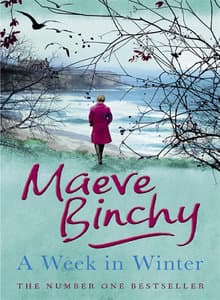
Synopsis
Covers the whole plot, including the ending.
- Difficulty
- Easy
- Pacing
- Moderate
- Mood
- Heartwarming, Reflective, Gentle, Cozy
- Read it if
- You enjoy character-driven stories about personal growth, quiet moments of connection, and the charm of an Irish setting. Perfect for fans of gentle humor and heartwarming tales.
- Skip it if
- You prefer fast-paced plots, high-stakes drama, or a single central romance. This book is more about ensemble character development than a singular narrative arc.
A Week in Winter Plot Summary
Covers the whole plot, including the ending.
Chicky Starr's Vision for Stone House
Chicky Starr, after years away in America, returns to her childhood home of Stoneybridge on the west coast of Ireland. She buys the long-abandoned Stone House, a large mansion on a cliff overlooking the Atlantic. Despite skepticism from locals, who remember the house's troubled past and its former owner, Mrs. O'Connell, Chicky is set on converting it into a small, welcoming hotel. She gets help from her niece, Orla, a business graduate, and Rigger, a local handyman with carpentry skills. The difficult renovation, full of challenges and local gossip, slowly begins to turn the crumbling structure into a place of warmth and hospitality.
The First Guests Arrive
As Stone House opens for its first week, a diverse group of guests arrives, each seeking something different from their stay. Among them are John, an American movie star hoping for anonymity; Winnie and Lillian, two elderly sisters-in-law with a strained relationship; Nicola and Henry, doctors seeking respite from the emotional toll of their work; Anders, a young musician escaping his father's business expectations; Miss Nell Howe, a critical retired schoolteacher; the Walls, a couple disappointed by their contest prize; and Freda, a librarian troubled by unsettling psychic visions. Chicky, Orla, and Rigger, along with the other staff, prepare to welcome them, unaware of the complexities each guest brings.
Unveiling John's Identity
John, at first reserved and trying to stay hidden, is eventually recognized by one of the guests as a famous American movie star. This causes excitement and curiosity among the other guests and staff, especially Orla, who is initially star-struck. John, who wanted a quiet escape from fame, finds his privacy somewhat compromised but gradually relaxes into the friendly atmosphere of Stone House. His presence adds an unexpected layer of glamour and interest to the first week, making the small Irish hotel a temporary hub of celebrity fascination.
Winnie and Lillian's Reconciliation
Winnie and Lillian, sisters-in-law estranged for years due to past grievances, must share a room at Stone House. Their first interactions are tense and full of passive aggression. However, the intimate setting, lack of outside distractions, and gentle nudging from Chicky and the other guests gradually make them confront their unresolved issues. Through shared meals, walks, and honest conversations, they begin to unpack years of resentment, slowly making way for a tentative reconciliation and a renewed understanding of their family bond, rooted in their shared past and love for Winnie's late brother.
Doctors Seeking Solace
Nicola and Henry, a married couple who are both doctors, arrive at Stone House emotionally exhausted and somewhat distant from each other. They have seen too much suffering and death in their careers, leaving them feeling burnt out and unable to connect deeply. The calm environment of Stone House, the comforting routine, and the chance for long, undisturbed walks along the cliffs allow them to slowly shed the weight of their professional burdens. They begin to rediscover their affection for each other, finding solace in shared quiet moments and the simple beauty of their surroundings, reigniting the spark that had dimmed under work stress.
Anders' Musical Awakening
Anders, a young man from a wealthy family, feels pressured by his father's expectations for him to join the family business, a path he dislikes. He secretly loves music, especially the piano. At Stone House, he finds an old, out-of-tune piano in a neglected room. With Rigger's help in tuning it, Anders carefully begins to play, first in secret, then more openly. His music becomes a source of joy and self-expression, captivating the other guests and staff. This new freedom to pursue his musical talent, encouraged by Chicky and the appreciative audience, helps him consider a different future for himself, away from his father's influence.
Freda's Visions and the House's History
Freda, the quiet librarian, has an unsettling ability to see visions and sense spirits. At Stone House, these abilities grow stronger, and she begins to experience clear glimpses into the house's tragic past, particularly involving the former owner, Mrs. O'Connell, and her ill-fated love affair. Freda's visions reveal the heartbreak and despair that filled the house, explaining its long-standing reputation for being haunted or cursed. While initially frightening, these insights help to explain the house's history for Chicky and the others, offering a deeper understanding of its previous melancholic atmosphere.
Miss Nell Howe's Departure
Miss Nell Howe, a retired schoolteacher, is the most challenging guest. She constantly criticizes every aspect of Stone House, from the food to the decor to the other guests. Her negativity affects the growing camaraderie. Despite Chicky's efforts to accommodate her, Miss Howe remains unsatisfied. Eventually, unable to find fault with the genuine warmth and effort of the staff, and perhaps feeling uncomfortable among the emerging friendships, she decides to leave a day early. Her departure brings a collective sigh of relief and allows the remaining guests to fully embrace the peaceful atmosphere.
The Walls' Shifting Perspective
The Walls, a couple who won their holiday as a second prize (first prize being a trip to Paris), arrive at Stone House feeling disappointed and entitled. They constantly compare their experience unfavorably to what they imagine Paris would have been. However, as the week goes on, and they see the genuine kindness of Chicky and her staff, and witness the changes happening in the other guests, their initial cynicism slowly fades. They begin to appreciate the simple pleasures of Stoneybridge, the beauty of the landscape, and the unexpected warmth of Stone House, realizing that their 'consolation prize' offers its own unique and valuable experiences.
A Week of Connection and Change
As the week ends, the guests prepare to leave, but not before sharing a final meal filled with laughter and new friendships. John, the movie star, has found a quiet place of refuge; Winnie and Lillian have mended their relationship; Nicola and Henry have reconnected; Anders has embraced his musical calling; and even the Walls have found unexpected joy. Freda's visions have brought a sense of closure to the house's past. Chicky, Orla, and Rigger reflect on the success of their first week, realizing that Stone House is more than just a hotel; it has been a catalyst for healing, connection, and personal growth for everyone who walked through its doors, setting a hopeful precedent for its future.
Principal Figures
Chicky Starr
Protagonist
The visionary owner of Stone House, determined to create a haven.
Chicky Starr is a resilient and optimistic woman who returns to her childhood home in Stoneybridge after living in America. She is the driving force behind the transformation of the dilapidated Stone House into a welcoming hotel. Chicky possesses a deep empathy and an innate ability to connect with people, making her guests feel at ease and fostering a sense of community. She is practical yet imaginative, facing challenges with determination and a warm spirit. Her past experiences, including a love affair that ended in heartbreak, have shaped her resilience but not dulled her capacity for kindness.
Relationships: Orla (niece, business partner, and confidante); Rigger (skilled handyman and trusted friend); John (guest, a famous actor she connects with); Mrs. O'Connell (former owner of Stone House, whose story Chicky learns)
Orla
Supporting
Chicky's sharp, business-minded niece and essential partner.
Orla is Chicky's niece, a bright and practical young woman with a keen business sense, recently graduated from university. She is initially skeptical of Chicky's ambitious project but quickly becomes an indispensable partner in managing Stone House. Orla balances Chicky's idealism with her own grounded approach, handling the finances and practicalities. She is initially reserved but grows to appreciate the unique charm of the hotel and the diverse personalities of the guests. Her initial star-struck reaction to John gradually evolves into a more mature understanding of his humanity.
Relationships: Chicky Starr (aunt, mentor, and business partner); Rigger (colleague and developing friendship); John (guest, whom she initially admires, then sees as a person)
Rigger
Supporting
The skilled local handyman with a troubled past and a good heart.
Rigger is a local Stoneybridge man, known for his past as a 'bad boy' but now a highly skilled and reliable carpenter and handyman. He is instrumental in the renovation of Stone House, capable of fixing almost anything. Despite his gruff exterior, Rigger possesses a kind heart and a deep loyalty, particularly to Chicky. He is perceptive and observant, often understanding more about the guests and the house than he lets on. His transformation from his wilder youth to a dependable and respected member of the community is evident through his dedication to Stone House.
Relationships: Chicky Starr (employer, friend, and confidante); Orla (colleague and developing friendship); Anders (helps him tune the piano and encourages his music)
John
Supporting
An American movie star seeking anonymity and escape from fame.
John is a famous American movie star who checks into Stone House under a false name, hoping to find a quiet retreat from the relentless demands of his public life. He is initially reserved and wary, valuing his privacy above all else. However, the genuine warmth and lack of pretension at Stone House, combined with Chicky's understanding nature, slowly allow him to relax and shed his celebrity persona. He finds a sense of normalcy and connection he rarely experiences, appreciating the simple pleasures and the camaraderie of the other guests.
Relationships: Chicky Starr (hotel owner and a source of comfort and understanding); Orla (staff member who is initially star-struck); The other guests (fellow travelers with whom he shares a unique week)
Winnie
Supporting
An elderly sister-in-law, initially resentful but open to reconciliation.
Winnie is an elderly woman forced to take a holiday with her estranged sister-in-law, Lillian. She carries years of resentment and perceived slights, making her initially guarded and prone to passive-aggressive behavior. However, beneath her prickly exterior lies a longing for connection and a willingness to reflect on her past. Through the forced proximity and the supportive environment of Stone House, Winnie gradually opens up, confronting old wounds and working towards reconciliation with Lillian, ultimately finding peace in their renewed relationship.
Relationships: Lillian (estranged sister-in-law, with whom she eventually reconciles)
Lillian
Supporting
Winnie's sister-in-law, seeking to bridge the gap in their relationship.
Lillian is Winnie's sister-in-law, a more outwardly gentle and accommodating woman, though also carrying the weight of their long-standing estrangement. She is more eager for reconciliation than Winnie but struggles with how to approach their complicated history. Lillian is observant and sensitive, understanding Winnie's pain even as she endures her barbs. Her patience and quiet persistence, combined with the neutral ground of Stone House, eventually help to mend the rift between them, allowing them to rebuild their familial bond.
Relationships: Winnie (estranged sister-in-law, with whom she eventually reconciles)
Anders
Supporting
A young musician burdened by his father's business expectations.
Anders is a young man from a wealthy family, sent to Stone House by his father. He is deeply unhappy with the prospect of joining the family business and longs to pursue his true passion for music, particularly playing the piano. He is initially quiet and withdrawn, feeling trapped by his circumstances. At Stone House, he finds an old piano and, with encouragement, begins to play, allowing his musical talent to shine. This experience empowers him to envision a life where he can follow his own path, rather than his father's expectations.
Relationships: Rigger (helps him with the piano); Chicky Starr (encourages his musical expression)
Freda
Supporting
A quiet librarian with unsettling psychic abilities.
Freda is a quiet and unassuming librarian who possesses psychic abilities, experiencing visions and sensing spirits. These abilities often make her feel isolated and anxious. At Stone House, her visions are particularly strong, drawing her into the tragic history of the mansion and its former occupants, particularly Mrs. O'Connell. While initially unsettling, her insights provide a deeper understanding of the house's past, contributing to a sense of closure for the lingering energies. Her quiet nature allows her to observe much of the human drama unfolding around her.
Relationships: Chicky Starr (hotel owner who listens to her visions); Mrs. O'Connell (the former owner whose spirit and story Freda senses)
Nicola and Henry
Supporting
Doctors seeking respite from the emotional toll of their profession.
Nicola and Henry are a married couple, both doctors, who arrive at Stone House emotionally exhausted and somewhat disconnected. Their demanding profession, filled with constant exposure to illness and death, has left them burnt out and struggling to reconnect with each other. The peaceful environment of Stone House provides them with the much-needed space and time to decompress, talk, and rediscover their affection. They represent the theme of finding solace and healing amidst life's challenges, using their holiday to mend their emotional and marital wounds.
Relationships: Each other (married couple, seeking to reconnect)
Themes & Insights
Healing and Redemption
Healing and redemption are central to 'A Week in Winter.' Stone House changes from a dilapidated, 'haunted' place to a welcoming haven, mirroring the personal journeys of its inhabitants. Chicky Starr wants to heal the house's past and her own past heartbreak. Rigger finds redemption through his dedicated work. Winnie and Lillian heal their fractured relationship, while Nicola and Henry find emotional recovery from their professional traumas. The house provides a space where characters can confront their pain, find solace, and move towards a more hopeful future, shedding past burdens. Freda's visions even offer a form of closure for the house's tragic history.
“Stone House might have been a place of sorrow once, but Chicky was determined it would be a place of joy now.”
The Power of Community and Connection
Despite starting as strangers, the diverse group of guests and the Stone House staff slowly form a unique, supportive community. Chicky's warm hospitality, combined with the forced proximity and shared experiences, breaks down initial barriers. Characters like John, the movie star, find genuine connection away from superficial fame. Winnie and Lillian's reconciliation is helped by the communal atmosphere. Anders finds an appreciative audience for his music, and the Walls slowly shed their cynicism by observing the kindness around them. The novel shows how shared humanity and mutual support can lead to personal growth and unexpected friendships.
“It was amazing how quickly strangers could become friends when they shared a common roof and a good fire.”
Identity and Self-Discovery
Several characters go on journeys of self-discovery during their week at Stone House. Anders struggles with his identity as a musician versus his father's business expectations, finally finding the courage to pursue his passion. John, the movie star, tries to shed his celebrity persona and rediscover his true self away from the public eye. Chicky, having returned home, redefines her own identity as the proprietor of Stone House, proving her capabilities. Even the Walls, initially defined by their disappointment, discover new appreciation and a shift in their perspective, suggesting a re-evaluation of what truly makes them happy.
“He wasn't John the movie star here, just John, a man looking for a bit of peace.”
The Influence of Place and Home
Stoneybridge and Stone House are more than just settings; they are active characters that influence the plot and the personal journeys of the characters. The wild, windswept west coast of Ireland provides a dramatic backdrop for reflection and introspection. Stone House, with its rich, often tragic history, initially feels heavy, but Chicky's vision transforms it into a sanctuary. The idea of 'home' is explored not just as a physical structure, but as a feeling of belonging, comfort, and acceptance, which Chicky creates and which the guests find, even temporarily. The house's past, revealed through Freda's visions, shows its deep connection to the lives lived within its walls.
“The old house felt like it was breathing again, shaking off the dust of years of sadness.”
Plot Devices & Literary Techniques
The 'Isolated' Setting (Stone House)
A grand, remote mansion that acts as a crucible for character interaction and transformation.
Stone House, perched on the cliffs of Stoneybridge, functions as a classic 'isolated setting' device. Its remote location on the wild Irish coast, coupled with the small number of guests, forces characters to interact with each other and confront their inner selves without external distractions. The house's history, initially a source of local superstition, becomes a catalyst for Freda's visions and a backdrop for the themes of healing and redemption. The contained environment allows for intensive character development and the formation of unexpected bonds among disparate individuals, making it a central force in the narrative.
Multiple Perspectives/Interweaving Narratives
The story unfolds through the alternating viewpoints of various characters.
The novel employs a narrative structure that shifts focus between the different guests and staff members, offering insights into their individual backstories, motivations, and internal monologues. This device allows the reader to understand the diverse struggles and hopes each character brings to Stone House. By interweaving these narratives, Binchy builds a rich tapestry of human experience, showing how each person's journey intersects and influences the others, contributing to the overarching theme of connection and community. It creates a comprehensive view of the week's events and their impact on everyone involved.
The 'Fish Out of Water' Trope
Characters placed in an unfamiliar environment, leading to personal growth and self-discovery.
Several characters embody the 'fish out of water' trope. John, the famous movie star, is out of his element in a quiet Irish guesthouse, forcing him to shed his celebrity façade. Anders, from a wealthy, business-oriented family, finds himself in a humble setting where his musical talent is unexpectedly nurtured. Even the Walls, expecting Parisian glamour, are forced to adapt to a different kind of holiday. This device highlights how stepping outside one's comfort zone and familiar environment can lead to profound self-reflection, new perspectives, and personal transformation, allowing characters to discover aspects of themselves previously hidden or suppressed.
Symbolism of the Piano
A neglected piano symbolizes hidden talent, emotional release, and the potential for joy.
The old, out-of-tune piano in Stone House serves as a powerful symbol. Initially neglected and silent, it represents Anders's suppressed musical talent and his unfulfilled desires. When Rigger tunes it and Anders begins to play, the piano transforms into a symbol of emotional release, self-expression, and the potential for joy and connection. Its music fills the house, bringing beauty and fostering a sense of shared experience among the guests. The piano's journey from disrepair to harmony mirrors the healing and revitalization occurring within the house and its inhabitants.
A Week in Winter Quotes
“You can't go back and change the beginning, but you can start where you are and change the ending.”
“Sometimes the best way to find yourself is to lose yourself in the service of others.”
“The sea doesn't care about your troubles; it just keeps rolling in and out.”
“We all have our secrets, but it's the sharing of them that makes us human.”
“A good story is like a warm fire on a cold night—it draws people together.”
“Home isn't always where you start; sometimes it's where you end up.”
“The winter light has a way of showing things as they really are.”
“You don't need to have everything figured out to take the first step.”
“Kindness is a language that even the loneliest heart can understand.”
“Memories are like stones on a beach—some smooth from handling, others still sharp.”
“There's a difference between being alone and being lonely.”
“The right place at the right time can heal wounds you didn't even know were still open.”
“Food prepared with love tastes better than any fancy recipe.”
“We're all just passing through, but some places leave footprints on your soul.”
Quiz
10 questions on the plot and the characters. Each answer comes with a short explanation.
Question 1
What is the name of the small Irish town where 'A Week in Winter' is set?
- Dublin
- Stoneybridge
- Galway
- Cork
Show answer
B. Stoneybridge The story takes place in Stoneybridge, a small town on the west coast of Ireland, as described in the book's setting where all families know each other.
Question 2
Who is the main character that transforms an old mansion into a holiday retreat called Stone House?
- Orla
- Chicky Starr
- Miss Nell Howe
- Freda
Show answer
B. Chicky Starr Chicky Starr is the protagonist who decides to renovate the decaying mansion on the cliffs into Stone House, a restful holiday place, despite others thinking she's crazy.
Question 3
What is the profession of Nicola and Henry, the husband and wife guests at Stone House?
- Teachers
- Librarians
- Doctors
- Business owners
Show answer
C. Doctors Nicola and Henry are medical practitioners who have been shaken by seeing too much death in their work, as mentioned in the book's description of the guests.
Question 4
Why does Anders, one of the guests, struggle with his father's business?
- He prefers farming
- He has a real talent for music
- He wants to be a teacher
- He dislikes traveling
Show answer
B. He has a real talent for music Anders hates his father's business because his true passion lies in music, which is a key detail about his character in the book.
Question 5
What is the name of the 'bad boy turned good' who helps Chicky with the renovations at Stone House?
- John
- Rigger
- Henry
- Anders
Show answer
B. Rigger Rigger is described as a reformed character who is handy around the house and assists Chicky in preparing Stone House for guests.
Question 6
Which guest at Stone House is a retired schoolteacher who criticizes everything and leaves early?
- Winnie
- Lillian
- Miss Nell Howe
- Freda
Show answer
C. Miss Nell Howe Miss Nell Howe is the retired schoolteacher whose critical nature leads her to depart a day early, much to the relief of others at Stone House.
Question 7
What is the primary reason Freda, the librarian guest, feels afraid during her stay?
- She dislikes the cold weather
- She is afraid of her own psychic visions
- She fears the ocean cliffs
- She worries about losing her job
Show answer
B. She is afraid of her own psychic visions Freda's character is defined by her psychic abilities, which cause her fear, as highlighted in the book's description of the guests.
Question 8
Why are the Walls disappointed about their holiday at Stone House?
- They wanted a beach vacation
- They won it as a second prize in a contest where first prize was Paris
- They prefer city life
- They had planned to visit family instead
Show answer
B. They won it as a second prize in a contest where first prize was Paris The Walls won their holiday as a second prize, with Paris being the first prize, which explains their initial disappointment upon arrival at Stone House.
Question 9
What is the relationship between Chicky Starr and Orla, who helps with the business at Stone House?
- Mother and daughter
- Sisters
- Aunt and niece
- Cousins
Show answer
C. Aunt and niece Orla is Chicky's niece, described as a whiz at business, who assists in running Stone House, showcasing the family dynamics in the story.
Question 10
Which theme is most emphasized in 'A Week in Winter' through the interactions of the diverse guests at Stone House?
- The importance of wealth and success
- The transformative power of community and shared experiences
- The dangers of rural isolation
- The conflict between tradition and modernity
Show answer
B. The transformative power of community and shared experiences The book highlights themes of warmth, humor, and human connection, as the unlikely cast of characters finds joy and transformation through their week together at Stone House, reflecting Maeve Binchy's trademark storytelling.
A Week in Winter FAQ
What is 'A Week in Winter' about?
The novel follows Chicky Starr as she transforms a decaying mansion in Stoneybridge, Ireland, into a seaside holiday retreat called Stone House. It centers on the first week of guests—including an incognito movie star, a bickering couple, a disillusioned doctor, and a psychic librarian—whose lives intertwine through shared experiences, healing, and unexpected connections.
Why should I read 'A Week in Winter'?
This book offers Maeve Binchy's signature warmth, humor, and rich character-driven storytelling, set against the evocative backdrop of coastal Ireland. As her final novel, it's a poignant celebration of community, second chances, and the quiet transformations that occur when strangers come together.
What is the background/setting of 'A Week in Winter'?
The story is set in the fictional small town of Stoneybridge on the west coast of Ireland, where the old Stone House mansion overlooks the windswept Atlantic Ocean. The setting emphasizes isolation, natural beauty, and the tight-knit, gossipy nature of rural Irish life.
What are the most memorable quotes?
While specific quotes vary, themes include Chicky's determination ('Everyone thinks she is crazy'), reflections on healing ('a restful place for a holiday by the sea'), and Binchy's warm narration ('Sharing a week with this unlikely cast of characters is pure joy').
What writing style does the author use?
Maeve Binchy employs a third-person omniscient perspective with a gentle, conversational tone, blending humor and empathy. Her style is character-focused, weaving multiple guest storylines into a cohesive narrative that highlights interpersonal dynamics and emotional growth.
What minor details add significant meaning?
Small details like the 'log fires' and 'understated elegant bedrooms' in Stone House symbolize comfort and renewal. Freda's fear of her psychic visions hints at deeper unspoken tensions, while Miss Nell Howe's early departure subtly underscores themes of judgment and relief.
What are some subtle foreshadowing moments?
Chicky's resilience in facing skepticism about Stone House foreshadows the guests' own transformations. Freda's psychic anxieties subtly hint at future emotional revelations among the group, and Rigger's reformation from 'bad boy' to handyman suggests redemption arcs for others.
What unexpected character connections exist?
Connections emerge through shared vulnerabilities: John the movie star's incognito status parallels others hiding truths, Winnie and Lillian's forced holiday reveals underlying bonds, and Anders' musical talent contrasts with his father's business, linking to themes of authenticity.
What are unspoken character motivations?
Chicky is driven by a desire for purpose and legacy after personal loss. Nicola and Henry seek escape from medical trauma, while Anders rebels against familial expectations. Freda's fear stems from a need to control her unsettling gifts.
What psychological complexities do characters exhibit?
Characters show layered psyches: John grapples with fame versus privacy, the Walls resent their 'second-prize' holiday reflecting deeper dissatisfaction, and Miss Nell Howe's criticism masks her own loneliness. Each guest's facade cracks under Stone House's nurturing environment.
What are the major emotional turning points?
Key moments include Chicky overcoming doubts to open Stone House, guests bonding over shared meals and fireside chats, and individual breakthroughs like Freda confronting her visions or Anders embracing his music. Miss Nell's departure marks a shift toward group cohesion.
How do relationship dynamics evolve?
Initial strangers become a supportive community: Winnie and Lillian move from friction to understanding, Nicola and Henry reconnect away from medical stress, and Chicky's mentorship of Rigger and Orla fosters familial bonds. The group's interactions soften defenses and spark friendships.
Which parts remain ambiguous or open-ended?
The novel leaves some futures open, such as whether the guests maintain connections after leaving, how Freda's psychic abilities develop, or if Stone House's success continues. Binchy emphasizes process over resolution, allowing readers to imagine ongoing growth.
What are controversial scenes or decisions?
Chicky's risky investment in the decaying mansion is seen as 'crazy' by locals, sparking debate on tradition versus change. Miss Nell Howe's critical behavior and early exit may polarize readers on empathy versus judgment. The portrayal of psychic elements in Freda's storyline adds a mystical layer that some may find divisive.
'A Week in Winter' ending explained: how it ends & what it means
The novel concludes with guests departing Stone House, having found healing and new perspectives. It ends on a hopeful note, implying that the week's connections will endure. The ending reinforces themes of renewal and the impact of brief, meaningful encounters, serving as a tribute to Binchy's belief in human resilience.
About the author

Maeve Binchy was an Irish author known for her engaging fiction that often explores themes of friendship and community. Some of her notable works include "Tara Road," "Circle of Friends," "A Week in Winter," "Evening Class," "Nights of Rain and Stars," and "Light a Penny Candle." Her storytelling style has resonated with readers worldwide, making her a significant figure in contemporary literature.
Similar books
- Circle of Friends
Maeve Binchy
4.0 (59k) average on GoodreadsHistorical FictionShares Binchy's signature style of ensemble cast, Irish setting, and focus on character relationships and personal journeys.
- The Shell Seekers
Rosamunde Pilcher
4.2 (95k) average on GoodreadsHistorical FictionBoth authors are known for character-driven stories set in picturesque locations. However, Pilcher's novels, like 'The Shell Seekers,' often span generations and focus on family sagas and the quiet unfolding of lives with themes of enduring love and fate. Binchy's 'A Week in Winter' is more contained, focusing on a specific period and the immediate, transformative impact of a new community, emphasizing chosen family and serendipitous connections rather than inherited legacies.
- The Hunger Games
Suzanne Collins
4.3 (6.4M) average on GoodreadsFantasyIn a future where children fight to the death on live television, Katniss Everdeen volunteers for the arena, turning a death sentence into a fight for survival and a spark of rebellion.
- The Great Gatsby
F. Scott Fitzgerald
3.9 (3.8M) average on GoodreadsHistorical FictionIn the opulent Roaring Twenties, a mysterious millionaire's lavish parties hide his desperate, tragic pursuit of a lost love, exposing the emptiness within the American Dream.
- The Fault in Our Stars
John Green
4.2 (3.6M) average on GoodreadsYoung AdultA girl with a terminal illness finds her story rewritten when a charming boy with a similar past enters her life at a cancer support group, leading to a star-crossed romance.
- Pride and Prejudice
Jane Austen
4.3 (3M) average on GoodreadsHistorical FictionIn a society focused on status and money, Elizabeth Bennet navigates love and pride, challenging Mr. Darcy and social expectations to find true affection.





Enjoyed the summary?
A summary gives you the shape of the book. The book itself has the detail, the examples and the voice.
Find A Week in Winter on AmazonAs an Amazon Associate, BookBrief earns from qualifying purchases. How we're funded