
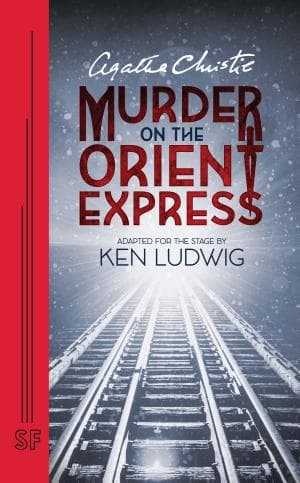
Synopsis
Covers the whole plot, including the ending.
- Difficulty
- Medium
- Pacing
- Moderate
- Mood
- Suspenseful, Classic, Intellectual, Mysterious
- Read it if
- You love classic whodunits with intricate plots, clever misdirection, and a satisfying reveal.
- Skip it if
- You prefer fast-paced thrillers or stories with clear-cut moral boundaries.
Agatha Christie's Murder on the Orient Express Plot Summary
Covers the whole plot, including the ending.
A Delay in Syria and an Unexpected Journey
Hercule Poirot, after solving a case for the French military in Aleppo, Syria, is going back to London. He plans to take the Taurus Express, but a last-minute telegram calls him back to London. The train is unusually full. On the Taurus Express, he meets Colonel Arbuthnot and Mary Debenham. In Istanbul, Poirot learns that the Simplon Orient Express is fully booked, which is odd for the season. However, his old friend, Monsieur Bouc, a director of the Compagnie Internationale des Wagons-Lits, gets him a berth in the Calais coach. Poirot watches the diverse passengers, including the loud American, Samuel Ratchett, and his secretary, Hector MacQueen.
Ratchett's Plea and Poirot's Refusal
Soon after boarding the Orient Express, Samuel Ratchett, an unpleasant American millionaire, approaches Poirot. Ratchett tells Poirot he has received threatening letters and fears for his life, believing someone on the train wants to kill him. He offers Poirot a lot of money to be his bodyguard. Poirot, finding Ratchett's manner disagreeable and sensing meanness, politely declines, saying he does not like Ratchett's face. Ratchett seems frustrated and continues to appear anxious that evening, making Poirot more curious about the train's strange mood.
The Snowdrift and the Murder Discovered
During the night, the Orient Express gets stuck in a deep snowdrift in Yugoslavia, cutting it off. Poirot is disturbed several times. He hears a groan from Ratchett's compartment, then a loud thump. He also hears voices and a woman's scream. The next morning, Monsieur Bouc tells Poirot that Samuel Ratchett has been murdered. The door to Ratchett's compartment was locked from the inside, and the window was open, suggesting the killer left that way. Ratchett has been stabbed twelve times, some wounds deep and forceful, others shallow, which could mean multiple attackers or one killer with varying strength. The train's isolation means the murderer is still on board.
Poirot Takes the Case
Since the train is isolated and Yugoslavian police cannot be reached right away, Monsieur Bouc and Dr. Constantine (the train's doctor) ask Poirot to lead the investigation. Poirot, at first unsure because he refused to work for Ratchett, agrees, recognizing the unique challenge and the need for justice. He stresses the need for complete secrecy and thoroughness. The three men start by examining the crime scene, carefully noting details of Ratchett's compartment, the body's position, the wounds, and any items left, such as a pipe cleaner, a lady's handkerchief, and a partly burned note mentioning 'Daisy Armstrong'.
The Armstrong Case Connection
Poirot soon learns that 'Samuel Ratchett' is Cassetti, an infamous American gangster responsible for the kidnapping and murder of Daisy Armstrong, a young child, years earlier. Cassetti used his money and power to avoid justice in America, which led to the suicide of Daisy's mother, Mrs. Armstrong, who was pregnant, and the death of her father, Colonel Armstrong. The governess, Miss Freebody, was wrongly accused and committed suicide, as did the chauffeur. This news changes the murder's motive from robbery or personal fight to a complex act of revenge for a terrible crime that ruined many lives. Poirot realizes that everyone connected to the Armstrong tragedy had a strong reason to see Cassetti punished.
Interrogating the Passengers
Poirot interviews each of the twelve passengers from the Calais coach, as well as Ratchett's valet and secretary, and the train conductor. He listens to their alibis, observations, and reactions. The passengers include Princess Dragomiroff, a Russian princess; Hector MacQueen, Ratchett's secretary; Masterman, Ratchett's valet; Mrs. Hubbard, an American; Colonel Arbuthnot, a British officer; Mary Debenham, a governess; Greta Ohlsson, a Swedish missionary; Antonio Foscarelli, an Italian car salesman; Cyrus Hardman, a private detective; Hildegarde Schmidt, Princess Dragomiroff's maid; Count and Countess Andrenyi, Hungarian nobility; and Pierre Michel, the train conductor. Each interview shows inconsistencies and suspicious details, making it hard to find one killer.
The Clues and Contradictions
Poirot collects several clues: a burned note showing Ratchett's true identity as Cassetti, a lady's handkerchief with the initial 'H', a pipe cleaner, a button from a Wagon Lit conductor's uniform, and a scarlet kimono. He also finds a small, expensive bottle of sleeping medicine in Ratchett's compartment. The different types of Ratchett's stab wounds, some deep, others shallow, suggest two different murderers or one killer with unusual methods. Many passengers give seemingly good alibis, but Poirot's sharp eye spots small differences in their stories, such as Mrs. Hubbard's repeated claims of a man in her compartment, and Mary Debenham's calm manner despite the situation.
The Revelation of Shared Connections
Through investigation, Poirot begins to uncover the connections among the passengers. He finds that almost everyone on the train has a direct or indirect link to the Armstrong family or the events of Daisy Armstrong's kidnapping and murder. For example, Masterman was Colonel Armstrong's valet, MacQueen was the District Attorney's son who handled the case, Miss Debenham was Daisy's governess, Greta Ohlsson was Daisy's nursemaid, Princess Dragomiroff was Mrs. Armstrong's godmother, and Mrs. Hubbard is Linda Arden, Mrs. Armstrong's mother. This confirms Poirot's idea that the murder was a planned act of group revenge.
The Two Solutions
With all the evidence and hidden connections found, Poirot gathers Monsieur Bouc and Dr. Constantine to share his findings. He offers two possible solutions. The first, simpler solution, suggests that a stranger boarded the train, murdered Ratchett, and escaped through the snow. This explanation, however, does not account for the many conflicting clues and the passengers' shared motives. The second, more complex solution, is the truth: a carefully planned, group act of revenge. Poirot explains that the twelve passengers, representing individuals affected by the Armstrong tragedy, conspired to murder Cassetti, each delivering a stab wound.
Justice Served
Poirot reveals that the passengers acted together as a jury and executioner for Samuel Ratchett/Cassetti. Each of the twelve, including the conductor Pierre Michel, had a personal connection to the Armstrong family and delivered one of the twelve stab wounds. The different wounds, the locked compartment, and the planted clues were all part of their plan to confuse investigators and create the idea of a single, unknown killer. Faced with the choice of turning in twelve otherwise innocent people who had delivered justice for a man who escaped it, Poirot, Monsieur Bouc, and Dr. Constantine agree to present the first, simpler solution to the Yugoslavian police, allowing the true perpetrators to go free, believing that justice, in this unique situation, has been served.
Principal Figures
Hercule Poirot
Protagonist
The renowned Belgian detective tasked with solving the murder on the Orient Express.
Hercule Poirot is a meticulous and highly intelligent former Belgian police officer, known for his 'little grey cells' and his obsession with order and method. He is sharp-witted, observant, and possesses an uncanny ability to deduce complex truths from seemingly insignificant details. Poirot is characterized by his fastidious appearance, his waxed mustache, and his unique approach to crime-solving, often preferring psychological analysis over brute force investigation. He initially declines Ratchett's offer of protection due to the man's unpleasant nature but accepts the murder case out of a sense of duty and intellectual challenge. Throughout the investigation, he maintains his composure and intellectual rigor, even when faced with an unprecedented moral dilemma.
Relationships: Monsieur Bouc (Long-time friend and colleague); Dr. Constantine (Temporary investigative partner)
Samuel Ratchett (Cassetti)
Victim/Antagonist
An American millionaire with a dark past, murdered on the train.
Samuel Ratchett is the victim of the murder, a wealthy American businessman who is secretly John Cassetti, a notorious gangster and child kidnapper. He is portrayed as a crude, unpleasant, and fearful man who senses danger. He attempted to hire Poirot for protection, but his unsavory character led Poirot to refuse. Cassetti was responsible for the kidnapping and murder of Daisy Armstrong, a crime that devastated the Armstrong family and led to several suicides. His past actions are the central motive for his murder, making him the catalyst for the entire plot, despite being dead for most of the story. His true identity and crimes are revealed through Poirot's investigation.
Relationships: Daisy Armstrong (Victim of his kidnapping and murder); Linda Arden (Mrs. Hubbard) (Mother of Mrs. Armstrong and grandmother of Daisy, his ultimate executioner)
Monsieur Bouc
Supporting
A director of the Compagnie Internationale des Wagons-Lits and Poirot's friend.
Monsieur Bouc is a jovial and well-connected Belgian, serving as a director of the Compagnie Internationale des Wagons-Lits. He is an old friend of Hercule Poirot and is instrumental in getting Poirot a berth on the crowded Orient Express. When Ratchett's murder occurs, Bouc is initially overwhelmed and eager to pass the responsibility to Poirot. He acts as Poirot's sounding board and occasionally offers observations, though he is often more concerned with the reputation of his company. He is present throughout the investigation, helping to interview witnesses and providing practical assistance. Ultimately, he is faced with the moral dilemma of the solution alongside Poirot and Dr. Constantine.
Relationships: Hercule Poirot (Close friend and confidant); Dr. Constantine (Temporary investigative partner)
Dr. Constantine
Supporting
The Greek doctor on board who examines Ratchett's body.
Dr. Constantine is the train's doctor, a Greek man who is tasked with examining Samuel Ratchett's body and providing medical insights into the murder. He assists Poirot and Monsieur Bouc throughout the investigation, offering his professional opinion on the nature of the stab wounds and the time of death. His medical expertise is crucial in understanding the varying depths and directions of the twelve stab wounds, which eventually leads to Poirot's theory of multiple assailants. He is a pragmatic and observant individual, though less astute at psychological deduction than Poirot. He ultimately concurs with the decision to present the simpler, false solution.
Relationships: Hercule Poirot (Temporary investigative partner); Monsieur Bouc (Temporary investigative partner)
Mary Debenham
Supporting/Conspirator
A reserved English governess with a surprising connection to the Armstrong family.
Mary Debenham is a young, efficient, and outwardly calm English governess returning from Baghdad. She initially appears cool and collected, almost too much so, which piques Poirot's interest. She is often seen conversing with Colonel Arbuthnot, leading to speculation about a romantic involvement. Poirot later discovers that she was Daisy Armstrong's governess, making her one of the key conspirators in Ratchett's murder. Her composure and intelligence made her a capable participant in the elaborate plan for revenge. Her character highlights the theme of hidden identities and the lengths to which people will go for justice.
Relationships: Daisy Armstrong (Former governess); Colonel Arbuthnot (Fellow conspirator, feigned romantic interest); Mrs. Armstrong (Former employer)
Mrs. Hubbard (Linda Arden)
Supporting/Conspirator
A boisterous American woman, revealed to be a famous actress and mastermind of the revenge plot.
Mrs. Hubbard is a loud, intrusive, and demanding American woman who constantly complains about her fellow passengers and claims a man was in her compartment. She provides much of the comic relief, yet her character is central to the plot. She is revealed to be Linda Arden, a famous American actress and the mother of Mrs. Armstrong and grandmother of Daisy Armstrong. She is the mastermind behind the entire revenge plot, meticulously organizing the twelve conspirators to collectively murder Cassetti. Her theatrical background explains her ability to play the role of the boisterous American so convincingly and to orchestrate such an elaborate scheme.
Relationships: Daisy Armstrong (Grandmother); Mrs. Armstrong (Mother); All other conspirators (The leader of their revenge plot)
Princess Dragomiroff
Supporting/Conspirator
An elderly Russian princess, godmother to Mrs. Armstrong.
Princess Dragomiroff is an elderly Russian princess, described as aristocratic, formidable, and ugly, but possessing a strong personality and sharp intellect. She is a close friend and godmother to Sonia Armstrong (Daisy's mother). She feigns ignorance about the Armstrong case initially but is eventually revealed to be one of the conspirators. Her deep loyalty to the Armstrong family and her aristocratic bearing make her a convincing figure of authority within the group of avengers. She gives a false testimony about her maid's initial 'H' to protect her.
Relationships: Sonia Armstrong (Godmother and close friend); Hildegarde Schmidt (Maid and fellow conspirator)
Colonel Arbuthnot
Supporting/Conspirator
A distinguished British Army officer, friend of Colonel Armstrong.
Colonel Arbuthnot is a distinguished British Army officer returning from India. He frequently converses with Mary Debenham, and they appear to be developing a romantic interest, though this is later revealed to be a part of their cover. He was a close friend of Colonel Armstrong, Daisy's father, and therefore had a strong motive for revenge against Cassetti. He is portrayed as honorable and straightforward, yet he is fully committed to the collective act of justice. He provides a strong, masculine presence among the conspirators, embodying the idea of honor-bound vengeance.
Relationships: Colonel Armstrong (Close friend); Mary Debenham (Fellow conspirator, feigned romantic interest)
Hector MacQueen
Supporting/Conspirator
Ratchett's young American secretary, whose father prosecuted the Armstrong case.
Hector MacQueen is Samuel Ratchett's young, well-educated, and seemingly nervous American secretary. He is initially very helpful to Poirot, providing information about Ratchett's habits. However, it is revealed that his father was the District Attorney who prosecuted the Armstrong case, and MacQueen himself was deeply fond of Sonia Armstrong. This connection makes him a key conspirator. He resented Ratchett deeply for escaping justice and participated in the murder. His role as Ratchett's secretary allowed him crucial access and insight, making him an ideal inside man for the revenge plot.
Relationships: Samuel Ratchett (Employer/Victim, secretly despised); Mr. MacQueen (father) (Father, District Attorney in Armstrong case); Sonia Armstrong (Deeply admired)
Greta Ohlsson
Supporting/Conspirator
A timid Swedish missionary, Daisy Armstrong's former nursemaid.
Greta Ohlsson is a timid, rather tearful, and seemingly simple Swedish missionary. She is initially presented as a witness who shares a compartment with Mrs. Hubbard and is easily flustered. Poirot discovers that she was Daisy Armstrong's nursemaid, a role that gave her a deep emotional connection to the child and a strong motive for revenge. Despite her meek exterior, she is a resolute participant in the collective murder, showcasing that even the most unassuming characters can harbor strong convictions and participate in extreme acts of justice. Her 'H' on the handkerchief is a key clue.
Relationships: Daisy Armstrong (Former nursemaid); Mrs. Hubbard (Compartment mate, fellow conspirator)
Pierre Michel
Supporting/Conspirator
The Wagon Lit conductor, father of the Armstrong family's deceased maid.
Pierre Michel is the polite and efficient Wagon Lit conductor. He is seen as a reliable and professional figure, but he is revealed to be the father of the Armstrong family's maid, Paulette, who committed suicide after being wrongly accused in the Armstrong case. His personal tragedy makes him a deeply motivated conspirator. His position as the conductor allowed him to facilitate the complex plot and move around the train without suspicion, making him an invaluable asset to the group of avengers. He is one of the twelve 'jurors' who collectively stab Ratchett.
Relationships: Paulette Michel (Daughter, deceased maid of Armstrongs); All other conspirators (Fellow avengers)
Themes & Insights
Justice vs. Law
The novel's main idea is the conflict between legal justice and moral justice. Samuel Ratchett (Cassetti) avoided legal punishment for his crimes in the Armstrong case due to his wealth. This failure of the legal system leads the twelve conspirators to take action, creating their own form of 'justice'. Poirot faces the choice of upholding the law by exposing the murderers or allowing a group act of revenge, which he privately believes served a higher form of justice, to go unpunished. The conclusion, where Poirot gives a false solution, shows this tension.
“'The law has been circumvented. It has been cheated by a clever man. Now justice has been done.”
Revenge and Retribution
The plot is driven by revenge. Each of the twelve conspirators has a direct or indirect link to the Armstrong case and suffered greatly because of Cassetti's actions. Their group motive is not personal gain, but a strong desire for payback against the man who ruined so many lives. The different stab wounds symbolize each person's act of revenge, a shared ritual to punish a man who escaped the law. Mrs. Hubbard (Linda Arden) plans this act, motivated by her grief as Daisy's grandmother.
“'In fact, it was a crime of pure vengeance. Not a very pretty thing, vengeance. But understandable.”
Identity and Deception
The novel has much deception and many hidden identities. Samuel Ratchett is Cassetti. Almost every passenger on the train is not who they seem, either by name, job, or behavior. Mary Debenham, Mrs. Hubbard (Linda Arden), Colonel Arbuthnot, and others are all pretending to hide their true connections to the Armstrong family and their part in the murder plan. Poirot's investigation mostly involves removing these layers of deception to uncover the passengers' true identities and motives, showing how people can create elaborate fronts.
“'You see, my friend, there are moments when one has to choose between two evils.”
The Collective vs. The Individual
This idea is central to the murder's unique solution. Instead of one killer, Poirot finds a group act, a 'jury' of twelve people each taking part in Ratchett's death. This challenges the usual idea of individual guilt in crime. The conspirators, though from different backgrounds, are united by a shared trauma and a common goal. Their coordinated effort shows the power of group action when driven by a shared feeling of injustice, blurring the lines of individual responsibility and creating a unique moral problem for the detective.
“'One must look at the facts. And the facts, my friend, are very curious. Twelve people, all with a reason to hate this man.”
Order and Chaos
Poirot, with his careful nature and love for order, faces a crime that seems messy in how it happened (many stab wounds, confusing clues) but perfectly planned. The snowdrift that stops the train creates an isolated, disordered setting, but within this disorder, a highly organized and planned murder occurs. Poirot's task is to bring order to this scene, even if the resulting 'order' (the truth of the twelve murderers) challenges his own sense of justice and legal rules. The final decision to give a simpler, false solution is a way to restore some order to the world.
“'It is my business to provide order out of chaos.”
Plot Devices & Literary Techniques
The Locked-Room Mystery
The classic setup where a murder occurs in an apparently inaccessible location.
The locked-room mystery is a fundamental plot device in 'Murder on the Orient Express'. Samuel Ratchett is found dead in his compartment, which is locked from the inside, and the window is open, suggesting an impossible escape through a snowdrift. This setup immediately creates an intense puzzle for Poirot, as it defies logical explanation and points to a killer who must still be among the confined group of passengers. The eventual solution reveals how the 'locked room' was cleverly faked, with the conspirators locking the door from the outside and then using a key, or simply locking it after the 'last' stab, making it appear impossible.
The Red Herring
Misleading clues deliberately placed to divert the investigation.
Christie masterfully uses multiple red herrings to confuse both Poirot and the reader. Examples include the pipe cleaner found in Ratchett's compartment, the lady's handkerchief with the initial 'H', the button from a Wagon Lit uniform, and the scarlet kimono discovered in Poirot's own luggage. Each of these clues appears to point to a single, distinct perpetrator or suggest a simple motive, but they are all either planted or misinterpreted initially to throw investigators off the scent. The open window in Ratchett's compartment, suggesting an escape, is another significant red herring, designed to make the idea of an outside killer plausible.
The Snowdrift
A natural event that isolates the train and its passengers.
The snowdrift is a crucial plot device that serves to physically isolate the Orient Express. This isolation is essential for the plot to function, as it ensures that the murderer (or murderers) must still be on the train, eliminating the possibility of an external killer. It creates a contained environment, heightening the tension and forcing Poirot to solve the case with only the available resources and witnesses. Without the snowdrift, local police would have been involved immediately, and the elaborate, collective revenge plot might not have been able to unfold or remain concealed as effectively.
The Armstrong Case as a Backstory
A prior, unresolved crime that provides the central motive for the current murder.
The Armstrong case is not just a backstory; it is the entire motivational engine of the plot. The brutal kidnapping and murder of young Daisy Armstrong, and the subsequent suicides and deaths of her family members and wrongly accused staff, provide the powerful and universal motive for the collective revenge against Cassetti (Ratchett). By slowly revealing the details of this past tragedy and the connections of each passenger to it, Christie builds a compelling ethical dilemma. The Armstrong case transforms a seemingly random murder into an act of profound, if extralegal, justice.
The 'Twelve Jurors' Motif
Symbolic representation of the twelve conspirators as a jury delivering justice.
The 'twelve jurors' motif is a powerful symbolic device that underpins the entire solution. There are twelve passengers, each with a direct connection to the Armstrong tragedy, and twelve stab wounds on Ratchett's body. This number is deliberately chosen to evoke the image of a jury, suggesting that the conspirators have collectively tried and condemned Cassetti, carrying out a form of vigilante justice when the legal system failed. This device emphasizes the theme of justice versus law and highlights the collective nature of the crime, making the ending morally ambiguous and thought-provoking.
Agatha Christie's Murder on the Orient Express Quotes
“The impossible could not have happened, therefore the impossible must be possible in spite of appearances.”
“If you want to play a game, you must know the rules.”
“The little grey cells, my friend, they are what count.”
“I like order and method. I like to have everything arranged.”
“In fact, I very much doubt if there is any man who is not a murderer at heart.”
“There are two solutions, and I shall put them both before you.”
“The truth, however ugly in itself, is always beautiful and pure in its own nature.”
“Every one of these people, at some time or another, had a motive for hating Ratchett.”
“Logic, my dear Hastings, is a poor guide when one is dealing with the human heart.”
“The body was lying on its back, the arms flung out, the knees drawn up.”
“It is not for me to judge. I am only interested in facts.”
“The case is a very curious one. I have never met with one like it.”
“One sees and yet one does not see. One observes and yet one does not observe.”
“When a crime is committed, there are always two questions: Who did it? And why?”
Quiz
10 questions on the plot and the characters. Each answer comes with a short explanation.
Question 1
What is the name of the victim in 'Murder on the Orient Express'?
- Samuel Ratchett
- Colonel Arbuthnot
- Monsieur Bouc
- Hector MacQueen
Show answer
A. Samuel Ratchett The victim is the American tycoon, Samuel Ratchett, who is later revealed to be Cassetti.
Question 2
What unusual circumstance stops the Orient Express?
- A mechanical failure in the engine.
- A bridge collapse ahead on the tracks.
- A snowdrift blocks the railway line.
- A passenger pulls the emergency brake.
Show answer
C. A snowdrift blocks the railway line. The train is stopped just after midnight by a large snowdrift, isolating it in the Yugoslavian countryside.
Question 3
Who is the famous detective investigating the murder?
- Sherlock Holmes
- Hercule Poirot
- Miss Marple
- Inspector Japp
Show answer
B. Hercule Poirot Hercule Poirot, the renowned Belgian detective, happens to be on the train and is asked to investigate the murder.
Question 4
What is the significant detail about the victim's compartment door after the murder?
- It was found slightly ajar.
- It was locked from the inside.
- It showed signs of forced entry.
- The key was missing from the lock.
Show answer
B. It was locked from the inside. The door to Ratchett's compartment was locked from the inside, suggesting no one could have entered or left, posing a classic 'locked-room mystery'.
Question 5
What is the connection between Samuel Ratchett and the Armstrong case?
- Ratchett was a close friend of the Armstrong family.
- Ratchett was the lawyer who defended the Armstrong family.
- Ratchett was actually Cassetti, the man who kidnapped and murdered Daisy Armstrong.
- Ratchett was one of the jurors in the Armstrong trial.
Show answer
C. Ratchett was actually Cassetti, the man who kidnapped and murdered Daisy Armstrong. Poirot discovers that Samuel Ratchett is actually Cassetti, the notorious criminal who escaped justice after kidnapping and murdering young Daisy Armstrong.
Question 6
How many stab wounds did the victim sustain?
- Three to five
- Six to eight
- A dozen times
- Only one fatal wound
Show answer
C. A dozen times The victim, Ratchett, was stabbed a dozen times, with wounds varying in depth and direction, indicating multiple assailants.
Question 7
What is the ultimate solution Poirot presents regarding the identity of the murderer(s)?
- The conductor, Pierre Michel, acted alone out of revenge.
- An unknown outsider boarded the train and committed the crime.
- All twelve passengers in the coach participated in the murder.
- Mrs. Hubbard committed the murder and framed the others.
Show answer
C. All twelve passengers in the coach participated in the murder. Poirot concludes that all twelve passengers, each connected to the Armstrong case, conspired together to stab Ratchett as an act of vigilante justice.
Question 8
Why does Poirot offer two possible solutions to the crime?
- He is genuinely unsure which solution is correct.
- He wants to test the intelligence of Monsieur Bouc and Dr. Constantine.
- He believes the truth (the collective murder) would be too disruptive to justice, so he offers a simpler, fabricated one.
- He is forced to by the Yugoslavian police who want a quick resolution.
Show answer
C. He believes the truth (the collective murder) would be too disruptive to justice, so he offers a simpler, fabricated one. Poirot presents a simpler, fabricated solution of an outsider killer to Monsieur Bouc and Dr. Constantine, allowing the passengers to escape legal consequences for their act of collective justice, which he morally condones.
Question 9
Which of the following is NOT one of the disguises or alternate identities revealed among the passengers?
- Princess Dragomiroff as Daisy Armstrong's godmother.
- Colonel Arbuthnot as a close friend of Colonel Armstrong.
- Greta Ohlsson as the Armstrong family's former governess.
- Antonio Foscarelli as an estranged business partner of Ratchett.
Show answer
D. Antonio Foscarelli as an estranged business partner of Ratchett. Antonio Foscarelli is revealed to be the Armstrong family's chauffeur. All the other options represent actual revealed connections or identities of the passengers.
Question 10
What is the primary theme explored through the resolution of 'Murder on the Orient Express'?
- The infallibility of the justice system.
- The dangers of international espionage.
- The conflict between legal justice and moral justice (vigilantism).
- The psychological effects of isolation.
Show answer
C. The conflict between legal justice and moral justice (vigilantism). The core theme is the struggle between legal justice (Ratchett/Cassetti escaped punishment) and moral justice (the collective act of revenge by those wronged by him), and Poirot's difficult decision to allow the latter to stand.
Agatha Christie's Murder on the Orient Express FAQ
What is Agatha Christie's Murder on the Orient Express about?
The novel centers on Hercule Poirot, who finds himself aboard the luxurious Orient Express when it becomes stranded in a snowdrift. During the night, a wealthy American passenger named Samuel Ratchett is murdered, stabbed twelve times in his locked compartment. Poirot must interview the diverse group of passengers and uncover the truth behind Ratchett's death before the killer can strike again or escape.
Why should I read Murder on the Orient Express?
You should read it for its masterful construction of a seemingly impossible crime and its ingenious solution. Christie expertly weaves together multiple motives and alibis, keeping readers guessing until Poirot's shocking reveal, which challenges conventional notions of justice and guilt. It's a classic example of a closed-circle mystery with a brilliant twist.
What is the background/setting of Murder on the Orient Express?
The story primarily takes place aboard the luxurious Simplon Orient Express, specifically in its first-class coach, as it travels through snowy Yugoslavia. The isolation of the train, stuck in a snowdrift, creates a perfect 'closed-circle' environment where the murderer must be one of the passengers or staff, heightening the tension and suspicion among the diverse group of travelers.
What are the most memorable quotes from Murder on the Orient Express?
One memorable quote is Poirot's declaration, 'The impossible cannot have happened, therefore the impossible must be possible in spite of appearances.' Another is the profound statement, 'There are two kinds of murder. One is murder done by the wicked for wicked ends. The other is murder done by the righteous for righteous ends.' These encapsulate the moral dilemma at the heart of the story.
What writing style does Agatha Christie use in Murder on the Orient Express?
Christie employs a clear, precise, and highly structured writing style, typical of the Golden Age of Detective Fiction. She meticulously presents clues and red herrings, often through character dialogue and Poirot's keen observations, allowing readers to try and solve the puzzle alongside the detective. Her narrative is direct, focusing on plot and character interaction to drive the mystery.
What minor details add significant meaning in the book?
Minor details such as the broken watch found in Ratchett's compartment, stopped at 1:15 AM, and the varying directions of the stab wounds (some deep, some superficial) are crucial. The different types of weapons supposedly used, like the pipe cleaner and the scarlet kimono, also subtly hint at multiple perpetrators rather than a single killer, preparing the reader for the complex solution.
What are some subtle foreshadowing moments in Murder on the Orient Express?
Poirot's initial unease about Ratchett, sensing he is a man with many enemies, subtly foreshadows his violent end. Also, the seemingly random collection of passengers from various nationalities and social strata, all coincidentally on the same train, hints at a deeper, organized connection among them, which is later revealed to be the core of the conspiracy.
What unexpected character connections exist among the passengers?
The most unexpected connection is that almost every passenger on the train, along with the conductor and the doctor, is secretly linked to the Armstrong kidnapping case, where Samuel Ratchett (whose real name is Cassetti) was the unpunished perpetrator. Each individual lost a loved one or was otherwise deeply affected by Cassetti's crime, uniting them in their desire for revenge.
What are unspoken character motivations in the story?
Beyond the explicit desire for revenge against Cassetti, many characters are motivated by a profound sense of injustice and a belief that the legal system failed the Armstrong family. Their unspoken motivation is to deliver a form of vigilante justice, not out of malice, but from a shared grief and a collective moral imperative to punish a man who escaped the law.
What psychological complexities do characters exhibit?
The characters exhibit the psychological complexity of collective trauma and shared purpose. Despite their diverse backgrounds, they are united by a singular, intense grief and a desire for retribution, leading them to overcome individual moral qualms to participate in a calculated murder. Their ability to maintain a facade of innocence under Poirot's scrutiny also highlights their deep emotional resolve.
What are the major emotional turning points in Murder on the Orient Express?
A major emotional turning point is when Poirot realizes the sheer impossibility of a single killer, leading him to consider the more complex, collective solution. Another is when he unveils the true identity of Ratchett as Cassetti, which shifts the passengers' perceived guilt from being random suspects to being justified avengers in the eyes of many, including potentially Poirot himself.
How do relationship dynamics evolve among the passengers?
Initially, the passengers exhibit typical polite, albeit somewhat strained, interactions as strangers. However, under the pressure of the murder investigation, their dynamics shift. They maintain a united front, implicitly cooperating to protect their shared secret and alibis, forming a silent pact against Poirot's investigation, which evolves from individual suspicion to collective conspiracy.
Which parts of Murder on the Orient Express remain ambiguous or open-ended?
The most ambiguous aspect is Poirot's ultimate decision. While he presents two possible solutions, he explicitly chooses to endorse the simpler, less truthful one to the police, leaving the true, complex solution to be known only by himself, Dr. Constantine, and M. Bouc. This leaves readers to ponder the moral implications of his choice and the nature of justice.
What are controversial scenes or decisions in the book?
The most controversial decision is Poirot's choice to allow the murderers to go free, presenting a fabricated, simpler explanation to the police. This act of condoning vigilante justice, even for a morally reprehensible victim like Cassetti, challenges the core principles of law and order that detective fiction often upholds, sparking debate among readers about the morality of his actions.
Murder on the Orient Express ending explained: how it ends & what it means
The novel ends with Poirot revealing that all twelve suspects conspired to murder Samuel Ratchett, each taking a turn stabbing him as a form of collective revenge for his role as Cassetti in the Armstrong case. Faced with this extraordinary situation, Poirot presents two solutions to M. Bouc and Dr. Constantine: one simple, false solution involving an unknown assailant, and the complex, true one. He ultimately endorses the simpler, false solution, allowing the conspirators to escape justice. This ending signifies that sometimes, justice by human law is insufficient, and a higher moral justice, even if unconventional, may prevail.
About the author
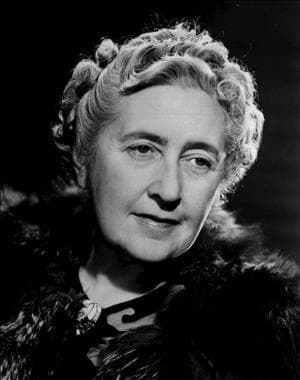
Dame Agatha Mary Clarissa Christie, Lady Mallowan, was an English writer known for her 66 detective novels and 14 short story collections, particularly those revolving around fictional detectives Hercule Poirot and Miss Marple. She also wrote the world's longest-running play, the murder mystery The Mousetrap, which has been performed in the West End since 1952. A writer during the "Golden Age of Detective Fiction", Christie has been called the "Queen of Crime". She also wrote six novels under the pseudonym Mary Westmacott. In 1971, she was made a Dame (DBE) by Queen Elizabeth II for her contributions to literature. Guinness World Records lists Christie as the best-selling fiction writer of all time, her novels having sold more than two billion copies.
Similar books
- And Then There Were None
Agatha Christie
4.3 (822k) average on GoodreadsThrillerFeatures a group of people trapped together with a killer in their midst, and a clever, unexpected resolution.
- The Cuckoo's Calling
Robert Galbraith
3.9 (482k) average on GoodreadsThrillerA detective story with a complex mystery, well-developed characters, and a focus on detailed investigation.
- Death Comes to Pemberley
P.D. James
3.3 (91k) average on GoodreadsHistorical FictionWhile both Murder on the Orient Express and Death Comes to Pemberley feature an ensemble cast and a murder mystery, James's novel adheres more closely to a traditional legal resolution, with the guilty party facing consequences within the established system. Christie's work is distinct in its exploration of extra-legal justice and Poirot's unconventional resolution.
- A Study in Scarlet
Arthur Conan Doyle
4.2 (324k) average on GoodreadsHistorical FictionBoth novels feature revenge as a central motive for murder. However, in A Study in Scarlet, Sherlock Holmes invariably ensures the perpetrator faces the legal consequences for their actions, even if the reader sympathizes with their plight. Christie's Orient Express diverges significantly by having Poirot tacitly approve of the vigilante justice and allowing the conspirators to escape legal repercussions, making it a more morally ambiguous and provocative work.
- Harry Potter and the Sorcerer's Stone
J.K. Rowling
4.5 (7M) average on GoodreadsFantasyRescued from a miserable life under the stairs, an orphaned boy discovers he's a wizard destined for a magical school, where he uncovers a dangerous secret tied to the dark wizard who murdered his parents.
- The Hunger Games
Suzanne Collins
4.3 (6.4M) average on GoodreadsFantasyIn a future where children fight to the death on live television, Katniss Everdeen volunteers for the arena, turning a death sentence into a fight for survival and a spark of rebellion.




Enjoyed the summary?
A summary gives you the shape of the book. The book itself has the detail, the examples and the voice.
Find Agatha Christie's Murder on the Orient Express on AmazonAs an Amazon Associate, BookBrief earns from qualifying purchases. How we're funded