
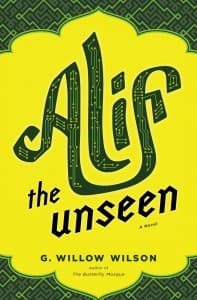
Synopsis
Covers the whole plot, including the ending.
- Difficulty
- Medium
- Pacing
- Moderate
- Mood
- Mysterious, Thought-provoking, Adventurous, Urban Fantasy
- Read it if
- You enjoy a unique blend of modern technology, ancient mythology, and political intrigue set in a richly imagined Middle Eastern world.
- Skip it if
- You prefer hard science fiction without fantasy elements or stories with a very straightforward, Western-centric narrative.
Alif the Unseen Plot Summary
Covers the whole plot, including the ending.
The Breach and the Breakup
Alif, a young Arab-Indian hacker in an unnamed Middle Eastern security state, protects dissidents and outlaws from the regime's surveillance. He uses the alias 'Alif' to stay anonymous. His world changes when state security breaches his computer systems, threatening to expose his clients and himself. At the same time, his aristocratic lover, Indrani, leaves him for a prince chosen by her parents. This double blow of professional danger and personal betrayal leaves Alif vulnerable, starting his desperate escape.
The Hand's Pursuit
Alif discovers that Indrani's new fiancé is the 'Hand of God,' the head of state security who has been hunting him. This news makes Alif's situation worse, as the Hand's personal vendetta now combines with the state's pursuit. Realizing the immediate danger, Alif leaves his apartment and goes into hiding. He seeks refuge in the city's hidden alleys, using his street smarts and network of contacts from his hacking work to avoid capture by the Hand's agents.
Enter Vikram and the Jinn
While on the run, Alif seeks help from his childhood friend, Vikram, a computer technician. During his escape, he meets Dina, his conservative veiled neighbor, who unexpectedly offers him shelter. Through Dina, Alif finds a mysterious, ancient book called 'The Thousand and One Days.' This book is an old manuscript rumored to contain the secrets of the jinn, supernatural beings from Islamic mythology. Alif, at first doubtful, starts to realize the book has power beyond human understanding, drawing the attention of both human and unseen forces.
The Jinn's Realm
As Alif studies 'The Thousand and One Days,' he and Dina become more exposed to the hidden world of the jinn. They meet various jinn, some good, some bad, who live in the city's hidden spaces. Alif learns that the jinn follow different laws of physics and perception, and their world often crosses into the human world in subtle ways. Dina, with her strong faith and cultural knowledge, is a guide in this new, frightening reality. Alif struggles to connect his logical, tech-focused view with the ancient magic around him.
The Hand's Obsession
The Hand of God is also obsessed with 'The Thousand and One Days.' He believes the book holds not just old stories, but the key to a new level of information technology, a way to achieve complete surveillance and control over all information and communication in the state. His hunt for Alif is now tied to his desire to own the book and unlock its secrets. The Hand's technological skill and ruthless methods make him a strong opponent, as he uses the state's resources to track Alif and the book, unaware of the true, supernatural nature of what he seeks.
Journey to the City of Jinn
Following clues in 'The Thousand and One Days' and advice from the jinn they meet, Alif and Dina begin a dangerous journey. Their quest leads them to a legendary 'City of Jinn,' a hidden place where human and jinn worlds meet. This journey is full of danger, both from the Hand's pursuit and from the unpredictable jinn. Along the way, Alif starts to rely less on pure logic and technology, opening himself to the spiritual and mystical parts of existence, while Dina faces her own faith and courage.
The Jinn's Council
In the City of Jinn, Alif and Dina meet with the ancient jinn elders, hoping to understand the true purpose and power of 'The Thousand and One Days.' They learn that the book is not just for technology, but a bridge between worlds, a way to control reality itself through language and belief. The elders explain the great responsibility that comes with such knowledge and warn of disaster if it falls into the wrong hands, especially those driven by human ambition and control like the Hand.
Indrani's Betrayal and Redemption
Indrani, who at first seems like a disloyal lover, has a more complex role. She is not just a pawn in her parents' political games but has her own reasons for marrying the Hand, perhaps to gain access or information. Her actions, though painful to Alif, come from a deeper understanding of the political situation and the Hand's plans. She eventually plays a key, though morally unclear, part in Alif's fight against the Hand, showing that her loyalties are not as simple as they first appeared, and suggesting a chance for redemption or a darker goal.
The Confrontation
The story's climax brings Alif, Dina, and their jinn allies into a direct fight with the Hand of God and his state security forces. The battle is not only physical; it is a clash of ideas, ancient magic versus modern technology, and freedom versus absolute control. The Hand tries to use his understanding of the book, which is superficial, to turn information and surveillance into weapons. Alif, now more connected to the jinn's world, must use his hacking skills with the jinn's spiritual power to counter the Hand's pursuit of power and stop him from starting a terrifying new era of digital totalitarianism.
The Resolution
In a final struggle, Alif and Dina, with help from the jinn, defeat the Hand of God. The victory is hard-won and involves sacrifices. The Hand's attempts to control the book's power lead to his downfall, as he cannot grasp or control the jinn's true, spiritual magic. Alif, having traveled through both digital and spiritual realms, is changed. He no longer hides behind his alias but embraces his identity, understanding that real power comes not from anonymity or control, but from connection, faith, and accepting the unseen.
Principal Figures
Alif
Protagonist
A brilliant hacker caught between digital and spiritual worlds.
Alif is a skilled Arab-Indian hacker who uses his abilities to protect the privacy of dissidents and outlaws from his unnamed security state. Initially cynical and heavily reliant on technology and logic, he struggles with intimacy and commitment, as evidenced by his relationship with Indrani. He values anonymity and control, seeing the digital realm as his sanctuary. His journey forces him to confront his rational worldview and embrace the existence of the unseen, leading to a profound personal and spiritual awakening.
Relationships: Indrani (Ex-lover, complicated political connection); Dina (Neighbor, trusted companion, spiritual guide); The Hand of God (Arch-nemesis, rival for power and knowledge); Vikram (Childhood friend, technical support)
Dina
Supporting
Alif's conservative neighbor and spiritual guide.
Dina is Alif's veiled, conservative neighbor, initially appearing as a pious, sheltered woman. She possesses a deep, intuitive understanding of her culture's spiritual traditions and the unseen world of the jinn, which becomes invaluable to Alif. Despite her traditional upbringing, she demonstrates immense courage, loyalty, and an open mind when faced with extraordinary circumstances. She serves as Alif's anchor to the spiritual realm and a catalyst for his personal growth, challenging his purely rational perspective.
Relationships: Alif (Neighbor, companion on a spiritual journey); The Hand of God (Opponent of his oppressive regime)
The Hand of God
Antagonist
The ruthless head of state security, obsessed with control.
The Hand of God is the formidable and ruthless head of state security, known for his absolute power and pervasive surveillance. He is a brilliant but cold and calculating individual, driven by an insatiable desire for control over information and the populace. He sees 'The Thousand and One Days' as a technological key to ultimate power, blind to its spiritual dimensions. His pursuit of Alif is both personal and professional, embodying the oppressive nature of the state and the dangers of unchecked authority.
Relationships: Alif (Arch-nemesis); Indrani (Fiancé, political pawn)
Indrani
Supporting
Alif's aristocratic ex-lover with hidden motives.
Indrani is Alif's former lover, an aristocratic woman who initially appears to have jilted him for a politically advantageous marriage to the Hand. She is intelligent, beautiful, and seemingly sophisticated, but her motivations are complex and veiled. Her choices are influenced by her family's status and the political realities of their society. She embodies the compromises and sacrifices made within the elite class, and her true loyalties and intentions are revealed gradually, adding layers of intrigue to the narrative.
Relationships: Alif (Ex-lover, complicated political connection); The Hand of God (Fiancé, political pawn)
Vikram
Supporting
Alif's cynical but loyal childhood friend and technical expert.
Vikram is Alif's childhood friend and a fellow computer technician. He is highly intelligent, pragmatic, and possesses a cynical, sarcastic wit. Despite his skepticism towards Alif's increasingly fantastical claims, Vikram remains fiercely loyal, providing crucial technical assistance and a grounding presence. He represents the rational, secular perspective in contrast to Dina's faith and Alif's burgeoning spiritual awareness, yet his loyalty transcends his disbelief.
Relationships: Alif (Childhood friend, technical collaborator)
The Vizier
Supporting
An ancient, powerful Jinn who guides Alif.
The Vizier is an ancient and powerful jinn, one of the elders of the jinn world. He is wise, enigmatic, and often speaks in riddles, challenging Alif's human perceptions. The Vizier serves as a key mentor and guide for Alif, helping him to understand the true nature of 'The Thousand and One Days' and the responsibilities that come with interacting with the jinn realm. He represents the ancient wisdom and power of the unseen world.
Relationships: Alif (Mentor, guide); Dina (Spiritual associate)
Newmark
Supporting
A jinn of the internet, representing modern digital spirits.
Newmark is a unique jinn, embodying the spirit of the internet and digital communication. Unlike the more traditional jinn, Newmark exists primarily within the digital realm, manifesting as glitches, codes, and data streams. He is playful, chaotic, and often speaks in internet slang, providing comic relief but also crucial insights into the intersection of technology and the supernatural. Newmark highlights how ancient spiritual forces adapt and manifest in modern forms.
Relationships: Alif (Digital ally, informational source)
The Caller
Supporting
An ethereal jinn who connects to the human world through sound.
The Caller is a jinn whose presence is primarily auditory, manifesting through sounds, whispers, and music. This jinn acts as a bridge between the spiritual and physical worlds, often communicating in ways that are subtle and require a heightened sense of perception. The Caller's role is to draw Alif and Dina deeper into the jinn realm through sensory experiences, emphasizing the idea that the unseen is not just visual but encompasses all senses.
Themes & Insights
The Interplay of Technology and Spirituality
The novel explores the meeting of advanced hacking and ancient jinn lore. Alif, a hacker, first relies on logic and code, but his journey makes him see that information and control can also exist in spiritual, unseen realms. The Hand sees 'The Thousand and One Days' as a tech blueprint, while Alif learns it is a key to understanding reality through language and belief. This theme is shown by jinn like Newmark, who exists within the internet, demonstrating how the spiritual adapts to and influences the digital, blurring the lines between science fiction and fantasy.
“What is the internet, after all, but a net that has caught every human being on the planet? A net that has caught the jinn, too.”
Freedom vs. Control
A main conflict is the fight for individual freedom against state control. Alif, as a hacker, supports privacy and anonymity, protecting those targeted by the regime. The Hand of God represents the desire for control, aiming to surveil and manipulate every part of his citizens' lives through technology. The jinn, as ancient, untamable forces, contrast with this desire for human control, suggesting that some parts of existence will always be beyond human authority. The battle for 'The Thousand and One Days' becomes a symbol for this larger ideological war.
“All information wants to be free. And all information wants to be controlled. Those are the two great forces of the universe.”
Identity and Anonymity
Alif's alias, 'Alif,' shows his wish for anonymity and his role as a hidden part of the digital resistance. Throughout the story, he deals with the consequences of hiding his true self versus being open about his identity. The jinn, who often operate unseen and in disguise, further explore this theme, showing the power and risks of hidden identities. By the end, Alif's journey is about letting go of the need for anonymity, recognizing that real strength comes from being authentic and connected, not from hiding behind a digital mask or an alias.
“I was Alif, the first letter of the alphabet, the first thing, the thing you could not do without. And I was nothing.”
The Power of Language and Belief
The novel highlights the power of language, especially Arabic and sacred texts. 'The Thousand and One Days' is not just information but a living text, whose words can shape reality and open doors to other dimensions. The jinn themselves are often linked to words and spells. Dina's strong faith and understanding of religious texts help her navigate the jinn world more easily than Alif, showing how belief systems and the language used to express them can be strong tools for understanding and interacting with the unseen. The act of reading and interpreting the book becomes a transformative experience.
“Words are not just sounds, Alif. They are living things. They have power.”
Cultural and Religious Syncretism
The book mixes Islamic mysticism, Middle Eastern folklore, and modern technology. It shows a world where ancient jinn exist with the internet, where deep religious beliefs guide interactions with supernatural beings, and where traditional customs like the veil (Dina) are presented alongside modern issues of surveillance and hacking. This blend enriches the story, showing that spirituality and folklore are not just from the past but continue to shape the present. It offers a unique view on how different cultural and religious elements can intertwine in a modern fantasy setting.
“The jinn were here before us, Alif. They will be here after us. And they are everywhere in between, if you only know where to look.”
Plot Devices & Literary Techniques
The Thousand and One Days
An ancient, mystical book that serves as the central MacGuffin.
This ancient manuscript is the central plot device driving the narrative. It is initially introduced as a legendary text containing the secrets of the jinn. For Alif, it becomes a guide to an unseen world and a source of profound spiritual revelation. For the Hand of God, it represents the ultimate tool for information control and a new frontier in surveillance technology. The book acts as a bridge between the digital and the mystical, a source of conflict, and a catalyst for the characters' transformations, constantly revealing new layers of its power and meaning.
The Veil
A literal and metaphorical symbol of unseen presence and protection.
The veil, worn by Dina, functions both literally as a piece of clothing and metaphorically. Literally, it allows Dina to move through the world with a degree of anonymity and protection, particularly from the male gaze. Metaphorically, it represents the unseen, the hidden, and the spiritual dimensions that Alif initially dismisses. It also symbolizes the 'unseen' world of the jinn, which often remains hidden from human perception. The veil thus becomes a symbol of spiritual insight and a reminder that not everything is visible or immediately apparent.
Hacking/Encryption
The primary skill of Alif, representing modern forms of power and resistance.
Hacking and encryption are Alif's primary tools and define his initial identity. They represent the modern equivalent of magic or power in the digital age, allowing him to protect the vulnerable and resist the oppressive state. This device highlights the novel's blend of technology and fantasy, suggesting that manipulating code can be as potent as ancient spells. As the story progresses, Alif's hacking skills become paralleled with the 'hacking' of reality by the jinn, demonstrating that control over information, whether digital or spiritual, is a form of immense power.
The Unnamed Security State
A dystopian setting that provides the backdrop for the conflict.
The unnamed Middle Eastern security state serves as a crucial plot device, creating the oppressive atmosphere and the initial conflict. Its pervasive surveillance and ruthless 'Hand of God' antagonist establish the stakes for Alif's fight for freedom and privacy. The anonymity of the state allows it to represent any authoritarian regime, making the themes of surveillance and control universally resonant. The setting grounds the fantastical elements in a recognizable, albeit heightened, political reality, making the struggle feel immediate and relevant.
Alif the Unseen Quotes
“The greatest trick the Devil ever pulled was convincing the world he didn't exist. The greatest trick the Djinn ever pulled was convincing the world they were not human.”
“Every human being has a Djinn twin. A qareen. They are born with us, and they die with us, and they see everything we do.”
“The internet was a vast and wild forest, full of hidden paths and dangerous creatures.”
“What is freedom, after all, but the right to choose your own chains?”
“Stories were like water. They found the cracks, they seeped in, they eroded the foundations.”
“Sometimes the most powerful magic is just the truth, spoken at the right time.”
“The city itself was a kind of Djinn, ancient and watchful, full of secrets.”
“There are some things that even the most advanced technology cannot understand, cannot replicate. The human heart is one of them.”
“To be truly unseen is not to be invisible, but to be overlooked. To be dismissed.”
“The world was full of signs, if you only knew how to read them.”
“Love was a language, and like any language, it could be learned, forgotten, or spoken badly.”
“Sometimes the greatest acts of rebellion are the quietest.”
“You cannot fight a ghost with a gun. You fight a ghost with a name.”
“The future was not a straight line, but a tangled web, where every choice sent ripples.”
Quiz
10 questions on the plot and the characters. Each answer comes with a short explanation.
Question 1
What is Alif's primary profession at the beginning of the novel?
- A university student
- A freelance journalist
- A hacker who shields dissidents from surveillance
- A software developer for the state security force
Show answer
C. A hacker who shields dissidents from surveillance Alif is known for his hacking skills, which he uses to protect his clients, including dissidents and outlaws, from government surveillance.
Question 2
What is the 'Hand of God' in the context of the novel?
- A mythical jinn figure
- The head of the state's electronic security force
- The leader of a rebel group
- Alif's mentor in the hacking world
Show answer
B. The head of the state's electronic security force The 'Hand of God' is the colloquial title for the head of state security, who becomes Alif's primary antagonist.
Question 3
What is the name of the secret book that Alif discovers and which holds significant power?
- The Arabian Nights
- The Book of Whispers
- The Thousand and One Days
- The Scroll of Shadows
Show answer
C. The Thousand and One Days Alif discovers 'The Thousand and One Days,' a secret book of the jinn that both he and the Hand believe can unlock new levels of information technology.
Question 4
Who is Alif's aristocratic lover who jilts him for a prince?
- Dina
- Intisar
- Layla
- Fatima
Show answer
B. Intisar Intisar is the aristocratic woman Alif loves who breaks off their relationship to marry a prince chosen by her parents.
Question 5
What specific event forces Alif to go underground and on the run?
- He accidentally exposes a government secret.
- His computer is breached by state security, and the Hand's henchmen come after him.
- He is framed for a crime he didn't commit.
- His clients betray him to the authorities.
Show answer
B. His computer is breached by state security, and the Hand's henchmen come after him. Alif's computer is breached by the state's electronic security force, and he learns that Intisar's fiancé is the 'Hand of God,' leading to the Hand's henchmen pursuing him.
Question 6
What is the significance of Alif's chosen handle, 'Alif'?
- It is a tribute to his family name.
- It signifies his role as a leader.
- It is the first letter of the Arabic alphabet and a convenient handle to hide behind.
- It is a common programming term.
Show answer
C. It is the first letter of the Arabic alphabet and a convenient handle to hide behind. The text states that Alif chose his handle because it is the first letter of the Arabic alphabet and provides a convenient way to remain anonymous.
Question 7
Which of the following best describes the genre blend of 'Alif the Unseen'?
- Pure historical fiction
- Romantic comedy with political undertones
- Fantasy, Spirituality, Science Fiction, Young Adult
- Gritty crime thriller
Show answer
C. Fantasy, Spirituality, Science Fiction, Young Adult The book description explicitly lists the genres as Fantasy, Spirituality, Science Fiction, and Young Adult.
Question 8
What is the primary thematic tension explored in Alif's struggle against the 'Hand of God' regarding information?
- The conflict between ancient traditions and modern lifestyles.
- The power of technology to both liberate and control information, and the unseen forces influencing it.
- The impact of economic disparity on societal structure.
- The struggle for personal artistic expression against state censorship.
Show answer
B. The power of technology to both liberate and control information, and the unseen forces influencing it. Both Alif and the Hand are interested in 'The Thousand and One Days' because they suspect it 'may unleash a new level of information technology,' highlighting the theme of information control, technology, and the 'unseen forces' at play.
Question 9
What is unique about the setting of the novel?
- It is set in a fictionalized ancient kingdom.
- It takes place in a real, identifiable Middle Eastern country.
- It is set in an unnamed Middle Eastern security state.
- It is set entirely in a digital, virtual world.
Show answer
C. It is set in an unnamed Middle Eastern security state. The description states the novel is set 'In an unnamed Middle Eastern security state,' which adds to the mysterious and oppressive atmosphere.
Question 10
How does Alif's heritage (Arab-Indian) contribute to his character or the narrative, based on the provided synopsis?
- It is central to a subplot involving international espionage.
- It directly connects him to the jinn world through ancestral magic.
- The synopsis mentions his heritage but doesn't elaborate on its specific narrative contribution, suggesting it might be a subtle aspect of his identity.
- It makes him a target for discrimination by the state security force.
Show answer
C. The synopsis mentions his heritage but doesn't elaborate on its specific narrative contribution, suggesting it might be a subtle aspect of his identity. While the synopsis mentions Alif is an 'Arab-Indian hacker,' it does not provide specific plot points or character traits that directly stem from this heritage, making it a detail of his identity rather than a driving force in the provided summary.
Alif the Unseen FAQ
What is the core conflict that drives Alif underground at the beginning of the story?
Alif, a hacker, is jilted by the aristocratic woman he loves, Indrani. Soon after, his computer is breached by the state's electronic security force, led by the 'Hand of God,' who turns out to be Indrani's new fiancé. This breach and the Hand's pursuit force Alif to go into hiding, fearing for his clients and his own safety.
Who is Vikram and what is his significance to Alif's journey?
Vikram is a powerful jinn, initially appearing as a mysterious figure Alif encounters. He becomes Alif's primary guide and protector in the world of the unseen, teaching him about jinn society, their rules, and the spiritual dimensions of reality. Vikram's deep knowledge and ancient perspective are crucial for Alif's survival and understanding of the forces at play.
What is 'The Thousand and One Days' and why is it so important?
'The Thousand and One Days' is a legendary book, a secret text of the jinn that contains ancient knowledge and spells. Both Alif and the Hand believe it holds the key to unlocking new levels of information technology and power, making it a highly sought-after artifact that raises the stakes significantly in their conflict.
How does Alif's relationship with Dina evolve throughout the novel?
Dina is Alif's conservative Muslim neighbor who initially disapproves of his lifestyle. As Alif delves deeper into the world of the jinn, Dina becomes an unexpected ally and confidante, her faith and spiritual understanding providing a different lens through which to comprehend the unseen. Their relationship deepens into mutual respect and affection, evolving past their initial differences.
What role do the 'Unseen' (jinn) play in the modern, technologically advanced setting?
The jinn represent an ancient, parallel reality that co-exists with the human world. They are not merely mythical creatures but powerful beings with their own societies, laws, and magic. Their interaction with human technology, particularly information technology, is a central theme, as Alif discovers their influence can be both disruptive and enabling.
What is the true nature of the 'Hand of God' and his connection to the jinn?
The 'Hand of God' is revealed to be a human who has made a pact with certain jinn, granting him immense power and control over the state's security apparatus. He seeks to exploit jinn knowledge for technological dominance, viewing them as tools rather than beings, making him a dangerous adversary who blends modern surveillance with ancient magic.
How does Alif's mixed heritage (Arab-Indian) subtly influence his journey and interactions?
Alif's mixed heritage is a subtle background detail that positions him as an outsider in some contexts, but also grants him a unique perspective. It might be interpreted as making him more open to bridging different worlds – the technological and the spiritual, the human and the jinn – reflecting a broader cultural fluidity that contrasts with the rigid state.
Are there any specific historical or mythological allusions embedded in the names or places within the story?
The name 'Alif' itself is the first letter of the Arabic alphabet, symbolizing beginnings and a foundational element, hinting at his role in uncovering fundamental truths. The title 'The Thousand and One Days' directly echoes 'The Thousand and One Nights,' a classic collection of Middle Eastern folk tales, grounding the narrative in a rich tradition of storytelling and magic.
What is the significance of the jinn 'Aswat' and her relationship with Vikram?
Aswat is a jinn associated with the desert and ancient ways, who has a complex history with Vikram. She represents a more traditional, perhaps wilder, aspect of jinn society. Her interactions with Vikram reveal layers of jinn politics, ancient feuds, and the enduring nature of their relationships, adding depth to the unseen world.
How does Alif's identity as a hacker inform his psychological development throughout the story?
Alif's hacker identity instills in him a mindset of seeking hidden truths, exploiting vulnerabilities, and navigating unseen networks. This translates psychologically into his ability to adapt to the jinn world, understanding its unseen rules and structures. It also fuels his desire for freedom and resistance against state control, reflecting his digital activism in the spiritual realm.
Discuss Indrani's psychological motivations for choosing the Hand over Alif.
Indrani is driven by a complex mix of duty, ambition, and perhaps a desire for security within her aristocratic family's expectations. Her choice of the Hand reflects a pragmatic decision to align with power and stability, even if it means sacrificing her emotional connection with Alif, highlighting the societal pressures she faces.
What psychological impact does encountering the jinn world have on Alif?
Encountering the jinn world profoundly shifts Alif's perception of reality. He moves from a purely logical, digital mindset to one that embraces the spiritual and mystical. This forces him to confront his own limitations, biases, and the true nature of power, leading to significant personal growth and a broader understanding of existence.
How does Dina's unwavering faith provide a psychological counterpoint to Alif's cynicism?
Dina's deep faith offers a psychological anchor, representing a different way of understanding the unseen and finding meaning. Her conviction provides a moral and spiritual compass that challenges Alif's initial cynicism and reliance on pure logic, encouraging him to consider the importance of belief and inner strength in facing overwhelming odds.
Is the novel primarily a critique of surveillance states, or does it explore broader themes of power and control?
While the novel strongly critiques surveillance states and their oppressive tactics through the 'Hand of God,' it also delves into broader themes. It explores the nature of power itself—how it's wielded, corrupted, and resisted—whether through technology, ancient magic, or political authority, making it a multifaceted examination beyond just surveillance.
How does the blending of fantasy, spirituality, and science fiction contribute to the novel's unique message?
The blend creates a rich tapestry where ancient spiritual beliefs and fantastical elements directly interact with modern technology and science fiction concepts. This fusion suggests that the 'unseen' is not separate from the modern world but intertwined with it, offering a commentary on the enduring relevance of faith and magic in an increasingly digital age.
What is the ultimate message regarding the relationship between humanity and the jinn?
The novel suggests that humanity and the jinn are distinct yet interconnected, capable of both conflict and cooperation. It emphasizes mutual respect and understanding, warning against the dangers of exploiting the unseen for selfish gain, while also highlighting the potential for profound wisdom and alliance when approached with humility.
Can the 'Hand of God' be seen as a metaphor for modern authoritarian regimes?
Absolutely. The 'Hand of God' embodies the characteristics of modern authoritarian regimes: pervasive surveillance, control over information, use of fear, and the suppression of dissent. His ambition to merge ancient power with advanced technology further symbolizes how such regimes often adapt and leverage all available tools to maintain their grip on power.
How does the ending resolve Alif's personal journey and his role in the larger conflict?
The ending sees Alif fully embracing his role as a bridge between the seen and unseen worlds. He not only survives the conflict with the Hand but also gains a deeper understanding of himself and the universe. His journey culminates in a more mature perspective, accepting his unique abilities and responsibilities, though the fight for freedom and understanding remains ongoing.
About the author
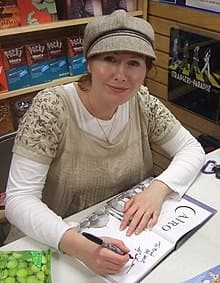
G. Willow Wilson is an American author known for her fiction that often explores themes of identity and culture. Her notable work, "Alif the Unseen," blends elements of fantasy and political commentary in a story set in a Middle Eastern city. Wilson's writing has garnered attention for its unique perspective and imaginative storytelling.
Similar books
- American Gods
Neil Gaiman
4.1 (758k) average on GoodreadsFantasyBlends ancient mythology and deities with a modern setting, exploring themes of belief and power.
- The City of Brass
S.A. Chakraborty
4.1 (46k) average on GoodreadsFantasyFeatures a rich Middle Eastern-inspired fantasy world with djinns and intricate political structures.
- Harry Potter and the Sorcerer's Stone
J.K. Rowling
4.5 (7M) average on GoodreadsFantasyRescued from a miserable life under the stairs, an orphaned boy discovers he's a wizard destined for a magical school, where he uncovers a dangerous secret tied to the dark wizard who murdered his parents.
- The Hunger Games
Suzanne Collins
4.3 (6.4M) average on GoodreadsFantasyIn a future where children fight to the death on live television, Katniss Everdeen volunteers for the arena, turning a death sentence into a fight for survival and a spark of rebellion.
- 1984
George Orwell
4.2 (3.1M) average on GoodreadsPoliticsIn a future where surveillance and thought control are absolute, a man's search for truth clashes with the Party, showing that hope can be a form of rebellion.
- Divergent
Veronica Roth
4.2 (2.9M) average on GoodreadsFantasyIn a society divided by virtues, a sixteen-year-old's difference from the norm starts a rebellion that threatens her world.




Enjoyed the summary?
A summary gives you the shape of the book. The book itself has the detail, the examples and the voice.
Find Alif the Unseen on AmazonAs an Amazon Associate, BookBrief earns from qualifying purchases. How we're funded