
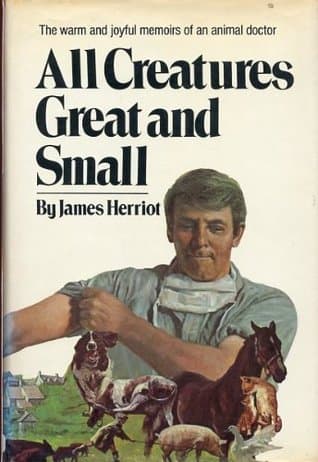
Core Idea
- Difficulty
- Easy
- Read it if
- You enjoy heartwarming stories about animals, rural life, and the human spirit, or are looking for a gentle, humorous escape into a bygone era of dedicated service and simple pleasures.
- Skip it if
- You prefer fast-paced narratives, dislike animal-centric stories, or are sensitive to descriptions of animal illnesses and medical procedures, even if depicted with care and humor.
Key Takeaways from All Creatures Great and Small
The Unvarnished Reality of Rural Practice
Veterinary medicine in the Dales was a far cry from textbook theory.
Herriot's first experiences as a new vet in the Yorkshire Dales quickly challenge any perfect ideas of his job. He learns that practical skill often matters more than book knowledge, and being resourceful is very important. The lack of modern equipment, the bad weather, and the physical demands of treating large farm animals in remote places make him adapt quickly. This difference between training and real-world reality is a main idea, showing the steep learning curve and the toughness needed to succeed in such an environment. It shows that true skill comes not just from knowledge, but from experience, quick thinking, and strong commitment.
“The realities of veterinary practice in rural Yorkshire are very different from the sterile setting of veterinary school.”
In the book: Herriot's frequent struggles with diagnosing obscure ailments, the physical exertion of wrestling large cows, and the reliance on intuition rather than sophisticated tests demonstrate the raw, unglamorous nature of his early career.
Try this: Aspiring professionals in any field should prepare for the significant gap between academic learning and practical application, cultivating adaptability and resilience as key skills.
Related ideas: rural-veterinary-practice, practical-learning, professional-adaptation
Beyond the Diagnosis: Empathy for Owners
Treating animals often means understanding and comforting their human companions.
Herriot's memoirs are as much about the people of Yorkshire as they are about their animals. He learns that a big part of his job involves dealing with the feelings of pet and livestock owners. From the sad scene of an old man whose dog is his only friend to the poor farmer who sacrifices a lot for his working animal, Herriot always shows empathy. He understands that an animal's illness or death does not just affect the animal, but deeply affects the lives, jobs, and feelings of its human caregivers. This human part makes his practice more than just medicine, making him a trusted friend and community member.
“Some visits are heart-wrenchingly difficult, such as one to an old man in the village whose very ill dog is his only friend and companion.”
In the book: The poignant story of the old man and his dying dog, and the recurring theme of farmers scraping together meager earnings to care for their animals, illustrate Herriot's deep understanding of the human-animal bond.
Try this: Professionals in service industries, particularly healthcare, should prioritize developing strong interpersonal skills and emotional intelligence to address the holistic needs of their clients, not just the technical problem.
Related ideas: human-animal-bond, veterinary-empathy, patient-care-holistic
The Unpredictable Charm of Animal Personalities
Animals, like people, possess unique quirks and endearing eccentricities.
One of the best parts of Herriot's writing is how well he observes animal personalities. He sees individuals with distinct traits, moods, and often funny quirks. From the spoiled and demanding Pekinese, Tricki Woo, who has 'fluffy internal derangement' and hosts parties, to the calm farm animals who present their own challenges, Herriot captures the range of animal character. This personal connection makes each case memorable and shows his real affection for his patients, letting readers see animals not just as medical cases but as living beings with their own inner lives.
“Herriot's periodic visits to the overfed and pampered Pekinese Tricki Woo who throws parties and has his own stationery.”
In the book: The recurring character of Tricki Woo, with his luxurious lifestyle and 'ailments,' serves as a prime example of Herriot's ability to imbue animals with distinct, often humorous, personalities.
Try this: Cultivate a sense of curiosity and observation in your daily interactions, recognizing the unique traits and stories in every individual, whether human or animal.
Related ideas: animal-personalities, observational-humor, veterinary-anecdotes
Humor as a Coping Mechanism
Laughter provides solace amidst the trials and tribulations of a demanding profession.
Herriot's writing has a gentle, self-deprecating humor that entertains the reader and helps the author cope. Facing everything from uncooperative animals and difficult farmers to life-or-death situations and being tired, humor helps Herriot keep perspective and avoid getting worn out. Whether it is the absurd parts of a situation or the quirks of characters, his ability to find the lighter side of difficult times shows his resilient spirit. This mix of real compassion and lighthearted wit makes even the hardest moments understandable and relatable.
“Herriot discovers the wondrous variety and never-ending challenges of veterinary practice as his humor, compassion, and love of the animal world shine forth.”
In the book: Numerous anecdotes detailing his own blunders, the comical misunderstandings with farmers, and the ridiculous antics of some animals provide consistent moments of levity throughout the book.
Try this: In high-stress environments, cultivate a sense of humor and the ability to laugh at oneself to manage pressure and maintain mental well-being.
Related ideas: coping-mechanisms, professional-resilience, humor-in-adversity
The Beauty and Harshness of Nature
The Yorkshire Dales are both a breathtaking backdrop and a formidable adversary.
The Yorkshire Dales are not just a setting but a character in Herriot's stories, showing both great beauty and challenges. He describes the wide landscapes, the changing seasons, and the peace they can offer. However, this natural beauty often comes with harshness: dangerous snowdrifts, freezing temperatures, and remote, isolated farms. These environmental factors affect his work, making travel hard, complicating treatments, and adding a ruggedness to the lives of both animals and people. Herriot's deep respect for nature, in all its forms, shows through, acknowledging its power over human efforts.
“From seeing to his patients in the depths of winter on the remotest homesteads...”
In the book: Descriptions of battling blizzards to reach a sick animal, navigating muddy tracks, and the sheer isolation of some homesteads highlight the demanding natural environment.
Try this: Appreciate the power and beauty of nature, but also understand its inherent challenges and develop strategies to adapt to environmental constraints in your professional or personal life.
Related ideas: yorkshire-dales, nature-impact, environmental-challenges
The Value of Simple Pleasures
Amidst the arduous work, small moments of joy sustain the spirit.
Despite long hours, difficult cases, and often low pay, Herriot finds satisfaction in simple things. A successful treatment, the birth of a healthy calf, a warm meal after a freezing journey, or a kind word from a grateful farmer are moments of joy that break up the hard work. These small victories and comforts are the foundation of his lasting love for his job and the Dales way of life. This idea shows how important it is to find contentment in everyday life and appreciate human connection and purpose.
“Herriot's deep love of life, and extraordinary storytelling abilities.”
In the book: Herriot's descriptions of the satisfaction derived from a successful, difficult surgery, the warmth of a fire on a cold night, or the genuine gratitude of a farmer after saving an animal.
Try this: Consciously seek out and appreciate the small, positive moments in your daily routine, as these can significantly contribute to overall well-being and job satisfaction.
Related ideas: simple-joys, professional-satisfaction, gratitude-practice
The Enduring Legacy of Dedication
True passion and commitment transcend obstacles and build lasting trust.
Herriot's journey from a new vet to a respected and loved person in the Dales shows what dedication can do. His commitment to his patients, no matter their species or the wealth of their owners, earns him the trust and affection of the community. He consistently goes beyond what is expected, enduring physical hardship and emotional strain out of a real love for his work. This deep passion, rather than ambition or money, defines his career and makes him an iconic figure, both in his community and in literature.
“For over forty years, generations of readers have thrilled to Herriot's marvelous tales, deep love of life, and extraordinary storytelling abilities.”
In the book: His willingness to travel to the remotest farms in the worst weather, his tireless efforts to save seemingly hopeless cases, and the deep respect he earns from the Dales people illustrate his dedication.
Try this: Identify your core passions and commit to them with integrity and perseverance, understanding that long-term success and fulfillment often stem from genuine dedication rather than immediate rewards.
Related ideas: professional-dedication, trust-building, passion-in-work
Life, Death, and the Cycle of Nature
Veterinary practice confronts the raw realities of existence daily.
The daily life of a rural vet often involves the cycles of life and death. Herriot sees both the miracle of birth and the sadness of loss often. These experiences, while sometimes heartbreaking, are shown with an acceptance that reflects the realities of farm life and nature. He does not avoid difficult decisions or inevitable outcomes, but approaches each situation with professional honesty and compassion. This constant exposure to the fragility and strength of life shapes his view, creating a deep appreciation for every moment.
“From seeing to his patients in the depths of winter on the remotest homesteads to dealing with uncooperative owners and critically ill animals...”
In the book: Descriptions of assisting difficult births, performing euthanasia, and grappling with incurable diseases in animals, all handled with a blend of professionalism and profound empathy.
Try this: Develop a realistic and compassionate understanding of life's inherent cycles, embracing both joy and sorrow as integral parts of existence, particularly in professions dealing with life and death.
Related ideas: life-cycles, mortality-acceptance, veterinary-ethics
The Power of Storytelling
Personal narratives can illuminate universal truths and connect generations.
Herriot's lasting popularity, shown by 80 million copies sold, is due to the wide appeal of well-told personal stories. His memoirs are not just a timeline but a carefully written story that takes readers to a specific time and place, letting them experience the world through his eyes. By sharing his experiences, both successes and troubles, with honesty, humor, and heart, he connects with his audience. This shows how individual stories, when filled with real emotion and good observation, can connect across cultures and generations, offering insights into the human (and animal) condition.
“For over forty years, generations of readers have thrilled to Herriot's marvelous tales...”
In the book: The book's global sales and continued popularity decades after its publication demonstrate the profound impact of his narrative style and the universal themes explored.
Try this: Recognize the power of personal narrative in communication, whether in professional presentations or casual conversations, to engage, inform, and inspire others.
Related ideas: memoir-writing, narrative-impact, universal-themes
Finding Purpose in Service
A life dedicated to caring for others, human or animal, brings profound meaning.
James Herriot's journey is about finding and accepting his life's work. Despite the initial shocks and difficulties, he never changes his commitment to veterinary medicine. His work is more than just a job; it is an act of service to the animals and the community he comes to love. This dedication to caring for others, often in challenging situations, gives him a deep sense of purpose and fulfillment. His story is a reminder that true meaning often lies in helping others, finding one's place in a community, and answering a calling with honesty.
“He takes up his calling and discovers that the realities of veterinary practice... differ from veterinary school.”
In the book: The consistent portrayal of his tireless work, his emotional investment in his patients' welfare, and the respect he earns from the Dales community all point to a life driven by a strong sense of purpose.
Try this: Reflect on your own 'calling' or purpose, and actively seek ways to integrate service and meaningful contribution into your professional and personal life for greater fulfillment.
Related ideas: vocational-calling, meaningful-work, community-service
All Creatures Great and Small Quotes
“If only animals could talk, what a lot of misery they could save us.”
“It is a fact that in this world of ours, among the many things that are not what they seem, we can number the country vet.”
“I had a feeling that I was seeing something that was not given to many men to see.”
“The only animals that ever hurt me were humans.”
“There are times when it is all too easy to forget that the simplest things in life are often the most profound.”
“I was still finding my way, still learning, still making mistakes. But I was learning to love it.”
“You could have all the knowledge in the world, but if you didn't have compassion, you were nothing.”
“The world was full of wonders, and I was seeing them every day.”
“Somehow, the animals always knew.”
“It was a good life, a hard life, but a good one.”
“There was no such thing as a small job in the country. Every animal was someone's livelihood, someone's friend.”
“And there was Siegfried, forever optimistic, forever impractical, forever lovable.”
“I had come to believe that the greatest gift a man could possess was the ability to laugh at himself.”
“The true measure of a man is how he treats someone who can do him absolutely no good.”
Quiz
10 questions on the main ideas. Each answer comes with a short explanation.
Question 1
What is the primary setting for James Herriot's veterinary practice in 'All Creatures Great and Small'?
- The Scottish Highlands
- Rural Yorkshire Dales
- The bustling streets of London
- A modern veterinary hospital in a large city
Show answer
B. Rural Yorkshire Dales The book explicitly states that Herriot 'roamed the remote, beautiful Yorkshire Dales,' where he established his practice and encountered the diverse animal patients and their owners.
Question 2
Which character is described as an overfed and pampered Pekinese who throws parties and has his own stationery?
- Bumphrey Hoggett
- Tricki Woo
- Gyp
- Buster
Show answer
B. Tricki Woo Tricki Woo is a memorable character in the book, known for his eccentric lifestyle, including his lavish parties and personal stationery, as described in the summary.
Question 3
What is a significant contrast Herriot discovers between veterinary school and his actual practice in rural Yorkshire?
- The higher pay in rural practice compared to academic life.
- The sterile setting of veterinary school versus the raw realities of rural practice.
- The focus on small animals in school versus large animals in practice.
- The lack of animal variety in practice compared to the school's diverse specimens.
Show answer
B. The sterile setting of veterinary school versus the raw realities of rural practice. The summary highlights that Herriot 'discovers that the realities of veterinary practice in rural Yorkshire are very different from the sterile setting of veterinary school,' emphasizing the practical, often messy, nature of his new role.
Question 4
Herriot's experiences include visits that are 'heart-wrenchingly difficult.' What kind of visit is given as an example of this difficulty?
- Attending to a prize-winning show dog with a minor ailment.
- Treating a critically ill dog belonging to an old man whose only friend it is.
- Dealing with a wealthy farmer's uncooperative cattle.
- Performing a routine check-up on a healthy farm animal.
Show answer
B. Treating a critically ill dog belonging to an old man whose only friend it is. The text specifically mentions 'one to an old man in the village whose very ill dog is his only friend and companion' as an example of a heart-wrenchingly difficult visit, showcasing the emotional toll of the job.
Question 5
What quality is consistently shown by Herriot, even when dealing with uncooperative owners and critically ill animals?
- Detachment and scientific objectivity.
- Humor, compassion, and love of the animal world.
- Strict adherence to rules and regulations.
- A desire for quick financial gain.
Show answer
B. Humor, compassion, and love of the animal world. The summary concludes by stating that Herriot's 'humor, compassion, and love of the animal world shine forth,' indicating these are his defining characteristics throughout his challenges.
Question 6
What does the book imply about the financial situation of some of Herriot's clients?
- Most of his clients are wealthy landowners who spare no expense.
- Many are poor farmers who will 'scrape their meager earnings together' for animal care.
- His clients typically barter goods and services instead of paying money.
- The financial status of his clients is rarely a factor in their decisions.
Show answer
B. Many are poor farmers who will 'scrape their meager earnings together' for animal care. The text describes 'recollections of poor farmers who will scrape their meager earnings together to be able to get proper care for their working animals,' highlighting the dedication of his less affluent clients.
Question 7
What is the overall tone and impact of Herriot's storytelling, as described in the summary?
- Cynical and critical of human nature.
- Dry, academic, and purely factual.
- Heartwarming, funny, tragic, and full of deep love of life.
- Melancholy and focused primarily on the hardships of rural life.
Show answer
C. Heartwarming, funny, tragic, and full of deep love of life. The summary uses phrases like 'magical, unforgettable world,' 'heartwarming, funny, and tragic animal patients,' and 'deep love of life, and extraordinary storytelling abilities' to describe the book's tone.
Question 8
Beyond treating animals, what other aspect of his surroundings does Herriot observe with a 'keen, loving eye'?
- Only the landscape and weather patterns.
- The latest advancements in veterinary technology.
- Humans alike, alongside animals.
- The economic fluctuations of the farming industry.
Show answer
C. Humans alike, alongside animals. The text states Herriot observed 'animals and humans alike with his keen, loving eye,' indicating his interest in the people he encountered was as significant as his care for their animals.
Question 9
The description mentions Herriot dealing with 'uncooperative owners.' What does this suggest about the challenges of his job, beyond just treating the animals?
- That animal owners are always indifferent to their pets' welfare.
- That effective veterinary care often requires navigating complex human personalities and beliefs.
- That Herriot often refused to treat animals if their owners were difficult.
- That most owners lacked basic knowledge of animal care, making them uncooperative.
Show answer
B. That effective veterinary care often requires navigating complex human personalities and beliefs. The phrase 'dealing with uncooperative owners' implies that a significant part of Herriot's work involved interpersonal skills and patience, as animal treatment success often depended on the owners' willingness to follow instructions or cooperate with the veterinarian.
Question 10
How does Herriot's initial experience in rural practice differ from the theoretical knowledge gained in veterinary school?
- He found that all the animals were perfectly healthy, contrary to his studies.
- He discovered that the practical application of medicine in a real-world, often harsh environment was far less predictable and more demanding than classroom learning.
- He realized that modern equipment was readily available in the Dales, making his job easier than expected.
- He learned that animal diseases in the Dales were entirely different from those taught in school.
Show answer
B. He discovered that the practical application of medicine in a real-world, often harsh environment was far less predictable and more demanding than classroom learning. The summary states he 'discovers that the realities of veterinary practice in rural Yorkshire are very different from the sterile setting of veterinary school,' implying the transition from theoretical, controlled learning to unpredictable, hands-on challenges in a rural environment.
All Creatures Great and Small FAQ
What is "All Creatures Great and Small" about?
"All Creatures Great and Small" is a beloved memoir by James Herriot, chronicling his experiences as a young veterinarian practicing in the remote and beautiful Yorkshire Dales during the mid-20th century. It offers heartwarming, humorous, and sometimes tragic tales of his animal patients and their human owners.
Who is James Herriot?
James Herriot was the pen name of James Alfred Wight, a British veterinary surgeon who became a bestselling author. He is celebrated for his series of books detailing his life and work as a country vet, characterized by his deep love for animals, keen observations, and compassionate storytelling.
Does "All Creatures Great and Small" accurately depict veterinary life?
Yes, the book provides a highly authentic and often vivid portrayal of veterinary practice in rural Yorkshire during that era. Herriot's anecdotes, while entertaining, reflect the challenges, triumphs, and emotional realities of treating animals in a time before modern veterinary advancements.
What kind of animals does James Herriot treat in the book?
Herriot treats a wide variety of animals, reflecting the diverse agricultural landscape of the Yorkshire Dales. This includes farm animals like cows, sheep, horses, and pigs, as well as beloved pets such as dogs (like the pampered Tricki Woo) and cats.
How is "All Creatures Great and Small" different from other animal stories?
Unlike many fictional animal stories, Herriot's book is a genuine memoir grounded in real experiences, offering an authentic, often humorous, and deeply compassionate perspective from a practicing veterinarian. It combines medical detail with rich character development of both animals and humans, avoiding sentimentality while still being profoundly moving.
What themes are explored in "All Creatures Great and Small"?
Key themes include the bond between humans and animals, the challenges and rewards of rural life, the beauty of the natural world, compassion, resilience, and the humor found in everyday situations. It also touches on the evolution of veterinary medicine and the importance of community.
Is "All Creatures Great and Small" suitable for all ages?
Yes, the book is widely considered suitable for readers of all ages. Its gentle humor, heartwarming stories, and accessible writing style make it enjoyable for younger readers, while its depth and wisdom resonate with adults.
Where does "All Creatures Great and Small" take place?
The book is set in the picturesque and often rugged Yorkshire Dales in England. Herriot's descriptions vividly capture the landscape, the close-knit communities, and the unique challenges of practicing veterinary medicine in such a rural environment.
About the author

James Herriot was a British veterinarian and author known for his works depicting rural life and veterinary practice in the Yorkshire Dales. His notable books include "All Creatures Great and Small," which chronicles his experiences as a country vet, and "Every Living Thing," which continues to explore the bond between humans and animals.
Similar books
- Awakenings
Oliver Sacks
4.1 (11k) average on GoodreadsBiographyBoth are memoirs rooted in medical practice, but Herriot focuses on the animal kingdom and the practical, often physical, challenges of veterinary work in a rural setting, extending empathy to the farmers and their livelihoods. Sacks's work delves more deeply into the psychological and neurological complexities of human patients, exploring the inner world of illness and recovery with a different kind of clinical and philosophical depth.
- The Diary of a Young Girl
Anne Frank
4.2 (2.7M) average on GoodreadsBiographyDuring the Nazi occupation, a teenage girl's diary, written from a secret annex, shares observations on humanity, hope, and the wait for freedom.
- Eat, Pray, Love
Elizabeth Gilbert
3.6 (1.5M) average on GoodreadsLifestyleA heartbroken writer leaves her conventional life for a year-long global search for pleasure in Italy, spiritual devotion in India, and unexpected love and balance in Bali.
- Night
Elie Wiesel
4.3 (970k) average on GoodreadsBiographyIn the darkness of Auschwitz and Buchenwald, a teenage Elie Wiesel faces the extermination of his family, the loss of his faith, and the lasting scars of humanity's deepest cruelty.
- Steve Jobs
Walter Isaacson
4.1 (957k) average on GoodreadsBusinessSteve Jobs was a visionary who fused creativity and technology to revolutionize six industries and shape our digital world.
- The Glass Castle
Jeannette Walls
4.3 (903k) average on GoodreadsBiographyJeannette Walls's memoir describes her unusual childhood with brilliant, free-spirited parents whose poverty-stricken life shaped her independence and love despite family problems.





Enjoyed the summary?
A summary gives you the shape of the book. The book itself has the detail, the examples and the voice.
Find All Creatures Great and Small on AmazonAs an Amazon Associate, BookBrief earns from qualifying purchases. How we're funded