
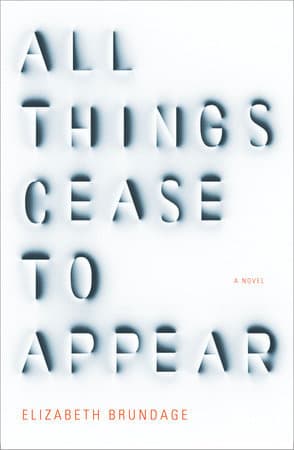
Synopsis
Covers the whole plot, including the ending.
- Difficulty
- Medium
- Pacing
- Moderate
- Mood
- Atmospheric, Dark, Suspenseful, Melancholy, Psychological
- Read it if
- You enjoy atmospheric, character-driven mysteries with a strong psychological element and a literary bent, exploring themes of family trauma, class division, and the long-term impact of violence.
- Skip it if
- You prefer fast-paced thrillers with clear-cut heroes and villains, or shy away from dark, emotionally heavy narratives with morally ambiguous characters.
All Things Cease to Appear Plot Summary
Covers the whole plot, including the ending.
The Clare Family's Arrival
In 1979, George Clare, an art history professor, moves his wife Catherine and young daughter Franny to Chosen, a small, struggling town in upstate New York. George has a job at the nearby Mandible College, a move Catherine dislikes, feeling alone and trapped in their new, old farmhouse, which was once the Hale family's dairy farm. Catherine, an artist, struggles with domestic life and George's condescending attitude. The townspeople are wary of the Clares, seeing them as part of the wealthy outsiders. George's career goals and his demanding, self-centered personality immediately cause problems in the family and with locals.
Catherine's Murder
On a cold winter afternoon, George Clare comes home to find Catherine murdered in their bed. Their three-year-old daughter, Franny, is alone in her room, unharmed but shaken. State Trooper Cole, a local officer, immediately suspects George, noting his calm manner and lack of real sadness. The murder shocks the quiet community, highlighting the gap between old residents and college newcomers. George's alibi is weak, and his controlling nature becomes clear during the initial investigation. However, his rich and powerful parents quickly arrive to protect him, making it harder for Cole to build a case.
The Hale Brothers' Connection
The farmhouse the Clares live in was once the Hale family's home. After a tragic accident years before, the three Hale brothers—Eddie, Wade, and Cole—were orphaned. Eddie, the oldest, became troubled, while Wade struggled with his own problems. Cole, the youngest, was adopted by the local sheriff and became State Trooper Cole, the investigator of Catherine's murder. The brothers carry the weight of their family's past and the loss of their farm. The Clares' presence in their old home brings up old hurts and resentments, creating tension and suspicion that connects the Hale family's history with the current tragedy.
Franny's Trauma and George's Indifference
After Catherine's murder, Franny is deeply traumatized. She often talks about "the bad man" and shows signs of severe emotional distress, often drawing disturbing pictures. George, however, remains distant and focused on himself, showing little real concern for Franny's mental state. He quickly sends her to live with his parents, prioritizing his career and social standing over his daughter's needs. This emotional neglect further isolates Franny and strengthens Trooper Cole's suspicions about George. Cole sees the clear difference between a father's expected grief and George's self-preservation.
Justine's Obsession with George
Justine, a young student at Mandible College, becomes obsessed with George Clare. She sees him as a romantic, troubled figure, despite the murder accusation. Her obsession leads her to seek out George, offering him comfort and support. Their relationship, which quickly turns sexual, is an illicit affair that further isolates George and fuels gossip. Justine's innocence and desire to believe in George's innocence blind her to his manipulative nature, making her a tool in his self-serving story and showing his ability to charm and exploit others for his own benefit, even during a murder investigation.
The Community's Divisions and Secrets
Catherine Clare's murder shows the social and economic divisions in Chosen. The wealthy, educated faculty of Mandible College clash with the working-class, long-time residents. The investigation uncovers secrets, resentments, and hidden affairs among the townspeople. Trooper Cole's investigation is hindered not only by George's parents but also by the reluctance of locals, who hold their own grudges and protect their own. The town's seemingly perfect appearance crumbles, revealing a darker side of poverty, desperation, and moral compromise that complicates the search for truth.
The Hale Family's Continued Struggles
The Hale brothers continue to struggle with their family's past and the loss of their farm. Eddie Hale, still full of bitterness and anger, drifts through life, often involved in minor crimes and violence. Wade Hale battles mental health issues and addiction, unable to escape their past. Trooper Cole, despite his career success, is haunted by his family's history and his inability to fully connect with his brothers. Catherine Clare's murder in their childhood home reawakens their pain and trauma, drawing them back to a place they had tried to leave, and showing how suffering repeats in Chosen.
George's Post-Murder Life and Career
Despite suspicions about Catherine's murder, George Clare's career thrives. He becomes a successful art historian, publishing acclaimed books and getting tenure at a respected university. He remarries, has more children, and maintains an image of academic brilliance and culture. This apparent freedom from consequences deeply frustrates Trooper Cole, who still believes George is guilty but lacks clear evidence. George's ability to move on and succeed, while Catherine is a forgotten victim and Franny carries her trauma, highlights the injustice and limits of the legal system in fully addressing moral blame.
Franny's Search for Truth
As an adult, Franny Clare, still dealing with fragmented memories of her childhood trauma, actively searches for the truth about her mother's murder. She looks at old police reports, newspaper clippings, and her own repressed memories. Franny's search for understanding is driven by a deep need for closure and justice for her mother. Her journey brings her back to Chosen and into contact with the past, including Trooper Cole, who shares her desire for the truth. Her artistic talents, inherited from Catherine, help her process her grief and reconstruct the events of that day, leading her closer to the shocking reality.
The Revelation of the True Killer
Through Franny's persistent investigation and a key piece of evidence—a childhood drawing showing a specific detail of the murder scene—the true killer of Catherine Clare is finally revealed. Eddie Hale, consumed by rage and a distorted sense of justice related to the loss of his family home and his own mental instability, was responsible for Catherine's death. He had broken into the Clare farmhouse that night, not specifically targeting Catherine, but driven by a general anger at the "outsiders" who had taken his family's property. The revelation brings a painful, though delayed, form of justice, and also highlights the deep-seated anger and despair that had grown in the community for decades.
Aftermath and Lingering Shadows
The revelation of Eddie Hale as Catherine's murderer provides a long-awaited answer, offering some closure to Franny and Trooper Cole. However, emotional scars remain. Franny must accept that her father, George, was not the killer but was still involved in her mother's suffering and his own moral failures. The Hale brothers must deal with the devastating truth about their oldest sibling. The town of Chosen, though the mystery is solved, must grapple with its own role in the silence and the deep-seated issues that allowed such a tragedy to happen. The novel ends with a sense that while specific truths can be uncovered, human complexities and the lasting effects of trauma continue to cast long shadows.
Principal Figures
Catherine Clare
Victim/Supporting
An artist trapped in a suffocating marriage, whose murder drives the plot.
Catherine is an intelligent, artistic woman who feels increasingly stifled and isolated in her marriage to George Clare and in their new rural home in Chosen. She is perceptive, seeing through George's intellectual pretenses and understanding the emotional void in their relationship. Her artistic sensibilities allow her to connect with the beauty of the natural world, a stark contrast to her unhappy domestic life. She yearns for intellectual and emotional fulfillment but is constantly undermined by George's condescension and self-absorption. Her murder is the central mystery, but her presence, through Franny's memories and the impact she had on others, permeates the entire narrative.
Relationships: George Clare (Husband, emotionally abusive, dismissive); Franny Clare (Daughter, loving, protective)
George Clare
Antagonist/Suspect
An ambitious and narcissistic art history professor, the primary suspect in his wife's murder.
George Clare is a highly intelligent, ambitious, and deeply narcissistic art history professor. He is charming on the surface but possesses a profound lack of empathy, viewing others, especially Catherine and Franny, as extensions of himself or tools for his advancement. He is manipulative, controlling, and emotionally abusive, quick to dismiss Catherine's artistic aspirations and critical of her character. His calm demeanor after Catherine's murder immediately makes him suspicious. He prioritizes his career and reputation above all else, including his daughter's well-being. He represents a particular kind of intellectual arrogance and moral corruption.
Relationships: Catherine Clare (Wife, victim of his emotional abuse); Franny Clare (Daughter, neglected and emotionally distant); Justine (Student, lover, manipulated)
Franny Clare
Protagonist
Catherine's daughter, who seeks the truth about her mother's murder as an adult.
Franny is Catherine and George's daughter, a traumatized child who grows into a determined adult. As a three-year-old, she witnesses the aftermath of her mother's murder, leading to repressed memories and a deep-seated need for answers. She is sensitive and artistic, inheriting her mother's creative spirit. Her childhood is marked by her father's emotional neglect and the lingering shadow of the unsolved crime. As an adult, she embarks on a quest for truth, piecing together fragmented memories and investigating the past, driven by a desire to understand and honor her mother.
Relationships: Catherine Clare (Mother, deeply loved and missed); George Clare (Father, emotionally distant and neglectful); Cole (Investigator, ally in seeking truth)
Cole (State Trooper Cole Hale)
Supporting/Protagonist
The local state trooper investigating Catherine's murder, haunted by his own family history.
Cole is the state trooper assigned to Catherine's murder case. He is a thoughtful, persistent, and morally upright man, deeply committed to justice. He is also one of the three Hale brothers, adopted by the sheriff after his parents' deaths, and therefore inextricably linked to the Clare's farmhouse, which was his childhood home. This personal connection gives him a unique perspective on the town and its secrets. He immediately suspects George Clare but is frustrated by the lack of concrete evidence and the influence of George's family. He carries the weight of his family's past and the economic decline of Chosen, making him a complex figure torn between his professional duty and personal history.
Relationships: Catherine Clare (Victim, for whom he seeks justice); George Clare (Primary suspect, object of his suspicion); Franny Clare (Ally in seeking truth); Eddie Hale (Brother, later revealed as the killer); Wade Hale (Brother, troubled and distant)
Eddie Hale
Antagonist/Supporting
The eldest Hale brother, consumed by anger and resentment, who ultimately commits the murder.
Eddie Hale is the eldest of the Hale brothers, a deeply troubled and embittered man. Orphaned and stripped of his family farm, he carries immense resentment towards the wealthy outsiders who he perceives as invading and destroying his community. He is prone to violence and has a volatile temper, struggling with mental instability and a sense of injustice. His anger festers for years, eventually culminating in his violent act against Catherine Clare, driven by a generalized rage rather than a specific vendetta against her. He embodies the forgotten and downtrodden of Chosen, becoming a tragic figure of misplaced vengeance.
Relationships: Cole (Brother, estranged by circumstances); Wade Hale (Brother, shares a difficult past); Catherine Clare (Victim, symbol of the 'outsiders' he resents)
Wade Hale
Supporting
The middle Hale brother, struggling with his own demons and the family's past.
Wade Hale is the middle of the three Hale brothers, caught between Eddie's rage and Cole's sense of duty. He is a more passive figure than his brothers, struggling with his own anxieties and vulnerabilities. He is deeply affected by the loss of his family home and his parents' deaths, leading to a life marked by instability and a quiet despair. He often tries to mediate between his brothers but is ultimately unable to escape the shadow of their past. He represents the quieter, more internal suffering experienced by those left behind by the changing landscape of Chosen.
Relationships: Eddie Hale (Brother, troubled and volatile); Cole (Brother, distant but connected by shared history)
Justine
Supporting
A naive college student who becomes infatuated with George Clare.
Justine is a young, impressionable student at Mandible College who becomes deeply infatuated with George Clare after Catherine's murder. She sees him as a romantic, misunderstood figure, a victim of circumstance rather than a suspect. Her naivety and desire for a dramatic connection make her vulnerable to George's manipulations. She willingly enters into an affair with him, believing she is offering him comfort and support, and remains loyal to him despite the lingering suspicions. Justine represents the allure of charisma and the danger of idealizing others, especially those with hidden darkness.
Relationships: George Clare (Professor, lover, object of infatuation)
Floyd DeWitt
Supporting
A local farmer and neighbor, a witness to the changes in Chosen.
Floyd DeWitt is a long-time resident and farmer in Chosen, a neighbor to the Clare family. He represents the older generation of the town, rooted in the land and resistant to the changes brought by the college and its faculty. He is a gruff but observant man, often privy to the local gossip and the underlying tensions. While not directly involved in the murder investigation, his presence and occasional comments offer a grounded, local perspective on the events and the characters, highlighting the clash between tradition and modernity, and the resentment felt by the working class towards the perceived elite.
Relationships: Clare family (Neighbors, viewed with suspicion); Hale family (Long-time acquaintances, understands their struggles)
Themes & Insights
The Corrosive Nature of Secrets and Lies
The novel shows how secrets, both personal and community-wide, cause great damage over decades. George Clare's hidden narcissism and emotional abuse of Catherine, the Hale brothers' buried trauma from losing their farm and parents, and the town's silence about its class divisions all contribute to the tragedy and its long mystery. Catherine's murder remains a secret for years, harming Franny's childhood and Trooper Cole's professional life. The eventual discovery of Eddie Hale's guilt, a long-kept secret, brings a painful but necessary reckoning, showing how truth, even if delayed, can be freeing, though it leaves scars.
“Secrets were like weeds, always growing, always threatening to choke out the good things.”
The Impact of Place and Environment
The upstate New York setting, especially the old farmhouse and the town of Chosen, is more than a backdrop; it actively shapes the lives of its residents. The isolation of the rural environment makes Catherine's loneliness and George's self-absorption worse. Chosen's economic decline fuels the resentment of locals like the Hale brothers toward wealthy newcomers, contributing to the violence. The farmhouse itself, once a symbol of the Hale family's livelihood, becomes a place of trauma for both families, a physical sign of loss and suffering. The landscape reflects the characters' inner turmoil, mirroring their despair and eventual, fragile hope.
“The house itself seemed to breathe in the cold, a living thing settling into its own decay.”
The Nature of Evil and Psychopathy
The novel explores different kinds of evil, from Eddie Hale's clear violence to George Clare's subtle psychological manipulation. George is a high-functioning psychopath: intelligent, charming, and successful, yet completely lacking empathy and capable of deep emotional cruelty toward his wife and daughter. His ability to live seemingly unaffected by the murder, while others suffer, highlights how common and often unpunished some forms of evil are. Eddie's violence, though brutal, comes from deep trauma and resentment, suggesting a different, perhaps more tragic, source for his destructive acts. The book makes readers think about how evil appears in both obvious and subtle ways.
“He was a man who could intellectualize anything, especially his own shortcomings.”
Justice, Truth, and Forgiveness
A main theme is the long and often elusive nature of justice. Trooper Cole's decades-long search for Catherine's killer, and Franny's adult quest for truth, highlight the human need for accountability. The novel suggests that justice is not always quick or perfect, and sometimes arrives unexpectedly, decades after the crime. The truth, when it finally appears, is complex and painful, offering a form of closure but not necessarily forgiveness or complete healing. The characters must deal with the limits of the legal system and the lasting impact of trauma, learning that while answers can be found, peace is a more personal and difficult journey.
“Truth was a stubborn thing, slow to reveal itself, but impossible to completely bury.”
Plot Devices & Literary Techniques
Non-linear Narrative
The story jumps between different time periods and perspectives.
The novel employs a non-linear narrative structure, moving back and forth between the 1970s when Catherine is murdered, the intervening decades, and the early 2000s when Franny seeks answers. This structure slowly reveals layers of the mystery, character motivations, and the long-term consequences of the events. It allows the reader to piece together the full picture alongside Franny and Cole, building suspense and showing the enduring impact of the past on the present. It also highlights the cyclical nature of trauma and the way history repeats itself.
Multiple Perspectives
The story is told through the viewpoints of several key characters.
The narrative shifts between the perspectives of Catherine, George, Franny, Trooper Cole, and other supporting characters like Justine and the Hale brothers. This allows for a comprehensive and nuanced understanding of the events, revealing the inner thoughts, motivations, and biases of each individual. It creates a rich tapestry of interwoven lives and provides different interpretations of the same events, deepening the mystery and challenging the reader's assumptions about who is truly innocent or guilty, and what constitutes justice. This device also emphasizes the subjectivity of truth.
Symbolism of the Farmhouse
The Clare's home serves as a potent symbol of loss, history, and haunting.
The old Hale farmhouse, where Catherine is murdered and the Clares reside, is a powerful symbol. For the Hale brothers, it represents their lost heritage, their family's decline, and the trauma of their parents' deaths. For Catherine, it embodies her isolation and the decay of her marriage. For Franny, it's the site of her deepest trauma. The house is imbued with the weight of its past, a place where different forms of violence and sorrow converge. Its physical deterioration mirrors the moral decay and emotional distress of the characters, serving as a constant reminder of the unresolved past.
Art as a Motif and Clue
Art, particularly Catherine's drawings and Franny's later work, serves as a crucial element.
Art functions both as a thematic motif and a critical plot device. Catherine's own artistic aspirations are stifled by George, yet her creative spirit endures in Franny. Franny's childhood drawings, initially dismissed as mere childish scrawls, later become a vital clue in solving her mother's murder, revealing repressed memories through artistic expression. George's profession as an art historian also contrasts sharply with his lack of appreciation for genuine human emotion, highlighting the superficiality of his intellectualism. Art, in this novel, becomes a language for unspoken truths and a means of processing trauma.
All Things Cease to Appear Quotes
“The past, after all, was like a house in which one had once lived; it was not a place to return to, but a place to remember from afar.”
“There was a kind of beauty in the absolute desolation of winter, a stark truth that summer's lushness obscured.”
“Grief, she was learning, wasn't a linear process. It was a labyrinth, and sometimes you found yourself back at the beginning, facing the same monster.”
“The house had a way of holding onto things, not just objects, but echoes of lives lived within its walls.”
“It was amazing how much people could hide, even from those they claimed to love the most.”
“Sometimes the greatest evil isn't an act of malice, but an act of profound indifference.”
“The truth, like a river, always finds a way to the sea, no matter how many dams are built to hold it back.”
“Love, she thought, was not a shield against sorrow, but often its very source.”
“People always wanted a simple explanation for complicated things, especially when those things involved death.”
“The silence of the house was not empty; it was filled with unspoken words, with the weight of what had happened.”
“He understood then that some people were like stars, burning brightly but destined to collapse into themselves.”
“There was a certain cruelty in hope, a way it could buoy you up only to drop you further.”
“The world was full of invisible threads, connecting people and events in ways no one could ever fully comprehend.”
“Sometimes the most dangerous ghosts were the ones we carried within us.”
Quiz
10 questions on the plot and the characters. Each answer comes with a short explanation.
Question 1
In what upstate New York town do the Clare family move, and where the murder takes place?
- Chosen
- Chosenkill
- Chosentown
- Chosenville
Show answer
B. Chosenkill The Clare family moves to the fictional town of Chosenkill, which becomes the setting for the tragic events.
Question 2
What subject does George Clare teach at the nearby private college?
- English Literature
- History
- Art History
- Philosophy
Show answer
C. Art History George Clare, somewhat begrudgingly, takes a position teaching art history at a local private college.
Question 3
How old is the Clare's daughter when her mother is murdered?
- Two years old
- Three years old
- Four years old
- Five years old
Show answer
B. Three years old The synopsis states that George comes home to find his wife killed and their three-year-old daughter alone in her room.
Question 4
Which character is the persistent cop who suspects George Clare but is repeatedly stymied?
- Detective Frank Velez
- Officer Ben LaRue
- Sheriff Brody
- Investigator John Smith
Show answer
A. Detective Frank Velez Detective Frank Velez is the dedicated police officer who suspects George Clare and works tirelessly on the case despite obstacles.
Question 5
What was the Clare's new home before they moved in?
- An abandoned schoolhouse
- A once-thriving dairy farm
- A former rectory
- A renovated factory
Show answer
B. A once-thriving dairy farm The Clare family moves into what was once the childhood home of three orphaned teenage brothers, described as a once-thriving dairy farm.
Question 6
How do George Clare's parents impact the initial investigation into his wife's murder?
- They provide a solid alibi for George.
- They actively obstruct the police investigation.
- They rescue him from suspicion, using their influence or resources.
- They confess to the murder to protect George.
Show answer
C. They rescue him from suspicion, using their influence or resources. The synopsis explicitly states that George's parents 'rescue him from suspicion,' implying they use their means to divert the investigation away from him.
Question 7
What is the primary thematic exploration regarding the Clare's marriage?
- A passionate but doomed romance.
- A complex portrait of a psychopath and a marriage.
- A struggling couple finding common ground.
- A marriage defined by shared ambition.
Show answer
B. A complex portrait of a psychopath and a marriage. The book is described as 'a rich and complex portrait of a psychopath and a marriage,' indicating a deep dive into the darker aspects of their relationship.
Question 8
Which of the following is NOT a characteristic of the town where the Clares reside?
- Impoverished
- Tight-knit
- Recently discovered by wealthy outsiders
- Known for its vibrant arts scene
Show answer
D. Known for its vibrant arts scene The town is described as 'tight-knit, impoverished' and 'lately been discovered by wealthy outsiders in search of a rural idyll.' There is no mention of a vibrant arts scene.
Question 9
How long does it take for a 'hard kind of justice' to finally be served in the story?
- Less than a year
- Approximately ten years
- More than twenty years
- A lifetime, as justice is never truly achieved
Show answer
C. More than twenty years The synopsis explicitly states that 'more than twenty years will pass before a hard kind of justice is finally served,' highlighting the long duration of the mystery.
Question 10
Beyond the central murder, what broader societal issue does the novel explore through the lens of the community?
- The impact of technological advancements on rural life.
- The challenges of intergenerational wealth transfer.
- The various taints that can scar very different families, and even an entire community.
- The struggle for environmental preservation in developing areas.
Show answer
C. The various taints that can scar very different families, and even an entire community. The book is described as 'an astute study of the various taints that can scar very different families, and even an entire community,' indicating its broader social commentary.
All Things Cease to Appear FAQ
What is the central mystery of 'All Things Cease to Appear'?
The central mystery revolves around the brutal murder of Catherine Clare in her home in upstate New York. Her husband, George Clare, is the immediate and primary suspect, but the local police struggle to gather enough concrete evidence to convict him, leaving the crime officially unsolved for decades.
Who are the key members of the Clare family?
The Clare family consists of George Clare, an art history professor; his wife Catherine Clare, the murder victim; and their young daughter, Franny Clare, who is found alone in her room on the day of her mother's death. George's wealthy and influential parents also play a significant role in his defense.
How does the town of Chosen, New York, influence the story?
Chosen is a small, impoverished upstate New York town being gentrified by wealthy outsiders, creating a stark class divide. This environment of resentment and suspicion, coupled with its insular nature, complicates the murder investigation and allows secrets to fester within the community for years.
What role do the three teenage brothers play in the narrative?
The three teenage brothers, orphaned by a previous tragedy, become entangled in the Clare murder mystery because the Clares moved into their childhood home, a former dairy farm. Their lives intersect with the Clares and the subsequent investigation, and their family's own history of misfortune mirrors the darkness surrounding the murder.
What is the significance of the title 'All Things Cease to Appear'?
The title, a quote from Ralph Waldo Emerson, reflects the novel's themes of decay, loss, the fading of truth over time, and the way superficial appearances can mask deeper, darker realities. It alludes to the elusive nature of justice and the way memories and evidence can diminish or become distorted.
How does the novel explore the concept of 'inherited trauma'?
The novel explores inherited trauma through the unfortunate fates of both the Clare family and the orphaned brothers. The violence and unhappiness from one generation, such as the Clare parents' dysfunctional marriage or the brothers' family tragedies, cast long shadows, influencing the psychological well-being and actions of the next generation.
What is the specific nature of George Clare's psychopathy?
George Clare's psychopathy is characterized by a profound lack of empathy, a manipulative nature, and a chilling ability to maintain a facade of normalcy while harboring violent tendencies. He views others as instruments for his own gratification, particularly evident in his treatment of Catherine and his students.
How does Catherine Clare's background contribute to her vulnerability?
Catherine's background as an artist with a sensitive nature and a desire for genuine connection makes her particularly vulnerable to George's manipulative charm. Her artistic sensibilities and perhaps a degree of naiveté prevent her from fully recognizing the extent of his darkness until it is too late, trapping her in a destructive marriage.
How does the novel use the setting of the 'dairy farm' to enhance its gothic elements?
The former dairy farm, with its history and isolated location, serves as a classic gothic setting. Its decaying beauty, the lingering presence of past inhabitants, and its transformation into the site of a gruesome murder contribute to the novel's oppressive atmosphere, suggesting that the land itself holds dark memories.
What is the significance of the art history references throughout the book?
Art history references, particularly those related to the Hudson River School, serve as a recurring motif. They highlight the contrast between idyllic representations of nature and the grim realities of human depravity, and also reflect George's superficial intellectualism versus his true, violent nature.
How does the character of Wade, the persistent cop, represent a different kind of justice?
Wade represents a steadfast, ethical pursuit of justice, even when official channels are stymied by influence and lack of evidence. His unwavering conviction about George's guilt and his quiet, long-term commitment to the case embody a moral integrity that contrasts with the corrupting forces at play.
What is the ultimate resolution of the murder mystery, and how is 'justice' finally served?
The ultimate resolution involves a 'hard kind of justice' served decades after Catherine's murder. While George Clare is never officially convicted of her murder, his later actions lead to his eventual demise, effectively bringing a form of karmic retribution that satisfies the reader's desire for justice, even if it isn't legal.
How do class distinctions play a role in the unfolding of the events?
Class distinctions are crucial, as George's wealthy and influential parents are able to protect him from immediate legal repercussions, leveraging their power to circumvent justice. This highlights how socio-economic status can impact the outcome of criminal investigations and the perception of guilt within the community.
How does Franny Clare's perspective evolve throughout the novel?
Franny Clare's perspective evolves from that of a traumatized young child, silently bearing witness to her mother's death, to an adult grappling with the fragmented memories and unspoken truths of her past. Her journey is about piecing together her family's dark history and understanding her father's true nature.
What is the role of the supernatural or spiritual elements in the book?
The book subtly incorporates supernatural or spiritual elements, particularly through the lingering presence of Catherine's spirit in the house. These elements serve to externalize the psychological weight of the past and the enduring impact of violence, suggesting that the trauma is so profound it leaves an indelible mark beyond the physical.
How does the narrative structure, spanning over twenty years, contribute to the novel's themes?
The narrative structure, which spans over two decades, allows the novel to explore the long-term ripple effects of violence and unaddressed trauma. It demonstrates how secrets fester, how justice can be delayed, and how the past continues to haunt the present, ultimately leading to a resolution that is slow and hard-won.
Discuss the symbolism of the color red throughout the narrative.
The color red frequently symbolizes violence, passion, and danger throughout the narrative, most notably associated with Catherine's murder. It appears in descriptions of blood, objects, and even emotions, serving as a visual motif that underscores the pervasive darkness and brutality at the heart of the story.
Similar books
- Gone Girl
Gillian Flynn
4.1 (2.3M) average on GoodreadsThrillerExplores a complex, toxic marriage and a murder mystery with psychological depth and unreliable narrators.
- The Secret History
Donna Tartt
3.9 (2k) average on GoodreadsPoliticsFeatures a murder at a private college, intricate character studies, and a gothic, literary atmosphere.
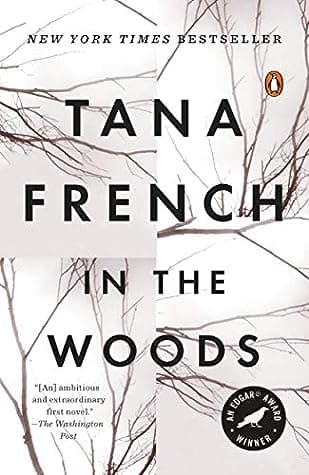
- In the Woods
Tana French
3.8 (304k) average on GoodreadsThrillerA dark, character-driven police procedural with a focus on psychological trauma and unsolved mysteries.
- The Secret Place
Tana French
3.9 (63k) average on GoodreadsThrillerBoth novels explore secrets within a closed community and the lingering impact of past events on the present. However, Brundage's work delves deeper into the psychological disintegration of its characters and employs a more overtly literary prose style, with less emphasis on the police procedural aspects prominent in French's novels. Brundage's scope is more historical and generational.
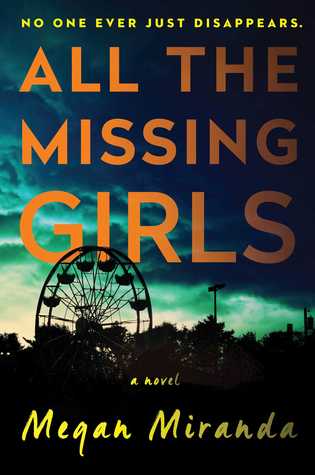
- All the Missing Girls
Megan Miranda
3.8 (131k) average on GoodreadsThrillerBoth books feature a protagonist returning to a small town to confront past trauma and solve a mystery. Miranda's novel employs a unique reverse chronological structure, creating immediate tension. Brundage's narrative, while also non-linear, has a more expansive historical scope and a less linear, more fragmented approach to storytelling, prioritizing atmosphere and character study over rapid plot twists, and building tension through psychological depth rather than purely structural novelty.
- The Old Man and the Sea
Ernest Hemingway
3.8 (831k) average on GoodreadsLiterary FictionA Cuban fisherman's long struggle with a giant marlin becomes a story of endurance and dignity, now retold for young adults with illustrations, phonetic guides, and writing prompts in Traditional Chinese.




Enjoyed the summary?
A summary gives you the shape of the book. The book itself has the detail, the examples and the voice.
Find All Things Cease to Appear on AmazonAs an Amazon Associate, BookBrief earns from qualifying purchases. How we're funded