
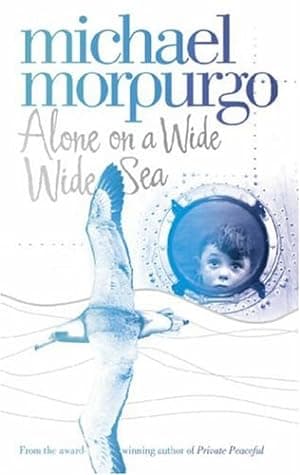
Synopsis
Covers the whole plot, including the ending.
- Difficulty
- Medium
- Pacing
- Moderate
- Mood
- Heartwarming, Poignant, Adventurous, Resilient
- Read it if
- You enjoy poignant historical fiction about resilience, family, and the power of the human spirit, especially stories involving sea voyages and the search for identity.
- Skip it if
- You prefer fast-paced thrillers or stories without significant emotional challenges and historical hardship.
Alone on a Wide Wide Sea Plot Summary
Covers the whole plot, including the ending.
A Farewell to England: Arthur's Orphaned Journey
The story begins with Arthur Hobhouse, an orphaned boy, remembering leaving England. After World War II, at age six, he is put on a ship for Australia as part of the Child Migrant Scheme, with many other children. He remembers the grey, drizzly day in Liverpool, the gulls, and the sad cranes. He is separated from his younger sister, Kitty, who is too young to travel with him and is sent to another orphanage. Arthur feels a deep sense of loss, holding onto the memory of Kitty and his vague memories of England. His journey on the ship, the 'Orontes', shows the shared confusion and sadness of the other child migrants and the unknown future.
Life at the Bindoon Boys' Home
When he arrives in Australia, Arthur is sent to the Bindoon Boys' Home in Western Australia, a remote place run by the Christian Brothers. Life there is hard. The boys do hard labor, live in poor conditions, and are often physically and emotionally abused by the Brothers. Arthur finds comfort in his friendship with two other boys, Martyn and Billy, and in his growing love for the sea, even though it is far away. He dreams of escaping and returning to England to find Kitty. The harshness of Bindoon takes away much of his childhood innocence, making him grow up quickly and rely on his strength and his friends to survive.
Escape and a New Life with the Dawsons
After several years at Bindoon, Arthur and his friends, Martyn and Billy, escape. They walk for days through the Australian bush, facing hunger and exhaustion. A kind farming couple, the Dawsons, find them and take them in. The Dawsons give Arthur his first experience of a loving home, very different from the orphanage. He learns about farming, enjoys family life, and begins to heal from his past. This time helps Arthur grow, as he experiences genuine care and responsibility, though the memory of Kitty and the sea never leaves him.
The Call of the Sea and the War
Despite the comfort from the Dawsons, Arthur's love for the sea eventually calls to him. He leaves the farm to work on a fishing boat, finding peace and purpose on the ocean. His life changes again with the start of World War II. Driven by duty and a desire for adventure, Arthur joins the Royal Australian Navy. He serves as a signalman, seeing the horrors of war but also the friendship of his fellow sailors. His time in the navy strengthens his connection to the sea and gives him a sense of belonging, even in a global conflict.
Meeting Sal and Building a Family
After the war, Arthur returns to Australia. He meets Sal, a kind nurse who shares his love for the sea. Sal's father owns a boat-building business, which is a good fit for Arthur's skills and passion. They fall in love and marry, building a life together in Australia. They have a daughter, Allie, who gets her father's deep connection to the ocean. Arthur finds happiness with his family, settling in Australia. He builds boats, a craft that lets him show his love for the sea and provide for his family, though the unspoken longing for his lost sister, Kitty, remains.
Allie's Childhood and the 'Kitty'
Allie grows up with the sea always present, learning to sail from a young age. Arthur, now an old man, decides to build a special boat for Allie, a ketch. He names it 'Kitty', a tribute to his lost sister. This boat represents his love for Allie and his hope and guilt about Kitty. He teaches Allie everything about the sea and sailing, giving her his passion and strength. The 'Kitty' is more than a boat; it symbolizes Arthur's life story, his past sadness, and his current joys, and is meant for Allie's own dreams and future adventures.
Arthur's Confession and Allie's Mission
As Arthur nears the end of his life, he tells Allie about his past as a child migrant and the sister he was separated from, Kitty. He shares the pain and regret he has carried for decades, his inability to find her, and his hope that she might still be alive in England. This news greatly affects Allie. Moved by her father's story and his lifelong burden, Allie decides to go on a journey. She plans to sail the 'Kitty' alone across the world's oceans, retracing her father's journey in reverse, to find her Aunt Kitty and bring closure to her father's life.
Allie's Epic Voyage
Allie begins her solo voyage on the 'Kitty', sailing from Australia towards England. Her journey has many challenges, including bad weather, loneliness, and the physical demands of navigating a large boat across oceans. She faces storms, calm seas, and the constant threat of the sea. Throughout her journey, Allie gets strength from her father's spirit and his love for the sea. She carefully records her journey, keeping a log and sending updates, knowing that her father, even in his final days, is following her progress with pride and hope. Her strength mirrors Arthur's own childhood journey, but with a different goal.
A Life Remembered: Arthur's Passing
While Allie is still at sea, Arthur's health worsens. He dies peacefully in Australia, having lived a long life. His last days are filled with the knowledge of Allie's brave voyage and the hope that she might find Kitty. Though he does not live to see the reunion, Arthur dies knowing that his daughter is continuing his legacy and fulfilling a quest that troubled him for a lifetime. His story, marked by strength, love, and loss, ends, leaving Allie to complete the final chapter of his life.
Arrival in England and the Search for Kitty
After a difficult and successful journey, Allie sails the 'Kitty' into an English port, completing her trip. She is met with media attention and a sense of accomplishment. Her arrival marks the end of her physical journey, but the emotional search to find Kitty is still ahead. With the little information her father gave her and her own determination, Allie starts the hard task of finding her aunt, looking through old records and institutions. Her search shows her the lasting impact of the child migrant schemes and the stories of other families separated by similar events.
The Reunion: Allie Finds Kitty
Through diligent searching and with help from various groups and people, Allie finds Kitty, who is now an elderly woman living in England. The reunion is very emotional, not just for Allie and Kitty, but for the reader, showing the mending of an old wound. Kitty, though surprised, is moved by the story of her brother Arthur and his lifelong search for her. Allie shares stories of Arthur's life, his love for the sea, and his memory of his sister. This meeting brings closure and healing, fulfilling Arthur's unspoken wish and uniting the two parts of the Hobhouse family.
Principal Figures
Arthur Hobhouse
Protagonist
An orphaned English boy sent to Australia, whose life is shaped by loss and the sea.
Arthur is the central protagonist, whose life story spans from his childhood as a child migrant in post-WWII England to his old age in Australia. He is resilient, resourceful, and deeply sensitive, carrying the trauma of separation from his sister, Kitty, and the abuse at Bindoon. Despite hardship, he finds solace and purpose in the sea, becoming a skilled sailor and boat builder. His love for his daughter, Allie, is profound, and his unspoken longing for Kitty drives the latter part of the narrative. He represents the many forgotten child migrants.
Relationships: Kitty Hobhouse (Younger sister, separated from him in childhood); Sal (Wife, shared love for the sea and boat building); Allie Hobhouse (Daughter, inherits his love for the sea and fulfills his lifelong quest); Martyn (Friend from Bindoon, fellow escapee); Billy (Friend from Bindoon, fellow escapee); Mr. and Mrs. Dawson (Kind farming couple who provide a temporary home and solace)
Allie Hobhouse
Protagonist
Arthur's daughter, who embarks on an epic solo voyage to find her aunt.
Allie is Arthur's spirited and determined daughter. She inherits her father's deep connection to the sea and his adventurous spirit. Upon learning of her father's past and his lost sister, she takes on the monumental task of sailing solo from Australia to England to find Kitty, driven by love and a desire for closure. She is courageous, skilled in sailing, and deeply empathetic, understanding the profound impact of her father's childhood trauma. Her journey represents hope and the healing power of familial connection.
Relationships: Arthur Hobhouse (Father, deeply loved and respected, whose story inspires her quest); Sal (Mother, supportive of her father's quest); Kitty Hobhouse (Aunt, whom she seeks to find)
Kitty Hobhouse
Supporting
Arthur's long-lost younger sister, separated from him in childhood.
Kitty is Arthur's younger sister, separated from him when he was sent to Australia. Her memory haunts Arthur throughout his life, representing his lost innocence and the profound impact of the child migrant scheme. Though her own story is not fully detailed, her existence and the search for her drive the latter part of the novel. When Allie finally finds her as an elderly woman in England, Kitty embodies the possibility of healing and the discovery of lost family connections, providing closure to Arthur's lifelong quest.
Relationships: Arthur Hobhouse (Older brother, separated from in childhood); Allie Hobhouse (Niece, who finds her after decades)
Sal
Supporting
Arthur's loving wife and Allie's mother, who shares a love for the sea.
Sal is Arthur's wife and Allie's mother. She is a kind, supportive, and understanding woman who meets Arthur after the war. As a nurse, she possesses a compassionate nature. Her father's boat-building business provides Arthur with a new sense of purpose and a stable life. Sal shares Arthur's love for the sea and is instrumental in creating a loving home for him, helping him to heal from his past traumas, even if she doesn't fully know the depth of his pain until much later. She represents stability and unconditional love in Arthur's life.
Relationships: Arthur Hobhouse (Husband, deeply loved and supported); Allie Hobhouse (Daughter, whom she supports in her quest)
Martyn
Supporting
Arthur's close friend from the Bindoon Boys' Home.
Martyn is one of Arthur's closest friends at the Bindoon Boys' Home. He shares the brutal experiences of the orphanage with Arthur and Billy. Their shared suffering forges a strong bond of camaraderie and loyalty. Martyn is part of the escape from Bindoon and later lives with Arthur at the Dawsons' farm. His friendship provides Arthur with crucial emotional support and a sense of belonging during his darkest years, highlighting the importance of friendship in overcoming adversity.
Relationships: Arthur Hobhouse (Close friend and fellow orphan); Billy (Friend and fellow orphan)
Billy
Supporting
Another friend of Arthur's from the Bindoon Boys' Home.
Billy is another of Arthur's friends at Bindoon, sharing the same harsh experiences as Arthur and Martyn. He is also part of their escape from the orphanage and finds temporary refuge with them at the Dawsons' farm. Billy, like Martyn, represents the shared trauma and resilience of the child migrants at Bindoon. His presence reinforces the theme of friendship and solidarity in the face of institutional cruelty, providing Arthur with a vital support system during his most vulnerable years.
Relationships: Arthur Hobhouse (Friend and fellow orphan); Martyn (Friend and fellow orphan)
Mr. and Mrs. Dawson
Supporting
The kind farming couple who shelter Arthur and his friends after their escape.
The Dawsons are a compassionate farming couple who discover Arthur, Martyn, and Billy after their escape from Bindoon. They offer the boys a safe haven, food, and genuine kindness, providing Arthur with his first experience of a loving family environment since leaving England. Their home offers a stark contrast to the brutality of Bindoon, allowing Arthur to begin healing and learn new skills in farming. They represent the unexpected kindness and humanity that can be found even in harsh circumstances.
Relationships: Arthur Hobhouse (Temporary guardians and benefactors); Martyn (Temporary guardians and benefactors); Billy (Temporary guardians and benefactors)
Christian Brothers
Antagonist
The abusive caretakers at the Bindoon Boys' Home.
The Christian Brothers are the figures in charge of the Bindoon Boys' Home. They are portrayed as cruel, abusive, and neglectful, subjecting the child migrants to harsh labor, poor living conditions, and frequent physical and psychological punishment. They represent the institutional failure and systemic abuse within the Child Migrant Scheme. Their actions deeply traumatize Arthur and the other boys, leaving lasting scars and driving Arthur's desperate desire for freedom. They are the primary antagonistic force in Arthur's early life.
Relationships: Arthur Hobhouse (Abusers and captors); Martyn (Abusers and captors); Billy (Abusers and captors)
Themes & Insights
Loss and Separation
The theme of loss and separation is central to the novel, mainly through Arthur's experience as a child migrant. His separation from his sister, Kitty, at a young age leaves a lasting mark and drives his search for reunion. This theme also explores the loss of his homeland, England, and the loss of childhood due to the harsh conditions at Bindoon. The emotional impact of these separations drives Arthur's character and Allie's journey.
“That is all I remember of England! When orphaned Arthur Hobhouse is shipped to Australia after WW II he loses his sister, his country and everything he knows.”
Resilience and Survival
Arthur's life shows human endurance. From the harsh conditions at Bindoon Boys' Home, to escaping into the Australian bush, and serving in the navy, he consistently shows a strong will to survive. His ability to find comfort in the sea and build a new life with Sal and Allie shows his ability to overcome trauma and adapt to new situations. Allie's solo voyage across the world's oceans further supports this theme, as she faces challenges to fulfill her father's dream.
“The coming years will test him to his limits, as he endures mistreatment, neglect and forced labour in the Australian outback. But Arthur is also saved, again and again, by his love of the sea.”
The Healing Power of the Sea
The sea is a source of comfort, healing, and identity for both Arthur and Allie. For Arthur, it is always present from his departure from England, a way to escape the hardships of Bindoon, and later, his work and passion as a fisherman and boat builder. The ocean gives him peace and purpose. Allie gets this deep connection, and her solo voyage on the 'Kitty' is not just a physical journey but a spiritual one, allowing her to connect with her father's spirit and find her own strength.
“But Arthur is also saved, again and again, by his love of the sea.”
Family and Belonging
The novel explores the human need for family and belonging. Arthur's lifelong longing for his sister Kitty comes from the disruption of his original family. His experiences at Bindoon show the absence of a loving family, while the Dawsons offer a temporary sense of belonging. The family he builds with Sal and Allie gives him happiness and roots in Australia. Allie's search for Kitty ultimately represents the repair of a broken family, bringing closure and a sense of completeness.
“Now Allie has a boat that will take her to England solo, across the world's roughest seas, in search of her father's long-lost sister! Will the threads of Arthur's life finally come together?”
The Legacy of the Past
The novel shows how the past, especially traumatic experiences, continues to shape people and generations. Arthur's childhood as a child migrant greatly affects his entire life, influencing his choices, his love for the sea, and his longing for Kitty. His decision to build the 'Kitty' for Allie and finally tell her about his past directly leads to Allie's journey. The book shows that while the past can be painful, acknowledging it is important for healing and for future generations to find closure.
“Now, at the end of his life, Arthur has built a special boat for his daughter Allie, whose love of the sea is as strong and as vital as her father's.”
Plot Devices & Literary Techniques
Dual Narrative / Framed Story
The story is told primarily through Arthur's memories, framed by Allie's contemporary quest.
The novel employs a dual narrative structure, where Arthur's life story is recounted in the first person, covering his childhood, war experiences, and family life in Australia. This is framed by Allie's contemporary narrative, also in the first person, detailing her decision to sail to England and her solo journey. This allows the reader to experience Arthur's past directly while simultaneously following Allie's quest to complete his unfinished business, weaving together past and present to create a cohesive and emotionally resonant story.
The 'Kitty' Boat
A symbolic ketch representing Arthur's love, loss, and hope for reunion.
The boat named 'Kitty' is a powerful symbol throughout the novel. Built by Arthur for his daughter Allie, it embodies his enduring love for his lost sister, his passion for the sea, and his hopes for Allie's future. It is the vessel for Allie's epic journey, literally carrying the weight of Arthur's past and the hope for familial reunion. The boat's construction and its subsequent voyage are central to the plot, serving as a tangible link between Arthur's past trauma and Allie's quest for closure.
The Sea as a Metaphor
The ocean represents freedom, solace, challenge, and the passage of time.
The sea is not merely a setting but a recurring metaphor. For Arthur, it symbolizes freedom from the confines of Bindoon, a source of peace amidst turmoil, and a connection to his lost home. It also represents the vastness of the world and the distance separating him from Kitty. For Allie, the sea represents challenge, self-discovery, and the continuation of her father's spirit. Its unpredictable nature mirrors the unpredictability of life, and its boundless expanse reflects the depth of human emotion and longing.
Flashback and Memory
Arthur's story unfolds through his detailed recollections, triggered by his present-day reflections.
Arthur's narrative is heavily reliant on flashback and memory. The entire account of his childhood as a child migrant, his time at Bindoon, and his early adulthood is presented as his personal recollection, shared with Allie or reflected upon as he nears the end of his life. This device allows the author to gradually reveal the depth of Arthur's trauma and the driving forces behind his actions, building empathy and understanding for his lifelong search for his sister.
The Child Migrant Scheme
A historical context that serves as the foundation for Arthur's entire life story.
The Child Migrant Scheme is a real historical event that forms the foundational plot device of the novel. It is the catalyst for Arthur's entire journey, his separation from Kitty, and his subsequent traumatic experiences. By centering the story around this historical context, Morpurgo sheds light on a dark chapter of British and Australian history, giving voice to the thousands of children who were forcibly relocated and often suffered abuse. This historical backdrop lends authenticity and emotional weight to Arthur's personal narrative.
Alone on a Wide Wide Sea Quotes
“There was a war on, and I was going to be sent away. That was all I knew.”
“Every child has a right to be safe. That's what Mrs. Henderson always said.”
“The sea was all around us, and it felt like the whole world was just us.”
“You're a brave boy, Arthur. Remember that. You've got a good heart.”
“The ship was a great beast, and we were just little ants crawling on its back.”
“It was just a dream, but it felt so real. The sound of the waves, the smell of the salt.”
“I wasn't alone. Not really. I had the sea, and the sky, and all the stars.”
“Sometimes, the smallest things can give you the most hope.”
“The sea gives and the sea takes away. It's always been that way.”
“Fear can make you do strange things, but it can also make you strong.”
“Every day was a new battle. A battle against the sea, against hunger, against despair.”
“I learned more about myself on that little raft than I ever did in London.”
“The world keeps turning, even when you think yours has stopped.”
“Home isn't just a place. It's the people you love, and the memories you carry.”
Quiz
10 questions on the plot and the characters. Each answer comes with a short explanation.
Question 1
What is the primary reason Arthur Hobhouse is sent to Australia after WWII?
- He volunteered for a government program to populate Australia.
- He was an orphaned child sent as part of a child migration scheme.
- His parents were Australian and he was returning home.
- He was being sent to live with distant relatives.
Show answer
B. He was an orphaned child sent as part of a child migration scheme. The book description clearly states that Arthur is 'orphaned' and 'shipped to Australia after WW II', indicating he was part of a post-war child migration scheme.
Question 2
What specific item does Arthur build for his daughter Allie at the end of his life?
- A house by the sea
- A special boat
- A collection of his life's memories
- A new life in England
Show answer
B. A special boat The text states, 'Now, at the end of his life, Arthur has built a special boat for his daughter Allie.'
Question 3
What is Allie's main goal for using the boat her father built?
- To start a fishing business in Australia.
- To sail around the world for adventure.
- To sail to England solo in search of her father's long-lost sister.
- To honor her father's memory by keeping the boat docked.
Show answer
C. To sail to England solo in search of her father's long-lost sister. Allie's purpose is explicitly stated: 'Now Allie has a boat that will take her to England solo, across the world's roughest seas, in search of her father's long-lost sister!'
Question 4
What recurring element provides solace and saves Arthur 'again and again' throughout his difficult years in Australia?
- His memories of his sister
- His love of the Australian outback
- His love of the sea
- Friendships he made on the ship
Show answer
C. His love of the sea The description highlights, 'But Arthur is also saved, again and again, by his love of the sea.'
Question 5
How does Arthur's life begin to 'come together' after enduring hardship in Australia?
- He inherits a fortune from an unknown relative.
- He finds his long-lost sister in Australia.
- He meets a nurse whose father owns a boat-building business.
- He returns to England and rebuilds his life there.
Show answer
C. He meets a nurse whose father owns a boat-building business. The text explains, 'And when he meets a nurse whose father owns a boat-building business, all the pieces of his broken life come together.' This suggests a connection between his passion for the sea and his personal relationships.
Question 6
What specific challenges does Arthur face during his time in the Australian outback?
- Extreme weather and animal attacks.
- Mistreatment, neglect, and forced labour.
- Loneliness and a lack of educational opportunities.
- Difficulty adapting to the local culture and language.
Show answer
B. Mistreatment, neglect, and forced labour. The description explicitly states he 'endures mistreatment, neglect and forced labour in the Australian outback.'
Question 7
What is the implied emotional state of the children leaving Liverpool, based on the opening paragraph?
- Excited and hopeful for a new adventure.
- Silent and somber, reflecting a sense of loss.
- Angry and defiant about being sent away.
- Curious about their destination.
Show answer
B. Silent and somber, reflecting a sense of loss. The text states, 'None of us spoke. It was a grey day with drizzle in the air, the great sad cranes bowing to the ship,' indicating a quiet, melancholic departure.
Question 8
The book's title, 'Alone on a Wide Wide Sea,' most directly reflects which aspect of Arthur's early experience?
- His literal journey across the ocean.
- His profound sense of isolation and loss after being separated from his sister and country.
- His future career as a sailor navigating vast waters.
- The overwhelming vastness of the Australian landscape.
Show answer
B. His profound sense of isolation and loss after being separated from his sister and country. While he does travel the sea, the title more profoundly symbolizes his emotional state of being 'orphaned' and losing 'his sister, his country and everything he knows,' leading to a deep sense of loneliness and disconnection in a vast, unknown world.
Question 9
What is the overarching question posed at the end of the book's summary, suggesting a key thematic resolution?
- Will Allie successfully navigate the rough seas?
- Will Arthur ever return to England?
- Will the threads of Arthur's life finally come together?
- Will Allie find happiness in her own life?
Show answer
C. Will the threads of Arthur's life finally come together? The summary concludes with the direct question: 'Will the threads of Arthur's life finally come together?' This encapsulates the central theme of resolution and finding completeness after a life of fragmentation and loss.
Question 10
How does the narrative structure imply a connection between Arthur and Allie's love for the sea?
- Allie learns to sail from her father during her childhood.
- Arthur's love of the sea saves him, and Allie's love of the sea is described as 'as strong and as vital as her father's.'
- Both characters become professional sailors.
- They both build their own boats independently.
Show answer
B. Arthur's love of the sea saves him, and Allie's love of the sea is described as 'as strong and as vital as her father's.' The text explicitly states, 'whose love of the sea is as strong and as vital as her father's,' directly linking their shared passion as a significant inherited trait or bond.
Alone on a Wide Wide Sea FAQ
What is "Alone on a Wide Wide Sea" about?
"Alone on a Wide Wide Sea" tells the story of Arthur Hobhouse, an orphan sent from post-WWII England to Australia as a child migrant. It chronicles his harsh experiences of forced labor and neglect in the Australian outback, his enduring love for the sea, and his eventual journey to find healing and build a family, culminating in his daughter Allie's quest to find his long-lost sister.
Why should I read "Alone on a Wide Wide Sea"?
You should read this book for its poignant exploration of resilience, the enduring power of family, and the search for identity amidst immense hardship. It offers a moving historical account of the child migrant scheme, balanced with themes of hope, the healing power of nature (specifically the sea), and the profound bond between father and daughter.
What is the background/setting of "Alone on a Wide Wide Sea"?
The story is primarily set in post-WWII England and Australia, specifically detailing the harsh conditions of the Australian outback where Arthur Hobhouse endures forced labor and neglect as a child migrant. It also features significant time spent on the open sea, reflecting Arthur's lifelong connection to it, and later in coastal Australia where he builds his life.
What are the most memorable quotes?
While specific quotes are not provided in the summary, the opening lines, "That is all I remember of England!" powerfully encapsulate Arthur's traumatic separation from his homeland. The recurring motif of "alone on a wide wide sea" itself serves as a memorable metaphor for Arthur's journey of isolation and eventual connection.
What writing style does the author use?
Michael Morpurgo employs a lyrical and evocative writing style, often told from a reflective, first-person perspective (implied through Arthur's narration and Allie's quest). The language is accessible yet deeply emotional, suitable for young adult readers, blending historical detail with personal introspection and vivid descriptions of both hardship and beauty, particularly the sea.
What minor details add significant meaning?
The detail of the 'gulls wheeling and crying over our heads, calling good-bye' and the 'great sad cranes bowing to the ship' on Arthur's departure from Liverpool aren't just descriptive; they personify nature and industry mirroring his profound, unspoken grief and the finality of his departure, setting a melancholic tone for his early life.
What are some subtle foreshadowing moments?
Arthur's innate "love of the sea" from his earliest days subtly foreshadows its pivotal role in his salvation, his career, and ultimately, the legacy he passes to Allie. It suggests that despite all his losses, this constant element will be the thread that eventually helps him piece his broken life together and connect him to his daughter's future quest.
What unexpected character connections exist?
The most significant unexpected connection is Arthur's meeting with a nurse whose father owns a boat-building business. This seemingly coincidental encounter is crucial; it not only provides Arthur with a path to stability and a career aligned with his passion but also leads to his future family, directly enabling Allie's later voyage and quest.
What are unspoken character motivations?
Arthur's unspoken motivation throughout his early hardships is a deep-seated desire for belonging and a yearning for the family he lost. While he endures mistreatment, his resilience is driven by an internal hope to find a place where he is loved and secure, often projected onto his love for the sea as a symbol of freedom and escape.
What psychological complexities do characters exhibit?
Arthur exhibits complex psychological responses to trauma, including a deep-seated sense of loss and abandonment, yet also an incredible capacity for resilience and hope. His enduring connection to the sea can be seen as a coping mechanism, a source of solace and identity that helps him navigate his fragmented past and build a future.
What are the major emotional turning points?
A major emotional turning point is Arthur's encounter with the nurse and her boat-building father, as it shifts his trajectory from one of perpetual hardship and rootlessness to finding purpose, love, and a family. Another is his decision to build a special boat for Allie, signifying his healing and his desire to empower her quest to complete his life story.
How do relationship dynamics evolve?
Arthur's initial relationship dynamics are characterized by profound loss (his sister, his country) and abusive power imbalances (forced labor). Over time, his relationship with the sea evolves from a solitary comfort to a shared passion with his daughter, Allie, transforming into a deep, empowering bond that transcends generations and drives her own journey.
Which parts remain ambiguous or open-ended?
The ultimate success of Allie's mission to find Arthur's long-lost sister remains open-ended at the book's summary conclusion. While she embarks on the journey, the outcome of her search and whether the threads of Arthur's life 'finally come together' in that specific way is left for the reader to discover within the full narrative.
What are controversial scenes or decisions?
The most controversial aspect, though not a specific 'scene' in the summary, is the historical context of the child migrant scheme itself, which saw thousands of British children like Arthur sent overseas, often enduring horrific conditions. Arthur's forced labor and mistreatment highlight the ethical failures and profound human cost of such policies.
Alone on a Wide Wide Sea ending explained: how it ends & what it means
The summary ends with Arthur, at the end of his life, having built a special boat for his daughter Allie, whose love for the sea mirrors his own. Allie embarks on a solo voyage to England, across the world's roughest seas, to find Arthur's long-lost sister. The ending signifies the enduring power of family bonds, the healing of generational trauma through shared purpose, and the hope that Allie's journey will bring final closure and connection to Arthur's fragmented past.
About the author

Michael Morpurgo is a British author known for his children's fiction, often exploring themes of war and nature. His notable works include "War Horse," "Private Peaceful," "The Butterfly Lion," "An Elephant in the Garden," "The Amazing Story of Adolphus Tips," and "Born to Run." Morpurgo's storytelling often combines historical events with imaginative narratives.
Similar books
- The Voyage of the Dawn Treader
C.S. Lewis
4.1 (395k) average on GoodreadsFantasyFeatures a significant sea journey and themes of discovery and personal growth, suitable for young readers.
- Number the Stars
Lois Lowry
4.2 (448k) average on GoodreadsChildren'sLowry's book focuses on resistance and immediate danger within Nazi-occupied Denmark, emphasizing themes of bravery and friendship. Morpurgo's work, conversely, highlights the vast geographical and emotional displacement and the internal struggle of a child evacuee seeking a new home and identity, a focus more on the aftermath and long-term separation rather than direct resistance.
- The Little White Horse
Elizabeth Goudge
4.1 (11k) average on GoodreadsFantasyGoudge's novel, while also set during wartime, is largely fantastical and offers an escapist narrative with magical elements. Morpurgo's "Alone on a Wide Wide Sea" is firmly rooted in the harsh realities of historical trauma and the personal costs of war, providing a more grounded and emotionally direct engagement with the historical context rather than a fantastical diversion.
- Harry Potter and the Sorcerer's Stone
J.K. Rowling
4.5 (7M) average on GoodreadsFantasyRescued from a miserable life under the stairs, an orphaned boy discovers he's a wizard destined for a magical school, where he uncovers a dangerous secret tied to the dark wizard who murdered his parents.
- The Hobbit, or There and Back Again
J.R.R. Tolkien
4.3 (2.9M) average on GoodreadsFantasyA comfort-loving hobbit named Bilbo Baggins is whisked away by a mischievous wizard and a band of dwarves on an unexpected journey to reclaim stolen treasure from a fearsome dragon, discovering courage and a magical ring along the way.
- Harry Potter and the Goblet of Fire
J.K. Rowling
4.6 (2.6M) average on GoodreadsFantasyA bewildered Harry Potter, underage and thrust into a deadly Triwizard Tournament, must brave dragons, mermaids, and a resurgent dark magic to survive a year that will forever alter the wizarding world.





Enjoyed the summary?
A summary gives you the shape of the book. The book itself has the detail, the examples and the voice.
Find Alone on a Wide Wide Sea on AmazonAs an Amazon Associate, BookBrief earns from qualifying purchases. How we're funded