
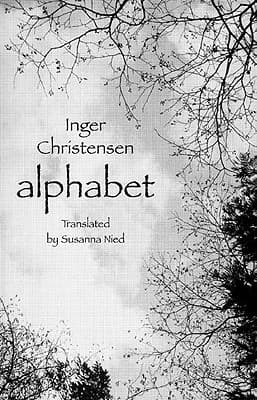
Synopsis
Covers the whole plot, including the ending.
- Difficulty
- Hard
- Pacing
- Slow
- Mood
- Philosophical, Meditative, Contemplative, Ethereal, Profound
- Read it if
- You appreciate highly structured, philosophical poetry that blends natural imagery with abstract concepts and mathematical principles.
- Skip it if
- You prefer narrative-driven works or poetry that is more free-form and less intellectually demanding.
alphabet Plot Summary
Covers the whole plot, including the ending.
a: apricot trees exist
The first section, for 'a' and the first Fibonacci number (1), introduces the core idea: 'apricot trees exist, apricot trees exist.' This statement repeats, highlighting a simple truth about nature. It sets a tone of quiet observation and affirmation. The language is simple and direct, focusing on the trees' physical presence. This initial statement builds the foundation for the poem's later, more complex philosophical explorations, rooting abstract ideas in tangible reality. It establishes the poem's structure, connecting alphabetical order with a numerical sequence, creating a sense of order and organic growth.
b: blackberries and blind nettles
Moving to 'b' and the second Fibonacci number, the poem lists 'blackberries exist, and blind nettles exist.' This continues the declarative style but introduces a subtle contrast. Blackberries represent natural sweetness, while blind nettles suggest a less friendly side of nature, or at least one needing careful interaction. The repetition reinforces the idea of undeniable existence. This section broadens the scope of the natural world being listed, hinting at its complexity and varied textures, preparing the reader for deeper explorations of existence beyond mere presence.
c: cicadas and chlorophyll
With 'c,' the poem includes 'cicadas exist, and chlorophyll exists.' Here, the focus shifts from static objects to dynamic elements: the sound of cicadas and the process of photosynthesis. Cicadas bring an auditory dimension, a hum of life, while chlorophyll points to the essence of plant life and energy conversion. This deepens the poem's engagement with nature, moving beyond simple observation to an appreciation of underlying mechanisms and sensory experiences. The pairing of sound and biochemical process shows how life's various forms and functions connect.
d: doves and death
The 'd' section is important, introducing 'doves exist, and death exists.' This is the first clear mention of mortality within the poem's growing list of existence. Doves, symbols of peace and life, are immediately followed by the reality of death. This sudden introduction of a destructive force contrasts sharply with earlier, more pleasant natural observations. It breaks the initial innocence and sets a darker tone for later sections, forcing a confrontation with the fragility in the beautiful world described. This contrast is central to the poem's evolving themes.
e: everything and eternity
Under 'e,' the poem broadens its scope to include 'everything exists, and eternity exists.' This move from concrete natural elements to abstract concepts shows a profound shift. 'Everything' tries to capture the totality of existence, while 'eternity' introduces timelessness, hinting at a reality beyond temporal limits. This section elevates the poem's philosophical inquiry, prompting reflection on reality itself and the limits of human perception. It suggests that existence is not just a collection of separate objects but a continuous, boundless phenomenon, including both the tangible and the conceptual.
f: fear and future
The 'f' section includes 'fear exists, and future exists.' This marks a significant turn towards human experience and time. Fear, a personal emotion, is directly linked to the future, suggesting an inherent anxiety about what lies ahead. This section grounds the poem in a more human perspective, moving away from purely objective observations of nature. It introduces vulnerability and uncertainty, hinting at potential suffering and the unknown, which will become more pronounced as the poem moves into darker reflections on destruction and war.
g: gas and the global village
With 'g,' the poem notes 'gas exists, and the global village exists.' This marks a clear shift from natural phenomena to human creations and their consequences. 'Gas' can mean many things—from natural gas to poison gas—introducing a hidden threat and the potential for technological harm. 'The global village' acknowledges modern society's interconnectedness, but also its vulnerability and the widespread impact of destructive forces. This section places the poem more firmly in the context of human civilization and its advancements, but also its dangers, setting the stage for later reflections on war and environmental damage.
h: hydrogen bomb and horror
The 'h' section is a clear and chilling statement: 'hydrogen bomb exists, and horror exists.' This is a direct confrontation with humanity's ability to destroy itself. The hydrogen bomb, a symbol of ultimate technological annihilation, brings earlier hinted fears and destructive potentials into sharp focus. 'Horror' is the emotional response to such a threat, capturing the deep dread it causes. This section represents a major thematic shift, from the initial celebratory list of existence to a somber reflection on its fragility and the constant shadow of human-made disaster.
i: ice ages and infinity
The 'i' section broadens the temporal scope to 'ice ages exist, and infinity exists.' This pairing places human concerns, including the hydrogen bomb, within a vast cosmic and geological framework. Ice ages represent natural cycles of destruction and renewal on an epochal scale, reminding the reader of forces beyond human control. Infinity, an abstract concept of endlessness, further lessens the perceived permanence of human efforts. This section offers perspective, suggesting that while human destruction is terrifying, it is also part of a larger, more enduring universe, capable of both immense creation and destruction.
j: jellyfish and jealousy
With 'j,' the poem notes 'jellyfish exist, and jealousy exists.' This section shifts back to a more concrete, yet evocative, pairing. Jellyfish are ancient, short-lived sea creatures, embodying a basic form of existence. Jealousy, on the other hand, is a human, often destructive emotion, reflecting inner turmoil. The pairing is intriguing, perhaps suggesting the widespread nature of both simple life forms and complex psychological states. It subtly reinforces the idea that the world contains a vast range of phenomena, from the biologically basic to the emotionally intricate, all existing at the same time.
k: krypton and knowledge
The 'k' section includes 'krypton exists, and knowledge exists.' Krypton, a noble gas, represents the tangible, scientific elements of the universe, discovered by human intellect. Knowledge, as an abstract concept, signifies humanity's quest to understand the world. This pairing highlights the interplay between the physical universe and the human mind's ability to grasp it. It acknowledges the power of scientific discovery but also implies the vastness of what remains unknown, or the potential for knowledge to be misused, especially given earlier mentions of destructive technologies like the hydrogen bomb.
l: light and language
With 'l,' the poem declares 'light exists, and language exists.' Light is basic to perception, allowing us to see and experience the world. Language is basic to communication, allowing us to express and share our understanding of existence. This pairing highlights the essential tools humanity uses to interact with and interpret reality. It implicitly acknowledges the poem itself as an act of language, trying to illuminate and organize the vastness of existence. This section reinforces the idea that these basic elements are not just present, but are also crucial for the act of knowing and being.
m: mushrooms and memory
The 'm' section includes 'mushrooms exist, and memory exists.' Mushrooms represent a mysterious part of nature, growing from decay and having their own life cycles. Memory, a core human ability, allows for the retention and recall of past experiences, shaping identity and understanding. This pairing might suggest the cyclical nature of life and death, as mushrooms often thrive on decomposition, and memory allows the past to live on. It further enriches the poem's depiction of existence, blending biological phenomena with the workings of the human mind.
n: nitrogen and nightingales
In the 'n' section, the poem states 'nitrogen exists, and nightingales exist.' Nitrogen is a basic chemical element, essential for all life, representing the unseen building blocks of the universe. Nightingales, on the other hand, are known for their beautiful song, embodying the audible beauty and vitality of nature. This pairing contrasts the microscopic, essential components of life with its most exquisite manifestations. It reinforces the idea that existence includes both the fundamental and the sublime, the invisible and the overtly beautiful, all connected.
o: ozone and oblivion
The 'o' section, where the Fibonacci sequence becomes quite long, offers 'ozone exists, and oblivion exists.' Ozone, vital for protecting Earth's life from harmful radiation, represents a fragile, life-sustaining layer. Oblivion, the state of being forgotten or destroyed, stands as its opposite. This pairing resonates deeply with the poem's earlier discussions of destruction and fear. It shows the precarious balance between protection and annihilation, suggesting that the very elements that sustain life are constantly threatened by total erasure, both environmentally and existentially.
alphabet Characters
The Narrator/Poetic Voice
Protagonist
The observing and cataloging consciousness that guides the poem's exploration of existence.
The narrator is not a character in the traditional sense, but rather the implied consciousness behind the poem's declarations. This voice is observational, almost detached, yet deeply engaged with the act of naming and affirming existence. It moves from simple, concrete observations to complex philosophical and existential statements, reflecting a mind grappling with the vastness and fragility of the world. The voice is both precise and expansive, carefully selecting words to build a cumulative vision. It doesn't express overt emotions but conveys a profound sense of wonder, dread, and contemplation through its choice of subject matter and structure.
Apricot Trees
Symbolic Element
The initial, foundational symbol of natural, undeniable existence.
Apricot trees are not characters but serve as the foundational element of the poem's world. They are introduced in the very first line as an irrefutable fact: 'apricot trees exist.' They symbolize simple, tangible, and beautiful natural existence, untouched by human intervention or decay. Their repeated affirmation sets the tone for the poem's initial, almost psalmic, cataloging of the world. They represent the baseline of reality, a peaceful and fertile starting point from which the poem gradually expands to encompass more complex and troubling aspects of existence. Their presence grounds the abstract structure in something concrete and organic.
Death
Antagonist/Thematic Force
The inevitable end of existence, introduced as a stark reality within the poem's inventory.
Death is presented not as a character, but as an undeniable force of nature and an existential reality, explicitly stated as 'death exists.' Its introduction marks a critical turning point in the poem, shattering the initial idyllic catalog of natural beauty. It serves as an antagonist to the simple affirmation of life, injecting a somber, unsettling tone. Death represents the fragility of all existing things, the ultimate limit, and the shadow that looms over even the most beautiful aspects of the world. Its presence forces the reader to confront mortality and the potential for erasure, both individual and collective, preparing the ground for the poem's later reflections on human-made destruction.
Hydrogen Bomb
Antagonist/Symbolic Element
The ultimate symbol of human-made destruction and the poem's most potent antagonist.
The hydrogen bomb is the most direct and terrifying antagonist in the poem, explicitly named as 'hydrogen bomb exists.' It symbolizes humanity's capacity for technological self-annihilation and represents the apex of destructive power. Unlike natural death, the hydrogen bomb is a creation of human intellect, making its existence a profound moral and existential crisis. Its mention irrevocably shifts the poem's focus from natural cycles to the potential for human-engineered catastrophe. It embodies the 'horror' that immediately follows its declaration, serving as a stark warning and a testament to the dark side of human progress, threatening to undo all the beautiful existence cataloged before it.
Fear
Thematic Force
A pervasive human emotion, linked to the future and the threat of destruction.
Fear is an abstract concept, but it functions almost as a character in its pervasive influence. Declared as 'fear exists,' it represents the human psychological response to the threats and uncertainties of existence, particularly those associated with the future and the potential for destruction. It humanizes the poem's otherwise objective catalog, introducing a subjective, emotional dimension. Fear is the underlying current that runs through the poem's darker sections, connecting the natural phenomenon of death to the human-made horror of the hydrogen bomb. It highlights the vulnerability of human experience and the anxiety inherent in contemplating a fragile future.
Oblivion
Thematic Force
The ultimate state of non-existence or utter erasure, a counterpoint to existence itself.
Oblivion, explicitly stated as 'oblivion exists,' is a powerful thematic force, representing the complete absence of memory, existence, or recognition. It stands as the ultimate antithesis to the poem's foundational premise of 'existence.' While death signifies an end, oblivion suggests an utter erasure, a state where even the memory of what was is lost. It is a terrifying prospect that intensifies the dread introduced by death and the hydrogen bomb. Oblivion challenges the very meaning of existence, suggesting that everything cataloged in the poem, no matter how beautiful or profound, could ultimately be swallowed by nothingness.
Light
Symbolic Element
A fundamental element of perception and knowledge, enabling the awareness of existence.
Light, proclaimed as 'light exists,' is a critical symbolic element in the poem. It represents not only physical illumination, making the world visible, but also metaphorical enlightenment, understanding, and knowledge. It is essential for perception and comprehension, allowing the poetic voice (and the reader) to observe and categorize the vast array of existing things. In a poem that grapples with both the beauty and darkness of existence, light stands as a constant, necessary force that enables awareness and the possibility of discerning truth. It implies clarity and the potential for hope, even amidst the shadows of destruction.
Language
Thematic Force/Tool
The medium through which existence is articulated, cataloged, and understood.
Language, declared as 'language exists,' is not a character but a foundational tool and thematic force within the poem. It is the very means by which the poem itself is constructed, allowing the poetic voice to name, categorize, and reflect upon existence. Language enables the articulation of both the beautiful and the terrifying aspects of the world. It is the framework that gives form to the otherwise inchoate experience of being. The poem's structured use of language, particularly its repetitive declarative sentences and alphabetical progression, highlights language's power to create order, meaning, and a sense of shared reality, even when confronting the ineffable.
alphabet Themes
The Fragility and Resilience of Existence
The poem creates a world through a list of existing things, from apricot trees and cicadas to hydrogen bombs and oblivion. This dual nature of existence—its beauty and its vulnerability to destruction—is a main theme. Early sections celebrate the simple fact of being, but this beauty is shadowed by the introduction of death, fear, and human-made threats like the hydrogen bomb. The poem doesn't offer easy answers but holds these opposing forces in tension, suggesting that existence is a delicate balance, constantly on the edge of both flourishing and annihilation. The cyclical nature of the Fibonacci sequence and the alphabet itself might imply resilience, a continuous unfolding even when destruction occurs.
“apricot trees exist, apricot trees exist / ... / hydrogen bomb exists, and horror exists.”
The Interconnectedness of All Things
Christensen's poem, through its thorough and often surprising pairings, emphasizes how the natural world, human experience, and abstract concepts are deeply connected. From chlorophyll to the global village, from jellyfish to jealousy, the poem suggests that all these different elements are part of one large, existing whole. The structural reliance on the Fibonacci sequence, where each number builds from the previous ones, mirrors this idea of inherent connection and growth. Even seemingly unrelated items are placed together, suggesting that the universe is a complex web where everything, from the microscopic to the cosmic, influences and relates to everything else, forming a coherent, if sometimes terrifying, whole.
“cicadas exist, and chlorophyll exists / ... / everything exists, and eternity exists.”
The Power and Limits of Language
Language is not just the poem's medium; it is a central theme. The poem's structure—a declarative list of 'X exists' for each letter—highlights language's power to name, define, and bring things into conscious being. By asserting the existence of everything from 'apricot trees' to 'oblivion,' the poetic voice shows how language creates and organizes our understanding of the world. However, the vastness and complexity of existence, especially when facing concepts like 'infinity' or 'horror,' also reveal language's limits to fully capture reality. The poem's repetitive style suggests an attempt to grasp the ineffable through persistent naming, recognizing language as both a powerful tool and an imperfect vessel for truth.
“light exists, and language exists.”
Humanity's Capacity for Creation and Destruction
While the poem begins with natural wonders, it gradually introduces humanity's role as both creator and destroyer. The shift from natural elements to human creations like 'the global village' and especially the 'hydrogen bomb' highlights this theme. Humanity can build complex societies and advance knowledge, but also create tools for its own annihilation. The poem presents this duality without judgment, simply stating the facts of existence. The 'horror' associated with the hydrogen bomb links human innovation to profound suffering, forcing a confrontation with the ethical implications of human power and the dangers within our own species.
“gas exists, and the global village exists / ... / hydrogen bomb exists, and horror exists.”
The Nature of Time and Eternity
The poem deals with different scales of time, from the fleeting moment to geological epochs and eternity itself. The progression through the alphabet and the Fibonacci sequence creates a sense of unfolding time and accumulation. The introduction of 'future' and 'ice ages' expands the temporal scope, placing human concerns within a much larger cosmic context. 'Eternity' and 'infinity' represent concepts that go beyond human understanding of time, suggesting a boundless continuum that dwarfs individual lives and even civilizations. This theme invites reflection on our place in the universe, the impermanence of human endeavors, and the enduring, cyclical nature of existence beyond our immediate perception.
“everything exists, and eternity exists / ... / ice ages exist, and infinity exists.”
Plot Devices & Literary Techniques
Fibonacci Sequence
A mathematical sequence used to determine the length of each section, creating an organic, expanding structure.
The Fibonacci sequence (1, 1, 2, 3, 5, 8, 13, 21, 34, 55, 89, 144, 233, 377, 610, etc.) dictates the number of lines in each section of the poem, corresponding to the letters of the alphabet. For instance, 'a' has 1 line, 'b' has 1 line, 'c' has 2 lines, 'd' has 3 lines, 'e' has 5 lines, and so on. This mathematical progression creates a sense of organic growth and expansion, mirroring the unfolding of existence itself. It provides a rigid, yet natural, framework that allows the poem to accumulate complexity and depth as it progresses, moving from simple affirmations to vast, interconnected concepts. This device gives the poem its unique, almost architectural, form.
Alphabetical Progression
The use of the alphabet to structure the poem's thematic development and cataloging of existence.
Each section of the poem is dedicated to a letter of the alphabet, from 'a' to 'n' (or 'o' in some interpretations, though the full alphabet is not used). This device provides a clear, linear framework for the poem's cumulative exploration of existence. It allows for a systematic cataloging of disparate elements, moving from the concrete to the abstract, from the natural to the human-made. The alphabetical order creates a sense of encyclopedic ambition, attempting to encompass a vast array of existing things in an organized manner. This structure, combined with the Fibonacci sequence, underpins the poem's meticulous and expansive approach to its subject.
Anaphora (Repetition of 'X exists')
The repeated phrase 'X exists' that affirms the presence of each element, creating a declarative, incantatory tone.
The consistent use of the phrase 'X exists' or 'X exists, and Y exists' at the beginning of each line or stanza is a powerful anaphoric device. This repetition serves to relentlessly affirm the undeniable presence of each item, whether it's an apricot tree, a hydrogen bomb, or fear. It creates a declarative, almost liturgical or psalmic tone, lending authority and weight to each statement. This device is fundamental to the poem's cumulative effect, building a vast inventory of existence through simple, undeniable truths. It also highlights the act of naming as a form of creation or recognition, emphasizing the sheer fact of being.
Juxtaposition
The pairing of contrasting or seemingly unrelated elements to reveal deeper connections or tensions.
A core device in the poem is the juxtaposition of diverse elements within single lines or stanzas. For example, 'doves exist, and death exists' or 'jellyfish exist, and jealousy exists.' This pairing forces the reader to consider the relationship between seemingly disparate concepts or objects. It highlights the inherent dualities of existence—beauty and destruction, simplicity and complexity, nature and humanity. This device creates tension, reveals hidden connections, and underscores the poem's central theme of interconnectedness, suggesting that the world is a complex tapestry where contrasting elements coexist and inform each other.
Cataloging / Inventory
The systematic listing of numerous items, building a comprehensive, yet selective, picture of existence.
The entire poem functions as a vast catalog or inventory of existing things. From flora and fauna to abstract concepts and human technologies, the poem systematically lists elements that constitute reality. This device creates a sense of comprehensiveness and an attempt to encapsulate the whole of existence within the poem's framework. However, the selection of items is deliberate and thematic, guiding the reader from idyllic nature to the horrors of human destruction. The cataloging is not merely a list; it's a carefully curated journey through the multifaceted nature of being, inviting reflection on what it means for something 'to exist.'
alphabet Quotes
“The apple tree exists, and it is a fact that it is an apple tree.”
“Apricot trees exist, apricot trees exist.”
“Barbed wire exists, it is a fact that it is barbed wire.”
“Butterflies exist, they are facts, they flutter over the fields of clover.”
“Death exists, it is a fact that it is death.”
“Emptiness exists, it is a fact that it is emptiness.”
“Fear exists, it is a fact that it is fear.”
“Grass exists, green grass, it is a fact that it is grass.”
“History exists, it is a fact that it is history.”
“Ignorance exists, it is a fact that it is ignorance.”
“Joy exists, it is a fact that it is joy.”
“Knowledge exists, it is a fact that it is knowledge.”
“Love exists, it is a fact that it is love.”
“Melancholy exists, it is a fact that it is melancholy.”
Quiz
10 questions on the plot and the characters. Each answer comes with a short explanation.
Question 1
Which mathematical sequence forms the structural basis for Inger Christensen's 'alphabet'?
- Arithmetic progression
- Fibonacci's sequence
- Geometric progression
- Prime number sequence
Show answer
B. Fibonacci's sequence 'alphabet' is structurally based on Fibonacci's sequence, where each number is the sum of the two preceding ones, combined with the alphabet.
Question 2
Who translated Inger Christensen's 'alphabet' into English, introducing it to US readers?
- Michael Hamburger
- Susanna Nied
- Paul Auster
- Seamus Heaney
Show answer
B. Susanna Nied Susanna Nied's translation of 'alphabet' introduced Inger Christensen's poetry to US readers and was awarded the American-Scandinavian PEN Translation Prize.
Question 3
What kind of forms does Christensen create in 'alphabet' that unfold like expanding universes?
- Sonnet sequences
- Haiku chains
- Psalm-like forms
- Epic narratives
Show answer
C. Psalm-like forms In 'alphabet', Christensen creates a framework of psalm-like forms that unfold like expanding universes.
Question 4
What dual aspect of our times does 'alphabet' crystallize through its poetry?
- The past and the future
- The urban and the rural
- The beauty and the potential for destruction
- The individual and society
Show answer
C. The beauty and the potential for destruction The poetry in 'alphabet' crystallizes both the beauty and the potential for destruction that permeate our times.
Question 5
How does 'alphabet' connect the metaphysical to everyday life?
- By focusing exclusively on abstract philosophical concepts
- By using highly complex academic language
- By discovering the metaphysical in the simple stuff of everyday life
- By narrating historical events with spiritual undertones
Show answer
C. By discovering the metaphysical in the simple stuff of everyday life The poetry has a visionary quality, discovering the metaphysical in the simple stuff of everyday life.
Question 6
What does the combination of Fibonacci's sequence and the alphabet contribute to the poetry's effect in 'alphabet'?
- It limits the scope of the poetic themes to purely mathematical topics.
- It creates a rigid, unyielding structure that restricts creative expression.
- It provides a structured framework that allows for expansive, yet controlled, thematic development and rhythm.
- It primarily serves as a hidden puzzle for readers to decode, rather than affecting the poetry itself.
Show answer
C. It provides a structured framework that allows for expansive, yet controlled, thematic development and rhythm. The structural basis of Fibonacci's sequence combined with the alphabet allows for a unique, expanding framework that guides the poem's development while maintaining a sense of order and growth.
Question 7
Inger Christensen is described as Denmark's best-known poet. What does this suggest about her impact in her home country?
- She is primarily known for her prose works, not her poetry.
- She has a significant cultural and literary presence within Denmark.
- Her work is only appreciated by a small, niche audience in Denmark.
- Her fame is limited to academic circles, not the general public.
Show answer
B. She has a significant cultural and literary presence within Denmark. Being 'Denmark's best known poet' implies widespread recognition and a significant cultural impact within her home country.
Question 8
The poetry in 'alphabet' is said to reflect a 'complex philosophical background'. How does this complexity manifest in the work without alienating readers?
- By presenting philosophical arguments in a didactic, essay-like manner.
- By embedding profound ideas within accessible, 'simple stuff of everyday life' and visionary language.
- It relies heavily on footnotes and academic references to clarify its philosophical underpinnings.
- The complexity is primarily in its obscure vocabulary, requiring specialized knowledge.
Show answer
B. By embedding profound ideas within accessible, 'simple stuff of everyday life' and visionary language. The text states the poetry 'reflects a complex philosophical background, yet has a visionary quality, discovering the metaphysical in the simple stuff of everyday life', suggesting that the complexity is made accessible through its relatable imagery and profound insights.
Question 9
Given the description of 'alphabet's structure and themes, what kind of reading experience might a new reader anticipate?
- A straightforward narrative with a clear plot progression and character development.
- A challenging, yet rewarding, exploration of existence, structure, and the world's dualities, presented with poetic beauty.
- A lighthearted collection of poems focused purely on nature and personal anecdotes.
- A highly experimental text that completely abandons traditional poetic forms and meaning.
Show answer
B. A challenging, yet rewarding, exploration of existence, structure, and the world's dualities, presented with poetic beauty. The description highlights a 'complex philosophical background,' 'visionary quality,' 'metaphysical in the simple stuff,' 'psalm-like forms' unfolding like 'expanding universes,' and crystallizing 'beauty and destruction.' This suggests a deep, structured, and emotionally resonant experience.
Question 10
The phrase 'unfold like expanding universes' in relation to the psalm-like forms suggests what about the poem's scope and progression?
- That the poem's themes are limited to astronomical phenomena.
- That each section builds upon the last, growing in complexity and thematic reach, mirroring cosmic expansion.
- That the poem is chaotic and lacks any discernible structure or pattern.
- That the poem is extremely short and concise, like a single point in space.
Show answer
B. That each section builds upon the last, growing in complexity and thematic reach, mirroring cosmic expansion. The analogy to 'expanding universes' implies a continuous growth and broadening of scope, where each part contributes to an ever-larger and more encompassing whole, much like the Fibonacci sequence itself.
alphabet FAQ
What is the core structural principle behind Inger Christensen's 'alphabet'?
'alphabet' is meticulously structured using two main principles: the alphabet itself, with each section corresponding to a letter, and the Fibonacci sequence. The length and complexity of each stanza or section expands according to the mathematical progression of the Fibonacci numbers, creating a sense of organic growth.
How does the poem balance themes of creation and destruction?
Christensen masterfully intertwines images of natural beauty and growth—like 'apricot trees exist' and 'bracken exists'—with the looming threat of destruction, particularly nuclear annihilation. The initial innocent cataloging of existence gradually gives way to a stark awareness of humanity's capacity for self-destruction, creating a profound tension throughout the work.
What role do everyday objects and natural elements play in the poem?
Everyday objects and natural elements, from 'apricot trees' to 'butterflies' and 'doves,' form the foundational lexicon of the poem, grounding its philosophical explorations in the tangible world. They serve as concrete anchors for Christensen's abstract ideas, allowing her to discover the metaphysical within the simple stuff of daily life.
Is 'alphabet' a narrative poem, or something else entirely?
'alphabet' is not a traditional narrative poem with a linear plot or characters in the conventional sense. Instead, it is a lyrical, meditative, and philosophical work that explores themes through cumulative imagery, repetition, and structural expansion, creating a rich tapestry of interconnected ideas rather than a story.
How does the Fibonacci sequence specifically manifest in the poem's structure?
The Fibonacci sequence dictates the number of lines or stanzas in each section corresponding to a letter. For example, the 'a' section might have one line, 'b' two, 'c' three, 'd' five, 'e' eight, and so on. This mathematical progression creates a continuously expanding form that mirrors the poem's thematic growth.
Are there any specific recurring motifs or symbols that evolve throughout the poem?
Yes, light, darkness, and various forms of energy are crucial recurring motifs. Initially, light signifies life and existence, but as the poem progresses, it also foreshadows the destructive energy of bombs and radiation. The transition from natural light to artificial, destructive light is a significant symbolic evolution.
How does Christensen use repetition and variation to build meaning?
Christensen employs anaphoric repetition, often starting lines with 'exists' or variations thereof, to establish a litany of existence. This repetition creates a hypnotic, psalm-like rhythm, while subtle variations in the repeated phrases or the addition of new elements gradually shift the poem's tone and introduce new layers of meaning and dread.
What is the significance of the shift in tone and subject matter as the poem progresses through the alphabet?
The initial sections, corresponding to early letters, are generally optimistic, cataloging the beauty of existence. As the poem moves through the alphabet, particularly past 'g' or 'h,' the tone darkens significantly. Themes of war, destruction, fear, and the nuclear threat become increasingly dominant, reflecting a progression from innocence to a grim awareness of human folly.
How does the poem explore the human psychological response to existential threats?
The poem subtly charts a psychological journey from simple wonder to profound anxiety and fear. It explores humanity's struggle to reconcile the beauty of the world with the horror of its potential destruction, reflecting a collective unconscious dread of nuclear war and environmental catastrophe.
What psychological effect does the combination of rigid structure and fluid imagery create?
The rigid, mathematical structure provides a sense of order and control, which ironically underscores the chaotic and uncontrollable forces of destruction the poem describes. This tension creates a powerful psychological effect, highlighting humanity's attempt to impose order on a world teetering on the brink of chaos, and the inherent fragility of that order.
In what ways does 'alphabet' touch upon collective human memory or historical trauma?
While not explicitly detailing historical events, the poem evokes collective human memory of conflict and the shadow of the atomic bomb, which was a significant global fear during Christensen's time. The 'fear exists' and 'fission exists' sections tap into a shared human experience of anxiety and the trauma of potential global annihilation.
Does the poem offer any psychological solace or hope amidst its bleak themes?
While the later sections are undeniably dark, the sheer act of cataloging existence, even in the face of destruction, can be interpreted as a form of defiance and a testament to enduring beauty. The poem's opening premise, 'apricot trees exist,' continually reminds the reader of what is to be cherished and protected, offering a subtle, enduring hope in existence itself.
Is 'alphabet' ultimately optimistic or pessimistic about the future of humanity?
This is a central point of debate. While the poem vividly portrays the existential threats facing humanity and the potential for utter destruction, its very existence as a work of art that meticulously celebrates and organizes the world can be seen as an optimistic act. It's often viewed as a work that holds both possibilities in tension.
How does the poem's use of a universal, mathematical structure relate to its philosophical message?
The use of the Fibonacci sequence and the alphabet suggests an underlying order and interconnectedness to the universe, a 'universal grammar.' Philosophically, this could imply that even amidst chaos, there are fundamental patterns, and that humanity's destructive tendencies are a deviation from, or a threat to, this inherent cosmic harmony.
Could 'alphabet' be read as an environmental warning, rather than solely a nuclear one?
Absolutely. While the nuclear threat is explicit, the poem's constant cataloging of natural elements and their potential disappearance or corruption can be strongly interpreted as an environmental warning. The interconnectedness of all 'existing' things makes their destruction, by any means, a profound loss, resonating with contemporary ecological concerns.
What is the significance of the poem's ending, particularly the later letters?
The poem often concludes with intense, almost apocalyptic imagery, moving beyond mere threat to a contemplation of the aftermath or the ultimate silence. The later letters push the boundaries of language and existence, forcing the reader to confront the unthinkable and leaving a powerful, lingering impression of vulnerability and potential oblivion.
How does Susanna Nied's translation contribute to the poem's impact for English readers?
Susanna Nied's translation is highly acclaimed for capturing the delicate balance of Christensen's original Danish—its precision, musicality, and philosophical depth. Her careful rendering allows English readers to experience the structural integrity and visionary quality of 'alphabet,' preserving its poetic integrity and powerful emotional resonance.
About the author

Inger Christensen was a Danish author known for her contributions to literature, particularly in poetry and fiction. Her notable work, "alphabet," explores themes of language and existence through a unique structure. Christensen's writing often reflects her interest in the intersection of form and meaning, earning her recognition in literary circles.
Similar books
- Leaves of Grass
Walt Whitman
4.1 (90k) average on GoodreadsPhilosophyExpansive, all-encompassing poetic vision that celebrates existence and connects the mundane to the universal.
- The Waste Land
T.S. Eliot
4.1 (43k) average on GoodreadsFictionWhile both address societal decay and spiritual emptiness, Christensen's 'alphabet' offers a more ecological and cosmic perspective, rooted in tangible nature before abstract concepts. Eliot's fragmentation is more overtly chaotic, whereas Christensen's is meticulously ordered by a mathematical principle.
- Invisible Cities
Italo Calvino
4.1 (62k) average on GoodreadsFantasyBoth use a structural conceit (alphabetic/thematic for Christensen, city descriptions for Calvino) to explore the human condition. However, Calvino focuses on imaginative human constructs and urban landscapes, while Christensen moves from elemental natural forces to abstract human fears and scientific realities, questioning humanity's place in the universe.
- Nineteen Eighty-Four
George Orwell
4.2 (5.5M) average on GoodreadsFictionWinston Smith dreams of truth and rebellion in a world where Big Brother watches all, but he confronts the terrifying power of a regime that controls not just actions, but thoughts.
- The Frozen River
Ariel Lawhon
4.4 (600k) average on GoodreadsFictionIn 1789 Maine, a heroic midwife's diary helps her expose a murder and get justice in a town that wants to silence her.
- A Man Called Ove
Fredrik Backman
4.4 (569k) average on GoodreadsFictionA stubborn widower, who lives by strict rules, finds his quiet world changed by a lively new family next door, making him face his past and find happiness in human connection.



Enjoyed the summary?
A summary gives you the shape of the book. The book itself has the detail, the examples and the voice.
Find alphabet on AmazonAs an Amazon Associate, BookBrief earns from qualifying purchases. How we're funded