
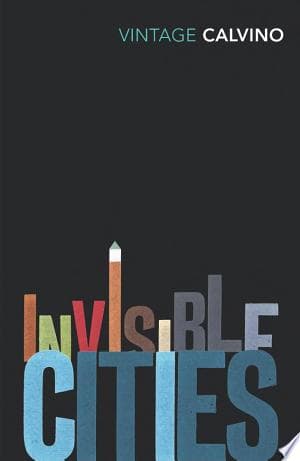
Synopsis
Covers the whole plot, including the ending.
- Difficulty
- Medium
- Pacing
- Slow
- Mood
- Philosophical, Evocative, Meditative, Dreamlike, Poetic
- Read it if
- You appreciate poetic prose, philosophical meditations on urban life and perception, and a unique, non-linear narrative structure.
- Skip it if
- You prefer traditional plot-driven stories with clear character arcs and conventional world-building.
Invisible Cities Plot Summary
Covers the whole plot, including the ending.
The Emperor's Burden and the Traveler's Tales
The story starts with Kublai Khan, an aging emperor of a large but fading empire. He talks with Marco Polo, a young explorer from Venice. Kublai Khan feels the burden of his rule, the many cities, and the empire's eventual decline. He looks for understanding and comfort from Marco Polo, who has traveled widely and tells of his experiences in various cities. At first, Marco Polo uses gestures, objects, and sounds because he does not yet speak the Tartar language. Kublai Khan understands these non-verbal cues, forming his own pictures of the cities. This early communication sets up the main relationship: the emperor wants order and meaning, and the traveler gives seemingly endless, often contradictory, descriptions.
Cities and Memory: Diomira and Isidora
Marco Polo's descriptions become spoken accounts. He groups cities by themes like 'Cities & Memory.' He talks about Diomira, a city where one arrives young and leaves old. This shows how memory and time change things. He then describes Isidora, a place where all the wonders from one's youth are recreated, but it does not bring the same happiness. This shows how memory can both improve and lessen reality, and how expecting a place is often different from experiencing it. These early descriptions show that Polo's memories are very personal and often sad, shaped by his own experiences and desires.
Cities and Desire: Dorothea and Zaira
As Marco Polo continues, he groups cities under 'Cities & Desire.' He describes Dorothea, a city imagined before arrival, a city of youthful dreams and hopes that are always let down by reality. He compares this to Zaira, a city defined by its past, by the stories and customs of its people, where every street and stone holds a memory. The people of Zaira are so focused on their history that they do not notice the city's slow decay. These accounts look at how people project desires onto places and the complex link between a city's current form and its past. They often suggest that chasing ideal visions is pointless.
Cities and Signs: Zora and Aglaura
In the section 'Cities & Signs,' Marco Polo describes Zora, a city whose appearance comes entirely from memory and description, not from direct experience. It is a city that exists only by being told about. He then presents Aglaura, a city known for its careful records and descriptions, where every detail has been written down. Yet, the true nature of the city remains hard to grasp. The people try to make sense of the written accounts and their lived experience. They wonder if the city is more real in its descriptions or in its physical form. This looks at how cities are made of signs, where symbols can both show and hide their true character.
Cities and Thin Cities: Octavia and Armilla
Marco Polo introduces 'Thin Cities,' like Octavia, a city held by ropes and chains between two mountain peaks. It exists in a fragile balance. Its people always know how unsteady it is, finding beauty in its delicate state. He also describes Armilla, a city with no walls, no ceilings, no floors, only the plumbing system remains. Nymphs and dryads live among the pipes. These imagined descriptions challenge the usual idea of what a city is. They present places that are more like ideas or symbols than physically strong. They show the temporary and often hidden structures that define city life.
Cities and Eyes: Eusapia and Baucis
Under 'Cities & Eyes,' Marco Polo tells about Eusapia, a city where the living and the dead share the same spaces. The dead use them at night, the living by day. This dual existence creates a haunting thought on life, death, and how memory continues in a place. He also describes Baucis, a city built on stilts, where the people never touch the ground. They live above the clouds, watching the earth below. These cities show how perception shapes reality and how different viewpoints—from the living and the dead, or from above and below—can show completely different sides of one city space.
Cities and Names: Hypatia and Leonia
In 'Cities & Names,' Polo presents Hypatia, a city that often changes its name and identity. This shows how trends are fleeting and how city spaces are always being remade. He then describes Leonia, a city that carefully throws away all its old things every day, piling them up on the outskirts. This constant renewal creates a strange scene of new consumption inside the city, next to mountains of discarded waste outside. This makes one think about consumerism, waste, and the endless search for newness. These descriptions show how a city's identity is shaped by its names, its history, and its relationship with physical objects.
Cities and the Dead: Eudoxia and Moriana
Under 'Cities & the Dead,' Marco Polo describes Eudoxia, a city whose carpet shows its true form, a map of its past, present, and future. This suggests that the city's essence is woven into its history and stories. He also talks about Moriana, a city with two faces: one for the living, a busy city, and one for the dead, a quiet, forgotten cemetery. The living avoid the dead, yet the dead's city holds the true past and meaning of the city. These cities look at the complex relationship between the living and their ancestors, and how a city's identity is tied to the memories and legacies of those who once lived there.
Cities and the Sky: Theodora and Penthesilea
Marco Polo describes cities related to the sky, such as Theodora, a city with two forms: one as it is, and one as its builders imagine it, which they believe exists in the stars. This shows the gap between ideal and reality, and humanity's wish for perfect forms. He then tells about Penthesilea, a city of constant war and destruction. Building is mixed with tearing down, symbolizing the cycle of human conflict and how creation is temporary. These cities reflect on humanity's place in the universe and the conflicts within city development.
Cities and Networks: Zemrude and Sophronia
In 'Cities & Networks,' Polo describes Zemrude, a city where the people spend their lives trying to understand a map that supposedly shows its real layout. They eventually realize the map itself is the city. This shows how interpreting things shapes city life. He also presents Sophronia, a city made of two parts: one permanent, made of stone and marble, and another temporary, a busy fairground that is taken down and rebuilt every year. This shows the changing relationship between permanent and temporary, and the visible and invisible parts that make up a city's identity and how it works.
Invisible Cities and Venice: The Unspoken Truth
Throughout their talks, Kublai Khan increasingly suspects that all of Marco Polo's imagined cities, despite their differences, are quietly referring to one city. He eventually asks Polo directly. He realizes that the explorer has been describing Venice, his own hometown, from many viewpoints. Polo never says this directly, but it becomes an unstated understanding between them. This moment changes the story from just descriptions to a deep thought on how we see things, memory, and the shared qualities that define any city. It suggests that all cities are, in a way, different versions of one very personal experience.
The End of Empire and the Pursuit of Hell
As Kublai Khan understands that all cities lead back to Venice, he thinks about the eventual decay of his own large empire. He imagines a future where the world becomes one continuous, unchanging city, a terrible place of sameness and no meaning. He asks Marco Polo how to avoid this coming disaster. Marco Polo, with deep thought, suggests that the only way to avoid trouble is to find and recognize what is not trouble. He says to give it room, learn to recognize it, and make it last. This final conversation offers a bit of hope. It stresses how important it is to look for beauty, meaning, and difference even when decay and disappointment seem unavoidable.
Invisible Cities Characters
Marco Polo
Protagonist/Narrator
The Venetian explorer who describes countless cities to Kublai Khan.
Marco Polo is the central figure, a young, observant traveler who has journeyed across Kublai Khan's vast empire. He serves as the primary narrator, recounting intricate and often surreal descriptions of cities. His descriptions are not purely objective but are filtered through his memory, desires, fears, and observations, making each city a reflection of his inner world. He initially communicates through gestures, then through language, gradually revealing the depth of his understanding of urban existence and human nature. His role is to provide the emperor with a lens through which to view his empire, challenging conventional notions of reality and perception.
Relationships: Kublai Khan (traveler and emperor; storyteller and listener; philosophical interlocutors)
Kublai Khan
Antagonist (in a philosophical sense)/Listener
The aging emperor burdened by his empire, who seeks understanding from Marco Polo.
Kublai Khan is the powerful but weary emperor of the Tartar empire, a vast dominion that he perceives as sprawling into an undifferentiated mass. He is a contemplative figure, burdened by the immense responsibility of his rule and the realization of his empire's inevitable decline. He listens intently to Marco Polo's tales, seeking patterns, meaning, and perhaps a way to understand or even halt the decay. He is a foil to Polo, representing the static, encompassing power that contrasts with Polo's dynamic, fragmenting observations. His questions drive the philosophical depth of the narrative.
Relationships: Marco Polo (emperor and traveler; listener and storyteller; philosophical interlocutors)
Invisible Cities Themes
The Nature of Reality and Perception
Calvino looks at how reality is not fixed but is built by individual perception, memory, and desire. Each city Marco Polo describes is his own view, filtered through his experiences. The repeated idea that all cities might be Venice shows how personal views shape our understanding of places. For example, the description of Zora, a city known only through description, or Aglaura, where records hide reality, shows that objective truth is unreliable and subjective interpretation is powerful. The book suggests that a city's 'truth' is not its physical form, but how it is seen and remembered.
“'You take delight in describing cities, Marco, but you never tell me if they are true or false...'' ''All cities are imaginary for me, and I give them imaginary names. I want to tell you about them as if they were real, but they are not.'”
Memory, Nostalgia, and the Past
Memory is a strong force in the city descriptions. It often shapes their current form and the experiences of the people there. Cities like Diomira and Isidora are directly linked to how people remember their past, showing the mixed feelings of nostalgia. Zaira, caught up in its own history, shows how relying too much on the past can make people blind to present decay. Remembering itself is shown to be a creative process, always changing the cities in Marco Polo's mind, making them more vivid or sadder. The book suggests that cities are not just physical spaces, but living places that hold shared and individual memories.
“'The city of Isidora is made of what you remember and what you forget.'”
The City as a Text/Sign System
Calvino often shows cities as complex systems of signs, symbols, and stories that need to be understood. Cities like Zora exist mainly through description, while Aglaura is defined by its careful records. This makes one question if the city is more real in its documents than in its physical form. Zemrude's people are obsessed with a map that is actually the city itself, showing that interpreting signs creates reality. This theme shows how language, stories, and cultural rules are key to understanding and experiencing city environments. It suggests that a city is like a text waiting to be read.
“'The city of Zora, however, has a quality that few other cities possess: it is unforgettable. To make it unforgettable, Zora has only to be described once. For it is the city where all things are known by their names.'”
Order vs. Chaos and the Search for Meaning
Kublai Khan's effort to bring order to his vast, messy empire and his fear of an undifferentiated 'hell' of sameness drives much of the story. Marco Polo's descriptions, though seemingly different, try to categorize and find patterns within the endless variety of cities, creating a kind of order. However, the descriptions often reveal underlying disorder, decay, or futility. The final talk between Polo and Khan, where Polo advises looking for what 'is not hell,' means a search for meaning and difference among the overwhelming forces of decay and disappointment. It suggests that meaning must be actively sought and kept.
“'The inferno where we live is not something that will be; if it exists, it is what is already here, the inferno where we live every day, that we form by being together. There are two ways to escape suffering it. The first is easy for many: accept the inferno and become such a part of it that you can no longer see it. The second is risky and demands constant vigilance and apprehension: seek and learn to recognize who and what, in the midst of the inferno, are not inferno, then make them last, give them space.'”
Plot Devices & Literary Techniques
Frame Narrative
The conversations between Kublai Khan and Marco Polo encase the city descriptions.
The entire book is structured as a frame narrative, where the ongoing dialogue and philosophical reflections between Kublai Khan and Marco Polo serve as the encompassing frame for the individual descriptions of the 'invisible cities.' This device allows for a layered reading: the cities themselves are fascinating, but the frame narrative adds a meta-commentary on storytelling, memory, and the nature of empire. It provides a consistent context and a philosophical anchor for the otherwise disparate descriptions, allowing the deeper themes to emerge through the interaction of the two main characters.
Categorization (Thematic Grouping)
Cities are grouped into thematic categories (e.g., 'Cities & Memory', 'Cities & Desire').
Calvino organizes Marco Polo's city descriptions into eleven thematic categories, such as 'Cities & Memory,' 'Cities & Desire,' 'Cities & Signs,' and 'Thin Cities.' This systematic categorization is a key structural device that brings a semblance of order to the seemingly infinite variety of urban forms. It allows Calvino to explore different facets of urban existence and human experience through distinct lenses. While the categories provide a framework, the cities within them often defy easy classification, adding to the book's richness and challenging the reader's own attempts at categorization.
Symbolism (Venice as the Universal City)
Venice implicitly represents all cities and the act of memory/description.
Although only implicitly revealed, Venice functions as a powerful symbol throughout the book. Marco Polo's eventual confession (or the Khan's realization) that all his described cities are, in some sense, variations of Venice, elevates the city from a specific place to a universal archetype. Venice symbolizes the deeply personal and subjective nature of memory, the fluidity of identity, and the idea that every city, regardless of its unique features, shares fundamental human experiences and aspirations. It becomes a metaphor for the act of description itself, where every story, no matter how fantastical, is rooted in a personal truth.
Allegory
Each city serves as an allegorical representation of human conditions or philosophical concepts.
Many of the 'invisible cities' function as allegories, representing abstract ideas or human conditions rather than literal places. For example, Leonia allegorizes consumerism and waste, while Octavia allegorizes the precarious balance of existence. The descriptions are not merely fantastical but are carefully constructed to illuminate philosophical concepts about memory, desire, identity, language, and the relationship between humanity and its built environment. This device allows Calvino to explore complex ideas through vivid, imaginative scenarios, making the abstract tangible and relatable, without being overtly didactic.
Invisible Cities Quotes
“Cities, like dreams, are made of desires and fears, even if the thread of their discourse is secret, their rules are absurd, their perspectives deceitful, and everything conceals something else.”
“The inferno of the living is not something that will be; if there is one, it is what is already here, the inferno where we live every day, that we form by being together.”
“You take delight not in a city's seven or seventy wonders, but in the answer it gives to a question of yours.”
“It is not the voice that commands the story: it is the ear.”
“The city does not consist of this, but of relationships between the measurements of its space and the events of its past.”
“With cities, it is as with dreams: everything imaginable can be dreamed, but even the most unexpected dream is a rebus that conceals a desire or, its reverse, a fear.”
“Arriving at each new city, the traveler finds again a past of his that he did not know he had: the foreignness of what you no longer are or no longer possess lies in wait for you in foreign, unpossessed places.”
“In Ersilia, to establish the relationships that sustain the city's life, the inhabitants stretch strings from the corners of the houses, white or black or gray or black-and-white according to whether they mark a relationship of blood, of trade, authority, agency.”
“The catalogue of forms is endless: until every shape has found its city, new cities will continue to be born.”
“Perhaps, Kublai thought, the empire is nothing but a zodiac of the mind's phantasms.”
“The city, however, does not tell its past, but contains it like the lines of a hand, written in the corners of the streets, the gratings of the windows, the banisters of the steps, the antennae of the lightning rods, the poles of the flags, every segment marked in turn with scratches, indentations, scrolls.”
“Falsehood is never in words; it is in things.”
“The traveler recognizes the little that is his, discovering the much he has not had and will never have.”
“Kublai Khan does not necessarily believe everything Marco Polo says when he describes the cities visited on his expeditions, but the emperor of the Tartars does continue listening to the young Venetian with greater attention and curiosity than he shows any other messenger or explorer of his.”
Quiz
10 questions on the plot and the characters. Each answer comes with a short explanation.
Question 1
Who is the primary narrator describing the cities to Kublai Khan throughout the book?
- A Chinese merchant
- Marco Polo
- A Venetian explorer
- Kublai Khan himself
Show answer
B. Marco Polo Marco Polo, the Venetian traveler, narrates the descriptions of the cities to Kublai Khan, the Mongol emperor, during their conversations in the book.
Question 2
What is the underlying city that Marco Polo is actually describing through all the fantastical cities?
- Rome
- Beijing
- Venice
- Constantinople
Show answer
C. Venice Although Marco Polo describes many magical and varied cities, it gradually becomes clear that he is using them as metaphors to describe his home city of Venice.
Question 3
What is the primary setting where Marco Polo and Kublai Khan have their conversations?
- A bustling marketplace
- Kublai Khan's garden
- A Venetian palace
- A desert oasis
Show answer
B. Kublai Khan's garden The dialogues between Marco Polo and Kublai Khan primarily take place in Kublai Khan's garden, which serves as a contemplative space for their exchanges.
Question 4
How are the cities in the book organized into categories?
- By geographical location
- By historical period
- By thematic elements (e.g., cities and memory, cities and desire)
- By population size
Show answer
C. By thematic elements (e.g., cities and memory, cities and desire) The cities are grouped into thematic categories such as 'Cities and Memory,' 'Cities and Desire,' 'Cities and Signs,' etc., reflecting different aspects of human experience and perception.
Question 5
What does Kublai Khan gradually realize about Marco Polo's descriptions of the cities?
- They are entirely fictional with no basis in reality
- They are accurate maps of his empire
- They are all variations describing the same city
- They are warnings about future invasions
Show answer
C. They are all variations describing the same city Kublai Khan comes to understand that the diverse cities Marco Polo describes are actually different facets and interpretations of a single city, Venice, revealing the book's meditative nature on perception and memory.
Question 6
Which of the following is a key theme explored through the descriptions of the invisible cities?
- The inevitability of technological progress
- The nature of memory, imagination, and reality
- The superiority of Eastern over Western cultures
- The economic principles of trade routes
Show answer
B. The nature of memory, imagination, and reality The book delves into themes of how memory, imagination, and perception shape our understanding of reality, using the cities as metaphors for these abstract concepts.
Question 7
What role does language and communication play in the interactions between Marco Polo and Kublai Khan?
- They speak the same language fluently throughout
- Marco Polo learns Mongolian quickly to describe the cities
- They initially struggle with language barriers, using objects and gestures
- Kublai Khan translates everything into Latin for accuracy
Show answer
C. They initially struggle with language barriers, using objects and gestures Early in the book, Marco Polo and Kublai Khan face language barriers, leading Marco Polo to use objects, gestures, and sounds to communicate, highlighting themes of interpretation and understanding.
Question 8
In the context of the book, what does the city of 'Eusapia' represent?
- A city built entirely underground
- A city that duplicates itself for the dead
- A city floating on water
- A city made of glass
Show answer
B. A city that duplicates itself for the dead Eusapia is a city where the living build an exact duplicate underground for the dead, exploring themes of mortality, memory, and the relationship between life and death.
Question 9
How does the structure of the book reflect its thematic concerns?
- It follows a linear narrative to show historical accuracy
- It uses a repetitive, cyclical pattern to emphasize the unity of all cities
- It is divided into acts like a play to highlight drama
- It includes footnotes to provide factual corrections
Show answer
B. It uses a repetitive, cyclical pattern to emphasize the unity of all cities The book's structure, with its thematic groupings and repetitive dialogues, creates a cyclical and meditative pattern that reinforces the idea that all cities are interconnected and ultimately reflections of one city (Venice).
Question 10
What is the significance of the final conversation between Marco Polo and Kublai Khan regarding the atlas of 'all the cities that ever were and ever will be'?
- It reveals that Marco Polo has been lying about his travels
- It shows that Kublai Khan plans to conquer all these cities
- It suggests that the true city is the one that remains when all others are stripped away
- It proves that Venice is the greatest city in history
Show answer
C. It suggests that the true city is the one that remains when all others are stripped away In the final dialogue, they discuss an atlas containing every possible city, leading to the realization that the essence of a city lies in its enduring, invisible qualities beyond physical description, tying back to the book's meditation on perception and reality.
Invisible Cities FAQ
What is 'Invisible Cities' about?
'Invisible Cities' is a poetic novel where the explorer Marco Polo describes 55 fantastical cities to the aging Mongol emperor Kublai Khan. Through these vivid descriptions—ranging from cities built on stilts to cities of memory and desire—it gradually becomes clear that Polo is actually revealing different facets of his own home city, Venice, exploring themes of memory, imagination, and the nature of human experience.
Why should I read 'Invisible Cities'?
You should read 'Invisible Cities' for its breathtaking lyrical prose, philosophical depth, and innovative structure. It's not a traditional narrative but a meditation on how we perceive reality, memory, and urban life, offering endless layers of interpretation about human civilization, loss, and the power of storytelling.
What is the background/setting of 'Invisible Cities'?
The frame narrative is set in Kublai Khan's garden in 13th-century China, where Marco Polo, recently returned from his travels, entertains the emperor with tales of cities he has visited. However, the true setting is the imaginative landscape of these cities, which exist more as philosophical constructs than physical places, reflecting Polo's (and Calvino's) contemplations on Venice and modernity.
What are the most memorable quotes?
Memorable quotes include: 'Cities, like dreams, are made of desires and fears,' and 'The inferno of the living is not something that will be; if there is one, it is what is already here.' Another is 'Traveling, you realize that differences are lost: each city takes to resembling all cities,' highlighting the book's themes of perception and universality.
What writing style does the author use?
Italo Calvino uses a highly poetic, fragmentary, and meditative style, blending fantasy with philosophical inquiry. The prose is dense with imagery and metaphor, organized into short, vignette-like descriptions of each city, creating a dreamlike rhythm that emphasizes reflection over plot.
What minor details add significant meaning?
Minor details like the classification of cities into categories such as 'Cities and Memory,' 'Cities and Desire,' and 'Thin Cities' add layers of meaning, structuring the novel as a taxonomy of human experience. For example, in the city of Zaira, descriptions of its walls and gates subtly encode the entire history of its inhabitants, turning architecture into a metaphor for memory.
What are some subtle foreshadowing moments?
Early descriptions of cities like Diomira, with its 'silver domes' and recurring festivals, foreshadow the revelation that all cities are variations of Venice. Polo's gradual shift from elaborate tales to more abstract, philosophical cities hints at his growing realization that he is describing not external places but internal states of mind.
What unexpected character connections exist?
An unexpected connection is that Marco Polo and Kublai Khan, despite their roles as storyteller and listener, become mirrors of each other—both are isolated rulers of empires (Polo of memory, Khan of territory) seeking meaning in a fading world. Their dialogue subtly reveals that Khan's longing for control parallels Polo's struggle to capture truth in words.
What are unspoken character motivations?
Marco Polo's unspoken motivation is not just to entertain Kublai Khan but to process his own nostalgia and grief for Venice, using the cities as a way to preserve and reinvent his homeland. Kublai Khan, in turn, is motivated by a deep existential dread—he fears his empire is crumbling and seeks in Polo's tales a way to grasp the intangible essence of human civilization.
What psychological complexities do characters exhibit?
Marco Polo exhibits complexity through his dual role as both a factual traveler and a poetic liar, grappling with how memory distorts reality. Kublai Khan shows a blend of imperial arrogance and profound melancholy, as he realizes his power cannot conquer the elusive cities of the mind, leading to a crisis of meaning.
What are the major emotional turning points?
A major emotional turning point occurs when Kublai Khan interrupts Polo to say, 'You have described all these cities, but you have never spoken of Venice.' This moment shifts the narrative from mere fantasy to a poignant exploration of loss and identity, as Polo admits that every city is a fragment of Venice, deepening their shared sense of melancholy.
How do relationship dynamics evolve?
The relationship evolves from a formal exchange between emperor and subject to an intimate, almost symbiotic dialogue. Initially, Khan is skeptical and Polo is deferential, but as the tales progress, they become co-creators of meaning, with Khan increasingly participating in the imaginative process, until their roles blur in mutual understanding and despair.
Which parts remain ambiguous or open-ended?
The nature of the cities remains ambiguous—are they real places, dreams, or metaphors? The ending is open-ended, with Polo suggesting that the only way to escape the 'inferno' of cities is to 'seek and learn to recognize who and what, in the midst of the inferno, are not inferno,' leaving interpretation of salvation up to the reader.
What are controversial scenes or decisions?
A controversial aspect is Calvino's decision to avoid a linear plot, which some readers find frustratingly abstract. The scene where Polo admits he has never left Venice could be seen as undermining the authenticity of his travels, raising debates about whether the book is a work of deception or a deeper truth about storytelling.
'Invisible Cities' ending explained: how it ends & what it means
The book ends with Kublai Khan realizing that his atlas may contain all possible cities, including those not yet imagined, and Polo advising that the only way to survive the inferno of modern life is to find the small, non-infernal parts within it. This suggests a message of hope amidst decay, emphasizing that meaning is found in perception and resilience rather than in grand narratives.
About the author
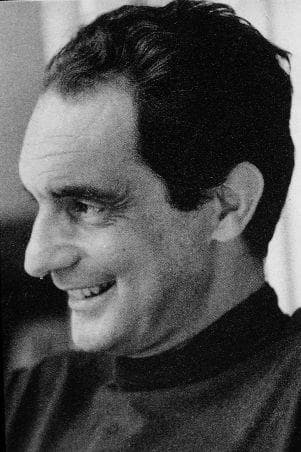
Italo Calvino was an Italian writer and journalist. His best known works include the Our Ancestors trilogy (1952–1959), the Cosmicomics collection of short stories (1965), and the novels Invisible Cities (1972) and If on a winter's night a traveler (1979).
Similar books
- One Hundred Years of Solitude
Gabriel García Márquez
4.1 (753k) average on GoodreadsLiterary FictionWhile both employ magical realism, Marquez's work offers a traditional narrative with a sprawling plot and deep character development rooted in a specific historical and cultural context. Calvino's Invisible Cities is far more abstract, philosophical, and less concerned with character or linear plot, focusing instead on conceptual explorations of urban existence.
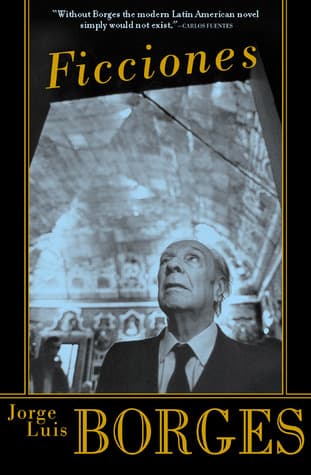
- Ficciones
Jorge Luis Borges
4.4 (49k) average on GoodreadsFantasyBorges' Ficciones shares Calvino's intellectual rigor and fascination with intricate structures and philosophical puzzles. However, Borges often delves deeper into metafiction, the nature of knowledge, and the labyrinthine qualities of text itself. Calvino, while intellectual, maintains a more consistent focus on the urban landscape and human perception within that space, using the cities as lenses for human experience rather than purely intellectual constructs.
- Harry Potter and the Sorcerer's Stone
J.K. Rowling
4.5 (7M) average on GoodreadsFantasyRescued from a miserable life under the stairs, an orphaned boy discovers he's a wizard destined for a magical school, where he uncovers a dangerous secret tied to the dark wizard who murdered his parents.
- The Hunger Games
Suzanne Collins
4.3 (6.4M) average on GoodreadsFantasyIn a future where children fight to the death on live television, Katniss Everdeen volunteers for the arena, turning a death sentence into a fight for survival and a spark of rebellion.
- 1984
George Orwell
4.2 (3.1M) average on GoodreadsPoliticsIn a future where surveillance and thought control are absolute, a man's search for truth clashes with the Party, showing that hope can be a form of rebellion.
- Divergent
Veronica Roth
4.2 (2.9M) average on GoodreadsFantasyIn a society divided by virtues, a sixteen-year-old's difference from the norm starts a rebellion that threatens her world.





Enjoyed the summary?
A summary gives you the shape of the book. The book itself has the detail, the examples and the voice.
Find Invisible Cities on AmazonAs an Amazon Associate, BookBrief earns from qualifying purchases. How we're funded