

Synopsis
Covers the whole plot, including the ending.
- Difficulty
- Easy
- Pacing
- Moderate
- Mood
- Inspiring, Hopeful, Thought-provoking, Resilient
- Read it if
- You enjoy stories about strong, resilient young girls who fight against injustice and inspire change in their communities.
- Skip it if
- You prefer fantasy or lighthearted reads, as this book tackles serious themes of poverty, injustice, and child labor.
Amal Unbound Plot Summary
Covers the whole plot, including the ending.
Amal's Dreams and Domestic Duties
Amal, a twelve-year-old girl in a small Pakistani village, dreams of becoming a teacher. She loves reading and learning, often sneaking away to the library. Her aspirations are temporarily sidelined when her mother gives birth to another daughter, and Amal, as the eldest, is pulled from school to help care for her younger siblings. While initially disappointed, Amal finds ways to continue her education at home, reading books and teaching her younger sisters. She values her time at school and the support of her teacher, Miss Sadia, who encourages her curiosity. Despite the domestic responsibilities, Amal remains optimistic about her future and her ability to return to school.
A Fateful Encounter and Unjust Debt
One day, while running an errand to the market, Amal accidentally bumps into a car, causing a minor dent. The car belongs to Jawad Khan, the entitled son of Khan Sahib, the powerful landlord who controls their village. Jawad Khan, enraged by the minor incident, demands a large sum for the damage. Amal's father, despite his protests, is forced to agree to repay the debt, knowing the Khans' power. This incident casts a shadow over Amal's family, as they are now indebted to the most feared family in the region, a debt they cannot afford.
Forced into Servitude at the Khan Estate
A few days after the incident, Jawad Khan's men arrive at Amal's home, demanding that she come to the Khan estate to work as a servant to pay off her family's debt. Despite her parents' anguish and Amal's terror, they have no choice but to comply. Amal is taken to the intimidating Khan estate, where she is immediately thrust into a life of servitude. Her dreams of school are gone, replaced by endless chores and the realities of her new existence. She is assigned to serve Khan Sahib's mother, the elderly Nasreen Baji, and quickly learns the strict rules of the household.
Life as a Servant and Nabila's Antagonism
Life at the Khan estate is very different from Amal's previous life. She experiences loneliness, exhaustion, and the constant fear of displeasing her masters. She befriends another servant girl, Fatima, who offers some comfort. However, Amal quickly incurs the anger of Nabila, a jealous servant who sees Amal as a threat to her position with Nasreen Baji. Nabila often belittles Amal, sabotages her work, and tries to get her into trouble, making Amal's difficult life even harder. Despite the hardships, Amal tries to keep her spirit and her love for learning, often reading when she can find a moment.
Discovering the Khans' Dark Secrets
As Amal spends more time at the estate, she starts to notice suspicious activities. She overhears hushed conversations, sees strange men coming and going at odd hours, and witnesses the Khans' treatment of anyone who crosses them. She learns that the Khans are involved in illegal land dealings, buying land from poor villagers through intimidation and fraud. She also discovers that they control the local elections and are generally corrupt. These revelations fill Amal with unease and a realization that the Khans' power extends beyond their wealth, affecting the lives of everyone in the village, including her own family.
The Arrival of the New Tutors and a Glimmer of Hope
A new development at the estate offers hope for Amal. Khan Sahib hires new tutors, a husband and wife team named Omar and Mehnaz, for his young daughters, Seema and Lubna. Omar and Mehnaz are educated and kind, and Amal, eager to learn, finds herself drawn to their lessons. She secretly listens in on their classes, absorbing every word. When Mehnaz notices Amal's intelligence and desire for knowledge, she secretly begins to teach Amal during her free moments, providing her with books and encouragement. This renewed access to learning becomes a source of strength and hope for Amal amidst her servitude.
Amal's Act of Defiance and Consequences
One day, Amal's father visits the estate, desperate for money to pay for a doctor for Amal's ailing youngest sister, Rabia. Jawad Khan cruelly dismisses him. Overhearing this, Amal, filled with desperation and anger, confronts Jawad Khan, pleading for her father. Her act of defiance, though brave, enrages Jawad Khan. As punishment, he bans Amal's family from visiting her and threatens to increase their debt. This incident shows the brutal power imbalance and the severe risks Amal faces if she challenges her captors. It also reinforces the deep love and concern Amal has for her family.
The Plan to Expose the Khans
Inspired by the tutors and her own growing awareness of injustice, Amal realizes she must do something. She confides in Mehnaz and Omar about the Khans' illegal land dealings and their manipulation of the local elections. Together, they plan to gather evidence against the Khans and expose their corruption to the authorities. They decide to use a local literacy program, which the Khans had reluctantly sponsored, as a cover to collect information from the villagers who have been cheated out of their land. This plan requires courage and secrecy, as failure could have serious consequences for all of them.
Gathering Evidence and Facing Obstacles
Amal, along with Omar and Mehnaz, begins to discreetly gather testimony from villagers who have been wronged by the Khans. They use the literacy program meetings as a safe space to talk, carefully recording details of fraudulent land deals and election rigging. Nabila, still resentful, continues to spy on Amal, making their efforts even more dangerous. There are close calls and moments of fear, particularly when Jawad Khan becomes suspicious. Despite the risks, Amal remains determined, fueled by her desire for justice and her longing for freedom. Her intelligence and resourcefulness are valuable in navigating these dangerous waters.
The Confrontation and Liberation
With enough evidence collected, Omar and Mehnaz contact an honest journalist and local authorities. A plan is set in motion to expose Jawad Khan. During a public event, the evidence is presented, leading to Jawad Khan's arrest for his various crimes. The news sends shockwaves through the village. With Jawad Khan imprisoned, the power of the Khan family is significantly diminished. Amal is freed from her servitude, her family's debt declared null and void. She returns home, a changed girl, but with her dreams of becoming a teacher strong again, ready to pursue her education.
Principal Figures
Amal
Protagonist
A bright, hopeful girl forced into indentured servitude who fights for justice and freedom.
Amal is a twelve-year-old girl with a deep love for learning and a dream of becoming a teacher. She is intelligent, observant, and resilient. Despite being pulled from school to help her family and then unjustly forced into servitude, she never loses her spirit or her desire for education. Her journey sees her transform from a naive girl into a courageous young woman who actively seeks justice for herself and her community. She is driven by a strong sense of right and wrong, and a profound loyalty to her family. Her resourcefulness and quiet determination are key to her survival and eventual triumph.
Relationships: Father (loving, supportive, but ultimately powerless against the Khans); Mother (caring, worried, relies on Amal); Fatima (fellow servant, friend and confidante); Nabila (rival servant, antagonist); Mehnaz (tutor, mentor, ally); Omar (tutor, ally); Jawad Khan (captor, antagonist)
Jawad Khan
Antagonist
The arrogant and corrupt son of the village's powerful landlord.
Jawad Khan is the entitled and cruel son of Khan Sahib, the powerful landlord of Amal's village. He is accustomed to getting his way and uses his family's influence to intimidate and exploit the local villagers. His arrogance and quick temper lead to Amal's forced servitude over a minor car dent. He embodies the corruption and injustice prevalent in the region, acting with impunity and showing no regard for the well-being of others. He is the direct cause of Amal's suffering and the primary obstacle to her freedom and the village's justice.
Relationships: Amal (captor-captive, antagonist); Khan Sahib (father, source of his power and influence); Nasreen Baji (grandmother, whom he respects to a degree)
Nasreen Baji
Supporting
Khan Sahib's elderly mother and Amal's primary mistress at the estate.
Nasreen Baji is the matriarch of the Khan family and Amal's direct mistress. She is an elderly woman who demands strict adherence to rules and tradition. While sometimes appearing stern and unforgiving, she also shows glimpses of a softer side, particularly towards her grandchildren. She represents the old guard of the Khan family's power, and her word is law within the household. She is largely oblivious to, or complicit in, the deeper corruption of her son and grandson, focusing instead on maintaining the household's order and her own status.
Relationships: Amal (mistress-servant); Jawad Khan (grandson, whom she dotes on); Khan Sahib (son)
Fatima
Supporting
A kind and loyal fellow servant at the Khan estate who befriends Amal.
Fatima is a young servant girl at the Khan estate who quickly becomes Amal's closest friend and confidante. She is kind, empathetic, and helps Amal navigate the difficult and often cruel environment of the estate. Having been a servant for longer, she understands the unspoken rules and dangers, offering Amal practical advice and emotional support. Her friendship provides Amal with much-needed solace and a sense of connection in her isolated life. She dreams of one day returning to her own family.
Relationships: Amal (friend, fellow servant); Nabila (fellow servant, often at odds with Nabila's cruelty)
Nabila
Supporting
A jealous and resentful servant who antagonizes Amal.
Nabila is another servant at the Khan estate, characterized by her jealousy, resentment, and desire to maintain her favored position with Nasreen Baji. She views Amal as a threat and frequently tries to get her into trouble, sabotaging her work and spreading rumors. Nabila's actions stem from her own insecurity and her desperate need for approval within the harsh hierarchy of the household. She represents the internal struggles and divisions that can exist even among those who are oppressed.
Relationships: Amal (rival servant, antagonist); Nasreen Baji (her mistress, whom she seeks to impress)
Mehnaz
Supporting
One of the new tutors at the Khan estate and a secret ally to Amal.
Mehnaz is an educated and compassionate woman who, along with her husband Omar, is hired to tutor the Khan daughters. She quickly recognizes Amal's intelligence and thirst for knowledge, secretly teaching her and providing her with books. Mehnaz becomes a mentor and a beacon of hope for Amal, inspiring her to fight for her freedom and education. She is instrumental in helping Amal gather evidence against the Khans, embodying courage, intellect, and a strong sense of justice.
Relationships: Amal (mentor, teacher, ally); Omar (husband, fellow tutor, ally)
Omar
Supporting
Mehnaz's husband and a tutor who supports Amal's quest for justice.
Omar is Mehnaz's husband and the other tutor hired by the Khans. He is also educated and possesses a strong moral compass. He supports his wife's efforts to help Amal and is actively involved in the plan to expose the Khans' corruption. Omar's presence provides additional adult support and credibility to Amal's cause, demonstrating that there are good people willing to risk their safety for justice. He is practical and strategic in their efforts to gather evidence.
Relationships: Amal (ally, supporter); Mehnaz (wife, fellow tutor, ally)
Amal's Father
Supporting
A loving but financially struggling father who is powerless against the Khans.
Amal's father is a hardworking but poor farmer who deeply loves his family. He is initially heartbroken by Amal being pulled from school and then devastated when she is forced into servitude. He represents the plight of many villagers who are trapped by poverty and the overwhelming power of landlords like the Khans. Despite his love and concern, he is largely powerless to protect Amal or his family from the Khans' demands, highlighting the systemic injustice they face.
Relationships: Amal (father-daughter); Amal's Mother (husband-wife)
Miss Sadia
Mentioned
Amal's former schoolteacher who encouraged her love for learning.
Miss Sadia is Amal's beloved schoolteacher. Though she appears only briefly at the beginning of the book, her encouragement and belief in Amal's intelligence leave a lasting impact. She represents the hope and opportunity that education offers and is a reminder of Amal's initial dreams. Her influence motivates Amal to continue learning even in servitude.
Relationships: Amal (teacher-student)
Themes & Insights
Injustice and Corruption
The novel shows the injustice and corruption in Pakistani society, especially through the unchecked power of the Khan family. Jawad Khan's demand for a debt and Amal's forced servitude show how the wealthy exploit the poor. The Khans' illegal land dealings and manipulation of elections further highlight a system where ordinary people have no recourse against powerful figures. Amal's journey is a direct response to this systemic injustice, as she works to expose and dismantle the Khans' corrupt power.
“It was a world where men like Jawad Khan could do whatever they wanted, and people like Amal’s father had no choice but to accept it.”
Education as Empowerment
Education is a powerful tool for personal freedom and societal change. Amal's love for learning and her dream of becoming a teacher are central to her character. Even when forced into servitude, she secretly continues her studies, finding comfort and strength in books. The tutors, Mehnaz and Omar, use their education to challenge the Khans, and the literacy program becomes a cover for gathering evidence. Ultimately, Amal's ability to read, write, and think critically allows her to understand the injustice around her and to plan for freedom, showing that knowledge is power.
“When you read, you learn. And when you learn, you grow. And when you grow, you can change the world.”
Resilience and Hope
Despite facing hardship, fear, and despair, Amal consistently shows resilience and maintains hope. From her initial disappointment at being pulled from school to the reality of servitude, she finds ways to adapt, survive, and even succeed. Her secret reading, her friendship with Fatima, and her determination to help her family show her strong spirit. Her hope is not passive; it fuels her active pursuit of justice and her belief that a better future is possible, not just for herself but for her community.
“Even in the darkest moments, a tiny flicker of hope remained, pushing her forward.”
Family and Community Bonds
The importance of family and community is a recurring idea. Amal's initial sacrifice of leaving school is for her family, and her desire to protect them fuels her courage throughout her ordeal. The fear of what will happen to her family if she fails is a constant motivation. The solidarity among the villagers, though initially suppressed by fear, eventually becomes a force for change. The collaboration between Amal, the tutors, and the wronged villagers shows how collective action, driven by shared suffering and a desire for justice, can overcome powerful oppressors.
“She knew that if she didn’t fight for herself, she would never truly be free, and her family would remain trapped in the shadow of the Khans.”
The Power of Storytelling and Voice
The novel emphasizes the power of storytelling and giving a voice to those who cannot speak for themselves. Amal's love for reading stories is like the need for the villagers' stories of injustice to be heard. Gathering testimonies from the cheated villagers, recording their experiences, and sharing them with a journalist is important to exposing the Khans. Amal's own journey is a story that inspires others and shows how speaking truth to power, even at great risk, can lead to change and freedom.
“Their stories were important. They were proof. And they needed to be heard.”
Plot Devices & Literary Techniques
Indenture as a Central Conflict
The primary mechanism driving the plot and symbolizing systemic oppression.
The forced indentured servitude of Amal serves as the core conflict of the story. It is not merely a plot point but a central device illustrating the pervasive social and economic injustice faced by the poor in many parts of the world. It strips Amal of her freedom and dreams, forcing her into a life of labor and fear. This device highlights the vulnerability of individuals to powerful figures and economic exploitation, making Amal's struggle for liberation a powerful symbol of resistance against systemic oppression.
The Literacy Program
A seemingly innocent initiative used as a cover for resistance and information gathering.
The literacy program, initially a reluctant concession from the Khans, becomes a crucial plot device. It provides a legitimate reason for villagers to gather, creating a safe space for Amal and the tutors to discreetly collect evidence against the Khans. It symbolizes the power of education and community, transforming from a simple learning initiative into a hub of resistance. This device cleverly contrasts the Khans' superficial benevolence with their underlying corruption, while providing the means for their downfall.
The Khan Estate
A symbol of wealth, power, and the gilded cage of Amal's captivity.
The opulent Khan estate functions as more than just a setting; it is a significant plot device and symbol. Its grandeur contrasts sharply with the poverty of the village, representing the vast economic disparity. For Amal, it is a gilded cage – a place of luxury that is also her prison. The estate's hidden corners and strict rules facilitate her secret learning and observations, but also underscore her powerlessness. It is both the source of her oppression and, ironically, the place where she finds the tools for her liberation.
Books and Reading
A consistent motif representing hope, escape, and the power of knowledge.
Books and the act of reading are recurring motifs throughout the novel. For Amal, books are a source of comfort, escape, and a connection to her dreams of becoming a teacher. Even in servitude, she seeks out opportunities to read, finding solace and inspiration in stories. This device emphasizes the theme of education as empowerment, showing how knowledge can sustain the spirit and provide the tools for critical thinking and ultimately, liberation. Her ability to read and understand documents is key to uncovering the Khans' fraudulent activities.
Amal Unbound Quotes
“Sometimes the hardest thing and the right thing are the same.”
“I was not a servant. I was a person with dreams and a family who loved me.”
“Education is the one thing no one can ever take away from you.”
“Silence can be a prison too.”
“Hope is a stubborn thing. It finds a way to grow even in the darkest places.”
“We are all bound by something, but we can choose what breaks us.”
“A single act of kindness can change someone's entire world.”
“The truth has a way of revealing itself, no matter how hard someone tries to bury it.”
“Dreams are not just for the privileged. They belong to everyone.”
“Sometimes you have to lose everything to find what truly matters.”
“Fear is a chain, but courage is the key that breaks it.”
“Our stories are our power. Never let anyone silence yours.”
“Injustice anywhere is a threat to justice everywhere.”
“The strongest bonds are not of servitude, but of shared humanity.”
Quiz
10 questions on the plot and the characters. Each answer comes with a short explanation.
Question 1
What is Amal's dream career at the beginning of the book?
- Doctor
- Teacher
- Lawyer
- Engineer
Show answer
B. Teacher Amal dreams of becoming a teacher, which is mentioned early in the book as her primary aspiration before her life changes dramatically.
Question 2
Why does Amal initially have to stay home from school?
- Her family cannot afford school fees
- She gets into trouble with the landlord
- As the eldest daughter, she must care for her siblings
- She is sick with an illness
Show answer
C. As the eldest daughter, she must care for her siblings Amal is forced to leave school temporarily because, as the eldest daughter, she has to take care of her younger siblings, reflecting gender expectations in her community.
Question 3
What event directly leads to Amal being forced into indentured servitude?
- Her father loses his job
- She accidentally insults the landlord's son
- She steals from the Khan estate
- Her family fails to repay a loan on time
Show answer
B. She accidentally insults the landlord's son Amal has an accidental run-in with Jawad Sahib, the son of the corrupt landlord, which offends him and results in her being forced to work as a servant to pay off her family's debt.
Question 4
Who becomes Amal's main enemy at the Khan estate?
- Jawad Sahib
- Nabila
- Nasreen Baji
- Fatima
Show answer
B. Nabila Nabila, another servant at the Khan estate, becomes Amal's enemy due to jealousy and competition, making Amal's life more difficult.
Question 5
What nefarious dealings does Amal become aware of at the Khan estate?
- Illegal drug trafficking
- Human trafficking and forced labor
- Counterfeit money operations
- Smuggling of antiques
Show answer
B. Human trafficking and forced labor Amal discovers that the Khans are involved in human trafficking and forced labor, exploiting people like her, which deepens her understanding of their corruption.
Question 6
How does Amal continue her education while working as a servant?
- She attends secret night classes
- She reads books and teaches other servants
- She uses online courses on a hidden phone
- She bribes a tutor to visit her
Show answer
B. She reads books and teaches other servants Amal finds ways to continue learning by reading books available at the estate and even starts teaching other servants, showing her resilience and commitment to education.
Question 7
What key realization does Amal have about fighting the Khans' corruption?
- She must escape alone to get help
- She needs to work with others to exact change
- She should focus on paying off her debt first
- She must become a lawyer to fight them legally
Show answer
B. She needs to work with others to exact change Amal realizes that individual effort is not enough; she must collaborate with others to challenge the cruel status quo and achieve justice, a central theme in the book.
Question 8
What role does Jawad Sahib play in Amal's servitude?
- He is a sympathetic figure who tries to help her
- He is the landlord's son who enforces her debt bondage
- He is a fellow servant who becomes her friend
- He is a teacher who secretly educates her
Show answer
B. He is the landlord's son who enforces her debt bondage Jawad Sahib, as the son of the corrupt landlord, is directly involved in forcing Amal into servitude after their run-in, representing the oppressive power structure.
Question 9
How does the book highlight themes of social injustice?
- Through Amal's personal dreams and hobbies
- By depicting the Khans' wealth and Amal's poverty
- Through the exploitation of indentured servants and gender roles
- By focusing on natural disasters in the village
Show answer
C. Through the exploitation of indentured servants and gender roles The book explores social injustice through the systemic exploitation of indentured servants like Amal and the restrictive gender roles that limit her opportunities, critiquing societal inequalities.
Question 10
What is a significant challenge Amal faces in regaining her freedom?
- Overcoming her fear of the dark
- Navigating the legal system to sue the Khans
- Balancing her duties with her education
- Uniting others to resist the Khans' power
Show answer
D. Uniting others to resist the Khans' power A major challenge for Amal is mobilizing and uniting other oppressed individuals to collectively resist the Khans' entrenched power, which is crucial for her fight for freedom and change.
Amal Unbound FAQ
What is 'Amal Unbound' about?
'Amal Unbound' follows Amal, a Pakistani girl whose dream of becoming a teacher is disrupted when she's forced into indentured servitude at the Khan estate after accidentally offending the corrupt landlord's son. The story chronicles her struggle to survive, her growing awareness of the Khans' exploitative practices, and her journey to reclaim her freedom and dreams through collective action.
Why should I read 'Amal Unbound'?
This book offers a powerful, accessible introduction to issues of social justice, gender inequality, and debt bondage through the eyes of a resilient young protagonist. Amal's journey from quiet village life to confronting systemic corruption provides both emotional depth and important educational value about real-world struggles in parts of South Asia.
What is the background/setting of 'Amal Unbound'?
The story begins in a rural Pakistani village where Amal lives with her family, then shifts to the opulent Khan estate where she's forced to work. This contrast highlights the economic disparity between the wealthy landlord family and the villagers they control through debt and power.
What are the most memorable quotes from 'Amal Unbound'?
Key quotes include Amal's reflection 'Sometimes the bravest thing you can do is to keep going' and her realization that 'Change doesn't happen overnight, but it starts with one person.' These capture her resilience and growing understanding of collective action against injustice.
What writing style does Aisha Saeed use in 'Amal Unbound'?
Saeed employs accessible, straightforward prose suitable for middle-grade readers while maintaining emotional depth. She uses vivid sensory details to contrast Amal's village life with the Khan estate's opulence, and incorporates Urdu words and cultural references to ground the story authentically.
What minor details add significant meaning to 'Amal Unbound'?
The detail of Amal continuing to read and teach others even while enslaved shows how education becomes her form of resistance. The contrast between the Khan family's lavish lifestyle and the villagers' poverty is emphasized through small moments like food descriptions and clothing differences.
What are some subtle foreshadowing moments in 'Amal Unbound'?
Early mentions of the Khan family's control over village resources foreshadow their broader corruption. Amal's initial conflict with Jawad Sahib's son hints at the disproportionate punishment she'll face. Her observations about other servants' resigned attitudes foreshadow the systemic nature of the oppression she'll confront.
What unexpected character connections exist in 'Amal Unbound'?
Nabila, who initially appears as Amal's rival among the servants, eventually becomes part of the collective resistance. The Khan family's own staff members, who seem complicit at first, are revealed to be trapped in the same system, creating unexpected alliances against their oppressors.
What are Amal's unspoken motivations throughout the story?
Beyond her stated dream of becoming a teacher, Amal is motivated by a deep need to maintain her dignity and identity despite her circumstances. Her quiet observations of injustice stem from an unspoken belief in fairness and a determination not to be broken by the system that enslaves her.
What psychological complexities do the characters exhibit?
Amal shows remarkable resilience while grappling with anger and despair. Nabila displays both jealousy and vulnerability as another young servant. Even the Khan family members reveal complexities - they're not simply evil but products of a system that privileges their power over others' humanity.
What are the major emotional turning points in 'Amal Unbound'?
Key emotional turning points include Amal's initial enslavement, her realization that individual resistance is insufficient, her decision to secretly document the Khans' crimes, and the moment she realizes she must work with others to create meaningful change.
How do relationship dynamics evolve between Amal and Nabila?
Their relationship begins with rivalry and mistrust as Nabila sees Amal as a threat. Through shared experiences of oppression, they gradually develop understanding and eventually collaborate, showing how solidarity can emerge even in competitive environments.
Which parts of 'Amal Unbound' remain ambiguous or open-ended?
The book doesn't fully resolve how the village will rebuild after confronting the Khans, leaving some systemic change questions open. Individual characters' futures beyond Amal's freedom are also left somewhat ambiguous, suggesting ongoing struggle rather than complete resolution.
What are controversial scenes or decisions in 'Amal Unbound'?
Some readers might debate whether Amal's family should have resisted her enslavement more forcefully, or whether the portrayal of debt bondage adequately addresses its real-world complexity. The book's accessibility for young readers while dealing with heavy themes also prompts discussion about age-appropriate content.
'Amal Unbound' ending explained: how it ends & what it means
The story ends with Amal achieving freedom and returning to pursue her education, but more importantly, she has helped expose the Khans' corruption through collective action with other villagers and servants. This ending emphasizes that individual dreams are connected to community liberation, and that systemic change requires solidarity rather than just personal escape.
How does the theme of education function in 'Amal Unbound'?
Education serves as both Amal's personal dream and a tool of resistance - she continues learning secretly and teaches others, showing how knowledge empowers oppressed communities. The Khans' control over village resources including education highlights how limiting access to learning maintains power imbalances.
What role does gender play in Amal's experiences?
As the eldest daughter, Amal faces gendered expectations to care for siblings before her enslavement, and her vulnerability to the Khan family's power is heightened by being a girl. However, her resilience also challenges stereotypes about girls' capabilities in oppressive circumstances.
Similar books
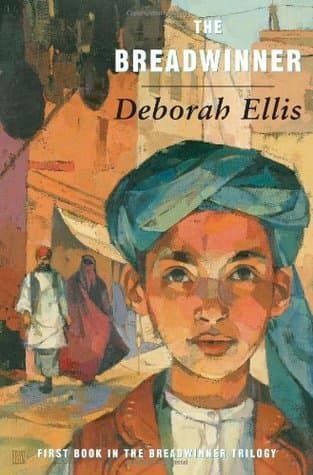
- The Breadwinner
Deborah Ellis
4.0 (20k) average on GoodreadsChildren'sFeatures a young girl in a challenging cultural setting fighting for survival and family.
- Front Desk
Kelly Yang
4.4 (15k) average on GoodreadsChildren'sA young protagonist navigating difficult circumstances and finding her voice against injustice.
- Salt to the Sea
Ruta Sepetys
4.3 (123k) average on GoodreadsHistorical FictionSepetys' book is a powerful piece of historical fiction set during WWII, focusing on survival and the plight of refugees. Amal Unbound, in contrast, addresses contemporary social justice issues, specifically highlighting economic bondage and the struggle against feudal power structures in modern Pakistan, making it more relevant to ongoing global human rights concerns outside of historical conflict.
- Harry Potter and the Sorcerer's Stone
J.K. Rowling
4.5 (7M) average on GoodreadsFantasyRescued from a miserable life under the stairs, an orphaned boy discovers he's a wizard destined for a magical school, where he uncovers a dangerous secret tied to the dark wizard who murdered his parents.
- The Hobbit, or There and Back Again
J.R.R. Tolkien
4.3 (2.9M) average on GoodreadsFantasyA comfort-loving hobbit named Bilbo Baggins is whisked away by a mischievous wizard and a band of dwarves on an unexpected journey to reclaim stolen treasure from a fearsome dragon, discovering courage and a magical ring along the way.
- Harry Potter and the Goblet of Fire
J.K. Rowling
4.6 (2.6M) average on GoodreadsFantasyA bewildered Harry Potter, underage and thrust into a deadly Triwizard Tournament, must brave dragons, mermaids, and a resurgent dark magic to survive a year that will forever alter the wizarding world.





Enjoyed the summary?
A summary gives you the shape of the book. The book itself has the detail, the examples and the voice.
Find Amal Unbound on AmazonAs an Amazon Associate, BookBrief earns from qualifying purchases. How we're funded