
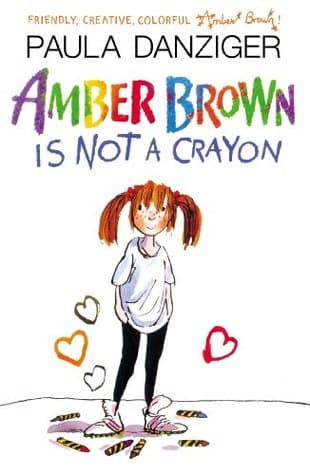
Synopsis
Covers the whole plot, including the ending.
- Difficulty
- Easy
- Pacing
- Moderate
- Mood
- Heartwarming, Relatable, A Little Sad, Hopeful
- Read it if
- You're a young reader (or reading to one) dealing with the feelings of a friend moving away, or you enjoy heartwarming and relatable stories about childhood friendships.
- Skip it if
- You prefer complex plots or stories for older audiences with more mature themes.
Amber Brown Is Not a Crayon Plot Summary
Covers the whole plot, including the ending.
Amber's Best Friend
Amber Brown, a third-grader, introduces her best friend, Justin Daniels. They have been together since birth, living next door, sharing secrets, and playing constantly. They have their own inside jokes and never tease each other with their last names. Amber loves their friendship, which feels perfect, and says they always support each other, whether with homework or school issues. Their bond is so strong that Amber cannot imagine life without Justin, highlighting their shared past and daily routines.
The Bad News
One afternoon, while playing at Amber's house, Justin shares big news: his family is moving to Alabama. Amber is shocked and thinks he is joking. When Justin confirms it is true, explaining his dad got a new job, Amber feels her world fall apart. She feels angry, betrayed, and very sad. The news ruins their fun, and Amber becomes quiet, unable to think about Justin, her constant friend, no longer being next door or in her daily life. The announcement starts a hard time for their friendship.
Anger and Blame
After the first shock, Amber's sadness turns to anger. She blames Justin for moving, even though his parents decided it. She cannot understand why he cannot just refuse to go. Her frustration shows in arguments and a coldness toward Justin. She refuses to talk about the move and avoids him, hoping that by ignoring it, the problem will disappear. This emotional struggle makes their remaining time together tense, as Amber's hurt stops her from being herself. Her parents try to help her, but Amber remains upset and unwilling to listen.
The Fight
The tension between Amber and Justin ends in a big fight over a shared item—a special eraser they both claim. This argument shows their deeper worries and frustrations about Justin leaving. They exchange harsh words, hurt each other's feelings, and both feel misunderstood and let down. The fight leaves them both feeling bad and makes Amber's anger and Justin's sadness worse, making their friendship seem broken. The eraser becomes a sign of their breaking bond, and neither wants to give in, making the conflict worse.
Coping Mechanisms
Amber's parents, seeing her sadness, try different ways to help her deal with Justin's move. They suggest she write letters to him, talk about her feelings, or plan a going-away party. However, Amber is in denial and refuses all their ideas. She does not want to talk about it, plan for it, or accept that it is happening. Her parents are patient but firm, reminding her that ignoring the situation will not make it go away. Amber's resistance comes from her deep fear of change and loss, making her withdraw more into her sadness.
The Gift Exchange
As Justin's moving day gets closer, he gives Amber a thoughtful going-away gift: a small, carved wooden animal, reminding her of a private joke they share. This surprises Amber and touches her deeply, making her realize that despite their recent fights, Justin still cares about their friendship. The gift makes Amber think about giving Justin something equally meaningful, something that will help him remember her. This moment is a turning point, as Amber begins to move from anger and denial toward acceptance and a wish to keep their bond.
Finding a Memory
Determined to give Justin a memorable going-away gift, Amber searches her room for something special. She wants to give him something that truly shows their friendship and will make him think of her. She considers different items, from a favorite book to a drawing, but nothing feels right. She wants a gift that is not just an object, but a part of their shared past, a memory. Her struggle shows her deep emotional care for their friendship and her wish to make sure Justin does not forget her, even from far away.
The Hair Gift
After much thought, Amber comes up with a unique and personal gift: a lock of her own hair. She carefully cuts a small piece of her distinctive amber-colored hair and puts it in a small box. This gift is very symbolic, showing a part of herself that Justin can keep, a physical reminder of their special friendship. It is a gesture that goes beyond things, showing their shared past and the irreplaceable nature of their bond. This unusual gift shows Amber's creative and heartfelt way of expressing her feelings.
Saying Goodbye
On Justin's moving day, Amber nervously approaches him with her gift. They exchange presents, and Amber explains why her hair is important. Justin, in turn, assures her he will keep it safe. Despite the sadness, a feeling of peace settles between them. They acknowledge their friendship and the difficulty of separating, but also that their bond will last. The goodbye is tearful but warm, as they promise to write and stay in touch. They hug, a final embrace before Justin gets into the car, driving away to Alabama, leaving Amber with sadness and hope.
Life Without Justin
After Justin leaves, Amber feels very empty. Her house is quieter, and school feels different without him. She misses their daily talks, their jokes, and his presence. However, she also starts to find ways to cope. She writes him letters, talks about him with her parents, and begins to notice other kids in her class more. While the pain of his absence remains, Amber slowly starts to get used to her new life, understanding that even though Justin is far away, their friendship can still exist, just in a different way.
The First Letter
A few weeks after Justin leaves, Amber gets her first letter from him. The envelope, addressed in his familiar writing, brings excitement and relief. Justin writes about his new school, his new house, and how much he misses her. He mentions the lock of hair and how much it means to him. Reading his words, Amber feels sure that their friendship is still alive. The letter connects them across the miles, proving that their bond is strong enough for the distance, and it fills Amber with new hope and happiness.
Principal Figures
Amber Brown
Protagonist
A spirited third-grader grappling with her best friend's move.
Amber Brown is a vibrant and imaginative third-grader with a strong sense of loyalty. She is deeply attached to her best friend, Justin, and struggles profoundly with the news of his impending move. Initially, she reacts with denial, anger, and sadness, lashing out at Justin and resisting her parents' attempts to help her cope. She is creative and thoughtful, as evidenced by her unique choice of a going-away gift for Justin. Her emotions are intense, and she finds it difficult to accept change, particularly when it impacts her closest relationships.
Relationships: Justin Daniels (Best friend, next-door neighbor, inseparable confidante.); Amber's Parents (Supportive and understanding, guiding her through emotional turmoil.)
Justin Daniels
Supporting
Amber's best friend, forced to move away, causing distress for both.
Justin Daniels is Amber's best friend and next-door neighbor. He is sensitive and caring, understanding Amber's feelings even when she's lashing out. He is the bearer of the difficult news of his family's move to Alabama, a decision beyond his control. Despite Amber's anger, he maintains his affection for her, demonstrating his enduring friendship by giving her a thoughtful going-away gift. He shares a deep, almost telepathic bond with Amber, built on years of shared experiences and inside jokes. His move is the central conflict of the story.
Relationships: Amber Brown (Best friend, next-door neighbor, inseparable confidante.)
Amber's Mom
Supporting
Amber's understanding mother, who helps her cope with Justin's move.
Amber's Mom is a patient and supportive figure who tries to guide Amber through her emotional distress. She offers practical advice, like writing letters, and provides emotional comfort, while also gently encouraging Amber to accept the reality of the situation. She understands the depth of Amber's friendship with Justin and empathizes with her daughter's pain. Her role is primarily to provide a safe and nurturing environment for Amber to process her feelings, demonstrating wisdom and compassion in handling a child's grief.
Relationships: Amber Brown (Mother-daughter relationship, providing emotional support and guidance.); Amber's Dad (Spousal relationship, co-parenting and supporting Amber.)
Amber's Dad
Supporting
Amber's supportive father, who offers comfort and understanding.
Amber's Dad, like Amber's Mom, is a supportive and understanding parent. He is present to comfort Amber during her sadness and anger over Justin's move. He works alongside Amber's Mom to help her process her emotions and find healthy coping mechanisms. While perhaps less vocal than her mom, he contributes to the stable and loving home environment that allows Amber to feel safe in expressing her difficult feelings. His presence reinforces the idea of a strong family unit supporting Amber through a challenging time.
Relationships: Amber Brown (Father-daughter relationship, providing emotional support and comfort.); Amber's Mom (Spousal relationship, co-parenting and supporting Amber.)
Brenda
Mentioned
A classmate who occasionally teases Amber.
Brenda is a classmate of Amber and Justin. She is mentioned as one of the kids who might tease Amber with her last name if Justin wasn't there to defend her. Her presence highlights the unique protective dynamic between Amber and Justin and emphasizes the security Amber feels when Justin is by her side. She serves as a minor contrast, representing the outside world that Amber and Justin often navigate as a team.
Relationships: Amber Brown (Classmate, occasional source of mild teasing.); Justin Daniels (Classmate.)
Themes & Insights
Friendship and Loyalty
The main theme is the deep friendship between Amber and Justin. Their bond is shown as special and strong, built on shared history, inside jokes, and helping each other. The story explores how strong this bond is when challenged, showing how true friends stay together even through hard times and distance. Amber's first anger comes from her deep friendship and fear of losing this connection, while Justin's gift shows his similar feelings. Their promises to write and their continued talks reinforce this theme.
“Justin Daniels is my best friend. He is almost nine. I am eight. We have known each other since we were babies. We live next door to each other. We are almost inseparable.”
Coping with Change and Loss
The book talks about how to deal with big changes and losing a close relationship. Amber's journey from denial and anger to finally accepting and adapting shows the steps of grief. Her struggle to deal with Justin's move, her outbursts, and her efforts to find a meaningful going-away gift all show the emotional upset that comes with loss. The story shows that while change is painful, it is possible to find new ways to keep connections and get used to new situations, as seen when Amber starts getting letters and adjusting to life without Justin physically present.
“I didn’t want to talk about it. If I didn’t talk about it, maybe it wouldn’t happen.”
Communication and Misunderstanding
Communication is important, especially how Amber and Justin first struggle to talk about their feelings about the move. Amber's anger stops her from talking about her sadness well, leading to misunderstandings and fights, like the one over the eraser. Justin's first news is sudden, and both children struggle to say how scared and sad they are. However, as the story goes on, they learn to show their affection and commitment to friendship through actions (like gifts) and later through letters, showing how important clear and honest communication is for keeping relationships.
“I was mad at him. How could he move away and leave me? It wasn’t fair.”
The Power of Memories and Symbols
Memories and symbolic actions help keep Amber and Justin's friendship alive. Amber's search for the perfect going-away gift is because she wants to give Justin a physical reminder of their past and her lasting presence. Her choice of a lock of her hair is very symbolic, representing a part of herself and their special bond. Justin's carved animal also stands for their inside jokes and shared memories. These objects become strong links, allowing them to feel connected even when far apart, showing how memories and symbols can bridge distance.
“I wanted to give him something that would make him remember me forever.”
Plot Devices & Literary Techniques
Foreshadowing (Implied)
Subtle hints of impending change or conflict through character behavior.
While not overt, the initial descriptions of Amber and Justin's inseparable bond and Amber's deep reliance on him subtly foreshadow the intensity of her reaction to his move. The idyllic portrayal of their friendship sets up the emotional stakes, making the eventual news of Justin's departure more impactful. The reader understands early on that any threat to this bond will be devastating for Amber, implicitly preparing them for her emotional turmoil.
Symbolism (The Eraser and Hair)
Objects representing deeper emotional states or the nature of relationships.
The shared eraser that Amber and Justin fight over symbolizes their crumbling friendship and the struggle for ownership over their shared past during a time of conflict. Later, Amber's gift of a lock of her hair is a powerful symbol of her unique identity and her desire to give Justin an irreplaceable piece of herself, signifying the enduring and personal nature of their bond even across distance. These objects are not just props but carry significant emotional weight.
First-Person Narration
The story is told from Amber's perspective, providing direct access to her thoughts and feelings.
The use of first-person narration allows readers to deeply empathize with Amber's emotional journey. By experiencing the world through her eyes, readers understand her profound sadness, anger, and eventual acceptance directly. This perspective makes her reactions, even her irrational ones, feel authentic and relatable for a young audience, enhancing the emotional impact of Justin's move and Amber's struggle to cope.
Epistolary Elements
The use of letters to advance the plot and demonstrate character development.
The exchange of letters between Amber and Justin, particularly Justin's first letter to Amber, serves as a crucial plot device. It provides resolution and reassurance, proving that their friendship can endure despite physical distance. The letters also allow for continued character interaction and development even after Justin has moved, reinforcing the themes of communication and enduring friendship. This device offers a tangible representation of their ongoing connection.
Amber Brown Is Not a Crayon Quotes
“Amber Brown is not a crayon, but she is brown. She has brown hair and brown eyes. She has a brown dog named Stanley.”
“Sometimes when you get mad, you want to throw things. But you can't throw a person. So you throw other things.”
“My best friend, Justin, is moving. He is moving to Alabama. That is very far away.”
“I wish I could live in a world where no one ever moved. Or at least where my best friend never moved.”
“I made a list of all the things I like about Justin. It was a very long list.”
“It's hard to be brave when your best friend is moving away.”
“Sometimes I think grown-ups don't understand how important best friends are.”
“We made a secret handshake. It was our special handshake. No one else knew it.”
“I hate good-byes. They make my stomach feel like it has butterflies that want to fly out.”
“Maybe if I don't say goodbye, he won't really leave.”
“My mom says things change. But I don't want things to change.”
“Even though Justin is moving, we will still be best friends. We promised.”
“I looked in the mirror. I still looked like Amber Brown. Even without Justin right next door.”
Quiz
10 questions on the plot and the characters. Each answer comes with a short explanation.
Question 1
What is the primary reason for the conflict and sadness between Amber Brown and Justin Daniels at the beginning of the story?
- They had a big fight over a toy.
- Justin is moving away to another state.
- Amber got a new best friend.
- They were assigned to different classes.
Show answer
B. Justin is moving away to another state. The central conflict of the book arises because Justin Daniels, Amber's best friend, is moving away, causing emotional turmoil for both of them.
Question 2
What is the specific, silly nickname Amber Brown and Justin Daniels use for each other, which they avoid saying when they are getting along?
- Amber Alert and Justin Case
- Amber Rose and Justin Time
- Amber Brown is not a crayon and Justin Time
- Amber Lamp and Justin Table
Show answer
C. Amber Brown is not a crayon and Justin Time The book explicitly states that Justin never says 'Amber Brown is not a crayon' and Amber never says 'Justin Time' when they are friends, highlighting their unique bond.
Question 3
What subject does Amber Brown enjoy drawing during, often getting into trouble for it?
- Science
- Math
- History
- Reading
Show answer
B. Math Amber frequently draws in her notebook, especially during math class, often leading to her teacher, Ms. Peters, getting frustrated.
Question 4
What kind of special item does Amber Brown collect and keep in a box?
- Stamps
- Buttons
- Crayons
- Stickers
Show answer
C. Crayons Amber has a special collection of crayons, which she treasures, reflecting her artistic personality and the book's title.
Question 5
How do Amber and Justin initially try to cope with the news of Justin moving away, leading to their conflict?
- They start planning a going-away party together.
- They avoid each other and stop talking.
- They try to convince their parents to change the plans.
- They decide to write letters every day.
Show answer
B. They avoid each other and stop talking. Their sadness and anger manifest as fighting and avoidance, as neither knows how to process the impending separation, leading to the breakdown in their friendship.
Question 6
What is the name of Amber Brown's teacher?
- Ms. Davis
- Ms. Rodriguez
- Ms. Peters
- Ms. Jenkins
Show answer
C. Ms. Peters Ms. Peters is Amber's teacher, who often has to deal with Amber's artistic distractions in class.
Question 7
What significant act of friendship do Amber and Justin perform to try and mend their relationship before Justin leaves?
- They exchange their favorite books.
- They create a special drawing together to remember each other.
- They promise to visit each other every holiday.
- They sing a song they made up about their friendship.
Show answer
B. They create a special drawing together to remember each other. To reconcile, Amber and Justin collaborate on a drawing, each contributing to a shared piece of art that symbolizes their bond and efforts to work through their sadness.
Question 8
What does the theme of 'change' primarily represent in the story for Amber Brown?
- The excitement of making new friends.
- The difficulty of accepting loss and the transition of friendships.
- The joy of moving to a new house.
- The challenge of learning new school subjects.
Show answer
B. The difficulty of accepting loss and the transition of friendships. The core theme of the book revolves around Amber's struggle to cope with the significant change of her best friend moving away, exploring feelings of loss, anger, and eventual acceptance.
Question 9
How does Amber Brown typically express her strong emotions, especially when she's upset or confused?
- She talks to her parents about everything.
- She writes in a secret diary.
- She uses her drawings and art to process her feelings.
- She withdraws completely and doesn't communicate.
Show answer
C. She uses her drawings and art to process her feelings. Amber often channels her feelings, both positive and negative, into her artwork, using her crayons and drawings as an outlet for her emotions, especially when dealing with Justin's move.
Question 10
By the end of the book, what is the resolution regarding Amber and Justin's friendship, despite Justin moving away?
- They decide they can no longer be friends.
- They promise to write letters and remain best friends, understanding their bond will continue.
- Justin decides not to move after all.
- Amber quickly finds a new best friend and forgets about Justin.
Show answer
B. They promise to write letters and remain best friends, understanding their bond will continue. Despite the sadness of separation, Amber and Justin reconcile and reaffirm their friendship, agreeing to stay in touch, signifying that their bond is strong enough to endure distance.
Amber Brown Is Not a Crayon FAQ
What is the central conflict driving the plot of 'Amber Brown Is Not a Crayon'?
The central conflict revolves around Amber Brown's best friend, Justin Daniels, moving away to Alabama. This impending separation causes significant emotional distress for Amber and leads to friction and arguments between the two friends as they struggle to cope with the change.
Who are the two main characters, and what is their relationship at the beginning of the book?
The two main characters are Amber Brown and Justin Daniels. At the beginning of the book, they are portrayed as inseparable best friends who have known each other 'practically forever,' sharing everything from school desks to homework help.
What specific actions do Amber and Justin take to express their anger and sadness about Justin moving?
Amber and Justin resort to childish arguments and name-calling, like Amber saying 'Justin Time' and Justin saying 'Amber Brown is not a crayon.' They also engage in more subtle acts of defiance and withdrawal, such as refusing to talk or actively avoiding each other.
How does Amber's bedroom decor, specifically the crayon collection, reflect her internal state or personality?
Amber's extensive crayon collection in her bedroom symbolizes her creativity, her vibrant personality, and perhaps her desire for things to remain colorful and unchanged. The eventual disarray of her crayons could subtly mirror the emotional chaos she experiences when Justin's move disrupts her world.
Are there any subtle foreshadowing elements that hint at the resolution of Amber and Justin's conflict?
Yes, their shared history and deep bond, emphasized by their long friendship and mutual support, subtly foreshadow their eventual reconciliation. Despite their arguments, their inherent care for each other suggests they will find a way to work through their differences.
What role do Amber's parents or other adults play in helping her cope with Justin's impending move?
Amber's parents attempt to be supportive, offering comfort and understanding, though Amber often struggles to articulate her feelings. They try to facilitate conversations and help her process her emotions, acting as a calming presence amidst her turmoil.
How does Amber's initial reaction to Justin's move exemplify a typical childhood response to loss?
Amber's initial reaction, characterized by anger, denial, and lashing out at Justin, is a classic childhood response to the perceived loss of a close friend. She struggles to process the change, leading to emotional outbursts rather than reasoned discussion.
What specific emotional stages does Amber go through as she grapples with Justin leaving?
Amber experiences a range of emotions, starting with disbelief and anger, which manifests in their fighting. She then moves through sadness and a sense of helplessness, eventually reaching a point of acceptance and finding a way to preserve their friendship.
How does the author portray the concept of friendship and its resilience in the face of change?
The author portrays friendship as a strong, enduring bond that can withstand significant challenges. Despite the arguments and sadness, Amber and Justin's friendship ultimately proves resilient, demonstrating that true connections can adapt and persist even with physical distance.
What is the significance of the phrase 'Amber Brown is not a crayon' in the context of the story?
The phrase 'Amber Brown is not a crayon' is Justin's childish taunt, meant to annoy Amber. It signifies their temporary breakdown in communication and their struggle to express their deeper sadness, resorting to surface-level insults instead of addressing the core issue.
How does the resolution of their conflict emphasize the importance of communication in friendships?
The resolution highlights that open communication, even when difficult, is crucial for maintaining friendships. Once Amber and Justin stop fighting and actually talk about their feelings, they are able to mend their rift and make plans for their friendship to continue.
What lesson about coping with change and loss can young readers take away from Amber's experience?
Young readers can learn that it's normal to feel angry or sad when big changes happen, like a friend moving away. The book teaches that while change is hard, expressing feelings and finding ways to stay connected can help ease the pain and maintain important relationships.
How does the book's ending provide a sense of hope and continuity for Amber and Justin's friendship?
The book's ending offers hope by showing Amber and Justin making plans to keep in touch, such as writing letters and visiting. This demonstrates their commitment to their friendship and reassures readers that their bond will endure despite the distance.
What is the significance of the 'Justin Time' nickname Amber uses, and how does it parallel Justin's 'Amber Brown is not a crayon' comment?
'Justin Time' is Amber's retaliatory nickname, mirroring Justin's taunt. Both phrases are childish expressions of their frustration and sadness, serving as verbal jabs that mask their deeper emotional distress about the impending separation.
How does Amber's internal monologue or perspective contribute to the reader's understanding of her emotional state?
Amber's internal monologue provides direct insight into her thoughts and feelings, allowing readers to understand her confusion, anger, and sadness from her point of view. This perspective helps children empathize with her struggles to process the big change in her life.
Could the title 'Amber Brown Is Not a Crayon' be interpreted as Amber asserting her individuality or agency?
Yes, while initially a taunt from Justin, the title can also be interpreted as Amber's subconscious assertion of her unique identity. It implies she is more than just a colorful object, and that she is a complex individual grappling with real emotions, rather than something easily defined or dismissed.
About the author

Paula Danziger was an American author known for her contributions to children's literature. She is recognized for her works such as "Amber Brown Is Not a Crayon," which follows the experiences of a young girl navigating life's challenges, and "The Pistachio Prescription," which explores themes of friendship and self-acceptance. Danziger's writing often addresses the complexities of growing up.
Similar books
- Tales of a Fourth Grade Nothing
Judy Blume
4.1 (132k) average on GoodreadsChildren'sBlume's book captures childhood emotions often related to sibling rivalry and family changes. Danziger's Amber Brown zeroes in on the unique pain of a best friend moving away, offering a more concentrated examination of this particular rite of passage.
- Harry Potter and the Sorcerer's Stone
J.K. Rowling
4.5 (7M) average on GoodreadsFantasyRescued from a miserable life under the stairs, an orphaned boy discovers he's a wizard destined for a magical school, where he uncovers a dangerous secret tied to the dark wizard who murdered his parents.
- The Hobbit, or There and Back Again
J.R.R. Tolkien
4.3 (2.9M) average on GoodreadsFantasyA comfort-loving hobbit named Bilbo Baggins is whisked away by a mischievous wizard and a band of dwarves on an unexpected journey to reclaim stolen treasure from a fearsome dragon, discovering courage and a magical ring along the way.
- Harry Potter and the Goblet of Fire
J.K. Rowling
4.6 (2.6M) average on GoodreadsFantasyA bewildered Harry Potter, underage and thrust into a deadly Triwizard Tournament, must brave dragons, mermaids, and a resurgent dark magic to survive a year that will forever alter the wizarding world.
- Harry Potter and the Order of the Phoenix
J.K. Rowling
4.5 (2.5M) average on GoodreadsFantasyIn a year of oppressive secrets and the threat of Voldemort, Harry Potter and Dumbledore's Army secretly train for war, shown through Jim Kay and Neil Packer's dark illustrations.
- The Lightning Thief
Rick Riordan
4.3 (2M) average on GoodreadsFantasyThrust into a world of mythological monsters and divine treachery, an ordinary boy discovers he's the son of Poseidon and must embark on a perilous quest across modern America to prevent an Olympian war.





Enjoyed the summary?
A summary gives you the shape of the book. The book itself has the detail, the examples and the voice.
Find Amber Brown Is Not a Crayon on AmazonAs an Amazon Associate, BookBrief earns from qualifying purchases. How we're funded