

Synopsis
Covers the whole plot, including the ending.
- Difficulty
- Medium
- Pacing
- Variable
- Mood
- Humorous, Philosophical, Energetic, Observational, Satirical
- Read it if
- You love sprawling, character-driven sagas with a witty, satirical edge, exploring themes of multiculturalism, identity, and the clash of generations in a vibrant London setting.
- Skip it if
- You prefer tightly plotted narratives with a single focus, dislike non-linear storytelling, or are put off by a large cast of characters and extensive philosophical digressions.
White Teeth Plot Summary
Covers the whole plot, including the ending.
Archie Jones's Near-Miss Suicide and an Unexpected Marriage
On New Year's Day, 1975, Archie Jones, a middle-aged Englishman, tries to end his life by gassing himself in his car, but a halal butcher stops him. This incident leads him to a New Year's Eve party where he meets Clara Bowden, a much younger Jamaican woman with missing front teeth. Her mother, Hortense, is a devout Jehovah's Witness. In a spontaneous decision, driven by a desire for change and a lack of other options, Archie marries Clara. Their unexpected union starts the intertwined lives of the Jones and Iqbal families in Willesden, London, beginning a new chapter for Archie after his wartime experiences and failed first marriage.
The Arrival of Samad Iqbal and the Birth of Twins
Soon after Archie's marriage, his best friend and fellow World War II veteran, Samad Iqbal, arrives in London from Bangladesh with his wife, Alsana, a woman who often argues with Samad. Both men had served together in the Indian Army during the war, sharing a past. Clara gives birth to their daughter, Irie Jones, a few years later. Not long after, Alsana gives birth to twin boys, Millat and Magid Iqbal. The births of these children strengthen the bond between the two families, creating a new generation that will deal with their mixed heritage and their parents' expectations, setting them on different paths in their search for identity.
The Iqbal Twins' Divergent Paths and Samad's Disappointment
As the Iqbal twins grow, Samad worries about their assimilation into Western culture, especially Millat's rebellious nature and interest in pop culture. To preserve Magid's Bangladeshi heritage and religious upbringing, Samad secretly sends him back to Bangladesh to live with relatives, hoping he will become a good Muslim and a doctor. This decision, made without Alsana's full consent, creates a deep division in the family and leaves Millat feeling abandoned. Millat, meanwhile, continues to embrace a more Westernized, even delinquent, lifestyle, further disappointing his father and setting him against traditional expectations.
Irie's Adolescent Struggles and the Chalfen Family's Influence
Irie Jones struggles with her identity, body image, and a lack of direction during her teenage years. She has crushes on both Millat and the absent Magid, feeling caught between her Jamaican heritage and her English upbringing. Her academic struggles lead her to seek help from the Chalfen family, a seemingly perfect, intellectual, white family living nearby. Joshua Chalfen, the son, becomes an object of Irie's affection, while his parents, Marcus and Joyce, take an interest in Irie and, later, Millat, offering them a different kind of mentorship that will affect their futures, often with unintended results.
Magid's Return and the Chalfen's 'Experiment'
Years later, Magid returns from Bangladesh, not as the devout Muslim doctor Samad imagined, but as a thoroughly Anglicized young man, obsessed with science and Western intellectualism, having been funded by Marcus Chalfen. This reversal of expectations devastates Samad. Meanwhile, Millat, after a brief time in a boy band and a period of aimlessness, joins a radical Islamic fundamentalist group, 'Keepers of the Eternal and Immutable Truth' (K.E.T.C.H.U.P.), largely due to the Chalfens' 'experiment' in helping their development. Marcus Chalfen, a geneticist, becomes more involved in both twins' lives, seeing them as subjects for his theories on nature versus nurture.
Irie's Crossroads and the Chalfen Effect
Irie, still dealing with her identity, finds herself in a complicated love triangle involving Joshua Chalfen and both Iqbal twins. After a drunken night, she becomes pregnant but is unsure whether the father is Millat or Joshua. This uncertainty adds another layer to her search for belonging. The Chalfens' influence on Millat and Magid deepens, with Marcus Chalfen particularly focused on his research into 'FutureMouse' – a genetically modified mouse designed to predict human disease. The Chalfens' well-meaning but ultimately patronizing interventions further complicate the lives of the Jones and Iqbal children, pushing them towards different, often extreme, ideological positions.
The 'FutureMouse' Project and its Opponents
Marcus Chalfen's 'FutureMouse' project, a controversial scientific endeavor involving genetically modified mice, gets much public attention. It becomes a target for various groups, including animal rights activists led by Dr. Perret, and, ironically, Millat's fundamentalist Islamic group, K.E.T.C.H.U.P., who see it as an offense to nature and God. The upcoming public unveiling of 'FutureMouse' at the Perret Institute creates a central point for the novel's converging narratives, bringing together characters from all three families and their various ideological positions. Magid, however, remains a strong supporter of the project, embodying the scientific rationalism that Millat now strongly opposes.
The Showdown at the Perret Institute
The novel ends in a chaotic scene at the Perret Institute during the unveiling of 'FutureMouse'. Millat, with his K.E.T.C.H.U.P. brethren, plans to disrupt the event. Irie, Clara, Archie, Samad, and Alsana are all present, as are the Chalfens and Dr. Perret. Magid is also there, working as an assistant on the project. The tension builds as the various groups clash, with protests erupting outside and inside the institute. The long-standing conflicts and unresolved issues between the families and their children come to a head in a moment of public spectacle and personal crisis.
The Incident with the Gun and the Mouse
During the chaotic unveiling, Millat, armed with a pistol, tries to shoot Dr. Perret, whom he sees as the embodiment of scientific arrogance and Western decadence. However, Archie Jones, in an unexpected moment of courage, lunges forward and deflects Millat's aim. The shot misses Dr. Perret and instead hits the 'FutureMouse,' destroying the controversial scientific creation. This act, whether accidental or intentional on Archie's part, becomes a symbolic ending, disrupting the Chalfens' experiment and bringing the immediate conflict to a dramatic close, though the underlying tensions remain.
Aftermath and Lingering Questions
After the 'FutureMouse' incident, Millat is arrested, while Archie is seen as a local hero, though he remains confused by the events. Irie gives birth to her baby, still uncertain of the father's identity, but embracing her role as a mother. Samad and Alsana continue their arguments, but their bond lasts. The Chalfens retreat, their grand experiment having failed. The novel concludes with the characters moving forward, but the fundamental questions of identity, heritage, and belonging remain partly unresolved. The ending suggests that life, with all its messiness and multicultural complexities, continues, leaving the future generations to deal with the legacy of their parents' choices and the constant pull of the past.
White Teeth Characters
Archie Jones
Protagonist
Middle-aged Englishman, best friend to Samad, and father to Irie.
Archie is a gentle, somewhat passive, and unremarkable Englishman who served in World War II with Samad Iqbal. He lives a life characterized by a lack of strong opinions or ambition, often allowing events to unfold around him. His spontaneous marriage to Clara Bowden and his unexpected act of heroism at the 'FutureMouse' launch are rare moments of agency. He serves as a grounding force for the more volatile characters around him, representing a particular strain of English working-class identity. His defining characteristic is his unwavering loyalty to Samad and his quiet acceptance of life's absurdities.
Relationships: Samad Iqbal (Lifelong best friend and wartime comrade); Clara Bowden (Wife); Irie Jones (Daughter)
Samad Iqbal
Protagonist
Bangladeshi Muslim, best friend to Archie, and father to Millat and Magid.
Samad is a passionate, intellectual, and often exasperated Bangladeshi Muslim immigrant who also served in WWII. He is deeply proud of his heritage and constantly struggles with the assimilation of his children into British culture, leading him to make drastic decisions like sending Magid to Bangladesh. He fancies himself an intellectual and a revolutionary, often quoting poets and philosophers, but his actions are frequently driven by insecurity and a desire for his children to honor their roots. His relationship with his wife, Alsana, is a constant battle of wits and affections.
Relationships: Archie Jones (Lifelong best friend and wartime comrade); Alsana Iqbal (Wife); Millat Iqbal (Son); Magid Iqbal (Son)
Clara Bowden
Supporting
Jamaican immigrant, wife of Archie, and mother to Irie.
Clara is a vibrant Jamaican woman who marries Archie Jones. She is characterized by her missing front teeth (lost in a childhood accident) and her strong, if sometimes naive, sense of optimism. Raised by her devout Jehovah's Witness mother, Hortense, Clara often clashes with her mother's strict beliefs. She represents a generation grappling with the complexities of immigration and raising a biracial child in a new culture. Her gentle nature contrasts with Alsana's fiery temperament, yet they share a deep bond of friendship.
Relationships: Archie Jones (Husband); Irie Jones (Daughter); Hortense Bowden (Mother); Alsana Iqbal (Close friend)
Alsana Iqbal
Supporting
Bangladeshi immigrant, wife of Samad, and mother to Millat and Magid.
Alsana is Samad's formidable and sharp-witted wife. She is a practical, no-nonsense woman who frequently bickers with Samad, often cutting through his intellectual pretensions with brutal honesty. Despite their constant arguments, there is a deep, abiding love and loyalty between them. She is fiercely protective of her children and often frustrated by Samad's grand, misguided plans, particularly his decision to send Magid away. Alsana embodies the strength and resilience of immigrant women, holding her family together amidst cultural clashes and personal disappointments.
Relationships: Samad Iqbal (Husband); Millat Iqbal (Son); Magid Iqbal (Son); Clara Bowden (Close friend)
Irie Jones
Protagonist
Biracial daughter of Archie and Clara, struggling with identity and belonging.
Irie is the daughter of Archie and Clara, a biracial girl who struggles with her identity, body image, and a sense of belonging throughout her adolescence and young adulthood. She feels caught between her Jamaican heritage and her English upbringing, and later, between the influences of the Iqbal twins and the Chalfen family. Her journey is one of self-discovery, marked by romantic entanglements and a search for her place in the world. She ultimately embraces motherhood as a defining aspect of her identity, even with the uncertainty of her child's paternity.
Relationships: Archie Jones (Father); Clara Bowden (Mother); Millat Iqbal (Love interest/friend); Magid Iqbal (Love interest/friend); Joshua Chalfen (Love interest/friend)
Millat Iqbal
Supporting
Rebellious twin son of Samad and Alsana, who embraces fundamentalism.
Millat is one of Samad and Alsana's twin sons. As a teenager, he is rebellious, charismatic, and popular, embracing Western pop culture and often getting into trouble. He is deeply affected by his father's decision to send Magid away. Later, disillusioned with Western society, he becomes involved with a radical Islamic fundamentalist group, K.E.T.C.H.U.P., seeking a strong sense of identity and purpose. His journey reflects the struggle of many second-generation immigrants trying to reconcile their heritage with modern life, often leading to extreme ideological positions.
Relationships: Samad Iqbal (Father); Alsana Iqbal (Mother); Magid Iqbal (Twin brother); Irie Jones (Love interest/friend); Joshua Chalfen (Friend/rival)
Magid Iqbal
Supporting
Intellectual twin son of Samad and Alsana, who becomes an Anglicized scientist.
Magid is Millat's twin brother, sent by Samad to Bangladesh to be raised as a devout Muslim. However, he returns years later as a thoroughly Anglicized, intellectual young man, obsessed with science, rationalism, and Western thought, largely influenced by Marcus Chalfen. His transformation is a bitter disappointment to Samad. Magid represents the opposite extreme to Millat, fully embracing Western intellectualism and rejecting his father's traditional aspirations. He works on Marcus Chalfen's 'FutureMouse' project, embodying the scientific perspective that his brother and K.E.T.C.H.U.P. despise.
Relationships: Samad Iqbal (Father); Alsana Iqbal (Mother); Millat Iqbal (Twin brother); Marcus Chalfen (Mentor/benefactor)
Marcus Chalfen
Supporting
Intellectual and geneticist, obsessed with nature vs. nurture.
Marcus Chalfen is the patriarch of the Chalfen family, a seemingly progressive, middle-class white English family. He is a geneticist obsessed with the debate of nature versus nurture, viewing the Iqbal twins and Irie Jones as subjects for his theories. He funds Magid's education and development, shaping him into a scientific rationalist, and later attempts to 'civilize' Millat and Irie. While seemingly well-intentioned, his interventions are often patronizing and ultimately manipulative, contributing to the children's identity crises and the novel's central conflicts. He embodies a certain intellectual arrogance and a desire to impose his worldview on others.
Relationships: Joyce Chalfen (Wife); Joshua Chalfen (Son); Magid Iqbal (Mentee/subject); Millat Iqbal (Subject)
Joyce Chalfen
Supporting
Marcus's wife, a 'new feminist' and a somewhat detached observer.
Joyce Chalfen is Marcus's wife, a self-proclaimed 'new feminist' and a somewhat detached academic. She is often depicted as well-meaning but emotionally distant, particularly from her own children. She takes an interest in Irie and Millat, offering them a different kind of mentorship, often through her progressive, but somewhat superficial, worldview. She represents a certain type of liberal intellectualism that, while espousing inclusivity, can sometimes overlook the genuine struggles of others. Her influence on the younger generation is less direct than Marcus's, but still contributes to their complex development.
Relationships: Marcus Chalfen (Husband); Joshua Chalfen (Son); Irie Jones (Mentee); Millat Iqbal (Mentee)
Joshua Chalfen
Supporting
Son of Marcus and Joyce, a rebellious but privileged youth.
Joshua Chalfen is the son of Marcus and Joyce. Despite his privileged, intellectual upbringing, he is rebellious and often critical of his parents' liberal pretensions. He becomes entangled in a love triangle with Irie and Millat, representing a different kind of English youth. He is an animal rights activist, placing him in direct opposition to his father's 'FutureMouse' project. Joshua embodies the contradictions of his generation, simultaneously rejecting his parents' values while benefiting from their social standing.
Relationships: Marcus Chalfen (Father); Joyce Chalfen (Mother); Irie Jones (Love interest/friend); Millat Iqbal (Friend/rival)
White Teeth Themes
Identity and Self-Discovery
The novel explores the complex and often conflicting nature of identity, especially for second-generation immigrants in multicultural Britain. Irie Jones struggles with her biracial heritage, feeling neither fully Jamaican nor fully English. The Iqbal twins, Millat and Magid, show this struggle most clearly: Millat embraces radical Islam after trying Western youth culture, while Magid becomes an Anglophile scientist despite being sent to Bangladesh for a traditional upbringing. Their parents, Samad and Clara, also deal with their identities as immigrants, trying to hold onto their heritage while adapting to a new country. The characters' journeys show how modern identity is fluid and mixed, shaped by ancestry, religion, culture, and personal choice.
“This is the story of a man who makes a decision and then, for the rest of his life, suffers the consequences of it. Or, rather, the consequences of not-making-it.”
Multiculturalism and Immigration
Zadie Smith shows the chaotic, and often challenging reality of multicultural London. The novel focuses on the interwoven lives of English, Jamaican, and Bangladeshi families, showing the cultural clashes, misunderstandings, and blending that happen when diverse communities live side-by-side. The characters navigate racism, cultural preservation, assimilation, and the search for belonging in a society that is constantly changing. The novel celebrates the richness of this diversity while also acknowledging the tensions and complexities in it, particularly in how different generations adapt to or resist their new surroundings.
“Because that's London, isn't it? A city that keeps reinventing itself, a city that absorbs and reflects and reinvents. And a city, always, of arrivals.”
The Weight of History and the Past
The past has a strong influence on the present throughout the novel, especially through the shared wartime experiences of Archie Jones and Samad Iqbal. Samad's focus on his family's historical legacy and his own perceived failures drives many of his decisions, including sending Magid away. The trauma of World War II subtly affects Archie's quiet resignation. For the younger generation, their parents' histories and cultural heritage are both a burden and a source of identity. The 'Chalfen's Folly' and the 'FutureMouse' project also represent attempts to control or predict the future, often failing because of the unpredictable forces of history and human nature. The novel suggests that the past is never truly left behind, continually shaping individual and collective destinies.
“The past is like a dead animal. You can kick it, poke it, burn it, but it still smells.”
Nature vs. Nurture
This theme is explored through Marcus Chalfen, a geneticist focused on understanding whether human behavior and destiny are determined by genetics (nature) or environment (nurture). He sees the Iqbal twins, Millat and Magid, as a living experiment, trying to manipulate their upbringing to prove his theories. Magid, sent to Bangladesh, returns a scientist, while Millat, raised in London, becomes a fundamentalist. The novel suggests that both nature and nurture play intricate, unpredictable roles, and that human agency, chance, and unforeseen circumstances often go against simple scientific explanations. The 'FutureMouse' project itself is a metaphor for this attempt to control and predict, which ultimately fails.
“It was Marcus Chalfen's belief that a child was a tabula rasa, a blank slate, and that it was his job, as a parent, to scribble on it as much as possible.”
Belief and Fanaticism
The novel examines various forms of belief, from the quiet faith of Clara's mother, Hortense (a Jehovah's Witness), to Samad's nostalgic adherence to Bangladeshi traditions, and Millat's eventual embrace of Islamic fundamentalism. It contrasts these strong beliefs with Archie's secular indifference and the Chalfens' scientific rationalism. Millat's journey into K.E.T.C.H.U.P. shows how the search for identity and meaning can lead to extreme, rigid positions. The novel explores the appeal of absolute truths in a confusing world, but also critiques the dangers of fanaticism and how it can both empower and limit individuals, often leading to conflict and intolerance.
“For the truth was, neither of them was particularly religious. They just wanted to be right.”
Plot Devices & Literary Techniques
Interwoven Narratives
The story follows multiple families and generations, creating a rich tapestry of lives.
Smith uses interwoven narratives, shifting between the perspectives and timelines of the Jones and Iqbal families, and later the Chalfens. This allows for a panoramic view of multicultural London and enables the exploration of how different lives intersect and influence one another. The technique builds a complex social fabric, highlighting the shared experiences and individual struggles within a diverse community. By jumping between characters and generations, the novel creates a sense of epic scope, tracing the long-term impact of decisions and historical events on subsequent lives.
Flashbacks and Historical Context
Frequent shifts to the past, particularly WWII, to illuminate character motivations.
The novel frequently employs flashbacks, particularly to Archie and Samad's experiences in World War II and Samad's family history in Bangladesh. These historical excursions provide crucial context for the characters' present-day motivations, anxieties, and cultural identities. The past is not merely background; it actively shapes the characters' decisions, relationships, and their children's destinies. This device emphasizes the theme of the weight of history and how personal and national pasts continue to resonate in contemporary life.
'FutureMouse' as a Central Symbol
A genetically modified mouse symbolizing scientific hubris and the nature vs. nurture debate.
The 'FutureMouse' project, a genetically modified mouse designed to predict human disease, functions as a powerful central symbol. It embodies Marcus Chalfen's scientific hubris and his attempts to control and predict life, directly addressing the nature vs. nurture theme. The mouse also becomes a focal point for various ideological clashes: scientific rationalism (Magid, Chalfen), animal rights activism (Joshua), and religious fundamentalism (Millat, K.E.T.C.H.U.P.). Its eventual destruction at the climax symbolizes the unpredictable nature of life and the failure of absolute control, whether scientific or ideological.
Episodic Structure with Thematic Connections
The novel is broken into distinct sections, each focusing on a period or character, linked by overarching themes.
While following a chronological progression, the novel's structure is largely episodic, with distinct sections often focusing on specific characters (e.g., 'The Temptation of Samad Iqbal') or periods. These episodes are not entirely self-contained but are intricately linked by recurring characters, themes, and motifs. This allows Smith to delve deeply into individual stories while maintaining a cohesive narrative tapestry, mirroring the fragmented yet interconnected lives of the multicultural community it depicts. The structure enables exploration of different facets of identity, history, and belief without losing sight of the larger narrative arc.
Humor and Satire
Used to lighten heavy themes and critique societal norms.
Smith employs abundant humor and satire throughout the novel, often in her characterizations and descriptions of societal quirks. This ranges from the slapstick of Archie's suicide attempt to the witty bickering between Samad and Alsana, and the ironic portrayal of the Chalfens' well-meaning but often patronizing liberalism. The humor serves to make complex and serious themes, such as racism, fundamentalism, and identity crises, more accessible and palatable. It also allows Smith to subtly critique various aspects of British society and human nature, highlighting absurdities and contradictions without becoming overly didactic.
White Teeth Quotes
“What is the point of a generation anyway? We are all products of the past, but we are not our parents. And we are not our children.”
“The past is a foreign country; they do things differently there.”
“Everywhere was a place where people had come from somewhere else.”
“It is not a question of whether the world will end, but how it will end.”
“Sometimes you have to be a little bit mad to be a good scientist.”
“But the past is an anchor, and the future is a kite.”
“Children are not a commodity. They are not a future investment. They are children.”
“There are some things in life that you don't choose. They choose you.”
“The truth is a very subjective thing, isn't it?”
“History is not a line, but a circle. We keep coming back to the same points.”
“People always want to be part of something bigger than themselves.”
“The problem with the future is that it keeps arriving.”
“You can't choose your family, but you can choose your friends.”
“Hope is a dangerous thing, but it's all we have.”
Quiz
10 questions on the plot and the characters. Each answer comes with a short explanation.
Question 1
Which two characters are the patriarchs of the Iqbal and Jones families, whose friendship forms a central bond in the novel?
- Samad Miah and Archie Jones
- Magid Iqbal and Archie Jones
- Samad Miah and Millat Iqbal
- Archie Jones and Joyce Chalfen
Show answer
A. Samad Miah and Archie Jones The novel opens with the long-standing friendship between Samad Iqbal and Archie Jones, forged during their time together in World War II, which is a foundational relationship for the interwoven family narratives.
Question 2
What significant event occurs in Archie Jones's life at the very beginning of the novel?
- He wins the lottery.
- He attempts suicide but fails.
- He meets Clara for the first time.
- He receives a mysterious package from Bangladesh.
Show answer
B. He attempts suicide but fails. The novel famously opens with Archie Jones attempting suicide in his car, only to be foiled by a lack of change for the car park meter, setting a darkly humorous tone.
Question 3
What is the name of Clara Bowden's grandmother, who is a devout Jehovah's Witness and strongly disapproves of Clara's lifestyle?
- Alsana Begum
- Joyce Chalfen
- Hortense Bowden
- Irie Jones
Show answer
C. Hortense Bowden Hortense Bowden is Clara's strict, religious grandmother who raised her and has a significant, often critical, presence in Clara's early life and relationship with Archie.
Question 4
Samad Iqbal sends one of his twin sons back to Bangladesh. Which son is it, and what is Samad's primary motivation?
- Millat, to escape the corrupting influence of Western culture.
- Magid, to instill traditional Bangladeshi values and escape Western degeneracy.
- Magid, to apprentice him in a family business.
- Millat, to learn about his family's ancestral land.
Show answer
B. Magid, to instill traditional Bangladeshi values and escape Western degeneracy. Samad sends Magid to Bangladesh, believing it will preserve him from the perceived moral decay of London and ensure he grows up with a stronger connection to his roots and traditional values.
Question 5
What is the name of the scientific project, initiated by Dr. Marcus Chalfen, that becomes a focal point for the younger generation, particularly Irie Jones and the Iqbal twins?
- The FutureMouse Project
- The Genetic Heritage Initiative
- The Multicultural Evolution Study
- The O'Connell Centre for Human Development
Show answer
A. The FutureMouse Project The FutureMouse Project, a controversial genetic experiment involving a specially bred mouse, serves as a significant plot device and a metaphor for themes of genetic determinism, identity, and scientific ethics in the novel.
Question 6
Which of the following best describes the thematic role of 'roots' and 'routes' in 'White Teeth'?
- The novel argues that one's genetic roots are the sole determinant of identity, making routes irrelevant.
- It explores the tension between inherited cultural identity (roots) and the individual paths and choices (routes) people make in a multicultural society.
- The story suggests that embracing new routes always leads to a rejection of one's roots.
- It primarily focuses on the importance of maintaining traditional roots without any deviation.
Show answer
B. It explores the tension between inherited cultural identity (roots) and the individual paths and choices (routes) people make in a multicultural society. A core theme of 'White Teeth' is the struggle of its characters, particularly the second generation, to reconcile their inherited cultural 'roots' with the new 'routes' they forge in a diverse, modern London, highlighting the complexities of multicultural identity.
Question 7
What is Alsana Iqbal's profession, which she eventually returns to with success, providing financial stability for her family?
- She works as a librarian.
- She becomes a successful chef.
- She is a seamstress and tailor.
- She opens a small grocery store.
Show answer
C. She is a seamstress and tailor. Alsana, despite Samad's initial disapproval, returns to her skilled trade as a seamstress, eventually running a successful business with Clara, demonstrating her resourcefulness and independence.
Question 8
Towards the end of the novel, what significant event involving Millat Iqbal takes place at the launch of the FutureMouse Project?
- He gives a passionate speech advocating for scientific research.
- He attempts to shoot Dr. Marcus Chalfen, but hits Archie Jones instead.
- He helps to release the FutureMouse into the wild.
- He reveals a conspiracy related to the project.
Show answer
B. He attempts to shoot Dr. Marcus Chalfen, but hits Archie Jones instead. In a climactic moment, Millat, driven by his extremist beliefs, attempts to assassinate Marcus Chalfen, but Archie Jones intervenes and takes the bullet, adding to the novel's blend of drama and absurdity.
Question 9
How do the Chalfen family's intellectual and seemingly progressive values contrast with their actual impact on the lives of Irie Jones and the Iqbal twins?
- They consistently provide genuinely supportive mentorship and opportunities for the younger generation.
- Their well-intentioned but often patronizing attempts at guidance lead to further confusion, appropriation, and identity crises for the children.
- They actively work to undermine the Iqbal and Jones families out of jealousy.
- Their influence is entirely positive, helping the children integrate seamlessly into British society.
Show answer
B. Their well-intentioned but often patronizing attempts at guidance lead to further confusion, appropriation, and identity crises for the children. The Chalfens, particularly Joyce and Marcus, represent a certain brand of liberal intellectualism that, despite its good intentions, often appropriates or misinterprets the experiences of Irie, Millat, and Magid, leading to more confusion and identity struggles rather than genuine empowerment.
Question 10
Which of the following characters ultimately has children with both Magid and Millat Iqbal?
- Clara Jones
- Irie Jones
- Joely Chalfen
- Alsana Iqbal
Show answer
B. Irie Jones Irie Jones becomes pregnant with Magid's child first, and then has a second child with Millat. This intertwining of the two brothers with Irie highlights the generational complexities and the theme of shared destinies.
White Teeth FAQ
What is 'White Teeth' about?
'White Teeth' is a sprawling, multi-generational saga centered on two families, the Iqbals and the Joneses, in multicultural London from 1975 to 1999. It explores themes of identity, immigration, religion, friendship, and the legacy of the past, primarily through the lives of Archie Jones, Samad Iqbal, and their children, Irie and Millat Jones, and Magid and Millat Iqbal.
Why should I read 'White Teeth'?
You should read 'White Teeth' for its vibrant portrayal of multicultural Britain, its sharp wit, and its deeply human characters. Zadie Smith masterfully weaves together complex narratives, offering a funny, insightful, and often poignant look at how different cultures collide and coexist, and how the past continually shapes the present.
What is the background/setting of 'White Teeth'?
The novel is primarily set in the diverse borough of Willesden, North-West London, from the mid-1970s through the late 1990s. This setting is crucial, reflecting the socio-political landscape of post-colonial Britain and serving as a microcosm for the broader themes of immigration, integration, and the clash of traditions.
What are the most memorable quotes?
One memorable quote is, 'The past is a foreign country; they do things differently there.' While a slight misquote of L.P. Hartley, it encapsulates the novel's preoccupation with how history and heritage shape individuals. Another is, 'What is the point of a man who is not a man anymore?' reflecting Samad's existential struggle with his perceived loss of identity.
What writing style does the author use?
Zadie Smith employs a distinctive omniscient narrative voice that is witty, discursive, and highly self-aware. She blends social commentary with intimate character observations, using a rich, often playful vocabulary and incorporating elements of magical realism and philosophical digressions. The style is fluid, jumping between perspectives and timelines with ease.
What minor details add significant meaning?
The recurring motif of the 'FutureMouse' project, a genetically engineered mouse designed for immortality, serves as a powerful metaphor for humanity's attempts to control destiny and escape the past. Also, the seemingly trivial details of specific dishes or cultural rituals often highlight the characters' struggles with assimilation and tradition.
What are some subtle foreshadowing moments?
The early descriptions of Samad Iqbal's fervent desire to preserve his Bengali heritage, contrasted with Archie Jones's more laid-back approach, subtly foreshadow the vastly different paths their children, particularly Magid and Millat, will take in embracing or rejecting their roots. The recurring references to 'mistakes' made during WWII also hint at the unresolved tensions that will resurface.
What unexpected character connections exist?
The most significant unexpected connection is the deep, enduring friendship between Archie Jones and Samad Iqbal, forged in the unlikely circumstances of World War II. Later, the intricate web connecting the Chalfens (a seemingly perfect academic family) to the Jones and Iqbal children through their intellectual and emotional influence is also a key, unexpected link that drives much of the later plot.
What are unspoken character motivations?
Samad Iqbal's decision to send his twin sons, Magid and Millat, to Bangladesh is driven by an unspoken fear of losing his cultural identity and a desperate attempt to 'correct' what he perceives as the failures of his own generation. Similarly, Clara Jones's quiet resilience often masks a deep-seated desire to escape her own mother's rigid Jehovah's Witness upbringing.
What psychological complexities do characters exhibit?
Archie Jones exhibits a profound passivity and a tendency to let fate guide him, which is both a coping mechanism and a source of missed opportunities. Samad Iqbal struggles with an internal conflict between his traditional Bengali values and his life in secular Britain, leading to hypocrisy and self-deception as he tries to impose his ideals on his children.
What are the major emotional turning points?
A major turning point is Samad's decision to send Magid to Bangladesh, which profoundly impacts both twins and their family dynamics, creating a rift that defines much of their adult lives. Another is Irie Jones's realization of her own agency and desire for self-definition, particularly in her complex relationships with the Iqbal twins and her eventual pregnancy.
How do relationship dynamics evolve?
The relationship between Archie and Samad, initially a bond of wartime camaraderie, evolves into a complex friendship marked by mutual affection, cultural misunderstandings, and unspoken resentments. The dynamic between the Iqbal twins, Magid and Millat, shifts dramatically from childhood closeness to ideological opposition, with Magid becoming a secular scientist and Millat a fervent Muslim fundamentalist.
Which parts remain ambiguous or open-ended?
The ultimate paternity of Irie Jones's child remains ambiguous, with strong suggestions pointing to both Magid and Millat. This ambiguity reinforces the novel's themes of interconnectedness and the blurring of traditional family lines. The long-term success or failure of the 'FutureMouse' project also remains unresolved, leaving its symbolic implications open to interpretation.
What are controversial scenes or decisions?
Samad's decision to send Magid to Bangladesh against Magid's will and without Clara's full understanding is one of the most controversial, as it directly leads to the fracturing of his family. Millat's radicalization and involvement with the KEVIN (Keepers of the Eternal and Victorious Islamic Nation) extremist group also sparks significant debate about cultural identity and fundamentalism.
'White Teeth' ending explained: how it ends & what it means
The novel culminates at the launch of the 'FutureMouse' project, where many characters converge. Archie prevents Dr. Perret from killing the mouse, symbolizing a rejection of human attempts to control destiny and a defense of natural life. The ending suggests a cyclical nature of history, with new generations facing similar challenges of identity and belonging. The intertwined families continue their messy, vibrant lives, embracing the complexities of multicultural existence rather than seeking neat resolutions, implying that true progress lies in accepting inherent contradictions and ongoing evolution.
About the author
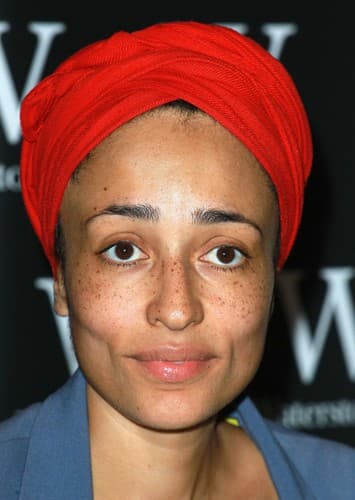
Zadie Smith FRSL is an English novelist, essayist, and short-story writer. Her debut novel, White Teeth (2000), immediately became a best-seller and won a number of awards. She has been a tenured professor in the Creative Writing faculty of New York University since September 2010.
Similar books
- The Buddha of Suburbia
Hanif Kureishi
3.7 (15k) average on GoodreadsFictionExplores immigrant identity, coming-of-age, and cultural clashes in Britain with a satirical tone.
- Middlesex
Jeffrey Eugenides
4.0 (581k) average on GoodreadsLiterary FictionA multi-generational family saga delving into identity, heritage, and the American experience.
- The Old Man and the Sea
Ernest Hemingway
3.8 (831k) average on GoodreadsLiterary FictionA Cuban fisherman's long struggle with a giant marlin becomes a story of endurance and dignity, now retold for young adults with illustrations, phonetic guides, and writing prompts in Traditional Chinese.
- One Hundred Years of Solitude
Gabriel García Márquez
4.1 (753k) average on GoodreadsLiterary FictionThrough the multi-generational story of the Buendía family, a mythical town deals with the repeating patterns of time, love, and solitude, as the extraordinary mixes with the ordinary.
- The Goldfinch
Donna Tartt
3.9 (720k) average on GoodreadsLiterary FictionHaunted by a tragic explosion and clutching a stolen Dutch masterpiece, a young orphan navigates the opulent drawing rooms of New York and the gritty underbelly of the art world, desperately seeking connection and redemption amidst a life spiraling into crime and obsession.
- Little Fires Everywhere
Celeste Ng
4.1 (713k) average on GoodreadsLiterary FictionIn Shaker Heights, an artist and her daughter move in, and their free-spirited lives clash with a rule-bound matriarch, revealing hidden conflicts beneath a perfect surface.





Enjoyed the summary?
A summary gives you the shape of the book. The book itself has the detail, the examples and the voice.
Find White Teeth on AmazonAs an Amazon Associate, BookBrief earns from qualifying purchases. How we're funded