
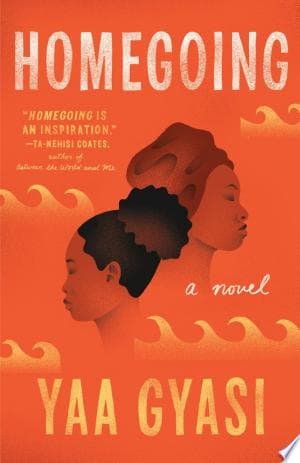
Synopsis
Covers the whole plot, including the ending.
- Difficulty
- Medium
- Pacing
- Moderate
- Mood
- Historical, Melancholy, Profound, Reflective, Educational
- Read it if
- You want a sweeping, multi-generational saga exploring the legacy of slavery from both African and African American perspectives, with deep historical and emotional resonance.
- Skip it if
- You prefer a single protagonist narrative or are not prepared for emotionally heavy themes of trauma, violence, and systemic oppression.
Homegoing Plot Summary
Covers the whole plot, including the ending.
Effia's Birth and Marriage
Effia Otcher is born in Fanteland, a territory often at war with the Asante. Despite her mother Maame's mysterious past and her stepmother Abronoma's harsh treatment, Effia grows into a beautiful young woman. Her father, Big Man, promises her in marriage to a British governor, James Collins. Effia accepts her fate. She moves into the luxurious Cape Coast Castle, unaware that her true mother, Maame, was from an Asante village. Maame had escaped a fire that killed her previous family, leaving a baby girl behind, before marrying Effia's father. Effia's marriage begins her privileged, yet isolated, life inside the slave-trading fort.
Esi's Capture and Imprisonment
Esi Asare, born in an Asante village, is the daughter of Maame and an Asante warrior. She has a peaceful childhood until Fante warriors allied with the British raid her village. Esi is captured with many others. During the brutal march to the coast, she endures hardship and witnesses atrocities. She is brought to Cape Coast Castle and imprisoned in the dungeon, directly beneath the living quarters of the British officers and their wives, including her half-sister Effia. Neither knows the other is there. Esi's time in the dungeon is a terrifying experience of dehumanization, fear, and uncertainty before her forced journey across the Middle Passage.
Quey's Divided Loyalty
Quey, Effia's son with James Collins, grows up in Cape Coast Castle, caught between his Fante heritage and British upbringing. His father sends him to England for education, further separating him from his African roots. When he returns, Quey is expected to join the slave trade, which he finds wrong. He develops a close friendship with his childhood friend, an African man named Yaw. This is complicated by society's expectations and Quey's inner conflict. Quey marries a Fante woman, Nana Yaa, as his father dictates. He continues to struggle with his family's role in the slave trade, feeling guilt and displacement.
Ness's Enslavement in America
Ness, Esi's daughter, is born into slavery on a plantation in America. She is a strong, resilient woman who dreams of freedom despite the terrible conditions. She marries Sam, another enslaved man, and they have a son, Kojo. Ness tries to escape multiple times, leading to severe beatings and permanent scars, especially on her back. Her final, desperate escape attempt with Sam and Kojo fails, leading to Sam's death and Kojo being sold away. Ness remains on the plantation, broken but not entirely defeated, her body and spirit marked by slavery's violence and the pain of losing her family. Her story shows the physical and emotional scars of the enslaved.
James and Abena's Doomed Love
James, Quey's grandson through his son Fiifi, is a Fante man who, unlike his ancestors, rejects the slave trade. He falls in love with Abena, a beautiful woman from an Asante village. Their love is complicated by historical animosity between their tribes and the changing political climate as the British begin to abolish slavery. James struggles to reconcile his family's past with his desire for a different future. He and Abena face many problems, including Abena's father's disapproval and James's inability to provide a traditional bride price. Their story is about love trying to grow in a world still marked by centuries of conflict and exploitation, ending in tragedy.
Kojo's Free Life and Family
Kojo, Ness's son, is sold away from his mother as a young boy. He eventually finds freedom in Baltimore, Maryland. He becomes a devout Christian and marries Anna, a free Black woman, with whom he has eight children. Kojo works as a blacksmith and builds a stable, loving family life, but he is constantly haunted by his mother's memory and the fear she might still be alive and looking for him. He struggles with the guilt of his survival and the uncertainty of his past, never fully losing the psychological burden of slavery. His story shows the challenges faced by free Black people in America, balancing hope for the future with the ever-present shadow of the past.
H's Life in the Coal Mines
H, Kojo's grandson, is born after the Emancipation Proclamation but quickly learns that freedom does not mean equality or opportunity. He is wrongly accused of a crime and sentenced to forced labor in the Alabama coal mines through the convict leasing system, a brutal form of post-slavery exploitation. H endures terrible conditions, violence, and dehumanization, like his enslaved ancestors. He forms a bond with other prisoners, finding solidarity in their shared suffering. His time in the mines scars him deeply, but he eventually survives, carrying the weight of this new oppression and the ongoing struggle for true freedom.
Willie's Harlem Jazz Dreams
Willie, H's daughter, moves to Harlem during the Great Migration, drawn by the promise of opportunity and the jazz scene. She dreams of becoming a professional singer and works in a club, performing with her husband, Robert, a talented pianist. However, Willie struggles with colorism within the Black community; her darker skin is seen as a disadvantage compared to lighter-skinned performers. Her marriage to Robert has tension and infidelity, and she faces racism and poverty despite the Harlem Renaissance's appeal. Willie's story explores identity, ambition, and the lasting effects of historical prejudice in a new urban setting.
Carson's Struggle with Addiction
Carson, known as Sonny, is Willie's son. He grows up in Harlem amid the growing drug culture. He becomes addicted to heroin, which ruins his life and his relationship with his mother. Sonny's addiction shows the deep-seated trauma and systemic issues in his community, a legacy of historical oppression. He deals with his family's past and the hopelessness of his present. Despite his struggles, Sonny has clear moments and wants a better life, but addiction's grip is strong, showing the destructive cycle that can affect individuals and families when faced with societal neglect and historical trauma.
Marjorie's Two Worlds
Marjorie, Sonny's daughter, grows up in Alabama but spends summers in Ghana, visiting her mother's family. She feels caught between two worlds: her American upbringing and her deep connection to her Ghanaian heritage. Marjorie struggles to fully belong in either place, feeling like an outsider in both. She is a talented student and writer, using her experiences to process her complex identity. Her story shows the challenge of bringing the past and present together, and the search for belonging across continents and cultures. Marjorie represents the diaspora's ongoing legacy, seeking to understand her roots and make her own path while honoring her ancestors' journeys.
Marcus's Academic Pursuit
Marcus, Marjorie's cousin and Sonny's grandson (through his other child, Robert), is a sociology graduate student at Stanford University. He is interested in 'historical trauma' and its genetic transmission, studying slavery's intergenerational effects on African Americans. Marcus struggles with his own identity and his family's history, often feeling disconnected from his academic work despite his curiosity. He deals with pressure to succeed and the emotional cost of his research. His character represents the modern effort to understand the scientific and social aspects of historical injustice and its impact on contemporary life.
Reunion at Cape Coast Castle
Marjorie and Marcus, descendants of the two half-sisters, travel to Ghana together. Marcus is researching his thesis, and Marjorie is visiting her mother's family. Their journey ends with a visit to Cape Coast Castle, where their ancestors, Effia and Esi, were unknowingly separated. As they walk through the dungeons and the governor's quarters, they feel a strong connection to their shared history and the slave trade's deep impact. Marjorie, able to understand the local language, acts as a bridge, while Marcus grapples with his academic theories' tangible reality. Their shared experience at the castle brings their separate family lines together, offering a moment of understanding and closure, and emphasizing the past's lasting legacy.
Principal Figures
Effia Otcher
Protagonist (Effia's lineage)
A beautiful Fante woman married to a British governor, living in Cape Coast Castle.
Effia is born into the Fante tribe but is given to a British governor, James Collins, in marriage. She lives a life of relative comfort within Cape Coast Castle, unaware of her true parentage or the horrors occurring beneath her feet in the dungeons. Despite her privileged position, she is often lonely and isolated, struggling with her stepmother's cruelty and the cultural divide with her husband. Her life represents the complicity and complex position of some Africans in the transatlantic slave trade.
Relationships: Maame (Biological mother, unknown to Effia); Abronoma (Stepmother, cruel and jealous); Big Man (Father, arranged her marriage); James Collins (British husband, Governor of Cape Coast Castle); Quey (Son)
Esi Asare
Protagonist (Esi's lineage)
An Asante woman captured and sold into slavery, enduring the Middle Passage.
Esi is born into an Asante village and experiences a relatively peaceful childhood until her capture during a Fante raid. She is imprisoned in the dungeons of Cape Coast Castle, directly beneath her half-sister Effia, before being forcibly transported to America. Esi is resilient and fierce, bearing the physical and emotional scars of her ordeal. Her experiences embody the immense suffering and dehumanization of those directly subjected to the transatlantic slave trade.
Relationships: Maame (Biological mother); Yaw (Father, Asante warrior); Ness (Daughter, born into slavery)
Quey
Supporting (Effia's lineage)
Effia's mixed-race son, grappling with his identity and the slave trade.
Quey is the son of Effia and James Collins. He is a sensitive and intelligent young man, educated in England, who struggles with his dual heritage – Fante and British. He is pressured by his father to participate in the slave trade, a practice he finds morally troubling. His close bond with his childhood friend, Yaw, hints at a deeper emotional complexity and a rejection of the imposed societal norms. Quey represents the internal conflict of those caught between cultures and the burgeoning moral unease surrounding slavery.
Relationships: Effia (Mother); James Collins (Father); Yaw (Childhood friend, intimate bond); Nana Yaa (Wife); Fiifi (Son)
Ness
Supporting (Esi's lineage)
Esi's daughter, a strong enslaved woman who repeatedly attempts to escape.
Ness is Esi's daughter, born into slavery on a Southern plantation. She is characterized by her immense strength and her unwavering desire for freedom. She makes multiple, harrowing attempts to escape, enduring brutal punishments that leave her body scarred. The loss of her husband, Sam, and the sale of her son, Kojo, inflict deep emotional wounds, yet she maintains a fierce spirit. Ness embodies the enduring resistance and incredible suffering of enslaved people in America.
Relationships: Esi (Mother); Sam (Husband, fellow enslaved person); Kojo (Son)
Kojo
Supporting (Esi's lineage)
Ness's son, a free Black man haunted by his past and searching for his mother.
Kojo is Ness's son, sold away from her as a child. He eventually finds freedom in Baltimore, where he becomes a successful blacksmith and a devout Christian. He builds a large, loving family with his wife, Anna, but he is perpetually haunted by the memory of his mother and the uncertainty of her fate. Kojo represents the generation of free Black Americans navigating their new lives while still carrying the psychological scars of slavery and the longing for lost family.
Relationships: Ness (Mother, separated from him); Anna (Wife); H (Grandson)
H
Supporting (Esi's lineage)
Kojo's grandson, a victim of the convict leasing system in Alabama.
H is Kojo's grandson, born after emancipation. He is unjustly imprisoned and forced into labor in the Alabama coal mines through the brutal convict leasing system. H experiences a new form of systemic oppression that echoes the horrors of slavery. He is strong and resilient, forging bonds with fellow prisoners. His story highlights the continued exploitation of Black Americans even after the official end of slavery, and the enduring fight for true freedom and justice.
Willie
Supporting (Esi's lineage)
H's daughter, a jazz singer in Harlem facing colorism and hardship.
Willie is H's daughter, who moves to Harlem during the Great Migration to pursue a singing career. She is a talented jazz singer but struggles with colorism within the Black community, feeling disadvantaged by her darker skin. Her relationship with her husband, Robert, is tumultuous, and she faces the harsh realities of poverty and racism despite the vibrant cultural scene. Willie's character explores the complexities of identity, ambition, and the enduring impact of discrimination in the Jazz Age.
Relationships: H (Father); Robert (Husband); Carson (Sonny) (Son)
Marjorie
Supporting (Esi's lineage)
Sonny's daughter, navigating her dual Ghanaian and American heritage.
Marjorie is Sonny's daughter, growing up in Alabama but spending summers in Ghana. She is a bright, sensitive young woman who feels caught between her two cultures, struggling to fully belong in either. She uses writing as a way to process her complex identity and the weight of her family's history. Marjorie represents the modern descendant grappling with the legacy of the diaspora, seeking to understand her roots and integrate her diverse heritage.
Relationships: Carson (Sonny) (Father); Marcus (Cousin)
Marcus
Supporting (Effia's lineage)
Marjorie's cousin, a Stanford grad student studying historical trauma.
Marcus is Sonny's grandson (through his other child, Robert), and Marjorie's cousin. He is a sociology graduate student at Stanford, researching the intergenerational transmission of historical trauma, particularly the impact of slavery on African Americans. Marcus is intellectual and earnest but also struggles with the emotional weight of his research and his own family's history. He represents the academic and scientific effort to understand the lasting effects of historical injustice.
Relationships: Carson (Sonny) (Grandfather); Marjorie (Cousin)
Themes & Insights
The Enduring Legacy of Slavery
The novel shows how the transatlantic slave trade and its aftermath shaped generations in Africa and America. For Esi's descendants, slavery means intergenerational trauma, poverty, systemic racism, and addiction, seen in Ness's scars, H's convict leasing, and Sonny's heroin use. For Effia's descendants, the legacy is complicity, guilt, and lost cultural identity, seen in Quey's inner conflict and James's struggle to escape his family's past. The story shows that freedom from chains did not mean freedom from enslavement's consequences; its effects echo through every character's life.
“The world was a place that had been created to separate, to force a wedge between those who belonged to the light and those who would forever be in the darkness.”
Identity and Belonging
Each character deals with a complex identity, often feeling caught between worlds. Quey struggles with his Fante and British heritage. Willie faces colorism within the Black community. Marjorie, living in America but connected to Ghana, shows the diaspora's search for belonging. The theme highlights how ancestry, race, place, and history shape identity, making the search for a clear self a main struggle. Characters often reconcile their past with their present and try to understand where they belong.
“She was a woman split in two, a woman living in a world that was always trying to pull her apart.”
Intergenerational Trauma and Resilience
Gyasi shows how trauma passes down through generations, appearing in different forms: physical scars, psychological burdens, addiction, and a sense of loss. Ness's literal scars represent the historical trauma carried by her descendants. Kojo's constant fear of his past, H's experience with convict leasing, and Sonny's addiction are direct results of ancestral suffering. Yet, with this trauma, the novel also shows resilience, a persistent will to survive, love, and seek a better future, as seen in each generation's endurance despite great challenges.
“Every time he had heard that story, he had felt the weight of it, the way it had shaped his life, even though he had never been enslaved himself.”
The Power of Story and Memory
Telling and remembering stories is important for characters to understand themselves and their heritage. From Ghana's oral traditions to the enslaved's fragmented memories, stories link to the past. Many characters, like Marjorie and Marcus, actively seek and piece together their family histories, realizing that understanding their ancestors' experiences helps them understand their own lives. The novel itself shows this theme, reconstructing a large family tree, bringing forgotten histories to light, and showing how memory shapes the present.
“We are all tied to our past, and the only way to move forward is to understand where you come from.”
Plot Devices & Literary Techniques
Parallel Narratives
Alternating chapters follow the descendants of two half-sisters.
The novel is structured with alternating chapters, each focusing on a descendant from either Effia's or Esi's lineage. This device allows Gyasi to explore the diverging experiences of those who remained in Africa and those who were forcibly brought to America. It highlights the profound impact of a single historical event (the slave trade) on two related but distinct branches of a family, illustrating both the shared humanity and the divergent destinies shaped by geography and circumstance. This parallel structure ultimately converges in the final chapters, bringing the two lines together.
Symbolism of Cape Coast Castle
The physical structure embodies the novel's central themes.
Cape Coast Castle serves as a powerful symbol throughout the novel. It is the literal point of separation for Effia and Esi, representing the origin of the diaspora. Its dual nature—luxurious living quarters above brutal dungeons—symbolizes the stark contrast between the lives of the colonizers and the enslaved, and the complicity of some Africans. The castle is a constant reminder of the historical trauma and the intertwined destinies of the two family lines, ultimately becoming a site of symbolic reunion and understanding for the final generation.
The Fire Stone (Fire Woman)
A recurring motif representing trauma, escape, and rebirth.
The 'fire stone' or the 'fire woman' (Maame) is a recurring motif that links the very first generation to subsequent ones. Maame, who escapes a fire and leaves a baby (Effia) behind, eventually has another child (Esi). Fire symbolizes destruction and trauma, but also escape, survival, and a kind of fierce rebirth. This motif underscores the cyclical nature of trauma and the resilience of those who escape or survive devastating events, connecting the initial act of displacement to the ongoing struggles of the descendants.
Oral Tradition and Storytelling
The passing down of family stories and histories.
The importance of oral tradition and storytelling is a key device. Many characters learn about their ancestors through fragmented stories, songs, and overheard conversations, particularly in the Ghanaian lineage. In the American lineage, the stories are often suppressed or forgotten due to the trauma of slavery, but the desire to know one's history remains strong. This device emphasizes the power of narrative in preserving identity, culture, and memory, and how the absence or presence of these stories shapes a character's understanding of their place in the world.
Homegoing Quotes
“We are like the sun and the moon, you and I. Always close, always there, but never together.”
“The world was a place that would take from you, and it would take from you again and again, but it would never give back.”
“They had forgotten the past, but the past had not forgotten them.”
“Fire, water, earth, air. We are all made of these things. We are all connected.”
“A man will come and make you a wife, and he will tell you that you are his. But you are not his. You are your own.”
“How could a man be happy when he was not free?”
“The past is a ghost that follows you everywhere. It whispers in your ear, reminding you of what you've lost.”
“Some things, once you've seen them, you can never unsee.”
“We were not meant to be broken. We were meant to be whole.”
“There was a kind of sadness that was so deep, it felt like joy.”
“The things that we think we know about ourselves, about our families, about our history, are often just stories.”
“Black stone, white stone. Each one a life, each one a death.”
“It was impossible to forget a thing you had never seen.”
“We are all tied to the past, whether we like it or not. The past is not dead. It is not even past.”
Quiz
10 questions on the plot and the characters. Each answer comes with a short explanation.
Question 1
What is the name of the half-sister who marries an English slave trader and lives in Cape Coast Castle?
- Effia Otcher
- Esi Asare
- Akua Otcher
- Maame
Show answer
A. Effia Otcher Effia Otcher is the half-sister who marries James Collins, an English governor, and lives in the comfort of Cape Coast Castle.
Question 2
Which of the following is a direct descendant of Esi, the half-sister who is enslaved?
- Quey
- Kojo
- Abena
- James
Show answer
B. Kojo Kojo is one of Esi's descendants, born into slavery in America. Quey, Abena, and James are descendants of Effia.
Question 3
What significant object does Maame give to both Effia and Esi's mothers, serving as a symbolic link between the sisters?
- A cowrie shell necklace
- A black stone
- A woven basket
- A fertility doll
Show answer
B. A black stone Maame gives a black stone to Effia's mother, Maame, and later it is implied she leaves one for Esi, symbolizing their shared lineage.
Question 4
What is the primary reason Kojo (H) and his wife, Anna, decide to leave the South and move North?
- To find better farming land
- To escape the violence and racial oppression of the Jim Crow South
- To join the burgeoning jazz scene in Harlem
- To search for lost family members
Show answer
B. To escape the violence and racial oppression of the Jim Crow South Kojo and Anna move North during the Great Migration, primarily to escape the brutal racial violence and systemic oppression of the Jim Crow South.
Question 5
What is the 'fire' that has burned in the hearts of Esi's descendants, often causing them pain or struggle, throughout generations?
- A literal curse passed down through the family
- The trauma and legacy of slavery, manifesting as deep-seated anger, fear, and a sense of displacement
- A burning desire for revenge against the white slave traders
- A passion for music and art that often leads to hardship
Show answer
B. The trauma and legacy of slavery, manifesting as deep-seated anger, fear, and a sense of displacement The 'fire' is a recurring metaphorical element, representing the enduring trauma and psychological impact of slavery that affects Esi's descendants, often leading to anger, struggle, and a feeling of being 'burnt.'
Question 6
What role does James Collins play in the life of Effia?
- He is her biological father.
- He is the English governor whom she marries.
- He is her first love, but they cannot be together.
- He is a Fante warrior who attempts to rescue her.
Show answer
B. He is the English governor whom she marries. James Collins is the English governor of Cape Coast Castle whom Effia is compelled to marry, ensuring her a life of relative comfort within the castle walls.
Question 7
What is the significance of the character Akua's 'dream' or visions in the novel?
- They predict future lottery numbers.
- They are a manifestation of her mental illness, but also connect her to the trauma of her ancestors.
- They are literal prophecies that guide her family's decisions.
- They represent her desire to escape her village and travel.
Show answer
B. They are a manifestation of her mental illness, but also connect her to the trauma of her ancestors. Akua's 'dream' is a recurring vision of fire and a woman, which is interpreted as a manifestation of her mental illness, but also symbolically links her to the generational trauma and the 'fire' of Esi's line.
Question 8
Which historical event directly impacts H's (Kojo's son) life and leads to his imprisonment?
- The American Civil War
- The construction of the transcontinental railroad
- Convict leasing in the post-Reconstruction South
- The Great Depression
Show answer
C. Convict leasing in the post-Reconstruction South H is unjustly imprisoned and forced into convict leasing, a system of penal labor that exploited African Americans in the post-Reconstruction South.
Question 9
What is the primary difference in how the legacy of slavery affects Effia's descendants compared to Esi's descendants?
- Effia's descendants are unaffected, while Esi's are constantly struggling.
- Effia's descendants grapple with complicity, guilt, and the loss of their traditional culture, while Esi's descendants endure the direct, brutal, and enduring trauma of enslavement and its aftermath.
- Effia's descendants are all wealthy and powerful, while Esi's are all poor.
- Effia's descendants are plagued by physical illness, while Esi's are mentally strong.
Show answer
B. Effia's descendants grapple with complicity, guilt, and the loss of their traditional culture, while Esi's descendants endure the direct, brutal, and enduring trauma of enslavement and its aftermath. Effia's descendants, though not enslaved, contend with the moral ambiguities of their ancestors' involvement in the slave trade and the erosion of their traditional identity, while Esi's descendants face the direct, systemic, and generational trauma of slavery and racism in America.
Question 10
What is the final destination for Marjorie and Marcus, the last descendants featured in the novel?
- Accra, Ghana
- Cape Coast Castle, Ghana
- Mississippi, USA
- Harlem, USA
Show answer
B. Cape Coast Castle, Ghana Marjorie and Marcus, representing the convergence of the two family lines, meet at Cape Coast Castle, where their ancestors' paths diverged, bringing the narrative full circle.
Homegoing FAQ
What is the central premise of 'Homegoing' and how are the two half-sisters connected?
'Homegoing' traces the parallel lives of two Asante half-sisters, Effia Otcher and Esi Asare, born in 18th-century Ghana. Effia marries James Collins, an English governor, and lives in comfort in Cape Coast Castle, while Esi is captured, imprisoned in the dungeons below Effia's quarters, and sold into slavery, beginning the divergent paths of their descendants across eight generations.
How does the novel structure its narrative to follow eight generations of descendants?
The novel employs a unique structure where each chapter focuses on a single descendant from either Effia's or Esi's lineage, alternating between the two family lines. This episodic approach allows Gyasi to cover significant historical periods, from the Gold Coast and the transatlantic slave trade to the American Civil War, the Great Migration, and contemporary America, while maintaining a clear focus on individual experiences.
What role does Cape Coast Castle play in the narrative, both for Effia and Esi?
Cape Coast Castle serves as a pivotal, haunting location. For Effia, it is her home as the wife of a British officer, a place of relative comfort but also complicity. For Esi, it is a place of unimaginable horror, where she is held captive in the dungeons before being forced onto a slave ship. The castle thus embodies both privilege and profound suffering, linking the sisters through its shared but vastly different experiences.
How does the novel explore the legacy of slavery in both Ghana and America?
The novel explores slavery's legacy by depicting its direct impact on Esi's descendants in America, showing the generational trauma of enslavement, Jim Crow, and systemic racism. Concurrently, it examines the complicity and lasting effects of the slave trade on those who remained in Ghana through Effia's lineage, highlighting issues of inter-tribal conflict, British colonialism, and the suppression of historical memory among the Fante.
What is the significance of the 'fire' and 'water' motifs often associated with Effia and Esi's lines?
Effia's lineage is often associated with fire, symbolizing the heat of the Gold Coast, her comfort in her marriage, and later, the passion or destruction faced by her descendants. Esi's line is linked to water, representing the Middle Passage, the constant threat of drowning or being overwhelmed, and the enduring flow of life and memory despite immense hardship.
Are there any recurring symbols or objects that appear across different generations?
Yes, several symbols recur. The black stone necklace, inherited by Esi, represents her lineage's enduring connection to Africa and its struggles. The scar on Maame's back, passed down or mirrored by descendants, symbolizes the indelible marks of trauma. The motif of fire and water, as well as the 'big fire' (village raid) and the 'water' (ocean crossing), also serve as generational markers.
How does the character of Maame, the mother of both Effia and Esi, subtly influence their destinies?
Maame's actions, though briefly depicted, are crucial. Her escape from her abusive husband, Cobbe, and her subsequent abandonment of Effia (leaving her with her stepmother, Baaba) and later her choice to save Esi from a burning village, directly set the sisters on their separate paths. Her mysterious past and the secrets she carries subtly shape the initial conditions for both lineages.
What is the significance of H and Willie's relationship and their struggles in Jazz Age Harlem?
H and Willie's relationship highlights the psychological and social challenges faced by Black Americans during the Great Migration and the Harlem Renaissance. H, scarred by the convict lease system, struggles with violence and anger, while Willie, a talented singer, faces discrimination, the heartbreak of a lost child, and the pressures of performing, illustrating how systemic oppression continued to impact personal lives even after slavery.
How does the novel portray the psychological burden of inherited trauma on characters like Kojo and Ness?
Kojo, Esi's son, carries the trauma of his mother's enslavement and his own early experiences as a 'bush-runner,' manifesting as a deep-seated fear and a desire for stability and family. Ness, Kojo's daughter, endures brutal treatment on a plantation and develops a fierce, almost feral, resistance, demonstrating how trauma can be internalized and expressed through both quiet resilience and explosive defiance, impacting their choices and relationships.
Discuss the internal conflicts faced by characters like James and Quey, Effia's descendants, regarding their roles in the slave trade.
James, Effia's son, grapples with the moral dilemma of his Fante heritage and his father's complicity in the slave trade, eventually rejecting his family's involvement. Quey, James's son, faces immense internal conflict as a mixed-race man educated by the British, torn between his Fante identity and his English upbringing, and pressured to participate in the slave trade by his father. Both struggle with identity and the ethics of their family's legacy.
How do characters like Akua and Yaw demonstrate the struggle with mental health across generations?
Akua, Effia's descendant, suffers from extreme night terrors and is believed to be possessed by 'fire,' foreshadowing the mental health struggles that recur. Yaw, Akua's son, carries the emotional scars of his mother's 'madness' and his own disfigurement, leading to a profound sense of isolation and a struggle to connect with others, showcasing how intergenerational trauma can manifest as mental and emotional distress.
What is the ultimate message or 'homegoing' that the novel suggests?
The novel suggests that 'homegoing' is not merely a physical return to Africa, but a spiritual and ancestral journey of understanding and reconciliation with one's past. It implies a coming to terms with the complex legacies of both slavery and complicity, and the eventual healing that comes from acknowledging history and forging connections across generations and continents.
Why does the author choose to end the novel with Marcus and Marjorie, bringing the two lineages together?
Ending with Marcus and Marjorie symbolizes the eventual, albeit distant, reunion and healing of the two separated lineages. Their meeting in Ghana, at Cape Coast Castle, signifies a full circle, a confrontation with the shared history of their ancestors, and the possibility of transcending the historical divisions through understanding and shared identity, offering a glimmer of hope for future generations.
How does 'Homegoing' challenge traditional narratives of slavery and colonialism?
'Homegoing' challenges traditional narratives by giving voice to both the enslaved and those who remained in Africa, including those who were complicit in the slave trade. It moves beyond a simplistic good-vs-evil dichotomy, exploring the complexities of tribal warfare, the role of African middlemen, and the internal struggles of those caught between cultures, offering a more nuanced and multifaceted view of history.
What is the significance of the final scene where Marjorie and Marcus touch the ocean?
The final scene, where Marjorie and Marcus touch the ocean that separated their ancestors, is deeply symbolic. It represents a physical and spiritual connection to their shared past, acknowledging the 'Middle Passage' that tore Esi's line away, and the same waters that Effia's descendants viewed from the shore. It signifies a moment of catharsis, healing, and the bridging of the vast historical and geographical divide.
How does the novel explore the concept of identity, particularly for mixed-race characters like Quey and Yaw?
The novel deeply explores the fractured identities of mixed-race characters. Quey, as a Fante-British man, is perpetually caught between two worlds, struggling to find belonging and purpose. Yaw, whose father is white and mother is Fante, grapples with his disfigurement and the perceived otherness it creates, highlighting how racial and physical differences can profoundly shape one's sense of self and place in the world.
What role does storytelling and the oral tradition play in the novel, especially for characters like Akua and Marjorie?
Storytelling, though often suppressed, is a vital undercurrent. Akua's 'madness' is partly a manifestation of unexpressed trauma and untold stories. Marjorie, a teacher and poet, actively engages with storytelling, using it to connect with her heritage and to articulate the complex history of her family. This emphasizes the power of narrative to preserve memory, process trauma, and forge identity across generations.
How does the author use the progression of language and dialect to reflect the journey of the characters?
The author subtly shifts the language and dialect used in each chapter to reflect the character's time and location. From the more formal, almost biblical prose for the early Ghanaian chapters, to the evolving English of the American South, the distinct patois of Harlem, and finally contemporary American English, the linguistic progression mirrors the historical journey and cultural assimilation (or resistance) of the descendants.
About the author
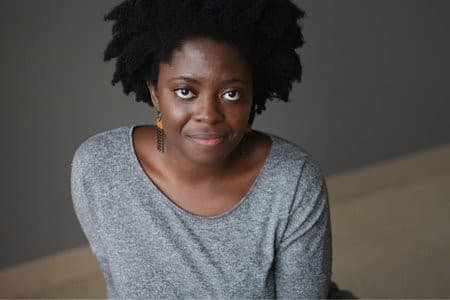
Yaa Gyasi is a Ghanaian-American novelist. Her debut novel Homegoing, published in 2016, won her, at the age of 26, the National Book Critics Circle's John Leonard Award for best first book, the PEN/Hemingway Award for a first book of fiction, the National Book Foundation's "5 under 35" honors for 2016 and the American Book Award. She was awarded a Vilcek Prize for Creative Promise in Literature in 2020.
Similar books
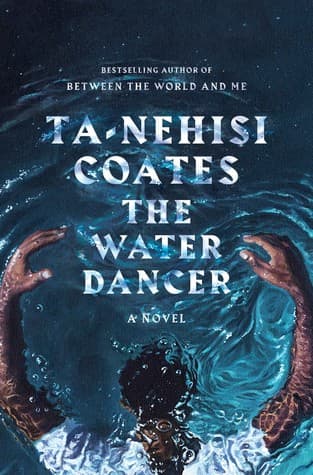
- The Water Dancer
Ta-Nehisi Coates
4.1 (64k) average on GoodreadsFantasyExplores the trauma and resilience of slavery through a unique lens, with a focus on generational impact.
- Roots: The Saga of an American Family
Alex Haley
4.4 (146k) average on GoodreadsHistorical FictionA seminal multi-generational narrative tracing a family's journey from Africa through slavery and beyond.
- Beloved
Toni Morrison
3.9 (325k) average on GoodreadsLiterary FictionHomegoing offers a broader historical canvas tracing multiple generations and lineages from both sides of the Atlantic, whereas Beloved provides an intense, psychologically deep focus on the direct trauma and aftermath for a single family unit immediately following slavery. Gyasi's novel is more about the systemic, generational ripple effect, while Morrison's is about the profound, haunting individual and familial psychological scars.
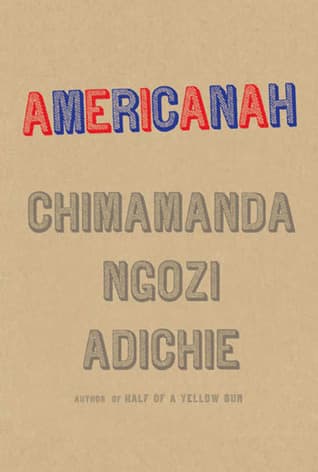
- Americanah
Chimamanda Ngozi Adichie
4.3 (264k) average on GoodreadsLiterary FictionHomegoing is primarily historical fiction, meticulously detailing the origins and lasting impact of the transatlantic slave trade and colonialism. Americanah, while acknowledging historical context, is a contemporary novel focused on modern African identity, immigration, race relations in the US, and the complexities of returning home. Homegoing provides a foundational historical understanding that informs the contemporary issues explored in Americanah.
- The Old Man and the Sea
Ernest Hemingway
3.8 (831k) average on GoodreadsLiterary FictionA Cuban fisherman's long struggle with a giant marlin becomes a story of endurance and dignity, now retold for young adults with illustrations, phonetic guides, and writing prompts in Traditional Chinese.
- One Hundred Years of Solitude
Gabriel García Márquez
4.1 (753k) average on GoodreadsLiterary FictionThrough the multi-generational story of the Buendía family, a mythical town deals with the repeating patterns of time, love, and solitude, as the extraordinary mixes with the ordinary.




Enjoyed the summary?
A summary gives you the shape of the book. The book itself has the detail, the examples and the voice.
Find Homegoing on AmazonAs an Amazon Associate, BookBrief earns from qualifying purchases. How we're funded