
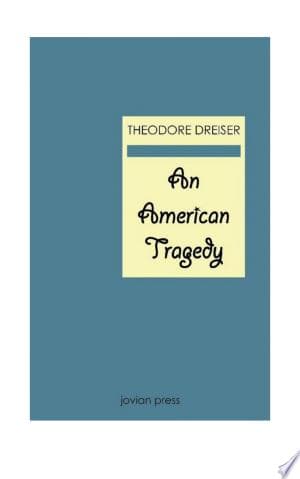
Synopsis
Covers the whole plot, including the ending.
- Difficulty
- Medium
- Pacing
- Slow
- Mood
- Melancholy, Tragic, Reflective, Critical, Realistic
- Read it if
- You enjoy sweeping, character-driven sagas exploring ambition, social class, moral dilemmas, and the American Dream's dark side, with a focus on psychological realism and societal critique.
- Skip it if
- You prefer fast-paced plots, lighthearted themes, or dislike lengthy, detailed explorations of character psyche and societal pressures leading to tragic outcomes.
An American Tragedy Plot Summary
Covers the whole plot, including the ending.
Clyde's Humble Beginnings and Early Influences
Clyde Griffiths grows up in extreme poverty in Kansas City, the son of street preachers, Asa and Hannah Griffiths. He dislikes their public displays of faith and the constant money problems, which make him work from a young age. He works menial jobs, first as a soda jerk, then as a bellhop at the upscale Green-Davidson Hotel. Here, he sees a world of wealth, luxury, and casual immorality that contrasts with his upbringing. He befriends other bellhops, Ratterer and Hegglund, who introduce him to drinking, gambling, and women. Clyde quickly likes this fast life and wants to move up socially.
Infatuation, Deception, and a Tragic Escape
Clyde's desire for social acceptance and love leads him into a relationship with Hortense Briggs, a flirtatious and materialistic girl. She manipulates him into buying expensive gifts he cannot afford. He likes her deeply, despite her shallowness and the financial strain she causes. One evening, after a night out with his bellhop friends and their companions, including Hortense, they are in a serious car accident. The car, driven by one of his friends, hits and kills a young girl. Panicked, Clyde and the others flee the scene to avoid arrest. Fearing the consequences, Clyde decides to leave Kansas City, abandoning his family and his past.
A New Beginning in Lycurgus
Clyde travels to Chicago, hoping to disappear. He eventually contacts his wealthy uncle, Samuel Griffiths, who owns a collar factory in Lycurgus, New York. Samuel, at first hesitant because of Clyde's past and lack of experience, offers him a low-level job in his factory's shrinking department. This is a step up for Clyde, as he is now connected, though distantly, to a prominent industrial family. He wants to make a good impression and rise socially, but his lack of education and social polish makes him an outsider among his affluent cousins, especially the snobbish Gilbert Griffiths.
Forbidden Love and Social Aspirations
While working at the factory, Clyde meets Roberta Alden, a shy and innocent factory girl from a poor farm background. Their relationship is kept secret because of the factory's strict rules against managers (even low-level ones like Clyde) dating female employees. Clyde likes Roberta, but his main goal is to be accepted into Lycurgus's elite social circles. He is increasingly drawn to the glamorous world of his cousin, Sondra Finchley, a sophisticated and beautiful debutante, who symbolizes the life he wants.
The Pressure Mounts: Roberta's Pregnancy
As Clyde's relationship with Sondra Finchley grows, giving him access to Lycurgus high society, Roberta tells him she is pregnant with his child. This news causes Clyde to panic. He sees the pregnancy as a barrier to his dreams of wealth and status, especially his growing relationship with Sondra. He tries to find a doctor for an abortion, but fails. Roberta, desperate and isolated, insists that Clyde marry her to legitimize their child. She threatens to expose their affair if he refuses. Clyde feels trapped between his ambitions and his responsibility.
A Desperate Plan Takes Shape
Clyde, consumed by fear and wanting to escape his situation, considers a terrible solution after reading a newspaper article about a couple who drowned in a boating accident, first thought to be murder but later ruled accidental. The idea of faking Roberta's death as an accident takes hold in his mind. He researches methods, even buying a camera and a tripod, supposedly for a trip, but with the subconscious thought of using the tripod as a weapon. He struggles with his conscience, but his strong ambition and terror of social ruin push him toward this dark path, convincing himself it is his only escape.
The Tragic Voyage on Big Bittern Lake
Clyde arranges a boat trip with Roberta on Big Bittern Lake, a secluded spot. He intends to confront her and, perhaps, carry out his plan. Roberta, hoping for a resolution and marriage, does not know Clyde's true intentions. As they are on the lake, a heated argument starts. Clyde, overwhelmed by conflicting emotions and the pressure, hits Roberta with the camera tripod. She falls into the water. He hesitates, then lets her drown. He capsizes the boat to make it look like an accident, then swims to shore, abandoning Roberta's body and his conscience to the dark waters.
The Investigation and Clyde's Capture
Roberta's body is eventually found, and the circumstances immediately cause suspicion. The local authorities, especially District Attorney Mason, start a thorough investigation. Clyde's nervous behavior, his conflicting statements, and the evidence found at the scene (including remnants of his belongings) quickly point to him as the main suspect. Despite his attempts to appear innocent and his flight from the scene, he is arrested. The news shocks Lycurgus society, especially the wealthy Griffiths family, who want to distance themselves from the scandal.
The Sensational Trial
Clyde's trial becomes a sensational media event, attracting national attention. The prosecution, led by District Attorney Mason, builds a case against Clyde. They present circumstantial evidence, Clyde's contradictory statements, and the emotional testimony of Roberta's family. They portray Clyde as a manipulative seducer and cold-blooded murderer driven by social ambition. Despite the efforts of his defense lawyers, provided by his wealthy uncle but more concerned with appearances than justice, Clyde struggles to tell his side of the story. He often appears evasive and guilty because of his weakness and fear.
The Verdict and Appeals
After a long and emotional trial, the jury finds Clyde Griffiths guilty of first-degree murder. The verdict devastates Clyde, who still struggles to understand the seriousness of his actions and the legal consequences. His defense team immediately appeals, arguing for a new trial based on legal technicalities and the sensational nature of the proceedings. The appeals process lasts for months, giving Clyde brief moments of hope, but ultimately confirming his grim fate. The legal battle shows the class differences and the relentless nature of justice.
Spiritual Awakening and Final Confession
While awaiting execution on death row, Clyde undergoes a spiritual change, influenced by the prison chaplain, Reverend McMillan, and his mother, Hannah. He begins to think about his life, his moral failures, and the full extent of his guilt. Though he never fully admits to premeditated murder, he confesses to his mother and the chaplain that he wished Roberta dead, and that his indecision and inaction directly led to her drowning. This qualified confession brings him some peace as he considers his actions and their results.
Execution and Aftermath
Despite all appeals being exhausted, Clyde Griffiths is led to the electric chair. His final moments are filled with fear, regret, and a new spiritual acceptance. His execution ends a life marked by ambition, moral weakness, and tragic choices. The novel ends by looking at the lasting impact of the tragedy on those connected to Clyde – Roberta's grieving family, Sondra's moved-on life, and his own parents, who continue their missionary work, forever changed by their son's fate. Clyde's story comments on the American Dream and the societal forces that shape individual lives.
Principal Figures
Clyde Griffiths
Protagonist
An ambitious but weak-willed young man striving for social acceptance and wealth.
Clyde is the central figure of the novel, driven by an intense desire to escape his impoverished, religious upbringing and achieve the material wealth and social status he constantly observes in others. He is characterized by his naivete, immaturity, and a profound moral weakness that prevents him from taking responsibility for his actions. He is easily swayed by external influences, whether it's the hedonistic lifestyle of his bellhop friends, the materialistic demands of Hortense, or the allure of Sondra Finchley's world. His ambition is not matched by his intellect or moral fortitude, leading him to make increasingly desperate and ultimately tragic choices. He is a product of his environment, yearning for a life he feels entitled to but lacks the inner strength to earn ethically.
Relationships: Roberta Alden (Lover, victim); Sondra Finchley (Object of romantic and social ambition); Hortense Briggs (Early love interest, manipulative); Samuel Griffiths (Wealthy uncle, employer); Hannah Griffiths (Mother, spiritual guide); Asa Griffiths (Father, street preacher)
Roberta Alden
Victim/Supporting
A naive factory girl, Clyde's lover, and the tragic victim of his ambition.
Roberta is a poor, innocent, and morally upright farm girl who works in Samuel Griffiths' factory. She falls genuinely in love with Clyde and is initially cautious about their secret affair, adhering to her strict moral code. Her love for Clyde makes her vulnerable, and she becomes pregnant with his child, which forces her to demand marriage. She represents the moral obligation and the lower-class world that Clyde desperately tries to escape. Her plight highlights the social and economic pressures faced by women of her class and her ultimate fate is the catalyst for Clyde's downfall.
Relationships: Clyde Griffiths (Lover, father of her child); Mr. and Mrs. Alden (Parents)
Sondra Finchley
Supporting
A beautiful and wealthy socialite who embodies Clyde's aspirations for high society.
Sondra is a sophisticated, charming, and beautiful young woman from Lycurgus's elite social circles. She represents everything Clyde desires: wealth, status, and social acceptance. She is initially attracted to Clyde's good looks and his connection, however distant, to the powerful Griffiths family. She is not malicious, but rather a product of her privileged environment, unburdened by the struggles of the lower classes. Her influence on Clyde is immense, as his desire to be with her and join her world becomes the primary motivation for his actions, including his desperate plan to eliminate Roberta.
Relationships: Clyde Griffiths (Romantic interest, social aspiration); Gilbert Griffiths (Cousin, social acquaintance)
Samuel Griffiths
Supporting
Clyde's wealthy and influential uncle, a prominent industrialist in Lycurgus.
Samuel Griffiths is a successful and respectable factory owner, a pillar of the Lycurgus community. He is initially hesitant to help Clyde due to his lack of experience and connection to his poorer side of the family, but eventually offers him a low-level position out of a sense of family duty. He represents the established, wealthy class and the American Dream achieved through hard work. Despite his moral uprightness, he is also concerned with his family's reputation and provides legal assistance to Clyde during the trial, not necessarily out of compassion for Clyde himself, but to mitigate the scandal's impact on his family name.
Relationships: Clyde Griffiths (Uncle, employer); Gilbert Griffiths (Son); Hannah Griffiths (Sister-in-law)
Hannah Griffiths
Supporting
Clyde's devoutly religious and poverty-stricken mother.
Hannah is Clyde's long-suffering and deeply religious mother, who, along with her husband, dedicates her life to street missionary work. She embodies selfless love and unwavering faith, constantly worrying about her children's spiritual and physical well-being. Despite Clyde's rejection of their lifestyle and his moral failings, she remains a constant source of unconditional love and support, especially during his trial and imprisonment. She represents the moral and spiritual foundation that Clyde abandons, but to which he ultimately returns in his final moments, seeking solace and forgiveness.
Relationships: Clyde Griffiths (Son); Asa Griffiths (Husband)
District Attorney Mason
Antagonist
The relentless prosecutor determined to secure Clyde's conviction.
District Attorney Mason is the ambitious and astute prosecutor in Clyde's murder trial. He is portrayed as a shrewd and determined legal professional, skilled in rhetoric and the manipulation of public opinion. Mason meticulously gathers evidence and constructs a compelling narrative that portrays Clyde as a cold-blooded murderer, driven by lust and ambition. He effectively uses the social prejudices of the time and the sensational nature of the crime to sway the jury. He embodies the rigid, unforgiving hand of the law and the societal need for retribution, serving as a formidable opponent for Clyde.
Relationships: Clyde Griffiths (Prosecutor)
Hortense Briggs
Mentioned/Supporting
Clyde's materialistic and manipulative early girlfriend in Kansas City.
Hortense is Clyde's first significant romantic interest in Kansas City. She is flirtatious, superficial, and highly materialistic, constantly demanding expensive gifts from Clyde that he cannot afford. She uses her charm to manipulate Clyde, taking advantage of his desire for love and acceptance. Her brief but impactful relationship with Clyde showcases his early moral weakness and susceptibility to external influence, setting a pattern for his later, more tragic choices.
Relationships: Clyde Griffiths (Early love interest)
Gilbert Griffiths
Supporting
Clyde's snobbish and disdainful cousin in Lycurgus.
Gilbert is Samuel Griffiths' son and Clyde's cousin. He embodies the entrenched snobbery and class consciousness of the wealthy Lycurgus elite. He views Clyde with disdain and suspicion, seeing him as an unwelcome intruder and a threat to his own social standing. Gilbert actively works to keep Clyde marginalized within the family and society, highlighting the rigid social barriers that Clyde constantly tries to overcome. He represents the unforgiving nature of the upper class and their resistance to outsiders.
Relationships: Clyde Griffiths (Cousin, antagonist); Samuel Griffiths (Father)
Themes & Insights
The American Dream Corrupted
The novel explores the negative side of the American Dream, where the pursuit of wealth and social status can lead to moral decline and tragedy. Clyde's strong desire for a life of luxury, represented by Sondra Finchley and the Lycurgus elite, overrides any sense of ethics. His belief that he deserves a better life, combined with his lack of opportunity and moral guidance, pushes him to desperate actions. Dreiser criticizes a society that values material success without providing fair ways to achieve it, suggesting that the dream itself can become destructive when pursued without moral foundation.
“For the first time he began to feel that he had a right to something better than he had ever had.”
Social Class and Inequality
A main theme is the sharp contrast between social classes and the pressure it puts on people. Clyde's journey from extreme poverty to the edge of high society highlights the rigid class structure of early 20th-century America. He constantly feels the weight of his background, leading to a strong desire to leave his past and join the wealthy elite. The novel shows how class dictates not only opportunity but also perception, as seen in how Clyde and his wealthy cousins are treated differently, and how the justice system can be affected by social standing. Roberta's fate further shows the vulnerability of the lower classes.
“He wanted to be in the swim, to be one of those who were important, who were at least considered.”
Moral Weakness and Indecision
Clyde Griffiths' character is defined by his moral weakness and constant indecision. He is easily influenced by outside forces and lacks the inner strength to make ethical choices, often choosing the easiest path or the one with the most personal gain. His inability to confront Roberta honestly, his wavering conscience about the murder, and his struggles to speak his truth during the trial all come from this basic flaw. Dreiser shows how this weakness, rather than clear malice, can lead to terrible consequences, suggesting that character, or its absence, greatly affects one's fate.
“He was weak, but he was not evil.”
Fate vs. Free Will
The novel explores the tension between predetermined fate and individual choice. While Clyde makes choices that lead to his downfall, Dreiser often emphasizes the powerful external forces—poverty, social ambition, societal pressures, and even chance events—that seem to work against him. The car accident, Roberta's unexpected pregnancy, and the newspaper article about the drowning all play roles in pushing Clyde toward his tragic end. This theme suggests that while people are responsible for their actions, they are also products of their environment and circumstances, caught in a web of events that limit their true freedom.
“He was a creature of a thousand moods, and a thousand circumstances.”
Justice and Retribution
The legal proceedings against Clyde look closely at the American justice system. Dreiser shows the trial as a sensationalized event, influenced by public opinion and the prosecutor's political ambitions, rather than a purely objective search for truth. The novel questions guilt and innocence, especially regarding Clyde's complex, qualified responsibility, and whether the system truly delivers justice or just punishment. The contrast between Clyde's internal struggle and the legal system's black-and-white judgment highlights the limits of formal justice in dealing with moral complexities.
“The law was a machine, and he was caught in its gears.”
Plot Devices & Literary Techniques
Social Realism
A literary movement depicting life with objective detail and focus on social issues.
Dreiser employs social realism to meticulously detail the lives of his characters, particularly focusing on the impact of socio-economic conditions. He provides extensive descriptions of Clyde's impoverished upbringing, the inner workings of the factory, the rituals of high society, and the minutiae of the legal process. This device grounds the narrative in a believable reality, allowing the reader to understand the systemic pressures that shape Clyde's choices and fate. The objective, almost journalistic, portrayal of events and environments underscores the novel's critique of American society and its class structures.
Naturalism
A literary movement emphasizing environmental, social, and hereditary forces on human character.
Naturalism is a dominant force in 'An American Tragedy,' portraying Clyde as a victim of forces beyond his control, including his heredity (the weak will from his parents), his environment (poverty, the allure of wealth), and social pressures (class aspirations, the demands of Roberta). Dreiser often depicts Clyde as a 'sport of circumstance,' emphasizing how his inherent weaknesses and external pressures combine to drive him towards his tragic destiny. This device reduces the role of free will, suggesting that human beings are largely determined by their biological and social environments, leading to an almost scientific observation of human behavior.
Foreshadowing
Hints or clues about future events, building suspense and inevitability.
Dreiser uses foreshadowing extensively, particularly in building the sense of impending doom for Clyde. The initial car accident in Kansas City, where a girl is killed and Clyde flees, subtly foreshadows the later, more direct tragedy involving Roberta. Clyde's morbid fascination with the newspaper article about the drowned couple explicitly plants the idea of a staged accident in his mind. These narrative hints create a powerful sense of inevitability, making Clyde's eventual crime feel less like a sudden act and more like the culmination of a series of predetermined steps and moral compromises.
Symbolism (The Lake)
Big Bittern Lake as a symbol of escape, temptation, and moral abyss.
Big Bittern Lake functions as a potent symbol in the novel. Initially, it represents a potential escape for Clyde, a secluded spot where he can confront Roberta and perhaps resolve his predicament. However, it quickly transforms into a symbol of moral temptation and the abyss into which Clyde plunges. The dark, isolated waters become the scene of his most heinous act, reflecting the moral darkness within him. Post-crime, the lake becomes a place of concealment and ultimately, discovery, embodying the inescapable consequences of his actions and the inability to truly 'drown' one's guilt.
Irony (Clyde's Name)
The ironic contrast between Clyde's name and his actual character/fate.
The name 'Clyde Griffiths' itself can be seen as a subtle ironic device. 'Clyde' might evoke a sense of strength or a river flowing, suggesting direction or force, while 'Griffiths' could imply a connection to griffins, mythical creatures of power and nobility. Yet, Clyde's character is marked by weakness, indecision, and a lack of true nobility. This ironic contrast highlights the gap between his aspirations and his reality, and between the potential implied by a name and the tragic reality of his life. It underscores Dreiser's naturalistic view of an individual often failing to live up to societal or inherent ideals.
An American Tragedy Quotes
“For the first time in his life Clyde realized what a terrible thing it was to be poor; how it hemmed one in, restricted one, shamed one.”
“Life seemed to him a thing of gaudy, glittering surfaces, and he longed to plunge into it, to be of it, to enjoy it.”
“He was not strong enough to take a stand against the desires that surged within him, nor yet to face the possible consequences of satisfying them.”
“It was the perfect type of American tragedy, that of the man who is trying to climb, and who is pulled down by the very conditions that make his attempt possible.”
“He was like a fly caught in a spider's web, struggling feebly, but inevitably doomed.”
“For a long time he sat there, staring into the blackness, seeing nothing, thinking nothing, feeling only a vast, formless despair.”
“The law was a thing of terror, a great, cold, impersonal machine that ground relentlessly on, crushing everything in its path.”
“He wanted to be rich, to be admired, to be envied, to be sought after, to be a figure.”
“The world was full of beautiful things, beautiful women, beautiful clothes, beautiful houses. And he wanted them all.”
“It was not a question of good or evil, but of success or failure.”
“He felt that he was being pursued by some evil, relentless destiny from which there was no escape.”
“And the world, the great, beautiful, indifferent world, went on its way, heedless of his small tragedy.”
“He had wanted so much, and now he had nothing. Less than nothing.”
“He was merely a creature of circumstance, a puppet pulled by invisible strings.”
Quiz
10 questions on the plot and the characters. Each answer comes with a short explanation.
Question 1
What is Clyde Griffiths' initial family background?
- Wealthy industrialists with a focus on philanthropy.
- Poor and devoutly religious street missionaries.
- Middle-class professionals who value education.
- Farmers struggling with the land during a drought.
Show answer
B. Poor and devoutly religious street missionaries. Clyde is raised by poor and devoutly religious parents who involve him in their street missionary work, setting the stage for his later desire to escape poverty.
Question 2
What were Clyde's first two significant jobs mentioned in the provided text?
- Factory worker and then a clerk in a department store.
- Soda jerk and then a bellhop at a prestigious hotel.
- Newspaper delivery boy and then a bank teller.
- Farmhand and then a stable boy for a wealthy family.
Show answer
B. Soda jerk and then a bellhop at a prestigious hotel. To help support his family, Clyde first works as a soda jerk and then becomes a bellhop at a prestigious Kansas City hotel, where he is exposed to a more sophisticated lifestyle.
Question 3
How do Clyde's colleagues at the Kansas City hotel influence him?
- They encourage him to save money and invest in his future.
- They introduce him to social drinking and sex with prostitutes.
- They tutor him in academic subjects to improve his education.
- They help him reconnect with his religious upbringing.
Show answer
B. They introduce him to social drinking and sex with prostitutes. His more sophisticated colleagues at the hotel introduce him to a lifestyle of social drinking and sex with prostitutes, which he enjoys and contributes to his moral decline.
Question 4
What is Clyde's primary motivation for taking on menial jobs?
- To gain independence from his strict parents.
- To save money for higher education.
- To help support his family.
- To experience different social classes.
Show answer
C. To help support his family. The text explicitly states that Clyde must take menial jobs 'to help support his family,' highlighting his initial sense of obligation.
Question 5
What kind of person is Hortense Briggs described as?
- A kind and supportive mentor.
- A manipulative individual who takes advantage of Clyde.
- A fellow bellhop who becomes his closest friend.
- A wealthy socialite who introduces him to high society.
Show answer
B. A manipulative individual who takes advantage of Clyde. Clyde becomes infatuated with 'manipulative Hortense Briggs, who takes advantage of him,' indicating her negative influence on his life.
Question 6
Which of Clyde's character traits is highlighted as a significant flaw in the provided text?
- His excessive generosity towards strangers.
- His overbearing intellectual arrogance.
- His naivety and immaturity.
- His strong sense of moral responsibility.
Show answer
C. His naivety and immaturity. The description of Clyde as 'naïve, and immature' is crucial to understanding his susceptibility to negative influences and poor decision-making later in the novel.
Question 7
What event forces Clyde to flee his town?
- He stole money from the hotel where he worked.
- He was involved in a car accident in which a young girl died.
- He was caught having an affair with a married woman.
- His missionary parents disowned him for his lifestyle.
Show answer
B. He was involved in a car accident in which a young girl died. Clyde is forced to run away after 'being in a car accident in which a young girl loses her life,' marking a significant turning point and his flight from consequences.
Question 8
The description of Clyde's ambition combined with his poor education and naivety foreshadows what thematic conflict in the novel?
- The triumph of hard work and determination over social obstacles.
- The conflict between individual desire for upward mobility and societal moral expectations or limitations.
- The importance of family loyalty above all else.
- The inherent goodness of humanity despite challenging circumstances.
Show answer
B. The conflict between individual desire for upward mobility and societal moral expectations or limitations. Clyde's ambition to escape his background, coupled with his lack of education and moral compass, sets up the central theme of the American Dream corrupted by materialism and a weak character, leading to tragic consequences.
Question 9
How does Clyde's enjoyment of his 'new lifestyle' after becoming a bellhop contribute to the overarching themes of the novel?
- It demonstrates his ability to adapt and thrive in new environments.
- It shows his rejection of his previous modest life and his embracing of superficial pleasures, contributing to his moral decline.
- It highlights the positive influence of urban life on his character development.
- It proves that he is naturally inclined towards a life of luxury and leisure.
Show answer
B. It shows his rejection of his previous modest life and his embracing of superficial pleasures, contributing to his moral decline. Clyde's enjoyment of the 'new lifestyle' (social drinking, prostitutes) signifies his quick immersion into superficiality and pleasure-seeking, moving away from his moral upbringing and setting him on a path of further moral compromise, a key theme of the novel.
Question 10
Based on the provided text, what is the most significant contrast between Clyde's upbringing and his experiences as a young adult?
- The contrast between urban and rural living.
- The contrast between religious piety and secular indulgence.
- The contrast between manual labor and intellectual pursuits.
- The contrast between family duty and personal ambition.
Show answer
B. The contrast between religious piety and secular indulgence. Clyde's 'poor and devoutly religious parents' and their missionary work stand in stark contrast to his experiences as a young adult, where he is introduced to 'social drinking and sex with prostitutes,' highlighting a fundamental shift from piety to indulgence.
An American Tragedy FAQ
What is "An American Tragedy" about?
"An American Tragedy" follows Clyde Griffiths, a young man from a poverty-stricken, religious background, as he navigates the allure of wealth and status in early 20th-century America. His ambition and naivete lead him into a tragic love triangle and a desperate act, exposing the harsh realities of class, morality, and the justice system.
Why should I read "An American Tragedy"?
You should read "An American Tragedy" for its unflinching exploration of the American Dream's dark side, its deep psychological insight into Clyde Griffiths's conflicted character, and its powerful social commentary on class disparity and the legal system. Dreiser's naturalist style offers a compelling, if bleak, examination of human ambition and moral compromise.
What is the background/setting of "An American Tragedy"?
The novel is set in the early 20th century, moving from the gritty urban missionary work of Clyde's parents to the more opulent, yet morally ambiguous, world of hotels in Kansas City, and later to the industrial town of Lycurgus, New York. This backdrop highlights the stark contrast between poverty and the glittering promise of American prosperity.
What writing style does Theodore Dreiser use in "An American Tragedy"?
Theodore Dreiser employs a naturalistic and highly detailed writing style in "An American Tragedy," characterized by extensive descriptions of settings, psychological states, and social conditions. His prose is often dispassionate, almost journalistic, allowing the reader to observe Clyde's downfall as an inevitable consequence of his character and environment.
What minor details add significant meaning in "An American Tragedy"?
Clyde's constant focus on his appearance and desire for expensive clothing, even when deeply in debt, signifies his profound yearning for social acceptance and his belief that external trappings equate to worth. This superficiality is a key indicator of his misplaced values and ultimately contributes to his tragic choices.
What are some subtle foreshadowing moments in "An American Tragedy"?
The car accident in Kansas City, where Clyde is involved in a death and forced to flee, subtly foreshadows the later, more significant tragedy involving Roberta Alden. It establishes a pattern of Clyde's impulsive actions and his tendency to run from consequences, setting the stage for his ultimate downfall and legal entanglements.
What unexpected character connections exist in "An American Tragedy"?
While not entirely unexpected given his family, Clyde's initial connection to his wealthy uncle, Samuel Griffiths, is pivotal. It provides him with an entry point into the world he desperately craves, yet ironically, it also sets in motion the events that lead to his ultimate ruin, creating a complex web of opportunity and destruction.
What are unspoken character motivations for Clyde Griffiths?
Clyde's deepest unspoken motivation is an almost pathological desire for social acceptance and material wealth, stemming from his impoverished upbringing. He craves to escape the shame of his family's missionary work and believes that acquiring status, fine clothes, and sophisticated companions will validate his existence, driving his often self-destructive decisions.
What psychological complexities do characters like Clyde exhibit?
Clyde exhibits a complex mix of ambition, naivete, moral weakness, and self-delusion. He is torn between his ingrained religious guilt and his overwhelming desire for pleasure and status. His inability to make decisive, ethical choices, coupled with a passive nature, leads him into situations he cannot control, highlighting his internal conflict.
What are the major emotional turning points for Clyde?
A major emotional turning point for Clyde is his infatuation with Sondra Finchley, which intensifies his desire to shed his past and Roberta Alden. This passionate pursuit of a 'higher' social connection hardens his resolve to eliminate any obstacles, leading him to rationalize increasingly desperate and immoral actions.
How do relationship dynamics evolve in "An American Tragedy"?
Relationship dynamics in the novel evolve from initial infatuation to manipulation and ultimately, tragedy. Clyde's relationship with Hortense Briggs begins as an exciting, yet exploitative, affair, while his bond with Roberta Alden shifts from genuine affection to a burdensome obligation. His pursuit of Sondra Finchley reveals his shallow priorities and willingness to betray others for social gain.
Which parts of "An American Tragedy" remain ambiguous or open-ended?
The novel leaves some ambiguity regarding Clyde's exact intentions during the drowning of Roberta Alden. While he envisions her death, whether he actively pushed her or merely failed to save her during a moment of panic remains a point of interpretation, fueling debate about his level of direct culpability versus moral negligence.
What are controversial scenes or decisions in "An American Tragedy"?
The most controversial aspect centers on Clyde's decision, or lack thereof, to facilitate Roberta Alden's death. His internal struggle, his inability to act decisively to save her, and the question of premeditation versus a moment of opportunity and panic, provoke strong reactions and debate about his moral character and the nature of justice.
"An American Tragedy" ending explained: how it ends & what it means.
"An American Tragedy" ends with Clyde Griffiths's execution for the murder of Roberta Alden, despite lingering doubts about his exact intent. His journey from naive ambition to a convicted criminal serves as a stark indictment of the American justice system, the illusions of social mobility, and the tragic consequences of moral weakness and societal pressures.
About the author
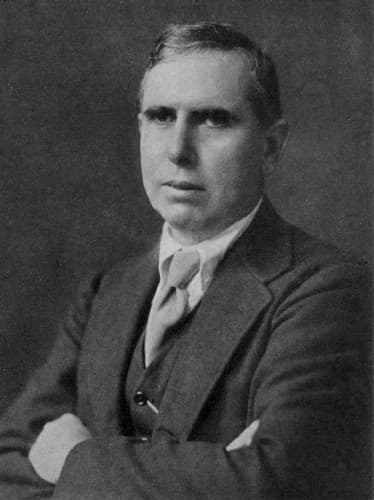
Theodore Herman Albert Dreiser was an American novelist and journalist of the naturalist school. His novels often featured main characters who succeeded at their objectives despite a lack of a firm moral code, and literary situations that more closely resemble studies of nature than tales of choice and agency. Dreiser's best known novels include Sister Carrie (1900) and An American Tragedy (1925).
Similar books
- Sister Carrie
Theodore Dreiser
3.8 (37k) average on GoodreadsLiterary FictionExplores themes of ambition, social mobility, and moral compromise in early 20th-century America.
- The Great Gatsby
F. Scott Fitzgerald
3.9 (3.8M) average on GoodreadsHistorical FictionExamines the pursuit of wealth, social status, and the disillusionment inherent in the American Dream.
- To Kill a Mockingbird
Harper Lee
4.3 (4.5M) average on GoodreadsHistorical FictionIn the 1930s Jim Crow South, Harper Lee writes about racial injustice, moral growth, and the quiet courage of a lawyer father, Atticus Finch, as seen through his young daughter's eyes.
- Pride and Prejudice
Jane Austen
4.3 (3M) average on GoodreadsHistorical FictionIn a society focused on status and money, Elizabeth Bennet navigates love and pride, challenging Mr. Darcy and social expectations to find true affection.
- Angels & Demons
Dan Brown
3.9 (2.7M) average on GoodreadsThrillerA Harvard symbologist races through Rome's ancient sites, deciphering cryptic clues to unmask the Illuminati and stop a vengeful plot to destroy the Vatican with a stolen antimatter weapon.
- The Kite Runner
Khaled Hosseini
4.3 (2.4M) average on GoodreadsHistorical FictionIn pre-Taliban Afghanistan, a wealthy boy's betrayal of his servant's son during a kite-running tournament starts a lifelong journey for amends as his country collapses.






Enjoyed the summary?
A summary gives you the shape of the book. The book itself has the detail, the examples and the voice.
Find An American Tragedy on AmazonAs an Amazon Associate, BookBrief earns from qualifying purchases. How we're funded