
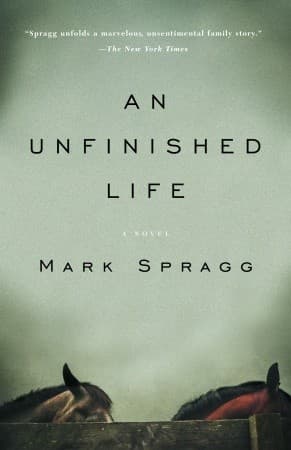
Synopsis
Covers the whole plot, including the ending.
- Difficulty
- Medium
- Pacing
- Moderate
- Mood
- Melancholy, Redemptive, Gritty, Emotional
- Read it if
- You enjoy poignant stories of family reconciliation, raw emotional journeys, and the healing power of the American West.
- Skip it if
- You prefer fast-paced thrillers or lighthearted reads, or are sensitive to themes of abuse and deep-seated grief.
An Unfinished Life Plot Summary
Covers the whole plot, including the ending.
A Desperate Return to Ishawooa
Jean Gilkyson, a single mother, flees her abusive boyfriend, Roy, in Iowa. She takes her ten-year-old daughter, Griff, and heads west. Her only option is the remote ranch of Einar Gilkyson in Ishawooa, Wyoming. Einar, an aging rancher, is her former father-in-law and blames Jean for the death of his son and her husband, Griffin, in a car accident years ago. Despite the tension and Einar's coldness, Jean has nowhere else to go. Griff, at first unsure, slowly warms to the ranch and its people.
Einar's Burden and Mitch's Presence
Einar Gilkyson's life centers on the ranch and caring for his best friend, Mitch Bradley. Mitch was badly mauled by a grizzly bear years ago, and Einar feels great guilt, believing he could have stopped it. Mitch is now in a wheelchair, his body twisted and mind often unclear, needing Einar's help for basic tasks. This daily care, with Einar's own pain from the bear attack, forms the quiet background of their lives, showing their long friendship and Einar's sense of duty.
Griff's Connection to the Ranch
Unlike her mother, Griff quickly takes to Einar's wild ranch world. She loves the animals, especially the barn cats and horses, and finds freedom in Wyoming's open spaces. She starts to connect with Einar in small ways, watching his routines and even helping with chores. Her simple curiosity and strong spirit begin to break through Einar's tough exterior. She forms a special bond with Mitch, who responds well to her presence despite his injuries. The ranch gives Griff a stability and home she has rarely known.
Jean's Struggle and Einar's Resentment
Jean struggles daily with Einar's bitter resentment and constant blame for his son's death. She tries to find work in town, taking a job at a local diner, hoping to gain some independence and provide for Griff. The tension between them is always there, with Einar often making sharp comments about her past choices. Jean carries her own guilt and sadness over Griffin's death and the hard years after. She wants to protect Griff from more harm and is wary of Einar's influence, even as she sees the stability the ranch offers her daughter.
The Looming Threat of Roy
Just as Jean and Griff begin a fragile routine, the threat of Roy, Jean's violent ex-boyfriend, appears. Jean gets unsettling phone calls and sees signs that he is looking for her. This brings back her fear. She tries to keep this from Einar, not wanting to give him more reasons to criticize her or complicate their strained relationship. However, Roy's coming presence darkens their new, though uncertain, peace at the ranch, making Jean think about how she will protect Griff.
The Grizzly Bear's Return
A key plot point comes with news that the same grizzly bear that mauled Mitch years ago has been seen again. This news deeply affects Einar, bringing back traumatic memories of the attack and his lasting guilt. He becomes focused on the bear, feeling a strong need to face it, not just for revenge but to confront his own past and the unresolved grief over Mitch's suffering and Griffin's death. The bear becomes a symbol of the wild forces that have shaped their lives, both destructive and, in a strange way, healing.
Einar's Revelation and Forgiveness
During an intense talk, Einar finally confronts Jean about Griffin's death. He reveals that Griffin, driving drunk, purposely swerved the car, causing the fatal accident, and that Jean had tried to stop him. This truth breaks Jean's long-held guilt and Einar's wrong blame. The truth, though painful, creates a vital moment in their relationship, opening the door for forgiveness. Einar begins to see Jean not as the cause of his son's death, but as a victim of it, like himself, finally starting to heal old hurts.
Roy's Violent Confrontation
Roy eventually finds Jean and Griff at the ranch, arriving with bad intentions. He confronts Jean, demanding she return with him. Einar, despite his age and injuries, steps in to protect Jean and Griff. A violent fight happens between Einar and Roy, during which Einar is badly beaten. This event makes Einar fully take on his protective role towards Jean and Griff, strengthening the family bond that has been forming. The confrontation shows the dangers Jean has faced and Einar's ability to love and be loyal, even to those he once resented.
The Hunt for the Grizzly
After the fight with Roy, and with a new sense of purpose, Einar decides it is time to confront the grizzly bear. He asks for Jean's help, despite her fear, to track the animal. This shared mission becomes a symbolic journey for both of them, a way to face their past traumas and find closure. Einar sees this as his final act of making amends for Mitch and a way to regain some control over the forces that have shaped his life. The hunt takes them deep into the wilderness, where they must face not only the bear but also their own weaknesses.
A New Beginning for the Gilkysons
Einar finally sees the grizzly bear. In a moment of deep personal understanding, he chooses not to kill the animal, but to let it go, finding peace in this act of mercy and acceptance rather than revenge. This decision shows his healing and acceptance of his past. With Roy gone and the truth about Griffin's death known, Jean and Einar's relationship changes. They start to rebuild their lives at the ranch, with Griff doing well in her new home. The family, though marked by their experiences, finds a way forward, joined by understanding, forgiveness, and an deep, unusual love.
Principal Figures
Einar Gilkyson
Protagonist
A gruff, aging Wyoming rancher burdened by grief and guilt.
Einar is a man of few words, hardened by a lifetime of ranching and deep personal tragedies. He carries immense guilt over the grizzly bear attack that crippled his best friend, Mitch, and harbors a bitter resentment towards his daughter-in-law, Jean, whom he blames for his son Griffin's death. Beneath his stoic, often harsh exterior lies a profound capacity for loyalty, love, and a deep sense of responsibility. His life is defined by his routines, his care for Mitch, and his connection to the land.
Relationships: Jean Gilkyson (Estranged daughter-in-law, initially resentful, later reconciled); Griff Gilkyson (Granddaughter, initially wary, later deeply bonded); Mitch Bradley (Best friend, caretaker, and source of guilt); Griffin Gilkyson (Deceased son, source of Einar's grief and blame)
Jean Gilkyson
Protagonist
A resilient single mother fleeing an abusive past, seeking sanctuary and reconciliation.
Jean is a strong-willed woman who has endured significant hardship and abuse. She carries the weight of her past, including the guilt over her husband Griffin's death and her struggles to provide a stable life for her daughter, Griff. Despite her vulnerability, she possesses a fierce protectiveness towards Griff and a quiet determination to forge a better future. She is initially defensive and wary of Einar's judgment but yearns for a place of safety and belonging.
Relationships: Einar Gilkyson (Estranged father-in-law, initially blamed, later reconciled); Griff Gilkyson (Daughter, fiercely protective and loving); Roy (Abusive ex-boyfriend, source of fear and threat); Griffin Gilkyson (Deceased husband, source of past grief and guilt)
Griff Gilkyson
Supporting
Jean's precocious ten-year-old daughter, who finds solace and connection on the Wyoming ranch.
Griff is a perceptive and resilient young girl, wise beyond her years due to her tumultuous upbringing. She is observant and curious, quickly adapting to the rustic life on Einar's ranch. Her innocence and straightforward nature allow her to bypass the adult resentments and connect with Einar and Mitch in a profound way. She represents hope and the possibility of a new beginning, often acting as a bridge between the estranged family members.
Relationships: Jean Gilkyson (Mother, protective and loving); Einar Gilkyson (Grandfather, initially distant, later deeply bonded); Mitch Bradley (Friend, source of comfort and unique connection)
Mitch Bradley
Supporting
Einar's best friend, severely injured by a grizzly bear, whose presence is a constant reminder of Einar's guilt.
Mitch is a gentle soul, rendered physically broken and mentally impaired by a devastating grizzly bear attack. He is entirely dependent on Einar for his care, and his quiet suffering is a constant source of guilt and devotion for Einar. Despite his condition, he retains moments of lucidity and a deep, unspoken bond with Einar. His presence underscores themes of responsibility, friendship, and the enduring consequences of a single, tragic event.
Relationships: Einar Gilkyson (Best friend, caretaker, and object of Einar's guilt); Griff Gilkyson (Friend, shares a unique, quiet bond)
Roy
Antagonist
Jean's abusive ex-boyfriend, who relentlessly pursues her and Griff.
Roy embodies the external threat and the traumatic past that Jean is desperately trying to escape. He is violent, controlling, and manipulative, representing the destructive forces that have plagued Jean's life. His pursuit of Jean and Griff forces the Gilkyson family to confront their internal conflicts and ultimately unite against a common enemy. He is driven by a possessive desire to reclaim Jean, demonstrating a complete disregard for her safety or autonomy.
Relationships: Jean Gilkyson (Former abusive boyfriend, antagonist); Griff Gilkyson (Threat to her safety)
Griffin Gilkyson
Mentioned
Einar's deceased son and Jean's late husband, whose death casts a long shadow over the family.
Griffin is present primarily through the memories and lingering effects of his actions. His death in a drunk driving accident, for which Jean was wrongly blamed by Einar, is the central catalyst for the family's estrangement and Einar's bitterness. He is portrayed as flawed and troubled, and the truth of his culpability is a crucial revelation that allows for healing and reconciliation.
Relationships: Einar Gilkyson (Father, source of grief and misplaced blame); Jean Gilkyson (Wife, source of guilt and trauma)
Themes & Insights
Forgiveness and Reconciliation
The novel looks closely at the difficult path to forgiveness, especially between Einar and Jean. Einar's decades of blaming Jean for his son's death created a wide gap between them. The slow reveal of the truth about Griffin's drunk driving and Jean's attempts to stop him is important. This truth allows Einar to let go of his anger and Jean to shed her guilt, leading to a hard-won peace that is at the heart of the story, ending with their united stand against Roy and shared search for the bear.
“Forgiveness isn’t a one-time thing, it’s a process.”
The Weight of Guilt and Grief
Both Einar and Jean are deeply affected by guilt and grief. Einar carries the weight of Mitch's bear attack and his son's death, leading to his isolation and bitterness. He feels responsible for Mitch's pain and blames Jean for Griffin's accident. Jean, in turn, carries the guilt of Griffin's death and the trauma of her abusive relationships. The story carefully shows how these burdens appear, with Einar's constant care for Mitch and Jean's escape from Roy, and how facing these feelings is key to healing.
“He’d carried the weight of it, the bear, the boy, for so long that it had become a part of him, like bone.”
Family and Belonging
At its heart, the novel is about finding and rebuilding family in unexpected ways. Jean and Griff arrive at Einar's ranch as strangers, seeking only safety. Despite the initial hostility, Griff's innocence and the shared problems, especially Roy's threat, slowly create a new, unusual family. The ranch itself becomes a symbol of belonging, especially for Griff, offering a stability she has never known. The story stresses that family is not just blood, but shared experience, loyalty, and the will to protect one another, as seen when Einar defends Jean and Griff from Roy.
“Family was a messy, complicated thing, but it was all they had.”
Man vs. Nature
The harsh, beautiful Wyoming landscape and its wildlife, especially the grizzly bear, are a strong background and theme. The bear represents the wild, unpredictable parts of nature that can cause great harm, as seen in Mitch's mauling. For Einar, the bear is also a symbol of his past trauma and a force he feels he must confront, not just for revenge but for a sense of closure. His choice to spare the bear shows his healing and acceptance of life's uncontrollable aspects and his own recovery, showing a change from fighting nature to finding peace within it.
“The land didn’t care about your sorrow. It just was.”
Plot Devices & Literary Techniques
The Grizzly Bear
A symbolic antagonist and catalyst for Einar's emotional journey.
The grizzly bear that mauled Mitch years ago serves as a powerful symbol throughout the novel. Initially, it represents Einar's guilt, the untamed brutality of nature, and the unresolved trauma of Mitch's injury. Its reappearance in the story acts as a catalyst, reigniting Einar's obsession and driving his personal quest for closure. The bear embodies the wild, uncontrollable aspects of life and fate that have shaped Einar's existence. His final, redemptive encounter with the bear, where he chooses not to kill it, signifies his release from vengeance and his acceptance of the past.
The Truth about Griffin's Death
A critical revelation that unlocks forgiveness and reconciliation.
The withheld truth about Griffin Gilkyson's death is a central plot device. For years, Einar has blamed Jean, perpetuating his bitterness and their estrangement. The gradual revelation that Griffin was driving drunk and deliberately caused the accident, and that Jean had tried to stop him, is the pivotal moment for both Einar and Jean. This narrative device shifts the blame, allowing Einar to finally forgive Jean and release his own misplaced guilt, and enabling Jean to shed her long-held burden. It is the key that unlocks their reconciliation and allows the family to begin healing.
Mitch Bradley's Condition
A constant, physical manifestation of Einar's guilt and responsibility.
Mitch's severely injured and dependent state serves as a powerful, ever-present plot device. His physical limitations and need for constant care are a daily reminder to Einar of the bear attack and his perceived failure to protect his friend, fueling Einar's profound guilt. Mitch's quiet suffering and dependence underscore Einar's deep sense of loyalty and responsibility. His presence forces Einar to confront the consequences of his past actions and provides a tangible measure of Einar's capacity for unwavering care and devotion, even amidst his own emotional turmoil.
The Wyoming Ranch Setting
A symbolic backdrop for isolation, resilience, and eventual belonging.
The remote Wyoming ranch is more than just a setting; it functions as a character and a plot device. Its isolation mirrors Einar's emotional solitude and the initial estrangement of the family. The harsh yet beautiful landscape embodies resilience and the untamed aspects of life. For Griff, the ranch offers a sense of freedom and belonging she's never had, becoming a sanctuary from her traumatic past. The ranch provides a crucible where the family's conflicts are played out and ultimately resolved, becoming the foundation for their new, reconciled life together.
An Unfinished Life Quotes
“There are some things in life, in love, you're not supposed to get over. And the only thing worse than not getting over them is pretending you have.”
“Every man carries a wound. I am a wounded man. But I am not a dead man. I am not a broken man.”
“Sometimes the only way to heal a wound is to stop picking at it.”
“The past is a stubborn thing. It doesn't just go away because you want it to.”
“Maybe love isn't about perfect. Maybe it's about not giving up, even when it is.”
“There's a difference between being alone and being lonely. You can be one without being the other.”
“Sometimes the hardest thing to do is forgive yourself.”
“Hope is a dangerous thing. It can make you believe in things that aren't real.”
“Family is not just blood. It's who you choose to let into your life, who you care for.”
“You can't outrun your past. It always catches up to you, one way or another.”
“It's a strange thing, isn't it? How life just keeps going, even when you think it shouldn't.”
“Sometimes the greatest strength is knowing when to ask for help.”
“Silence can be louder than any scream.”
“An unfinished life is not a wasted one. It's just waiting for the next chapter.”
Quiz
10 questions on the plot and the characters. Each answer comes with a short explanation.
Question 1
Why does Jean Gilkyson return to Ishawooa, Wyoming, with her daughter Griff?
- To inherit her late husband's share of the ranch.
- To help Einar manage the ranch after he suffers an injury.
- She is escaping an abusive boyfriend and has nowhere else to go.
- To reconcile with Einar after many years of estrangement.
Show answer
C. She is escaping an abusive boyfriend and has nowhere else to go. Jean returns to Ishawooa because she is fleeing an abusive boyfriend and has no other place to turn for refuge with her daughter, Griff.
Question 2
What is Einar Gilkyson's initial reaction to Jean and Griff's arrival?
- He welcomes them warmly, happy to see his granddaughter.
- He is indifferent, barely acknowledging their presence.
- He is unwelcoming and still blames Jean for his son's death.
- He immediately offers Jean a job on the ranch.
Show answer
C. He is unwelcoming and still blames Jean for his son's death. Einar is not glad to see Jean or Griff, as he still holds Jean responsible for the death of his son, her late husband.
Question 3
Who is Mitch, and what is his relationship with Einar?
- Mitch is Einar's estranged brother, visiting from out of state.
- Mitch is Einar's crippled old friend who lives with him on the ranch.
- Mitch is a local veterinarian who frequently visits the ranch.
- Mitch is a new ranch hand Einar recently hired.
Show answer
B. Mitch is Einar's crippled old friend who lives with him on the ranch. Mitch is Einar's crippled old friend who shares his life on the sprawling ranch, and Griff slowly gets to know him.
Question 4
What specifically does Griff fall in love with upon arriving at Einar's ranch?
- The bustling town nearby and its amenities.
- The opportunity to attend a new school with many friends.
- The sprawling ranch, quiet way of life, and the animals like the barn cats.
- The prospect of her mother reconciling with Einar.
Show answer
C. The sprawling ranch, quiet way of life, and the animals like the barn cats. Despite Einar's initial unwelcoming demeanor, Griff quickly falls in love with the ranch's vastness, its quiet existence, and the animals, including the cats in the barn.
Question 5
What central theme is explored through the relationship between Jean, Einar, and Griff?
- The challenges of modern ranching in Wyoming.
- The importance of financial independence.
- Love, forgiveness, and reconciliation.
- The difficulties of raising a child as a single parent.
Show answer
C. Love, forgiveness, and reconciliation. The novel is described as an 'extraordinary tale of love and forgiveness' and 'an emotionally charged story of hard-won friendship and reconciliation,' clearly highlighting these as central themes.
Question 6
What is the primary source of Einar's resentment towards Jean?
- Jean's past financial troubles.
- Jean's decision to leave Ishawooa years ago.
- He blames her for the death of his son, her late husband.
- He believes she is a bad influence on Griff.
Show answer
C. He blames her for the death of his son, her late husband. The text explicitly states that Einar 'still blames her for the death of his son,' which is the root of his animosity towards Jean.
Question 7
How old is Griff when she arrives at Einar's ranch?
- Eight years old.
- Ten years old.
- Twelve years old.
- Six years old.
Show answer
B. Ten years old. The description states that Jean and her 'ten-year-old daughter Griff' arrive at Ishawooa.
Question 8
The title 'An Unfinished Life' most likely refers to which of the following?
- Einar's desire to complete a specific project on his ranch before he dies.
- The unresolved emotional conflicts and relationships that Einar and Jean must confront.
- Griff's childhood, which is still in its early stages.
- Mitch's physical limitations preventing him from fully living.
Show answer
B. The unresolved emotional conflicts and relationships that Einar and Jean must confront. The novel's focus on 'hard-won friendship and reconciliation' and the complex emotional journey of the characters suggests that 'An Unfinished Life' refers to the unresolved aspects of their past and relationships that need to be addressed for healing and closure.
Question 9
What role do the cats in the barn at milking time play in Griff's adaptation to the ranch?
- They are a source of fear for Griff, making her wary of the barn.
- They symbolize the untamed wilderness of Wyoming, which Griff finds intimidating.
- They are a small detail that contributes to her falling in love with the quiet way of life and getting to know the ranch.
- They are a significant responsibility Einar immediately assigns to Griff.
Show answer
C. They are a small detail that contributes to her falling in love with the quiet way of life and getting to know the ranch. The text mentions Griff 'slowly gets to know his crippled old friend Mitch, the cats that lurk in the barn at milking time, and finally the grandfather she had lost for so many years,' indicating the cats are part of the small, specific details that draw her into the ranch's life.
Question 10
How does the novel's setting in Ishawooa, Wyoming, contribute to the overall tone and themes?
- The bustling urban environment emphasizes the characters' desire for city life.
- The remote, sprawling ranch setting provides a backdrop for isolation, reflection, and the slow process of healing and reconciliation.
- The exotic location highlights the characters' adventurous spirits and love for travel.
- The historical significance of the area drives much of the plot's conflict.
Show answer
B. The remote, sprawling ranch setting provides a backdrop for isolation, reflection, and the slow process of healing and reconciliation. The 'sprawling ranch and quiet way of life' in a remote location like Ishawooa, Wyoming, naturally lends itself to themes of introspection, the slow mending of relationships, and facing difficult truths away from external distractions.
An Unfinished Life FAQ
What is the central conflict that brings Jean Gilkyson and her daughter Griff to Einar's ranch?
Jean Gilkyson arrives at Einar's ranch in Ishawooa, Wyoming, with her daughter Griff because she is fleeing an abusive boyfriend. They have no other place to go, making Einar's home, despite their estranged relationship, their only refuge.
Who is Einar Gilkyson, and what is his relationship with Jean at the beginning of the story?
Einar Gilkyson is Jean's estranged father-in-law, and he blames her for the death of his son, Griffin, many years prior. Their relationship is fraught with resentment and unresolved grief, creating a tense atmosphere upon Jean and Griff's arrival.
How does Griff react to the ranch life and her grandfather, Einar?
Griff quickly falls in love with the sprawling ranch and its quiet way of life, finding solace and connection in the animals and the routine. She slowly begins to get to know Einar, forming a bond with the grandfather she had never truly known.
Who is Mitch Bradley, and what is his significance to Einar?
Mitch Bradley is Einar's crippled old friend, who has lived with him on the ranch for years. He serves as Einar's confidant and a steady, grounding presence, often mediating Einar's gruffness and offering a different perspective.
What role does the bear play in the narrative, particularly concerning Mitch?
The bear is a central element, having severely injured Mitch years ago, leaving him crippled. Einar feels a deep, unresolved guilt and responsibility for Mitch's injuries, stemming from their encounter with the bear, which still roams the area.
What specific incident led to Einar blaming Jean for his son Griffin's death?
Einar blames Jean because Griffin died in a car accident while driving home from picking Jean up after she had left him following an argument. Einar perceives Jean's actions as directly contributing to his son being on the road at that fatal moment.
How does the film adaptation of 'An Unfinished Life' differ from the book in its portrayal of certain characters or events?
The film adaptation, while generally faithful, condenses some subplots and character developments. For instance, the exact nature of Jean's past abusive relationships and the depth of Einar's internal struggle with his grief are explored more extensively in the novel.
Are there any subtle indications of Mitch's past before his injury that contribute to his character?
The book hints at Mitch's life before the accident, suggesting he was a more active and perhaps less introspective man. His current state of quiet observation and his philosophical outlook are partly a consequence of his injury and the long recovery process, but his underlying resilience was always present.
What is the significance of the 'unfinished life' in the title, beyond just Einar's grief?
The 'unfinished life' refers not only to Einar's stalled existence due to his grief for Griffin but also to Jean's struggle to build a stable life, Mitch's life altered by his injury, and even the wild bear's existence, always on the periphery, a constant reminder of past trauma and the untamed natural world.
How does Einar's relationship with the bear evolve throughout the story, and what does it symbolize?
Einar's relationship with the bear evolves from a desire for revenge to a grudging respect and eventual understanding. The bear symbolizes the untamed aspects of grief, trauma, and nature itself, which Einar must ultimately accept rather than conquer to find peace.
Discuss the psychological impact of Jean's abusive past on her decisions and her parenting of Griff.
Jean's abusive past has left her with deep emotional scars, leading to a strong protective instinct towards Griff and a tendency to flee rather than confront. Her decisions are often driven by fear, but her love for Griff motivates her to seek a safer, more stable environment.
How does Griff's innocence and perspective help to heal the fractured relationships around her?
Griff's innocence and open-hearted nature act as a catalyst for healing, particularly between Einar and Jean. Her genuine affection for Einar and her ability to see the good in people, despite their flaws, forces the adults to confront their bitterness and begin to reconcile.
What psychological defense mechanisms does Einar employ to cope with his grief over Griffin?
Einar primarily uses isolation, anger, and blame as defense mechanisms to cope with his grief. He withdraws emotionally, lashes out at Jean, and fixates on the bear, all as ways to avoid processing the profound pain of losing his son.
Is Einar's eventual reconciliation with Jean fully deserved given his past treatment of her?
This is debatable. While Einar's grief was profound, his prolonged and unjust blame of Jean caused her significant pain. The reconciliation is hard-won, suggesting that while forgiveness is possible, the impact of his past actions is not entirely erased, but rather overcome through mutual effort and understanding.
What is the significance of the ranch setting in the overall themes of the novel?
The ranch setting is crucial, symbolizing a place of both confinement and potential freedom. It represents Einar's rootedness and his inability to move on, but also the enduring power of nature and the possibility of renewal and growth, mirroring the characters' journeys.
How does the concept of forgiveness manifest differently for Einar and Jean?
For Einar, forgiveness means releasing his blame of Jean and accepting the tragic circumstances of his son's death. For Jean, it involves forgiving herself for past mistakes and allowing herself to be vulnerable enough to accept Einar's eventual acceptance and love.
Does the novel suggest that some wounds can never truly heal, or does it offer complete closure?
The novel suggests that while deep wounds may leave lasting scars, it is possible to find peace and move forward. It offers a sense of closure and hope for the characters, but acknowledges that the past, particularly loss and trauma, continues to shape their present and future.
How does the author use the character of the bear to explore themes of nature versus human intervention?
The author uses the bear to highlight the uncontrollable power of nature against human attempts to dominate or exact revenge. Einar's initial desire to kill the bear represents his struggle to control his grief, but his eventual decision to let it live signifies his acceptance of forces beyond his command.
Similar books
- Gilead (Oprah's Book Club)
Marilynne Robinson
3.9 (126k) average on GoodreadsFictionFeatures an aging protagonist reflecting on life, family, and faith with profound emotional depth.
- The Glass Castle
Jeannette Walls
4.3 (903k) average on GoodreadsBiographyFocuses on difficult family dynamics, resilience in hardship, and the complexities of forgiveness.
- Brokeback Mountain
Annie Proulx
4.0 (30k) average on GoodreadsRomanceWhile both are set in Wyoming and explore complex relationships, Proulx's work primarily focuses on forbidden love and societal repression, whereas Spragg's delves more deeply into intergenerational familial trauma, grief, and the arduous path to forgiveness within a family unit. Spragg's narrative is less about societal constraints and more about internal healing.
- The Old Man and the Sea
Ernest Hemingway
3.8 (831k) average on GoodreadsLiterary FictionA Cuban fisherman's long struggle with a giant marlin becomes a story of endurance and dignity, now retold for young adults with illustrations, phonetic guides, and writing prompts in Traditional Chinese.
- One Hundred Years of Solitude
Gabriel García Márquez
4.1 (753k) average on GoodreadsLiterary FictionThrough the multi-generational story of the Buendía family, a mythical town deals with the repeating patterns of time, love, and solitude, as the extraordinary mixes with the ordinary.
- The Goldfinch
Donna Tartt
3.9 (720k) average on GoodreadsLiterary FictionHaunted by a tragic explosion and clutching a stolen Dutch masterpiece, a young orphan navigates the opulent drawing rooms of New York and the gritty underbelly of the art world, desperately seeking connection and redemption amidst a life spiraling into crime and obsession.





Enjoyed the summary?
A summary gives you the shape of the book. The book itself has the detail, the examples and the voice.
Find An Unfinished Life on AmazonAs an Amazon Associate, BookBrief earns from qualifying purchases. How we're funded