
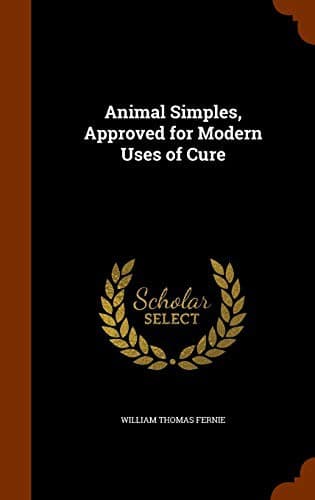
Core Idea
- Difficulty
- Medium
- Read it if
- You are interested in the history of medicine, ethnopharmacology, traditional remedies, or the cultural significance of animal products in healing practices. It's also for those curious about the evolution of medical thought and the vast array of substances people have used to cure ailments.
- Skip it if
- You are looking for evidence-based modern medical advice or a scientific analysis of animal-derived pharmaceuticals. This book is primarily historical and descriptive, not a guide to contemporary medical treatment.
Key Takeaways from Animal Simples, Approved for Modern Uses of Cure
The Enduring Wisdom of Folk Medicine
Fernie's compendium highlights the historical continuity and practical rationale behind animal-derived remedies.
Fernie's work, a modern look at historical 'animal simples,' is not just an old curiosity. It shows how people have always sought healing and how sophisticated pre-scientific medicine often was. The book lists remedies from beaver castoreum for nerve issues to spiderwebs for wounds. It shows that many of these practices, though lacking modern drug understanding, were based on observable effects. This challenges the common idea that folk medicine was only superstition, suggesting instead a rich history of trial-and-error. This is one of the book's best points, making us rethink what 'valid' medical knowledge means in different historical times.
“The wisdom of our ancestors, though often dismissed as superstition, frequently contained kernels of truth, patiently observed and empirically tested over generations.”
In the book: The book's extensive cataloging of remedies, like the use of dried toad skin for dropsy, reveals a systematic approach to identifying and applying natural substances based on observed physiological responses, even if the underlying mechanisms were unknown.
Try this: Approach historical medical texts with an open mind, seeking the practical observations and rationales that might underpin seemingly bizarre remedies, rather than immediately dismissing them as primitive or ineffective.
Related ideas: ethnomedicine, historical-pharmacology, empirical-healing
Beyond Superstition: Bioactive Compounds in Ancient Remedies
Many 'simple' animal remedies likely contained active pharmacological agents, now being rediscovered by modern science.
Fernie's collection suggests that many animal simples worked because they contained active compounds, even if people did not understand them scientifically. For example, honey (from bees) used on wounds is now known to have antibacterial properties. Similarly, the old use of some insect secretions or organ extracts for specific illnesses points to an intuitive, if not analytical, grasp of their drug potential. This idea matters for finding new drugs, encouraging researchers to look beyond plants to animals and old texts for discoveries. The book is a valuable historical resource for such efforts, linking old practices with modern science.
“What was once dismissed as magical thinking is increasingly being validated by the rigorous methodologies of modern biochemistry.”
In the book: The historical use of leeches for bloodletting, now understood to involve anticoagulants like hirudin, or the application of spider silk for wounds, which possesses antimicrobial properties, exemplifies this concept.
Try this: Modern pharmaceutical research should actively explore traditional animal-based remedies, using advanced analytical techniques to identify and isolate their active compounds, potentially leading to new drug discoveries.
Related ideas: bioprospecting, pharmacognosy, traditional-medicine-validation
The Ethical Dilemma of Sourcing Animal Simples
The historical reliance on animal products for medicine raises critical questions about sustainability and animal welfare.
While Fernie's book is mainly a historical survey, it also highlights the ethical problems in many animal-derived remedies. Getting ingredients like musk from deer, bear gall bladders, or even pearls from oysters often involved practices that were unsustainable, cruel, or harmed species. This part of the book makes readers face the historical conflict between human medical needs and animal exploitation. Modern medicine has mostly moved away from such direct sourcing, but the historical context serves as a warning, emphasizing the need for ethical and sustainable practices in all biomedical research and resource use. This is not a flaw in the book but a critical way to view its topic.
“The pursuit of human health, throughout history, has often come at a significant cost to the animal kingdom.”
In the book: The historical demand for rhinoceros horn for various ailments, leading to near extinction, or the trade in beaver castoreum, illustrates the ecological impact of traditional animal simples.
Try this: When studying historical medical practices, critically evaluate the ethical implications of sourcing and production, and advocate for sustainable and humane alternatives in contemporary research and healthcare.
Related ideas: animal-welfare, sustainability, bioethics, conservation
The Power of Placebo and Ritual in Healing
Beyond active compounds, the psychological and cultural aspects of traditional remedies played a significant role.
Fernie's list, while focusing on the physical aspects of remedies, shows the important role of the placebo effect and healing rituals in pre-modern medicine. Many preparations, especially those with rare or exotic animal parts, likely carried strong symbolic power, boosting patient belief and expectation. The complex preparation methods or the mystery around certain ingredients could contribute as much to perceived healing as any actual drug action. This insight is key to understanding historical healing's complete nature and reminds us that human biology is deeply connected to psychology. The book gives many examples where an animal's perceived 'power'—like a lion's for courage—was transferred to the remedy, highlighting the mind-body link in healing.
“The efficacy of a remedy often lay not just in its substance, but in the belief it inspired and the ritual it embodied.”
In the book: The use of 'powdered mummy' (human or animal) for various ailments, while lacking direct pharmacological benefit, would have carried immense cultural and psychological weight for the patient.
Try this: Recognize the ongoing importance of patient belief, cultural context, and the therapeutic relationship in modern healthcare, even when relying on evidence-based pharmacological treatments.
Related ideas: placebo-effect, healing-rituals, medical-anthropology, mind-body-connection
The Cross-Cultural Universality of Animal Medicine
Similar animal-based remedies appear independently across diverse cultures, suggesting shared human observations.
One interesting point from Fernie's detailed list is how certain animal simples or types of animal simples appear repeatedly across different cultures. For instance, snake venom or specific insect parts used for various illnesses can be found in ancient Egyptian, Chinese, and European traditions. This commonality across cultures suggests either separate observations of similar biological effects or the spread of knowledge along old trade routes. It shows a basic human tendency to observe, experiment, and share medical knowledge within and between communities. This widespread use points to a shared old medical heritage that goes beyond local superstitions, suggesting a more systematic, though pre-scientific, approach to healing.
“Despite vast geographical distances and cultural divides, humanity often arrived at strikingly similar conclusions regarding the medicinal properties of the animal kingdom.”
In the book: The widespread historical use of animal bile (e.g., bear bile in traditional Chinese medicine, ox bile in European folk remedies) for digestive issues or liver complaints demonstrates this cross-cultural consistency.
Try this: Explore global ethnomedical traditions to identify common themes and remedies, which may indicate deeply rooted human observations and potentially potent therapeutic agents for further scientific investigation.
Related ideas: comparative-ethnomedicine, cultural-diffusion, universal-healing-practices
From 'Simple' to Complex: Evolution of Pharmaceutical Knowledge
Fernie's work illustrates the gradual transition from crude animal simples to refined pharmaceutical compounds.
The book, by offering a historical snapshot, shows how drug knowledge changed over time. Many 'simples' described represent the first steps of drug discovery, where whole animal parts or crude extracts were used. Over centuries, this practice slowly led to more advanced methods of extraction, purification, and eventually, making active compounds. For example, the historical use of foxglove (a plant, but similar in idea) led to isolating digitoxin for heart conditions. While Fernie focuses on animals, the path is similar: from noticing an effect to finding its source, and then isolating the active part. This is an important historical view, showing how modern pharmacology has roots in these old, often animal-derived, remedies.
“The journey from a raw animal part to a purified, standardized drug is a testament to scientific progress, yet the initial inspiration often lay in the 'simples' of old.”
In the book: The historical use of dried thyroid gland for treating hypothyroidism, later leading to the isolation and synthesis of thyroid hormones, is a direct example of this progression.
Try this: Understand that modern pharmacology is not an isolated discipline but builds upon millennia of empirical observation and experimentation, often initiated through traditional and folk medicine practices.
Related ideas: pharmaceutical-history, drug-discovery-evolution, ethnobotany-zoology
The Blurry Line Between Food, Medicine, and Poison
Many animal simples occupy an ambiguous space, highlighting historical dietary and toxicological understanding.
Fernie's collection often shows remedies that mix food, medicine, and outright poison. Many animals or their parts were eaten for both nutrition and therapy, while others were toxic in large amounts but medicinal in small ones. This uncertainty reflects an old understanding of toxicology and dosage, often based on observation rather than exact measurement. For example, certain insect larvae might be food in one situation but an anti-inflammatory remedy in another. This highlights the complex and often risky nature of historical medical practice, where a healer's skill often involved knowing the right preparation and dose. This part of the book is especially insightful for understanding old eating habits and the development of early toxicology.
“What cures in one dose may harm in another, and what sustains in one culture may be shunned in another.”
In the book: The use of snake venom, a potent poison, in highly diluted forms for various ailments in traditional medicine, showcases the delicate balance between toxicity and therapeutic effect.
Try this: When evaluating historical remedies, consider the full spectrum of their potential effects, from nutritional value to medicinal properties and toxicological risks, and how dosage was historically managed.
Related ideas: nutraceuticals, historical-toxicology, dosage-science
Relevance to Modern 'Natural' Health Trends
The book offers a historical mirror to contemporary interest in natural remedies and 'superfoods'.
Fernie's 'Animal Simples' offers a fascinating historical background for today's renewed interest in 'natural' health products, supplements, and 'superfoods.' The desire to find healing and energy in unprocessed, natural substances is deeply embedded in human history, as shown by the remedies Fernie lists. While modern natural health often focuses on plant-based remedies, historical records show a strong reliance on animal products. The book implicitly warns against blindly accepting all 'natural' remedies, reminding readers that effectiveness and safety need careful testing, regardless of their origin. It shows the cyclical nature of human interest in natural health, providing both historical support and a call for careful judgment.
“The human yearning for natural cures is not a modern phenomenon; it is an ancient echo, resonating through millennia.”
In the book: The current popularity of collagen supplements (derived from animal products) or fish oil for various health benefits directly mirrors historical uses of animal fats and tissues for similar purposes.
Try this: Approach modern natural health trends with a historically informed perspective, understanding the long human tradition of seeking remedies in nature, but always prioritizing evidence-based validation and safety.
Related ideas: natural-health, holistic-medicine, supplement-history, evidence-based-medicine
The Role of Observation and Experimentation
Despite lacking scientific method, historical healers employed astute observation and empirical testing.
This book, though a compilation, shows the rigorous, though informal, observation and experimental methods used by historical healers. The sheer number and specific details of the remedies suggest generations of trial and error, careful observation of effects, and sharing of successful practices. Healers would have noted which animal parts eased certain symptoms, which preparations worked, and which were dangerous. While not following modern scientific rules, this represents an early form of empirical study. This insight helps understand the origins of scientific thought, showing that the drive to understand and use the natural world for human benefit came before formal scientific groups and methods.
“Before the microscope and the laboratory, the keen eye and the patient hand were the primary tools of medical discovery.”
In the book: The detailed descriptions of preparation methods and specific applications for remedies like dried viper flesh for various ailments suggest a long period of careful observation and refinement of practice.
Try this: Appreciate the foundational role of careful observation and empirical testing in all forms of knowledge acquisition, from ancient healing to modern scientific research.
Related ideas: empirical-science, observational-studies, history-of-science, pre-scientific-inquiry
A Window into Historical Worldviews and Beliefs
Animal simples reveal not just remedies, but the cultural and symbolic meanings attributed to animals.
Beyond their medicinal uses, the animal simples listed by Fernie offer an interesting look into historical worldviews, beliefs, and the symbolic meaning given to different creatures. Using a lion's heart for courage, a snake's skin for renewal, or a beaver's testicles for virility reflects a deep link between animal traits and human hopes or ailments. These remedies were not purely mechanical; they were part of a rich mix of cultural beliefs, folklore, and animistic views of the natural world. This aspect of the book is valuable for cultural historians and anthropologists, as it shows how medical practices were connected with broader systems of meaning and belief, making it more than just a medical text.
“Animals were not merely resources; they were symbols, teachers, and often, extensions of human understanding of the cosmos.”
In the book: The widespread belief in 'sympathetic magic,' where consuming an animal part imbued one with that animal's qualities (e.g., hawk's eyes for better vision), is evident throughout the remedies.
Try this: When studying historical practices, consider the underlying cultural, symbolic, and cosmological frameworks that informed and shaped them, rather than viewing them solely through a modern scientific lens.
Related ideas: medical-folklore, symbolic-medicine, cultural-anthropology, history-of-ideas
Animal Simples, Approved for Modern Uses of Cure Quotes
“The author has a special fondness for the common daisy, believing it to be a most valuable remedy.”
“He discusses the use of nettles for various ailments, including rheumatism and kidney problems.”
“Fernie emphasizes the importance of diet in maintaining health, advocating for simple, wholesome foods.”
“The author mentions the historical use of dandelion as a liver tonic and diuretic.”
“He explores the benefits of honey as a natural sweetener and medicinal agent.”
“Fernie touches upon the efficacy of chamomile for calming nerves and aiding digestion.”
“The book includes information on the traditional uses of plantain for wounds and skin irritations.”
“He suggests that fresh air and moderate exercise are crucial components of a healthy lifestyle.”
“The author details the use of garlic for its antibacterial properties and cardiovascular benefits.”
“Fernie expresses a belief in the power of nature to heal, advocating for natural methods over harsh chemicals.”
“He discusses the value of common herbs like peppermint for digestive complaints.”
“The book contains advice on the use of rosemary for memory enhancement and circulation.”
“Fernie notes the traditional use of thyme as an expectorant and antiseptic.”
“He includes a section on the benefits of bathing and hydrotherapy for overall health.”
Quiz
10 questions on the main ideas. Each answer comes with a short explanation.
Question 1
What is the primary focus of William Thomas Fernie's book, 'Animal Simples, Approved for Modern Uses of Cure'?
- The anatomy of common farm animals.
- The medicinal properties and uses of animal-derived substances.
- The breeding and care of exotic pets.
- The behavior of wild animals in their natural habitats.
Show answer
B. The medicinal properties and uses of animal-derived substances. The title 'Animal Simples' directly refers to substances derived from animals used for medicinal purposes.
Question 2
In the context of the book's title, what does the term 'Simples' most likely refer to?
- Simple remedies with a single ingredient.
- Complex surgical procedures.
- Basic veterinary diagnostic tools.
- The immature stages of animal life.
Show answer
A. Simple remedies with a single ingredient. 'Simples' in historical herbalism and materia medica typically refers to remedies made from a single natural substance, often plants or, in this case, animals.
Question 3
What historical period is William Thomas Fernie most associated with in his writing?
- The Renaissance
- The Victorian Era
- The Medieval Period
- The Enlightenment
Show answer
B. The Victorian Era William Thomas Fernie was a physician and author active in the late 19th and early 20th centuries, placing him within the Victorian and Edwardian eras.
Question 4
The phrase 'Approved for Modern Uses of Cure' suggests that Fernie's work aimed to:
- Debunk traditional remedies as ineffective.
- Preserve ancient healing practices for contemporary application.
- Introduce entirely new scientific medical theories.
- Critique the limitations of contemporary medicine.
Show answer
B. Preserve ancient healing practices for contemporary application. The phrase implies that Fernie was compiling and validating older, animal-based remedies for use in his own time, suggesting a bridge between traditional and modern (for his era) practices.
Question 5
What kind of animal substances might one expect to find discussed in 'Animal Simples'?
- Feathers and fur for insulation purposes.
- Hides and bones for construction.
- Milk, honey, bile, and blood.
- Animal feed additives for livestock.
Show answer
C. Milk, honey, bile, and blood. Historical medical texts often discussed animal products like milk, honey (from bees), bile, and blood for their perceived therapeutic qualities.
Question 6
Fernie's approach in 'Animal Simples' can be characterized as part of which broader historical trend in medicine?
- The rise of purely evidence-based, randomized controlled trials.
- The development of antiseptic surgical techniques.
- The compilation and study of traditional and folk medicine.
- The isolation of specific chemical compounds for pharmaceuticals.
Show answer
C. The compilation and study of traditional and folk medicine. Fernie's work falls into the category of collecting and documenting existing knowledge, including folk and traditional remedies, which was a common practice before the full advent of modern scientific reductionism in medicine.
Question 7
Considering the era, the 'modern uses' mentioned in the title likely referred to:
- The very latest advancements in germ theory.
- The application of these remedies within the medical practices of the late 19th/early 20th century.
- The use of animal products in industrial manufacturing.
- The integration of these remedies into veterinary medicine exclusively.
Show answer
B. The application of these remedies within the medical practices of the late 19th/early 20th century. 'Modern uses' in this context would mean how these older remedies were being applied or considered within the medical framework of Fernie's own time, not necessarily cutting-edge scientific discoveries.
Question 8
What is a potential challenge in evaluating the efficacy of remedies described in 'Animal Simples' by today's scientific standards?
- The remedies are too complex to analyze.
- The lack of standardized dosages, control groups, and rigorous testing methodologies in the original documentation.
- The animal sources are no longer available.
- Modern medicine has completely invalidated all traditional remedies.
Show answer
B. The lack of standardized dosages, control groups, and rigorous testing methodologies in the original documentation. Historical medical texts often lack the structured experimental design (like placebo controls, double-blinding, and statistical analysis) that is standard in modern clinical trials, making direct efficacy comparisons difficult.
Question 9
The 'cure' mentioned in the title most likely refers to:
- The eradication of all known diseases.
- The alleviation of symptoms or treatment of specific ailments.
- The development of vaccines.
- The prevention of all future illnesses.
Show answer
B. The alleviation of symptoms or treatment of specific ailments. Historically, 'cure' in a medical context often meant treating or alleviating symptoms of illness, rather than the absolute eradication or prevention of disease as understood today.
Question 10
If Fernie's book discusses 'animal simples', it implies a connection to which historical branch of medicine?
- Surgical intervention
- Pharmacology and materia medica
- Public health initiatives
- Psychiatry
Show answer
B. Pharmacology and materia medica Materia medica is the branch of medicine dealing with the collection of drugs or medicinal substances, and 'simples' are basic medicinal substances. Animal simples thus fall under the umbrella of pharmacology and materia medica.
Animal Simples, Approved for Modern Uses of Cure FAQ
What is William Thomas Fernie's 'Animal Simples, Approved for Modern Uses of Cure' about?
This book is a comprehensive guide to using animal-derived substances for medicinal purposes. It details the historical and traditional uses of various animal products in healing, offering insights into their perceived therapeutic properties.
Is 'Animal Simples' a scientific or historical text?
'Animal Simples' is primarily a historical and materia medica text. It reflects the medical knowledge and practices of its time, focusing on traditional remedies rather than modern scientific validation.
What kind of animal products are discussed in the book?
The book covers a wide range of animal products, including parts from mammals, birds, reptiles, insects, and marine life. These could be anything from blood and bile to bones, fats, and even excrement, all believed to possess healing qualities.
Are the remedies in 'Animal Simples' still relevant today?
While many of the specific remedies and their underlying theories are not supported by modern medicine, the book offers a fascinating glimpse into historical pharmacology and the evolution of medical thought. Some principles of using animal-derived compounds might have distant echoes in modern treatments.
Who was William Thomas Fernie?
William Thomas Fernie was a British physician and author known for his works on herbal and animal remedies. He compiled and presented a vast amount of traditional medical knowledge in his writings.
Where does the term 'Animal Simples' come from?
The term 'simples' refers to medicinal substances, often of plant or animal origin, used in their uncompounded state. 'Animal Simples' therefore denotes remedies derived directly from animals.
Can 'Animal Simples' be used as a medical guide for current ailments?
No, this book should not be used as a primary medical guide for current ailments. The remedies are based on historical beliefs and practices and may be ineffective or even harmful by today's medical standards.
What is the historical significance of 'Animal Simples'?
The book is significant for documenting historical medical practices and beliefs surrounding the use of animal products in healing. It provides valuable insight into the development of materia medica and the relationship between humans and the animal kingdom in medicine.
How does 'Animal Simples' compare to modern pharmacology?
'Animal Simples' represents a pre-scientific approach to medicine, relying on empirical observation, tradition, and often sympathetic or humoral theories. Modern pharmacology is based on rigorous scientific research, understanding of biochemistry, and clinical trials.
Is 'Animal Simples' a rare book?
While original editions might be considered rare and collectible, the text has been reprinted and is often available through various online booksellers and digital archives, making its content accessible to a wider audience interested in medical history.
Similar books
- The Diary of a Young Girl
Anne Frank
4.2 (2.7M) average on GoodreadsBiographyDuring the Nazi occupation, a teenage girl's diary, written from a secret annex, shares observations on humanity, hope, and the wait for freedom.
- Twisted 1. Twisted love
Ana Huang
3.7 (1.7M) average on GoodreadsA quiet billionaire with a difficult past finds his guarded heart opening to the woman he must protect, but their growing passion uncovers dangerous secrets and a shared, traumatic history.
- Eat, Pray, Love
Elizabeth Gilbert
3.6 (1.5M) average on GoodreadsLifestyleA heartbroken writer leaves her conventional life for a year-long global search for pleasure in Italy, spiritual devotion in India, and unexpected love and balance in Bali.
- Night
Elie Wiesel
4.3 (970k) average on GoodreadsBiographyIn the darkness of Auschwitz and Buchenwald, a teenage Elie Wiesel faces the extermination of his family, the loss of his faith, and the lasting scars of humanity's deepest cruelty.
- Steve Jobs
Walter Isaacson
4.1 (957k) average on GoodreadsBusinessSteve Jobs was a visionary who fused creativity and technology to revolutionize six industries and shape our digital world.
- The Glass Castle
Jeannette Walls
4.3 (903k) average on GoodreadsBiographyJeannette Walls's memoir describes her unusual childhood with brilliant, free-spirited parents whose poverty-stricken life shaped her independence and love despite family problems.





Enjoyed the summary?
A summary gives you the shape of the book. The book itself has the detail, the examples and the voice.
Find Animal Simples, Approved for Modern Uses of Cure on AmazonAs an Amazon Associate, BookBrief earns from qualifying purchases. How we're funded