

Synopsis
Covers the whole plot, including the ending.
- Difficulty
- Medium
- Pacing
- Fast
- Mood
- Dark, Suspenseful, Action-packed, Epic
- Read it if
- You enjoy dark, gritty retellings of Greek mythology with a strong focus on action, complex characters, and a touch of romance.
- Skip it if
- You prefer lighthearted fantasy, are sensitive to body horror elements, or dislike morally ambiguous gods.
Antigoddess Plot Summary
Covers the whole plot, including the ending.
The Sickness and the Quest
Athena, once the goddess of wisdom and war, is plagued by a mysterious illness: feathers grow beneath her skin, threatening to suffocate her. Her friend Hermes, the messenger god, has a similar affliction, a fever that consumes his flesh. Realizing their immortality is failing, they determine that all the Old Gods are slowly dying. Desperate for answers and a cure, they decide to seek out Cassandra, a mortal girl who was once a prophetess, believing she holds a key to their situation. Their journey begins, marked by their decaying powers and the fear of an unknown enemy.
Cassandra's Mundane Life and Unsettling Visions
Cassandra, a high school student, lives a quiet life in a small town, unaware of her past as a prophetess or the existence of the gods. However, her life is shattered by vivid and disturbing visions, glimpses of feathers and suffering she cannot explain. These visions come with strange occurrences, like objects moving on their own and a sense of being watched. Her best friend, Aidan, notices her distress but cannot help. Cassandra struggles to tell reality from hallucination, convinced she is losing her mind, while unknowingly drawing closer to the world of the dying gods.
The First Encounter
Athena and Hermes finally find Cassandra. Initially, Cassandra is skeptical and frightened by their appearance and their claims of being ancient gods. Hermes, weakened but still charming, tries to explain their situation and her forgotten past as a prophetess. Athena, more direct, shows Cassandra the physical signs of her illness, the feathers, as proof. They reveal that Cassandra was once loved by Apollo and had the gift of prophecy, which was later cursed. This revelation overwhelms Cassandra, who struggles to accept the fantastical truth, but the tangible evidence of their suffering begins to change her mind.
The Oracle's Purpose
Athena and Hermes explain to Cassandra that her prophetic abilities, even if dormant or cursed, are vital to their survival. They believe she can foresee the cause of their deaths or guide them to a solution. They reveal that the other Old Gods are also dying, some turning into monstrous versions of themselves, driven mad by their impending end. Cassandra, still shocked, slowly begins to understand the seriousness of their situation and her potential role. The weight of this responsibility, along with the horrific visions she has already experienced, forces her to face a destiny far grander and more terrifying than she imagined.
The Attack of the Harpies
As Cassandra processes the truth, their conversation is violently interrupted by an attack from monstrous Harpies. These creatures, once minor deities, are now twisted and ravenous, showing the corrupted state of the dying gods. Athena, despite her weakening powers, fights fiercely to protect Cassandra, while Hermes, though feverish, uses his speed and cunning. Cassandra sees the terrifying reality of the 'antigods' firsthand, confirming the danger they face. The fight is a harrowing experience for her, solidifying that her life is linked to this ancient, dying war.
Meeting Apollo
Following a lead, Athena, Hermes, and Cassandra seek out Apollo, hoping he can offer insight or aid. They find him in a secluded, decaying temple, also suffering from the god-sickness. However, Apollo is not the radiant god Cassandra remembers from her visions; he is a shadow of his former self, consumed by the illness, his artistic nature twisted into a destructive obsession. His appearance deeply disturbs Cassandra, forcing her to confront the tragic reality of her past relationship and the profound decay affecting the gods. His madness and despair serve as a grim warning of what awaits them all.
Hera's Manipulation and the Goddess War
Through fragmented visions and the accounts of other dying gods, the truth about the 'Goddess War' begins to emerge. Hera, the queen of the gods, is a central antagonist. Driven by a desperate fear of death, she has allied with other powerful Olympians, such as Ares and Poseidon, and is actively causing the demise of rival gods. Her plan involves siphoning the life force or essence of others to sustain her own decaying immortality. Her actions have sped up the spread of the 'sickness,' turning many gods into monstrous 'antigods' and creating a desperate, brutal conflict for survival.
The Labyrinth of Minos
To find a crucial artifact or piece of information, the group ventures into the legendary Labyrinth of Minos, now a decaying and dangerous place. The labyrinth is not only a physical maze but also a psychological one, filled with illusions and the remnants of powerful, corrupted gods who have succumbed to the sickness. They encounter the Minotaur, a grotesque, powerful shadow of its former self. The journey tests their dwindling strengths and Cassandra's growing prophetic abilities, forcing her to rely on her instincts and the fragmented visions that guide her through the peril. The labyrinth embodies the decaying world the gods now inhabit.
Aidan's Involvement and Sacrifice
Cassandra's best friend, Aidan, concerned for her erratic behavior, follows her and inadvertently enters the world of the gods. Despite his initial disbelief, he sees the horrors firsthand and becomes a reluctant ally. During a confrontation with one of Hera's corrupted allies, Aidan makes a heroic sacrifice, using his mortal ingenuity and courage to protect Cassandra. His death, or severe injury, shows the devastating impact the gods' war has on innocent mortals, further fueling Cassandra's resolve and grief.
Confronting Hera
Armed with new knowledge and a clearer understanding of Hera's plan, Athena and Cassandra prepare for a direct confrontation. They gather the few remaining allies they can find, including a weakened Hephaestus. The final battleground is chosen, likely a place of ancient power. Hera, now more monstrous and desperate than ever, awaits them with her corrupted forces. The stage is set for a final showdown, where the fate of the remaining Old Gods and perhaps even humanity hangs in the balance. Cassandra's visions become more frequent and urgent, guiding their last stand.
The Climax and Cassandra's Choice
The battle against Hera and her allies is fierce and brutal. Athena, despite her advanced sickness, fights with her strategic brilliance, while Hermes, though fading, uses his speed to protect Cassandra. Cassandra, now fully using her role as an Oracle, uses her visions to anticipate enemy movements and reveal weaknesses. The confrontation ends in a direct face-off with Hera, who has become a terrifying embodiment of decay and power. Cassandra must make a harrowing choice, using her prophetic abilities in a way that will irrevocably alter the fate of the gods and herself, possibly sacrificing a part of her humanity or her future.
The Aftermath and New Beginning
The immediate aftermath of the battle sees Hera defeated, though at a great cost. Many gods are gone, and those who remain are forever changed. Athena and Hermes are still gravely ill, but there is a glimmer of hope for their survival, or at least a reprieve. Cassandra, having fully used her prophetic powers, emerges from the conflict as a powerful figure, no longer just a mortal girl. The world of the gods is forever altered, and Cassandra must now navigate her future, balancing her newfound abilities with the desire for a normal life, or perhaps accepting her destiny as a bridge between worlds.
Antigoddess Characters
Athena
Protagonist
The dying goddess of wisdom and war, seeking a cure for the gods' demise.
Athena is introduced as a once-powerful and strategic goddess, now weakened and vulnerable due to a mysterious illness that manifests as feathers growing beneath her skin. Despite her fading strength and constant discomfort, she retains her sharp intellect, leadership qualities, and fierce determination. She is pragmatic and direct, often taking charge, but also deeply cares for her fellow gods, particularly Hermes. Her primary motivation is to find the cause and cure for the gods' sickness, driven by a sense of responsibility and a refusal to succumb without a fight.
Relationships: Hermes (Close companion and fellow sufferer in the quest); Cassandra (Protector and mentor, recognizing her importance); Hera (Antagonist and rival in the Goddess War)
Hermes
Protagonist/Supporting
The charming, fever-stricken messenger god, Athena's loyal companion.
Hermes is the quick-witted and charming messenger god, afflicted by a debilitating fever that slowly consumes his flesh. Despite his suffering, he maintains a sense of humor and a playful demeanor, often using levity to cope with their grim situation. He is loyal to Athena and acts as her confidant and support. His speed and cunning are vital to their journey, though his illness progressively limits his abilities. He is more empathetic than Athena, often trying to bridge the gap between their divine world and Cassandra's mortal understanding.
Relationships: Athena (Close companion, fellow sufferer, and trusted ally); Cassandra (Initial guide and protector, using charm to ease her into their world)
Cassandra
Protagonist
A mortal girl with a forgotten past as a prophetess, the key to the gods' survival.
Cassandra is an ordinary high school student who is unknowingly thrust into the world of dying gods. She initially struggles with unsettling visions and a feeling of impending madness. She is intelligent, skeptical, and resourceful, but also vulnerable and overwhelmed by the fantastical revelations. As she slowly accepts her past as Apollo's prophetess and the cursed nature of her visions, she develops courage and a sense of responsibility. Her unique connection to prophecy and her mortal perspective make her invaluable to Athena and Hermes.
Relationships: Athena (Protégée and vital component of her quest); Hermes (Guided and protected by him, slowly trusting him); Aidan (Best friend and confidant, her anchor to the mortal world); Apollo (Former lover, whose current state deeply affects her)
Hera
Antagonist
The desperate queen of the gods, orchestrating the demise of others to prolong her own life.
Hera is the primary antagonist, the queen of the gods driven by an overwhelming fear of death. As the god-sickness spreads, she becomes increasingly desperate and ruthless, aligning with other powerful Olympians to siphon the life force of rival deities. She is manipulative, cunning, and has become a grotesque 'antigod,' a terrifying caricature of her former glory. Her actions are fueled by a twisted desire for self-preservation, willing to sacrifice anyone and anything to maintain her immortality, making her a formidable and monstrous foe.
Relationships: Athena (Arch-rival and target of her machinations); Poseidon (Ally in her scheme to prolong her life); Ares (Ally in her scheme to prolong her life)
Apollo
Supporting
The god of music and prophecy, Cassandra's former lover, now corrupted by the sickness.
Apollo was once the radiant god of music, poetry, and prophecy, and Cassandra's lover. When Cassandra rejected him, he cursed her prophecies to never be believed. Now, he is severely afflicted by the god-sickness, his once-beautiful form decaying and his artistic nature twisted into a destructive madness. He represents the tragic fate awaiting the dying gods, a shadow of his former self, consumed by despair and a distorted sense of creativity. His presence is a poignant reminder of Cassandra's past and the devastating effects of the divine plague.
Relationships: Cassandra (Former lover and source of her prophetic curse); Athena (Former ally, now too far gone to be of much help)
Aidan
Supporting
Cassandra's loyal mortal best friend, inadvertently drawn into the gods' war.
Aidan is Cassandra's best friend, a normal high school student who provides her with an anchor to her mundane life. He is caring, observant, and initially tries to rationalize Cassandra's strange behavior. Despite his initial skepticism, he is fiercely loyal and protective of Cassandra. His mortal perspective highlights the vast difference between the human and divine worlds. He is ultimately drawn into the conflict, showcasing his courage and willingness to protect Cassandra even against impossible odds, making a significant sacrifice.
Relationships: Cassandra (Best friend, loyal confidant, and protector)
Poseidon
Supporting/Antagonist
The god of the sea, allied with Hera in her quest for survival.
Poseidon, the powerful god of the sea, is one of the Olympians who has aligned himself with Hera. Like Hera, he is succumbing to the god-sickness but believes that by aiding Hera, he can prolong his own existence. His power over water becomes unpredictable and destructive as he decays, making him a dangerous and formidable foe. He is a force of raw, untamed power, now corrupted by fear and desperation, embodying the destructive nature of the 'antigods.'
Relationships: Hera (Desperate ally in the Goddess War)
Ares
Supporting/Antagonist
The god of war, another of Hera's corrupted allies.
Ares, the god of war, is another of Hera's allies. His natural inclination towards violence and chaos is amplified by the god-sickness, turning him into a brutal and unhinged warrior. He delights in the destruction and conflict of the 'Goddess War,' seeing it as an opportunity to indulge his bloodlust. He is a powerful physical threat, embodying the raw, destructive force of the corrupted gods. His presence underscores the sheer brutality and danger faced by Athena and her allies.
Relationships: Hera (Ally, sharing her destructive goals)
Antigoddess Themes
The Decay of Immortality
This theme explores gods not only dying but decaying in horrific ways, questioning the nature of immortality. It appears through Athena's feathers, Hermes's fever, and the monstrous transformations of other gods into 'antigods.' The physical and mental deterioration of these once-perfect beings shows the fragility of even divine existence and the terror of facing an end they never believed possible. It challenges the traditional idea of gods as eternal and indestructible, showing them as vulnerable and subject to a terrifying, slow demise, as seen in Apollo's tragic state.
“Old Gods never die…Or so Athena thought. But then the feathers started sprouting beneath her skin, invading her lungs like a strange cancer, and Hermes showed up with a fever eating away his flesh.”
Desperation and Corruption
Desperation drives many of the characters' actions, especially the antagonists. Hera's fear of death leads her to commit unspeakable acts, sacrificing other gods to prolong her own life, turning her into a monstrous 'antigod.' This desperation corrupts not just their bodies but their very essence, turning once-revered deities into savage, power-hungry beings. It shows how the fear of loss can lead to moral decay and extreme measures, even among those once considered divine and just, as seen in the viciousness of the Harpies and Ares.
“Because Hera, the queen of the gods, has aligned herself with other of the ancient Olympians, who are killing off rivals in an attempt to prolong their own lives. But these anti-gods have become corrupted in their desperation to survive, horrific caricatures of their former glory.”
The Burden of Prophecy and Knowledge
Cassandra embodies the burden of prophecy. Her past as a prophetess, cursed to never be believed, is a source of trauma and isolation. As her visions return, she struggles with the overwhelming knowledge of impending doom and the difficulty of convincing others of what she sees. This theme highlights how knowledge, especially of a grim future, can be a heavy curse rather than a gift. Cassandra's journey is about accepting this burden and learning to use her visions, even when they bring pain and confusion, making her crucial to unraveling the gods' mystery despite her own suffering.
“These days, Cassandra doesn’t involve herself in the business of gods—in fact, she doesn’t even know they exist. But she could be the key in a war that is only just beginning.”
The Nature of Identity and Power
This theme explores how identity is tied to power and purpose, especially for the gods. As their powers wane and their bodies decay, their sense of self is challenged. They become 'antigods,' losing their divine essence and becoming monstrous. Cassandra's journey also reflects this, as she deals with her identity as a 'normal' girl versus her forgotten, powerful past as an Oracle. The story questions what remains when one's defining characteristics are stripped away, and how one redefines themselves in the face of such profound change and loss. Athena, despite her sickness, fights to retain her identity as a strategist and leader.
“Immortals don’t just flicker out. Every one of them dies in their own way. Some choke on feathers. Others become monsters. All of them rage against their last breath.”
Plot Devices & Literary Techniques
The God-Sickness
The mysterious illness causing the gods' decay and death.
The God-Sickness is the central catalyst for the entire plot. It's a mysterious, incurable affliction causing the Old Gods to slowly die, manifesting uniquely in each deity (feathers for Athena, fever for Hermes, corruption into monsters for others). This device creates immediate urgency and fear, driving Athena and Hermes's quest. It also serves as a physical manifestation of the gods' fading relevance and power in the modern world, forcing them to confront their mortality and prompting the desperate actions of characters like Hera. Its unknown origin and progression create suspense and mystery throughout the narrative.
Cassandra's Prophecies/Visions
Fragmented, cursed visions that guide the protagonists.
Cassandra's prophecies, though cursed to be disbelieved, function as a crucial plot device. They provide fragmented clues, warnings, and glimpses into the past and future, guiding Athena and Hermes in their search for a cure. These visions are often unsettling and difficult for Cassandra to interpret, adding to the mystery and the psychological toll on her. They are not clear-cut solutions but rather cryptic pieces of a puzzle, forcing the characters to actively decipher and act upon them, thereby advancing the plot and revealing key information about the 'Goddess War' and its true orchestrators.
The 'Antigods'
Corrupted, monstrous versions of the dying gods.
The 'Antigods' are a critical plot device that raises the stakes and provides formidable antagonists. These are deities who, as they succumb to the God-Sickness, transform into monstrous, twisted versions of their former selves, driven by desperation and madness. They are physically terrifying and morally corrupted, serving as both a threat to the protagonists and a grim warning of what could happen to Athena and Hermes. Their existence highlights the horrifying consequences of the sickness and the moral decay brought about by the fear of death, creating dynamic and dangerous encounters for the main characters.
Antigoddess Quotes
“Helen's life was a myth. A story written by others, for others. A tragedy, a romance, a war. Always someone else's idea of what she should be.”
“The gods were dying. Not with a bang, but with a whimper. Slowly, painfully, they were fading.”
“Cassandra saw the future. Always. And always, no one believed her. It was her curse, her burden, her eternal torment.”
“Love was a weapon, and a shield. It could save you, or destroy you. But either way, it changed you.”
“Even a god can bleed. Even a god can break.”
“What is a monster but a god who has forgotten how to be loved?”
“The past was a cage, and the future was a mystery. But the present, the present was all they had.”
“Sometimes, the only way to save yourself is to let go of everything you thought you were.”
“Hope was a dangerous thing, a fragile thing. But without it, there was only despair.”
“He carried the weight of a thousand battles, and the scars of a thousand losses.”
“They were echoes of what they once were, fading into oblivion.”
“To be forgotten was the true death, far worse than any wound.”
“Every myth had a kernel of truth, twisted and embellished over centuries.”
“The greatest heroes were often the ones who didn't know they were heroes at all.”
Quiz
10 questions on the plot and the characters. Each answer comes with a short explanation.
Question 1
What is the initial physical ailment that Athena experiences, signaling the start of the gods' mysterious decline?
- Her skin begins to crack and bleed.
- Feathers sprout beneath her skin and invade her lungs.
- She develops a high fever that won't break.
- Her hair starts falling out in clumps.
Show answer
B. Feathers sprout beneath her skin and invade her lungs. Athena's initial symptom is the growth of feathers beneath her skin, which also affects her lungs, a unique and unsettling sign of the gods' decline.
Question 2
Which god first appears to Athena also suffering from a mysterious illness?
- Ares
- Hephaestus
- Hermes
- Apollo
Show answer
C. Hermes Hermes is the first god to show up to Athena also suffering from a fever that is eating away his flesh, confirming her suspicions that something is gravely wrong with the gods.
Question 3
Who is Cassandra described as, before she becomes involved in the gods' conflict?
- A powerful sorceress seeking revenge.
- An ordinary girl who was once an extraordinary prophetess.
- A goddess in disguise, hiding her true identity.
- A mortal scholar researching ancient myths.
Show answer
B. An ordinary girl who was once an extraordinary prophetess. Cassandra is introduced as an 'ordinary girl who was once an extraordinary prophetess,' having been protected and loved by a god in the past, but now unaware of the gods' existence.
Question 4
What is Hera's primary motivation for aligning with other Olympians and killing off rivals?
- To gain ultimate power over the mortal world.
- To avenge past slights against her by other gods.
- To prolong her own life and the lives of her allies.
- To restore the ancient glory of Olympus.
Show answer
C. To prolong her own life and the lives of her allies. Hera's desperate actions, aligning with other Olympians to kill rivals, are driven by a desire to prolong her own life and the lives of her chosen allies amidst the gods' dying off.
Question 5
What happens to the 'anti-gods' who are trying to survive?
- They become more powerful and youthful.
- They become corrupted and horrific caricatures of their former glory.
- They lose their divine powers entirely.
- They revert to mortal form.
Show answer
B. They become corrupted and horrific caricatures of their former glory. The 'anti-gods' are described as becoming 'corrupted in their desperation to survive, horrific caricatures of their former glory,' highlighting the gruesome nature of their decline.
Question 6
According to the synopsis, what is a key characteristic of how immortals die?
- They simply fade away peacefully.
- They are reborn as mortals.
- Every one of them dies in their own way, raging against their last breath.
- They are consumed by a bright light.
Show answer
C. Every one of them dies in their own way, raging against their last breath. The synopsis explicitly states, 'immortals don’t just flicker out. Every one of them dies in their own way. Some choke on feathers. Others become monsters. All of them rage against their last breath,' emphasizing the unique and violent nature of their demise.
Question 7
Before the events of the book, what was Cassandra's relationship with a god?
- She was a rival of a god.
- She was protected and loved by a god.
- She was a servant to a god.
- She had cursed a god.
Show answer
B. She was protected and loved by a god. Cassandra is described as 'an ordinary girl who was once an extraordinary prophetess, protected and loved by a god,' indicating a significant past connection to the divine.
Question 8
What is the central conflict or event that is 'about to begin' according to the synopsis?
- The Mortal Uprising
- The Goddess War
- The Titanomachy's Return
- The Prophecy of Doom
Show answer
B. The Goddess War The synopsis concludes by stating, 'The Goddess War is about to begin,' clearly identifying the central conflict that will unfold in the story.
Question 9
What is the primary theme explored through the gods' afflictions and Hera's actions?
- The cyclical nature of creation and destruction.
- The corruption and desperation that comes with the fear of death, even for immortals.
- The inherent goodness and purity of divine beings.
- The power of prophecy to alter destiny.
Show answer
B. The corruption and desperation that comes with the fear of death, even for immortals. The gods' 'slow, miserable deaths,' Hera's desperate actions to 'prolong their own lives,' and the 'horrific caricatures' they become all point to the theme of corruption and desperation born from the fear of mortality, even for those once thought immortal.
Question 10
How is Cassandra's current state presented in relation to the ongoing conflict among the gods?
- She is actively seeking to help the gods.
- She is aware of the gods' existence and plotting against them.
- She doesn't involve herself in the business of gods and doesn't even know they exist, but could be key.
- She has regained her prophetic abilities and is guiding Athena.
Show answer
C. She doesn't involve herself in the business of gods and doesn't even know they exist, but could be key. Cassandra 'doesn’t involve herself in the business of gods—in fact, she doesn’t even know they exist,' yet the synopsis states she 'could be the key,' setting up her unwitting involvement in the unfolding war.
Antigoddess FAQ
What is the central premise of 'Antigoddess'?
The central premise revolves around the Greek gods slowly dying from a mysterious illness, causing them to seek a cure. Athena and Hermes lead the search, discovering that their demise is linked to the dwindling belief in them and a desperate power struggle among the remaining Olympians, especially Hera, who is actively killing off rivals to extend her own life.
Who are the primary protagonists and what are their initial motivations?
Athena, plagued by growing feathers, and Hermes, suffering from a fever, are the primary protagonists. Their initial motivation is self-preservation, as they are both experiencing the debilitating symptoms of the 'death sickness' affecting the gods. They travel the world seeking the cause and a cure before it consumes them entirely.
Who is Cassandra and why is she important to the gods' plight?
Cassandra is an ordinary human girl who was once a prophetess, loved by Apollo, but has no memory of her divine past. She is crucial because her blood holds the key to either saving or destroying the gods, as she unknowingly carries the last vestiges of their true power and connection to humanity's belief, making her a target for all factions.
What is the 'death sickness' affecting the gods, and how does it manifest?
The 'death sickness' is a mysterious ailment causing the gods to slowly lose their powers and physical forms, ultimately leading to their demise. It manifests uniquely for each god; Athena grows feathers, Hermes suffers from a fever, and others become monstrous versions of themselves, reflecting their inner corruption or the nature of their domain.
Who is Hera's primary ally in her scheme, and what are their goals?
Hera's primary ally is Poseidon, who has become a monstrous, desperate figure. Their goal is to consolidate power and prolong their own lives by systematically killing off other gods and absorbing their essence, believing this will somehow reverse the effects of the death sickness and restore their dwindling divinity.
What is the significance of the 'antigods' mentioned in the synopsis?
The 'antigods' are the gods who have succumbed to the death sickness and their own desperation, becoming horrific, corrupted caricatures of their former selves. They are either actively aligned with Hera, like Poseidon, or are simply monstrous beings driven by their dying instincts, posing a threat to both humans and the remaining uncorrupted gods.
How does the prophecy aspect of Cassandra's past connect to the current events?
Cassandra's past as a prophetess means she was once intimately connected to the flow of fate and divine will, even if she doesn't remember it. Her suppressed prophetic abilities and the residual divine energy within her blood are what make her the 'key' to either saving or destroying the gods, as she can potentially re-establish their connection to human belief or sever it entirely.
Are there any other lesser-known gods or mythical figures who play a role in the story?
Yes, aside from the major Olympians, figures like Apollo, Ares, and Persephone also appear, each with their own struggles against the death sickness or their involvement in the unfolding war. Their appearances often reveal deeper connections to the current crisis and the past actions that led to the gods' decline.
What role does romance play in the narrative, particularly for Athena and Hermes?
Romance is a significant undercurrent, particularly through the developing relationship between Athena and Hermes. Their shared vulnerability and journey forge a deep bond, adding emotional stakes to their quest for survival. Cassandra also experiences romantic entanglements that tie into her past with Apollo and her current situation.
How does Athena's character evolve as she faces her impending death?
Athena, initially stoic and calculating, begins to show vulnerability and a deeper emotional range as she confronts her mortality. The feathers invading her body force her to rely on others and question her own 'wisdom,' leading her to develop empathy and a fierce loyalty to her allies, particularly Hermes.
What psychological impact does the 'death sickness' have on the gods?
The death sickness profoundly impacts the gods psychologically, driving many to extreme desperation, paranoia, and monstrous behavior, as seen with Hera and Poseidon. It strips away their invincibility, forcing them to confront their own finitude and the meaning of their existence without human belief, leading to a loss of identity and sanity for some.
How does Cassandra's amnesia affect her emotional journey and interactions?
Cassandra's amnesia leaves her feeling disconnected and confused, making her initially resistant to the gods' world. As memories resurface, she grapples with betrayal and anger, particularly concerning Apollo, and struggles to reconcile her ordinary human life with her extraordinary past, impacting her trust and emotional stability.
Discuss the themes of belief and power in relation to the gods' survival.
The book strongly implies that the gods' power and even their existence are intrinsically linked to human belief. As humanity's faith wanes, so does their vitality, manifesting as the death sickness. This explores the idea that power, even divine power, is sustained by external validation and collective consciousness.
Is the 'Goddess War' primarily a physical conflict or a struggle for survival and identity?
The 'Goddess War' is both. While there are physical battles between factions of gods, it's fundamentally a struggle for survival against an existential threat. It's also a war for identity, as the gods fight to retain their sense of self and purpose in a world where their very essence is fading, leading to moral and psychological conflicts.
How does the book challenge traditional perceptions of Greek gods?
The book challenges traditional perceptions by portraying the gods as vulnerable, fallible, and ultimately mortal, rather than omnipotent and immortal. It humanizes them by showing their fear, desperation, and capacity for both great love and monstrous cruelty when faced with their own demise, stripping away their divine glory.
What is the ultimate fate of the gods by the end of the first book?
By the end of the first book, the immediate threat of the death sickness is not fully resolved, but the war among the gods intensifies. Some gods are killed, while others are further corrupted. The fate of all gods, including Athena and Hermes, remains precarious, with Cassandra's role becoming even more critical for the future.
How does the setting, moving across different locations, contribute to the story?
The diverse settings, from ancient ruins to modern cities, emphasize the gods' enduring presence throughout history and their struggle to adapt to a changing world. It also highlights the global scale of their plight, suggesting that their decline is a worldwide phenomenon, not confined to one region.
What philosophical questions does the book raise about immortality and mortality?
The book prompts reflection on whether true immortality is a blessing or a curse, especially when it comes with the risk of slow, agonizing decay. It questions the value of an existence without purpose or belief, and contrasts the gods' struggles with human mortality, suggesting that mortality can give life meaning.
About the author

Kendare Blake is an author known for her work in young adult fiction. She is best recognized for her series including "Three Dark Crowns," which follows a deadly competition among triplet sisters, and its sequel "One Dark Throne." Additionally, her novel "Antigoddess" explores themes of mythology and power in a contemporary setting.
Similar books
- A Touch of Darkness
Scarlett St. Clair
4.0 (4k) average on GoodreadsFantasyAdult fantasy romance with Greek gods, focusing on a darker, more mature take.
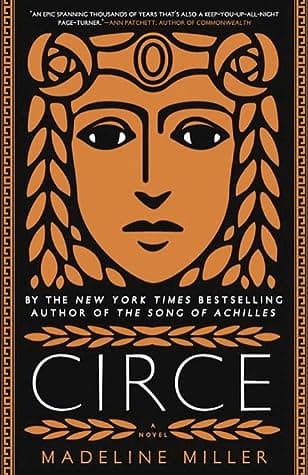
- Circe
Madeline Miller
4.3 (343k) average on GoodreadsFantasyMiller's Circe offers a more literary and psychologically rich exploration of a mythological figure, focusing on internal monologue and nuanced character development with sophisticated prose. Antigoddess is more action-oriented and plot-driven, prioritizing a faster pace over deep psychological dives.
- The Lightning Thief
Rick Riordan
4.3 (2M) average on GoodreadsFantasyRiordan's The Lightning Thief maintains a more lighthearted and humorous tone, even amidst danger, and its gods are often depicted with a more approachable, albeit flawed, demeanor. Antigoddess presents a darker, more perilous world where the gods face genuine annihilation, and the stakes feel significantly higher and more desperate.
- Harry Potter and the Sorcerer's Stone
J.K. Rowling
4.5 (7M) average on GoodreadsFantasyRescued from a miserable life under the stairs, an orphaned boy discovers he's a wizard destined for a magical school, where he uncovers a dangerous secret tied to the dark wizard who murdered his parents.
- The Hunger Games
Suzanne Collins
4.3 (6.4M) average on GoodreadsFantasyIn a future where children fight to the death on live television, Katniss Everdeen volunteers for the arena, turning a death sentence into a fight for survival and a spark of rebellion.
- 1984
George Orwell
4.2 (3.1M) average on GoodreadsPoliticsIn a future where surveillance and thought control are absolute, a man's search for truth clashes with the Party, showing that hope can be a form of rebellion.





Enjoyed the summary?
A summary gives you the shape of the book. The book itself has the detail, the examples and the voice.
Find Antigoddess on AmazonAs an Amazon Associate, BookBrief earns from qualifying purchases. How we're funded