

Core Idea
- Difficulty
- Medium
- Read it if
- You enjoy stories where children uncover hidden worlds, appreciate themes of historical preservation and community resilience, and are open to a non-linear exploration of time within a contemporary setting.
- Skip it if
- You prefer strictly realistic narratives, are not interested in historical fiction elements, or dislike stories centered around youthful protagonists solving adult-scale problems.
Key Takeaways from Apartment 713
The Regency's Living History
Buildings, like people, hold stories and secrets within their walls.
The Regency first appears to Jake as a run-down, uninteresting old building, a stark contrast to his previous life. But as he explores its hidden areas and meets its unusual residents, the building changes from just a structure into a lively place with a rich, layered history. Its 'peeling wallpaper and faded glory' are not just signs of age, but marks of time, each flaw showing lives lived inside. This takeaway shows that true value often lies beneath the surface, and that neglected places can hold beauty and untold stories, waiting for those who look closer.
“The Regency is nothing more than floor after floor of peeling wallpaper and faded glory.”
In the book: Jake's initial impression of the building, contrasted with his later discoveries of secret ballrooms and hidden artwork, and the deep connections he forms with its long-term residents who embody the building's spirit.
Try this: Approach old or overlooked places, objects, or even people with an open mind and a sense of curiosity, rather than immediate judgment. Seek out the hidden stories and historical context that might reveal unexpected value and beauty.
Related ideas: architectural-history, hidden-value, historical-preservation
Unexpected Friendships Forge Resilience
Loneliness can be the unexpected catalyst for profound human connection.
Jake's initial loneliness in his new home, caused by his mother's unemployment and the move to the Regency, leads him to form an unexpected group of friends. The 'trail of kittens' is a whimsical way to show how small, seemingly unimportant events can lead to important relationships. His meetings with the elderly lady, Danny the custodian, and eventually Beth, are not just casual; they become the base of his emotional support. These friendships give Jake a sense of belonging and purpose, helping him face the challenges at the Regency. They show how shared experiences and support can turn personal hardship into collective strength.
“Loneliness (and a trail of kittens) leads Jake to the apartment of an elderly lady, then to the bowels of the building and then to a part-time job assisting Danny the custodian.”
In the book: Jake's journey from loneliness to assisting Danny, befriending the elderly lady, and his developing partnership with Beth in his quest to save the Regency.
Try this: Actively engage with your environment and the people around you, even in unfamiliar or challenging situations. Be open to unconventional friendships, as they can provide unexpected support and opportunities for growth.
Related ideas: intergenerational-friendship, community-building, overcoming-loneliness
The Power of Belonging
A sense of place and community can be a powerful antidote to feelings of powerlessness.
Jake's emotional journey is tied to his growing sense of belonging at the Regency. He first feels out of place, but he gradually finds comfort and purpose among its residents and by understanding the building itself. This growing sense of belonging is suddenly threatened by the news of the city's demolition plans, making Jake feel helpless. However, it is this connection to the Regency and its community that pushes him to act. His personal stake turns abstract threats into a deeply personal mission, showing that when people feel truly connected to a place and its people, they are more likely to fight for its preservation and their shared future, even against great odds.
“Jake’s feeling of belonging is short-lived: the city plans to demolish the Regency. Jake feels powerless.”
In the book: Jake's initial disinterest, his growing affection for the building and its occupants, and his subsequent determination to save it once he feels a part of its fabric.
Try this: Cultivate a strong sense of community and connection in your own life and environment. Recognize that feeling connected empowers you to advocate for what you value and to overcome challenges that might otherwise feel insurmountable.
Related ideas: community-engagement, sense-of-place, advocacy
Time as a Non-Linear Journey
The past is not merely gone; it can be accessed and influence the present in surprising ways.
The discovery of Apartment 713 and its ability to transport Jake to the past introduces a fantastical, yet important, idea: time is not a fixed, straight line. This changes Jake's understanding of history, making it a tangible, interactive place instead of a distant concept. His trips to the past are not just nostalgic; they are important missions to gather information and find solutions that can affect the Regency's present and future. This challenges the usual view of time, suggesting that understanding and engaging with historical events can provide key insights and tools to handle current problems, emphasizing the lasting importance of what came before.
“He’s summoned to apartment 713. An apartment he’s been told is off-limits. But when he opens the door . . . he travels to the past!”
In the book: Jake's direct experience of traveling to the past through Apartment 713, and his subsequent quest with Beth to find clues within the Regency's history.
Try this: View history not as a static record, but as a dynamic resource. Actively seek out historical context and lessons when facing current problems, understanding that solutions may lie in past events or forgotten knowledge.
Related ideas: time-travel, historical-influence, non-linear-narrative
The Interconnectedness of Past and Present
Unraveling historical mysteries can unlock solutions for contemporary dilemmas.
Jake and Beth's quest to save the Regency involves a deep look into the building's origins and the identities of its mysterious creators. This search is not just academic; it is a desperate race against time to find a 'key' in the past that can secure the building's future. The story strongly suggests that solutions to current problems, especially those involving preservation and legacy, are often found within the historical context of the problem itself. By understanding the intentions, challenges, and secrets of the Regency's creators, Jake and Beth hope to find a loophole or a forgotten truth that can stop its demolition. This highlights the practical use of historical research in solving real, immediate problems.
“As their friendship blooms, the mystery around the building’s makers deepens. The Regency’s own storied past will give Jake the key to saving his own future—if only he knows where to look.”
In the book: The central plot point of Jake and Beth actively searching for clues in the past to save the building in the present, and the deepening mystery around the Regency's makers.
Try this: When faced with complex problems, particularly those involving long-standing institutions or structures, investigate their origins and historical trajectory. Solutions might be found in forgotten documents, original intentions, or overlooked historical facts.
Related ideas: historical-research, problem-solving, legacy
Youthful Agency in Adult Problems
Even young people can be powerful agents of change when driven by conviction.
Initially, Jake is a typical kid who feels overwhelmed and powerless by adult problems, specifically his family's financial troubles and the coming demolition of his new home. Apartment 713, however, puts him in a position of unexpected power. With Beth, he takes on the huge task of saving an entire building, a responsibility usually for adults. This story shows that age is not a barrier to making a big difference. When young people are empowered, given a purpose, and supported by friends, they can gather resources, uncover truths, and challenge seemingly unchangeable adult decisions, proving that conviction and creativity often matter more than experience.
“Jake feels powerless. And then fate throws him a curveball. He’s summoned to apartment 713.”
In the book: Jake's initial feeling of powerlessness, contrasted with his active role in investigating the Regency's past and working to save it, alongside Beth.
Try this: Encourage and empower young people to engage with real-world problems and contribute to solutions. Recognize that their fresh perspectives and energy can be invaluable assets in tackling complex challenges. For adults, be open to their ideas and support their initiatives.
Related ideas: youth-empowerment, civic-engagement, activism
The Value of the 'Obsolete'
What is deemed 'faded glory' by some holds irreplaceable value for others.
The city's plan to demolish the Regency reflects a common current issue: the idea that older buildings are outdated compared to modern development. For the city, the Regency is likely an economic burden or an obstacle to new projects. However, for Jake and the residents, its 'peeling wallpaper and faded glory' are not flaws but features that contribute to its unique character, historical importance, and the strong community it builds. This takeaway argues against a purely practical view of buildings, supporting the preservation of structures that hold cultural memory, architectural heritage, and social unity, even if they do not meet modern aesthetic or economic standards. It highlights the often-overlooked emotional and historical value of 'obsolete' places.
“The Regency is nothing more than floor after floor of peeling wallpaper and faded glory.”
In the book: The city's decision to demolish the Regency due to its age and condition, contrasted with the residents' deep attachment and Jake's fight to preserve it.
Try this: Before discarding or demolishing old structures or items, consider their historical, cultural, and emotional value. Advocate for adaptive reuse and preservation efforts that maintain the character and memory of a place, rather than solely focusing on economic expedience.
Related ideas: architectural-preservation, cultural-heritage, urban-development
The Labyrinthine Nature of Home
A true home is not just a dwelling, but a complex, evolving space with hidden depths.
The Regency is more than just an apartment building; it is a character itself, always showing new 'mysteries' to Jake. From secret ballrooms to hidden art and the time-traveling apartment 713, the building is a place of discovery. This complexity reflects the process of truly making a place home. It is not an immediate feeling but an ongoing journey of exploration and understanding. As Jake explores the building's physical and historical layers, his connection to it grows, and the 'occupants grow on him too.' This takeaway suggests that a true sense of home comes from active involvement, curiosity, and a willingness to uncover the many layers of a place, both its physical spaces and its human stories.
“With each passing day, the building reveals more of its mysteries to Jake. The occupants grow on him too.”
In the book: Jake's continuous discoveries within the building (secret ballrooms, hidden artwork, Apartment 713) and his evolving relationship with both the building and its residents.
Try this: Actively explore and engage with your living environment, whether it's your home, neighborhood, or city. Look beyond the surface to discover hidden histories, unique features, and the stories of the people who inhabit it, allowing a deeper sense of home to develop.
Related ideas: sense-of-home, personal-discovery, architectural-mystery
The Unseen Labor of Custodians
The quiet work of those who maintain spaces often holds the keys to their secrets.
Jake's part-time job helping Danny the custodian is more than just a way to earn money; it is his entry into the unseen operational core of the Regency. Custodians like Danny have an intimate, practical knowledge of a building that residents rarely do. They know its hidden passages, its quirks, its weaknesses, and often, its history through years of observation and maintenance. Danny becomes a mentor and a guide, not just in tasks but in understanding the building's deeper workings and secrets. This takeaway highlights the often-underestimated value of 'invisible' labor, showing how those who maintain our spaces are often the unsung heroes who hold crucial institutional knowledge and can open unexpected paths to understanding and solving problems.
“Loneliness (and a trail of kittens) leads Jake...then to a part-time job assisting Danny the custodian.”
In the book: Jake's direct experience working with Danny, which grants him access to parts of the building and insights he wouldn't otherwise have.
Try this: Recognize and value the knowledge and contributions of maintenance staff, custodians, and others who work 'behind the scenes.' Their practical expertise and long-term observations can provide invaluable insights and solutions.
Related ideas: invisible-labor, institutional-knowledge, mentorship
Hope in the Face of Demolition
Even when faced with seemingly inevitable destruction, hope can drive innovation and change.
The threat of demolition hangs over the Regency, initially making Jake feel 'powerless.' This situation is a strong way to show facing seemingly impossible challenges where the outcome seems set. However, the story turns on the idea that even in such dire circumstances, an unexpected event ('fate throws him a curveball') can spark hope and action. Jake's journey to the past, driven by the wish to save his new home, represents the human ability to be resilient and clever when facing loss. It shows that even against bureaucracy and economic forces, the desire to preserve something cherished can lead to extraordinary efforts and possibly, a different future. The book champions the idea that hope is not passive, but an active force that drives problem-solving and resistance.
“The city plans to demolish the Regency. Jake feels powerless. And then fate throws him a curveball.”
In the book: The direct threat of the city's demolition plans, which acts as the primary antagonist, and Jake's subsequent heroic efforts, driven by his connection to the building, to find a way to save it.
Try this: When confronted with seemingly irreversible negative outcomes, actively seek out alternative solutions and unexpected pathways. Don't succumb to feelings of powerlessness; instead, let hope fuel your creativity and determination to find a different outcome.
Related ideas: resilience, optimism, social-justice
Apartment 713 Quotes
“The city was a symphony of sirens and distant laughter, a lullaby for the sleepless.”
“Sometimes, the most secure place is the one everyone overlooks.”
“Every apartment holds a universe, and sometimes, those universes collide.”
“The past isn't just a story we tell; it's a shadow that follows, even into the brightest rooms.”
“Trust is a fragile thing, easily broken, and almost impossible to fully mend.”
“The silence in Apartment 713 wasn't empty; it was heavy with unspoken words.”
“You can change the locks, but you can't change what's already happened inside.”
“Curiosity, like a persistent draft, finds its way into every crack.”
“We build walls to keep things out, but sometimes, they end up trapping us in.”
“The truth has a way of surfacing, even from the deepest foundations.”
“Sometimes, the most ordinary places hide the most extraordinary secrets.”
“Fear can make you see ghosts where there are only shadows, and shadows where there are real threats.”
“The rhythm of the building, the creaks and groans, were its own kind of language, if you knew how to listen.”
“What we choose to forget can be just as powerful as what we remember.”
Quiz
10 questions on the main ideas. Each answer comes with a short explanation.
Question 1
What is Jake Simmons' initial impression of his new home, The Regency?
- He finds it modern and exciting.
- He sees it as a place of peeling wallpaper and faded glory.
- He is indifferent to its appearance.
- He is impressed by its historical grandeur.
Show answer
B. He sees it as a place of peeling wallpaper and faded glory. The book explicitly states that Jake sees The Regency as 'nothing more than floor after floor of peeling wallpaper and faded glory,' indicating his initial dislike.
Question 2
What leads Jake to first interact with the elderly lady in the building?
- A request from his mother.
- A desire to explore the hidden parts of the building.
- Loneliness and a trail of kittens.
- A part-time job assisting Danny the custodian.
Show answer
C. Loneliness and a trail of kittens. The synopsis states that 'Loneliness (and a trail of kittens) leads Jake to the apartment of an elderly lady,' initiating his deeper involvement with the building.
Question 3
What significant event threatens the future of The Regency?
- A major fire.
- A change in ownership.
- The city's plan to demolish it.
- A natural disaster.
Show answer
C. The city's plan to demolish it. Jake's feeling of belonging is 'short-lived' because 'the city plans to demolish the Regency,' which is the central conflict he must address.
Question 4
What happens when Jake finally enters apartment 713, an apartment he was told was off-limits?
- He discovers a secret ballroom.
- He finds hidden artwork.
- He travels to the past.
- He meets the building's original architect.
Show answer
C. He travels to the past. The narrative explicitly states, 'But when he opens the door . . . he travels to the past!', revealing the fantastical element of the story.
Question 5
Who is Beth in relation to Jake's journey to save The Regency?
- She is the elderly lady he befriended.
- She is his new friend and guide in the past.
- She is Danny the custodian's daughter.
- She is a city official trying to save the building.
Show answer
B. She is his new friend and guide in the past. The synopsis introduces Beth as 'his new friend and guide' in the context of his time travel and search for clues.
Question 6
Besides Jake's initial dislike, what specific detail about his old life does he miss?
- His old school friends.
- His father's presence.
- The time when his mother was employed.
- His pet dog.
Show answer
C. The time when his mother was employed. The text states, 'He misses the time when his mother was employed,' indicating a specific aspect of his previous, more stable life.
Question 7
What is Jake's part-time job within The Regency, acquired after his initial explorations?
- Assisting the building manager.
- Working in the hidden ballroom.
- Assisting Danny the custodian.
- Cataloging hidden artwork.
Show answer
C. Assisting Danny the custodian. After meeting the elderly lady, Jake's journey leads him 'then to a part-time job assisting Danny the custodian,' further integrating him into the building's life.
Question 8
The book hints that 'even time moves in surprising ways' at The Regency. What specific event confirms this unusual aspect of the building?
- The discovery of secret ballrooms.
- Jake's ability to travel to the past through Apartment 713.
- The deepening mystery around the building's makers.
- The slow decay of the building over time.
Show answer
B. Jake's ability to travel to the past through Apartment 713. The phrase 'even time moves in surprising ways' foreshadows the major plot point where Jake 'travels to the past!' upon entering Apartment 713, directly confirming this unusual characteristic.
Question 9
What is the ultimate goal Jake and Beth are working towards in their search through the past?
- To uncover the identity of the building's original residents.
- To find any clue that might help save The Regency from demolition.
- To restore the building to its former glory.
- To prevent time travel from being discovered by others.
Show answer
B. To find any clue that might help save The Regency from demolition. After traveling to the past, Jake 'begins searching for any clue that might help him save the Regency,' which is the driving motivation for his and Beth's actions.
Question 10
The synopsis mentions that 'The Regency’s own storied past will give Jake the key to saving his own future.' What does this imply about the solution to Jake's problem?
- He needs to find a hidden treasure within the building.
- The historical significance or a secret from the building's creation will provide the means to prevent its demolition.
- He must convince the past residents to move to the present.
- His future personal happiness depends solely on his friendship with Beth.
Show answer
B. The historical significance or a secret from the building's creation will provide the means to prevent its demolition. This statement suggests that the solution to saving The Regency, and thus Jake's sense of belonging and future, lies within understanding or utilizing something from the building's historical narrative or construction, directly linking the past to the present crisis.
Apartment 713 FAQ
What is the main premise of 'Apartment 713'?
'Apartment 713' follows Jake Simmons, a lonely boy who discovers that his new, old apartment building, the Regency, holds a secret: a portal to the past in apartment 713. He must use this discovery, alongside a new friend, to uncover clues and save the building from demolition.
Does Jake travel to different historical periods in the book?
Yes, upon entering apartment 713, Jake is transported to the past, specifically to earlier eras of the Regency building's history. These journeys are crucial for him to understand the building's mysteries and find a way to save it.
What role do the 'secret ballrooms' and 'hidden artwork' play in the story?
The secret ballrooms and hidden artwork are key mysteries within the Regency building, serving as clues to its unique past and the identities of its original creators. Discovering them helps Jake and Beth piece together the building's storied history.
How does the book explore themes of friendship and belonging?
Jake's initial loneliness in a new, old home is gradually overcome as he forms an unlikely friendship with Beth and connects with the quirky residents of the Regency. This sense of belonging motivates him to fight for the building's survival.
What kind of challenges do Jake and Beth face in their quest to save the Regency?
Jake and Beth face the imminent threat of the city's demolition plans, the complexities of navigating time travel, and the challenge of uncovering historical secrets. They must work against the clock to find a solution that can prevent the building's destruction.
Is 'Apartment 713' suitable for all ages?
'Apartment 713' is a middle-grade novel, making it suitable for young readers who enjoy mystery, adventure, and a touch of fantasy. Its themes of friendship, belonging, and historical discovery are engaging for this age group.
How does 'Apartment 713' differ from other time-travel books for young readers?
Unlike some time-travel narratives, 'Apartment 713' grounds its time travel within a single, specific location – the Regency building itself. This creates a unique focus on historical preservation and the personal connection to a place, rather than broad historical events.
Does the book have a satisfying conclusion regarding the Regency's fate?
The book builds towards a compelling climax where Jake and Beth's discoveries from the past offer the key to influencing the present. Readers will find out if their efforts are enough to save the beloved Regency from demolition.
Similar books
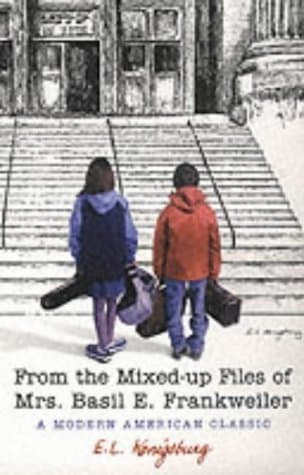
- From the Mixed-Up Files of Mrs. Basil E. Frankweiler
E.L. Konigsburg
4.2 (189k) average on GoodreadsChildren'sShowcases children making a home and finding adventure in an unconventional, public space, with a focus on discovery and resourcefulness.
- The Diary of a Young Girl
Anne Frank
4.2 (2.7M) average on GoodreadsBiographyDuring the Nazi occupation, a teenage girl's diary, written from a secret annex, shares observations on humanity, hope, and the wait for freedom.
- Twisted 1. Twisted love
Ana Huang
3.7 (1.7M) average on GoodreadsA quiet billionaire with a difficult past finds his guarded heart opening to the woman he must protect, but their growing passion uncovers dangerous secrets and a shared, traumatic history.
- Eat, Pray, Love
Elizabeth Gilbert
3.6 (1.5M) average on GoodreadsLifestyleA heartbroken writer leaves her conventional life for a year-long global search for pleasure in Italy, spiritual devotion in India, and unexpected love and balance in Bali.
- Night
Elie Wiesel
4.3 (970k) average on GoodreadsBiographyIn the darkness of Auschwitz and Buchenwald, a teenage Elie Wiesel faces the extermination of his family, the loss of his faith, and the lasting scars of humanity's deepest cruelty.
- Steve Jobs
Walter Isaacson
4.1 (957k) average on GoodreadsBusinessSteve Jobs was a visionary who fused creativity and technology to revolutionize six industries and shape our digital world.





Enjoyed the summary?
A summary gives you the shape of the book. The book itself has the detail, the examples and the voice.
Find Apartment 713 on AmazonAs an Amazon Associate, BookBrief earns from qualifying purchases. How we're funded