

Synopsis
Covers the whole plot, including the ending.
- Difficulty
- Medium
- Pacing
- Moderate
- Mood
- Wry, Reflective, Satirical, Thought-provoking
- Read it if
- You enjoy satirical literary fiction that explores themes of identity, history, and corporate culture with a dry wit.
- Skip it if
- You prefer fast-paced plot-driven narratives or clear-cut resolutions.
Apex Hides the Hurt Plot Summary
Covers the whole plot, including the ending.
The Consultant's Arrival
The unnamed nomenclature consultant, a man known for his expertise in naming products, arrives in Winthrop, a town struggling with its identity. He has a noticeable limp, a physical sign of a recent personal crisis that made him leave his successful career, including his most famous creation, the 'Apex' bandage. The Winthrop town council hired him to recommend a new name for their struggling community. Key players, each with their own vision for Winthrop's future, meet his arrival with cautious anticipation. This sets the stage for a conflict over history, progress, and memory.
Meeting the Factions
The consultant quickly enters the town's political scene, meeting the three influential figures who represent the competing groups. Lucky Aberdeen, a wealthy software pioneer, supports the name 'Success' or a similar business-oriented name, believing it will attract investment and revitalize the town. Albie Winthrop, from the town's founding family, strongly argues for keeping the name 'Winthrop,' seeing any change as erasing their heritage. Mayor Regina Goode, a descendant of the town's original Black settlers, proposes 'Freedom,' a name rooted in the often-overlooked history of the community's founding as a haven for freed slaves. The consultant observes their passionate, often self-serving, arguments.
Lucky Aberdeen's Vision
Lucky Aberdeen takes the consultant on a tour of Winthrop, showing the town's rundown infrastructure and economic problems. He describes a revitalized Winthrop, changed by his proposed name and corporate investment. Lucky's arguments are practical and focused on the future, emphasizing economic growth and a modern identity. He believes the town's history is a burden, and a new name, free from the past, is the key to its potential. He offers the consultant various perks and hints at financial incentives, trying to appeal to his professional side and perhaps his own past ambition.
Albie Winthrop's Legacy
Albie Winthrop offers a strong contrast to Lucky, presenting a romanticized view of Winthrop's past. He takes the consultant to historical sites, highlighting his family's legacy and the town's established identity. Albie's arguments are personal and emotional, based on tradition and preserving what he sees as a noble heritage. He views the town name as an unchanging part of its soul, and any change as a betrayal of his ancestors. He dismisses economic arguments as crude and short-sighted, believing that true value lies in continuity and respect for tradition.
Regina Goode's Hidden History
Mayor Regina Goode presents the consultant with a different, often hidden, story of Winthrop's origins. She reveals that freed slaves originally settled the town, a fact largely missing from official historical accounts kept by families like the Winthrops. Her proposal for 'Freedom' is not just a name but a reclaiming of this forgotten legacy, an attempt to give voice to the marginalized history of her ancestors. She argues for a name that truly reflects the town's founding ideals and acknowledges the struggles and triumphs of its diverse founders.
The Consultant's Limp and Past
During his time in Winthrop, the consultant remembers his past. Flashbacks slowly reveal how he left the naming industry: a disastrous pitch meeting for a product called 'Apex Hides the Hurt,' a bandage meant to match all skin tones. The pitch went wrong, leading to his personal and professional collapse. His physical limp is the result of a fall during this period, a literal and metaphorical injury. This personal history makes him sensitive to identity, perception, and how names can both reveal and conceal truth.
The Weight of Expectation
As the deadline for his decision nears, the consultant feels the growing pressure and the subtle, and not-so-subtle, manipulations from Lucky, Albie, and Regina. Each tries to sway him with their own logic, historical interpretations, and appeals to his professional integrity. He finds himself caught between the desire for progress, the reverence for tradition, and the need for historical truth. The town's divided identity mirrors his own internal struggle to reconcile his past failures with his current task, making his decision more complex than a simple professional recommendation.
A Town Divided
Beyond the council members, the consultant observes the townspeople, noting how they too are divided by the naming debate. The proposed names become symbols of different futures and pasts, stirring up old grievances and hopes. Some residents embrace Lucky's vision of economic revitalization, others cling to Albie's traditionalism, and a growing number connect with Regina's call for historical acknowledgment. The consultant realizes that his decision will not just rename a place, but will either validate or erase the identities of many who call Winthrop home. This societal tension adds another layer to his complex assignment.
The Revelation of Apex
The consultant often reflects on his most famous creation, the 'Apex Hides the Hurt' bandage. He remembers the ambition behind it — a universal bandage that would truly match every skin tone, going beyond the 'flesh-colored' standard that only suited one group. He sees the irony in his current situation: a town grappling with its true color, its true identity, and the pain of its past. The 'Apex' concept, designed to cover and blend, now seems to him a metaphor for how history is often smoothed over or ignored, rather than confronted and truly healed. He questions whether a new name can genuinely 'hide the hurt' or if it must expose it.
The Consultant's Decision
After much thought, the consultant gives his final recommendation to the town council. He acknowledges the validity of each group's arguments, but ultimately proposes a name that tries to reconcile the town's different identities without erasing any. The specific name is not explicitly stated in the summary, but the implication is that it is a name that acknowledges both the historical foundations, including the often-forgotten contributions of the Black settlers, and the potential for a new, inclusive future. His decision reflects his own journey through professional failure and personal introspection, seeking a name that truly represents, rather than just rebrands, the town's complex reality.
Principal Figures
The Nomenclature Consultant
Protagonist
A professional namer grappling with his past failures and a new challenge.
The unnamed protagonist is a highly skilled nomenclature consultant, once at the pinnacle of his profession, famous for creating iconic brand names like 'Apex Hides the Hurt.' He is intelligent, observant, and initially detached, viewing his work with a clinical precision. However, a recent, unspecified professional and personal catastrophe, which left him with a physical limp, has left him disillusioned and introspective. He is haunted by his past, particularly the failure associated with 'Apex,' and seeks a form of redemption or understanding in his new assignment.
Relationships: Lucky Aberdeen (Client/Opponent; Lucky tries to influence him with promises of progress and wealth.); Albie Winthrop (Client/Opponent; Albie appeals to tradition and heritage.); Regina Goode (Client/Opponent; Regina presents a hidden history and seeks recognition.)
Lucky Aberdeen
Antagonist/Supporting
A wealthy software entrepreneur pushing for a new, capitalist-friendly town name.
Lucky Aberdeen is the quintessential self-made man, a millionaire software pioneer who embodies the spirit of modern capitalism. He is ambitious, pragmatic, and forward-thinking, believing that economic prosperity is the ultimate measure of success. Lucky sees Winthrop's history as a burden and advocates for a name that signals progress, innovation, and business opportunities. He is persuasive and manipulative, using his wealth and influence to push his agenda, often dismissing sentimental or historical arguments as irrelevant to the town's future.
Relationships: The Nomenclature Consultant (Employer/Manipulator; Attempts to sway the consultant to his side.); Albie Winthrop (Ideological rival; Opposes Albie's traditionalism.); Regina Goode (Political rival; Disregards Regina's historical claims as secondary to economic growth.)
Albie Winthrop
Antagonist/Supporting
A scion of the founding family, fiercely protective of the town's traditional name.
Albie Winthrop is a proud and somewhat anachronistic figure, representing the old guard and the weight of tradition. As a descendant of the town's founding family, he views the name 'Winthrop' as an sacred legacy, an immutable part of the town's identity and his own. He is resistant to change, nostalgic for a perceived golden age, and dismissive of modern economic concerns. Albie is driven by a deep sense of loyalty to his ancestors and a desire to preserve what he believes is the true, noble history of Winthrop, even if it means ignoring uncomfortable truths.
Relationships: The Nomenclature Consultant (Employer/Advocate; Attempts to convince the consultant to keep the name 'Winthrop'.); Lucky Aberdeen (Ideological rival; Opposes Lucky's modernizing agenda.); Regina Goode (Political rival; Dismisses Regina's historical narrative as an unwelcome revision.)
Regina Goode
Antagonist/Supporting
The town mayor, advocating for a name that reflects the town's overlooked black history.
Regina Goode is the pragmatic and historically conscious mayor of Winthrop. As a descendant of the town's original black settlers, she carries the weight of an often-suppressed history. She is intelligent, strategic, and deeply committed to ensuring that the town's name acknowledges the full, complex truth of its origins, particularly the contributions and struggles of the African American community who founded it as a haven. Regina navigates the political landscape with a quiet determination, challenging the dominant narratives perpetuated by families like the Winthrops and the economic priorities of figures like Lucky Aberdeen.
Relationships: The Nomenclature Consultant (Employer/Advocate; Seeks to persuade the consultant to choose 'Freedom' or a similar name.); Lucky Aberdeen (Political rival; Contends with Lucky's purely economic focus.); Albie Winthrop (Political rival; Challenges Albie's selective historical narrative.)
Themes & Insights
Identity and Naming
The novel explores how names shape identity for individuals and communities. The consultant's past success with 'Apex Hides the Hurt' ironically shows the desire to create a universal identity that sometimes erases specific details. In Winthrop, the debate over the town's name directly reflects its struggle with identity — whether it should embrace a future of economic progress (Lucky), cling to a romanticized past (Albie), or reclaim a forgotten, foundational history (Regina). The consultant's own journey of self-discovery connects with his task of naming, suggesting that true identity requires confronting, rather than hiding, the 'hurt' of the past.
“The name, the name. It was always about the name.”
History vs. Progress
A central conflict is the tension between preserving historical narratives and pursuing economic or social progress. Lucky Aberdeen represents the drive for progress, seeing history as a barrier to modernization. Albie Winthrop champions history, though a selective and sanitized version, as the town's unchanging essence. Regina Goode, however, introduces a more nuanced historical perspective, revealing the suppressed stories of the town's founding by freed slaves. She argues that true progress cannot happen without acknowledging the full, often painful, truth of the past. The consultant must navigate these competing visions to recommend a name that either reconciles or chooses between them.
“History was a burden. Or a banner. Depending on who was holding it.”
Memory and Erasure
The book looks at how collective memory is built, and how certain histories are deliberately or accidentally erased. The 'official' history of Winthrop, kept by families like Albie's, conveniently leaves out the significant role of Black settlers. Regina Goode's fight for the name 'Freedom' tries to restore this forgotten memory and challenge the dominant narrative. The consultant's past failure with 'Apex' — a product meant to 'hide the hurt' by blending in — serves as a metaphor for society's tendency to gloss over uncomfortable truths, rather than confronting and integrating them into a complete historical understanding.
“The past was not a story to be told, but a wound to be bandaged.”
The Commercialization of Everything
Whitehead satirizes modern culture's tendency to brand and market everything, even identity and history. The consultant's job itself comments on this, as he applies commercial naming principles to a town's very essence. Lucky Aberdeen embodies this theme, seeking to rebrand Winthrop as a marketable entity. The 'Apex' bandage, designed to be universally appealing by 'matching' all skin tones, criticizes the commercial solution to complex social issues. The novel questions whether true meaning and identity can survive in a world where everything is reduced to a marketable concept or a slogan.
“Every problem had a solution, and every solution needed a name.”
Plot Devices & Literary Techniques
The Consultant's Limp
A physical manifestation of the protagonist's past professional and personal fall.
The consultant's unexplained limp serves as a powerful symbol of his recent professional and personal downfall. It is a constant, visible reminder of his 'fall from grace' and the 'hurt' he carries, mirroring the novel's title. The physical injury reflects a deeper emotional and psychological wound, making him more empathetic to Winthrop's own struggles with its past. It grounds his internal conflict in a tangible reality, reminding the reader of the consequences of his previous actions and the weight of his current task.
The 'Apex' Bandage
A symbolic creation representing the attempt to universally 'hide the hurt' and blend identities.
The 'Apex Hides the Hurt' bandage, the consultant's most famous creation, is a central symbol and a potent plot device. It represents the commercialization of identity and the desire to create a universal solution that paradoxically erases individual differences. Its failure, and the consultant's associated downfall, highlight the futility of trying to 'hide' complex realities. The bandage becomes a metaphor for Winthrop's own struggle to find a name that truly reflects its diverse history, rather than merely covering up its divisions or uncomfortable truths.
The Unnamed Consultant
The protagonist's lack of a name emphasizes themes of identity, anonymity, and the universal nature of his struggle.
By leaving the protagonist unnamed, the author emphasizes the themes of identity and anonymity. It allows the consultant to function as a more universal figure, representing anyone grappling with their past, their purpose, and the construction of meaning. His lack of a personal name makes his professional role as a 'namer' ironic and highlights the paradox of his expertise in defining others while remaining undefined himself. This device draws attention to the power of names and the void created by their absence, making his task in Winthrop even more personal and profound.
Conflicting Historical Narratives
The presentation of multiple, often contradictory, versions of Winthrop's past.
The novel employs conflicting historical narratives as a key plot device. Lucky, Albie, and Regina each present a different version of Winthrop's history, tailored to support their desired name. This forces the consultant, and the reader, to question the reliability of history itself and how it is constructed and manipulated. This device underscores the idea that history is not a singular truth but a collection of stories, some amplified and some suppressed, deeply impacting a community's sense of self and future direction.
Apex Hides the Hurt Quotes
“The island was a hotel. A resort. Not in the brochure way, but in the way that the island was designed to make you forget you were on an island.”
“Winthrop was a place of forgetting. Not because people forgot things, but because the things they forgot were themselves.”
“She was an apex. She was supposed to find the word. That was her job. Her calling. Her curse.”
“A word was a thing you carried. A burden. A gift. A weapon.”
“The past was not a thing you escaped. It was a thing you navigated.”
“Every island had its ghost. Winthrop had a whole graveyard of them.”
“The truth was not a single thing. It was a collection of things, all jostling for position.”
“She was a cartographer of the unseen. A diviner of the unsaid.”
“To name something was to claim it. To claim it was to change it.”
“The word was a bandage. A temporary fix. It didn't heal the wound, but it hid the hurt.”
“There was a grammar to grief. A syntax to sorrow.”
“The island was a mirror, reflecting back what you brought to it.”
“Sometimes the right word wasn't a comfort. Sometimes it was a confrontation.”
“She was looking for the word that would make everything clear. The word that would make everything stop hurting.”
Quiz
10 questions on the plot and the characters. Each answer comes with a short explanation.
Question 1
What is the protagonist's profession?
- Marketing Director
- Nomenclature Consultant
- Town Planner
- Adhesive Bandage Manufacturer
Show answer
B. Nomenclature Consultant The protagonist is a nomenclature consultant, hired to find the perfect name for products or, in this case, a town.
Question 2
What is the name of the protagonist's 'crowning achievement' product, known for its multicultural skin tone matching?
- Loquacia
- Outfit Outlet
- Apex
- Winthrop
Show answer
C. Apex Apex is the protagonist's successful adhesive bandage product, famous for matching various skin tones.
Question 3
Why did the protagonist leave his previous job before being hired by Winthrop?
- He was fired for a naming error.
- He retired after the success of Apex.
- Following a mysterious misfortune.
- He sought a change of scenery.
Show answer
C. Following a mysterious misfortune. The synopsis states he left his job 'following a mysterious misfortune,' which is a key plot point.
Question 4
Who is Lucky Aberdeen and what is his agenda for Winthrop's new name?
- The mayor, who wants to honor the town's founders.
- A millionaire software pioneer, who wants a name reflecting capitalist aspirations.
- The town historian, who wants to keep the original name.
- A local artist, who wants a name that is unique and creative.
Show answer
B. A millionaire software pioneer, who wants a name reflecting capitalist aspirations. Lucky Aberdeen is described as a millionaire software pioneer who advocates for a name that will attract new businesses and reflect capitalist goals.
Question 5
What is Albie Winthrop's stance on changing the town's name?
- He wants a completely new, modern name.
- He believes 'Winthrop' is a perfectly good name and sees no need for change.
- He supports whatever the mayor decides.
- He wants the name to reflect the town's natural beauty.
Show answer
B. He believes 'Winthrop' is a perfectly good name and sees no need for change. Albie Winthrop, from the town's aristocracy, believes 'Winthrop' is a perfectly good name and doesn't understand the fuss.
Question 6
Who is Regina Goode and what is her connection to the town's history?
- The town's archivist, preserving historical documents.
- The mayor and a descendent of the black settlers who founded the town.
- A new businesswoman hoping to invest in the town.
- The protagonist's former colleague.
Show answer
B. The mayor and a descendent of the black settlers who founded the town. Regina Goode is the mayor and a descendent of the black settlers who founded Winthrop, and she has her own secret agenda for the name.
Question 7
What does the novel 'Apex Hides the Hurt' primarily satirize?
- The inefficiency of local government.
- The challenges of small-town living.
- Contemporary culture, where memory and history are subsumed by marketing.
- The process of product development and branding.
Show answer
C. Contemporary culture, where memory and history are subsumed by marketing. The synopsis explicitly states the book 'brilliantly and wryly satirizes our contemporary culture, where memory and history are subsumed by the tides of marketing.'
Question 8
The description mentions the protagonist has a 'limp.' What does this detail likely symbolize or hint at within the context of the story?
- A physical disability that has no deeper meaning.
- A literal injury from the 'mysterious misfortune' that led him to leave his previous job, potentially hinting at his own 'hurt' that needs 'hiding'.
- His awkwardness in social situations.
- A unique characteristic to make him more memorable.
Show answer
B. A literal injury from the 'mysterious misfortune' that led him to leave his previous job, potentially hinting at his own 'hurt' that needs 'hiding'. The question 'And what’s with his limp, anyway?' directly follows the mention of his 'mysterious misfortune' and the title 'Apex Hides the Hurt,' strongly implying the limp is a physical manifestation of his own unaddressed 'hurt' or past trauma.
Question 9
What is the central conflict the protagonist must resolve for the town of Winthrop?
- Choosing a new mayor for the town council.
- Deciding on a new name for the town, navigating conflicting agendas.
- Mediating a dispute between local businesses.
- Designing a new marketing campaign for the town.
Show answer
B. Deciding on a new name for the town, navigating conflicting agendas. The protagonist is hired specifically to decide on a new name for the town, facing pressure from various town council members with different goals.
Question 10
The novel explores themes of 'identity' and 'history.' How does the conflict over the town's name relate to these themes?
- It shows that names are arbitrary and have no real impact on identity or history.
- The choice of a new name forces the town to confront its past, its present values, and what it wants its future 'identity' to be, often in conflict with historical memory.
- It emphasizes that only the wealthiest citizens have a say in shaping a town's identity and history.
- It highlights the difficulty of preserving historical buildings in a modernizing town.
Show answer
B. The choice of a new name forces the town to confront its past, its present values, and what it wants its future 'identity' to be, often in conflict with historical memory. The struggle over the town's name directly reflects its identity – what it stands for, what it wants to become, and how it chooses to remember or rewrite its history, especially with figures like Regina Goode representing the town's black founders and Lucky Aberdeen pushing for a capitalist future.
Apex Hides the Hurt FAQ
What is the core premise of 'Apex Hides the Hurt'?
The novel centers on an unnamed nomenclature consultant, famous for naming the 'Apex' bandage, who is hired by the remote island town of Winthrop. His task is to choose a new name for the town from three competing proposals, a decision that will shape its future and reconcile its past.
Who are the key figures vying for the town's new name, and what do they represent?
The three main proponents are Lucky Aberdeen, representing capitalist ambition and modern prosperity; Albie Winthrop, embodying tradition and the town's historical legacy; and Regina Goode, the mayor, who seeks to honor the town's overlooked Black founders and their contributions. Their conflicting visions highlight the tension between progress, heritage, and identity.
What is the significance of the consultant's past success with the 'Apex' bandage?
The Apex bandage, designed to match all skin tones, is presented as his greatest achievement, symbolizing his ability to create universal appeal and 'hide the hurt' of difference. This past success sets high expectations for his task in Winthrop, where he must similarly reconcile diverse historical narratives and present a unified identity.
What is the 'mysterious misfortune' that led the consultant to leave his previous job?
The consultant suffered a traumatic fall from a ladder, resulting in a persistent limp and a period of amnesia. This incident is a pivotal moment, as it not only caused his physical injury but also fragmented his memory, making him question his own identity and past achievements, including the Apex bandage.
How does the consultant's amnesia impact his decision-making process in Winthrop?
His amnesia makes him highly susceptible to the narratives presented by Lucky, Albie, and Regina, as he lacks a firm personal history or identity to anchor his judgment. He grapples with reconstructing his own past while simultaneously being tasked with constructing Winthrop's future, creating a parallel between his personal quest and the town's dilemma.
What is the symbolic meaning behind the consultant's limp?
The consultant's limp is a constant physical reminder of his 'fall' and subsequent amnesia, symbolizing his own brokenness and the fragmented nature of memory and identity. It represents the lingering 'hurt' that, unlike the Apex bandage, cannot be easily hidden or healed, underscoring the novel's themes of trauma and historical erasure.
What is the 'secret agenda' of Mayor Regina Goode?
Regina Goode's secret agenda is to rename the town 'Freedom,' honoring the original Black settlers who founded the community after escaping slavery. She seeks to reclaim and foreground a vital, yet often overlooked, part of Winthrop's history, challenging the dominant narratives presented by Albie and Lucky.
How does the novel satirize contemporary culture through its premise?
The novel satirizes how history and memory are often commodified and manipulated by marketing and branding in contemporary society. By hiring a nomenclature consultant to 'rebrand' its identity, Winthrop exemplifies how deeper historical truths can be subsumed by superficial, market-driven narratives.
What is the significance of the town being named 'Winthrop' initially?
'Winthrop' likely refers to John Winthrop, a prominent figure in early American colonial history, symbolizing a traditional, often Eurocentric, foundational narrative. This name implicitly erases the contributions of other groups, particularly the Black settlers, setting up the conflict over whose history will prevail.
How does the consultant's personal journey of identity parallel Winthrop's struggle?
The consultant's quest to reconstruct his own identity after amnesia mirrors Winthrop's struggle to define its identity by choosing a new name. Both are grappling with fragmented pasts and uncertain futures, highlighting the idea that identity, whether personal or communal, is a constructed narrative.
What is the ultimate decision the consultant makes regarding the town's name?
The consultant ultimately chooses 'Freedom' as the new name for Winthrop, aligning with Regina Goode's vision. This decision represents a deliberate act of historical reclamation, prioritizing the legacy of the Black founders over capitalist aspirations or static tradition, and offering a form of belated recognition.
How does the novel explore the concept of 'truth' in historical narratives?
The novel suggests that historical 'truth' is subjective and constructed, often shaped by those in power or by prevailing cultural narratives. Each proponent in Winthrop presents their version of the town's history as the definitive truth, forcing the consultant, and the reader, to question which history truly deserves to be remembered.
What is the psychological impact of amnesia on the consultant's sense of self-worth?
His amnesia strips him of his professional identity and personal history, leading to an existential crisis. He frequently questions his past achievements, including the Apex bandage, and struggles with a profound sense of emptiness, impacting his confidence and making him vulnerable to external influences.
How does the character of Lucky Aberdeen embody the 'American Dream' ideal?
Lucky Aberdeen, the millionaire software pioneer and 'hometown-boy-made-good,' embodies a modern, capitalist version of the American Dream. He believes in progress, innovation, and economic revitalization, proposing names that reflect these values and promising a prosperous future for Winthrop through business growth.
What is the role of memory, both individual and collective, in the novel?
Memory is central, explored through the consultant's amnesia and Winthrop's contested historical narratives. The novel demonstrates how individual memory shapes identity, and how collective memory, often selective or suppressed, defines a community's understanding of its past and future.
Are there any subtle clues about the consultant's identity or past before his amnesia?
Beyond his success with Apex, there are hints of a highly analytical and somewhat detached personality, obsessed with language and naming. His ability to craft compelling names suggests a past where he was a master manipulator of perception, which is ironically challenged by his own loss of self-perception.
How does the novel use humor and satire despite its serious themes?
Whitehead employs a dry, ironic wit and a detached narrative voice to satirize corporate jargon, the absurdity of branding, and the often-frivolous ways in which serious issues like history and identity are treated in contemporary culture. This comic approach makes the deeper critiques more palatable and incisive.
What is the significance of the town being on an island?
The island setting of Winthrop emphasizes its isolation and insularity, making it a microcosm where historical and identity conflicts are intensified. It suggests a contained environment where external influences are filtered, allowing the core debates about heritage and future to play out distinctly.
About the author
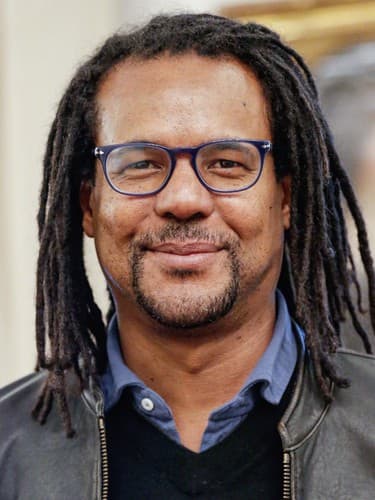
Arch Colson Chipp Whitehead is an American novelist. He is the author of eight novels, including his 1999 debut work The Intuitionist; The Underground Railroad (2016), for which he won the 2016 National Book Award for Fiction and the 2017 Pulitzer Prize for Fiction; and The Nickel Boys, for which he won the Pulitzer Prize for Fiction again in 2020. He has also published two books of non-fiction. In 2002, he received a MacArthur Genius Grant.
Similar books
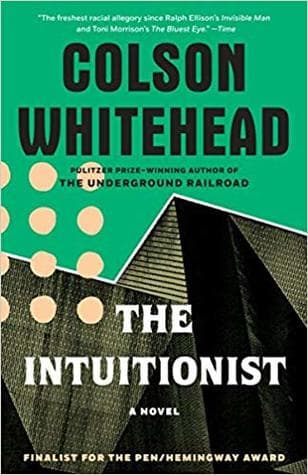
- The Intuitionist
Colson Whitehead
3.7 (10k) average on GoodreadsLiterary FictionShares Whitehead's signature blend of social commentary, unique concepts, and exploration of identity.
- A Confederacy of Dunces
John Kennedy Toole
3.9 (231k) average on GoodreadsLiterary FictionFeatures a unique protagonist and satirizes societal norms with a distinct, often absurd, humor.
- White Noise
Don DeLillo
3.9 (87k) average on GoodreadsLiterary FictionExplores themes of consumerism, media, and the search for meaning in modern American life with a satirical edge.
- A Brief History of Seven Killings
Marlon James
3.9 (28k) average on GoodreadsLiterary FictionWhile 'Apex' and 'A Brief History of Seven Killings' both grapple with post-colonial Caribbean histories and the weight of the past, James's novel is far more expansive in its scope and visceral in its depiction of violence and political turmoil. James employs a multitude of distinct voices to create a sprawling, polyphonic narrative, immersing the reader in the chaos. Whitehead's 'Apex' is more contained, introspective, and philosophical, using a more restrained narrative to explore the subtle, often internal, conflicts of historical interpretation rather than overt political violence.
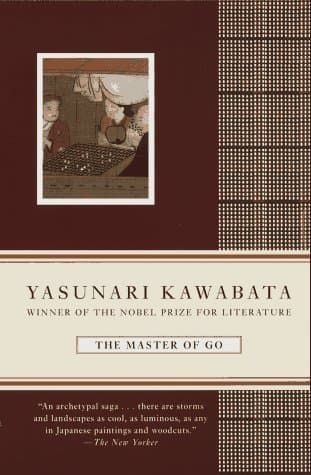
- The Master of Go
Yasunari Kawabata
3.8 (4k) average on GoodreadsFictionThough vastly different in setting and overt themes, both 'Apex Hides the Hurt' and 'The Master of Go' subtly explore the end of an era and the struggle to define legacy in the face of changing times. Kawabata's novel, detailing the final match of a legendary Go master, focuses on tradition, honor, and the passing of an old guard. 'Apex' similarly examines the struggle to preserve or redefine the 'truth' of a place's identity amidst external pressures and internal factions. Both novels use a seemingly simple premise to delve into profound questions of meaning, history, and the inevitable march of progress, albeit with Whitehead's work being far more overtly allegorical and critical of historical construction.
- The Old Man and the Sea
Ernest Hemingway
3.8 (831k) average on GoodreadsLiterary FictionA Cuban fisherman's long struggle with a giant marlin becomes a story of endurance and dignity, now retold for young adults with illustrations, phonetic guides, and writing prompts in Traditional Chinese.




Enjoyed the summary?
A summary gives you the shape of the book. The book itself has the detail, the examples and the voice.
Find Apex Hides the Hurt on AmazonAs an Amazon Associate, BookBrief earns from qualifying purchases. How we're funded