
Core Idea
- Difficulty
- Easy
- Read it if
- You are a parent or caregiver looking for a classic, gentle story about belonging and the bond between a child and its mother, suitable for very young children.
- Skip it if
- You are looking for complex narratives, advanced vocabulary, or a book with significant plot twists and philosophical depth for older readers.
Key Takeaways from Are You My Mother? Cloth Book
The Innate Drive for Belonging
A newborn's immediate quest for its primary caregiver highlights a fundamental biological imperative.
The story of 'Are You My Mother?' starts with Baby Bird immediately searching for his mother after hatching. This is not something he learned; it is a natural, inborn need for connection and safety. Biologically, this need is vital for survival, as newborns depend completely on their caregivers. The book shows this basic need well, illustrating how a creature, just out of its shell, feels driven to find its source of care and protection. It speaks to the common human experience of needing to belong and the deep discomfort of feeling lost or alone, especially when vulnerable.
“Out of the egg he came. Up, up, up went the baby bird, out of the nest. Down, down, down fell the baby bird.”
In the book: Baby Bird's immediate departure from the nest after hatching, driven solely by the absence of his mother.
Try this: Recognize and validate the innate need for connection in children and adults. Create environments that foster a sense of belonging and security, understanding that this is a fundamental human requirement, not a mere preference.
Related ideas: attachment-theory, instinctual-behavior, belonging-needs
The Power of Persistent Inquiry
Baby Bird's unwavering question, 'Are you my mother?', demonstrates the effectiveness of consistent pursuit.
Baby Bird's journey involves one main question: 'Are you my mother?' He asks it of every creature and object he meets, from a kitten to a machine and even a plane. This constant questioning, even with many failures and misunderstandings, helps him succeed. It shows how being persistent and focused can help you reach a goal, especially when the way is unclear or difficult. For children, it teaches them not to give up, even when they hear 'no' many times or get wrong answers. It illustrates that continuous, focused effort, even if simple, can lead to big results.
“'Are you my mother?' the baby bird asked.”
In the book: Baby Bird asks the same question to a kitten, a hen, a dog, a cow, a snort (crane), and a plane before finally finding his mother.
Try this: Encourage children (and ourselves) to persist in asking questions and seeking answers, even when initial attempts fail. Frame 'failures' as steps closer to the right solution, reinforcing the value of tenacity in learning and problem-solving.
Related ideas: persistence, problem-solving, inquiry-based-learning
Misidentification as a Learning Tool
Mistaking other creatures for his mother helps Baby Bird refine his understanding of what he's looking for.
A big part of Baby Bird's search involves mistaking different animals and objects for his mother. Each 'no' he gets, while disappointing at first, helps him learn. It helps him slowly rule out possibilities and, in a quiet way, improve his idea of what his mother looks like. By meeting a kitten, a hen, a dog, and a cow, he learns what his mother is not. This process of elimination is a basic part of thinking and problem-solving. It teaches that mistakes are not just problems but useful information that helps us get closer to the right answer, encouraging a strong approach to learning.
“No,' said the kitten. 'I am not your mother. I am a kitten.”
In the book: The repeated instances where other animals explicitly state they are not his mother and identify themselves instead.
Try this: Reframe mistakes as essential parts of the learning process. Encourage exploration and experimentation, understanding that incorrect answers or paths can provide valuable information that leads to the right solution. Focus on the learning derived from errors, not just the errors themselves.
Related ideas: error-correction, cognitive-development, differentiation
The Unconditional Nature of Maternal Love
Despite Baby Bird's wandering, his mother's return signifies enduring care and acceptance.
When Baby Bird finally finds his mother, she is not angry or abandoning; instead, she is relieved and gently scolds him, then promises to take him home. This scene strongly conveys that a mother's love and care are unconditional. Despite Baby Bird's risky adventure, her main concern is his safety and getting him home. It confirms that true maternal love goes beyond mistakes and adventures, offering a safe base for a child to return to. This message is very comforting, teaching children that even when they wander or make bad choices, their primary caregiver's love stays constant.
“Oh, here you are, baby bird,' said the mother bird. 'You were a bad little bird to leave the nest. But here I am. I will take you home.”
In the book: The mother bird's dialogue upon finding Baby Bird, acknowledging his 'bad' behavior but immediately offering to take him home.
Try this: Model unconditional love and forgiveness in parenting and relationships. Create a safe space where individuals feel secure in returning, even after making mistakes, knowing they will be met with understanding and continued care, not rejection.
Related ideas: unconditional-love, attachment-security, parental-bonding
The Concept of 'Home' as a Feeling, Not Just a Place
Baby Bird's journey emphasizes that true 'home' is found in the presence of a loving caregiver.
Baby Bird leaves his physical nest, but his real 'home' is not just a structure; it is the safety and comfort his mother provides. His repeated cries for his mother show that 'home' is closely tied to the presence of his main caregiver. He is physically out of the nest, but he is also emotionally 'homeless' until he is back with his mother. This difference teaches an important lesson: while a physical space offers shelter, the emotional warmth, safety, and belonging from a loving person are what truly make a 'home.' It shows the psychological importance of attachment figures in creating a feeling of safety and belonging.
“'I want my mother!' said the baby bird.”
In the book: Baby Bird's distress and wandering despite being in various environments, contrasted with his immediate relief and desire to return to the nest once his mother is found.
Try this: Prioritize fostering strong, secure attachments with children, understanding that these relationships are the foundation of their emotional 'home.' Emphasize creating a supportive emotional environment over just providing a physical dwelling.
Related ideas: emotional-security, sense-of-belonging, attachment-figures
The World as a Source of Both Wonder and Confusion
Baby Bird's encounters highlight the vast, often perplexing, nature of a new environment.
For Baby Bird, the world outside his nest is a confusing mix of shapes, sounds, and creatures. He meets a kitten, a hen, a dog, a cow, and even a big, mechanical 'Snort' (a crane). Each meeting is a mix of curiosity and confusion. He does not understand the different features of each animal or object, which leads to him repeatedly guessing wrong. This nicely shows what it is like for a very young child to meet the vast and often overwhelming complexity of the world for the first time. It illustrates how we build perception and understanding through direct experience and interaction, often starting with confusion before things become clear. It is a gentle reminder of the sensory overload and thinking challenges that come with early development.
“He saw a big thing. This thing was a Snort. 'Are you my mother?' he asked the Snort.”
In the book: Baby Bird's interactions with various distinctly different creatures and objects, all of which he initially mistakes for his mother.
Try this: Approach a child's exploration of the world with empathy, understanding that new experiences can be both fascinating and confusing. Provide guidance and clear explanations to help them make sense of their environment, rather than expecting immediate understanding.
Related ideas: sensory-overload, cognitive-development, environmental-exploration
The Importance of Self-Reliance (Even if Accidental)
Baby Bird's journey, though driven by dependence, fosters an early sense of agency and exploration.
While Baby Bird's search is about finding his mother, his first jump from the nest and his journey show an accidental but important act of self-reliance. He does not wait; he acts. His 'flight' (or rather, fall and walk) into the unknown, driven by instinct, makes him interact with his surroundings and handle problems alone. This early, though desperate, use of his own will is a basic step in becoming self-reliant. It quietly teaches that sometimes, even when feeling completely dependent, taking action and exploring can lead to solutions, even if they are not clear right away.
“Up, up, up went the baby bird, out of the nest. Down, down, down fell the baby bird.”
In the book: Baby Bird's decision to leave the nest and actively search for his mother, rather than waiting for her return.
Try this: Encourage age-appropriate independence and problem-solving in children. Allow them opportunities to explore and take initiative, even if it leads to small detours or 'mistakes,' as these experiences build confidence and self-reliance.
Related ideas: self-efficacy, agency, independent-exploration
The Simplicity of Childhood Logic
Baby Bird's direct, often literal, interpretation of 'mother' reflects a child's developing understanding.
Baby Bird's thinking is simply charming: 'My mother is big, so anything big could be my mother.' This explains why he asks a cow, a dog, and even a crane if they are his mother. He is using a very basic set of things he sees (size, maybe sound, or just being there) without a more complex understanding of different species, family ties, or even the idea of flight. This shows how young children's thinking develops. They often rely on immediate, observable traits to sort and understand the world. It reminds us that a child's 'mistakes' in identifying things often make sense based on their current, limited, but growing understanding.
“He saw a big thing. This thing was a Snort. 'Are you my mother?' he asked the Snort.”
In the book: Baby Bird's consistent questioning of creatures/objects that are simply 'big' or present, without deeper biological understanding.
Try this: When interacting with children, be mindful of their developing logic and cognitive frameworks. Provide clear, simple explanations and avoid assuming they understand complex concepts. Break down information into observable, relatable attributes.
Related ideas: child-development, cognitive-biases, literal-thinking
The Universal Theme of Separation Anxiety
Baby Bird's distress upon hatching alone captures the primal fear of being separated from a primary caregiver.
'Are You My Mother?' is a classic because it touches on a common, basic fear: separation anxiety. From the moment Baby Bird hatches to an empty nest, his confusion and upset are clear. This is not just about finding food; it is about finding safety, comfort, and survival. The book shows this inner anxiety well, letting children see a character dealing with the same fears they might have when a parent leaves. It gives a safe place to explore these feelings, finally offering comfort through the happy reunion. The main message is that even when separated, the bond remains, and reunion is possible.
“'Where is my mother?' he said. He did not know what his mother looked like. He did not know where to look for his mother.”
In the book: Baby Bird's immediate cries and frantic search for his mother upon hatching and finding the nest empty.
Try this: Acknowledge and validate children's feelings of separation anxiety. Provide consistent reassurance of return, establish clear routines, and use transitional objects to help them cope with temporary separations, reinforcing the message that 'I will be back.'
Related ideas: separation-anxiety, emotional-regulation, attachment-styles
Are You My Mother? Cloth Book Quotes
“Are you my mother?”
“I am not your mother. I am a kitten.”
“I am not your mother. I am a hen.”
“I am not your mother. I am a dog.”
“I am not your mother. I am a cow.”
“I am not your mother. I am a boat.”
“I am not your mother. I am a plane.”
“I am not your mother. I am a car.”
“I am not your mother. I am a snort.”
“Oh, you are not my mother. You are a Snort!”
“Here I am, Son. I am your mother.”
“And the baby bird was very happy.”
Quiz
10 questions on the main ideas. Each answer comes with a short explanation.
Question 1
When Baby Bird hatches, where is his mother?
- She is in the nest, sleeping.
- She is off looking for food.
- She has gone to visit friends.
- She is teaching other baby birds to fly.
Show answer
B. She is off looking for food. According to the book's description, Baby Bird's mother is 'off looking for food' when he hatches.
Question 2
What is the primary question Baby Bird asks each character he meets?
- Can you help me find my nest?
- Are you my friend?
- Are you my mother?
- Where is the worm?
Show answer
C. Are you my mother? The book description explicitly states that Baby Bird 'asks again and again, "Are you my mother?"'
Question 3
Which of the following describes the nature of Baby Bird's hunt for his mother?
- Boring and repetitive
- Frustrating and sad
- Hilarious and at times very touching
- Dangerous and scary
Show answer
C. Hilarious and at times very touching The book description characterizes Baby Bird's hunt as 'hilarious, and at times very touching'.
Question 4
What special feature is included in the deluxe cloth edition of the book to enhance interaction?
- Sound effects on each page
- Scratch-and-sniff elements
- An adorable plush baby bird
- Pop-up illustrations
Show answer
C. An adorable plush baby bird The description mentions 'complete with an adorable plush baby bird' as a feature of the deluxe cloth edition.
Question 5
How do the 'soft and snuggly pages' contribute to the reading experience for children?
- They make the book lighter to carry.
- They allow children to interact with each wonderful character.
- They provide a sensory experience unrelated to the story.
- They prevent the pages from tearing easily.
Show answer
B. They allow children to interact with each wonderful character. The text states, 'Soft and snuggly pages... let children interact with each wonderful character our little hero meets.'
Question 6
What prompts Baby Bird to leave his nest immediately after hatching?
- He is curious about the world outside.
- His mother is absent, and he needs to find her.
- He hears other birds calling to him.
- He is hungry and looking for food himself.
Show answer
B. His mother is absent, and he needs to find her. The plot summary states, 'When Baby Bird hatches from his egg, his mother is off looking for food. What's a bird to do? Go find his mother, of course!' This indicates her absence is the catalyst.
Question 7
The description highlights the book as an 'all-time favorite'. What does this suggest about its enduring appeal?
- It features the latest interactive technology.
- Its themes and narrative resonate across generations of readers.
- It is frequently updated with new characters.
- It is only popular in specific regions.
Show answer
B. Its themes and narrative resonate across generations of readers. An 'all-time favorite' implies widespread and lasting popularity, suggesting its themes and story have a broad and enduring appeal.
Question 8
Considering the target audience of a cloth book, what practical developmental benefit might be associated with the 'soft and snuggly pages' and the 'plush baby bird'?
- It helps children develop advanced reading skills.
- It encourages sensory exploration and fine motor skills.
- It prepares children for complex narrative structures.
- It teaches them about different bird species.
Show answer
B. It encourages sensory exploration and fine motor skills. Cloth books with tactile elements are designed for very young children, promoting sensory engagement (touch) and interaction, which aids in developing fine motor skills and tactile discrimination.
Question 9
The phrase 'at times very touching' suggests that Baby Bird's journey evokes which emotional response in the reader?
- Amusement at his silly mistakes.
- A sense of empathy and warmth for his plight.
- Anxiety about whether he will ever succeed.
- Disinterest due to the repetitive nature of his question.
Show answer
B. A sense of empathy and warmth for his plight. To be 'touching' implies evoking emotions like tenderness, sympathy, or warmth, which aligns with empathy for Baby Bird's quest to find his mother.
Question 10
How does the initial premise—Baby Bird hatching while his mother is away—establish the central conflict and driving force of the story?
- It immediately introduces the concept of separation and the need for connection.
- It suggests that Baby Bird is an unusually independent character.
- It sets up a scenario where the mother is intentionally avoiding the baby.
- It implies that Baby Bird's journey will primarily be about finding food.
Show answer
A. It immediately introduces the concept of separation and the need for connection. The mother's absence at the moment of hatching creates an immediate and fundamental need for Baby Bird to find his primary caregiver, establishing the core theme of separation and the universal search for belonging and parental connection.
Are You My Mother? Cloth Book FAQ
What is the main story of 'Are You My Mother?'
The story follows a newborn Baby Bird who hatches from his egg to find his mother gone. He then embarks on a quest to find her, asking various animals and even an inanimate object, 'Are you my mother?' along the way.
Who is the author of 'Are You My Mother?'
The beloved children's book 'Are You My Mother?' was written and illustrated by Philip D. Eastman, often credited as P. D. Eastman.
What age group is 'Are You My Mother? Cloth Book' suitable for?
This deluxe cloth edition is perfect for babies and toddlers, typically from birth to 3 years old. Its soft, snuggly pages and plush baby bird encourage sensory interaction and engagement for the youngest readers.
Does the Baby Bird ever find his mother?
Yes, after a series of comical encounters with different creatures and objects, the Baby Bird is eventually reunited with his mother in a heartwarming conclusion.
What is the 'Snort' in 'Are You My Mother?'
The 'Snort' is a large, powerful piece of machinery (a steam shovel) that the Baby Bird mistakes for his mother due to its imposing size and the noise it makes.
How is the cloth book different from the original 'Are You My Mother?' storybook?
While the story remains the same, the cloth book edition features soft, fabric pages and often includes an attached plush baby bird toy, making it durable, washable, and tactilely engaging for very young children, unlike the traditional paper storybook.
What themes are explored in 'Are You My Mother?'
The book explores themes of belonging, the strong bond between a child and parent, discovery, and perseverance. It gently introduces children to different animals and helps them understand the concept of family.
Does the cloth book edition include all the original characters?
Yes, the cloth book edition faithfully includes all the wonderful characters Baby Bird meets, such as the kitten, hen, dog, and Snort, allowing children to interact with each one as they follow the story.
About the author

Philip D. Eastman was an American author and illustrator known for his contributions to children's literature. He is best known for the picture book "Are You My Mother?", which features themes of exploration and family. Eastman's works often blend engaging storytelling with educational elements, appealing to young readers and their families.
Similar books
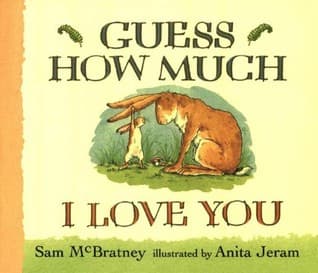
- Guess How Much I Love You
Sam McBratney
4.4 (126k) average on GoodreadsChildren'sExplores the depth of parental love and connection through simple, repetitive dialogue.
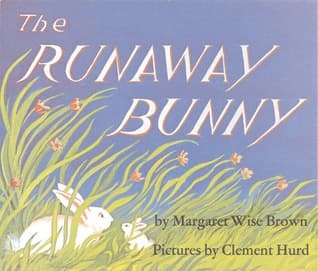
- The Runaway Bunny
Margaret Wise Brown
4.1 (68k) average on GoodreadsFantasyFeatures a child-like character testing the boundaries of a parent's unconditional love and presence.
- The Diary of a Young Girl
Anne Frank
4.2 (2.7M) average on GoodreadsBiographyDuring the Nazi occupation, a teenage girl's diary, written from a secret annex, shares observations on humanity, hope, and the wait for freedom.
- Twisted 1. Twisted love
Ana Huang
3.7 (1.7M) average on GoodreadsA quiet billionaire with a difficult past finds his guarded heart opening to the woman he must protect, but their growing passion uncovers dangerous secrets and a shared, traumatic history.
- Eat, Pray, Love
Elizabeth Gilbert
3.6 (1.5M) average on GoodreadsLifestyleA heartbroken writer leaves her conventional life for a year-long global search for pleasure in Italy, spiritual devotion in India, and unexpected love and balance in Bali.
- Night
Elie Wiesel
4.3 (970k) average on GoodreadsBiographyIn the darkness of Auschwitz and Buchenwald, a teenage Elie Wiesel faces the extermination of his family, the loss of his faith, and the lasting scars of humanity's deepest cruelty.




Enjoyed the summary?
A summary gives you the shape of the book. The book itself has the detail, the examples and the voice.
Find Are You My Mother? Cloth Book on AmazonAs an Amazon Associate, BookBrief earns from qualifying purchases. How we're funded